 YardMate


Purple Wood Sage
Salvia nemorosa
Easy · Beginner friendlyAbout Purple Wood Sage
Salvia nemorosa, the woodland sage, is a hardy European perennial producing dense spikes of violet-blue, pink, or white flowers from late spring through summer. Growing 45–60 cm tall, it forms tidy clumps of aromatic gray-green foliage that pairs beautifully with roses and ornamental grasses. Cutting back after the first flush produces a reliable second bloom. It is one of the most important perennials in modern garden design — the cultivar 'Caradonna' with dark purple stems is widely considered one of the best perennials of the 21st century. Drought-tolerant and deer-resistant once established.
- Drought-tolerant
- Deer-resistant
- Pollinator-friendly
How to care for Purple Wood Sage
Watering
- Springevery 10 days
- Summerevery 7 days
- Fallevery 14 days
- Winterevery 21 days
Soil · Well-draining
- Top dressingPine bark mulch10%
- Main mixPotting soil + perlite 2:170%
- DrainageLECA / gravel20%
Never skip the drainage layer — standing water is the top cause of root rot.
FERTILIZER
- Springevery 30 days
- Summerevery 30 days
At a Glance
- NativeEurope, Western Asia
- Height1.5–3 ft (0.5–0.9 m)
- Spread1–2 ft (0.3–0.6 m)
- Flower colorPurple, Blue, Pink, White
- Foliage colorGreen
- SoilLoamy, Well-drained
- LocationsYard
Bloom time
BLOOM CYCLE
Peak bloom
May–Aug
Cut back after first flush for repeat bloom; violet-blue spikes; pairs with roses
Fragrance
MODERATE FRAGRANCE
Pungent sage-mint aroma when leaves are brushed.
Toxicity
Humans Safe · Pets Safe
None reported
Safe
EXPOSURE No exposure route is reported.
EFFECT No significant toxicity.
NOTE Listed as non-toxic for humans; avoid eating ornamental plants unless confirmed edible.
Safe
EXPOSURE No exposure route is reported.
EFFECT Not listed as toxic.
NOTE Listed as non-toxic for dogs; avoid eating ornamental plants unless confirmed edible.
Safe
EXPOSURE No exposure route is reported.
EFFECT Not listed as toxic.
NOTE Listed as non-toxic for cats; avoid eating ornamental plants unless confirmed edible.
Educational information, not medical or veterinary advice. If exposure is suspected, contact a doctor or veterinarian.
DISTRIBUTION

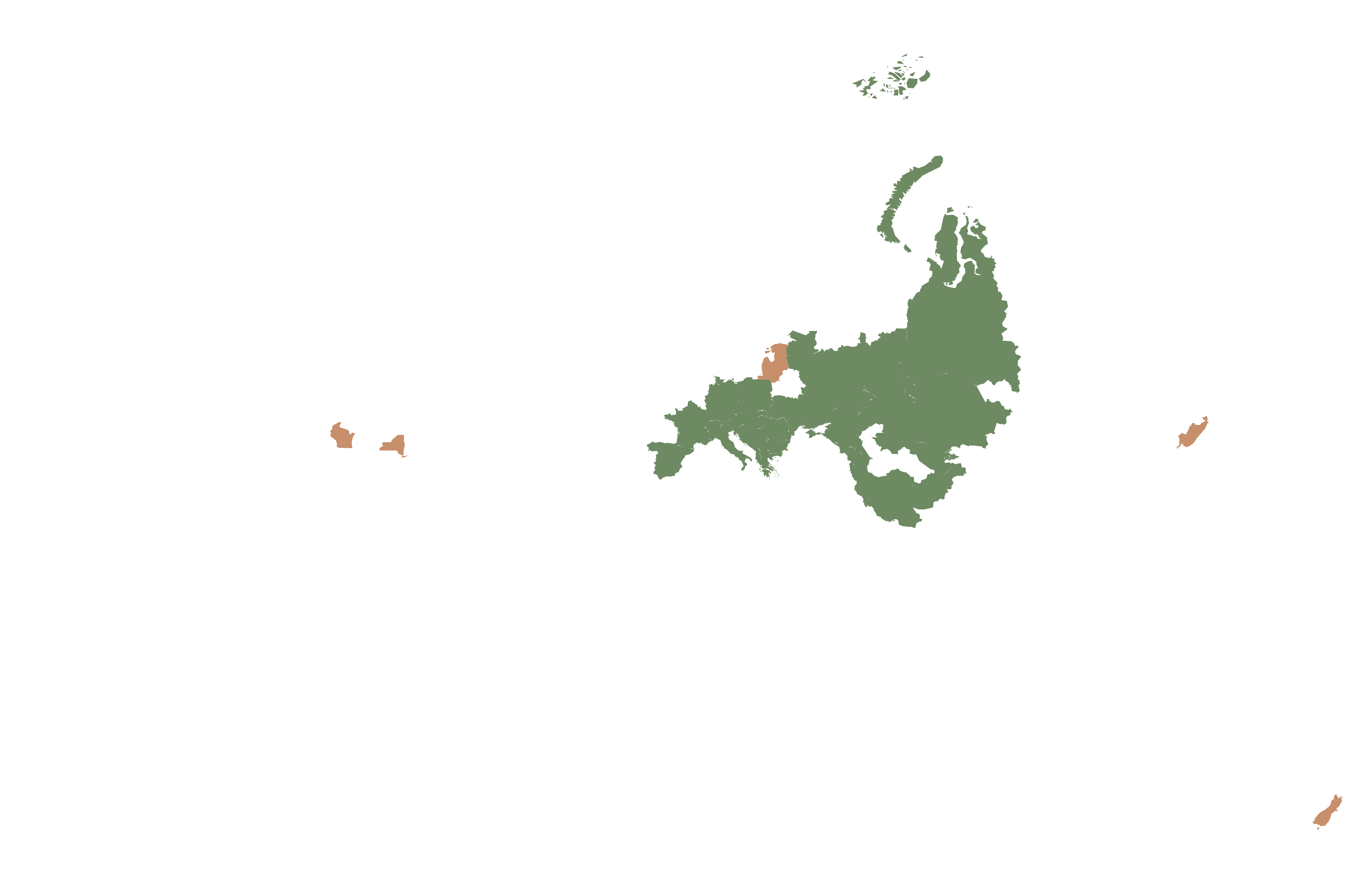
- Native
- Introduced
- Europe
- Western Asia
History

Salvia nemorosa is native to dry meadows and woodland edges from central and eastern Europe through the Caucasus and western Asia. Long grown as a hardy border plant, it rose to modern prominence through the work of Karl Foerster's nursery and later German breeders at the Weihenstephan trial gardens, who selected compact, long-blooming, sterile cultivars including "Ostfriesland" (1955) and "Mainacht" (May Night, named 1997 Perennial Plant of the Year). Dutch designer Piet Oudolf popularized it as a backbone plant of the naturalistic "New Perennial" or prairie style from the 1990s onward, where its vertical violet-blue spikes punctuate grasses and late-summer composite flowers.
It is drought-tolerant, deer-resistant, and a strong pollinator magnet. Salvia nemorosa 'Caradonna' — discovered as a seedling in the garden of German plantswoman Countess von Zeppelin — has become one of the defining perennials of the New Perennial Movement.
Dutch garden designer Piet Oudolf uses it extensively in his famous public plantings, including the High Line in New York City and Lurie Garden in Chicago. The plant is so reliable and widely admired that it won the Royal Horticultural Society's Award of Garden Merit — the gold standard of ornamental plant quality.
Symbolism & meaning
What It Symbolizes
Purple Wood Sage can symbolize wisdom, drawn from the same root as the word 'sage' and the long association of salvias with accumulated knowledge and cool discernment. Its tall purple-violet spikes rising in early summer turn the meaning visible, lifting wisdom into the perennial border in a form bees can find. In the modern cottage garden, salvia nemorosa is the quiet philosopher of the bed, blooming reliably and asking, in its own way, that the gardener keep a clear head with it.
- Wisdom — From the same root as 'sage,' it represents accumulated knowledge and discernment
Where the Name Comes From
Salvia comes from Latin 'salvere' meaning to be well. Nemorosa means of the woods, for its woodland-edge habitat.
Uses & Fun Facts
- Aromatic foliage releases sage scent when brushed
- Violet-blue spires draw bees throughout summer
- Slim flower spikes work in casual bouquets
Related plants
More Salvia plants
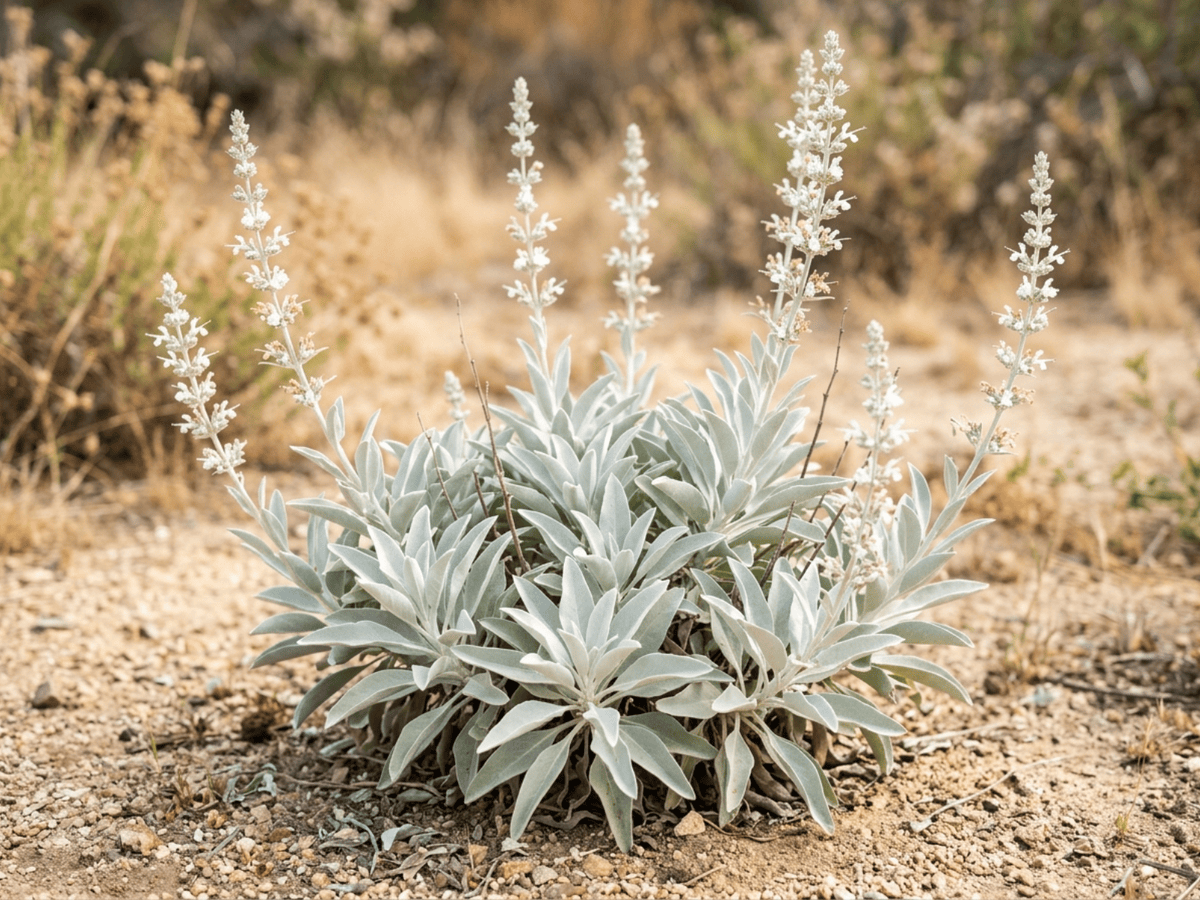 White SageSalvia apiana
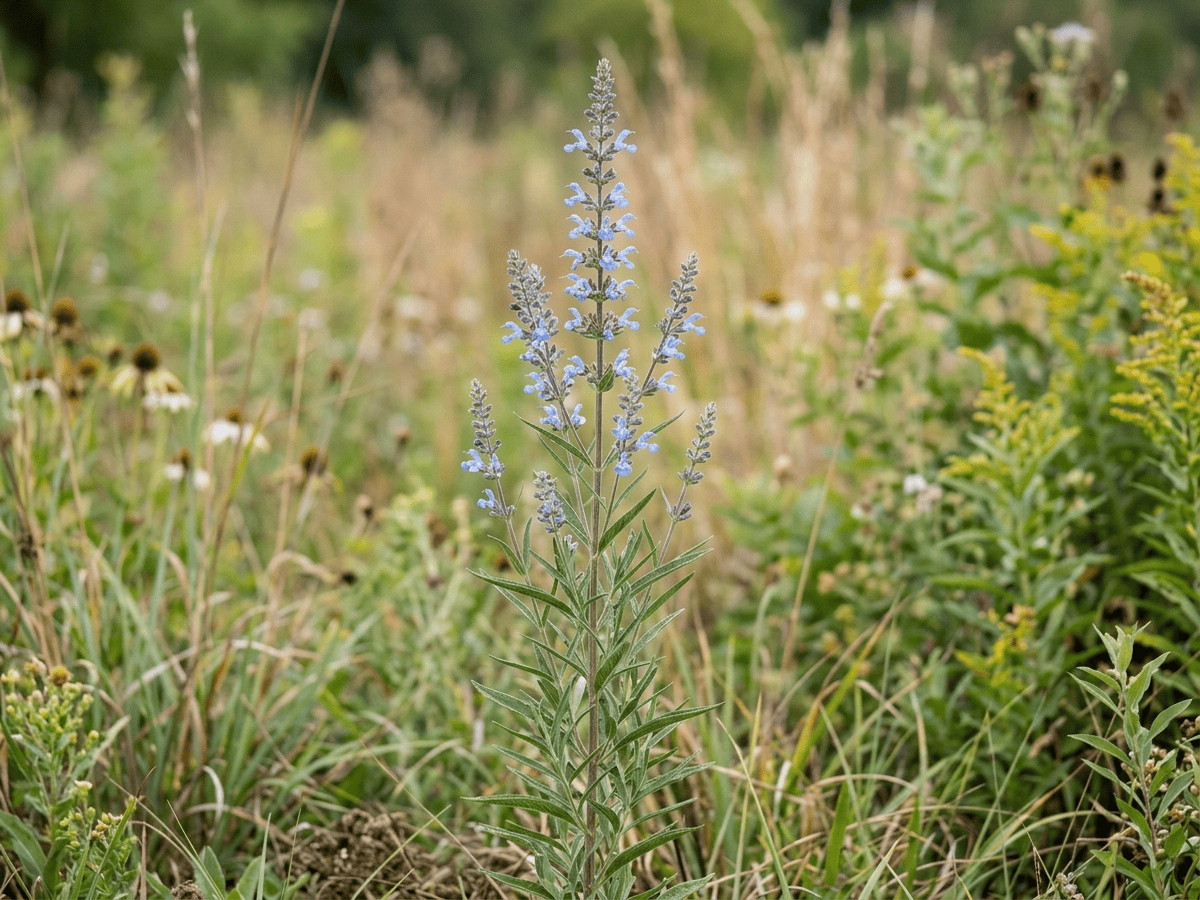 Giant Blue SageSalvia azurea
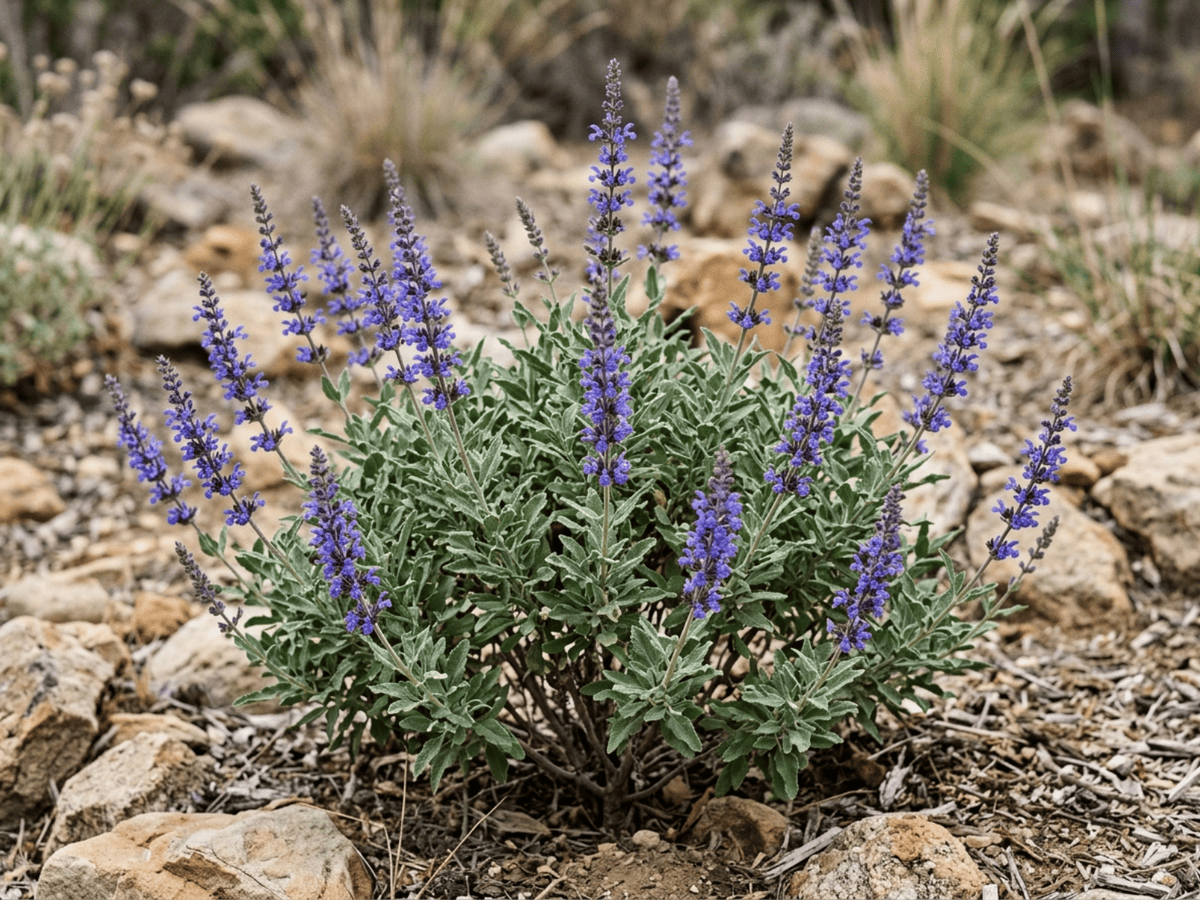 Cleveland SageSalvia clevelandii
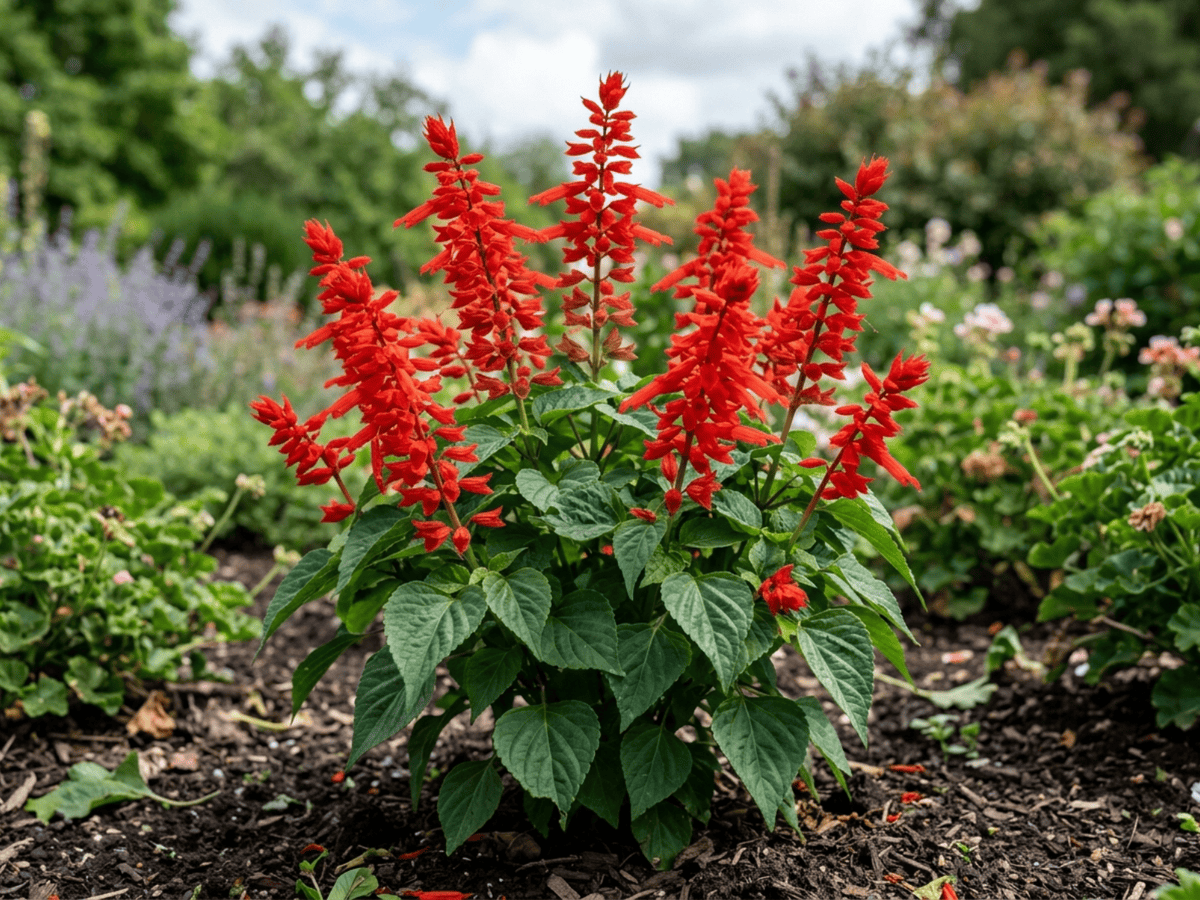 Tropical SageSalvia coccinea
Plants with similar care
 Chinese AbeliaAbelia chinensis
 Fragrant AbeliaAbelia mosanensis
 Large-Flowered AbeliaAbelia uniflora
 Glossy AbeliaAbelia x grandiflora
Frequently asked questions
How often should I water Purple Wood Sage?
In summer, water about every 7 days; in winter, about every 21 days. Adjust for heat, pot size and drainage.
How much light does Purple Wood Sage need?
Full sun: 6+ hrs direct. Watch the leaves — scorching or stretching means the light needs adjusting.
Is Purple Wood Sage toxic to cats or dogs?
Pets Safe (Dogs Safe · Cats Safe) Educational information, not medical or veterinary advice. If exposure is suspected, contact a doctor or veterinarian.
Is Purple Wood Sage easy to grow?
Yes — it is considered an easy, beginner-friendly plant.
When does Purple Wood Sage bloom?
It typically blooms May–Aug in the Northern Hemisphere.
YardMate
Identify any plant in seconds
Snap a photo — YardMate names the plant, diagnoses problems, and reminds you when to water.
Download on the App Store