 YardMate


Clary
Salvia sclarea
Easy · Beginner friendlyAbout Clary
Clary Sage is a striking biennial or short-lived perennial native to the Mediterranean, famed for its bold architectural presence. Large felted silver-green basal leaves give rise to towering branched flower stalks 3-5 feet tall, topped with showy pink, lilac, or white bracts in early summer. The musky essential oil has long been used in perfumery. Widely grown in American herb gardens, dry borders, and as a cut or dried flower.
- Medicinal
- Fragrant
- Drought-tolerant
- Deer-resistant
How to care for Clary
Watering
- Springevery 7 days
- Summerevery 5 days
- Fallevery 10 days
- Winterpause watering
Soil · Well-draining
- Top dressingPine bark mulch10%
- Main mixPotting soil + perlite 2:170%
- DrainageLECA / gravel20%
Never skip the drainage layer — standing water is the top cause of root rot.
FERTILIZER
- Springevery 30 days
- Summerevery 30 days
At a Glance
- NativeMediterranean, Western Asia
- Height3–4 ft (0.9–1.2 m)
- Spread2–3 ft (0.6–0.9 m)
- Flower colorPink, White, Purple
- Foliage colorGreen
- SoilSandy, Well-drained, Alkaline
- LocationsYard
Bloom time
BLOOM CYCLE
Peak bloom
Jun–Aug
Pink and lilac bracts June to August
Fragrance
STRONG FRAGRANCE
The flowers have a herbaceous, musky, bittersweet scent.
Toxicity
Humans Slight · Pets Moderate
sclareol, linalool, and linalyl acetate
Slight
- Leaf
- Flower
- Ingestion
- Inhalation
EXPOSURE Eating leaves and flowers. Inhaling leaves and flowers.
EFFECT Drowsiness with large doses and headache.
NOTE Essential oil may cause drowsiness; essential oils are generally toxic to pets.
Moderate
- All
- Ingestion
EXPOSURE Eating any part of the plant.
EFFECT Vomiting, diarrhea, and cNS depression.
NOTE Essential oil may cause drowsiness; essential oils are generally toxic to pets.
Moderate
- All
- Ingestion
EXPOSURE Eating any part of the plant.
EFFECT Vomiting, diarrhea, and cNS depression.
NOTE Essential oil may cause drowsiness; essential oils are generally toxic to pets.
Educational information, not medical or veterinary advice. If exposure is suspected, contact a doctor or veterinarian.
DISTRIBUTION

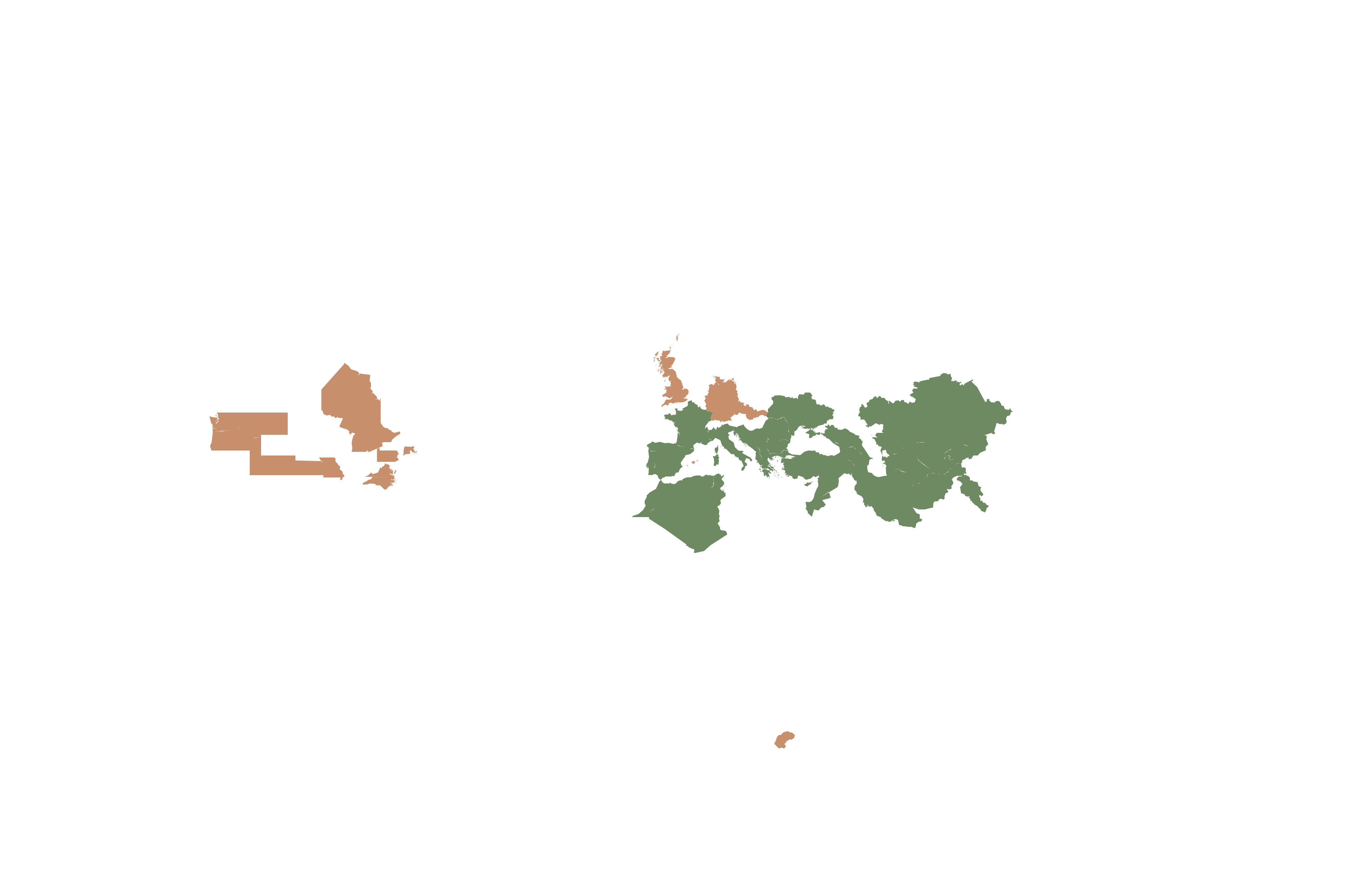
- Native
- Introduced
- Mediterranean
- Western Asia
History
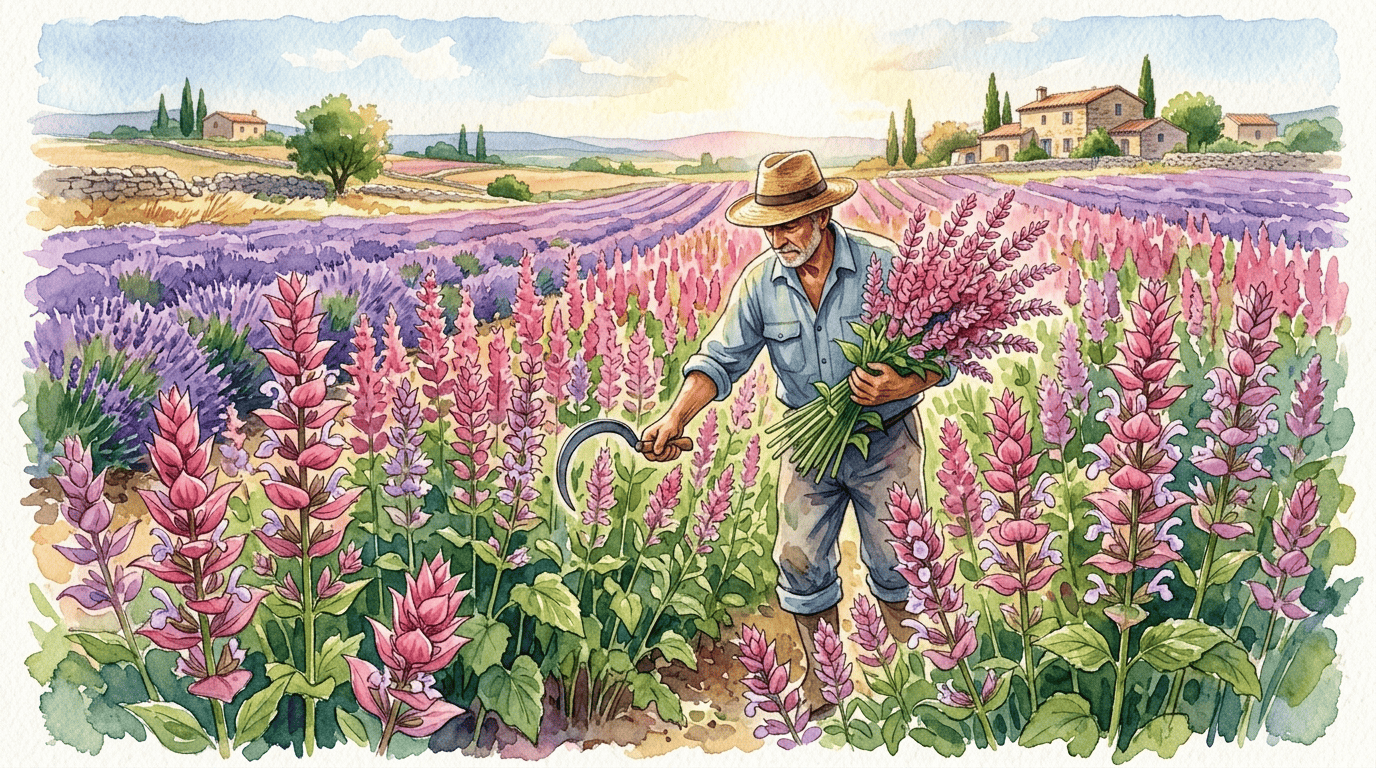
Salvia sclarea is native to the northern Mediterranean basin and Central Asia. The Latin epithet sclarea derives from clarus (clear), referencing medieval European use of seed mucilage as an eyewash to remove foreign particles—hence the common name clary or clear-eye. Theophrastus and Dioscorides mentioned it in antiquity.
In medieval times it flavored ale as a hops substitute. The plant gained modern economic importance in Provence and Russia as a source of sclareol, the precursor to synthetic ambroxide which replaced whale-derived ambergris in fine perfumery after whaling bans. France remains a major producer.
The cultivar var. turkestanica with rose-pink bracts is the most widely grown ornamental form, admired for dramatic flower spikes reaching 4-5 feet. Cultivated since antiquity for its essential oil, used in perfumery (a key ingredient in many classic fragrances) and as a flavoring in vermouth and muscatel wine—its name 'muscatel sage' references this use. Used by medieval herbalists to treat eye conditions, reflected in the Latin 'clarus' (clear).
Symbolism & meaning
What It Symbolizes
Clary embodies clarity, a name derived from its traditional use for clearing irritated vision in old European herbalism. It also carries dignity — large bracted flower spikes in lavender and white give it a stately, architectural presence in the herb garden. A biennial that offers both visual grandeur and a quiet old reminder about taking care of your eyes.
- Clarity — traditional use for clearing vision
- Dignity — stately architectural presence
Where the Name Comes From
'Sclarea' likely derives from 'clarus' (clear), referencing the historic use of seed mucilage to clear eye irritation.
Uses & Fun Facts
- Traditional herbal remedy for women's complaints and digestion
- Clary sage oil distilled for perfumery and aromatherapy
- Tall lilac bracts attract bumblebees and butterflies
Related plants
More Salvia plants
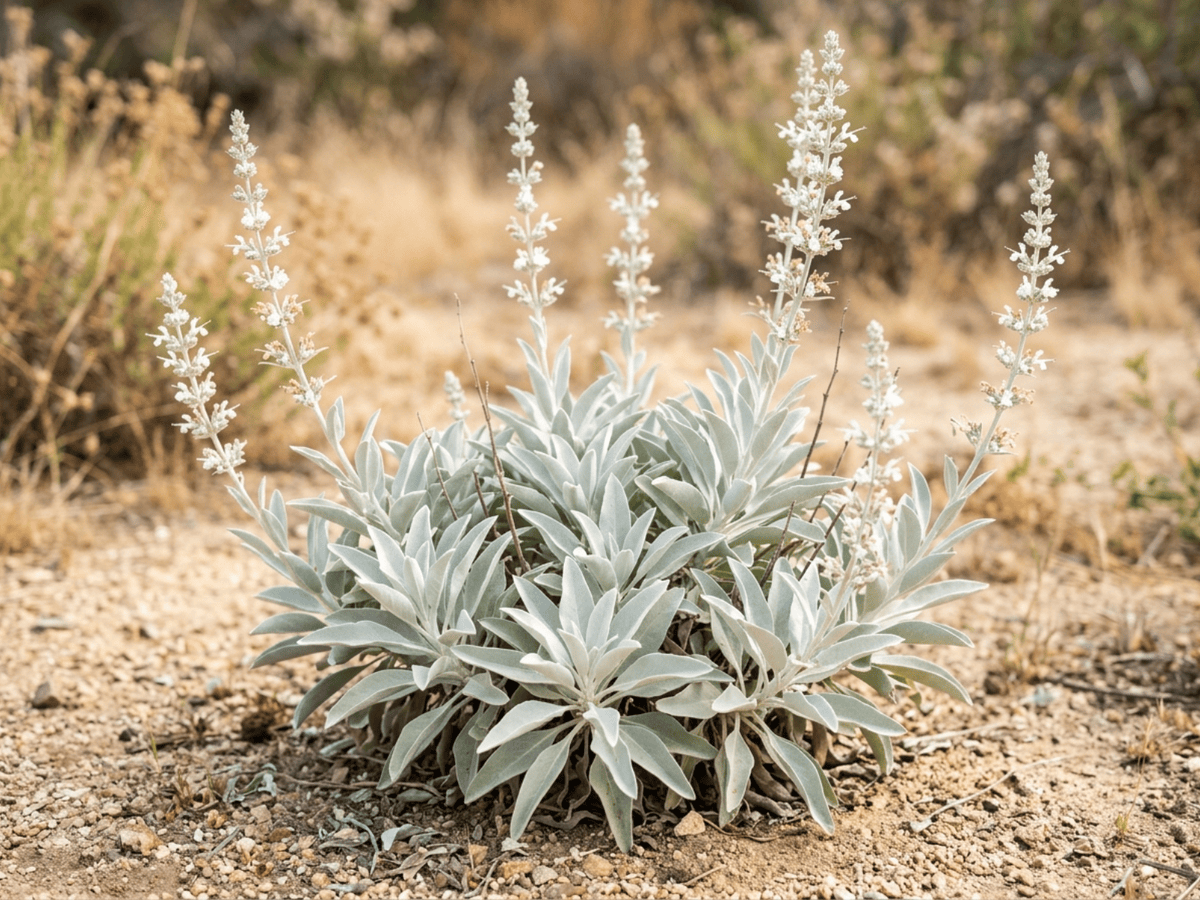 White SageSalvia apiana
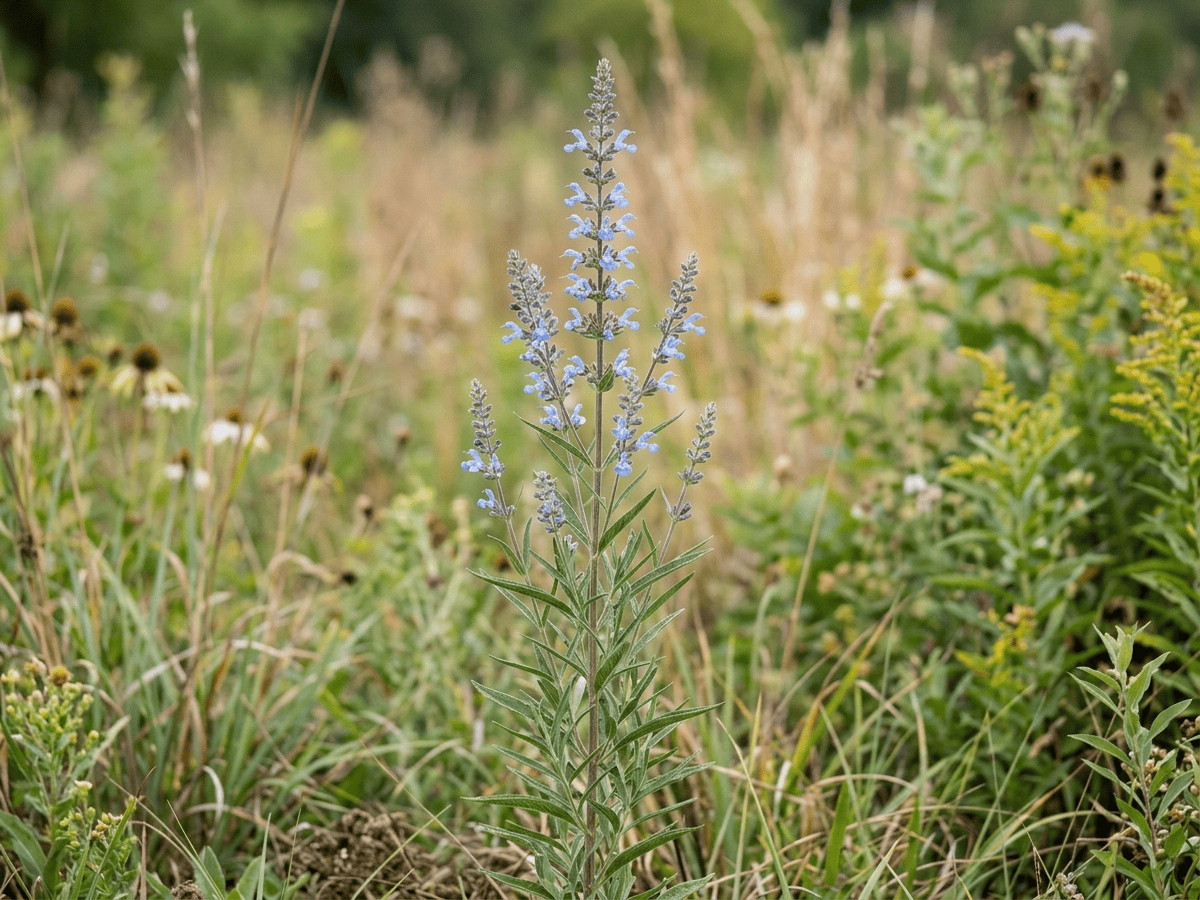 Giant Blue SageSalvia azurea
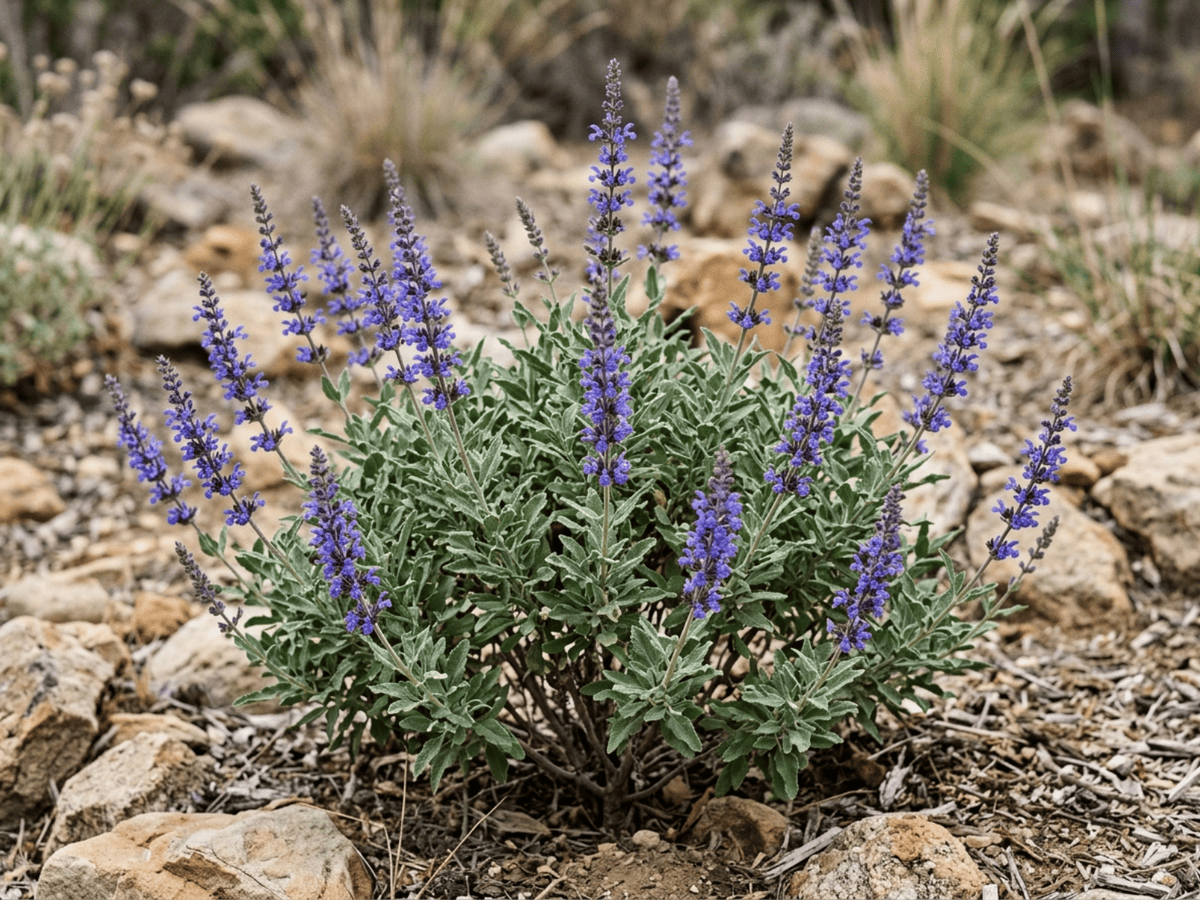 Cleveland SageSalvia clevelandii
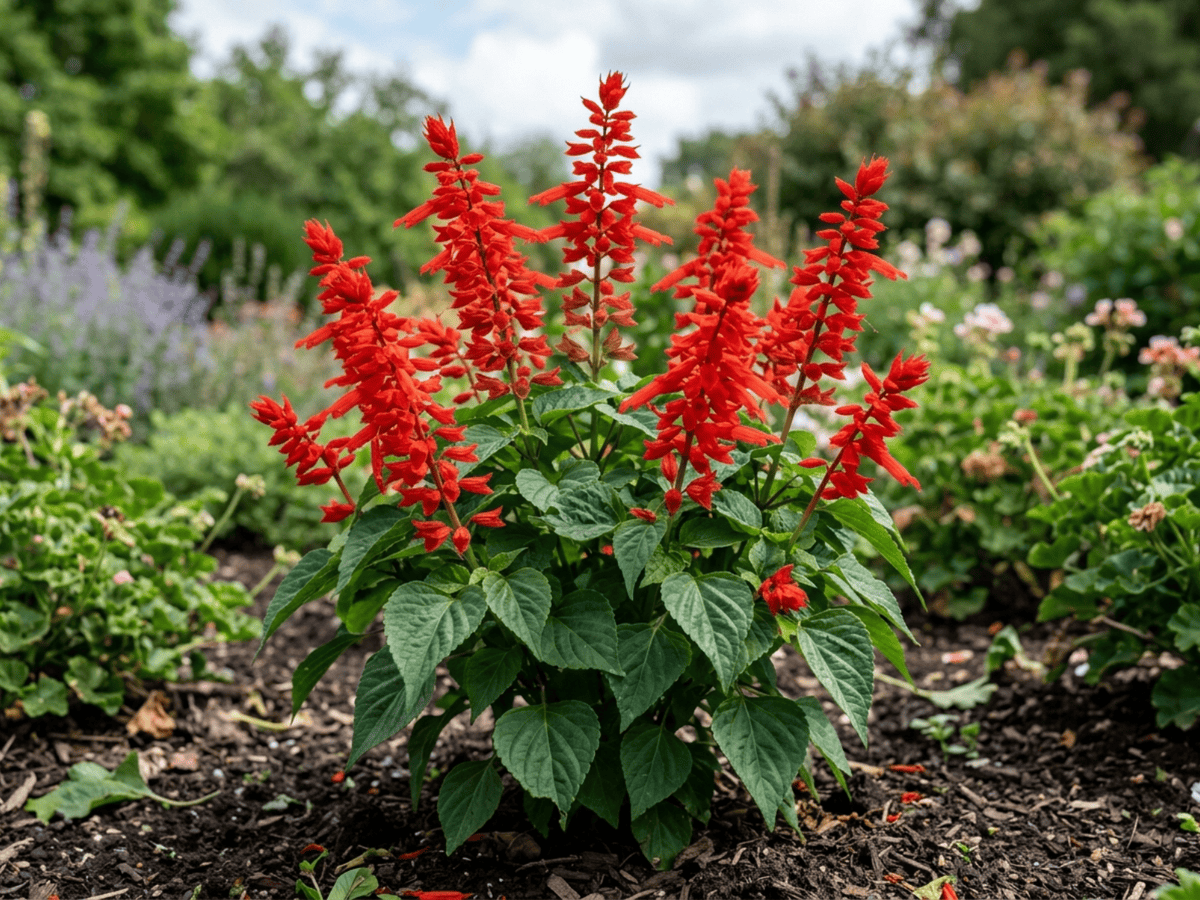 Tropical SageSalvia coccinea
Plants with similar care
 Chinese AbeliaAbelia chinensis
 Fragrant AbeliaAbelia mosanensis
 Large-Flowered AbeliaAbelia uniflora
 Glossy AbeliaAbelia x grandiflora
Frequently asked questions
How often should I water Clary?
Water about every 7 days during the growing season, and always let excess water drain away.
How much light does Clary need?
Full sun: 6+ hrs direct. Watch the leaves — scorching or stretching means the light needs adjusting.
Is Clary toxic to cats or dogs?
Pets Moderate (Dogs Moderate · Cats Moderate) Educational information, not medical or veterinary advice. If exposure is suspected, contact a doctor or veterinarian.
Is Clary easy to grow?
Yes — it is considered an easy, beginner-friendly plant.
When does Clary bloom?
It typically blooms Jun–Aug in the Northern Hemisphere.
YardMate
Identify any plant in seconds
Snap a photo — YardMate names the plant, diagnoses problems, and reminds you when to water.
Download on the App Store