 YardMate


Scarlet Sage
Salvia splendens
Easy · Beginner friendlyAbout Scarlet Sage
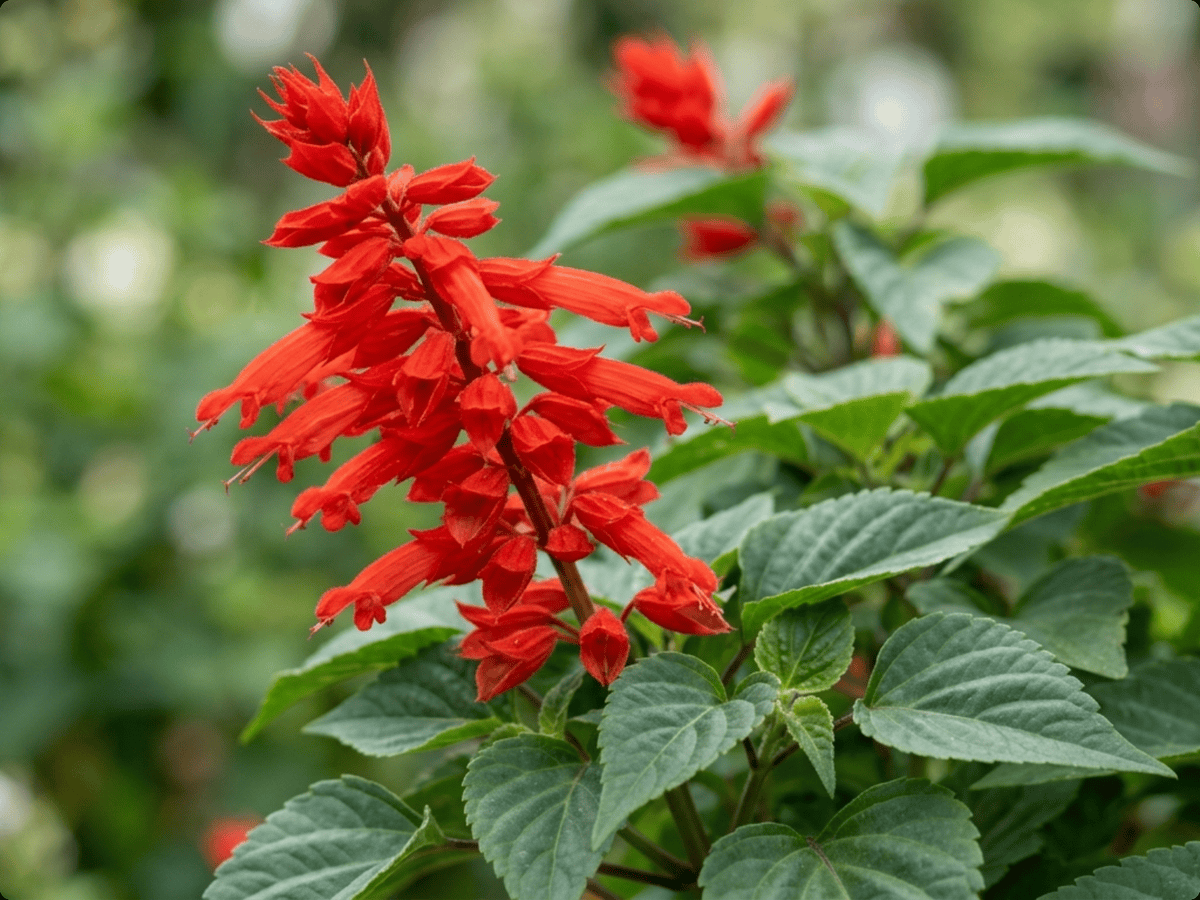
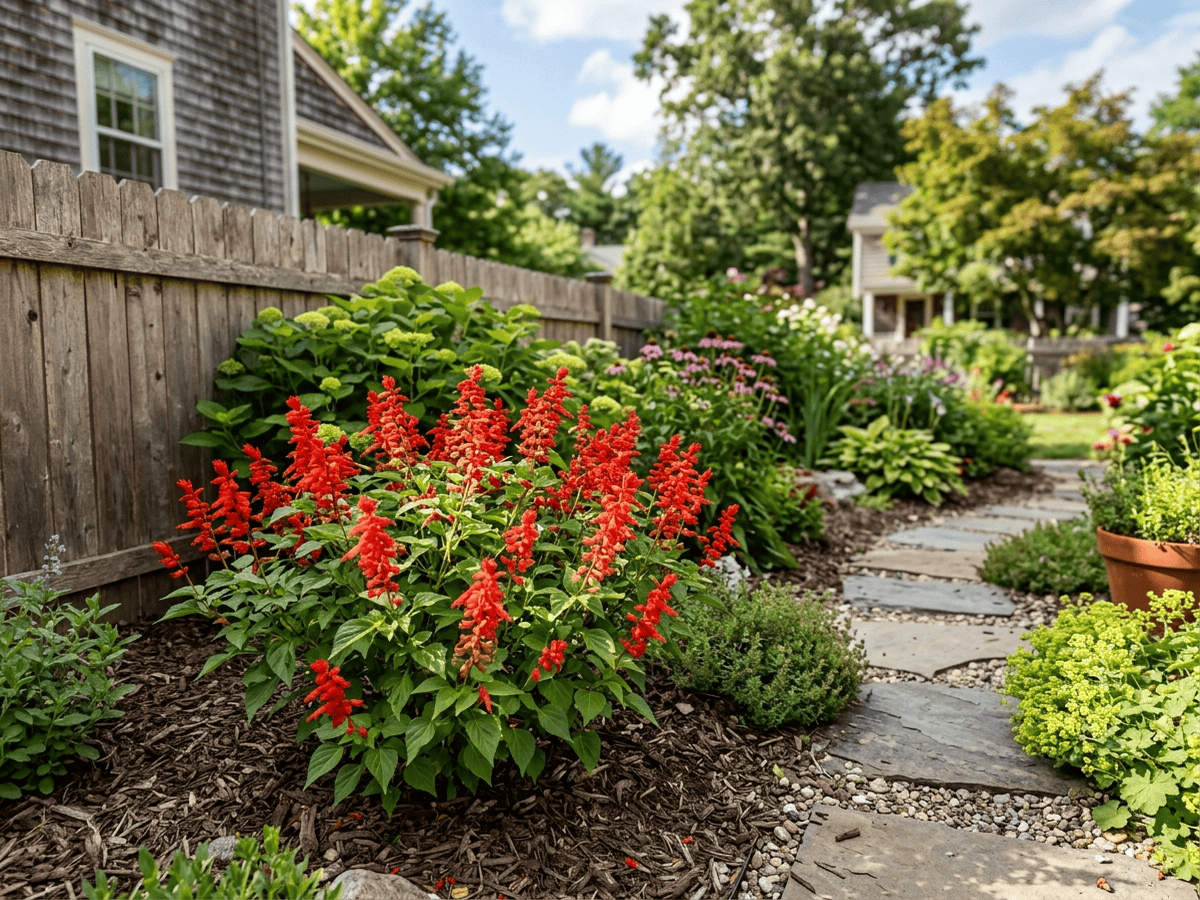
Salvia splendens, the scarlet sage, is a heat-loving annual producing dense spikes of tubular scarlet flowers from summer through frost. Native to Brazil, its brilliant red flower spikes are among the most eye-catching in the annual garden. Modern breeding has expanded colors to include purple, salmon, white, and bicolors. Growing 30–60 cm tall, it thrives in full sun and tolerates heat and humidity. The tubular flowers are magnets for hummingbirds. The 'Sizzler' and 'Vista' series are among the most commercially successful annual salvia varieties worldwide.
- Heat-tolerant
- Long-blooming
How to care for Scarlet Sage
Watering
- Springevery 5 days
- Summerevery 3 days
- Fallevery 7 days
- Winterpause watering
Soil · Well-draining
- Top dressingPine bark mulch10%
- Main mixPotting soil + perlite 2:170%
- DrainageLECA / gravel20%
Never skip the drainage layer — standing water is the top cause of root rot.
FERTILIZER
Balanced Feed 14-14-14
An even feed covers all three needs at once, keeping leaves, roots and blooms moving together with nothing pushed out of balance.
- Nitrogen · Leaves
- Phosphorus · Roots + Blooms
- Potassium · Strength
- Springevery 21 days
- Summerevery 21 days
At a Glance
- NativeSouth America
- Height1–2.5 ft (0.3–0.8 m)
- Spread1–1.5 ft (0.3–0.5 m)
- Flower colorRed, Purple, White, Pink
- Foliage colorGreen
- SoilWell-drained, Loamy
- LocationsYard · Balcony
Bloom time
BLOOM CYCLE
Peak bloom
Jun–Sep
Brilliant red spikes; hummingbird magnet; thrives in heat and humidity
Fragrance
LIGHT FRAGRANCE
Mild herbal scent when leaves are crushed.
Toxicity
No toxicity has been reported for this plant. Still, it is wise to keep pets from chewing on any houseplant.
Educational information, not medical or veterinary advice. If exposure is suspected, contact a doctor or veterinarian.
DISTRIBUTION


- Native
- Introduced
- South America
History
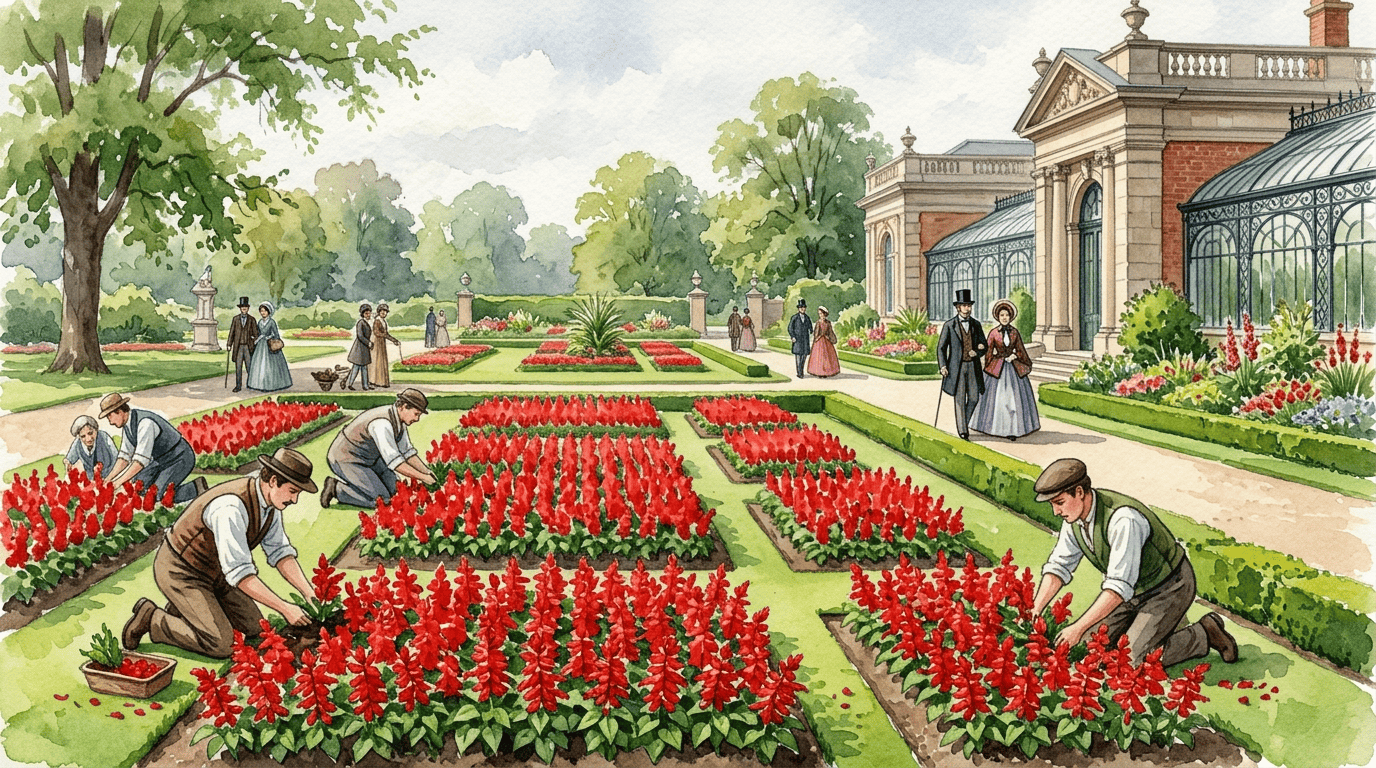
Salvia splendens is native to the Atlantic forests of southeastern Brazil. It reached European horticulture around 1822, and by the middle of the 19th century its intense scarlet flowers had become a mainstay of carpet bedding in England, France, and Germany. Municipal gardeners used massed rows to draw geometric patterns, spell words, and create the disciplined red blocks that defined Victorian public planting.
The wild species is taller and later flowering than the bedding salvia most gardeners know. Breeding in Japan, the United States, and Europe produced dwarf, early-flowering F1 hybrids such as the Bonfire and Salsa series, softening the plant's formal reputation and making it useful in borders and containers.
Its tubular red flowers are also superb for hummingbirds, matching their visual preference and bill shape. One plant links Brazilian forest edges, Victorian civic display, seed-company breeding, and backyard wildlife gardening.
Symbolism & meaning
What It Symbolizes
Scarlet Sage makes visible energy in its blazing red spikes, color so saturated it seems to vibrate against summer green. The Victorian and modern reading is the same: vitality, passion, and the dynamic life force made visible in petal form. To plant a row of it is to invite a small bonfire into the bedding scheme — a flower whose only message is heat, light, and the pulse of the warmest season.
- Energy — Its blazing red spikes radiate vitality, passion, and dynamic life force
Where the Name Comes From
'Scarlet sage' says exactly what gardeners notice first: brilliant red Salvia flowers. Salvia comes from Latin 'salvere', to be well; splendens means splendid.
Uses & Fun Facts
- Scarlet tubular flowers attract hummingbirds and butterflies
- Heat-tolerant annual fills sunny patio pots and beds
- Brilliant red spires used in summer bedding displays
Related plants
More Salvia plants
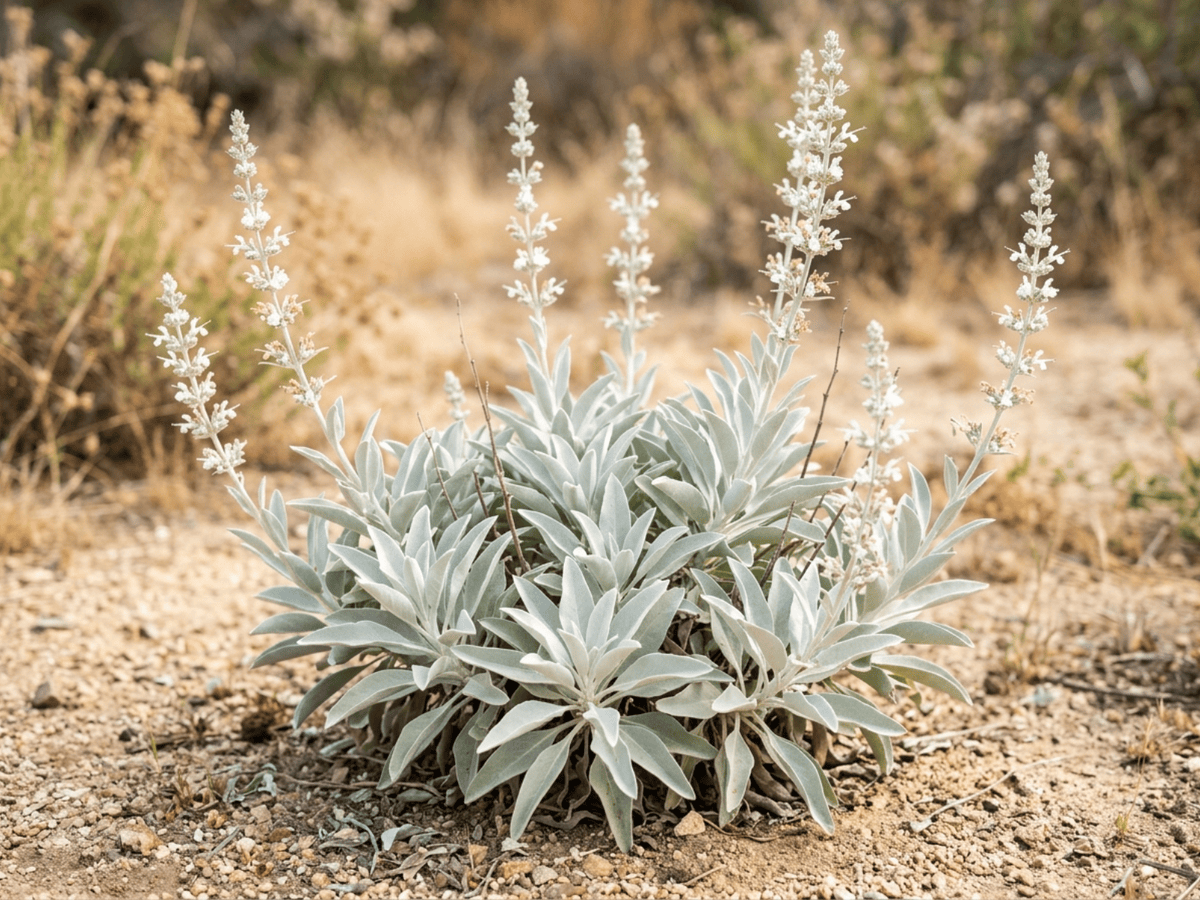 White SageSalvia apiana
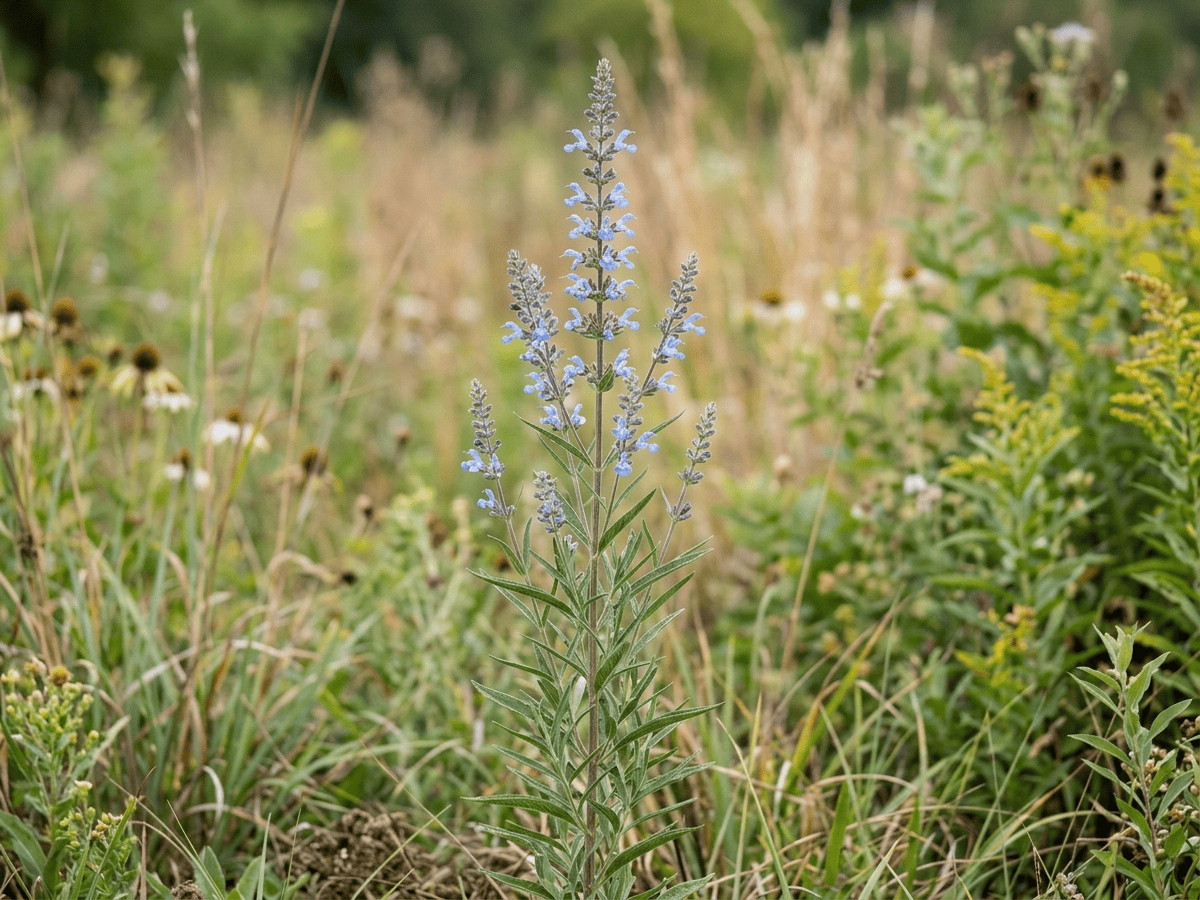 Giant Blue SageSalvia azurea
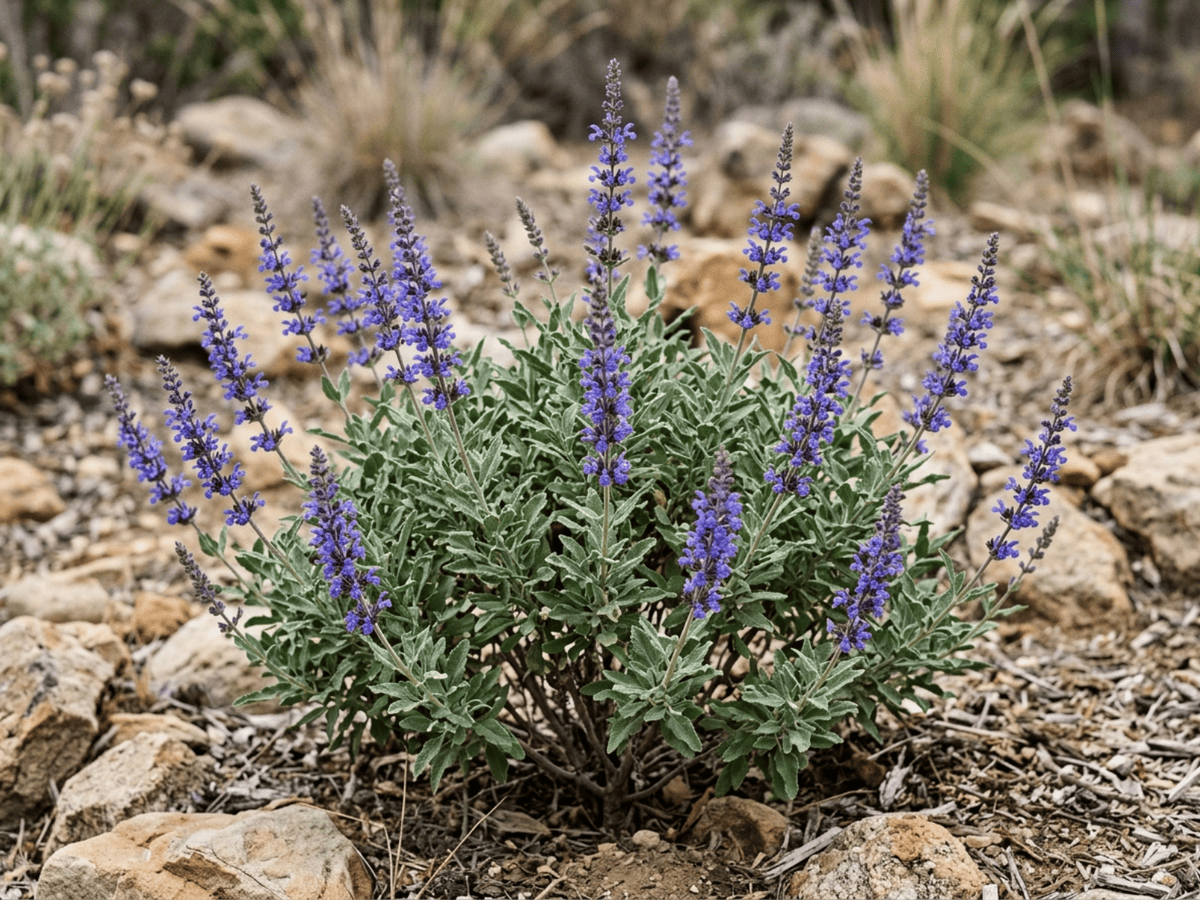 Cleveland SageSalvia clevelandii
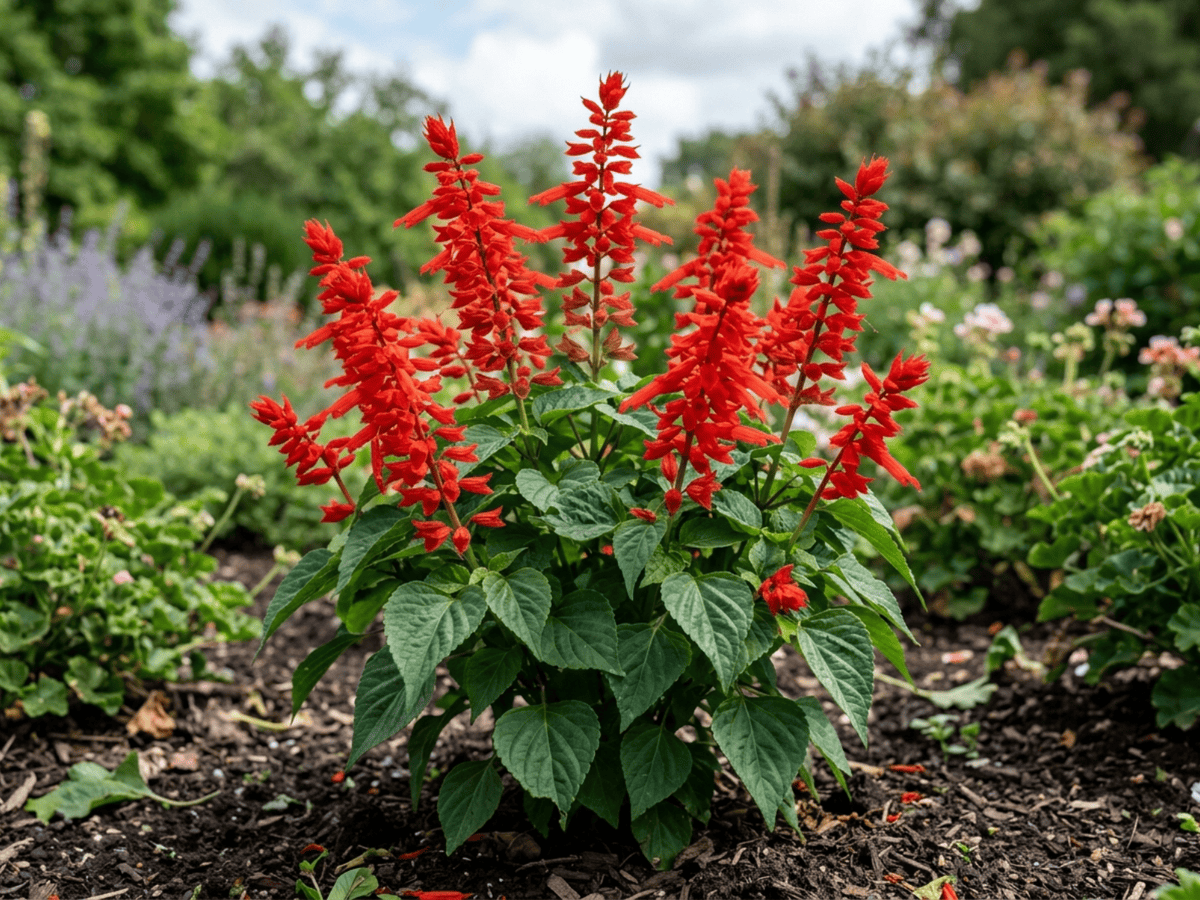 Tropical SageSalvia coccinea
Plants with similar care
 Chinese AbeliaAbelia chinensis
 Fragrant AbeliaAbelia mosanensis
 Large-Flowered AbeliaAbelia uniflora
 Glossy AbeliaAbelia x grandiflora
Frequently asked questions
How often should I water Scarlet Sage?
Water about every 5 days during the growing season, and always let excess water drain away.
How much light does Scarlet Sage need?
Full sun: 6+ hrs direct. Watch the leaves — scorching or stretching means the light needs adjusting.
Is Scarlet Sage toxic to cats or dogs?
No toxicity has been reported for this plant. Still, it is wise to keep pets from chewing on any houseplant. Educational information, not medical or veterinary advice. If exposure is suspected, contact a doctor or veterinarian.
Is Scarlet Sage easy to grow?
Yes — it is considered an easy, beginner-friendly plant.
When does Scarlet Sage bloom?
It typically blooms Jun–Sep in the Northern Hemisphere.
YardMate
Identify any plant in seconds
Snap a photo — YardMate names the plant, diagnoses problems, and reminds you when to water.
Download on the App Store