 YardMate


Texas Sage
Salvia texana
Easy · Beginner friendlyAbout Texas Sage
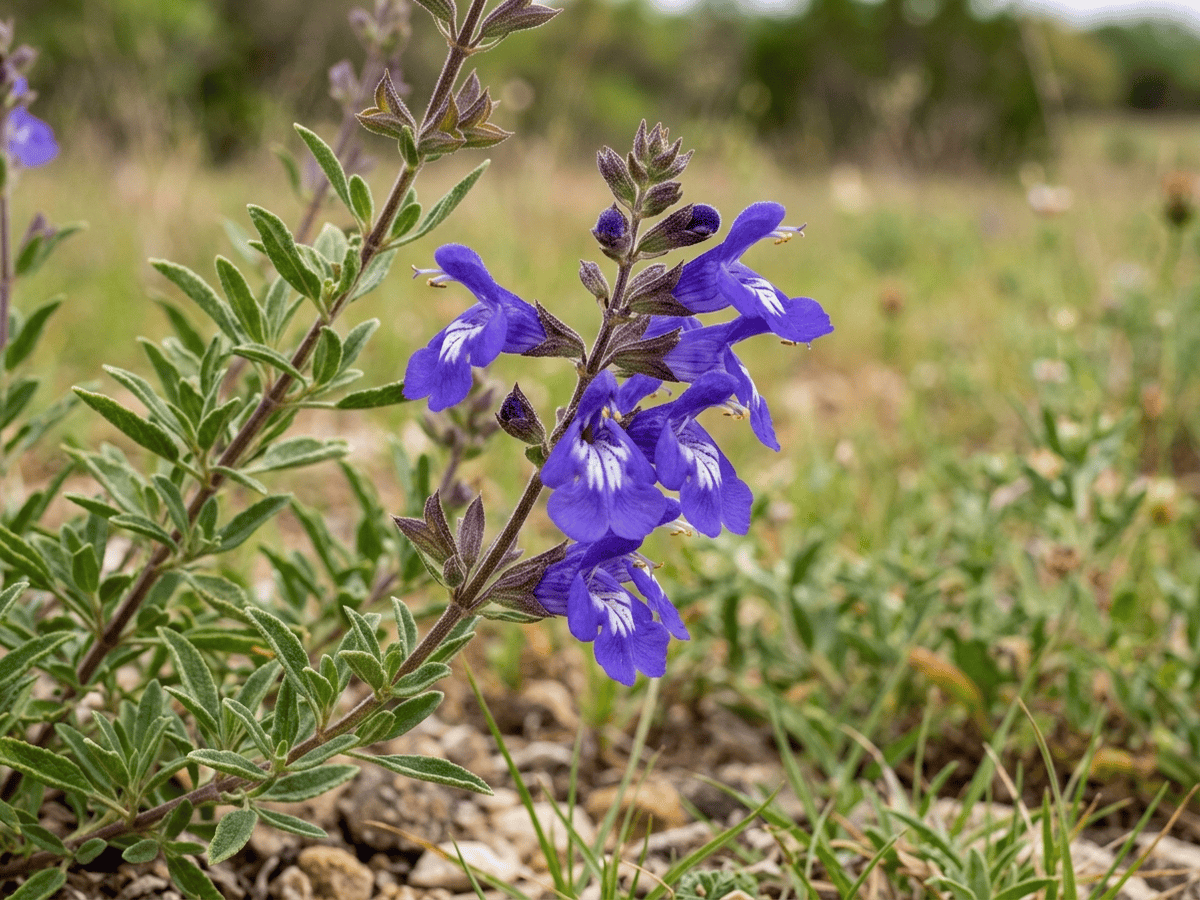
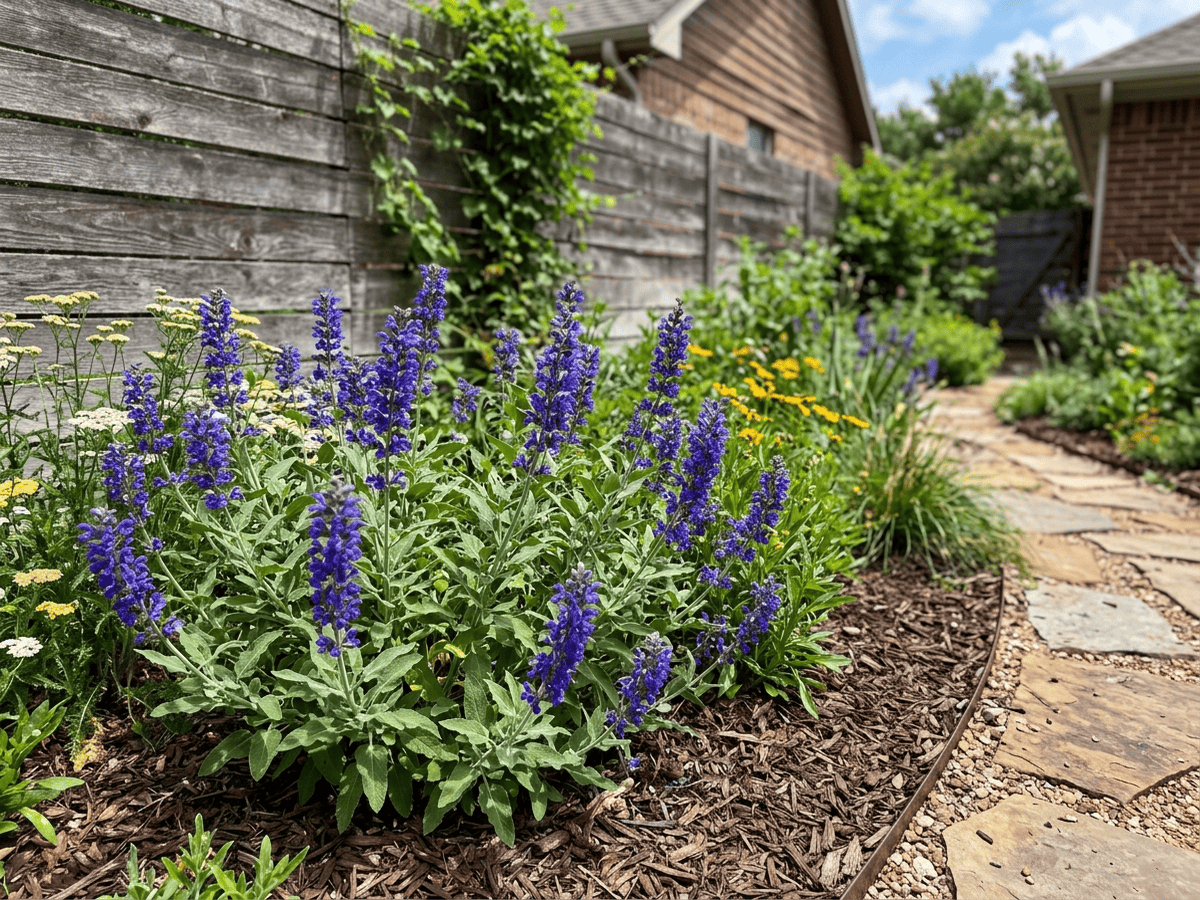
Texas Sage, also called Texas Blue Sage, is a compact perennial native to the limestone hills and prairies of central and west Texas, southern Oklahoma, and northern Mexico. Growing only 12 to 18 inches tall in dense mounded clumps, it produces violet-blue tubular flowers in spring on short upright spikes. A tough native that thrives on rocky alkaline soils, it brings cool blue color to Texas xeric gardens at a time when most plants are still emerging.
- Drought-tolerant
- Deer-resistant
- Compact
- Native
How to care for Texas Sage
Watering
- Springevery 10 days
- Summerevery 7 days
- Fallevery 14 days
- Winterevery 21 days
Soil · Well-draining
- Top dressingPine bark mulch10%
- Main mixPotting soil + perlite 2:170%
- DrainageLECA / gravel20%
Never skip the drainage layer — standing water is the top cause of root rot.
FERTILIZER
- Springevery 60 days
At a Glance
- NativeNorth America
- Height1–1.5 ft (0.3–0.5 m)
- Spread1–1.5 ft (0.3–0.5 m)
- Flower colorBlue, Purple
- Foliage colorGreen
- SoilSandy, Well-drained, Alkaline
- LocationsYard · Balcony
Bloom time
BLOOM CYCLE
Peak bloom
Mar–May
Violet-blue tubular flowers March to May
Fragrance
MODERATE FRAGRANCE
The foliage has a sage-like aromatic foliage scent.
Toxicity
No toxicity has been reported for this plant. Still, it is wise to keep pets from chewing on any houseplant.
Educational information, not medical or veterinary advice. If exposure is suspected, contact a doctor or veterinarian.
DISTRIBUTION


- Native
- North America
History

Salvia texana, the Texas sage or Texas blue sage, is a short-lived perennial native to limestone soils, rocky slopes, and open grasslands of central and west Texas, New Mexico, and adjacent northern Mexico. American botanist George Engelmann and his colleagues catalogued many Texas sages in the mid-19th century, and the species bears the state epithet in recognition of its stronghold there. Growing only 30 to 45 centimeters tall, the plant produces deep blue to blue-violet two-lipped flowers in spring and early summer that attract native bees, hummingbirds, and butterflies.
Because it tolerates shallow alkaline soils, heat, and drought while offering brilliant cool color at a compact scale, it is a favorite of Edwards Plateau and Hill Country native plant gardens and low-water landscape design. A signature spring wildflower of the Texas Hill Country and Edwards Plateau limestone country, Texas Sage has become a treasured native garden plant promoted by the Lady Bird Johnson Wildflower Center and Texas Native Plant Society.
Provides essential spring forage for native solitary bees.
Symbolism & meaning
What It Symbolizes
Texas Sage is Texas blue — a deep cobalt wildflower that punctuates Hill Country spring alongside bluebonnets and Indian paintbrush, an icon of the season most Texans wait all winter for. Its limestone spirit explains its brilliance: it thrives on the alkaline white rock of central Texas, where many other plants give up. It is the small native sage that turns a roadside into a state-fair painting every April.
- Texas blue — icon of Hill Country spring wildflower season
- Limestone spirit — thrives on the alkaline rock of central Texas
Where the Name Comes From
'Salvia' comes from Latin 'salvere' meaning to be well; 'texana' refers to its Texas range.
Uses & Fun Facts
- Compact violet-blue Texas native for limestone Hill Country gardens
- Tubular spring flowers attract native bees and hummingbirds
Related plants
More Salvia plants
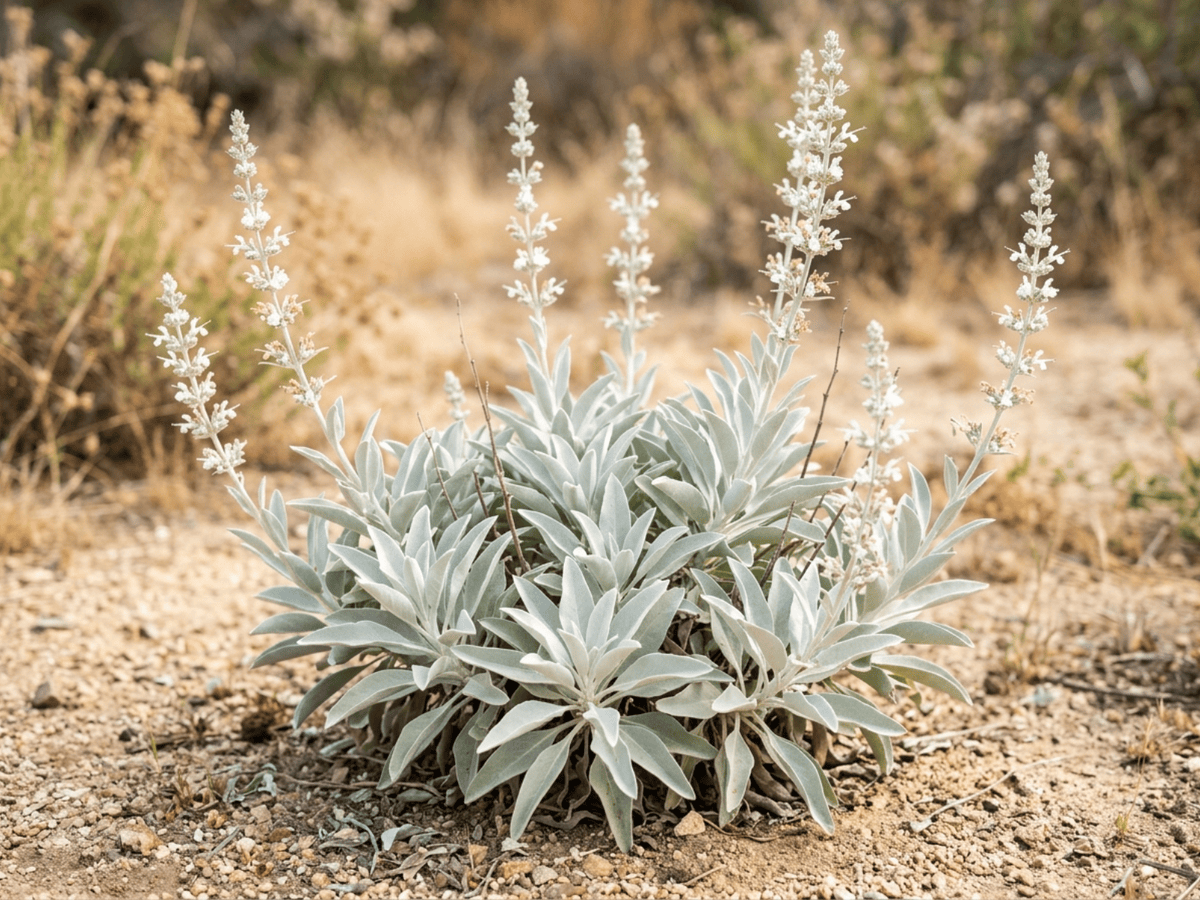 White SageSalvia apiana
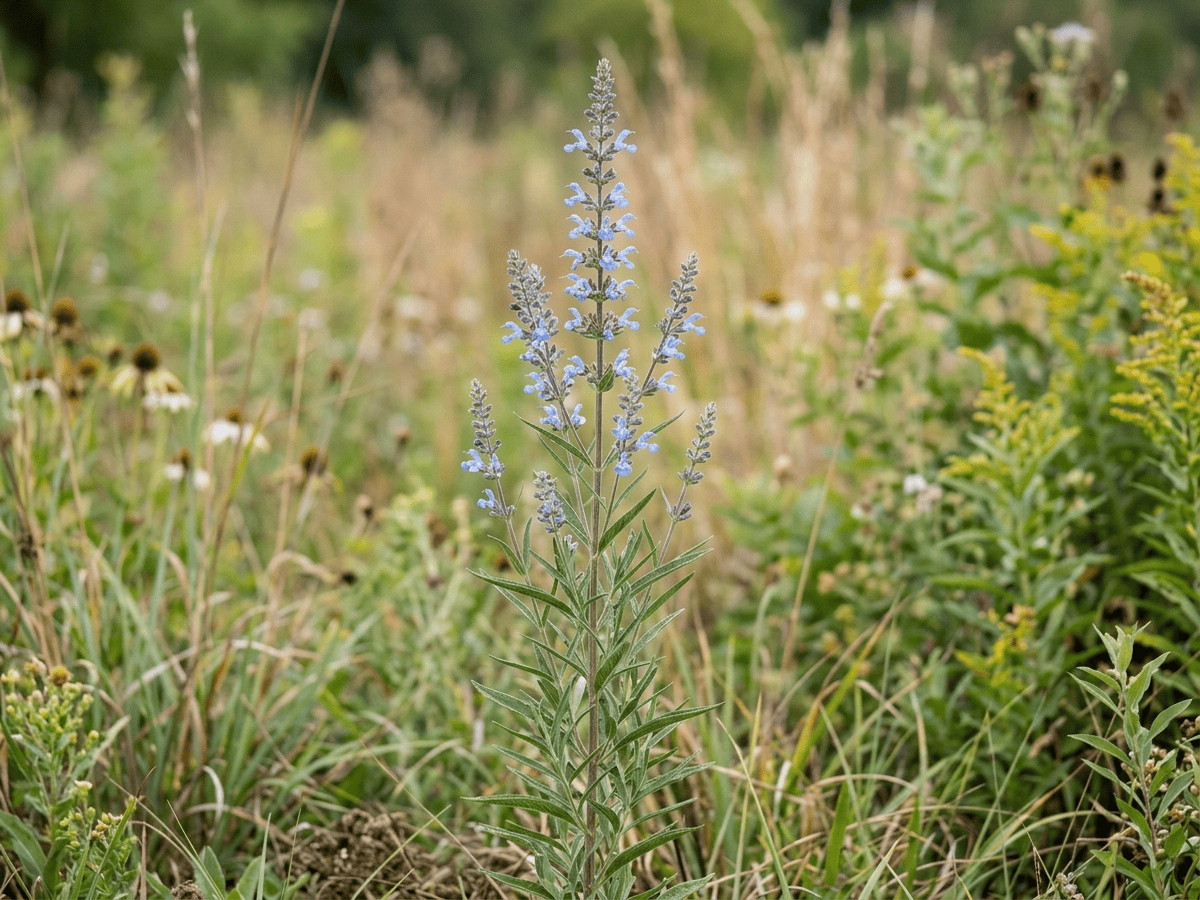 Giant Blue SageSalvia azurea
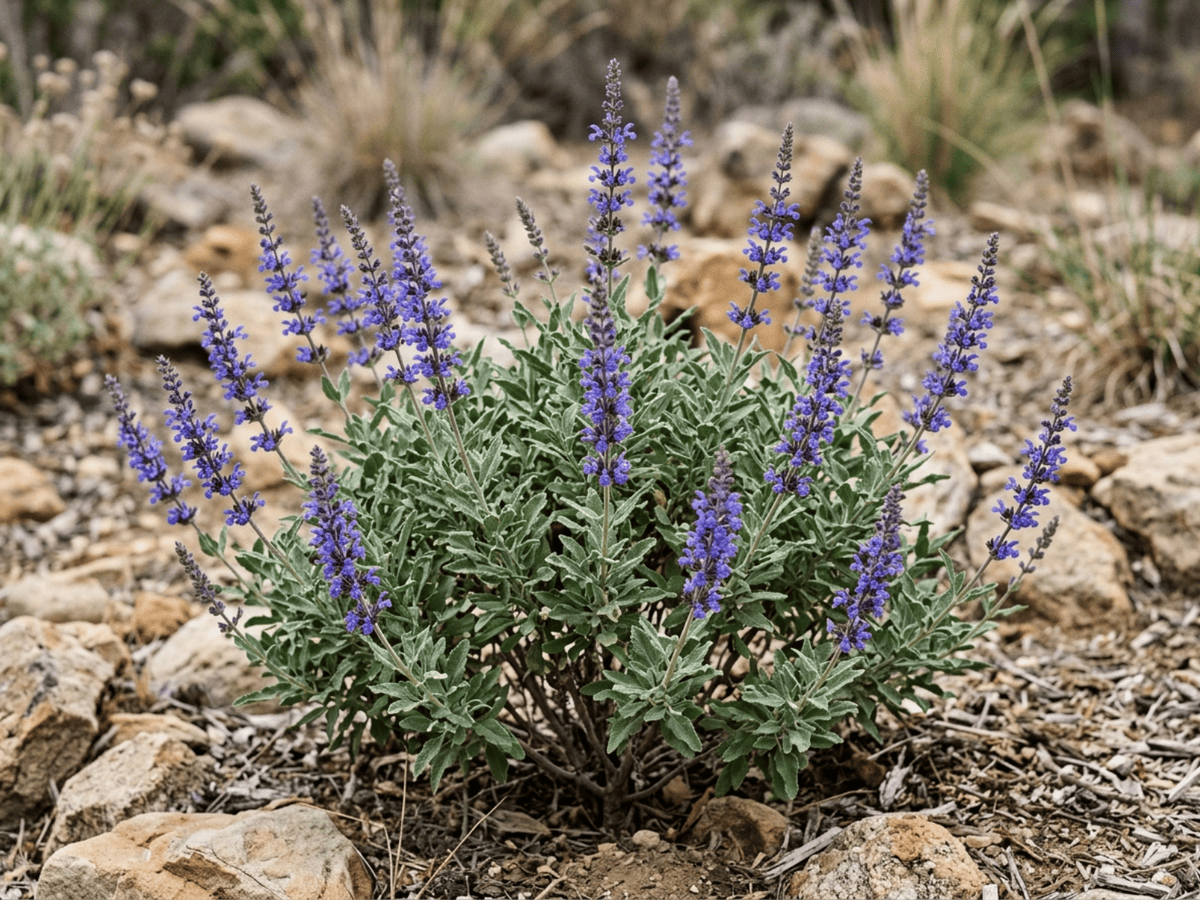 Cleveland SageSalvia clevelandii
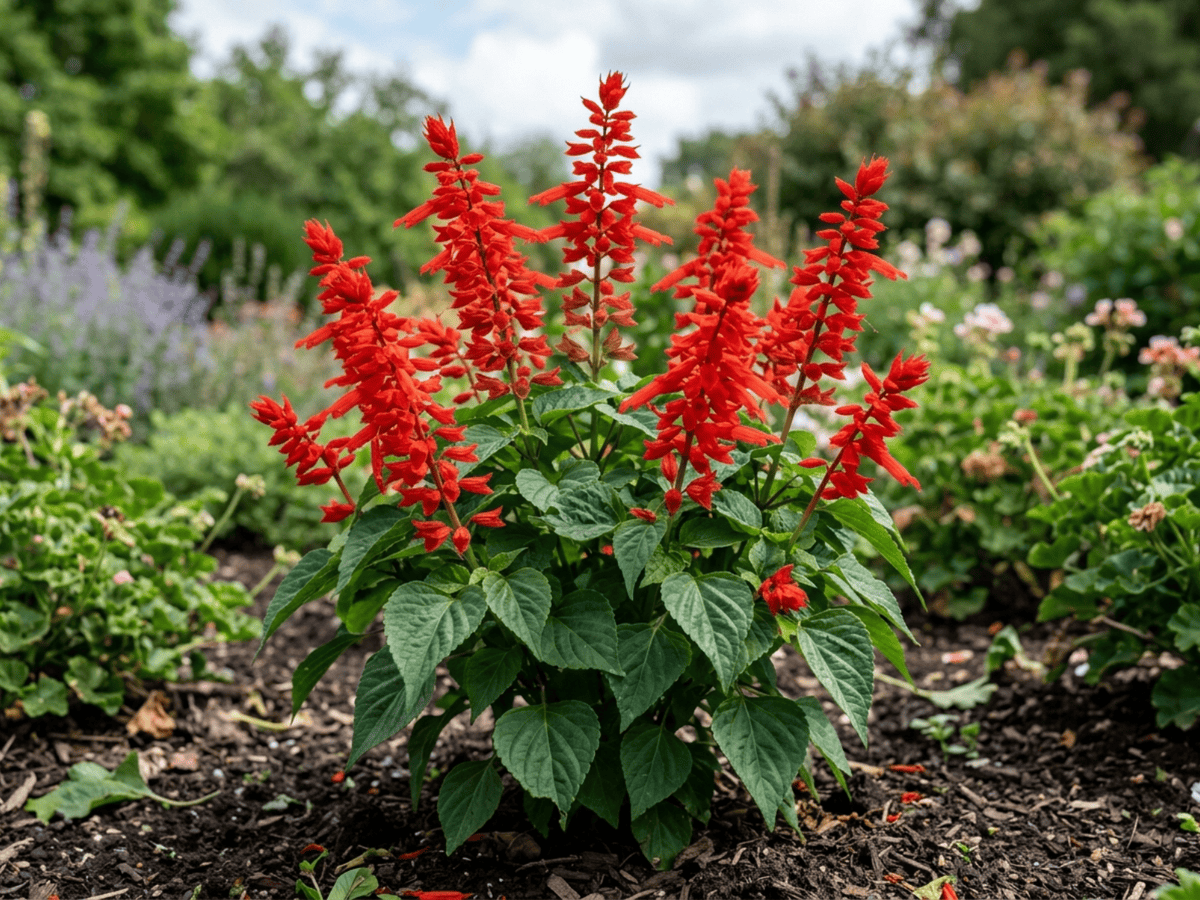 Tropical SageSalvia coccinea
Plants with similar care
 Chinese AbeliaAbelia chinensis
 Fragrant AbeliaAbelia mosanensis
 Large-Flowered AbeliaAbelia uniflora
 Glossy AbeliaAbelia x grandiflora
Frequently asked questions
How often should I water Texas Sage?
In summer, water about every 7 days; in winter, about every 21 days. Adjust for heat, pot size and drainage.
How much light does Texas Sage need?
Full sun: 6+ hrs direct. Watch the leaves — scorching or stretching means the light needs adjusting.
Is Texas Sage toxic to cats or dogs?
No toxicity has been reported for this plant. Still, it is wise to keep pets from chewing on any houseplant. Educational information, not medical or veterinary advice. If exposure is suspected, contact a doctor or veterinarian.
Is Texas Sage easy to grow?
Yes — it is considered an easy, beginner-friendly plant.
When does Texas Sage bloom?
It typically blooms Mar–May in the Northern Hemisphere.
YardMate
Identify any plant in seconds
Snap a photo — YardMate names the plant, diagnoses problems, and reminds you when to water.
Download on the App Store