 YardMate
White Stonecrop
Sedum album
Easy · Beginner friendlyAbout White Stonecrop
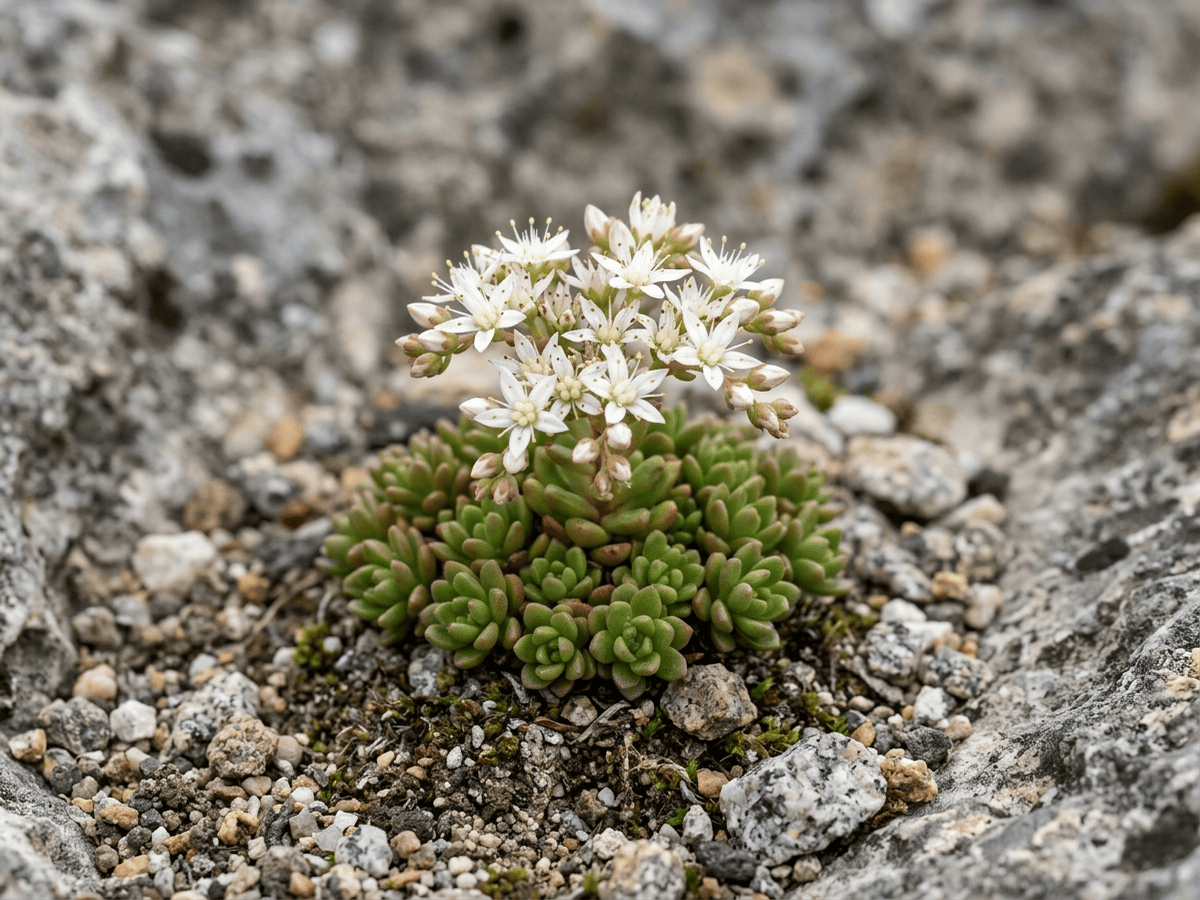
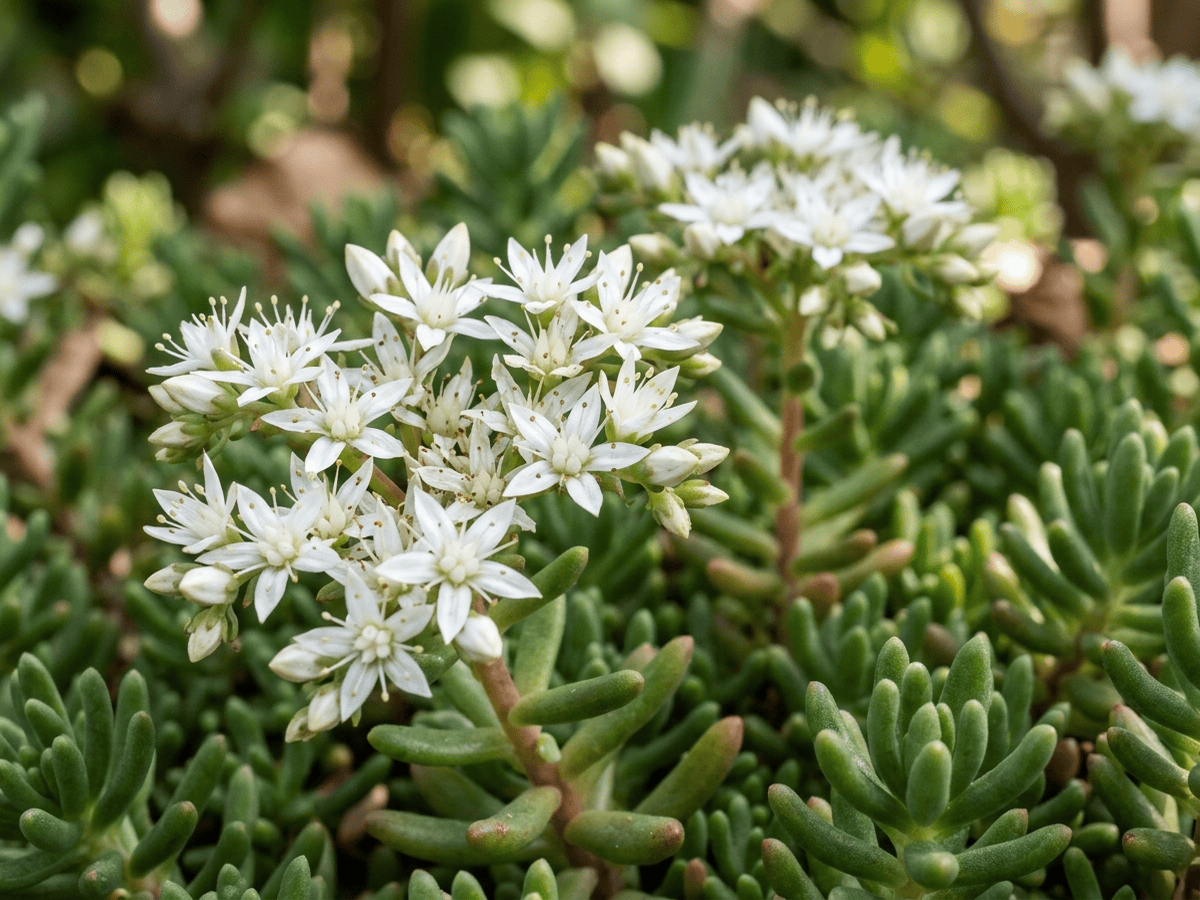
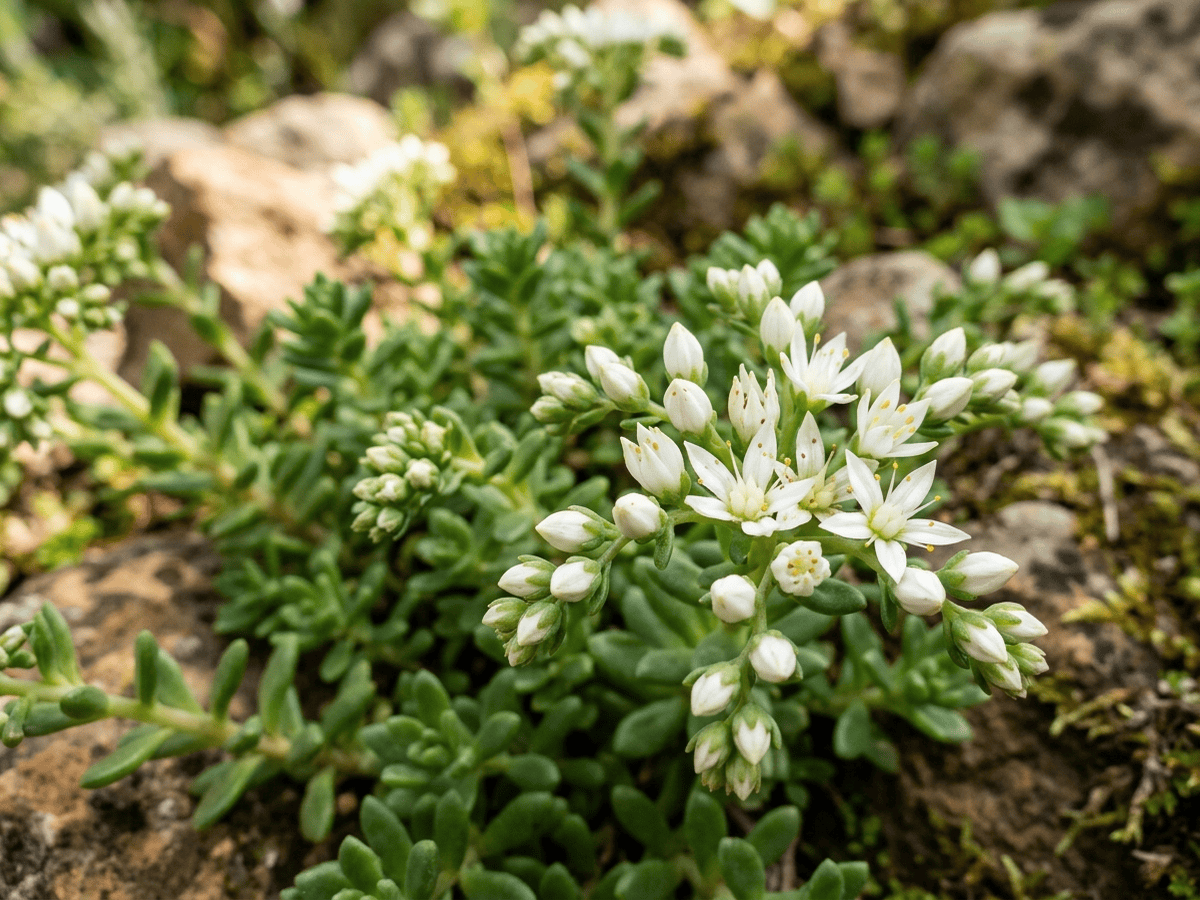
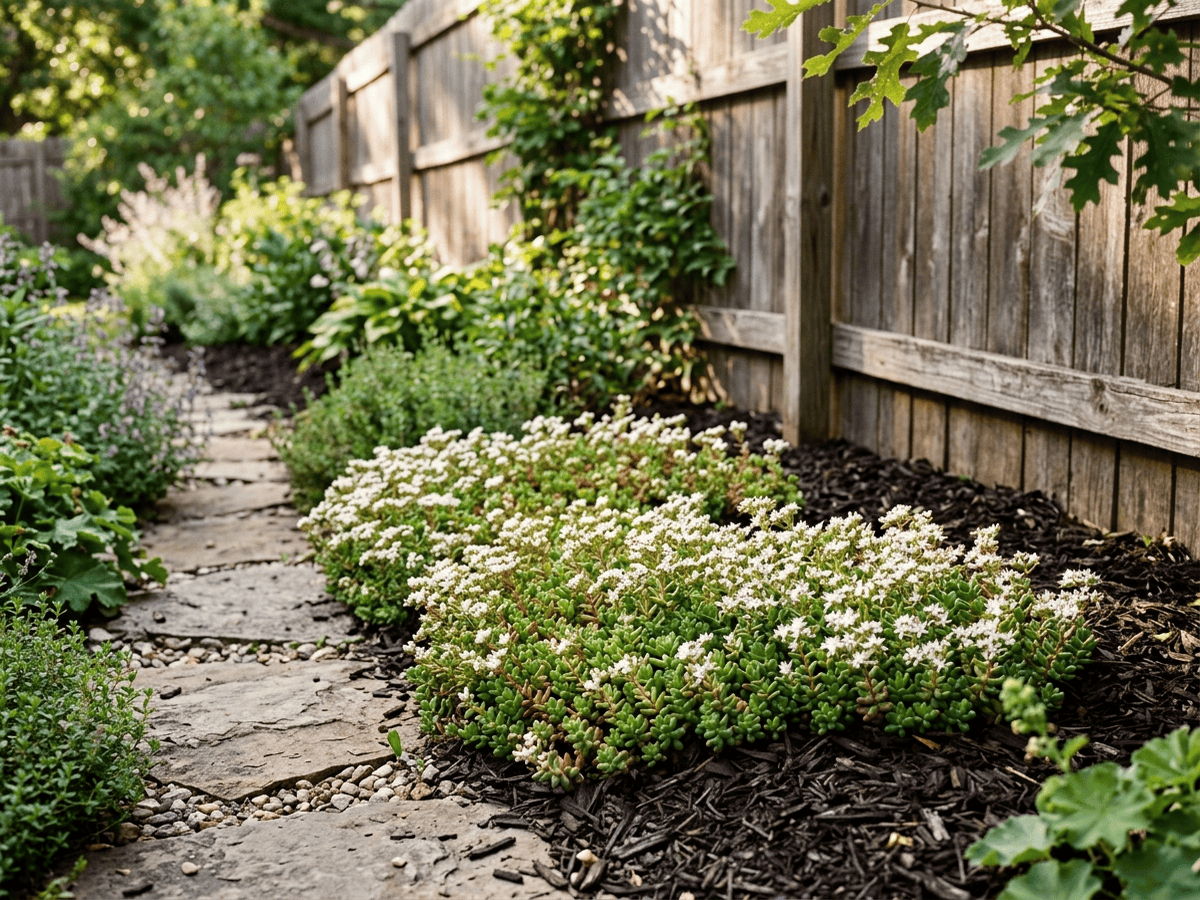
Sedum album, known as white stonecrop, is a hardy evergreen succulent native to Europe, western Asia, and North Africa. It forms tight mats of small cylindrical leaves that are typically green but blush red or bronze under sun stress or cold temperatures. In midsummer it produces clusters of delicate white star-shaped flowers on short upright stems. This species is one of the most widely used sedums for green roofs across Europe, valued for its exceptional drought tolerance and ability to survive on just a few centimeters of substrate. It thrives in full sun and poor, well-drained soil, and actually performs worse in rich, moist conditions where it becomes leggy and prone to rot. The plant spreads steadily through creeping stems and self-sowing, filling gaps in paving, colonizing walls, and softening rock gardens. It is remarkably cold-hardy, surviving temperatures well below freezing. White stonecrop requires almost no maintenance once established, making it a cornerstone of low-input sustainable landscaping.
- Drought-tolerant
- Cold-hardy
- Groundcover
- Evergreen
How to care for White Stonecrop
Watering
- Springevery 14 days
- Summerevery 10 days
- Fallevery 21 days
- Winterevery 30 days
Soil · Fast-draining
- Main mixSand + pumice + soil 1:1:150%
- DrainagePumice / gravel50%
Keep grit at half the mix or more — this soil is meant to dry out fast.
FERTILIZER
- Springevery 60 days
At a Glance
- NativeEurope, Africa, Western Asia
- Height0.5 ft (0.2 m)
- Spread1–2 ft (0.3–0.6 m)
- Flower colorWhite, Pink
- Foliage colorGreen, Red, Bronze
- SoilSandy, Well-drained
- LocationsYard
Bloom time
BLOOM CYCLE
Peak bloom
Jun–Aug
White star-shaped flower clusters in midsummer
Fragrance
NO FRAGRANCE
No notable fragrance.
Toxicity
Pets Safe
None reported
Not reported
EXPOSURE No exposure route is reported.
EFFECT Historically eaten in salads and as famine food and no significant toxicity.
NOTE No human toxicity is reported in this catalog; avoid eating ornamental plants unless confirmed edible.
Safe
EXPOSURE No exposure route is reported.
EFFECT Not listed as toxic by ASPCA.
NOTE Listed as non-toxic for dogs; avoid eating ornamental plants unless confirmed edible.
Safe
EXPOSURE No exposure route is reported.
EFFECT Not listed as toxic by ASPCA.
NOTE Listed as non-toxic for cats; avoid eating ornamental plants unless confirmed edible.
Educational information, not medical or veterinary advice. If exposure is suspected, contact a doctor or veterinarian.
DISTRIBUTION


- Native
- Introduced
- Europe
- Africa
- Western Asia
History

Sedum album is native to Europe, North Africa, and western Asia, growing on rock outcrops, old walls, and roofs. It has colonized traditional European sod, turf, and tile roofs for centuries and is the paradigmatic plant of the medieval to modern "grünes Dach" (green roof) tradition. The modern engineered green-roof industry emerged from late 20th-century German research — Reinhard Bornkamm's work in Berlin during the 1970s and 1980s and the subsequent FLL (Forschungsgesellschaft Landschaftsentwicklung Landschaftsbau) guidelines published from 1990 — standardized substrate mixes, drainage, and a sedum-based palette in which S. album is a central species alongside S. acre, S. spurium, and S. sexangulare.
It is now used on hundreds of thousands of extensive (thin-substrate) green roofs worldwide, including landmark projects like the Ford Rouge factory roof in Michigan. In traditional European herbalism, its crushed leaves were applied to minor burns and insect stings as a cooling poultice.
The species played a key role in modern green roof research in Germany during the 1970s, where scientists demonstrated its ability to survive on minimal substrate, leading to widespread adoption in sustainable urban architecture across Europe.
Symbolism & meaning
What It Symbolizes
White Stonecrop expresses purity through pristine white flowers held above small succulent leaves, each bloom a small symbol of innocence and clarity. Yet behind that delicate face lies remarkable endurance — the plant survives extreme cold, drought, and hard rocky soils where almost nothing else holds on. This is the sedum of steadfast perseverance, beauty and toughness held quietly in the same low, evergreen mat.
- Purity — Its pristine white flowers symbolize innocence and clarity
- Endurance — Survives extreme cold and drought, representing steadfast perseverance
Where the Name Comes From
Sedum from Latin 'sedere' (to sit), as it sits atop rocks. 'Album' is Latin for white, referring to its white flowers.
Uses & Fun Facts
- White starry bloom mats spill over walls, troughs, and dry edging
- White Stonecrop spreads as low groundcover on banks and slopes
Related plants
More Sedum plants
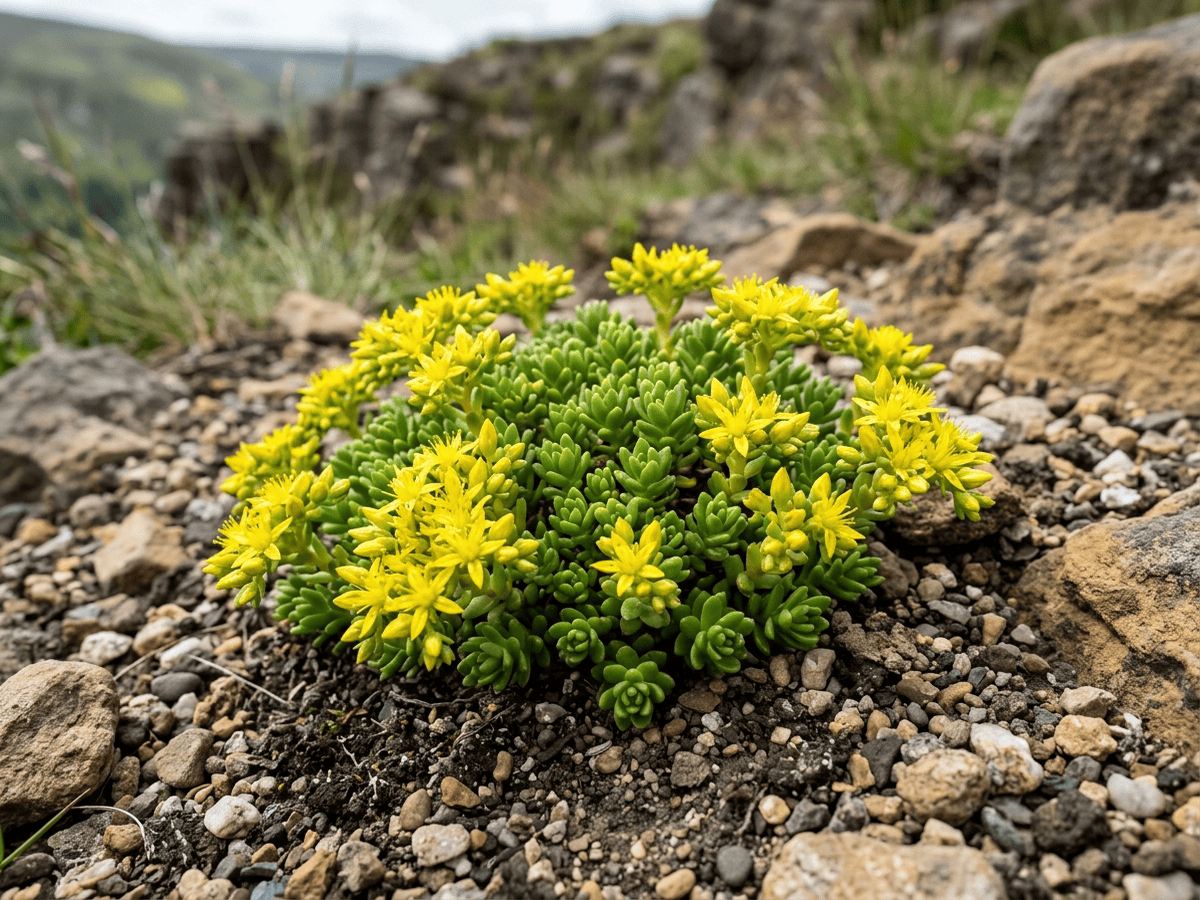 Biting StonecropSedum acre
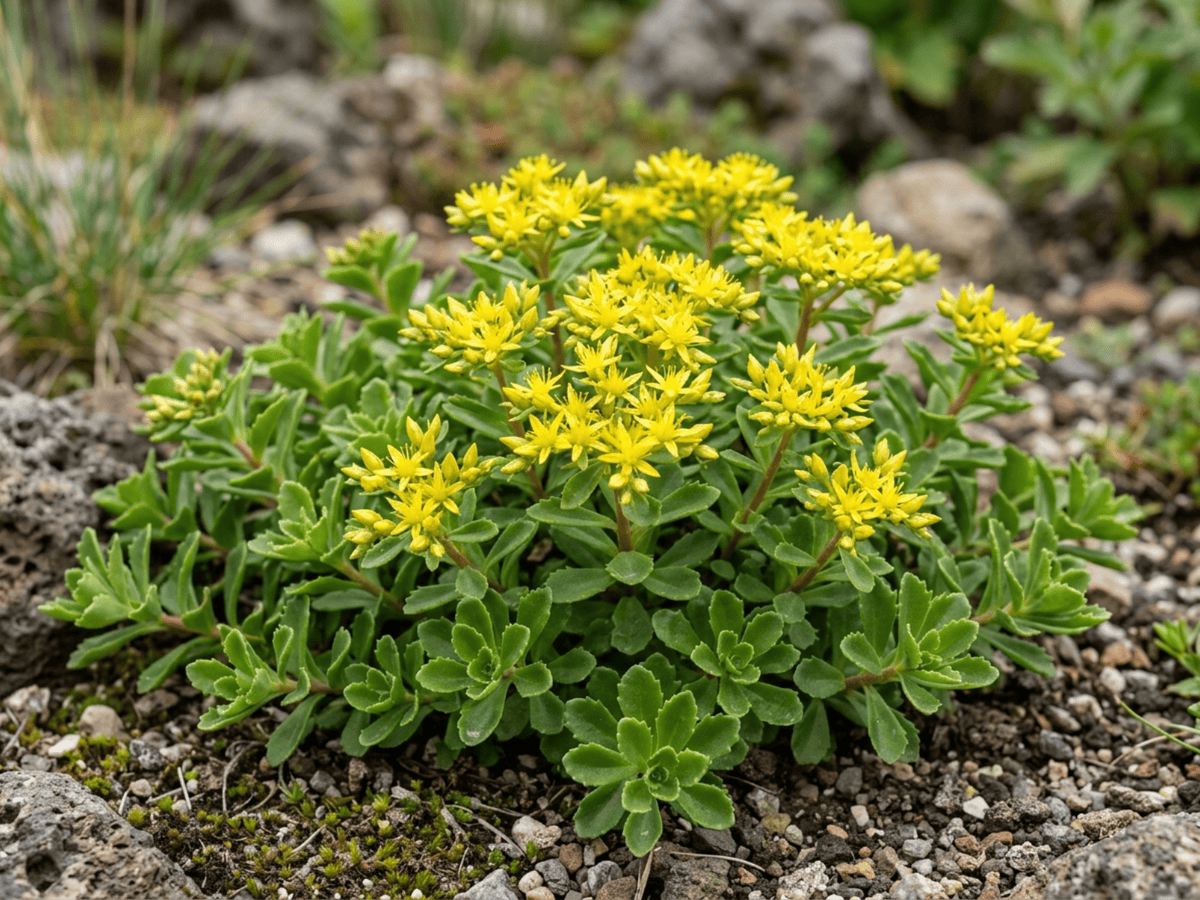 Aizoon StonecropSedum kamtschaticum
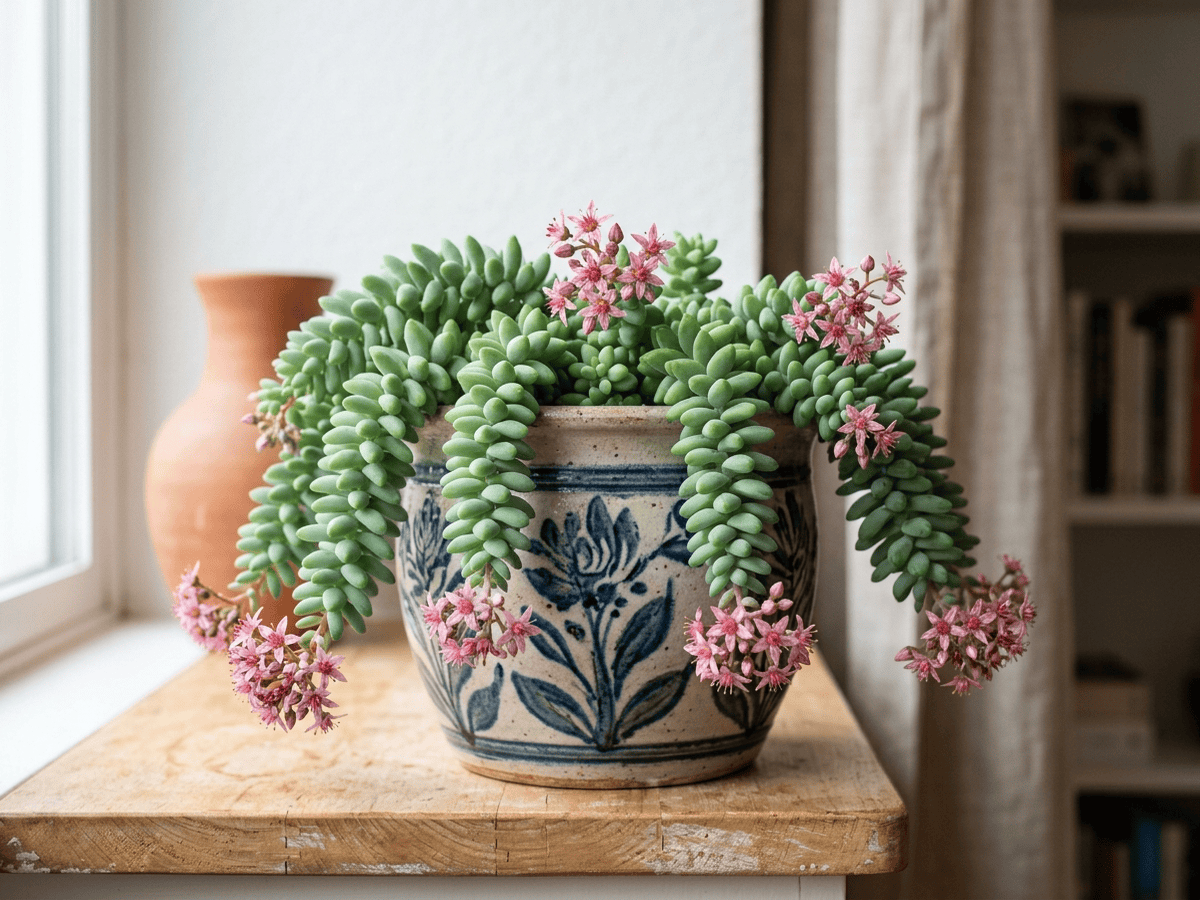 Burro's-TailSedum morganianum
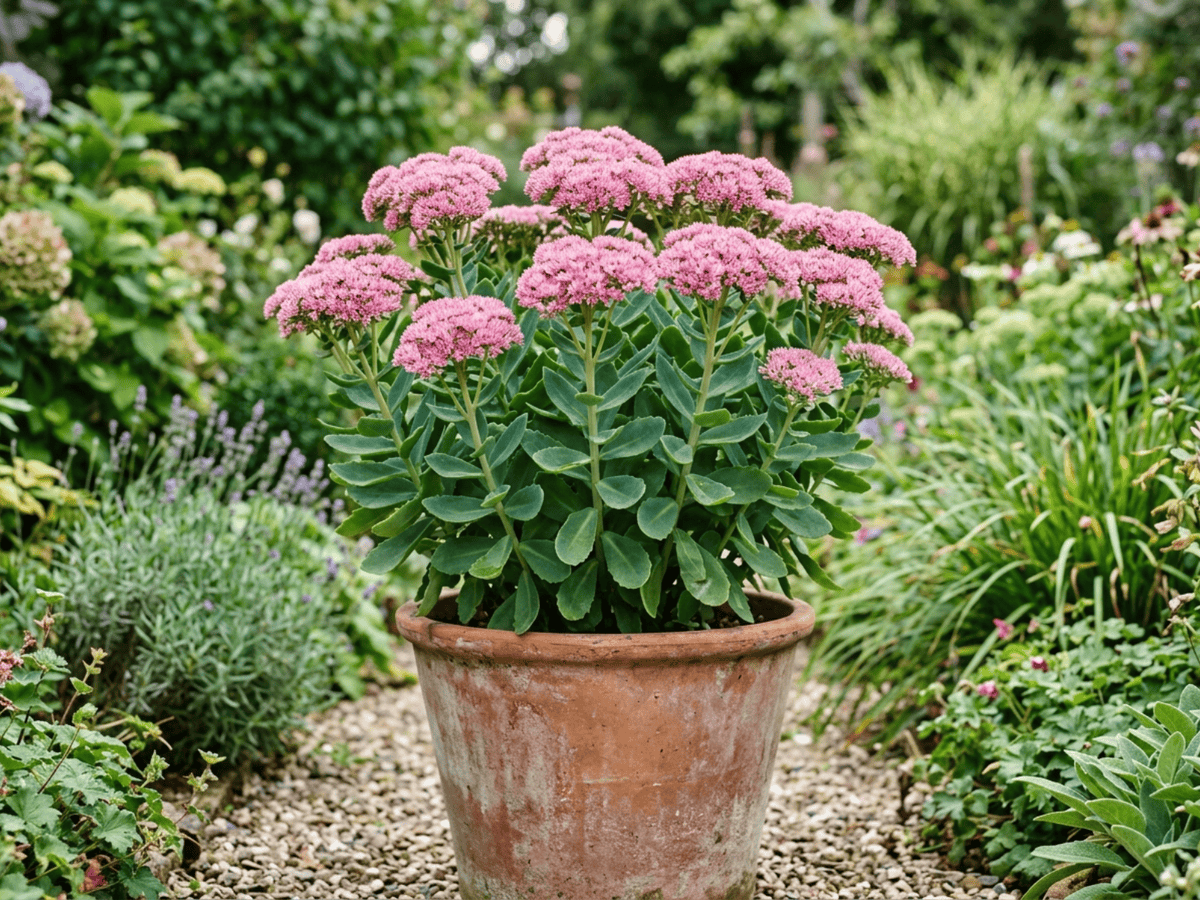 Butterfly StonecropSedum spectabile
Plants with similar care
 Chinese AbeliaAbelia chinensis
 Fragrant AbeliaAbelia mosanensis
 Large-Flowered AbeliaAbelia uniflora
 Glossy AbeliaAbelia x grandiflora
Frequently asked questions
How often should I water White Stonecrop?
In summer, water about every 10 days; in winter, about every 30 days. Adjust for heat, pot size and drainage.
How much light does White Stonecrop need?
Full sun: 6+ hrs direct. Watch the leaves — scorching or stretching means the light needs adjusting.
Is White Stonecrop toxic to cats or dogs?
Pets Safe (Dogs Safe · Cats Safe) Educational information, not medical or veterinary advice. If exposure is suspected, contact a doctor or veterinarian.
Is White Stonecrop easy to grow?
Yes — it is considered an easy, beginner-friendly plant.
When does White Stonecrop bloom?
It typically blooms Jun–Aug in the Northern Hemisphere.
YardMate
Identify any plant in seconds
Snap a photo — YardMate names the plant, diagnoses problems, and reminds you when to water.
Download on the App Store