 YardMate
Biting Stonecrop
Sedum acre
Easy · Beginner friendlyAbout Biting Stonecrop
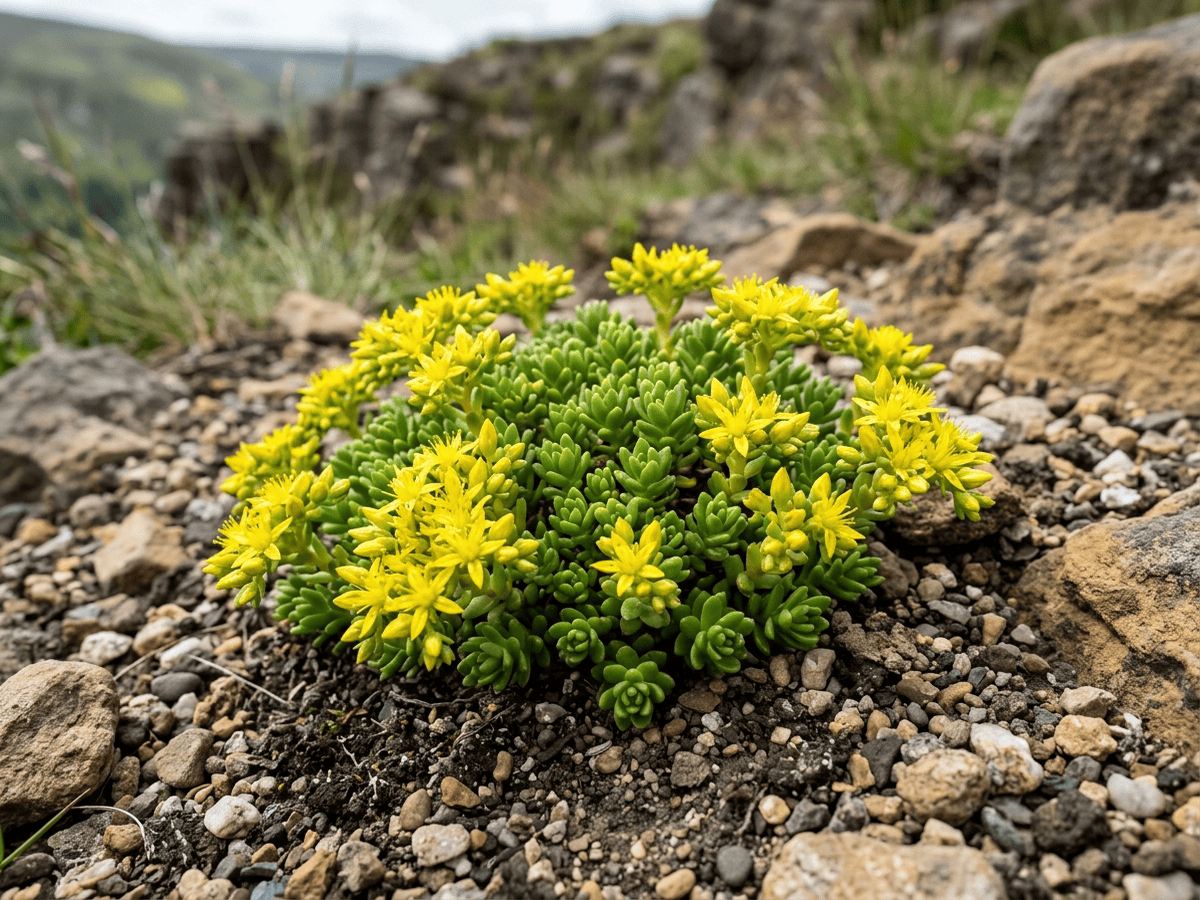
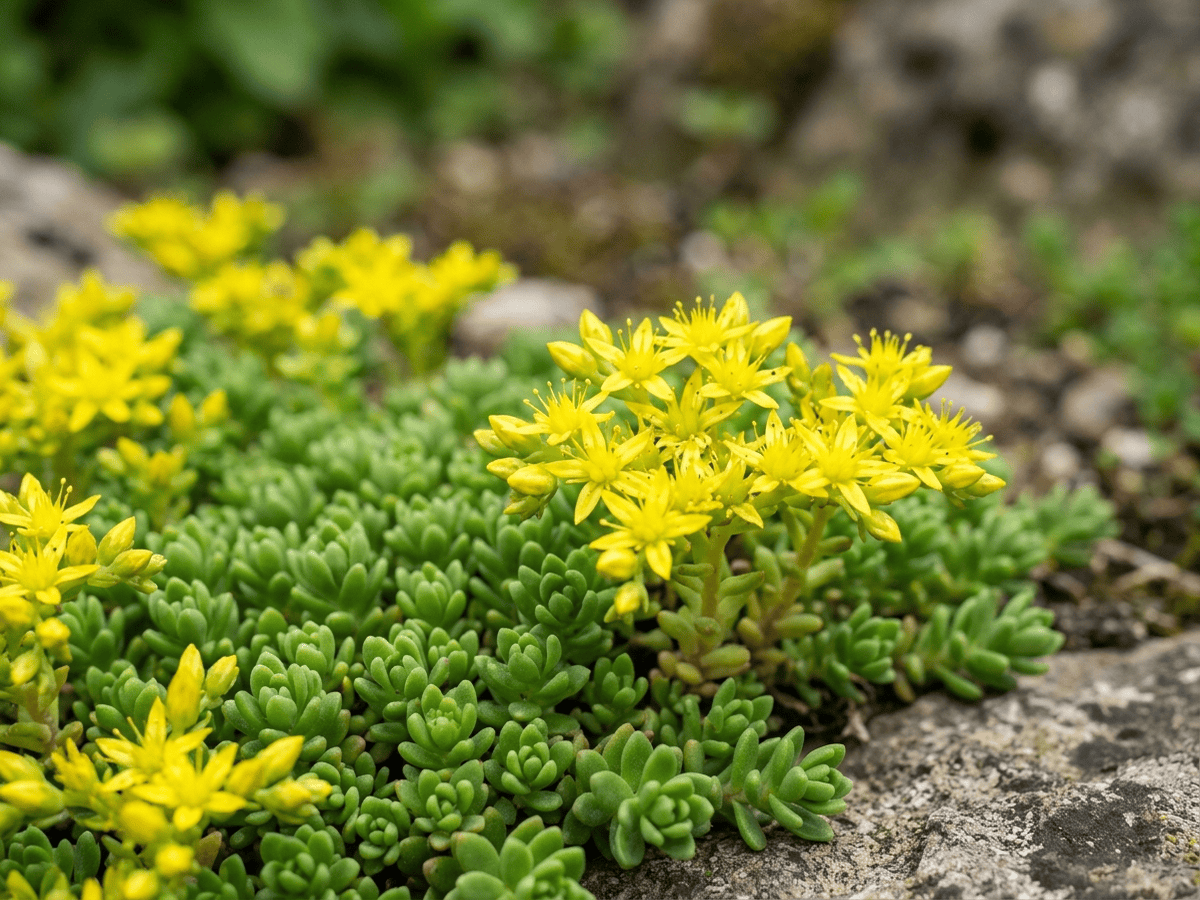
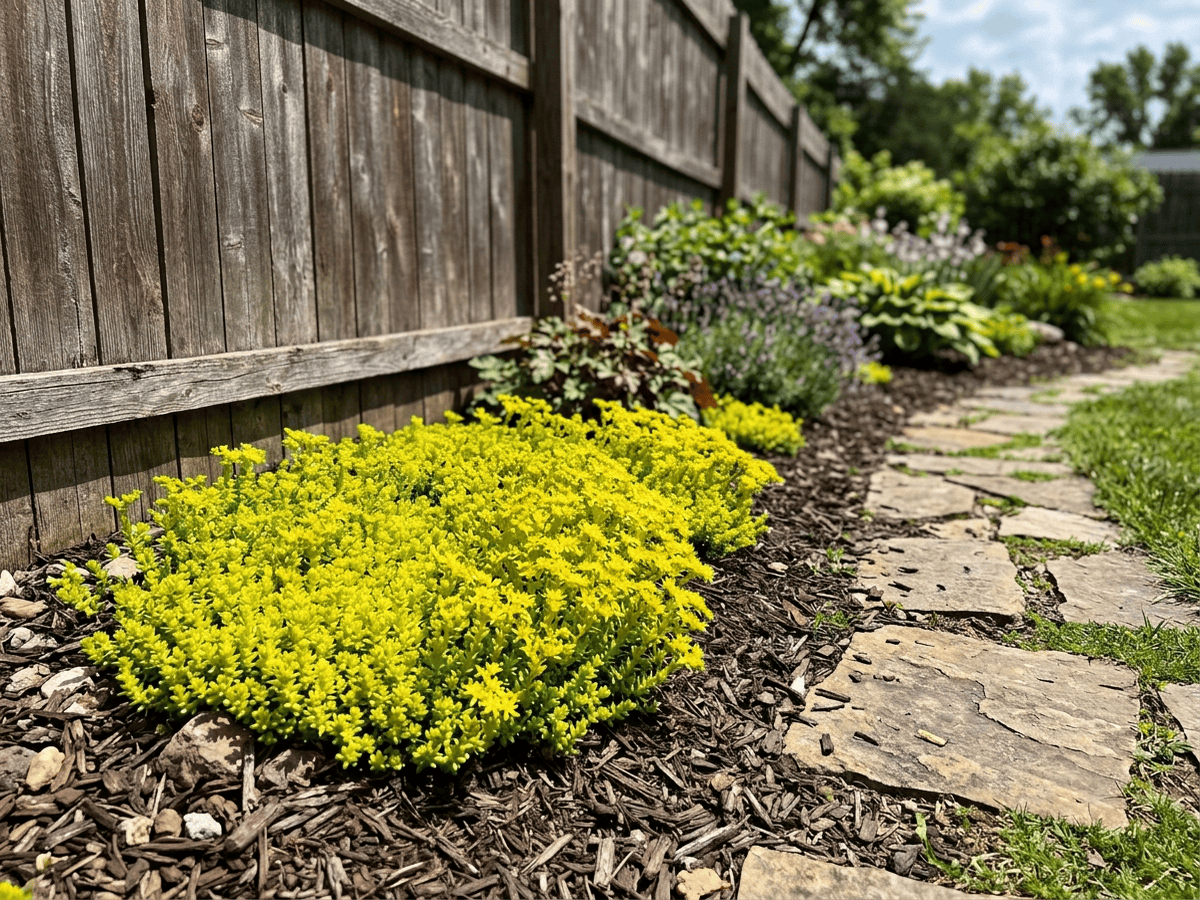
Sedum acre, commonly called goldmoss stonecrop, is a low-growing evergreen perennial succulent native to Europe, North Africa, and western Asia. It forms dense, creeping mats of tiny bright green leaves that turn golden when stressed by drought or cold. In early summer it erupts with masses of star-shaped yellow flowers that attract bees and butterflies. The plant thrives in thin, rocky, nutrient-poor soil where most other species cannot survive, making it ideal for green roofs, stone walls, and gravel gardens. It spreads rapidly through stem fragments — even a small piece dropped on soil can root and establish. Historically, it was used in folk medicine as a poultice, though its acrid peppery sap can irritate skin and mucous membranes. Despite its tiny stature, rarely exceeding 5 centimeters in height, it is remarkably tough, tolerating extreme heat, frost, and prolonged drought. Its ability to colonize bare ground quickly makes it a popular choice for erosion control and xeriscaping.
- Drought-tolerant
- Groundcover
- Evergreen
- Pollinator-friendly
How to care for Biting Stonecrop
Watering
- Springevery 14 days
- Summerevery 10 days
- Fallevery 21 days
- Winterevery 30 days
Soil · Fast-draining
- Main mixSand + pumice + soil 1:1:150%
- DrainagePumice / gravel50%
Keep grit at half the mix or more — this soil is meant to dry out fast.
FERTILIZER
- Springevery 60 days
At a Glance
- NativeEurope, Africa, Western Asia
- Height0.3–0.5 ft (0.1–0.2 m)
- Spread1–2 ft (0.3–0.6 m)
- Flower colorYellow
- Foliage colorGreen
- SoilSandy, Well-drained
- LocationsYard
Bloom time
BLOOM CYCLE
Peak bloom
May–Aug
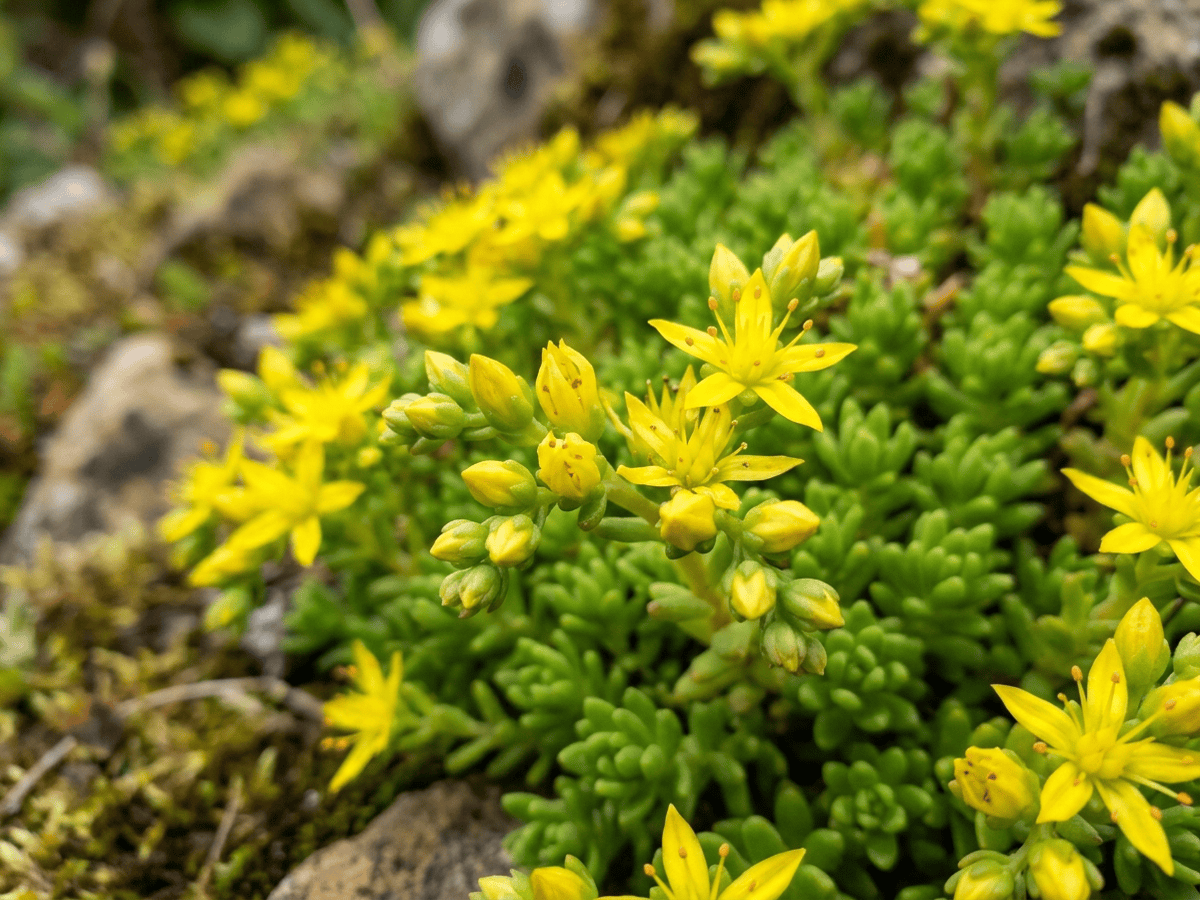
Bright yellow star-shaped flowers in early summer
Fragrance
NO FRAGRANCE
No notable fragrance.
Toxicity
Humans Slight · Pets Slight
piperidine alkaloids (sedamine, sedridine)
Slight
- Leaf
- Ingestion
EXPOSURE Eating leaves.
EFFECT Burning mouth, nausea, vomiting if consumed in quantity and skin contact can cause dermatitis.
NOTE Mildly toxic in quantity despite belonging to the broadly non-toxic Sedum genus; acrid taste deters ingestion.
Slight
- Leaf
- Ingestion
EXPOSURE Eating leaves.
EFFECT Mild GI upset and rarely consumed due to acrid taste.
NOTE Mildly toxic in quantity despite belonging to the broadly non-toxic Sedum genus; acrid taste deters ingestion.
Slight
- Leaf
- Ingestion
EXPOSURE Eating leaves.
EFFECT Mild GI upset.
NOTE Mildly toxic in quantity despite belonging to the broadly non-toxic Sedum genus; acrid taste deters ingestion.
Educational information, not medical or veterinary advice. If exposure is suspected, contact a doctor or veterinarian.
DISTRIBUTION


- Native
- Introduced
- Europe
- Africa
- Western Asia
History

Sedum acre is native across Europe, North Africa, and western Asia. The species name acre means "sharp" or "acrid," referring to the burning pungency of the small yellow-green leaves if chewed; one English common name is "wall-pepper." In medieval folk medicine it was applied to burns, ulcers, and skin conditions, and described by Nicholas Culpeper in 1653.
It was among the "sallet" herbs historically used as a famine-time food, though it contains piperidine alkaloids (sedamine, sedridine, sedinine) that make it toxic in quantity. It has escaped cultivation across North America, Australia, New Zealand, and most temperate regions, where it is a common roof and wall colonist as well as an intentional groundcover. It is a foundational species on traditional sod and living roofs in Scandinavia and the British Isles.
Sedum acre has been used in European folk medicine since the Middle Ages as a treatment for warts and skin ailments, applied as a fresh leaf poultice. In Scandinavian tradition, it was planted on sod roofs to protect against lightning — a practice that evolved into the modern green roof movement. The plant's common name 'stonecrop' reflects its ability to grow on bare stone. Roman naturalist Pliny the Elder recorded its use as a wound herb in the first century AD.
Symbolism & meaning
What It Symbolizes
Biting stonecrop is resilience pressed into a green mat — thriving on bare gravel rooftops, in the cracks of stone walls, on land where almost nothing else can find purchase. Humility comes with the territory: it grows low, stays small, asks for nothing. Together those traits make it the small philosopher of the green-roof movement, a plant that quietly proves how little is actually required to live.
- Resilience — Thrives in the harshest conditions, symbolizing the ability to endure and adapt
- Humility — Its low-growing habit represents modesty and quiet strength
Where the Name Comes From
The name Biting Stonecrop describes its habit of growing among stones. Sedum comes from Latin 'sedere' (to sit), describing how it sits on rocks and walls. 'Acre' means sharp or pungent, referring to its acrid-tasting sap.
Uses & Fun Facts
- Bright yellow star flowers attract bees and small native pollinators
- Mat-forming succulent thrives on green roofs and rocky walls
Related plants
More Sedum plants
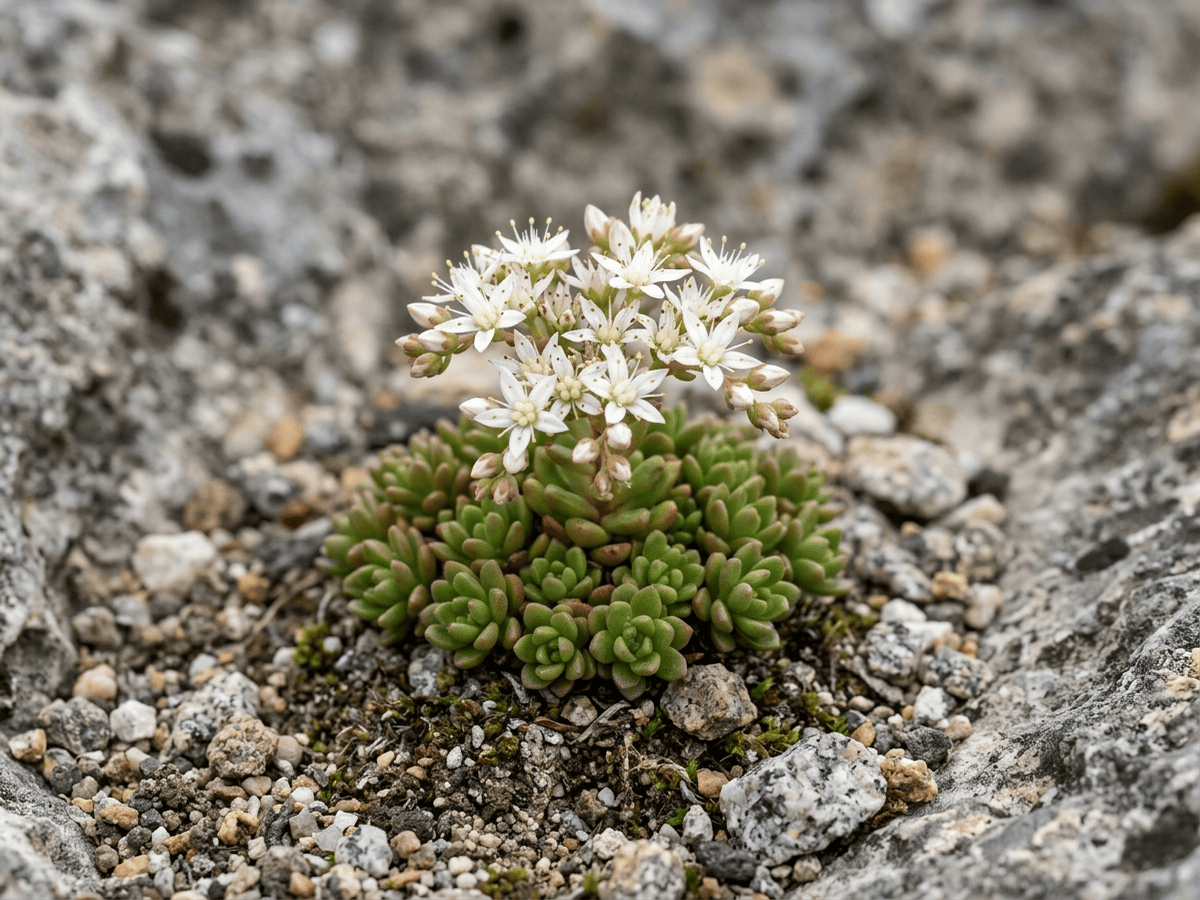 White StonecropSedum album
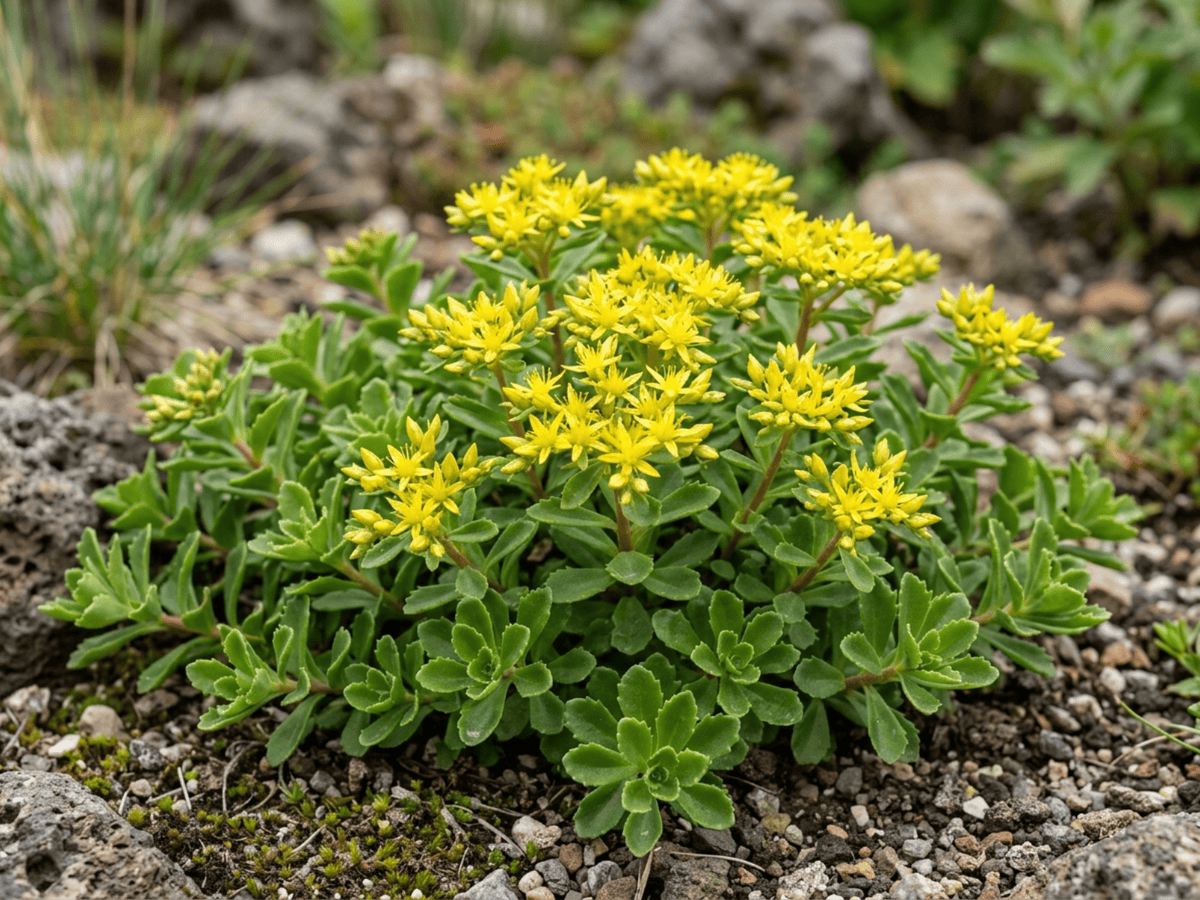 Aizoon StonecropSedum kamtschaticum
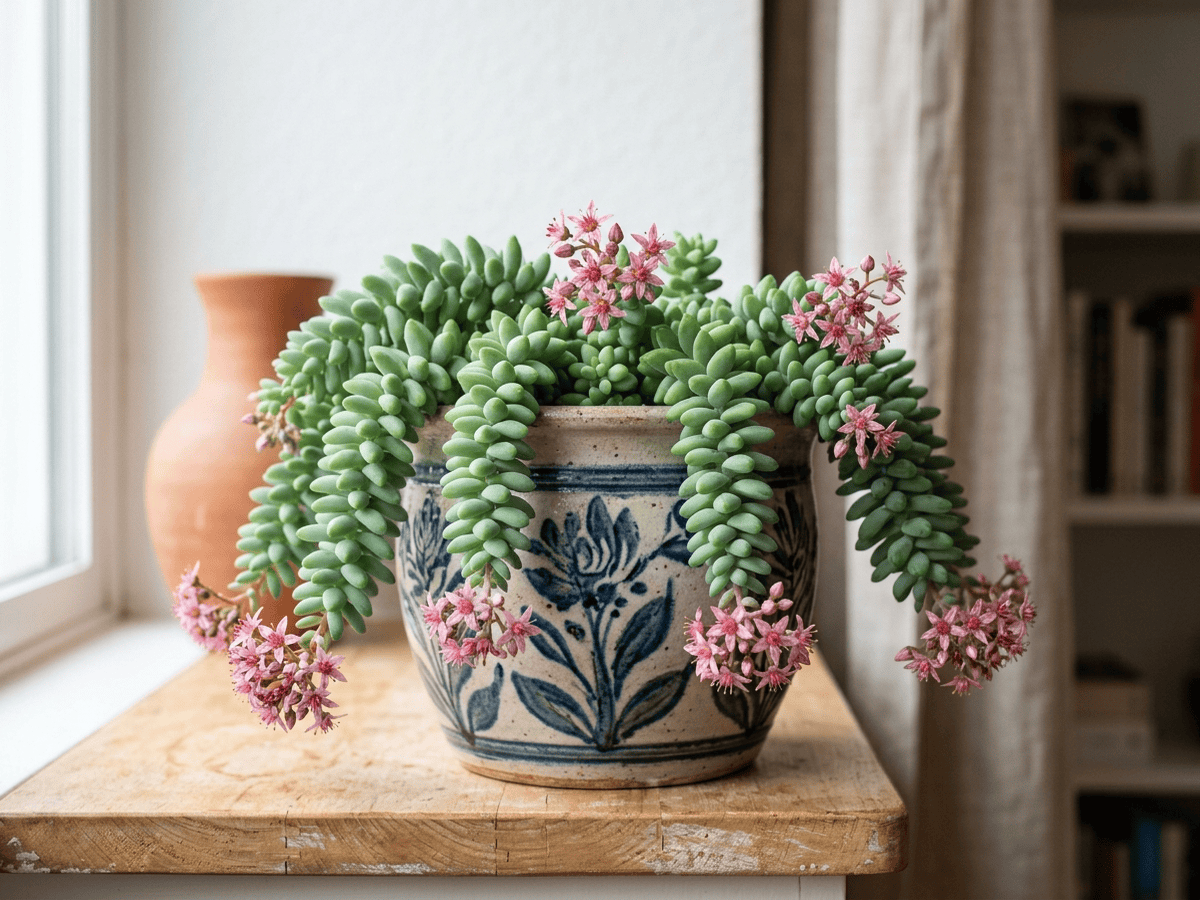 Burro's-TailSedum morganianum
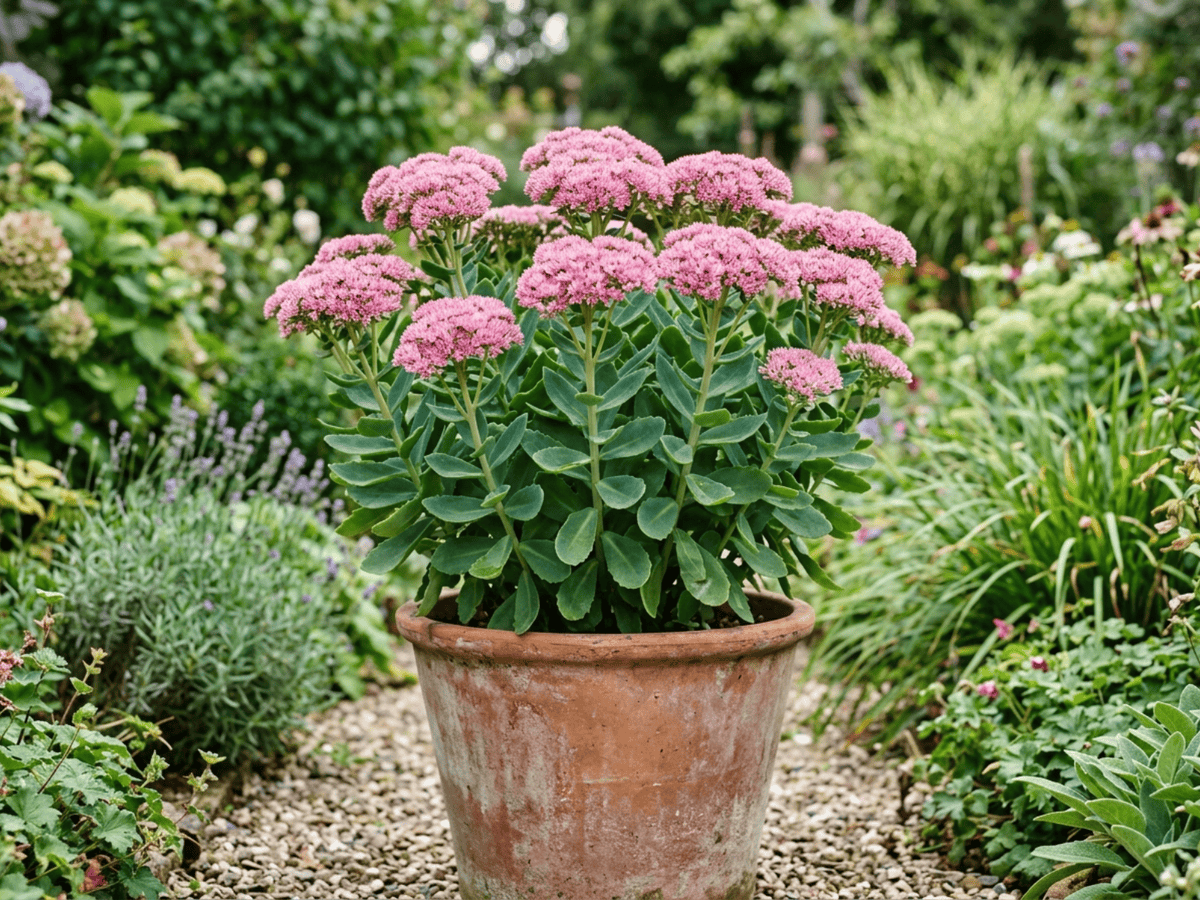 Butterfly StonecropSedum spectabile
Plants with similar care
 Chinese AbeliaAbelia chinensis
 Fragrant AbeliaAbelia mosanensis
 Large-Flowered AbeliaAbelia uniflora
 Glossy AbeliaAbelia x grandiflora
Frequently asked questions
How often should I water Biting Stonecrop?
In summer, water about every 10 days; in winter, about every 30 days. Adjust for heat, pot size and drainage.
How much light does Biting Stonecrop need?
Full sun: 6+ hrs direct. Watch the leaves — scorching or stretching means the light needs adjusting.
Is Biting Stonecrop toxic to cats or dogs?
Pets Slight (Dogs Slight · Cats Slight) Educational information, not medical or veterinary advice. If exposure is suspected, contact a doctor or veterinarian.
Is Biting Stonecrop easy to grow?
Yes — it is considered an easy, beginner-friendly plant.
When does Biting Stonecrop bloom?
It typically blooms May–Aug in the Northern Hemisphere.
YardMate
Identify any plant in seconds
Snap a photo — YardMate names the plant, diagnoses problems, and reminds you when to water.
Download on the App Store