 YardMate

Burro's-Tail
Sedum morganianum
Easy · Beginner friendlyAbout Burro's-Tail
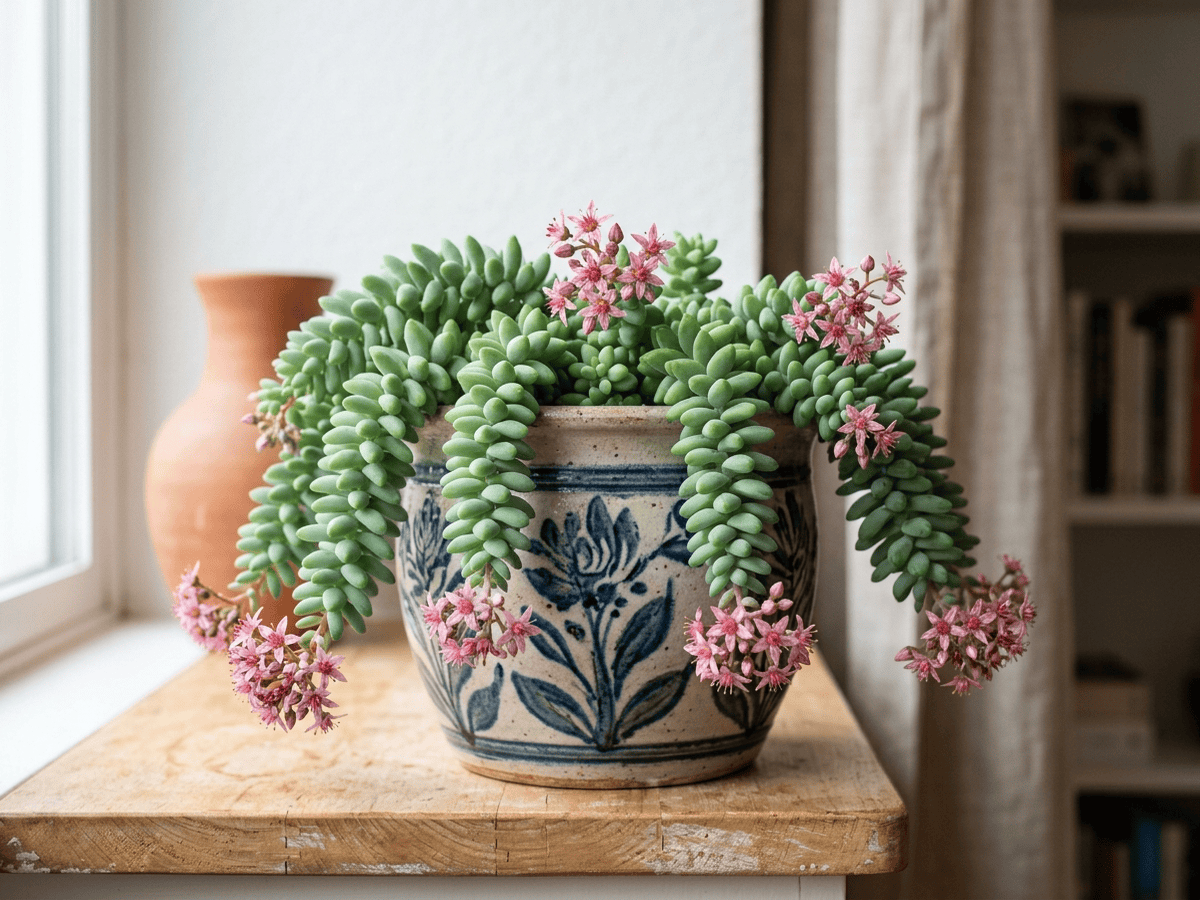
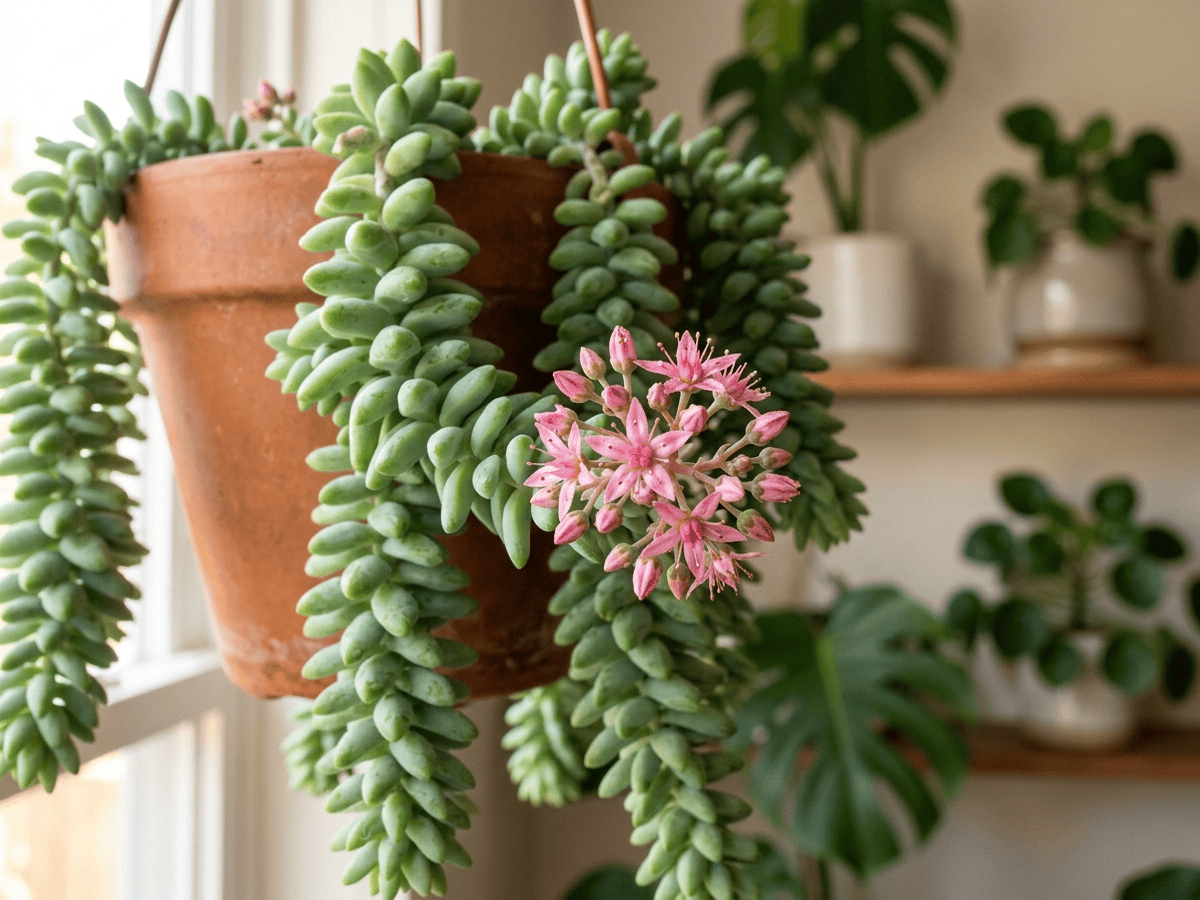
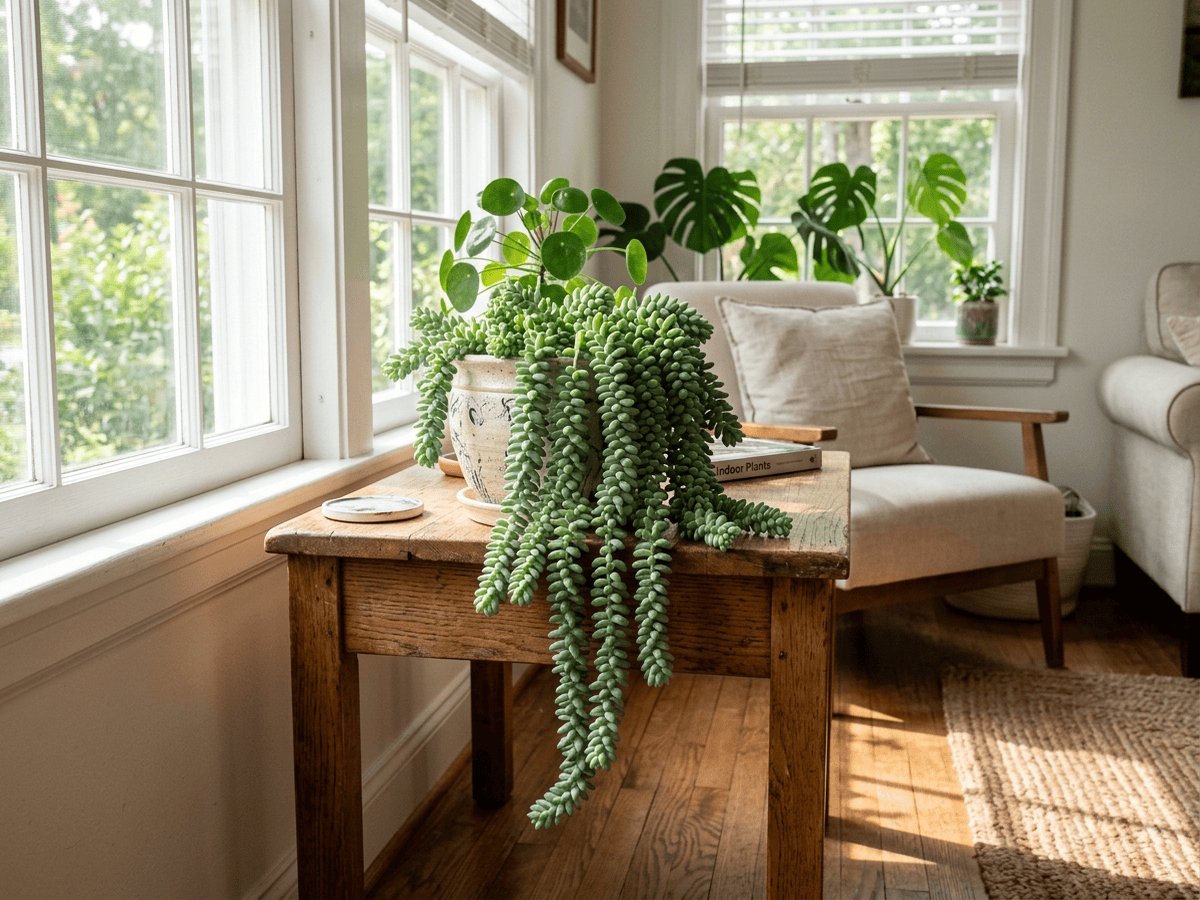
Sedum morganianum, the burro's tail, is a spectacular trailing succulent with long, rope-like stems densely packed with plump, blue-green, jelly-bean shaped leaves. Native to southern Mexico, stems can reach over 60 cm, creating a dramatic cascading effect from hanging baskets. The leaves are extremely fragile — the slightest touch knocks them off, but each fallen leaf can root into a new plant. It needs bright light and infrequent watering. Mature plants may produce small pink-red star flowers at stem tips in summer, though this is uncommon indoors.
- Drought-tolerant
- Trailing
How to care for Burro's-Tail
Watering
- Springevery 14 days
- Summerevery 10 days
- Fallevery 21 days
- Winterevery 30 days
Soil · Fast-draining
- Main mixSand + pumice + soil 1:1:150%
- DrainagePumice / gravel50%
Keep grit at half the mix or more — this soil is meant to dry out fast.
FERTILIZER
Cactus & Succulent Feed 2-7-7
Hold the nitrogen back and growth stays compact instead of soft and stretched. Phosphorus and potassium carry the roots and the flowering.
- Nitrogen · Leaves
- Phosphorus · Roots + Blooms
- Potassium · Strength
- Springevery 60 days
- Summerevery 60 days
At a Glance
- NativeNorth America
- Height1–2 ft (0.3–0.6 m)
- Spread1–2 ft (0.3–0.6 m)
- Flower colorPink, Red
- Foliage colorGreen
- SoilSandy, Well-drained
- LocationsIndoor · Balcony
Bloom time
BLOOM CYCLE
Peak bloom
Jun–Aug
Pink-red star flowers at stem tips; rare indoors
Fragrance
NO FRAGRANCE
Not fragrant.
Toxicity
No toxicity has been reported for this plant. Still, it is wise to keep pets from chewing on any houseplant.
Educational information, not medical or veterinary advice. If exposure is suspected, contact a doctor or veterinarian.
DISTRIBUTION


- Native
- Introduced
- North America
History
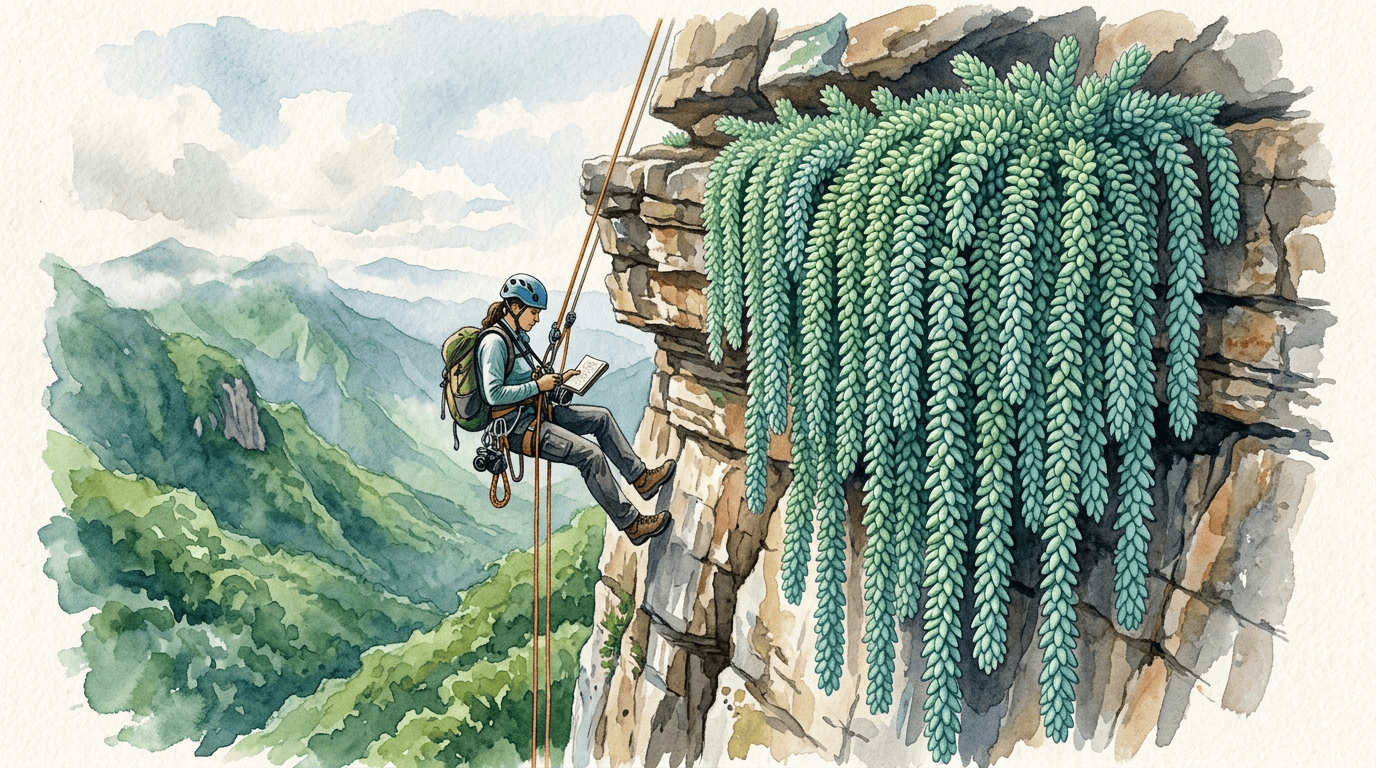
Sedum morganianum is one of the most unusual introductions in succulent history: it was first described in 1935 from cultivated plants in a California nursery, and its wild origin was unknown for decades afterward. Only in 2008 were natural populations finally documented on vertical cliffs near Tenampa in Veracruz state, southern Mexico, where its long trailing stems drape downward from cliff faces out of reach of grazing animals. It was named in honor of Dr. Meredith Morgan, the California nurseryman who brought it to botanical attention.
Its heavy ropes of tightly packed plump blue-green leaves made it an instant horticultural favorite, and it remains one of the most popular hanging-basket succulents worldwide. Confirmed non-toxic to pets. Sedum morganianum was first described in 1938 by botanist Eric Walther, based on specimens sent by Meredith Morgan from a collection in Coatepec, Mexico.
Remarkably, the plant has never been found in the wild — its exact native habitat remains a botanical mystery. All cultivated plants descend from those original collections. The genus Sedum contains over 400 species worldwide and is named from the Latin 'sedere' (to sit), as many species sit flat on rocks and walls. A closely related species, S. burrito, has rounder leaves and is often confused with burro's tail.
Symbolism & meaning
What It Symbolizes
Burro's-Tail embodies tranquility, its gently cascading bead-like stems evoking a calm, peaceful flow over the edge of any pot. It is the houseplant of slow rivers, a succulent whose meaning is the meditative quality of plants that drape rather than reach. It is often read as a flower of quiet downward grace, a Mexican native whose meaning is the simple permission to let oneself trail, gathering serenity along the way.
- Tranquility — Its gently cascading form evokes a sense of calm and peaceful flow
Where the Name Comes From
Sedum from Latin 'sedere' (to sit), as they grow on rocks. Morganianum honors Meredith Morgan, who sent the first specimens to researchers.
Uses & Fun Facts
- Rope-like stems cascade dramatically from hanging baskets
- Jelly-bean blue-green leaves for trailing succulent displays
Related plants
More Sedum plants
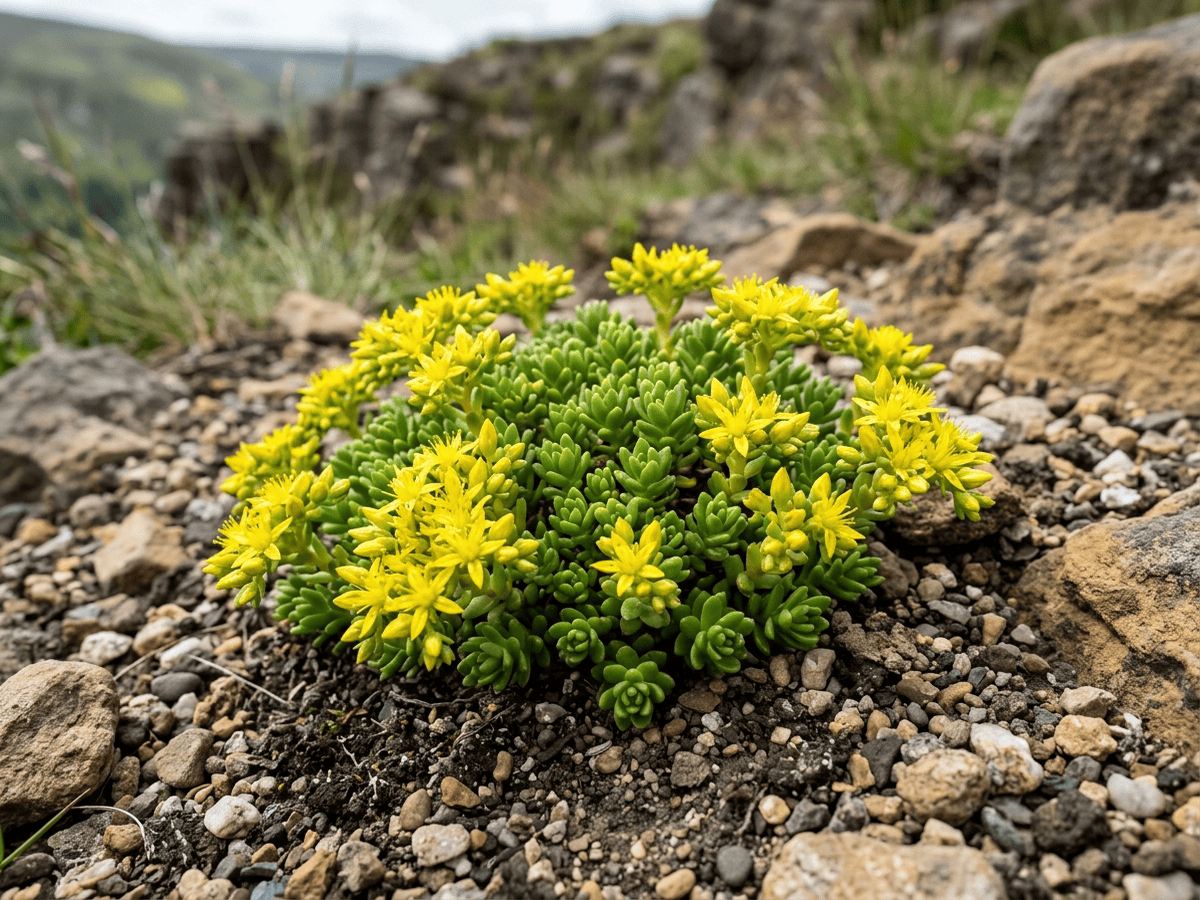 Biting StonecropSedum acre
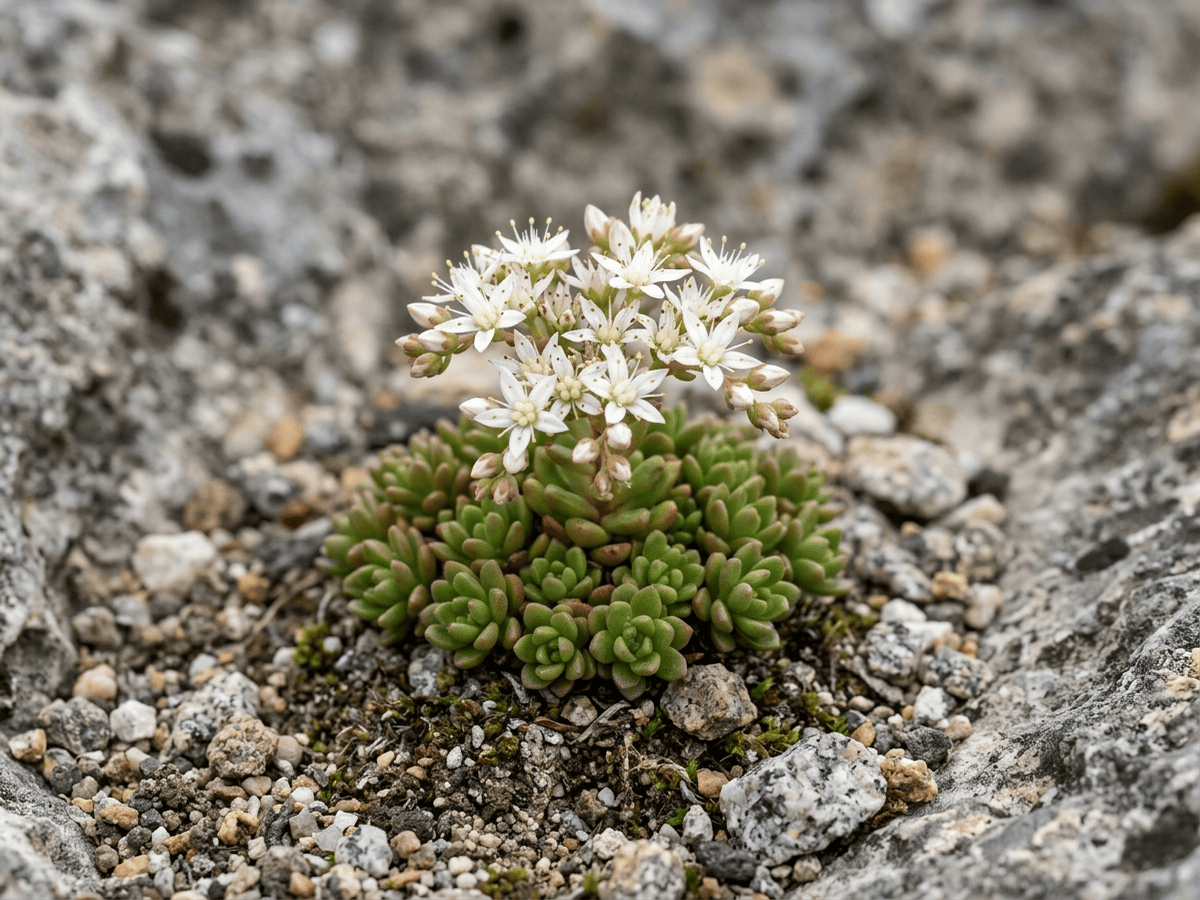 White StonecropSedum album
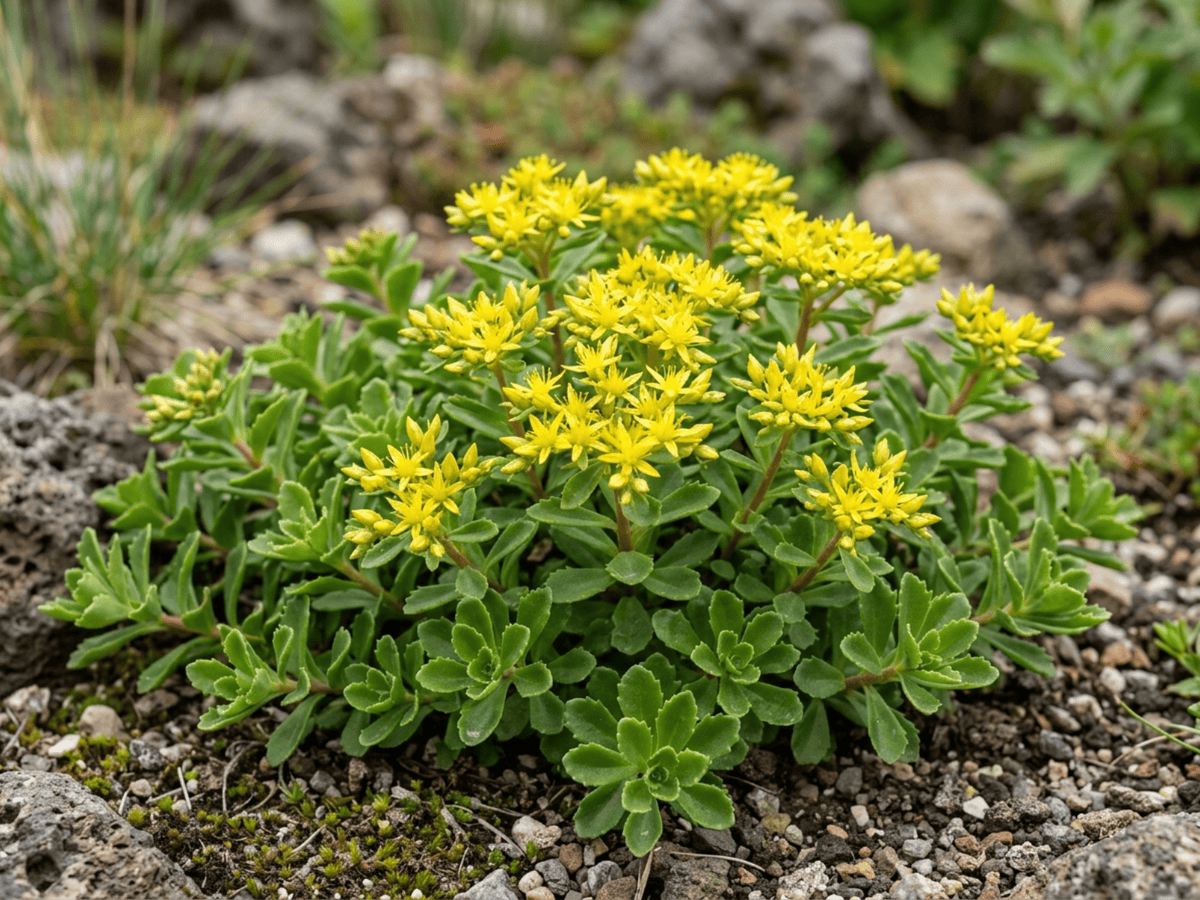 Aizoon StonecropSedum kamtschaticum
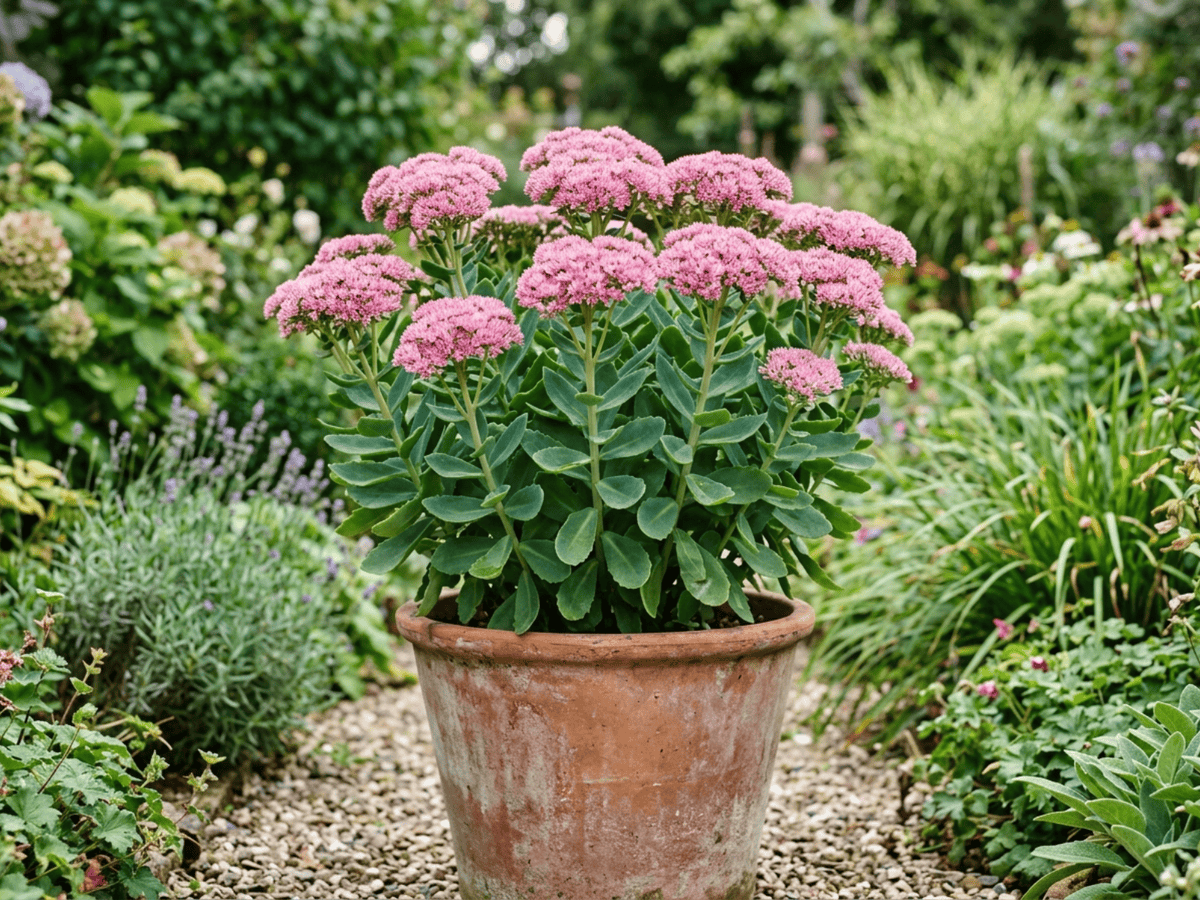 Butterfly StonecropSedum spectabile
Plants with similar care
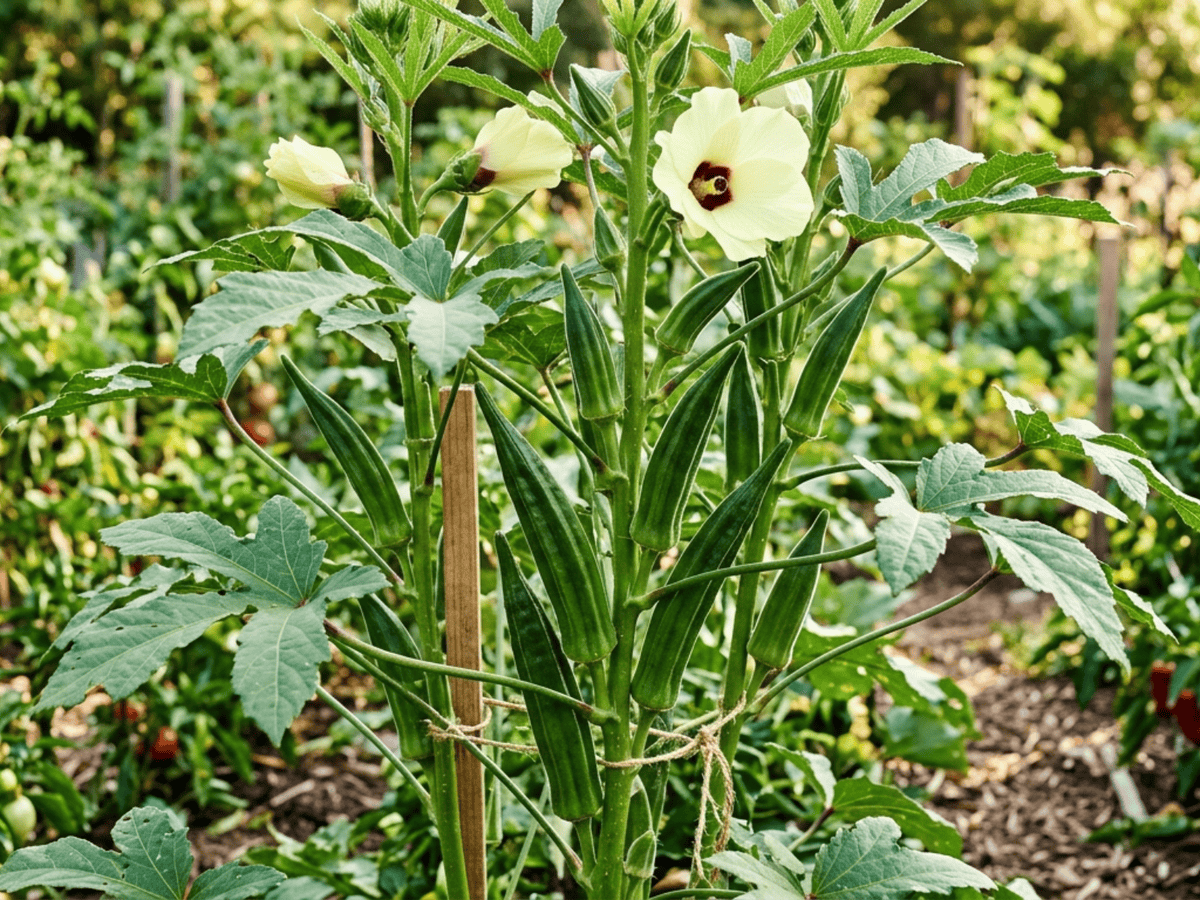 OkraAbelmoschus esculentus
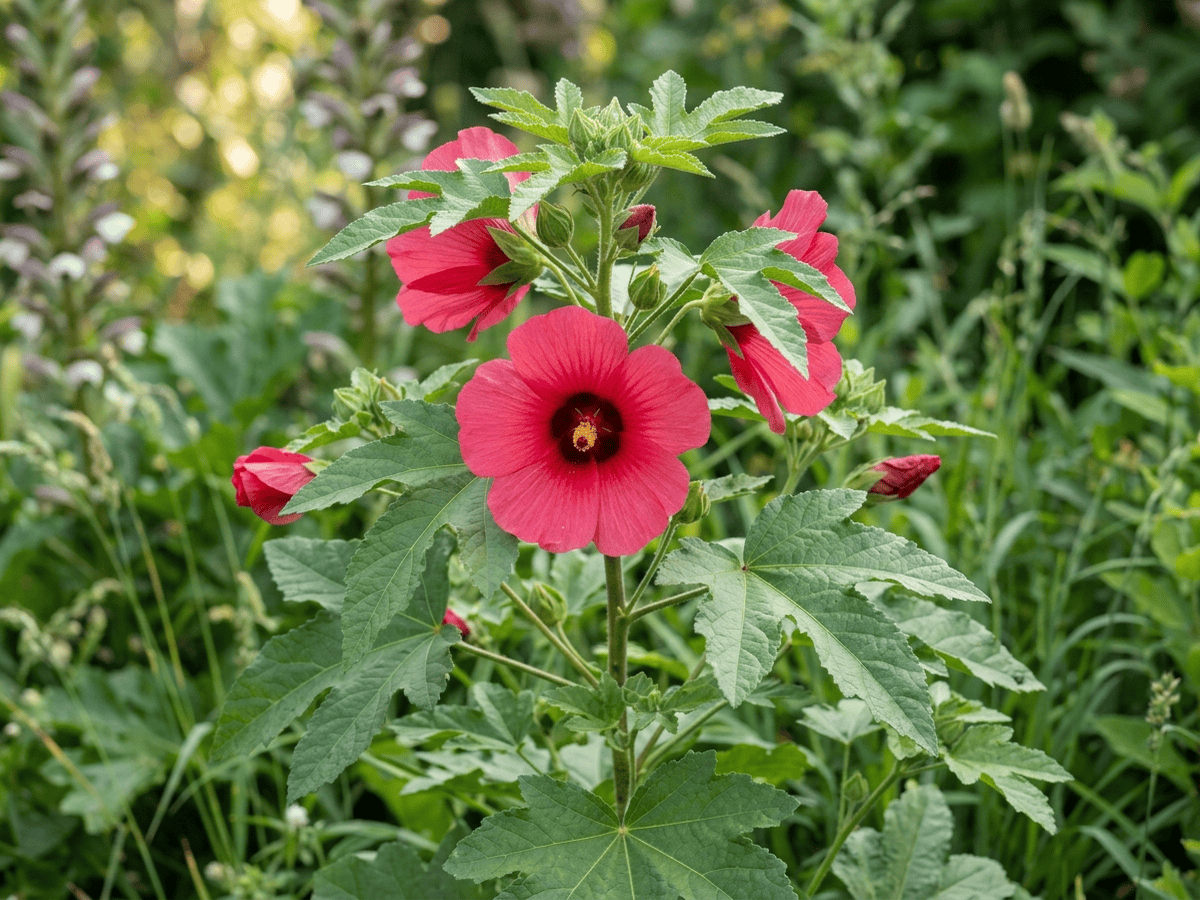 MuskseedAbelmoschus moschatus
 Black AeoniumAeonium arboreum 'Zwartkop'
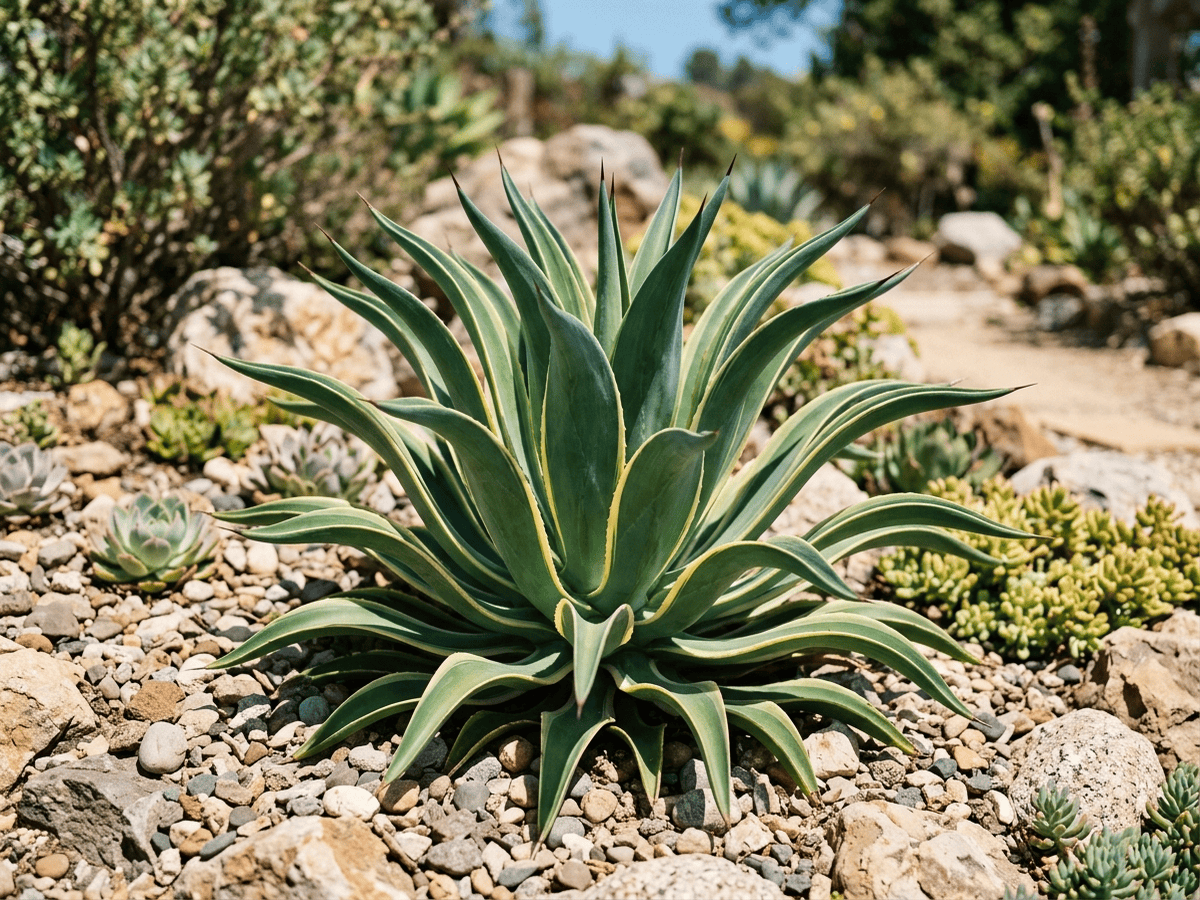 Smooth AgaveAgave desmettiana
Frequently asked questions
How often should I water Burro's-Tail?
In summer, water about every 10 days; in winter, about every 30 days. Adjust for heat, pot size and drainage.
How much light does Burro's-Tail need?
Full sun: 6+ hrs direct. Watch the leaves — scorching or stretching means the light needs adjusting.
Is Burro's-Tail toxic to cats or dogs?
No toxicity has been reported for this plant. Still, it is wise to keep pets from chewing on any houseplant. Educational information, not medical or veterinary advice. If exposure is suspected, contact a doctor or veterinarian.
Is Burro's-Tail easy to grow?
Yes — it is considered an easy, beginner-friendly plant.
Can Burro's-Tail be grown indoors?
Yes, it adapts well to indoor growing given the right light.
When does Burro's-Tail bloom?
It typically blooms Jun–Aug in the Northern Hemisphere.
YardMate
Identify any plant in seconds
Snap a photo — YardMate names the plant, diagnoses problems, and reminds you when to water.
Download on the App Store