 YardMate



Caucasian Stonecrop
Sedum spurium
Easy · Beginner friendlyAbout Caucasian Stonecrop
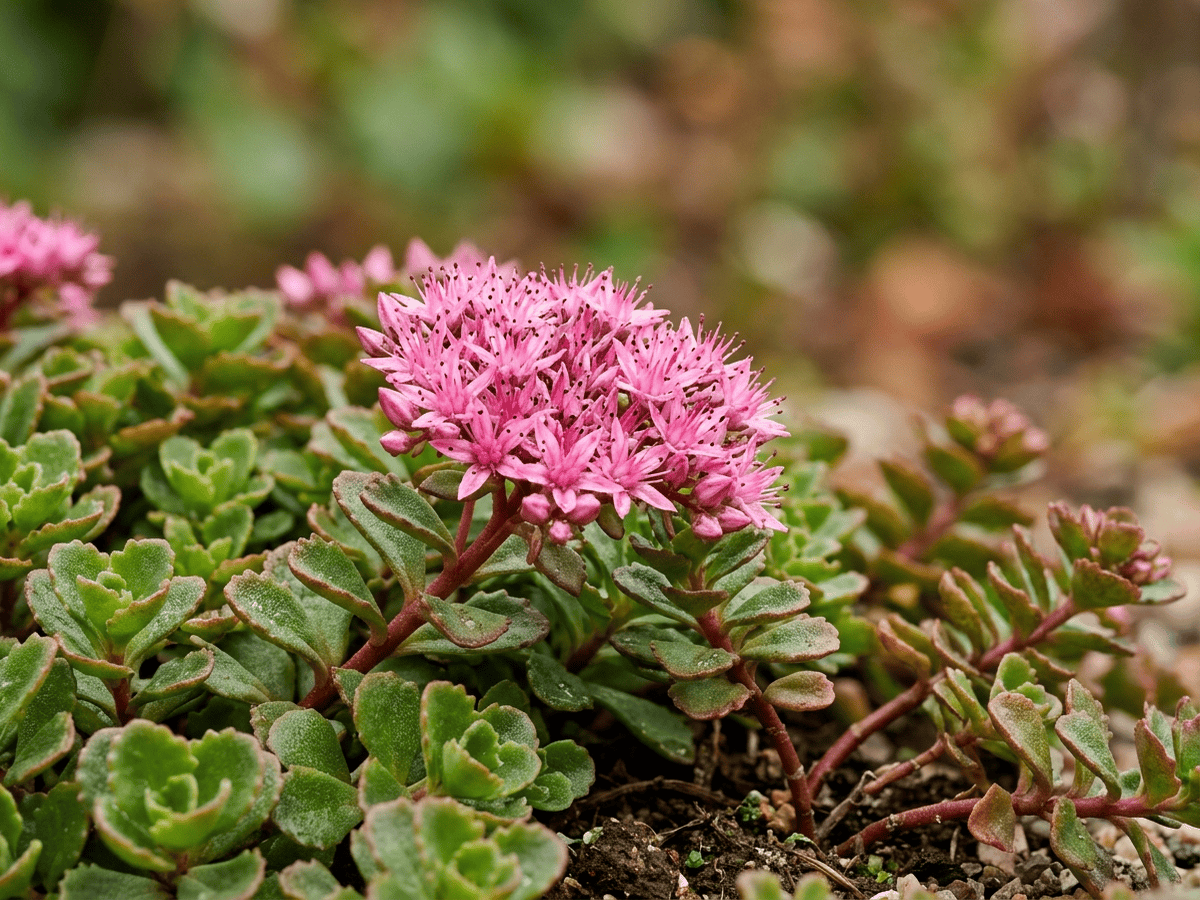
Sedum spurium, the Caucasian stonecrop, is a low, creeping succulent ground cover with small, rounded leaves in green, bronze, or deep red, topped with clusters of star-shaped pink or red flowers in summer. Native to the Caucasus, it forms dense, weed-suppressing mats 10–15 cm tall. Extremely tough — it tolerates poor soil, drought, heat, cold, and foot traffic. The cultivar 'Dragon's Blood' with deep red foliage and crimson flowers is one of the most widely planted ground cover sedums. It is a staple of green roof systems and rock gardens.
- Drought-tolerant
- Cold-hardy
- Groundcover
How to care for Caucasian Stonecrop
Watering
- Springevery 14 days
- Summerevery 10 days
- Fallevery 21 days
- Winterevery 30 days
Soil · Fast-draining
- Main mixSand + pumice + soil 1:1:150%
- DrainagePumice / gravel50%
Keep grit at half the mix or more — this soil is meant to dry out fast.
FERTILIZER
- Springevery 60 days
At a Glance
- NativeWestern Asia
- Height0.3–0.5 ft (0.1–0.2 m)
- Spread1–2 ft (0.3–0.6 m)
- Flower colorPink, Red, White
- Foliage colorGreen, Red, Bronze, Variegated
- SoilSandy, Well-drained
- LocationsYard
Bloom time
BLOOM CYCLE
Peak bloom
Jun–Aug
Pink-red star clusters in summer; 'Dragon's Blood' turns deep red
Fragrance
NO FRAGRANCE
No notable fragrance.
Toxicity
Pets Safe
None reported
Not reported
EXPOSURE No exposure route is reported.
EFFECT No significant toxicity.
NOTE No human toxicity is reported in this catalog; avoid eating ornamental plants unless confirmed edible.
Safe
EXPOSURE No exposure route is reported.
EFFECT Not listed as toxic by ASPCA.
NOTE Listed as non-toxic for dogs; avoid eating ornamental plants unless confirmed edible.
Safe
EXPOSURE No exposure route is reported.
EFFECT Not listed as toxic by ASPCA.
NOTE Listed as non-toxic for cats; avoid eating ornamental plants unless confirmed edible.
Educational information, not medical or veterinary advice. If exposure is suspected, contact a doctor or veterinarian.
DISTRIBUTION


- Native
- Introduced
- Western Asia
History

Sedum spurium (recently reclassified to Phedimus spurius by botanists splitting the genus, though horticulture retains the traditional name) is native to the Caucasus, northern Turkey, and northern Iran, growing in rocky meadows and cliff ledges. It was introduced to European gardens in the 18th century and quickly naturalized as a garden escapee, spreading across much of Europe and eastern North America. Its ability to root from any stem fragment, tolerate poor soil and full sun, and flower profusely made it a mainstay of cottage and rock gardens. More recently it has become one of the foundational species of extensive green-roof plantings worldwide, because it tolerates the thin substrate, wind, and drought of exposed rooftops better than almost any other low-growing perennial.
Cultivars like "Dragon's Blood," "Fuldaglut," and "John Creech" are particularly widespread. Sedum spurium is one of the most important plants in the modern green roof industry. Its ability to survive on thin soil layers (as little as 5 cm) in full sun with no irrigation makes it ideal for extensive green roofs.
Cities worldwide — including Chicago, Toronto, and Stuttgart — mandate or incentivize green roofs for stormwater management, and Sedum spurium carpets millions of square meters of rooftops. The genus Sedum contains over 400 species and is named from Latin 'sedere' (to sit), as many species sit flat on rocks. German green roof pioneer Stephan Brenneisen demonstrated that sedum green roofs can also support urban biodiversity.
Symbolism & meaning
What It Symbolizes
Caucasian Stonecrop makes visible persistence, thriving on bare rock, gravel rooftops, and walls where almost nothing else can hold. Its succulent leaves and starry pink flowers ask only for light and a foothold, offering steady beauty in return. Its meaning is quiet refusal to give up: a plant that proves green life can settle and flourish on the most unlikely surfaces, year after year.
- Persistence — Thriving on bare rock and rooftops where nothing else survives
Where the Name Comes From
The name Caucasian Stonecrop describes its habit of growing among stones. Sedum from Latin 'sedere' (to sit). Spurium means 'false' or 'spurious.'
Uses & Fun Facts
- Succulent mat covers dry rocky banks and green roofs
- Pink summer flowers feed bees and small butterflies
- Bronze and burgundy foliage cultivars edge sunny borders
Related plants
More Sedum plants
 Biting StonecropSedum acre
 White StonecropSedum album
 Aizoon StonecropSedum kamtschaticum
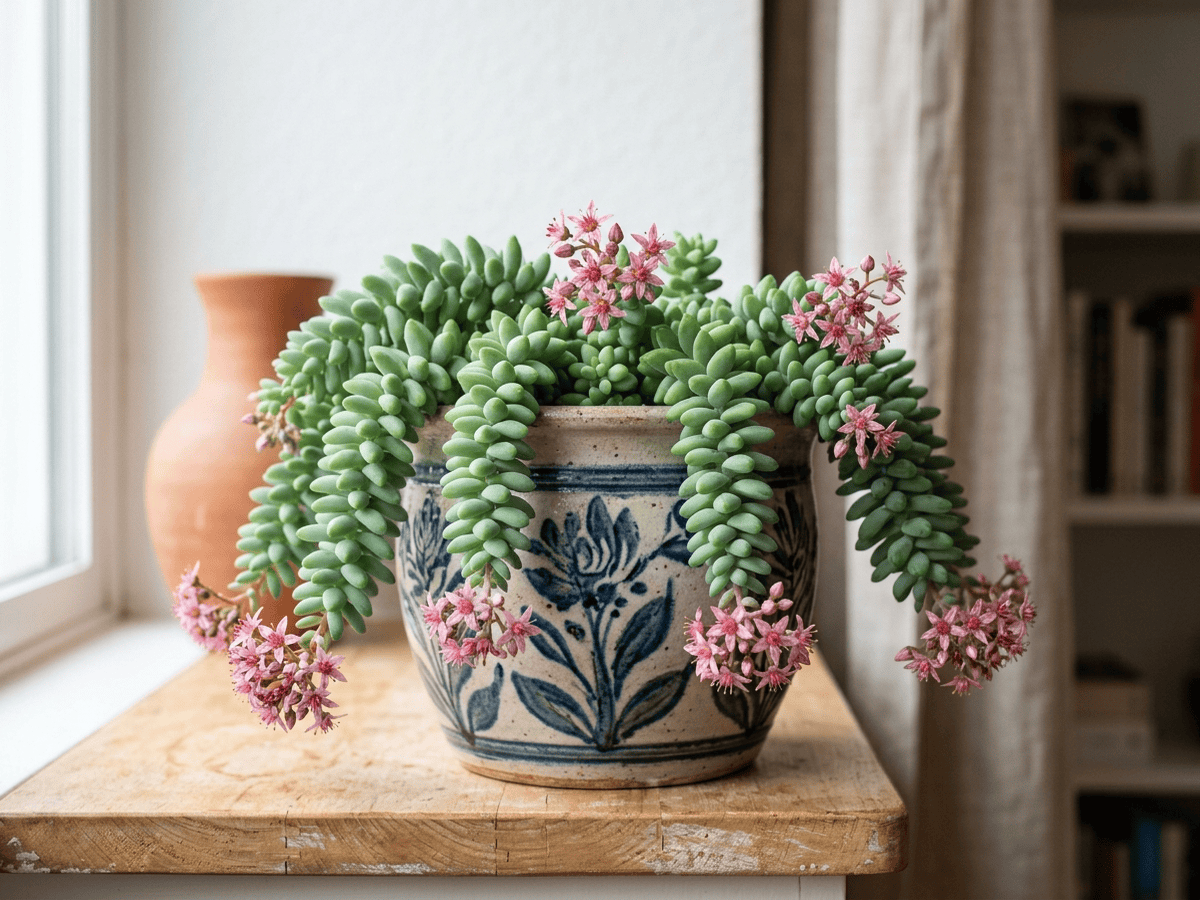 Burro's-TailSedum morganianum
Plants with similar care
 Chinese AbeliaAbelia chinensis
 Fragrant AbeliaAbelia mosanensis
 Large-Flowered AbeliaAbelia uniflora
 Glossy AbeliaAbelia x grandiflora
Frequently asked questions
How often should I water Caucasian Stonecrop?
In summer, water about every 10 days; in winter, about every 30 days. Adjust for heat, pot size and drainage.
How much light does Caucasian Stonecrop need?
Full sun: 6+ hrs direct. Watch the leaves — scorching or stretching means the light needs adjusting.
Is Caucasian Stonecrop toxic to cats or dogs?
Pets Safe (Dogs Safe · Cats Safe) Educational information, not medical or veterinary advice. If exposure is suspected, contact a doctor or veterinarian.
Is Caucasian Stonecrop easy to grow?
Yes — it is considered an easy, beginner-friendly plant.
When does Caucasian Stonecrop bloom?
It typically blooms Jun–Aug in the Northern Hemisphere.
YardMate
Identify any plant in seconds
Snap a photo — YardMate names the plant, diagnoses problems, and reminds you when to water.
Download on the App Store