 YardMate

Great Stonecrop
Sedum telephium
Easy · Beginner friendlyAbout Great Stonecrop
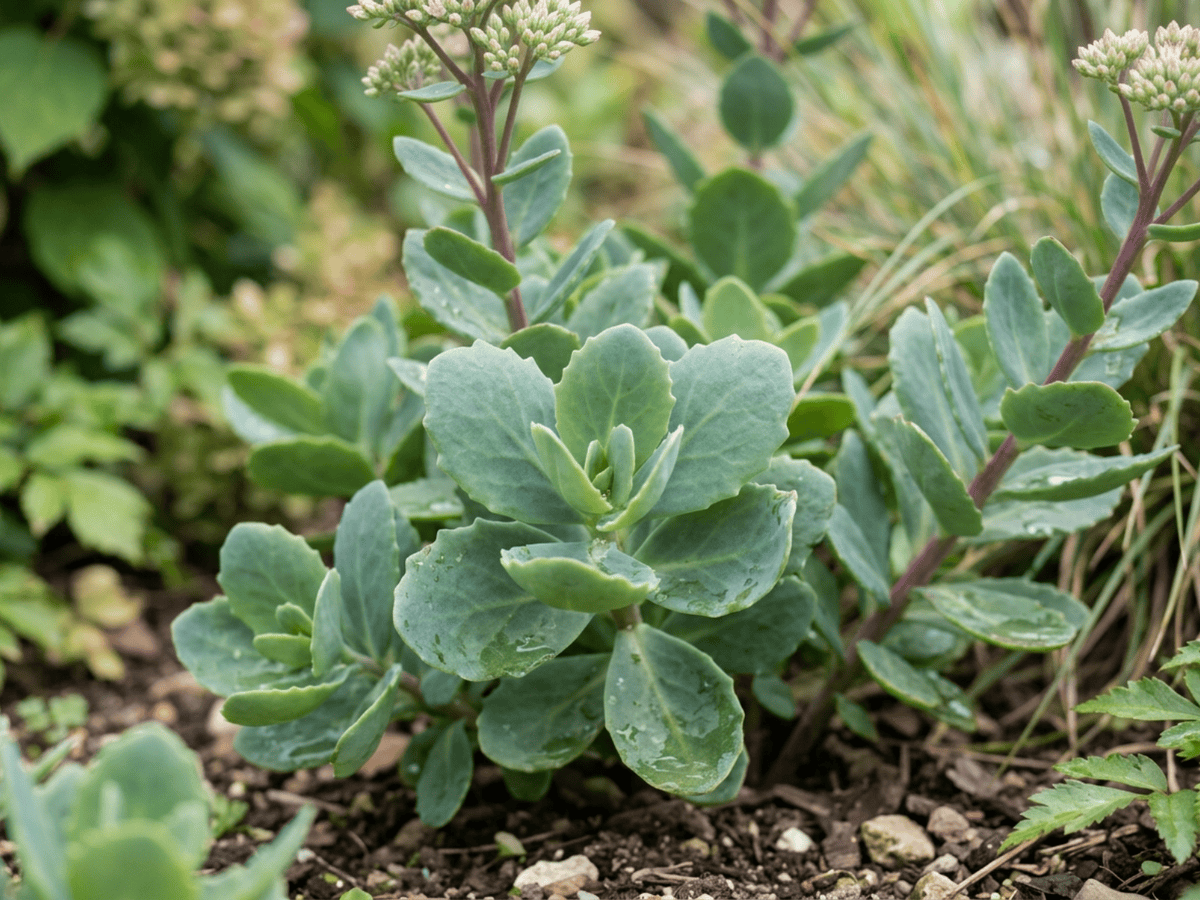
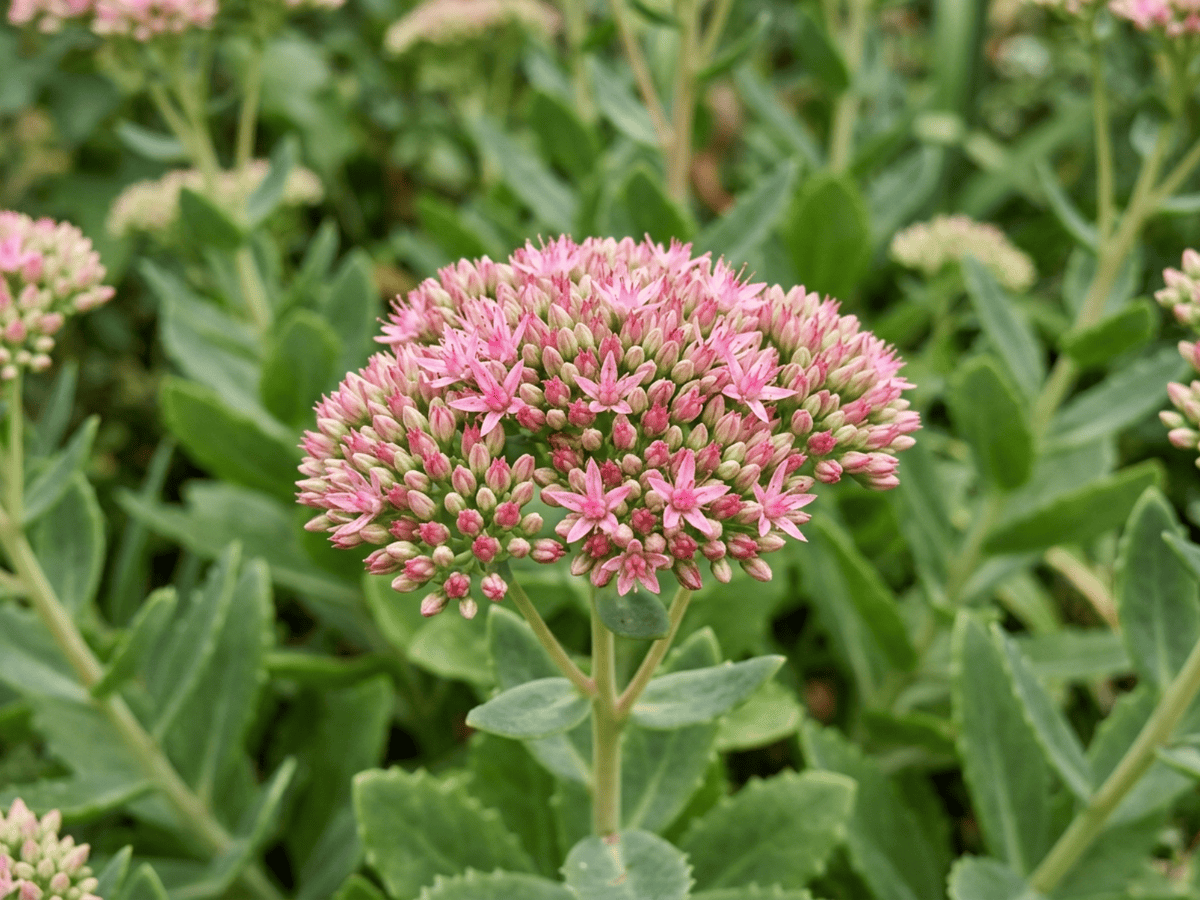
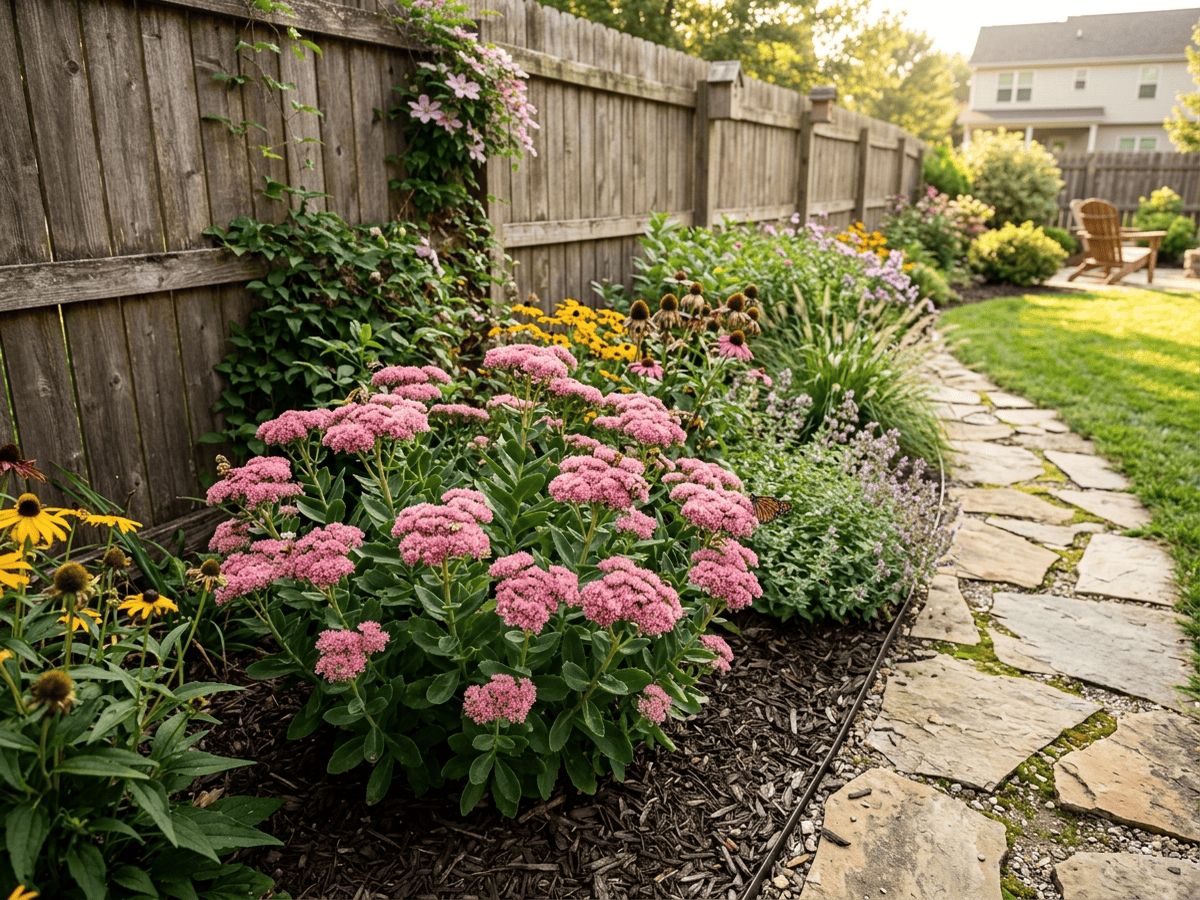
Orpine or Livelong is a robust clump-forming perennial sedum native to Eurasia, bearing fleshy blue-green to purple foliage and broad domed heads of pink, rose, or copper flowers in late summer and fall. Growing 12-24 inches tall, it is a cornerstone of modern perennial design, providing fall pollinator nectar and sculptural seedheads for winter interest. Exceptionally drought-tolerant and cold-hardy across USDA zones 3-9.
- Drought-tolerant
- Cold-hardy
- Deer-resistant
- Pollinator-friendly
How to care for Great Stonecrop
Watering
- Springevery 10 days
- Summerevery 7 days
- Fallevery 14 days
- Winterpause watering
Soil · Fast-draining
- Main mixSand + pumice + soil 1:1:150%
- DrainagePumice / gravel50%
Keep grit at half the mix or more — this soil is meant to dry out fast.
FERTILIZER
- Springevery 60 days
- Summerevery 60 days
At a Glance
- NativeEurope, East Asia
- Height1–2 ft (0.3–0.6 m)
- Spread1–2 ft (0.3–0.6 m)
- Flower colorPink, Red, Orange
- Foliage colorGreen, Blue-green, Purple
- SoilSandy, Well-drained, Loamy
- LocationsYard
Bloom time
BLOOM CYCLE
Peak bloom
Aug–Oct
Pink to copper flower heads August to October
Toxicity
Humans Slight · Pets Slight
sedoheptulose and tannins
Slight
- All
- Ingestion
EXPOSURE Eating any part of the plant.
EFFECT Mild GI upset in quantity.
NOTE Documented concern for humans: Mild GI upset in quantity.
Slight
- All
- Ingestion
EXPOSURE Eating any part of the plant.
EFFECT Mild vomiting.
NOTE Generally low toxicity; not on ASPCA toxic list.
Slight
- All
- Ingestion
EXPOSURE Eating any part of the plant.
EFFECT Mild vomiting.
NOTE Generally low toxicity; not on ASPCA toxic list.
Educational information, not medical or veterinary advice. If exposure is suspected, contact a doctor or veterinarian.
DISTRIBUTION


- Native
- Introduced
- Europe
- East Asia
History

Sedum telephium (now often placed in Hylotelephium) grows wild across Europe and northern Asia. The specific epithet refers to Telephus, mythical king of Mysia and son of Hercules, whose wound was said to be healed by this plant's poultice. Pliny the Elder mentioned the legend.
English folk tradition used the fleshy leaves as a wound dressing. The plant's most enduring horticultural legacy is the cultivar 'Herbstfreude' (Autumn Joy), developed by German breeder Georg Arends in 1955 from crosses involving S. telephium and S. spectabile. It became one of the most ubiquitous perennials of late 20th-century American landscapes, valued for broccoli-like flower heads turning pink to russet from August to October.
Modern breeding has produced many derivatives including 'Matrona' and dark-leaved cultivars. The parent species of innumerable garden hybrids including 'Autumn Joy' (Herbstfreude), one of the most planted perennials in America since its German introduction in the 1950s. Carolus Linnaeus described it in 1753. Traditional European folk medicine used the succulent leaves as wound poultices.
Symbolism & meaning
What It Symbolizes
Great Stonecrop offers tranquility in late-season pink and bronze — calm autumnal presence as the rest of the garden fades, sturdy domes of bloom feeding the last bees of the year. Its endurance is legendary among perennials: poor soils, dry summers, deep cold winters all leave its unfazed. It is the September perennial of the truly low-maintenance border, peaceful because it has nothing to prove.
- Tranquility — calm autumnal presence
- Endurance — thrives in poor soils and cold winters
Where the Name Comes From
The name Great Stonecrop describes its habit of growing among stones. 'Sedum' comes from Latin 'sedere' (to sit), referring to its sprawling habit; 'telephium' honors Telephus of Mysia, restored by Achilles' spear in myth.
Uses & Fun Facts
- Domed pink flower heads feed late bees and migrating monarchs
- Young tender leaves added to traditional European wild salads
- Drought-tolerant fleshy clumps anchor modern perennial designs
Related plants
More Sedum plants
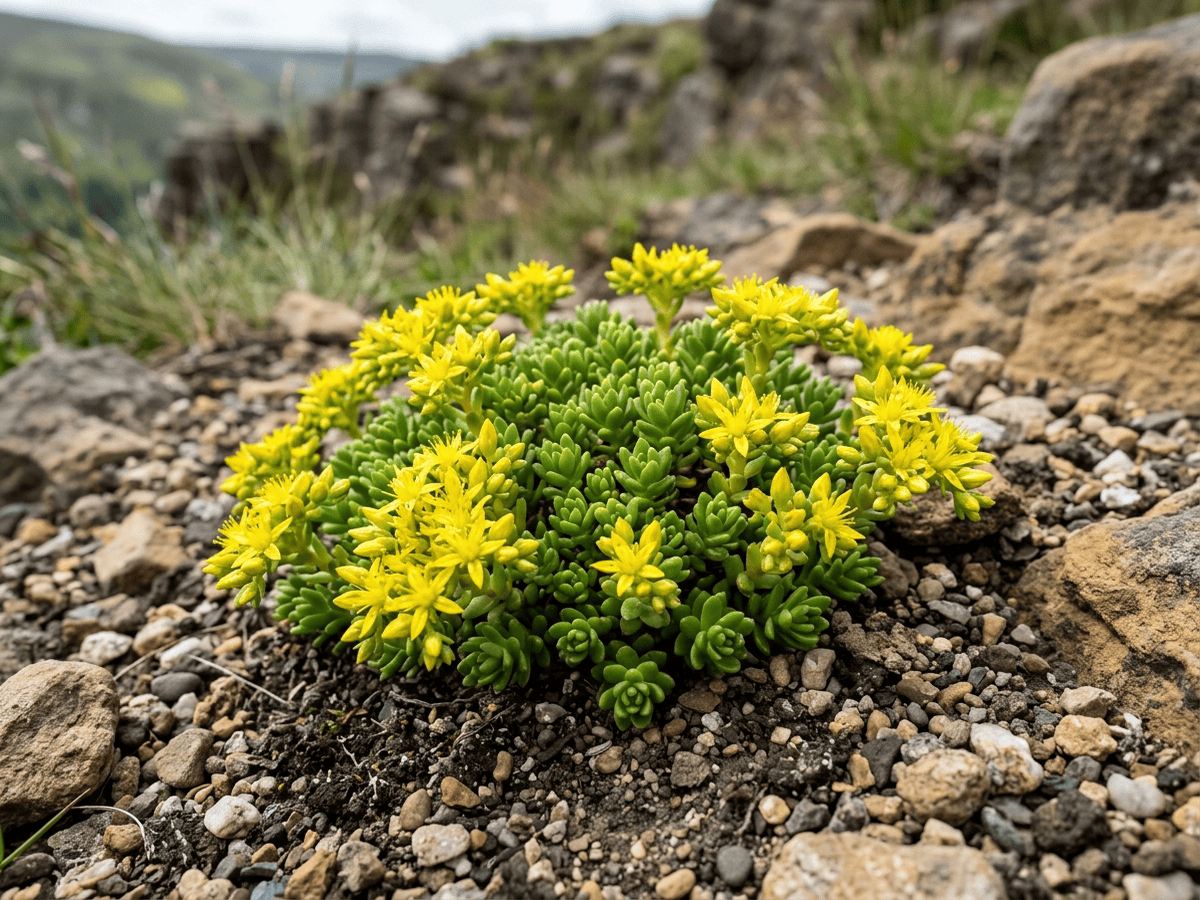 Biting StonecropSedum acre
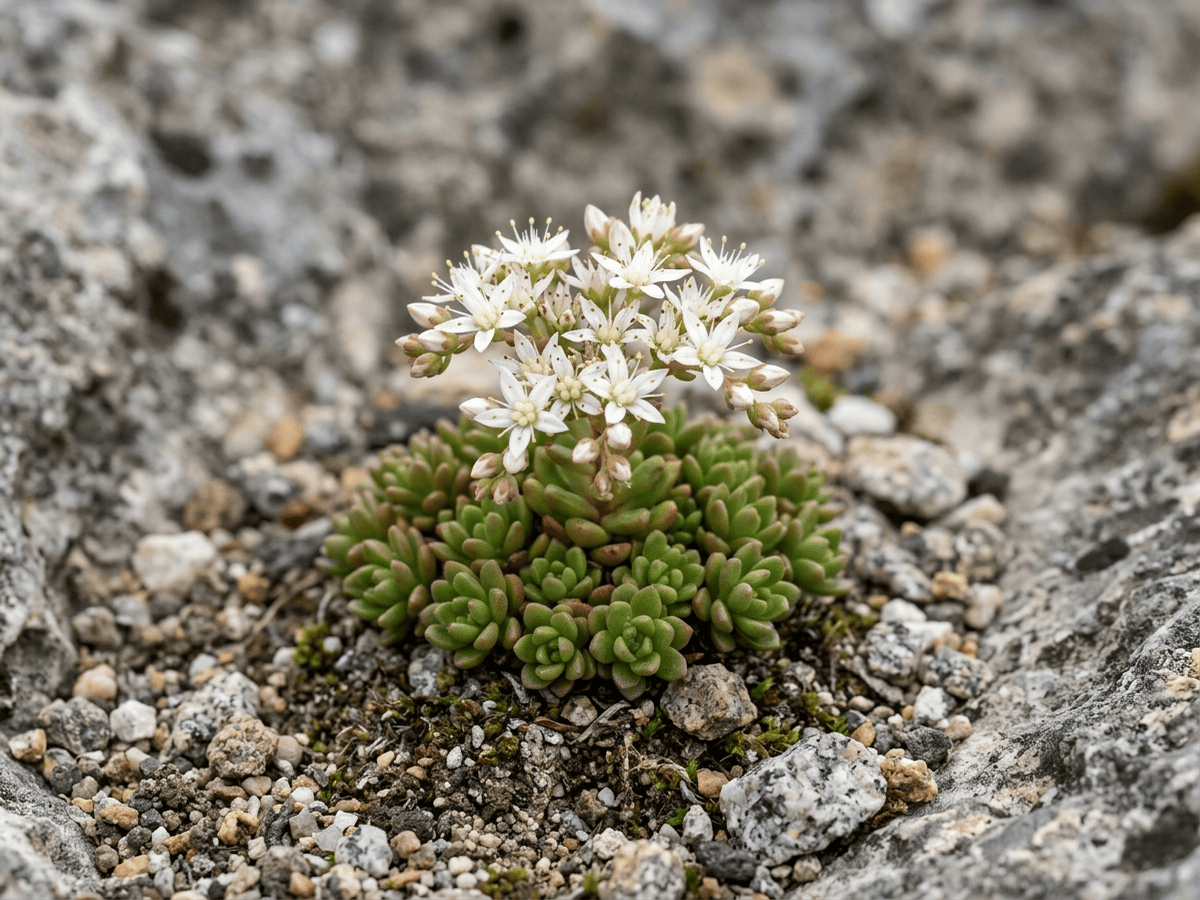 White StonecropSedum album
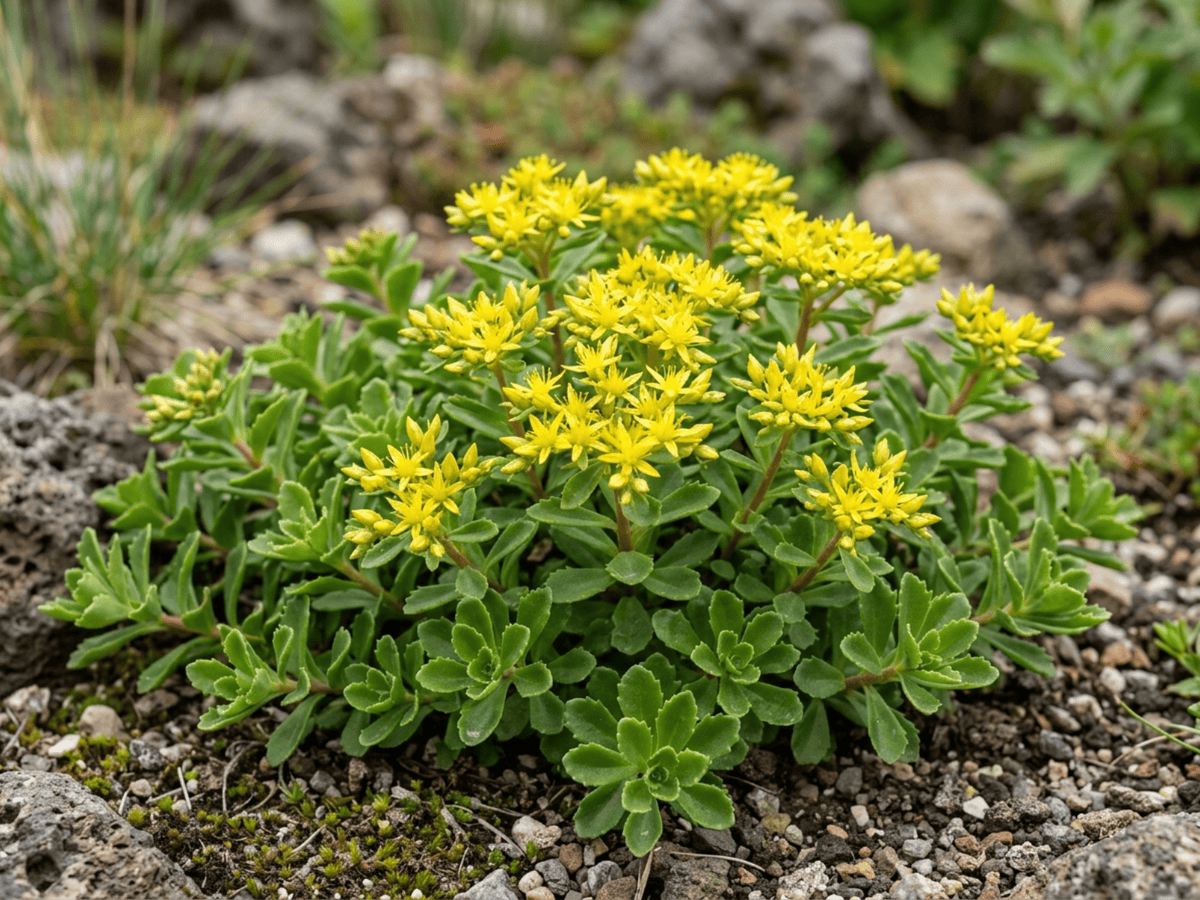 Aizoon StonecropSedum kamtschaticum
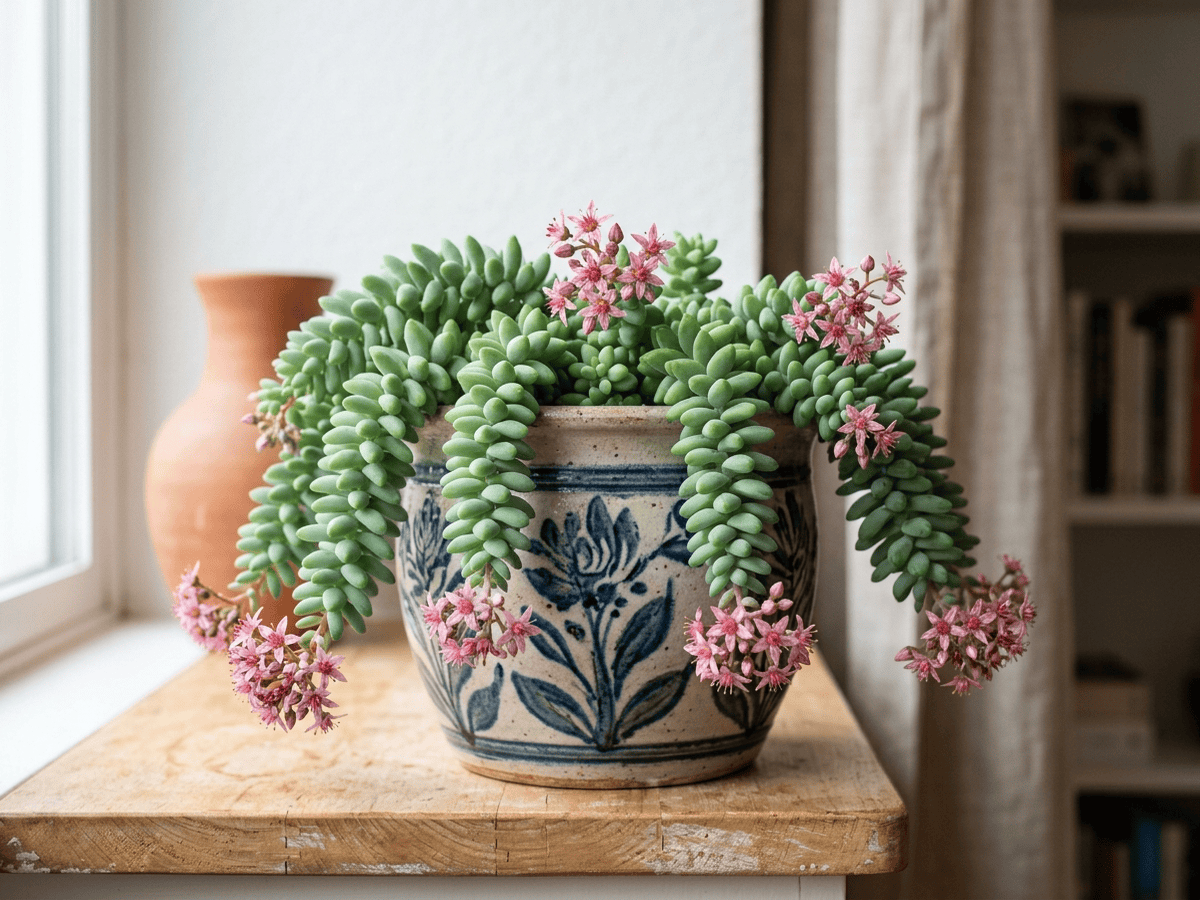 Burro's-TailSedum morganianum
Plants with similar care
 Chinese AbeliaAbelia chinensis
 Fragrant AbeliaAbelia mosanensis
 Large-Flowered AbeliaAbelia uniflora
 Glossy AbeliaAbelia x grandiflora
Frequently asked questions
How often should I water Great Stonecrop?
Water about every 10 days during the growing season, and always let excess water drain away.
How much light does Great Stonecrop need?
Full sun: 6+ hrs direct. Watch the leaves — scorching or stretching means the light needs adjusting.
Is Great Stonecrop toxic to cats or dogs?
Pets Slight (Dogs Slight · Cats Slight) Educational information, not medical or veterinary advice. If exposure is suspected, contact a doctor or veterinarian.
Is Great Stonecrop easy to grow?
Yes — it is considered an easy, beginner-friendly plant.
When does Great Stonecrop bloom?
It typically blooms Aug–Oct in the Northern Hemisphere.
YardMate
Identify any plant in seconds
Snap a photo — YardMate names the plant, diagnoses problems, and reminds you when to water.
Download on the App Store