 YardMate


Christmas-Cheer
Sedum x rubrotinctum
Easy · Beginner friendlyAbout Christmas-Cheer
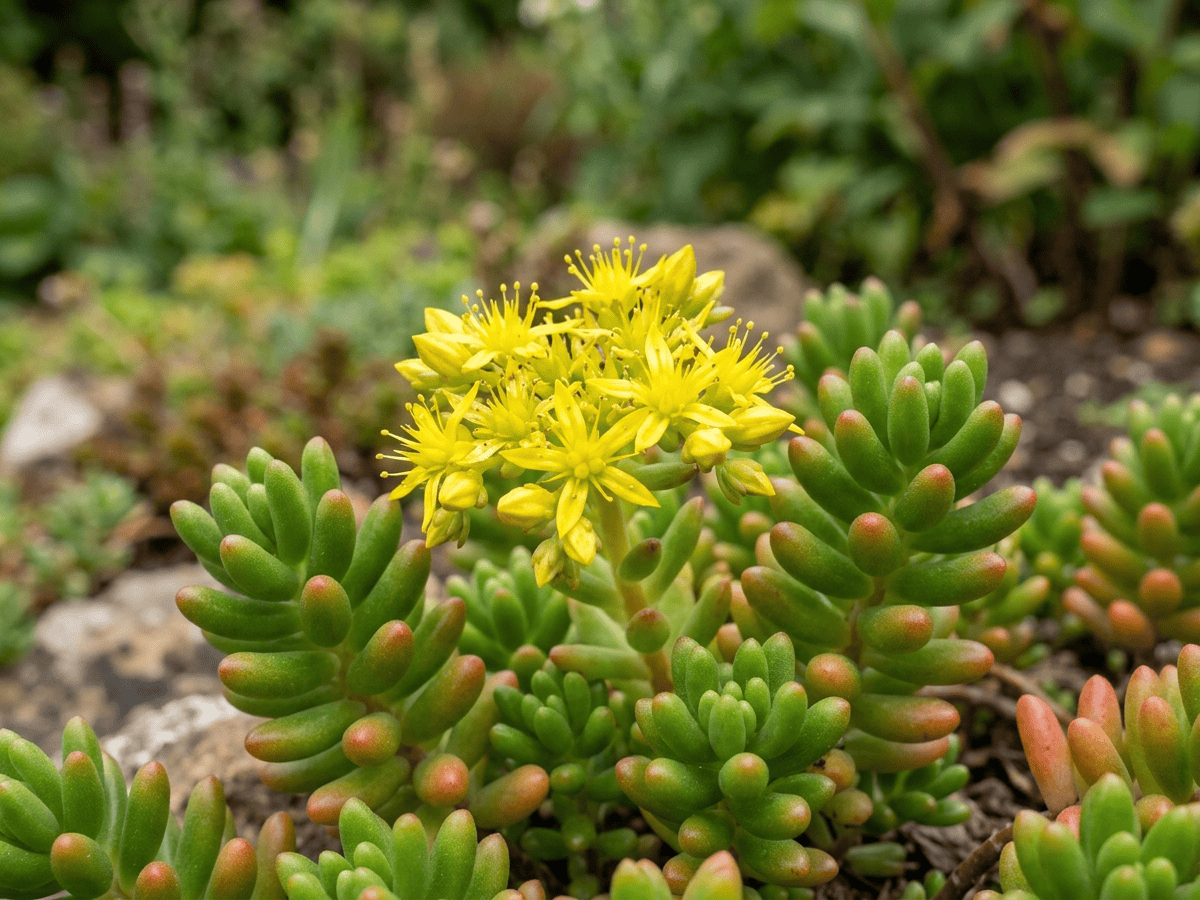
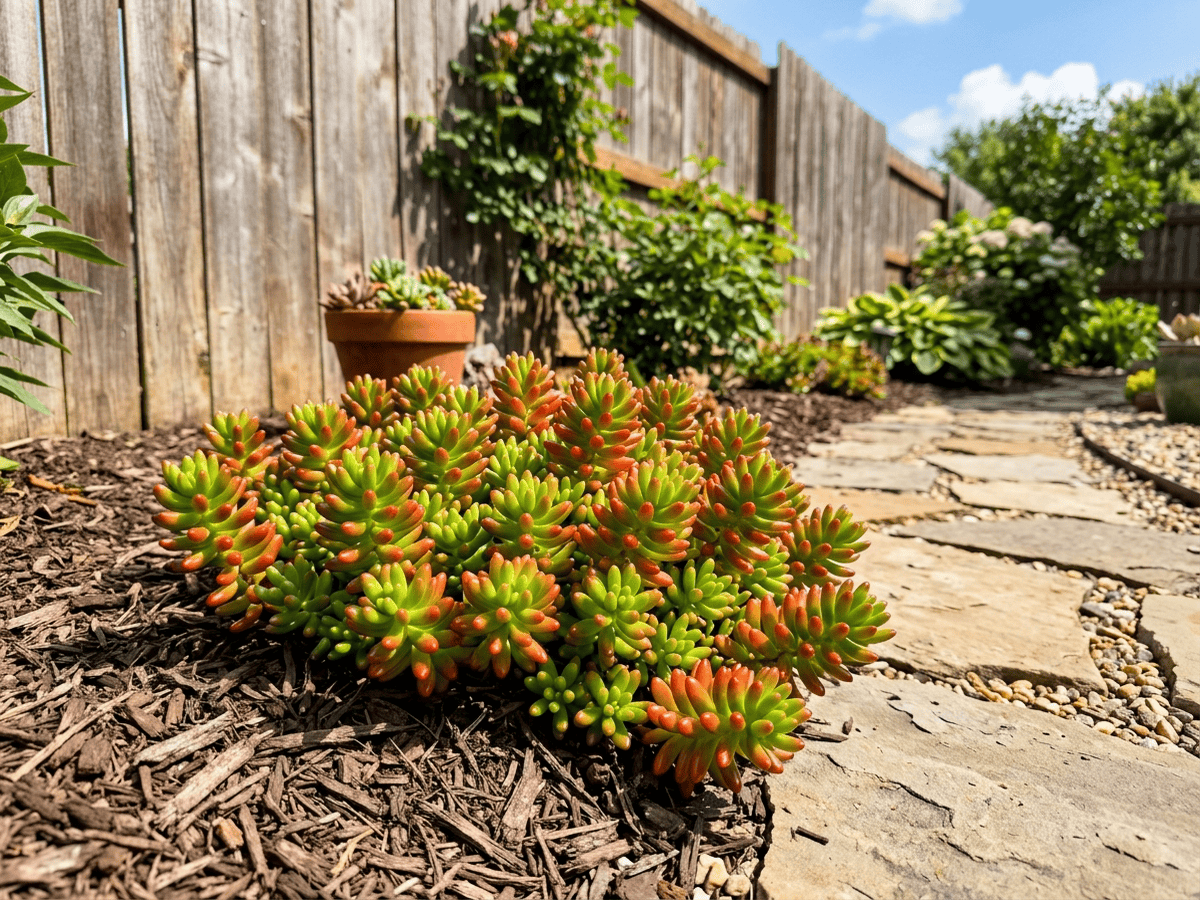
Sedum x rubrotinctum, commonly called jelly bean plant or pork and beans, is a cheerful hybrid succulent believed to be a cross between Sedum pachyphyllum and Sedum stahlii, originating in Mexican cultivation. Its plump, bean-shaped leaves are arranged in loose rosettes along trailing stems, starting green and developing vivid red to bronze tips when exposed to bright sunlight — a phenomenon called sun-stress coloring that makes each plant a living palette. The more sun it receives, the more intensely the leaves color. It produces small yellow star-shaped flowers in spring. The leaves detach easily and root readily wherever they fall, making it one of the easiest succulents to propagate. It is popular in container gardens, succulent arrangements, and as a windowsill plant. In mild climates it makes an excellent groundcover, cascading over walls and spilling from raised beds. The jelly bean plant is forgiving of neglect and thrives on a water-when-dry approach.
- Drought-tolerant
- Trailing
How to care for Christmas-Cheer
Watering
- Springevery 14 days
- Summerevery 10 days
- Fallevery 21 days
- Winterevery 30 days
Soil · Fast-draining
- Main mixSand + pumice + soil 1:1:150%
- DrainagePumice / gravel50%
Keep grit at half the mix or more — this soil is meant to dry out fast.
FERTILIZER
Cactus & Succulent Feed 2-7-7
Hold the nitrogen back and growth stays compact instead of soft and stretched. Phosphorus and potassium carry the roots and the flowering.
- Nitrogen · Leaves
- Phosphorus · Roots + Blooms
- Potassium · Strength
- Springevery 60 days
- Summerevery 60 days
At a Glance
- NativeNorth America
- Height0.5–0.8 ft (0.2–0.2 m)
- Spread0.5–1 ft (0.2–0.3 m)
- Flower colorYellow
- Foliage colorGreen, Red
- SoilSandy, Well-drained
- LocationsIndoor · Yard · Balcony
Bloom time
BLOOM CYCLE
Peak bloom
Mar–May
Small yellow flowers in spring; sun stress intensifies red leaf tips year-round
Fragrance
NO FRAGRANCE
No notable fragrance.
Toxicity
Humans Slight · Pets Slight
Unknown toxic principle
Slight
- Sap
- Leaf
- Contact
EXPOSURE Touching sap and leaves.
EFFECT Sap can cause mild skin irritation in sensitive individuals.
NOTE Documented concern for humans: Sap can cause mild skin irritation in sensitive individuals.
Slight
- All
- Ingestion
EXPOSURE Eating any part of the plant.
EFFECT Vomiting, GI irritation and unusually among sedums, specifically reported as mildly toxic.
NOTE While Sedum is broadly non-toxic per ASPCA, S. x rubrotinctum has been specifically reported to cause mild GI toxicity in pets.
Slight
- All
- Ingestion
EXPOSURE Eating any part of the plant.
EFFECT Vomiting, GI irritation.
NOTE While Sedum is broadly non-toxic per ASPCA, S. x rubrotinctum has been specifically reported to cause mild GI toxicity in pets.
Educational information, not medical or veterinary advice. If exposure is suspected, contact a doctor or veterinarian.
DISTRIBUTION


- Native
- North America
History

Sedum x rubrotinctum is believed to be a hybrid (possibly natural, possibly garden-made) between S. stahlii from Mexico and S. pachyphyllum, and was first described formally by R. T. Clausen in 1948. It has no confirmed wild population. The name "rubrotinctum" means "tinted red," referring to the bright cherry-red coloration the plump cylindrical leaves develop under strong sun or cool temperatures.
It is among the easiest succulents to propagate — single dropped leaves root readily — making it a foundational beginner succulent and one of the most-propagated plants in the global succulent trade. The variegated cultivar "Aurora" has pale pink leaves. Unlike most sedums, which ASPCA classifies as non-toxic, S. x rubrotinctum has specifically been associated with reports of mild toxicity in cats and dogs and should be kept out of reach.
Sedum x rubrotinctum is a garden hybrid that likely arose in Mexican nurseries, though its exact origin is uncertain. It became a global houseplant sensation during the succulent boom of the 2010s, when its candy-colored leaves made it one of the most photographed and shared plants on social media. The ease with which its leaves propagate — simply falling off and rooting on soil — helped fuel the 'prop-lifting' culture among millennial plant enthusiasts.
Symbolism & meaning
What It Symbolizes
Christmas-Cheer is Joy in candy-colored form — chubby green leaves that flush red in bright sun, looking almost like jellybeans clinging to the stem. Its Simplicity extends to propagation: a single fallen leaf will root happily on its own. A succulent that turns playfulness and easy-going life into one small, cheerful plant.
- Joy — Its candy-colored leaves bring a sense of playful happiness
- Simplicity — Effortless propagation represents the beauty of uncomplicated living
Where the Name Comes From
'Rubrotinctum' means 'red-tinged' in Latin, perfectly describing the red coloration that develops on its jelly-bean-shaped leaves under strong light.
Uses & Fun Facts
- Jelly-bean succulent stars in dish gardens and shallow pots
- Plump leaves blush red in bright sunlight
- Low spreading mat for hot dry rockeries
Related plants
More Sedum plants
 Biting StonecropSedum acre
 White StonecropSedum album
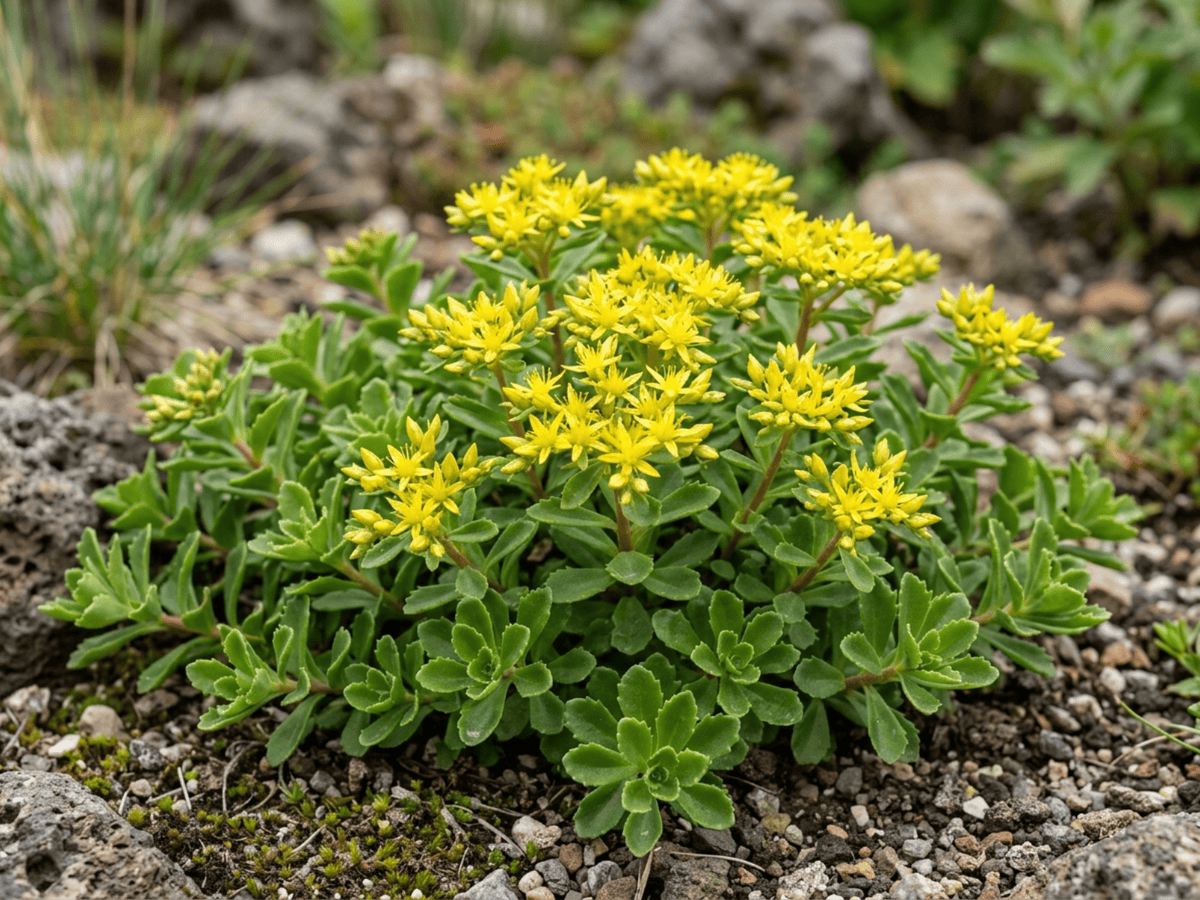 Aizoon StonecropSedum kamtschaticum
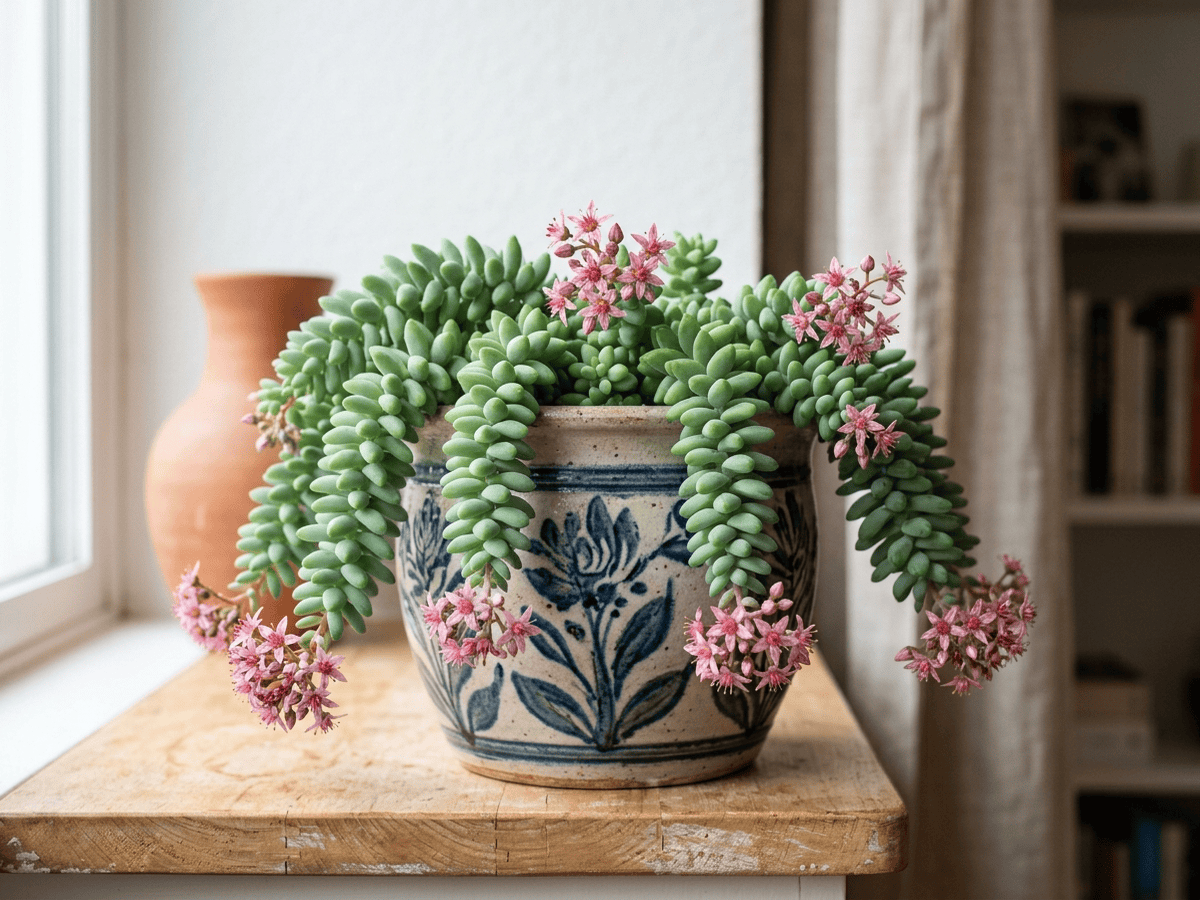 Burro's-TailSedum morganianum
Plants with similar care
 Chinese AbeliaAbelia chinensis
 Fragrant AbeliaAbelia mosanensis
 Large-Flowered AbeliaAbelia uniflora
 Glossy AbeliaAbelia x grandiflora
Frequently asked questions
How often should I water Christmas-Cheer?
In summer, water about every 10 days; in winter, about every 30 days. Adjust for heat, pot size and drainage.
How much light does Christmas-Cheer need?
Full sun: 6+ hrs direct. Watch the leaves — scorching or stretching means the light needs adjusting.
Is Christmas-Cheer toxic to cats or dogs?
Pets Slight (Dogs Slight · Cats Slight) Educational information, not medical or veterinary advice. If exposure is suspected, contact a doctor or veterinarian.
Is Christmas-Cheer easy to grow?
Yes — it is considered an easy, beginner-friendly plant.
Can Christmas-Cheer be grown indoors?
Yes, it adapts well to indoor growing given the right light.
When does Christmas-Cheer bloom?
It typically blooms Mar–May in the Northern Hemisphere.
YardMate
Identify any plant in seconds
Snap a photo — YardMate names the plant, diagnoses problems, and reminds you when to water.
Download on the App Store