 YardMate

Blue Chalksticks
Senecio mandraliscae
Easy · Beginner friendlyAbout Blue Chalksticks
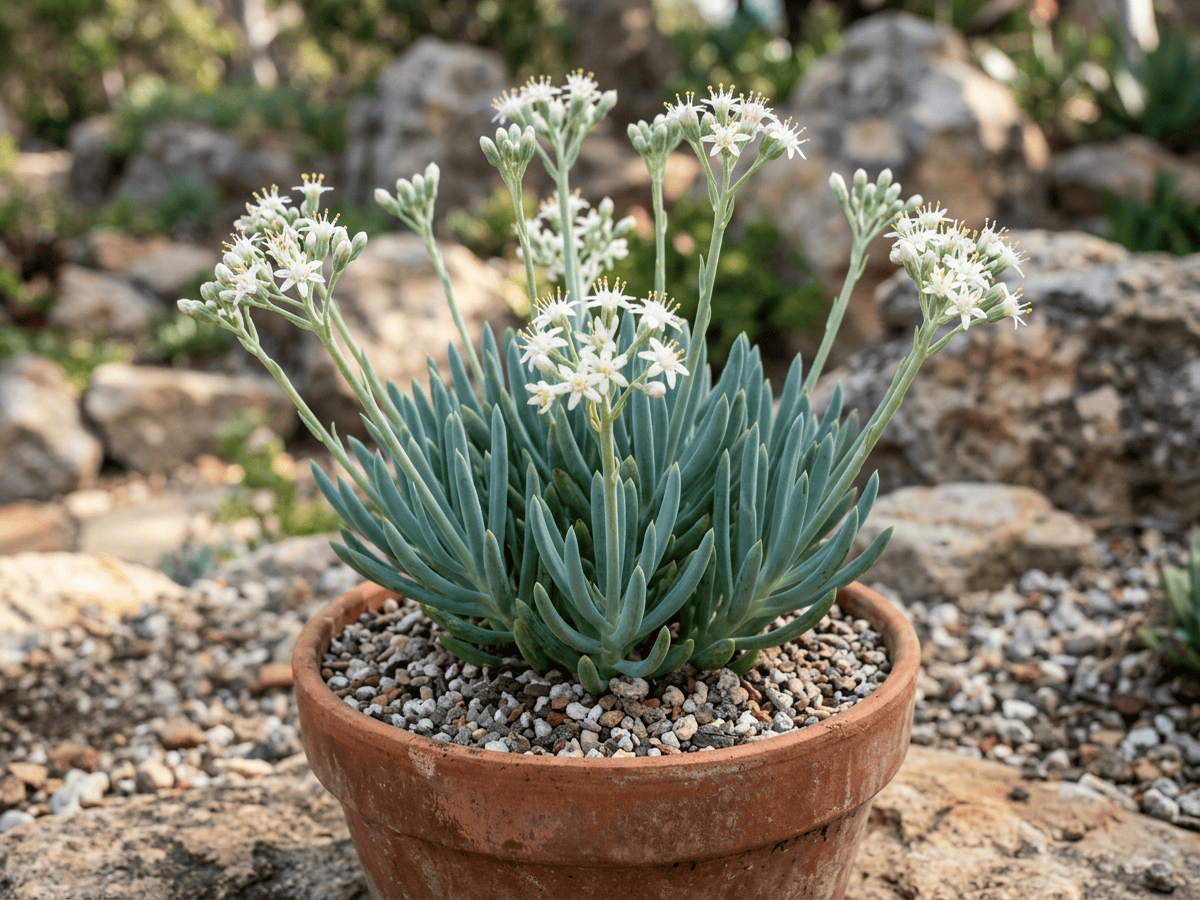
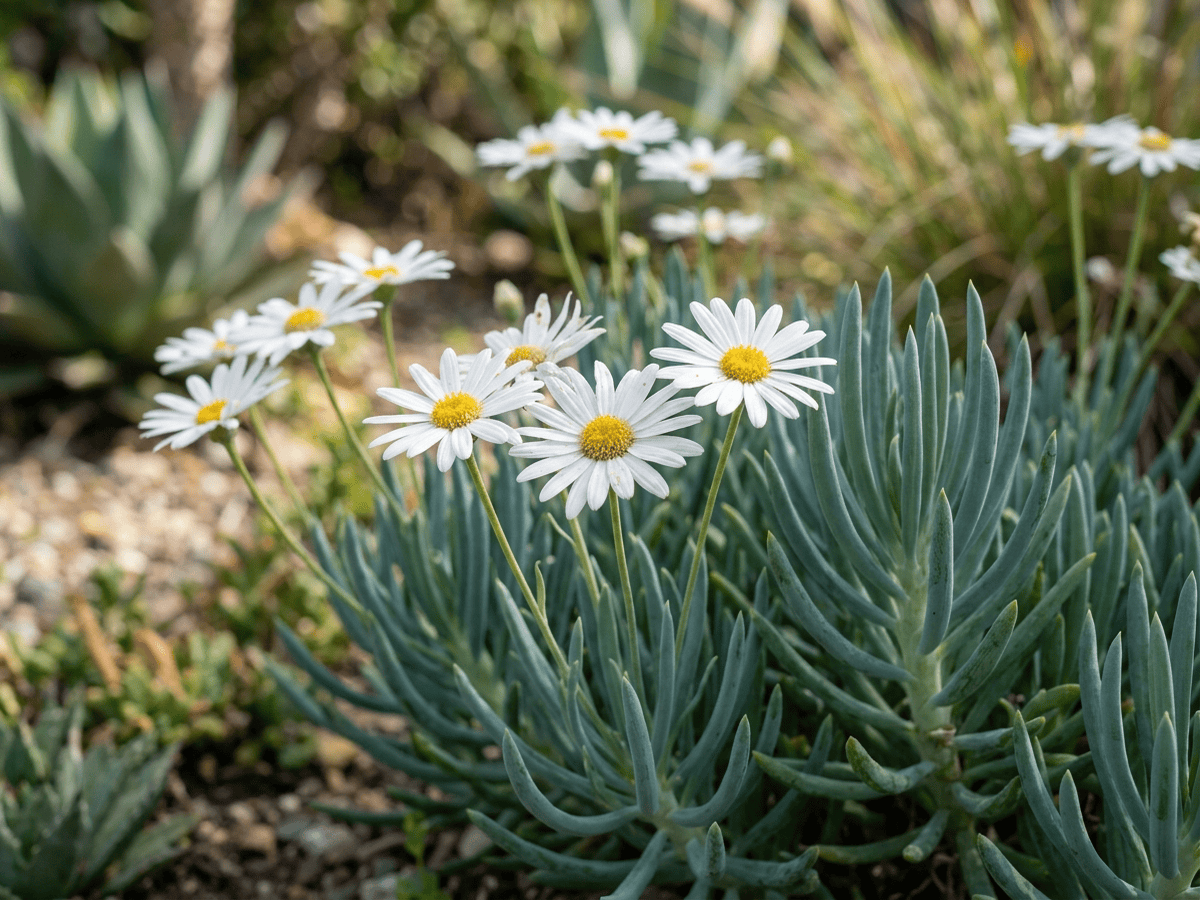
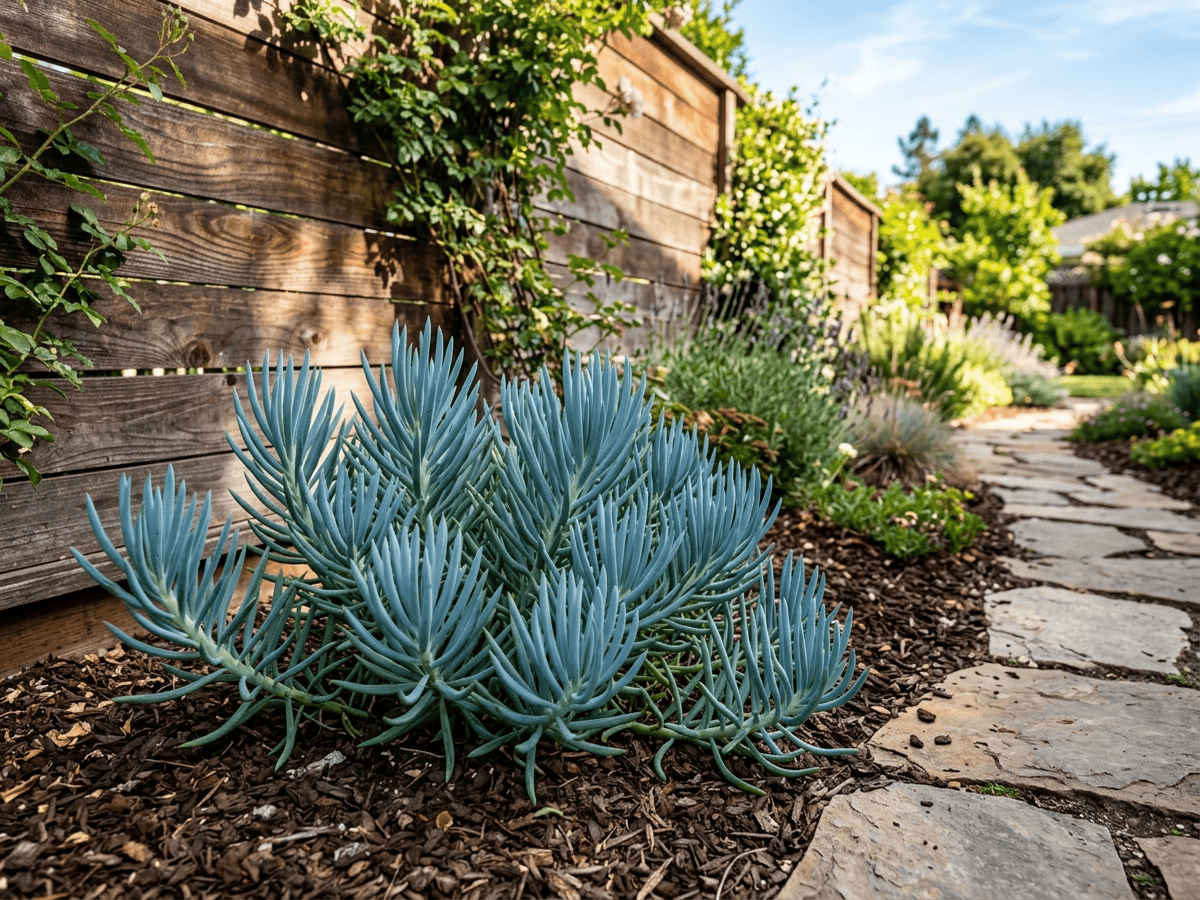
Senecio mandraliscae, known as blue finger or large blue chalksticks, is a vigorous succulent groundcover native to South Africa. It closely resembles its smaller relative Senecio serpens but grows larger and more robustly, reaching 30 to 45 centimeters tall with longer, thicker blue-gray finger-like leaves. The intense powder-blue foliage color is its signature feature, creating dramatic sweeps of cool color in landscape plantings. It spreads readily through rooting stems and can cover large areas quickly, making it popular for commercial landscaping, highway medians, and public gardens in Mediterranean climates. Small white flowers appear in summer but are secondary to the foliage display. It excels in coastal conditions, tolerating salt spray, wind, and poor sandy soil. This species has become a cornerstone of water-wise landscaping in California, Australia, and the Mediterranean, where it provides year-round color without irrigation once established. Its rapid growth rate means it can fill a garden bed in a single growing season.
- Drought-tolerant
- Groundcover
- Fast-growing
How to care for Blue Chalksticks
Watering
- Springevery 14 days
- Summerevery 10 days
- Fallevery 21 days
- Winterevery 30 days
Soil · Fast-draining
- Main mixSand + pumice + soil 1:1:150%
- DrainagePumice / gravel50%
Keep grit at half the mix or more — this soil is meant to dry out fast.
FERTILIZER
- Springevery 45 days
- Summerevery 45 days
- Fallevery 60 days
At a Glance
- NativeAfrica
- Height1–1.5 ft (0.3–0.5 m)
- Spread2–3 ft (0.6–0.9 m)
- Flower colorWhite
- Foliage colorBlue-green, Silver
- SoilSandy, Well-drained
- LocationsYard
Bloom time
BLOOM CYCLE
Peak bloom
Jun–Aug
White daisy flowers in summer; foliage is the main attraction
Fragrance
NO FRAGRANCE
No notable fragrance.
Toxicity
Humans Moderate · Pets Moderate
pyrrolizidine alkaloids
Moderate
- All
- Ingestion
EXPOSURE Eating any part of the plant.
EFFECT Pyrrolizidine alkaloid exposure and liver toxicity with chronic intake.
NOTE Documented concern for humans: Pyrrolizidine alkaloid exposure and liver toxicity with chronic intake.
Moderate
- All
- Ingestion
EXPOSURE Eating any part of the plant.
EFFECT Vomiting, diarrhea, liver damage.
NOTE ASPCA lists Senecio as toxic to dogs, cats, horses.
Moderate
- All
- Ingestion
EXPOSURE Eating any part of the plant.
EFFECT Vomiting, diarrhea, liver damage.
NOTE ASPCA lists Senecio as toxic to dogs, cats, horses.
Educational information, not medical or veterinary advice. If exposure is suspected, contact a doctor or veterinarian.
DISTRIBUTION


- Native
- Introduced
- Africa
History

Senecio mandraliscae (now Curio talinoides subsp. mandraliscae in revised taxonomy) originates in the Eastern Cape of South Africa and was introduced to horticulture through European botanical gardens in the 19th century. The epithet "mandraliscae" commemorates the Italian Prince Mandralisca, whose garden and collection in Sicily first grew it in Europe in cultivated form. In mid-20th century California it became emblematic of the drought-tolerant landscape tradition promoted by designers like Garrett Eckbo and Thomas Church, who incorporated it as ribbons of intense blue alongside aloes, agaves, and cacti.
It is commonly mass-planted on slopes in arid suburban landscaping because of its reliable color, low water needs, and neat upright growth habit. Senecio mandraliscae is named after Baron Ferrara di Mandralisce, a 19th-century Sicilian nobleman and naturalist who maintained an important botanical collection.
The species became a landscape industry staple in Southern California during the drought-conscious gardening revolution of the 2000s, where designers discovered it could replace water-hungry groundcovers while providing striking year-round color. Like other Senecio species, it contains pyrrolizidine alkaloids.
Symbolism & meaning
What It Symbolizes
Curio Talinoides suggests freedom, its vigorous spreading growth suggesting uninhibited expansion across its dry blue carpet. Paired with sustainability, it thrives without irrigation, a living argument for gardens that work with rather than against natural resources. It is a succulent whose meaning is both botanical and ecological — beauty that doesn't ask the world to change for it.
- Freedom — Its vigorous spreading growth represents uninhibited expansion and liberty
- Sustainability — Thriving without irrigation symbolizes living in harmony with natural resources
Where the Name Comes From
Senecio from Latin 'senex' (old man), referring to the white seed hairs. 'Mandraliscae' honors Baron Mandralisce of Sicily, a 19th-century naturalist and collector.
Uses & Fun Facts
- Powder-blue finger-leaved succulent carpets dry sunny slopes
- Striking blue chalk-stick foliage cools warm-color succulent plantings
Related plants
More Senecio plants
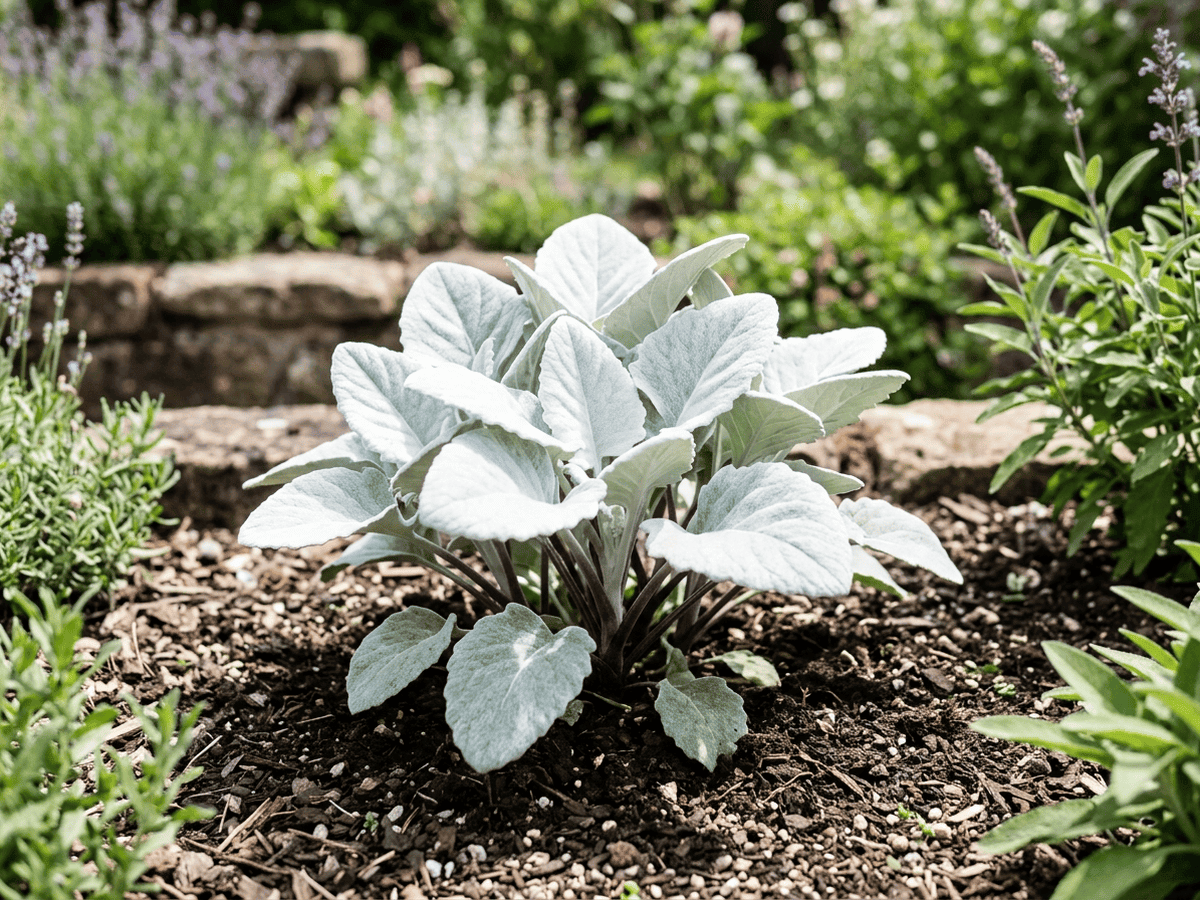 Angel Wings SenecioSenecio candidans
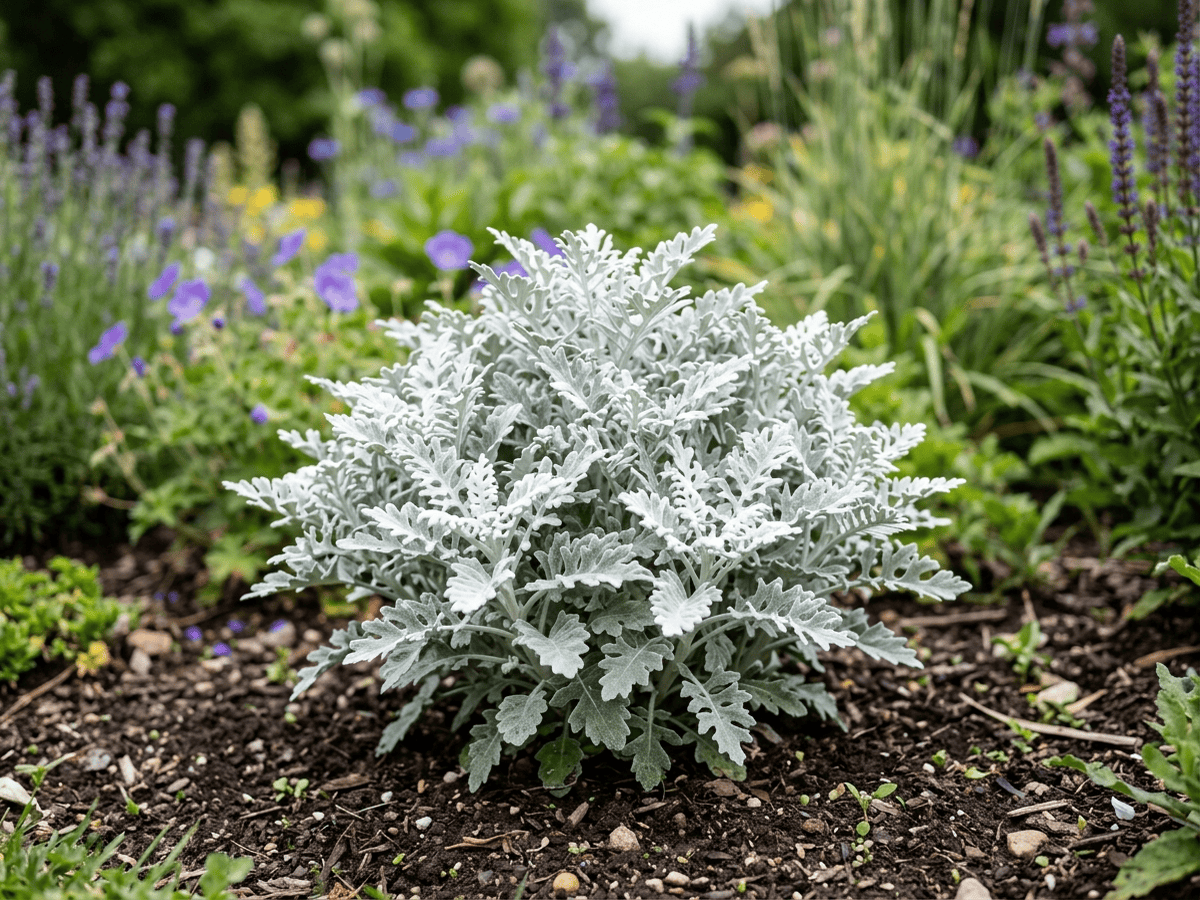 Dusty MillerSenecio cineraria
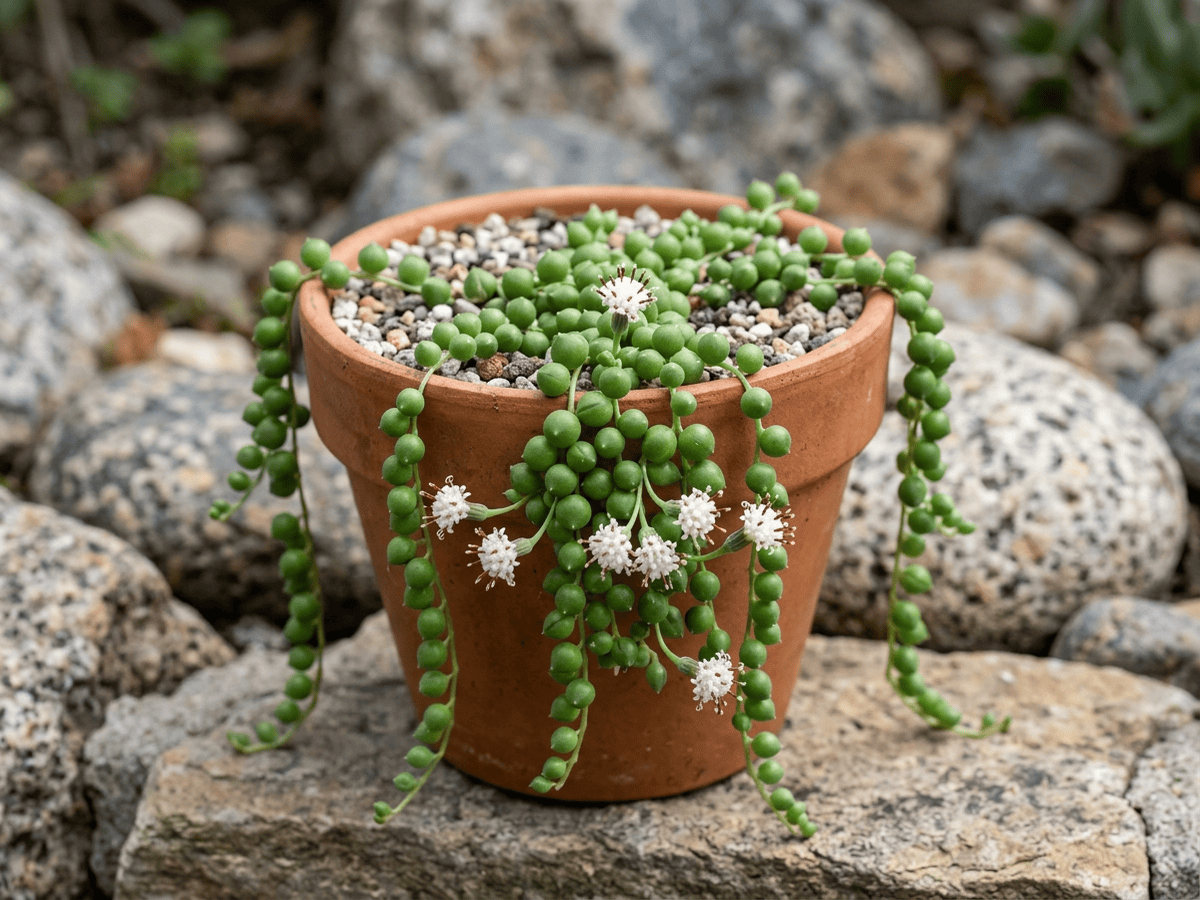 String-Of-BeadsSenecio rowleyanus
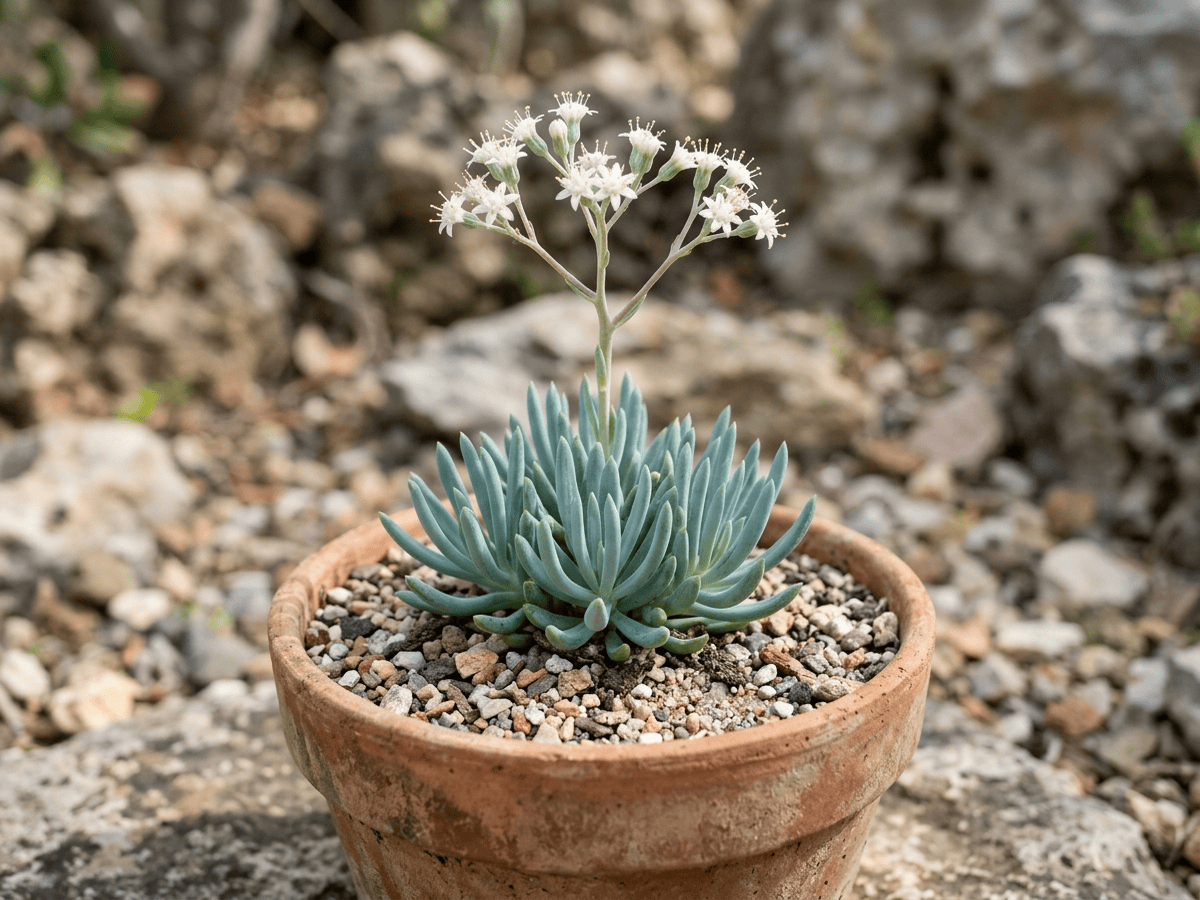 Snake RagwortSenecio serpens
Plants with similar care
 Chinese AbeliaAbelia chinensis
 Fragrant AbeliaAbelia mosanensis
 Large-Flowered AbeliaAbelia uniflora
 Glossy AbeliaAbelia x grandiflora
Frequently asked questions
How often should I water Blue Chalksticks?
In summer, water about every 10 days; in winter, about every 30 days. Adjust for heat, pot size and drainage.
How much light does Blue Chalksticks need?
Full sun: 6+ hrs direct. Watch the leaves — scorching or stretching means the light needs adjusting.
Is Blue Chalksticks toxic to cats or dogs?
Pets Moderate (Dogs Moderate · Cats Moderate) Educational information, not medical or veterinary advice. If exposure is suspected, contact a doctor or veterinarian.
Is Blue Chalksticks easy to grow?
Yes — it is considered an easy, beginner-friendly plant.
When does Blue Chalksticks bloom?
It typically blooms Jun–Aug in the Northern Hemisphere.
YardMate
Identify any plant in seconds
Snap a photo — YardMate names the plant, diagnoses problems, and reminds you when to water.
Download on the App Store