 YardMate

Common Groundsel
Senecio vulgaris
Easy · Beginner friendlyAbout Common Groundsel
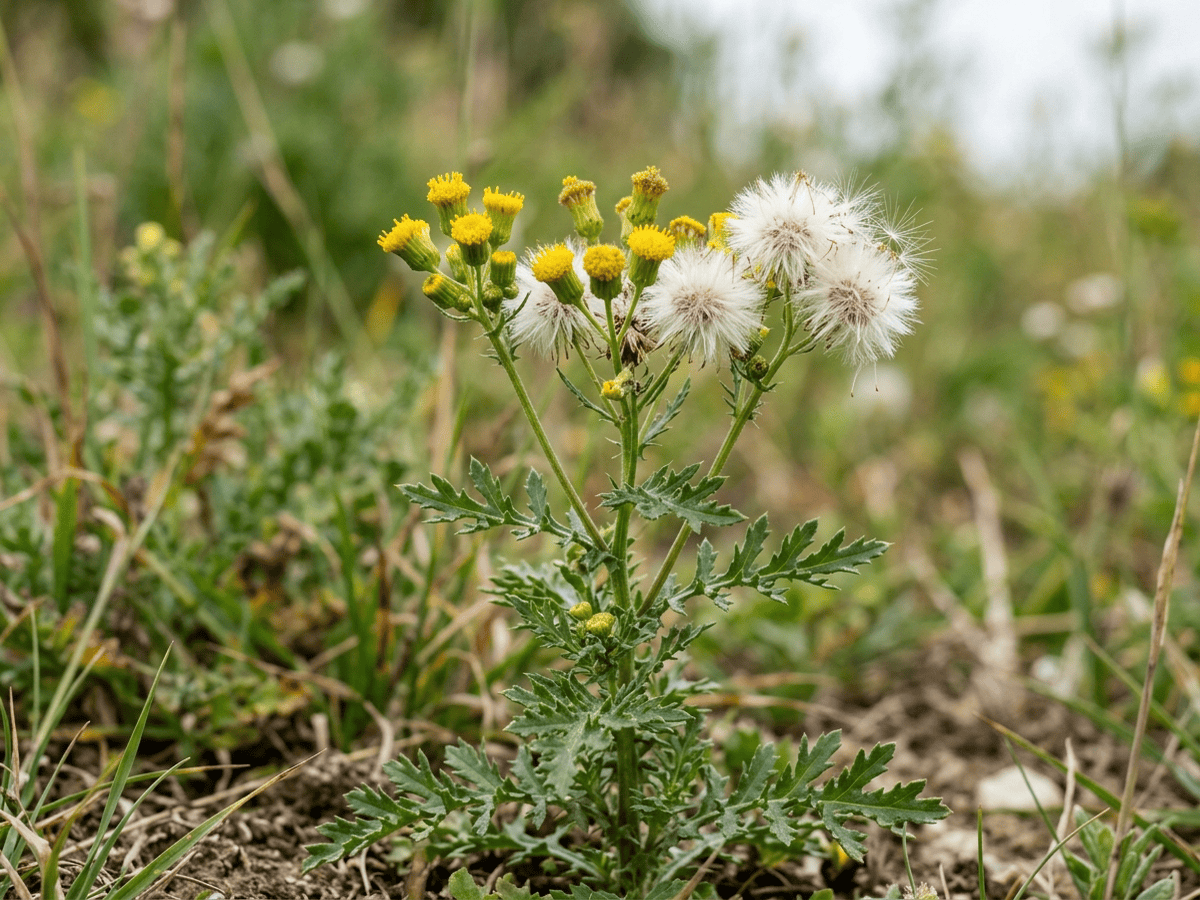
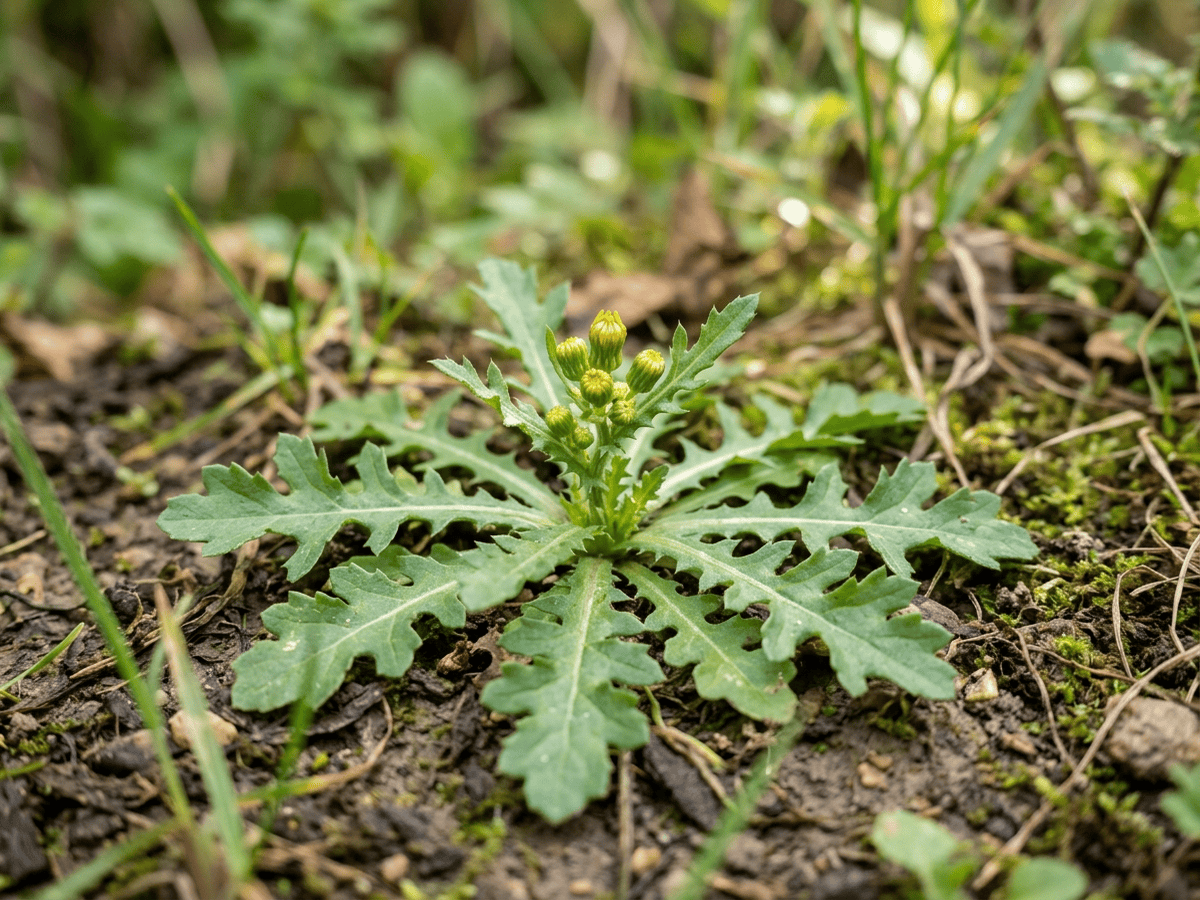
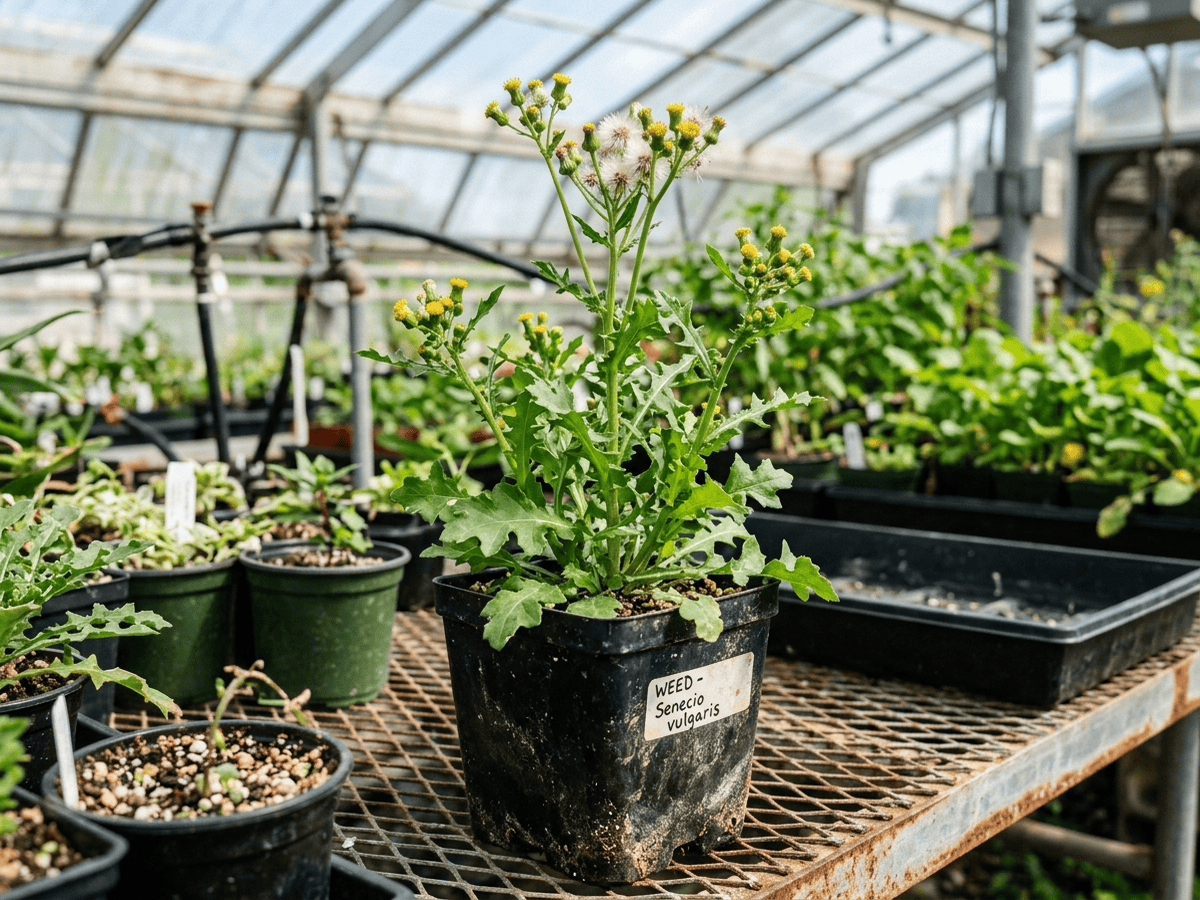
Common Groundsel is a cool-season annual weed of European origin, now naturalized throughout the US as an aggressive garden, lawn edge, and agricultural weed. Growing 6 to 18 inches tall with lobed leaves and small yellow rayless flower heads, it completes its life cycle in as little as 5 to 6 weeks and produces wind-borne seeds by the thousands. A persistent cool-season pest in American vegetable beds, nurseries, and disturbed ground.
- Fast-growing
How to care for Common Groundsel
Watering
- Springevery 7 days
- Summerevery 5 days
- Fallevery 10 days
- Winterevery 14 days
Soil · Fast-draining
- Main mixSand + pumice + soil 1:1:150%
- DrainagePumice / gravel50%
Keep grit at half the mix or more — this soil is meant to dry out fast.
FERTILIZER
This plant needs little to no feeding.
At a Glance
- NativeEurope, Western Asia
- Height0.5–1.5 ft (0.2–0.5 m)
- Spread0.5–1 ft (0.2–0.3 m)
- Flower colorYellow
- Foliage colorGreen
- SoilWell-drained, Loamy
- LocationsYard
Bloom time
BLOOM CYCLE
Peak bloom
Jan–Dec
Small yellow rayless flower heads nearly year-round in mild climates
Toxicity
Humans Toxic · Pets Toxic
pyrrolizidine alkaloids, senecionine, and seneciphylline
Toxic
- All
- Ingestion
EXPOSURE Eating any part of the plant.
EFFECT Cumulative liver damage, hepatic veno-occlusive disease, and death.
NOTE Highly hepatotoxic from cumulative pyrrolizidine alkaloid exposure. Do not consume. Contaminated hay has killed livestock; keep away from horses and pets.
Toxic
- All
- Ingestion
EXPOSURE Eating any part of the plant.
EFFECT Liver failure, wasting, and death.
NOTE Highly hepatotoxic from cumulative pyrrolizidine alkaloid exposure. Do not consume. Contaminated hay has killed livestock; keep away from horses and pets.
Toxic
- All
- Ingestion
EXPOSURE Eating any part of the plant.
EFFECT Liver failure, wasting, and death.
NOTE Highly hepatotoxic from cumulative pyrrolizidine alkaloid exposure. Do not consume. Contaminated hay has killed livestock; keep away from horses and pets.
Educational information, not medical or veterinary advice. If exposure is suspected, contact a doctor or veterinarian.
DISTRIBUTION

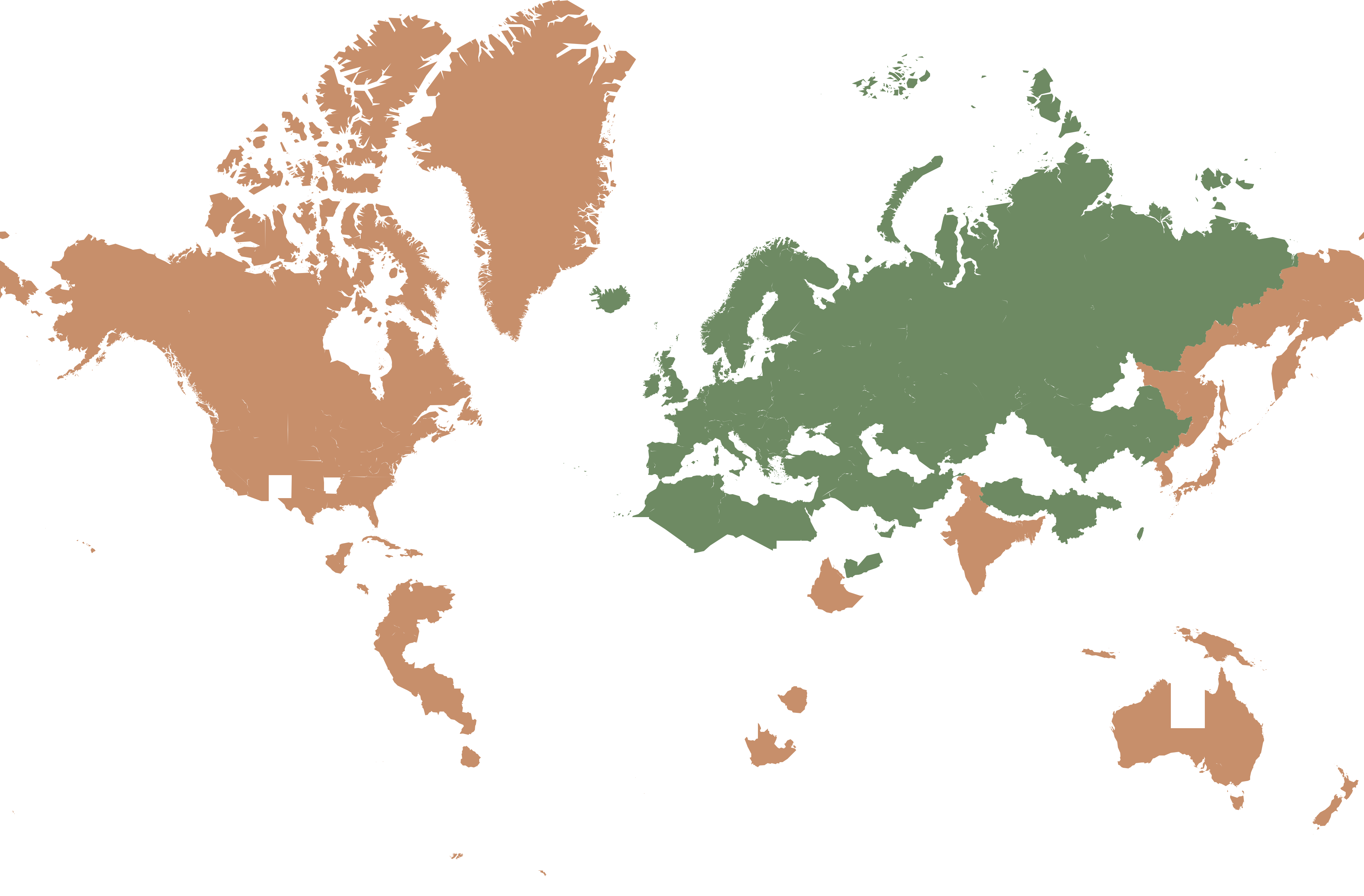
- Native
- Introduced
- Europe
- Western Asia
History

Senecio vulgaris is native to Europe and western Asia. Linnaeus described it in Species Plantarum (1753). For centuries European folk herbalists used decoctions for wound poultices, menstrual regulation, and general 'women's complaints', reflected in old names like 'sention' and 'simson'.
Modern pharmacological research in the 20th century identified high levels of pyrrolizidine alkaloids including senecionine and seneciphylline, which cause cumulative liver damage — even small chronic doses can cause hepatic veno-occlusive disease. Livestock poisoning from contaminated hay became a major veterinary issue globally. Today most European regulatory authorities warn against any internal use of Senecio species.
As a weed it is a major problem in nursery crops, orchards, and vegetable fields worldwide, producing seeds that germinate year-round in mild climates. Canaries eat the seeds — hence the English name groundsel. Native to Europe and western Asia, Senecio vulgaris arrived in North America with early colonial agriculture and is now one of the most widespread cool-season weeds across the US. Resistant biotypes to triazine herbicides emerged in the 1970s, making it a notorious challenge in American nursery and vegetable production.
Symbolism & meaning
What It Symbolizes
Common Groundsel is unwanted persistence at gardener's eye level — capable of seeding by the thousands and returning year after year despite every effort to remove it. Its fluffy white seed heads earn it the folk name old man's beard, drifting on every breeze. Its meaning is ecological observation rather than romance: a small reminder of how fertile ground does not stay empty for long, no matter our intentions.
- Unwanted persistence — seeds by the thousands, returns endlessly
- Old man's beard — fluffy white seed heads
Where the Name Comes From
'Senecio' from Latin 'senex' meaning old man, for the white-bearded seed heads; 'vulgaris' means common.
Related plants
More Senecio plants
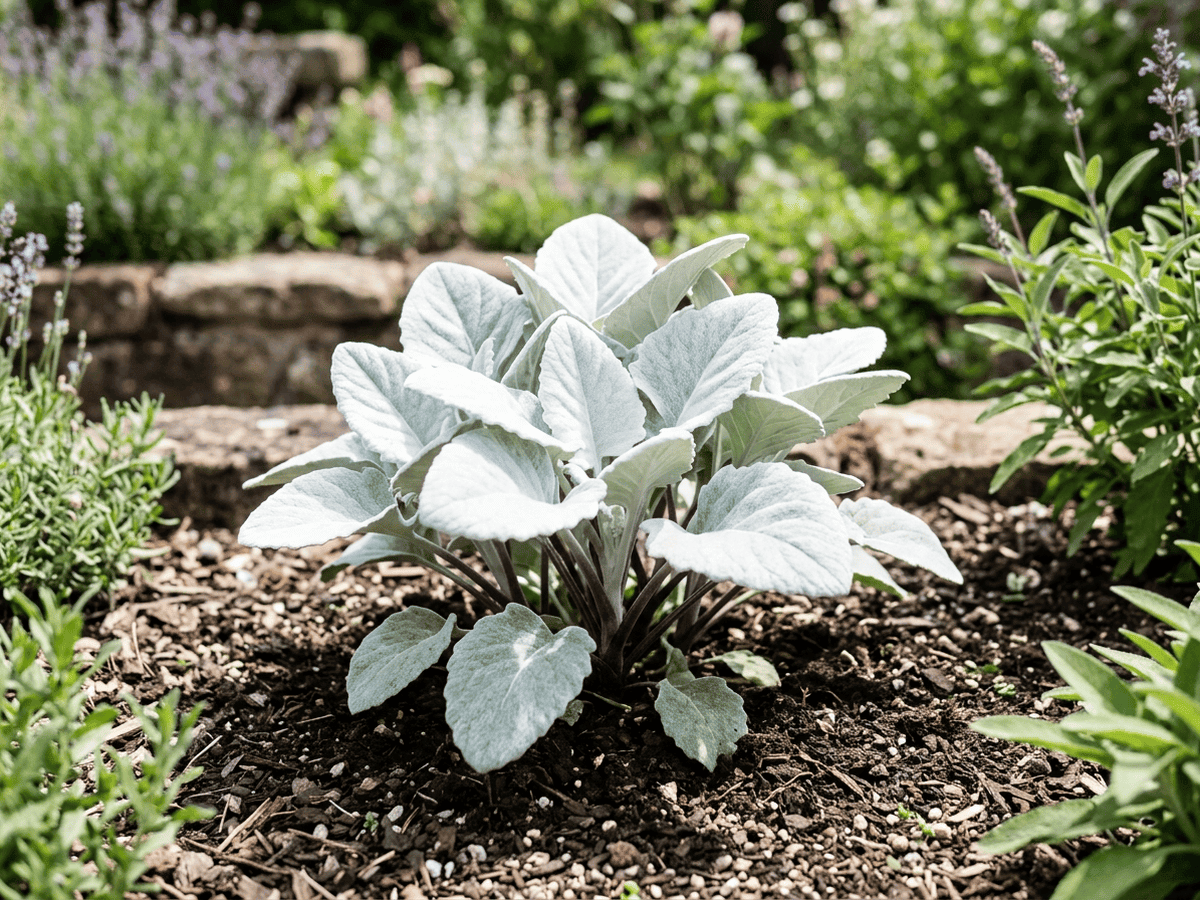 Angel Wings SenecioSenecio candidans
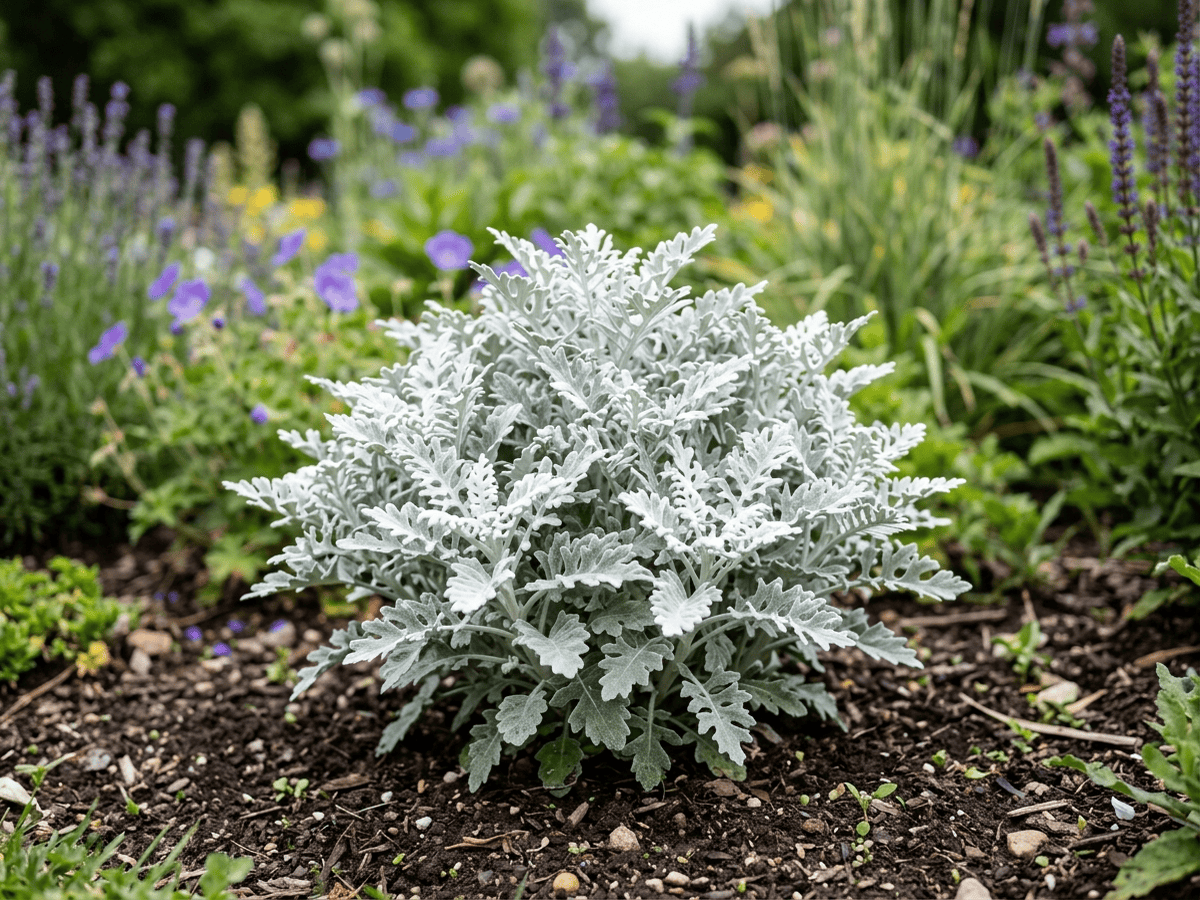 Dusty MillerSenecio cineraria
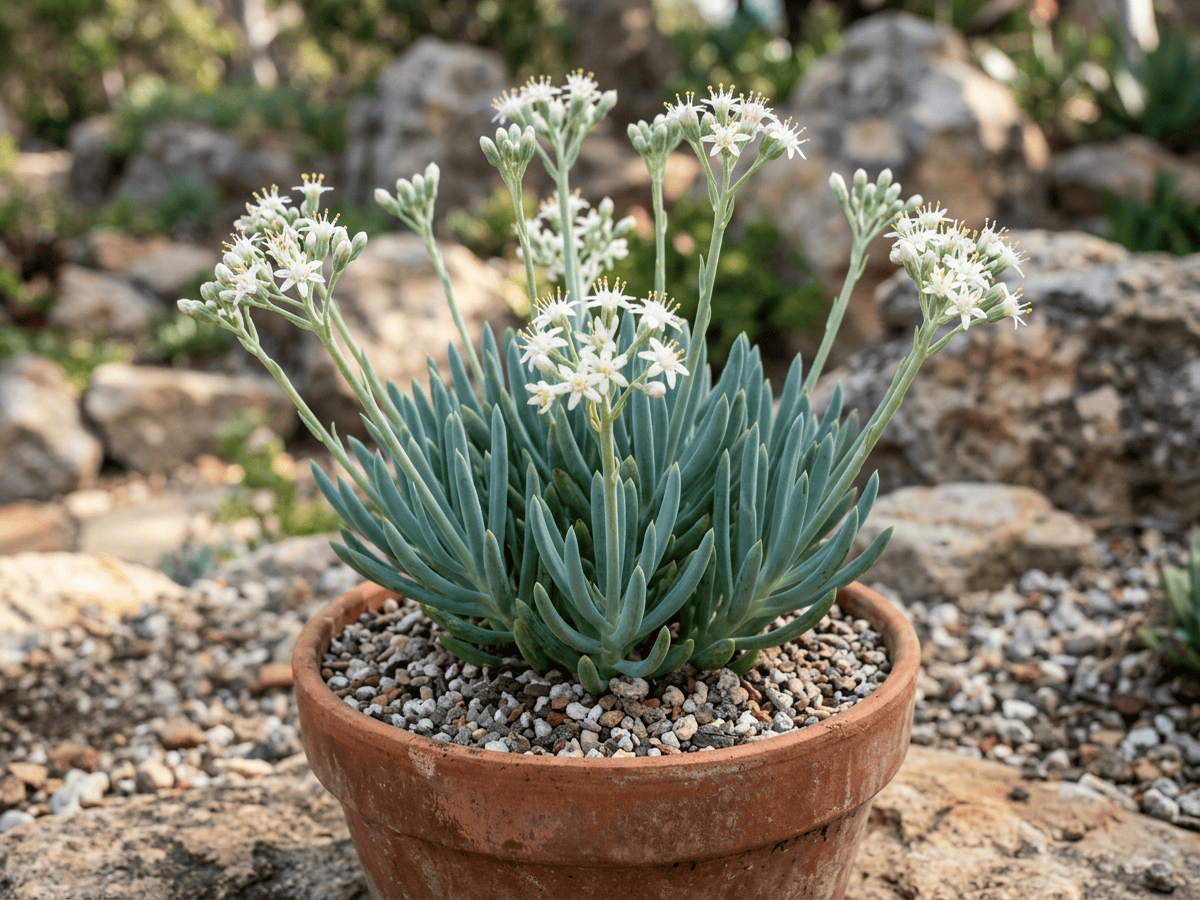 Blue ChalksticksSenecio mandraliscae
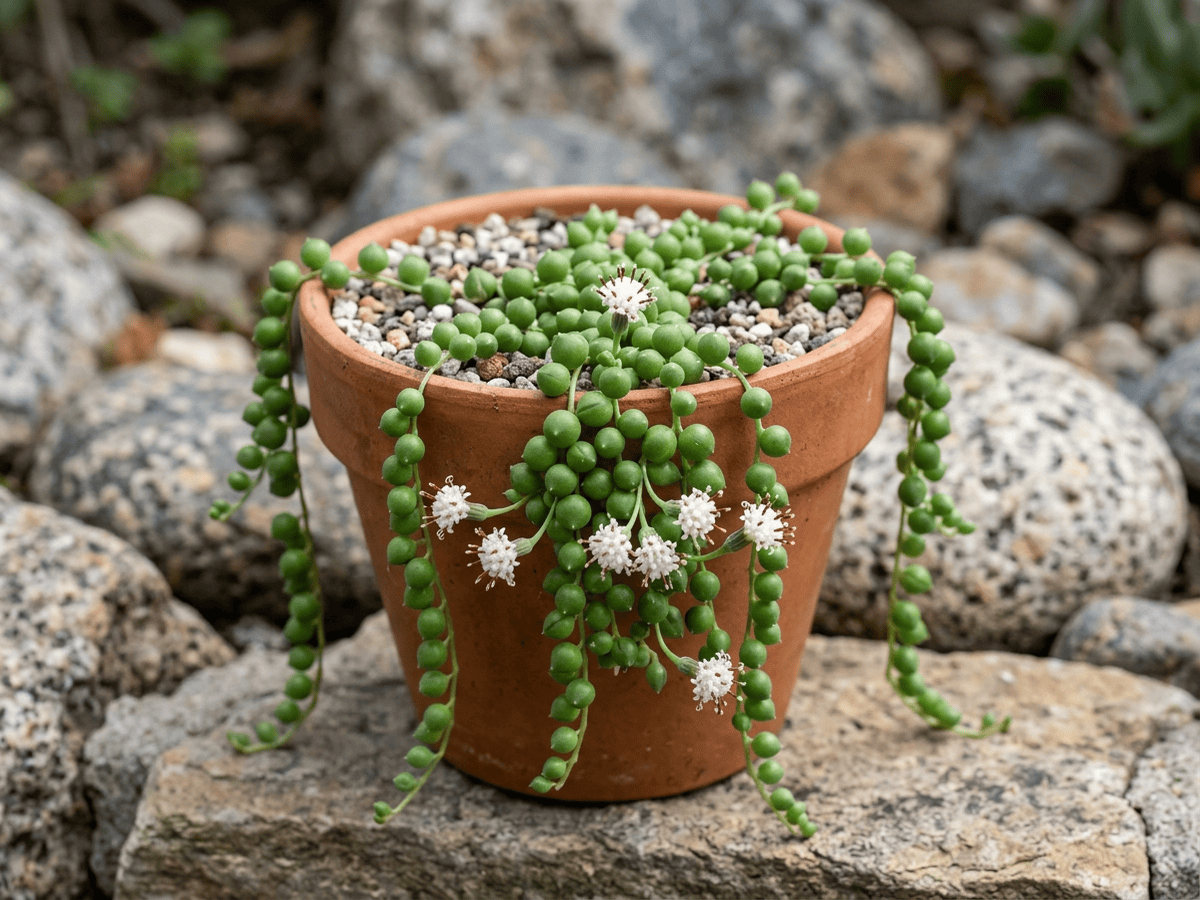 String-Of-BeadsSenecio rowleyanus
Plants with similar care
 Chinese AbeliaAbelia chinensis
 Fragrant AbeliaAbelia mosanensis
 Large-Flowered AbeliaAbelia uniflora
 Glossy AbeliaAbelia x grandiflora
Frequently asked questions
How often should I water Common Groundsel?
In summer, water about every 5 days; in winter, about every 14 days. Adjust for heat, pot size and drainage.
How much light does Common Groundsel need?
Full sun: 6+ hrs direct. Watch the leaves — scorching or stretching means the light needs adjusting.
Is Common Groundsel toxic to cats or dogs?
Pets Toxic (Dogs Toxic · Cats Toxic) Educational information, not medical or veterinary advice. If exposure is suspected, contact a doctor or veterinarian.
Is Common Groundsel easy to grow?
Yes — it is considered an easy, beginner-friendly plant.
When does Common Groundsel bloom?
It typically blooms Jan–Dec in the Northern Hemisphere.
YardMate
Identify any plant in seconds
Snap a photo — YardMate names the plant, diagnoses problems, and reminds you when to water.
Download on the App Store