 YardMate
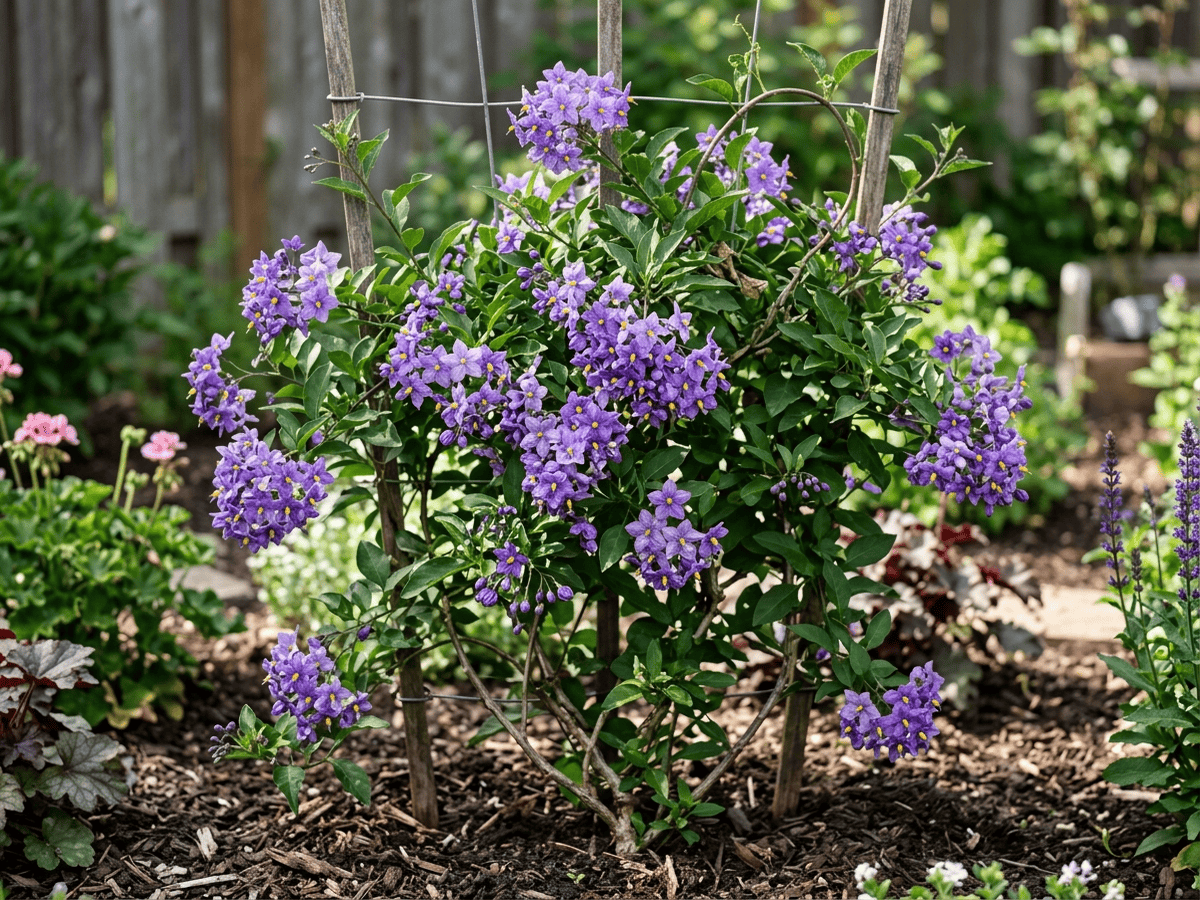


Chilean Potato Vine
Solanum crispum
Medium · Some experienceAbout Chilean Potato Vine
Chilean Potato Vine is a scrambling semi-evergreen climber reaching 10-20 feet, producing abundant clusters of starry purple-blue flowers with yellow centers from early summer into fall, resembling potato flowers on a grand scale. Native to Chile and Peru, it is a favorite vine for Pacific coast US gardens where mild winters suit it. The cultivar 'Glasnevin' is the most popular and cold-hardy form.
- Climbing
- Evergreen
- Long-blooming
- Pollinator-friendly
How to care for Chilean Potato Vine
Watering
- Springevery 7 days
- Summerevery 5 days
- Fallevery 10 days
- Winterevery 21 days
Soil · Well-draining
- Top dressingPine bark mulch10%
- Main mixPotting soil + perlite 2:170%
- DrainageLECA / gravel20%
Never skip the drainage layer — standing water is the top cause of root rot.
FERTILIZER
Balanced Feed 14-14-14
An even feed covers all three needs at once, keeping leaves, roots and blooms moving together with nothing pushed out of balance.
- Nitrogen · Leaves
- Phosphorus · Roots + Blooms
- Potassium · Strength
- Springevery 30 days
- Summerevery 45 days
At a Glance
- NativeSouth America
- Height12–20 ft (3.7–6.1 m)
- Spread6–10 ft (1.8–3 m)
- Flower colorPurple, Blue, White
- Foliage colorGreen
- SoilLoamy, Well-drained
- LocationsYard
Bloom time
BLOOM CYCLE
Peak bloom
Jun–Oct
Purple-blue starry flowers June to October
Fragrance
LIGHT FRAGRANCE
The flowers have a mild sweet scent.
Toxicity
Humans Toxic · Pets Toxic
solanine and solasodine glycoalkaloids
Toxic
- Leaf
- Fruit
- Stem
- Ingestion
EXPOSURE Eating leaves, fruit, and stems.
EFFECT Nausea, vomiting, diarrhea, potential neurological effects from solanine alkaloids.
NOTE Documented concern for humans: Nausea, vomiting, diarrhea, potential neurological effects from solanine alkaloids.
Toxic
- Leaf
- Fruit
- Stem
- Ingestion
EXPOSURE Eating leaves, fruit, and stems.
EFFECT Vomiting, diarrhea, depression.
NOTE ASPCA lists Solanum as toxic. All parts contain glycoalkaloids.
Toxic
- Leaf
- Fruit
- Stem
- Ingestion
EXPOSURE Eating leaves, fruit, and stems.
EFFECT Vomiting, diarrhea, depression.
NOTE ASPCA lists Solanum as toxic. All parts contain glycoalkaloids.
Educational information, not medical or veterinary advice. If exposure is suspected, contact a doctor or veterinarian.
DISTRIBUTION


- Native
- Introduced
- South America
History
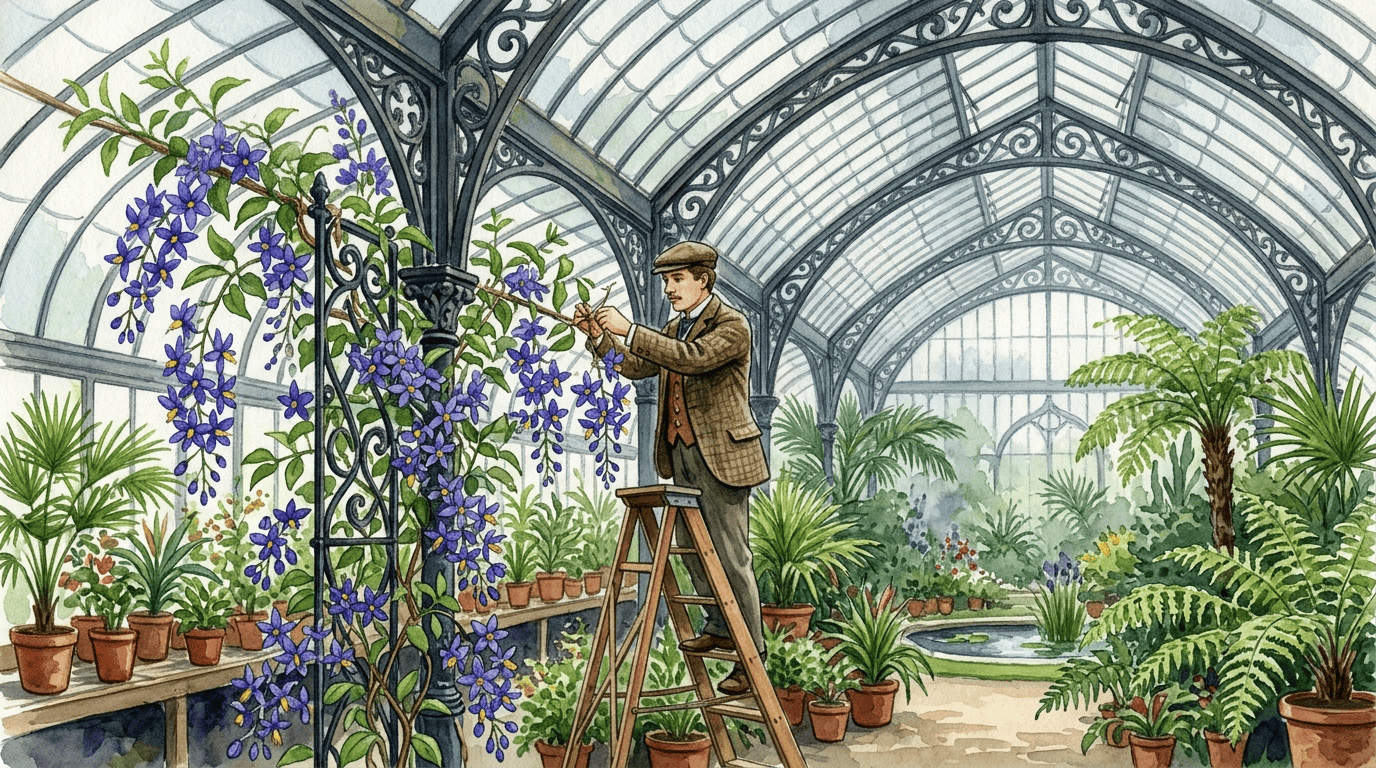
Solanum crispum is native to central Chile and adjacent Peru, typically in open hillsides and coastal thickets. Spanish botanists Hipólito Ruiz López and José Antonio Pavón Jiménez described the species in 1799 based on their extensive 1777-1788 expedition through Peru and Chile. The epithet crispum means curled, referring to the wavy leaf margins.
The 4-5 meter scrambling semi-evergreen shrub-vine produces abundant clusters of 2-3 cm star-shaped deep blue-purple flowers with prominent yellow anthers from June through October—an unusually long bloom period for a climbing shrub. The flowers resemble those of its close cousin the potato (S. tuberosum) and of its Mediterranean relatives eggplant and tomato. The superior cultivar 'Glasnevin' was discovered at the Glasnevin Botanic Garden in Dublin, Ireland around 1860, and received the RHS Award of Garden Merit—it is hardier (to zone 8 or occasionally zone 7) and more free-flowering than the type, and has become the standard form in cultivation.
Like all Solanums, toxic; do not confuse with edible relatives. Introduced to British gardens in the 1820s and a staple of mild-climate horticulture since. The 'Glasnevin' cultivar was selected at Ireland's National Botanic Gardens. Well-suited to California and Pacific Northwest gardens where winters remain mild.
Symbolism & meaning
What It Symbolizes
The Chilean Potato Vine can symbolize endless summer, blooming from May until frost in milder gardens with a near-tropical insistence. Another layer is exotic beauty, the surprise of seeing potato-family flowers, recognisably related to the humble spud, lifted onto a grand decorative scale of yellow-eyed lavender stars. In the cottage and conservatory garden, solanum crispum is the warm-weather over-achiever, a vine whose familiar floral structure is suddenly draped over a wall in extravagant abundance.
- Endless summer — blooms from May to frost
- Exotic beauty — potato-family flowers on a grand scale
Where the Name Comes From
The name Chilean Potato Vine describes its vining or arching growth. 'Solanum' from Latin for nightshade; 'crispum' means curled or wavy-edged leaves.
Uses & Fun Facts
- Purple potato-flower clusters attract bumblebees through summer
- Chilean potato vine clothes warm sunny walls
- Clouds of yellow-eyed purple flowers all summer
Related plants
More Solanum plants
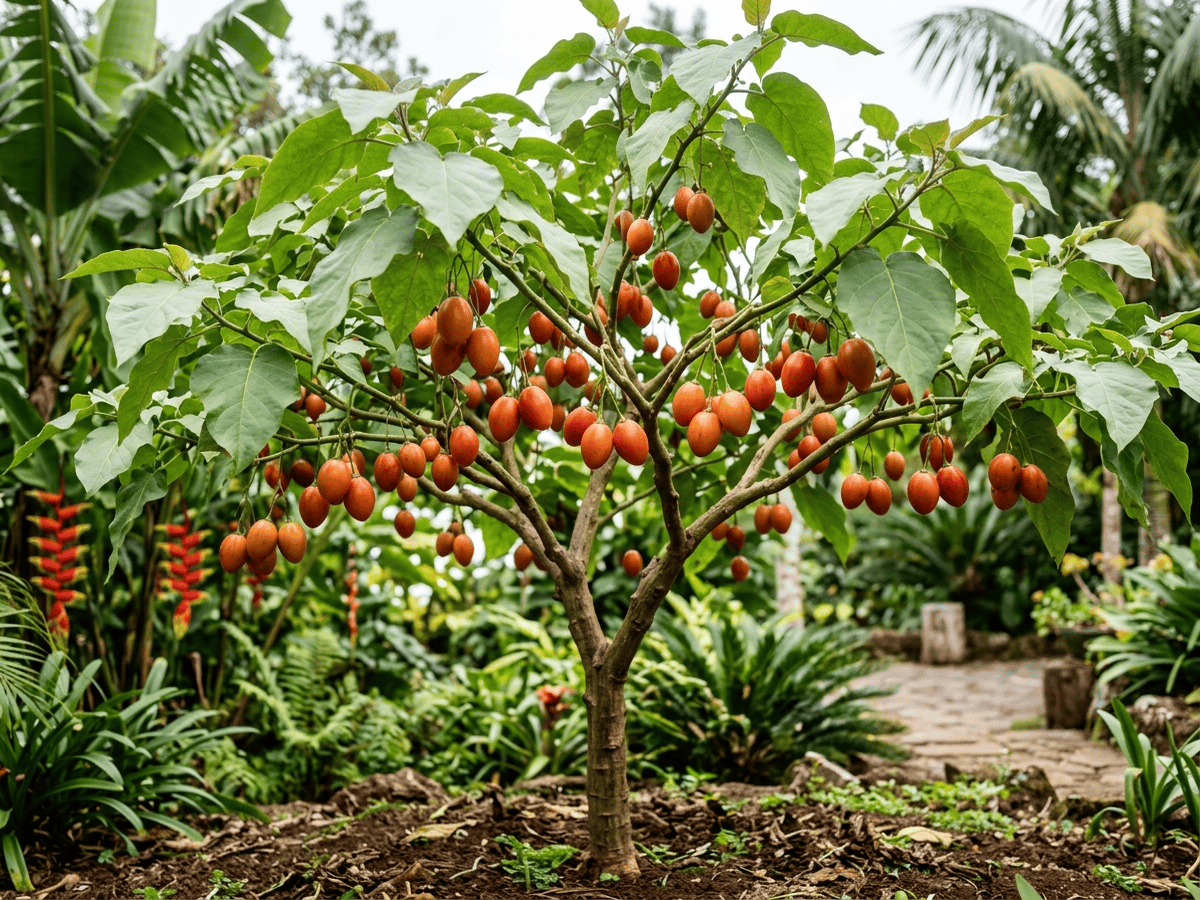 TamarilloSolanum betaceum
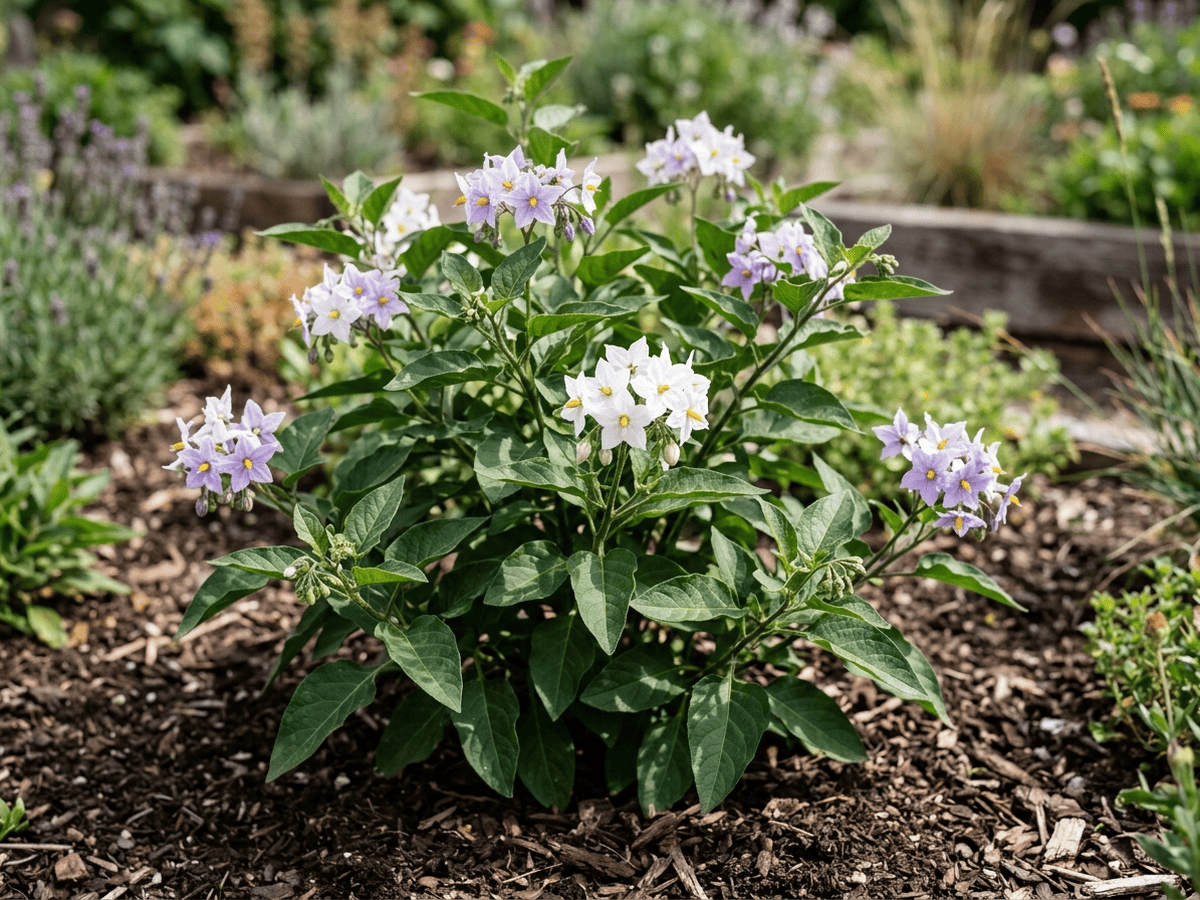 Buenos Aires NightshadeSolanum bonariense
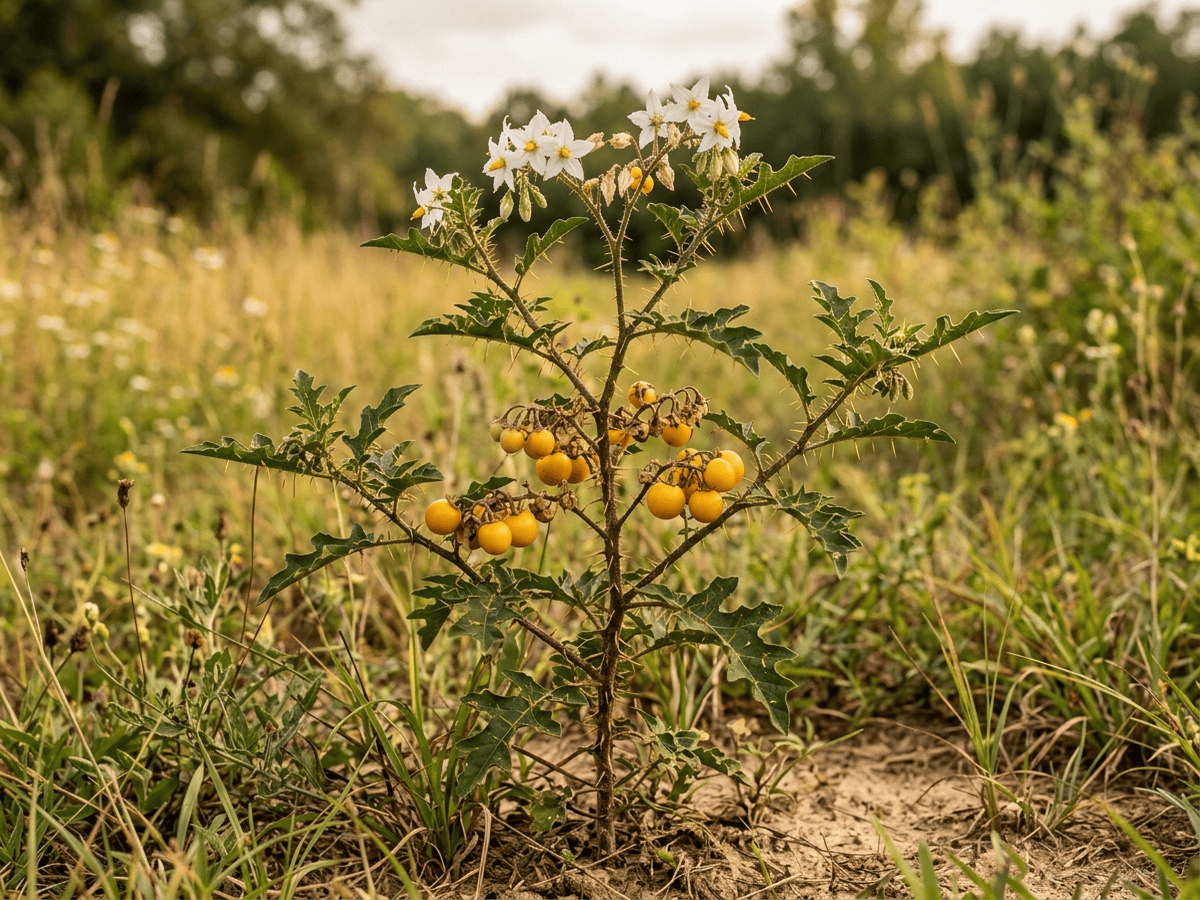 Carolina HorsenettleSolanum carolinense
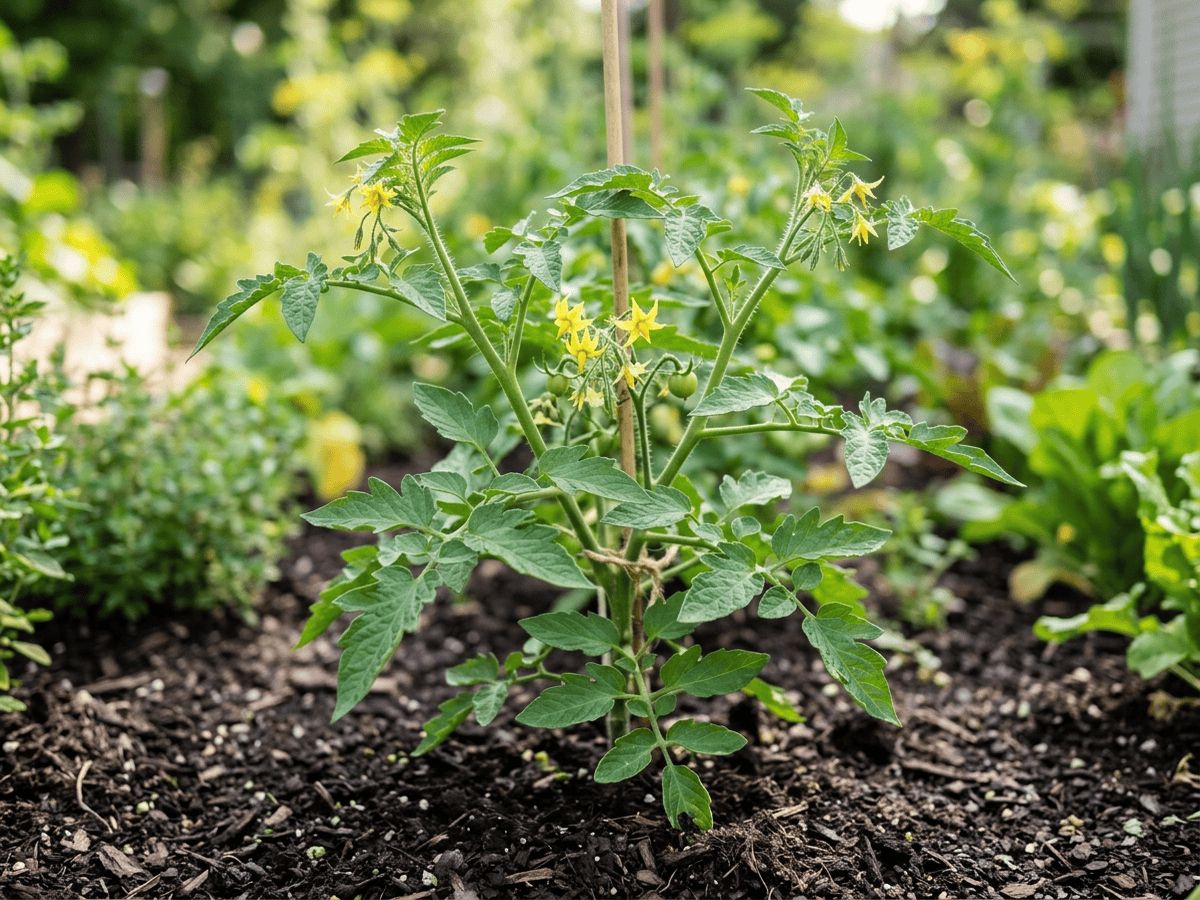 TomatoSolanum lycopersicum
Plants with similar care
 Mexican AbeliaAbelia floribunda
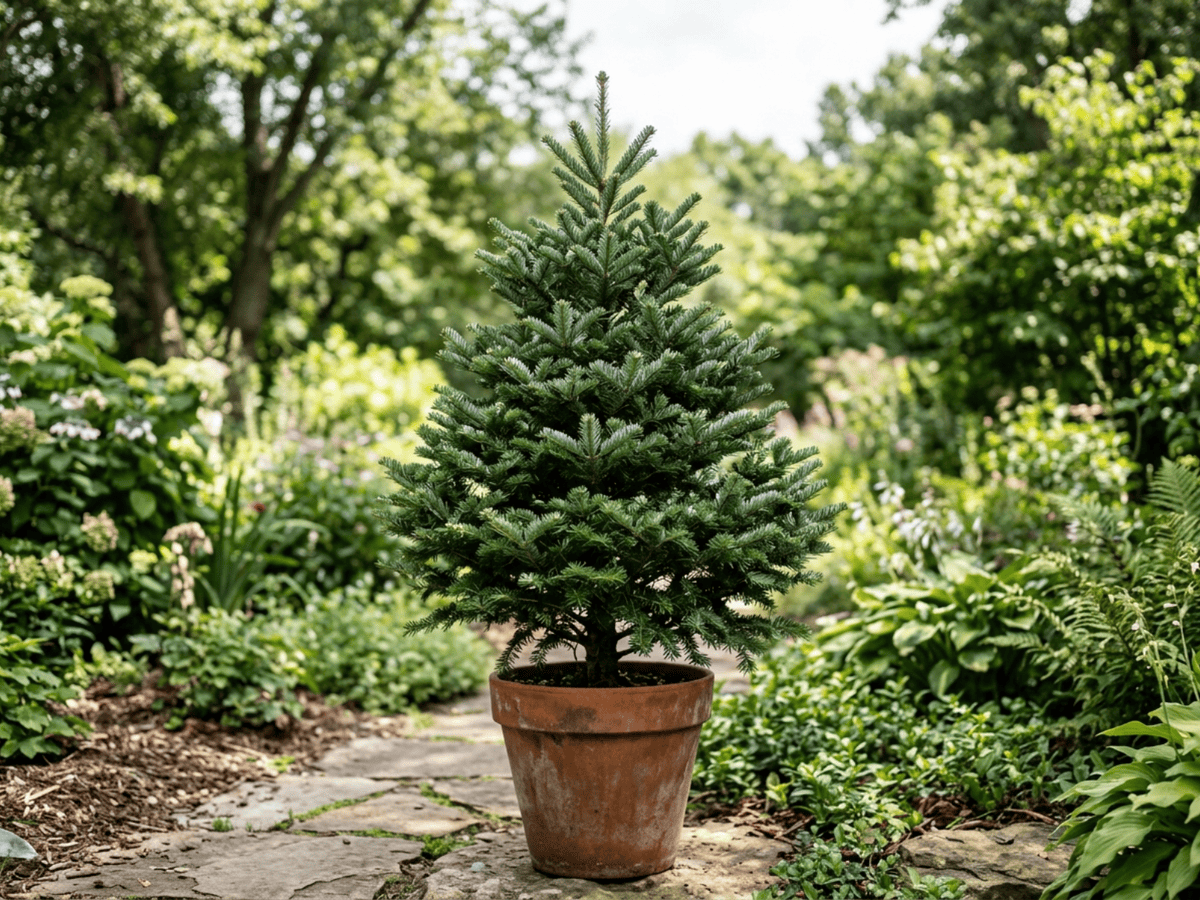 Fraser FirAbies fraseri
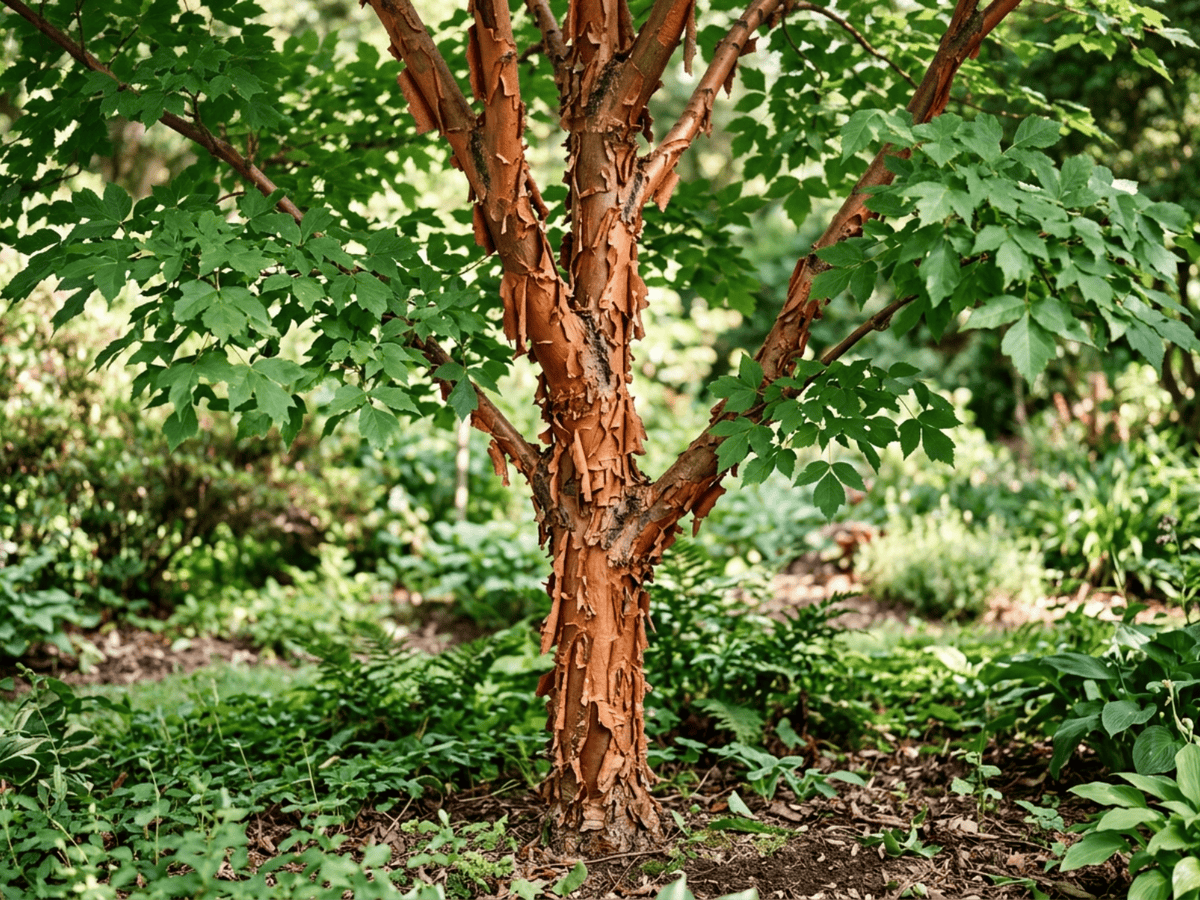 Paperbark MapleAcer griseum
 Sugar MapleAcer saccharum
Frequently asked questions
How often should I water Chilean Potato Vine?
In summer, water about every 5 days; in winter, about every 21 days. Adjust for heat, pot size and drainage.
How much light does Chilean Potato Vine need?
Full sun: 6+ hrs direct. Watch the leaves — scorching or stretching means the light needs adjusting.
Is Chilean Potato Vine toxic to cats or dogs?
Pets Toxic (Dogs Toxic · Cats Toxic) Educational information, not medical or veterinary advice. If exposure is suspected, contact a doctor or veterinarian.
Is Chilean Potato Vine easy to grow?
It is moderately demanding: a good choice once you have a little experience.
When does Chilean Potato Vine bloom?
It typically blooms Jun–Oct in the Northern Hemisphere.
YardMate
Identify any plant in seconds
Snap a photo — YardMate names the plant, diagnoses problems, and reminds you when to water.
Download on the App Store