 YardMate
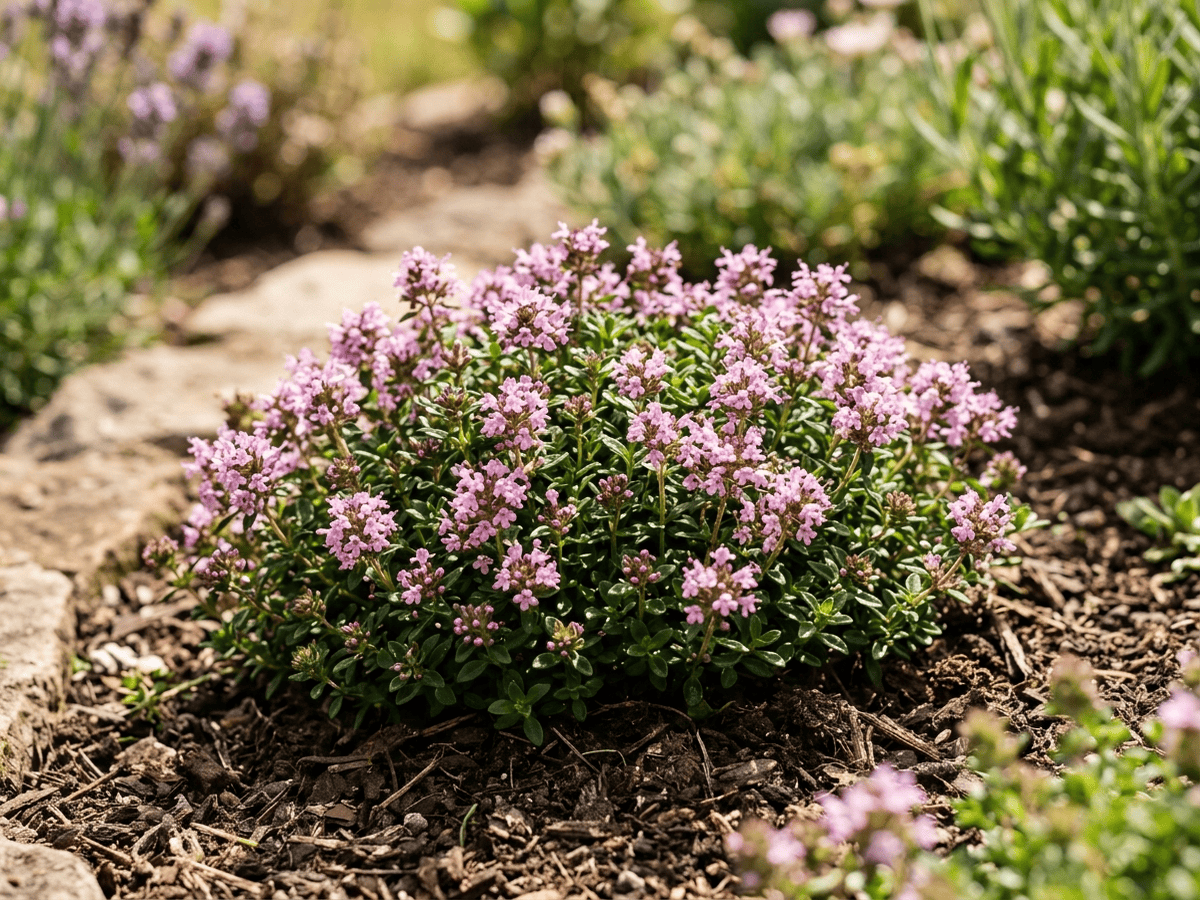


Mother Of Thyme
Thymus praecox
Easy · Beginner friendlyAbout Mother Of Thyme
Creeping Thyme is a dense aromatic groundcover reaching only 2-4 inches tall, forming tight carpets of tiny gray-green leaves topped with masses of pink to purple flowers in early summer that attract bees in abundance. Tough, drought-tolerant, and fragrant when walked upon, it is an ideal lawn substitute for low-traffic areas and a premier groundcover between pavers throughout temperate US gardens.
- Fragrant
- Drought-tolerant
- Groundcover
- Pollinator-friendly
How to care for Mother Of Thyme
Watering
- Springevery 10 days
- Summerevery 14 days
- Fallevery 21 days
- Winterevery 30 days
Soil · Rich & well-draining
- Top dressingCompost10%
- Main mixPotting soil + compost 3:180%
- DrainageGravel10%
Top up the compost layer each season.
FERTILIZER
This plant needs little to no feeding.
At a Glance
- NativeEurope, Western Asia
- Height0.1–0.3 ft (0–0.1 m)
- Spread1–2 ft (0.3–0.6 m)
- Flower colorPink, Purple, White, Red
- Foliage colorDark-green, Green
- SoilSandy, Well-drained
- LocationsYard
Bloom time
BLOOM CYCLE
Peak bloom
May–Jul
Pink-purple flowers May to July
Fragrance
STRONG FRAGRANCE
Strong thymol-scented foliage when crushed or walked on.
Toxicity
No toxicity has been reported for this plant. Still, it is wise to keep pets from chewing on any houseplant.
Educational information, not medical or veterinary advice. If exposure is suspected, contact a doctor or veterinarian.
DISTRIBUTION


- Native
- Introduced
- Europe
- Western Asia
History
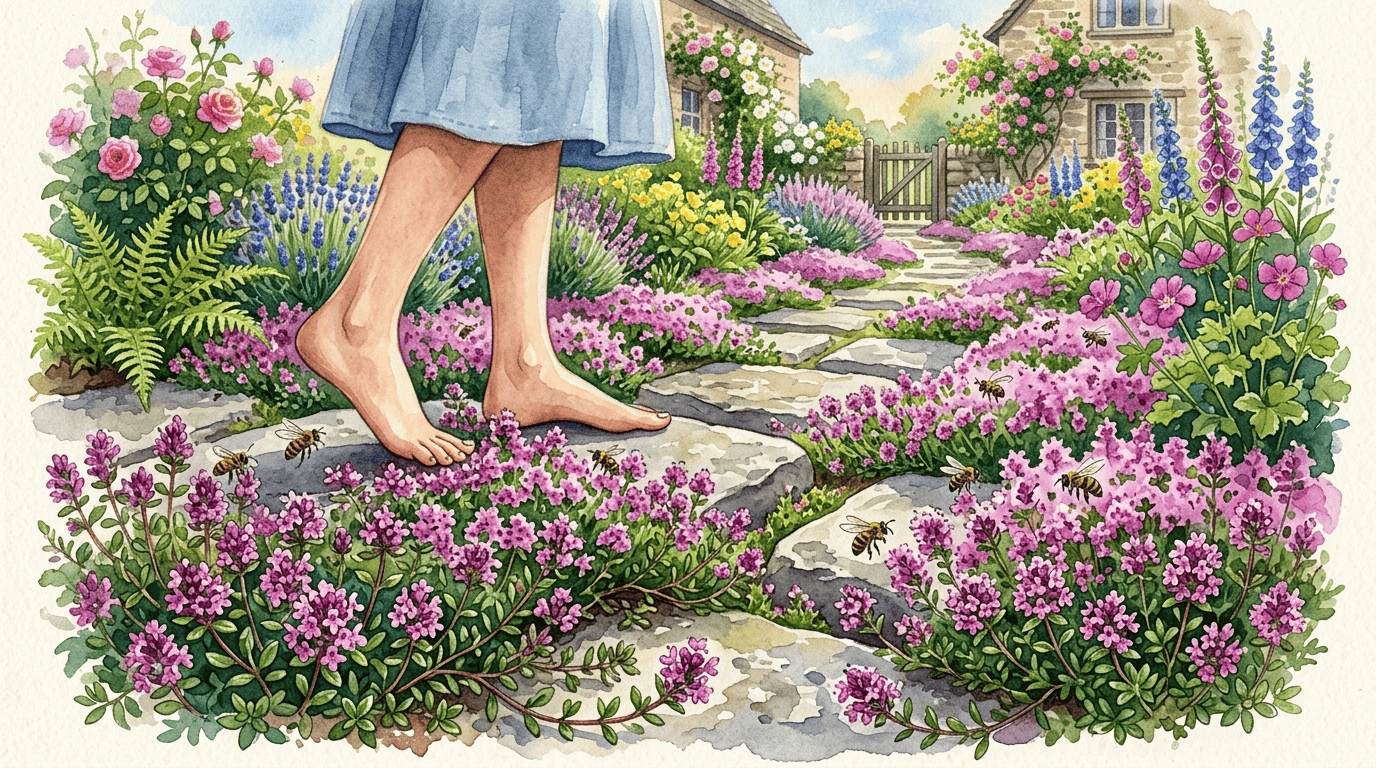
Thymus praecox, commonly called creeping thyme, mother-of-thyme, or wild thyme, is a prostrate evergreen aromatic subshrub in the mint family (Lamiaceae) native to much of Europe from Iceland and Britain through Scandinavia to the Mediterranean and east to the Caucasus. Czech botanist Anton Philipp Opiz described the species in 1824. The plant forms dense 5-10 cm tall mats of tiny dark green aromatic leaves with woody trailing stems that root where they touch soil.
Small pink to purple (occasionally white) flowers appear in dense clusters in early to midsummer, heavily attractive to honeybees. In Europe the herb has been used medicinally since antiquity for coughs, digestive upset, and as an antiseptic, containing essential oils rich in thymol and carvacrol. Garden forms include red-flowered 'Coccineus', white 'Albus', and the wooly-leaved 'Pseudolanuginosus' form now treated as a separate species.
Widely planted as fragrant lawn substitute and between stepping stones. Thyme has been cultivated as medicinal herb since ancient Egypt. Creeping thyme carpets are a defining feature of English cottage gardens and Mediterranean landscapes. The cultivars 'Coccineus' (red) and 'Elfin' (tight-growing) are US garden staples.
Symbolism & meaning
What It Symbolizes
Mother of Thyme is courage carried in fragrance, an ancient Greek emblem of bravery once burned as incense before battle. Underfoot it releases its scent generously, turning paths and crevices into perfumed walkways. In its low, tough mats lies the quiet companion of every herb gardener — small, pungent, and surprisingly bold.
- Courage — ancient Greek symbol of bravery
- Fragrance of the path — releases scent underfoot
Where the Name Comes From
'Thymus' from Greek 'thymos' (courage); 'praecox' means early or precocious.
Uses & Fun Facts
- Aromatic mat fills paving cracks and low-traffic lawn substitutes
- Creeping mats release warm thyme scent between paving stones
- Pink summer flowers swarm with bees in rock gardens
- Tiny leaves used as savory thyme seasoning in cooking
Related plants
More Thymus plants
 Woolly ThymeThymus pseudolanuginosus
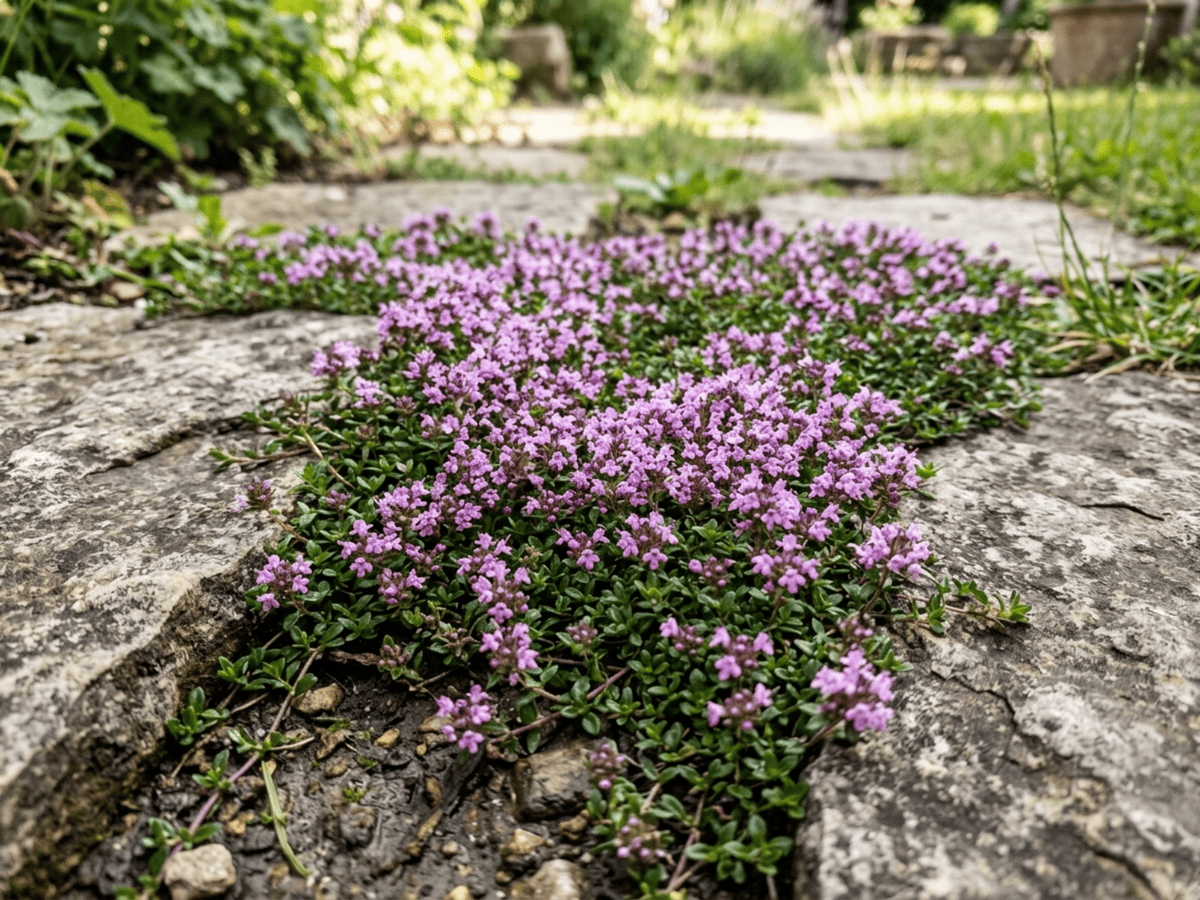 Wild ThymeThymus serpyllum
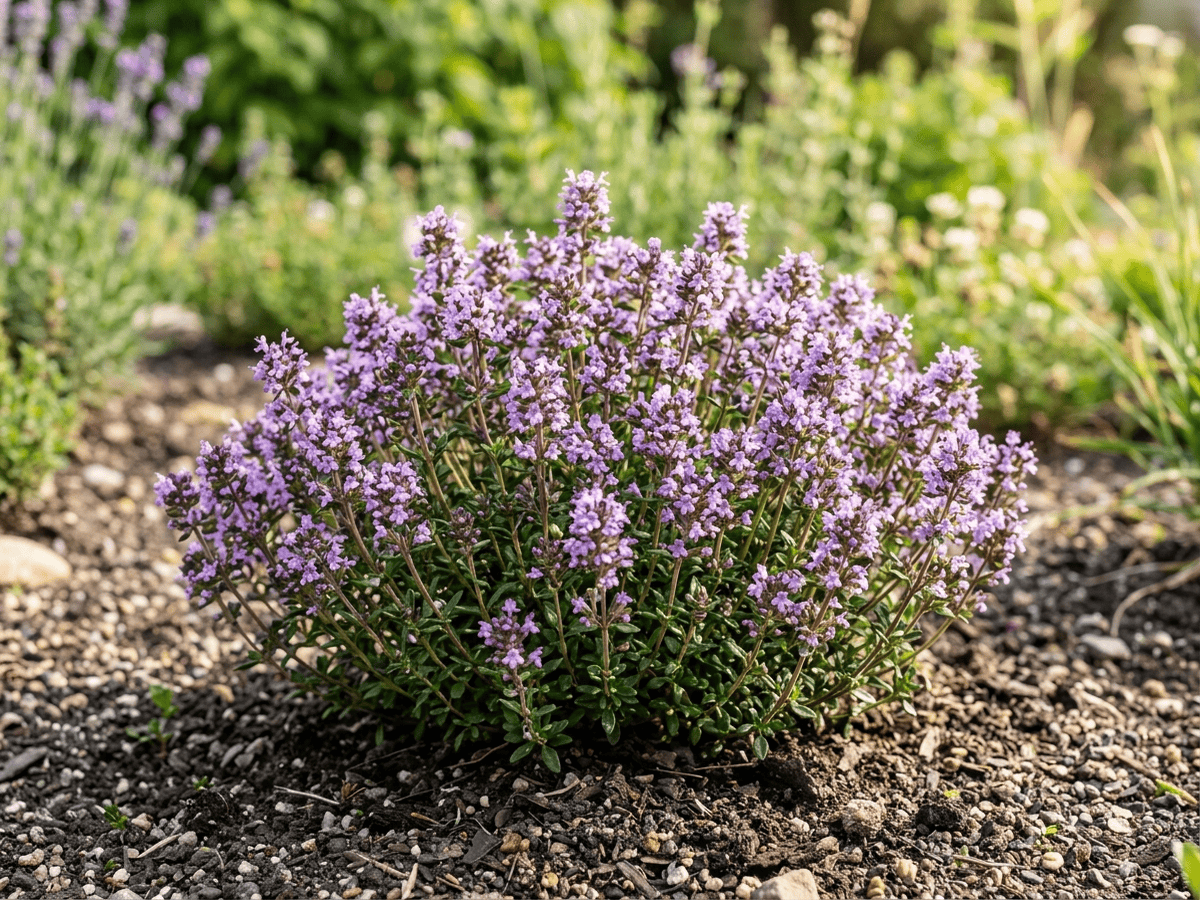 Common ThymeThymus vulgaris
 Lemon ThymeThymus x citriodorus
Plants with similar care
 Chinese AbeliaAbelia chinensis
 Fragrant AbeliaAbelia mosanensis
 Large-Flowered AbeliaAbelia uniflora
 Glossy AbeliaAbelia x grandiflora
Frequently asked questions
How often should I water Mother Of Thyme?
In summer, water about every 14 days; in winter, about every 30 days. Adjust for heat, pot size and drainage.
How much light does Mother Of Thyme need?
Full sun: 6+ hrs direct. Watch the leaves — scorching or stretching means the light needs adjusting.
Is Mother Of Thyme toxic to cats or dogs?
No toxicity has been reported for this plant. Still, it is wise to keep pets from chewing on any houseplant. Educational information, not medical or veterinary advice. If exposure is suspected, contact a doctor or veterinarian.
Is Mother Of Thyme easy to grow?
Yes — it is considered an easy, beginner-friendly plant.
When does Mother Of Thyme bloom?
It typically blooms May–Jul in the Northern Hemisphere.
YardMate
Identify any plant in seconds
Snap a photo — YardMate names the plant, diagnoses problems, and reminds you when to water.
Download on the App Store