 YardMate


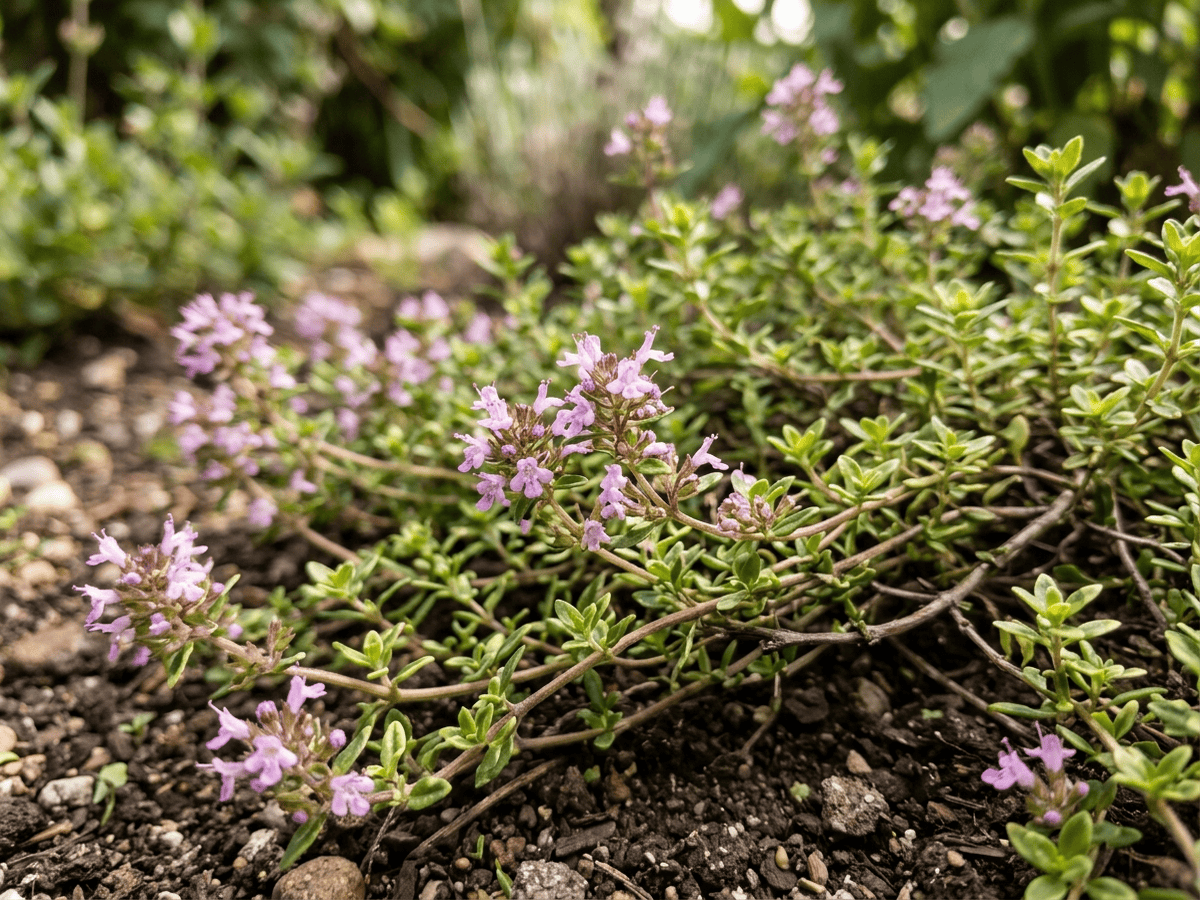

Lemon Thyme
Thymus x citriodorus
Easy · Beginner friendlyAbout Lemon Thyme
Lemon Thyme is a popular European hybrid culinary herb reaching 6-12 inches tall, with tiny aromatic green leaves that emit a distinctive lemon scent when brushed or crushed. Used widely in American cuisine for fish, poultry, and vegetable dishes, it also makes an attractive low groundcover in herb gardens, rock gardens, and along pathways. Cultivars 'Variegata', 'Gold Edge', and 'Silver Queen' offer variegated foliage for ornamental appeal.
- Edible
- Fragrant
- Drought-tolerant
- Evergreen
How to care for Lemon Thyme
Watering
- Springevery 10 days
- Summerevery 14 days
- Fallevery 21 days
- Winterevery 30 days
Soil · Rich & well-draining
- Top dressingCompost10%
- Main mixPotting soil + compost 3:180%
- DrainageGravel10%
Top up the compost layer each season.
FERTILIZER
This plant needs little to no feeding.
At a Glance
- Height0.5–1 ft (0.2–0.3 m)
- Spread1–1.5 ft (0.3–0.5 m)
- Flower colorPink, Purple
- Foliage colorGreen, Variegated
- SoilSandy, Well-drained
- LocationsYard · Balcony · Indoor
Bloom time
BLOOM CYCLE
Peak bloom
Jun–Aug
Tiny pale lavender-pink flowers in summer attract pollinators
Fragrance
STRONG FRAGRANCE
The foliage has a strong lemon-thyme aroma.
Toxicity
Pets Safe
thymol, citral, and geraniol
Not reported
EXPOSURE No exposure route is reported.
EFFECT No toxic effect is reported.
NOTE No human toxicity is reported in this catalog; avoid eating ornamental plants unless confirmed edible.
Safe
EXPOSURE No exposure route is reported.
EFFECT No toxic effect is reported.
NOTE Listed as non-toxic for dogs; avoid eating ornamental plants unless confirmed edible.
Safe
EXPOSURE No exposure route is reported.
EFFECT No toxic effect is reported.
NOTE Listed as non-toxic for cats; avoid eating ornamental plants unless confirmed edible.
Educational information, not medical or veterinary advice. If exposure is suspected, contact a doctor or veterinarian.
DISTRIBUTION


- Native
- Introduced
History

Thymus × citriodorus, commonly called lemon thyme, is a low-growing aromatic hybrid subshrub in the mint family (Lamiaceae) arising from the cross between Thymus pulegioides and Thymus vulgaris, both European Mediterranean species. German botanist Johann Christian Daniel von Schreber formally described the hybrid in 1774 based on cultivated material, though the hybrid had been grown in European herb gardens since the 17th century. The epithet citriodorus means lemon-scented, referring to the distinctive lemon-citronella aroma of the leaves caused by high concentrations of citral and geraniol in addition to the typical thyme thymol.
Plants form low 15-25 cm mounds of tiny dark green or variegated oval leaves on woody sprawling stems, with terminal clusters of tiny pale pink to lavender flowers in summer. Widely grown as culinary herb for its lemon-thyme flavor used in poultry, fish, and vegetable dishes.
The lemon-scented chemotype became popular in American cuisine during the 1980s herb renaissance and has since been a staple of culinary herb gardens nationwide. Popular ornamental cultivars include 'Silver Queen' (cream-edged leaves), 'Aureus' (golden-variegated), 'Doone Valley' (gold-splashed), 'Archer's Gold', and 'Lime'.
Symbolism & meaning
What It Symbolizes
Lemon Thyme carries the ancient meaning of courage — Greek warriors bathed in thyme before battle, and medieval ladies embroidered sprigs of it on the favors they gave to knights. Paired with refreshment, its bright lemon scent invigorates whatever it touches, from garden path to roast chicken. It is a small herb whose meaning is encouragement: a brave little plant, freely offered.
- Courage — ancient symbol of bravery in Greek and medieval traditions
- Refreshment — bright lemon scent invigorates
Where the Name Comes From
'Thymus' from Greek 'thymos' (courage); 'citriodorus' means lemon-scented.
Uses & Fun Facts
- Lemon-scented leaves season fish, chicken, and herbal teas
- Bright lemon-thyme aroma released when foliage is brushed
- Low aromatic mat fills gaps between stones in herb gardens
- Pink summer flowers feed honeybees and small native bees
Related plants
More Thymus plants
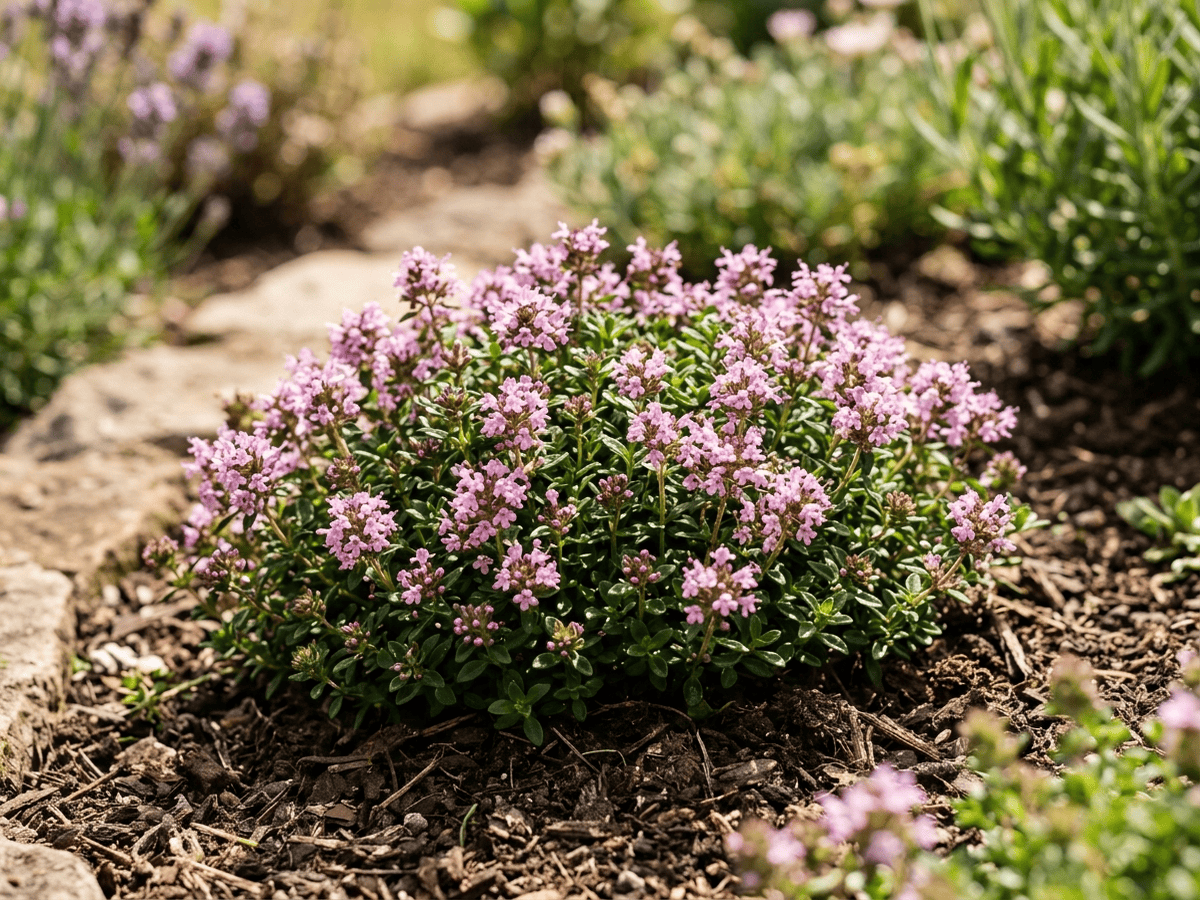 Mother Of ThymeThymus praecox
 Woolly ThymeThymus pseudolanuginosus
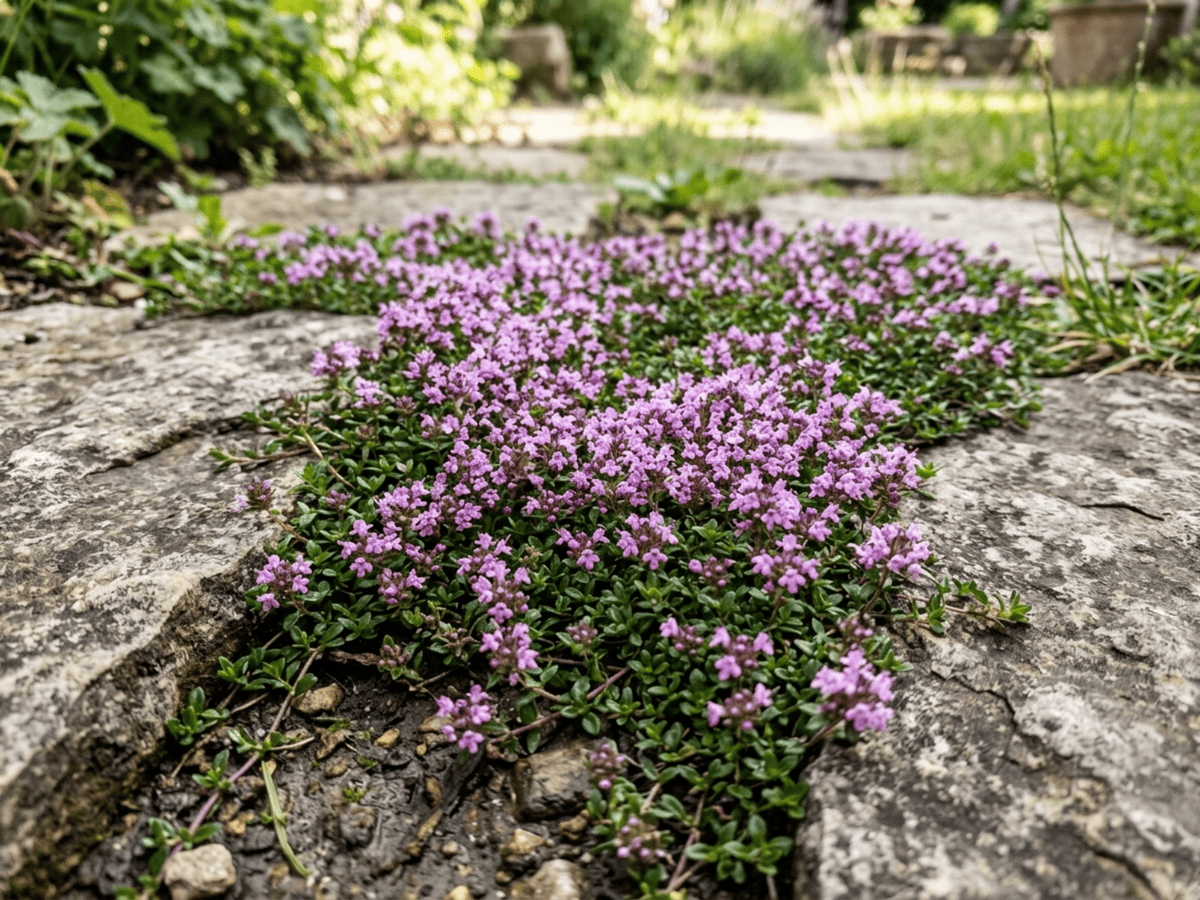 Wild ThymeThymus serpyllum
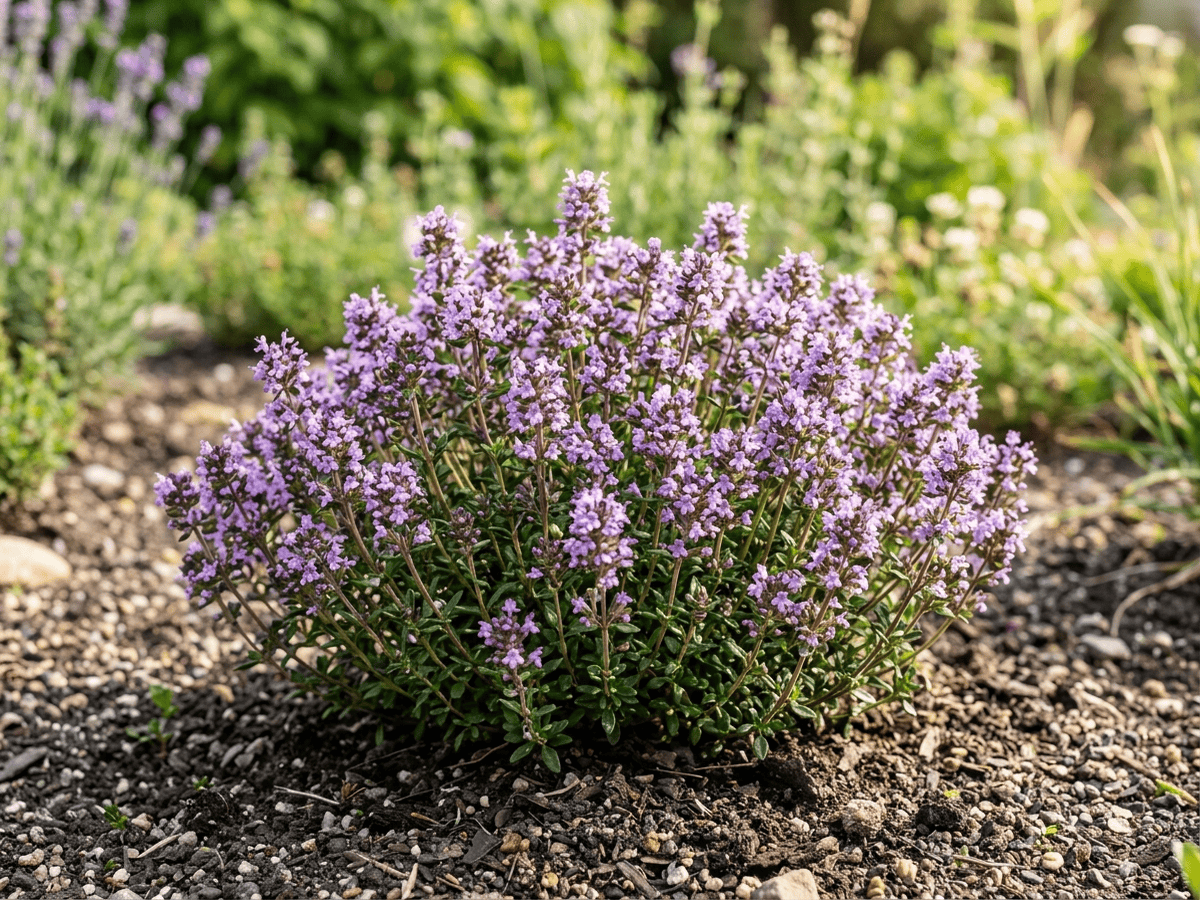 Common ThymeThymus vulgaris
Plants with similar care
 Chinese AbeliaAbelia chinensis
 Fragrant AbeliaAbelia mosanensis
 Large-Flowered AbeliaAbelia uniflora
 Glossy AbeliaAbelia x grandiflora
Frequently asked questions
How often should I water Lemon Thyme?
In summer, water about every 14 days; in winter, about every 30 days. Adjust for heat, pot size and drainage.
How much light does Lemon Thyme need?
Full sun: 6+ hrs direct. Watch the leaves — scorching or stretching means the light needs adjusting.
Is Lemon Thyme toxic to cats or dogs?
Pets Safe (Dogs Safe · Cats Safe) Educational information, not medical or veterinary advice. If exposure is suspected, contact a doctor or veterinarian.
Is Lemon Thyme easy to grow?
Yes — it is considered an easy, beginner-friendly plant.
Can Lemon Thyme be grown indoors?
Yes, it adapts well to indoor growing given the right light.
When does Lemon Thyme bloom?
It typically blooms Jun–Aug in the Northern Hemisphere.
YardMate
Identify any plant in seconds
Snap a photo — YardMate names the plant, diagnoses problems, and reminds you when to water.
Download on the App Store