 YardMate

Common Thyme
Thymus vulgaris
Easy · Beginner friendlyAbout Common Thyme
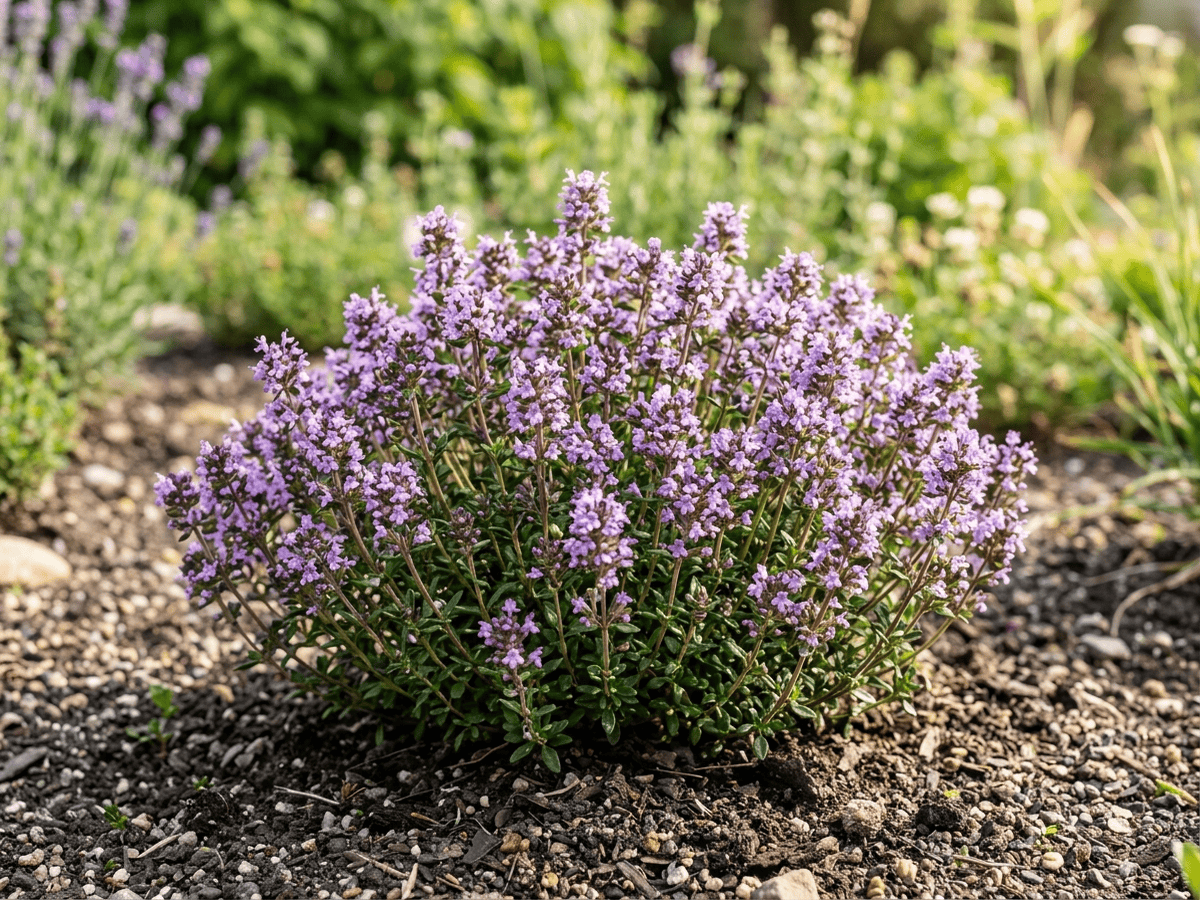
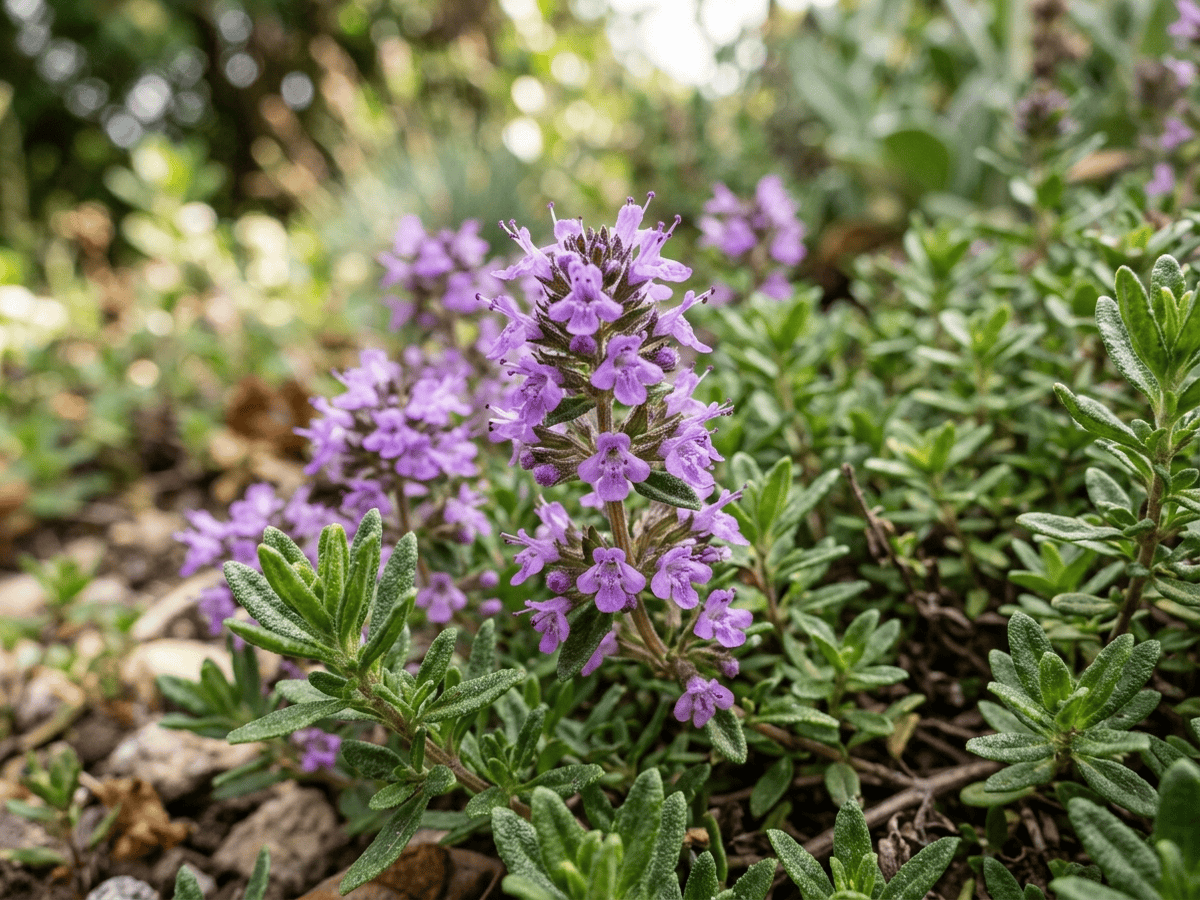
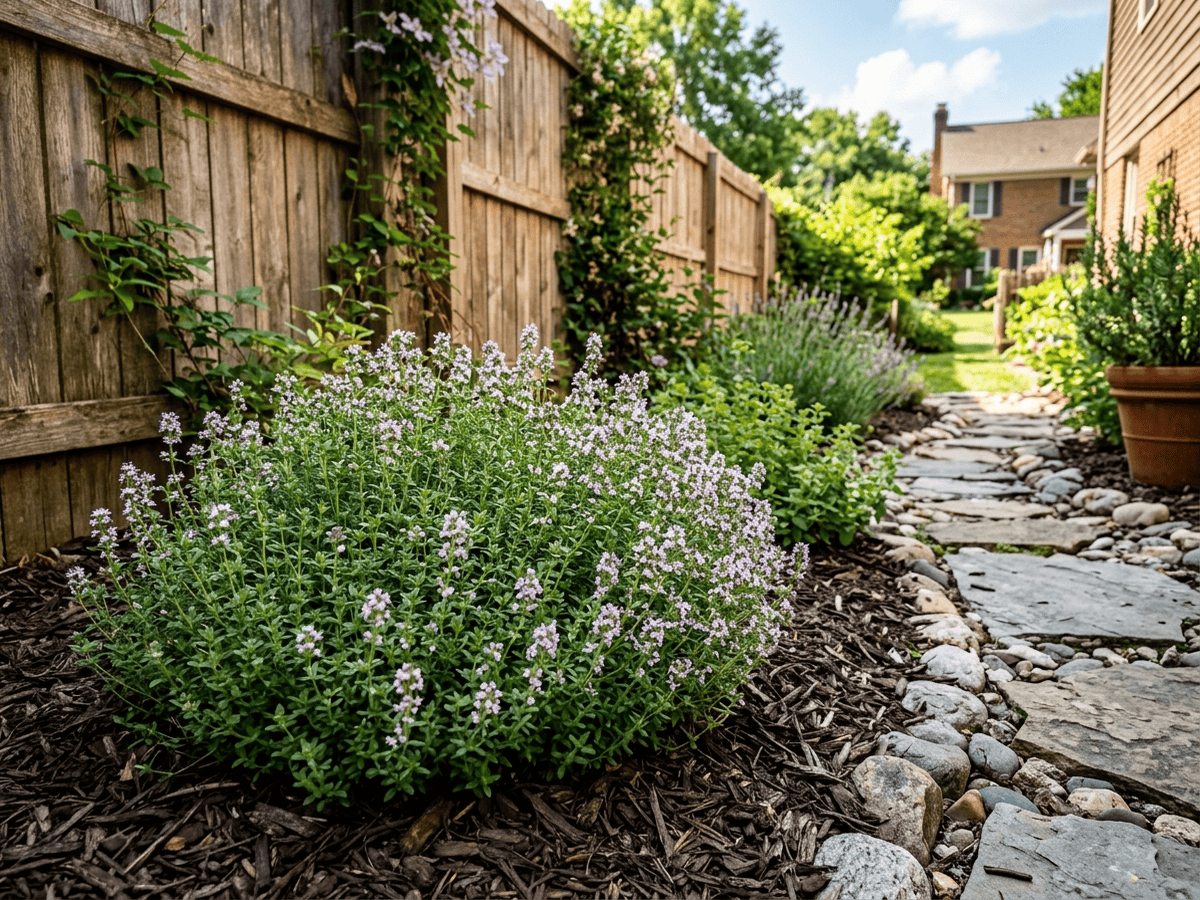
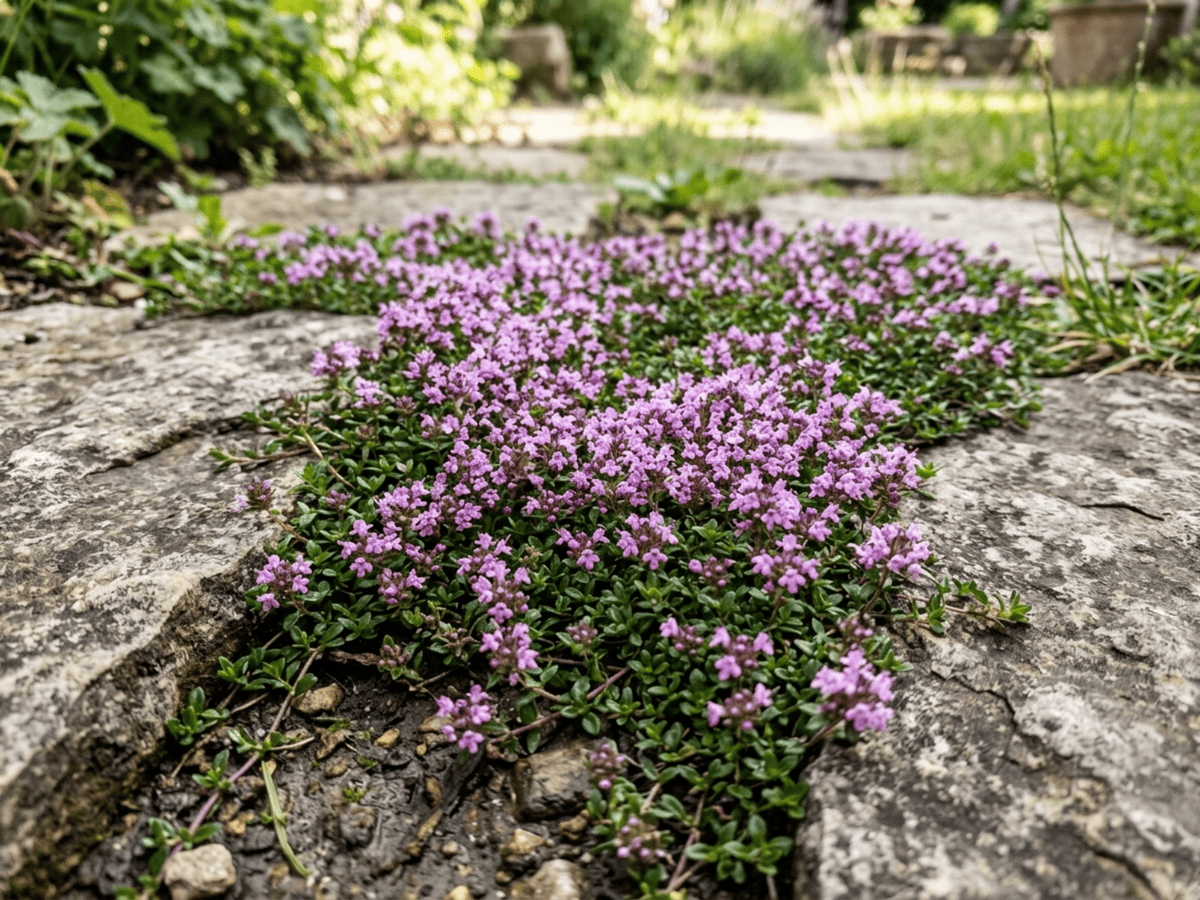
Thymus vulgaris, common thyme, is a low-growing Mediterranean herb with tiny, intensely aromatic grey-green leaves and small pink-purple flowers that are magnets for bees. Essential in French, Italian, and Middle Eastern cooking, it is a key ingredient in bouquet garni and Herbes de Provence. Growing only 15–30 cm tall, it forms neat mounds or ground-covering mats. It thrives in hot, dry conditions with poor, well-drained soil. Thyme essential oil contains thymol, a powerful natural antiseptic used in Listerine mouthwash since 1879.
- Edible
- Fragrant
- Drought-tolerant
- Pollinator-friendly
How to care for Common Thyme
Watering
- Springevery 5 days
- Summerevery 4 days
- Fallevery 7 days
- Winterevery 14 days
Soil · Rich & well-draining
- Top dressingCompost10%
- Main mixPotting soil + compost 3:180%
- DrainageGravel10%
Top up the compost layer each season.
FERTILIZER
- Springevery 30 days
- Summerevery 30 days
- Fallevery 45 days
At a Glance
- NativeMediterranean
- Height0.5–1 ft (0.2–0.3 m)
- Spread1–1.5 ft (0.3–0.5 m)
- Flower colorPurple, Pink, White
- Foliage colorGreen, Variegated
- SoilSandy, Well-drained, Alkaline
- LocationsYard · Balcony
Bloom time
BLOOM CYCLE
Peak bloom
Jun–Aug
Tiny pink-purple flowers attract massive numbers of bees; trim after flowering
Fragrance
STRONG FRAGRANCE
Pungent herbal-phenolic aroma from thymol.
Toxicity
Pets Safe
thymol and carvacrol
Not reported
EXPOSURE No exposure route is reported.
EFFECT Widely used culinary and medicinal herb and concentrated essential oil can cause dermatitis.
NOTE No human toxicity is reported in this catalog; avoid eating ornamental plants unless confirmed edible.
Safe
EXPOSURE No exposure route is reported.
EFFECT Not listed as toxic in dietary amounts.
NOTE Listed as non-toxic for dogs; avoid eating ornamental plants unless confirmed edible.
Safe
EXPOSURE No exposure route is reported.
EFFECT No toxic effect is reported.
NOTE Listed as non-toxic for cats; avoid eating ornamental plants unless confirmed edible.
Educational information, not medical or veterinary advice. If exposure is suspected, contact a doctor or veterinarian.
DISTRIBUTION


- Native
- Introduced
- Mediterranean
History

Thymus vulgaris is native to the rocky limestone garrigue of the western Mediterranean from Spain to Italy. Ancient Egyptians used thyme in embalming, and the name derives from the Greek "thymos" — either meaning "courage" (Greek warriors wore thyme as a bravery symbol) or "fumigate" (the plant was burnt as incense in temples). Medieval European knights wore thyme sprigs embroidered on tunics during the Crusades. The primary antimicrobial compound thymol was isolated by German apothecary Caspar Neumann in 1719; it remains a key active in Listerine mouthwash (introduced 1879) and many hospital-grade disinfectants.
Culinary use is central to Provencal cuisine (particularly bouquet garni and herbes de Provence), Greek cuisine, and North African tagines. Over 300 named cultivars exist with diverse flavor profiles — lemon thyme (T. citriodorus), caraway thyme (T. herba-barona), and creeping thyme. Ancient Greeks associated thyme with courage — warriors bathed in thyme water before battle, and 'to smell of thyme' was the highest compliment to a soldier.
Egyptian embalmers used thymol in the mummification process. Thymol, the primary compound in thyme oil, was identified in 1719 and has been used in medicine ever since — Joseph Lister used it as an early antiseptic, and it remains the active ingredient in Listerine mouthwash. During the Black Death (1346–1353), posies of thyme were carried to ward off plague. In Provençal tradition, wild thyme-scented honey is considered the finest in France.
Symbolism & meaning
What It Symbolizes
Common Thyme embodies courage, an ancient warriors' herb worn into battle by Greek and Roman soldiers as a sign of bravery and strength. Medieval ladies stitched small sprigs of thyme into the scarves of departing knights, blessing them with bold spirit for the road ahead. Few culinary herbs carry such military and chivalric heritage — a kitchen plant whose tiny purple flowers once stood for the largest possible kind of human courage.
- Courage — Ancient warriors' herb — representing bravery, strength, and bold spirit
Where the Name Comes From
Thymus from Greek 'thymos' (courage/spirit) or 'thyein' (to fumigate). Vulgaris means 'common.'
Uses & Fun Facts
- Pungent thyme leaves season roasts, soups, breads, and Mediterranean dishes
Related plants
More Thymus plants
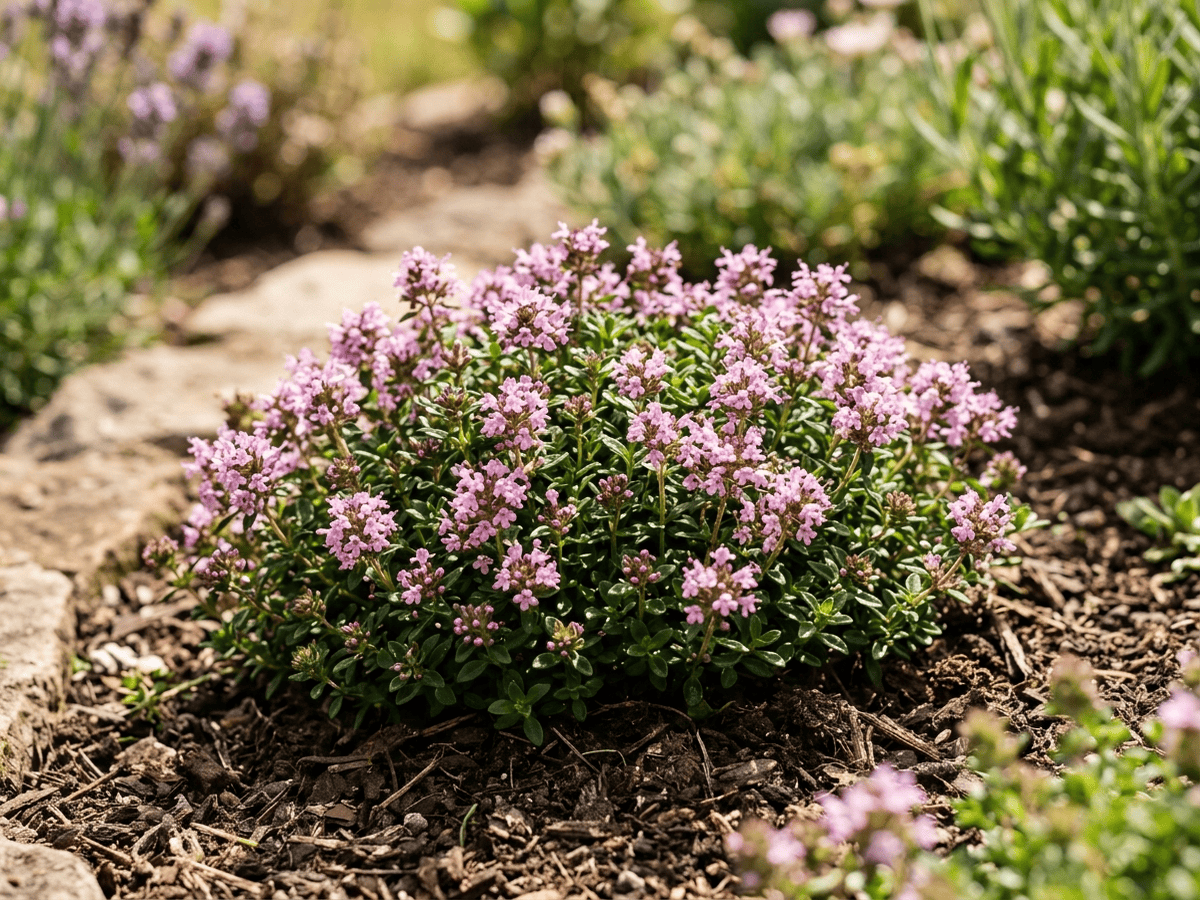 Mother Of ThymeThymus praecox
 Woolly ThymeThymus pseudolanuginosus
 Wild ThymeThymus serpyllum
 Lemon ThymeThymus x citriodorus
Plants with similar care
 Chinese AbeliaAbelia chinensis
 Fragrant AbeliaAbelia mosanensis
 Large-Flowered AbeliaAbelia uniflora
 Glossy AbeliaAbelia x grandiflora
Frequently asked questions
How often should I water Common Thyme?
In summer, water about every 4 days; in winter, about every 14 days. Adjust for heat, pot size and drainage.
How much light does Common Thyme need?
Full sun: 6+ hrs direct. Watch the leaves — scorching or stretching means the light needs adjusting.
Is Common Thyme toxic to cats or dogs?
Pets Safe (Dogs Safe · Cats Safe) Educational information, not medical or veterinary advice. If exposure is suspected, contact a doctor or veterinarian.
Is Common Thyme easy to grow?
Yes — it is considered an easy, beginner-friendly plant.
When does Common Thyme bloom?
It typically blooms Jun–Aug in the Northern Hemisphere.
YardMate
Identify any plant in seconds
Snap a photo — YardMate names the plant, diagnoses problems, and reminds you when to water.
Download on the App Store