 YardMate


Woolly Thyme
Thymus pseudolanuginosus
Easy · Beginner friendlyAbout Woolly Thyme
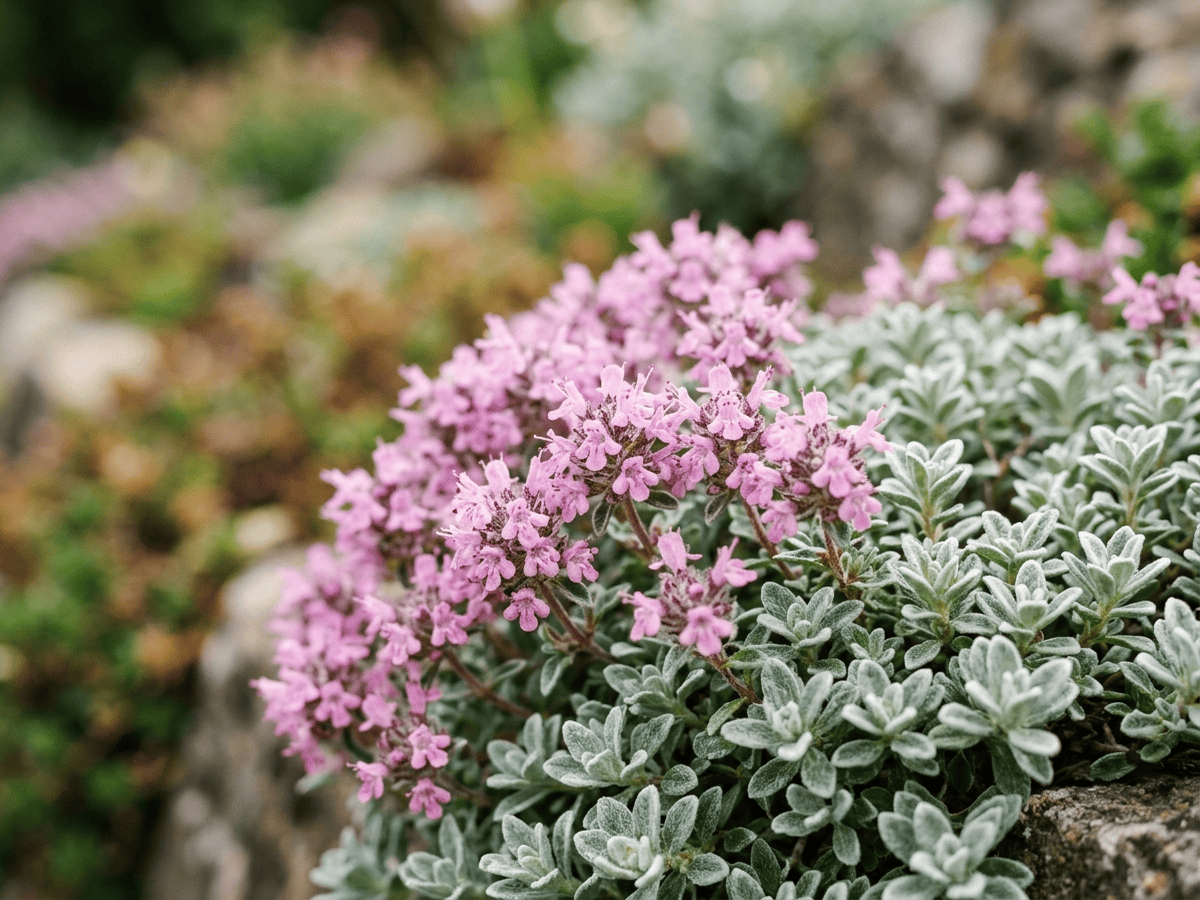
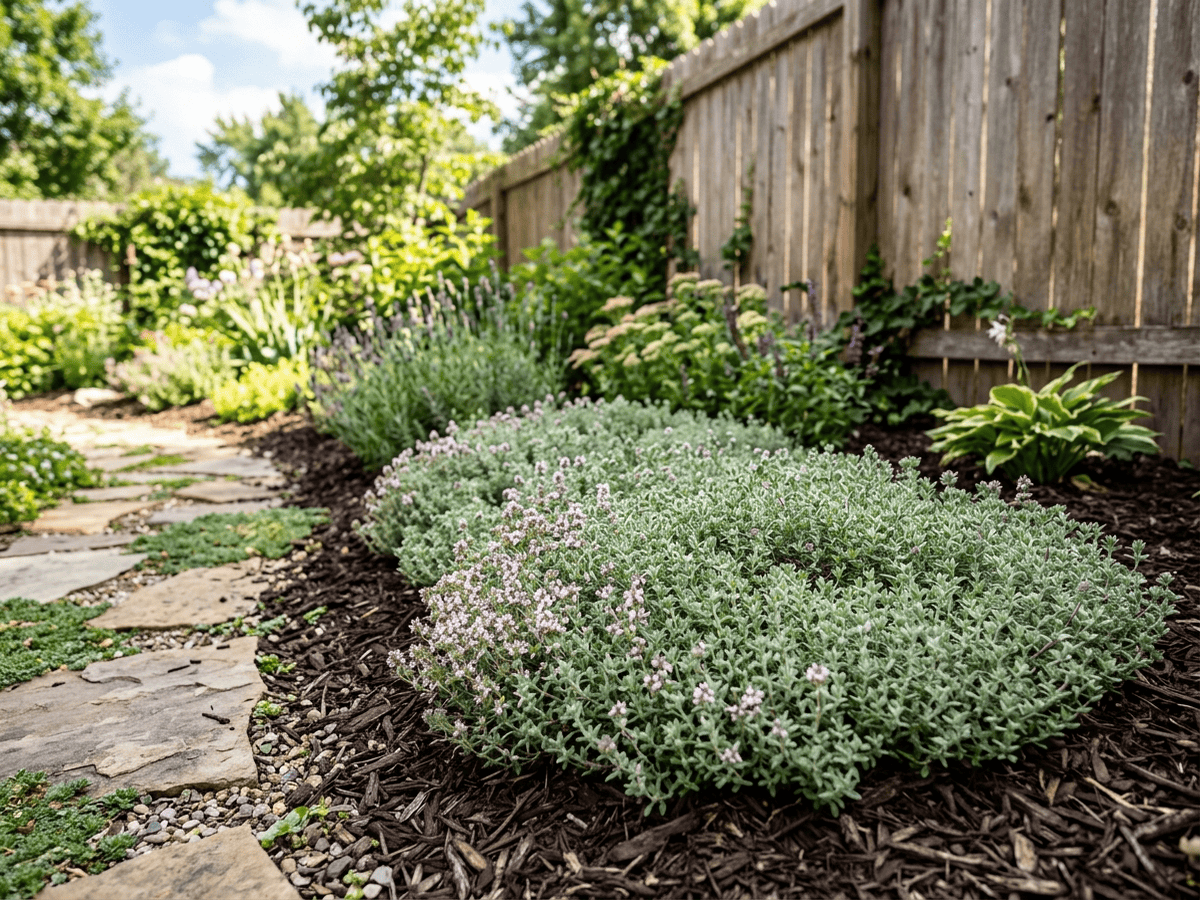
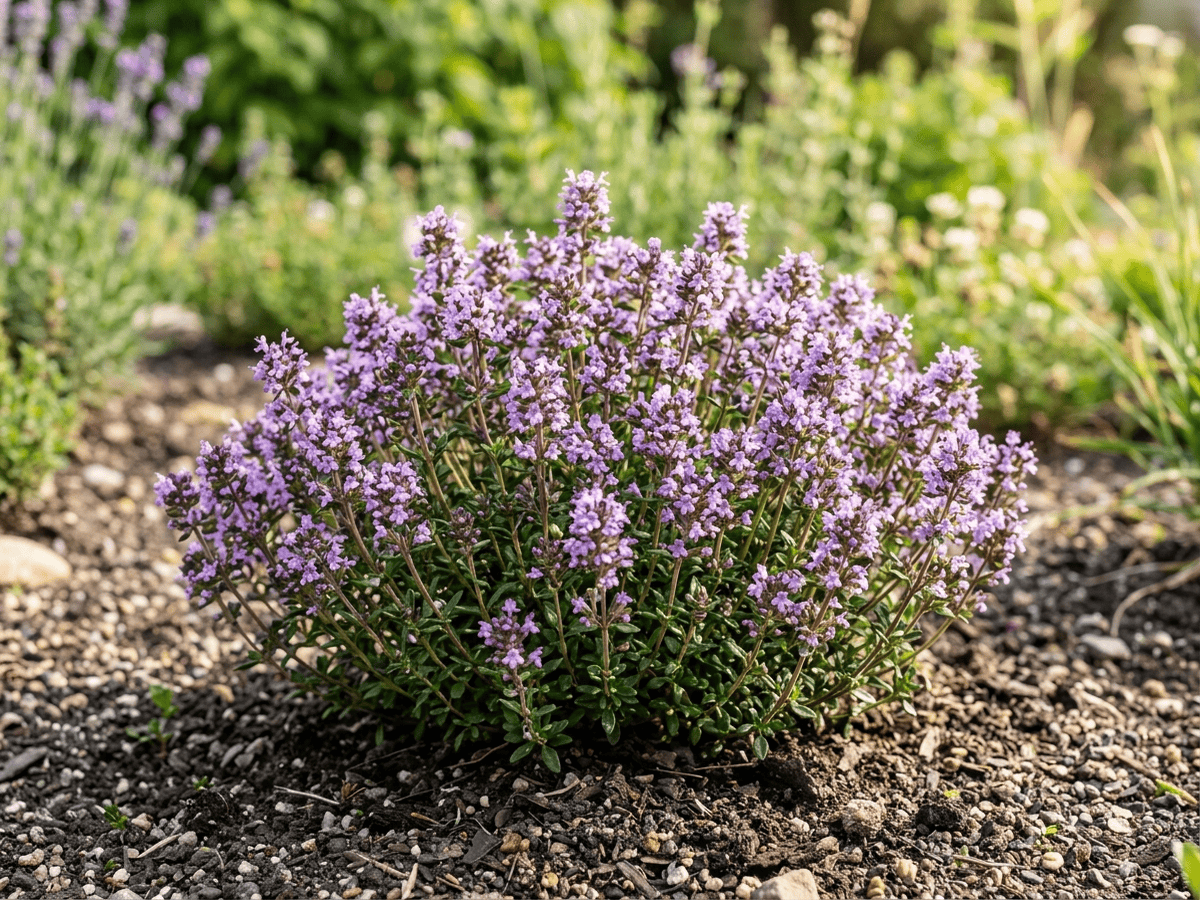
Woolly Thyme is a silvery-gray groundcover reaching only 1-3 inches tall, forming soft downy carpets of tiny fuzzy leaves that feel like fur underfoot. Rarely flowers but occasionally produces pink flowers in summer. Grown primarily as a textural silver groundcover for dry sunny slopes, rock gardens, and between stepping stones where its fuzzy silver texture creates a living mat.
- Drought-tolerant
- Groundcover
How to care for Woolly Thyme
Watering
- Springevery 10 days
- Summerevery 14 days
- Fallevery 21 days
- Winterevery 30 days
Soil · Well-draining
- Top dressingPine bark mulch10%
- Main mixPotting soil + perlite 2:170%
- DrainageLECA / gravel20%
Never skip the drainage layer — standing water is the top cause of root rot.
FERTILIZER
This plant needs little to no feeding.
At a Glance
- NativeEurope
- Height0.1–0.3 ft (0–0.1 m)
- Spread1–1.5 ft (0.3–0.5 m)
- Flower colorPink
- Foliage colorSilver
- SoilSandy, Well-drained
- LocationsYard
Bloom time
BLOOM CYCLE
Peak bloom
Jun–Aug
Pink flowers rarely in summer
Fragrance
LIGHT FRAGRANCE
Faint thyme scent compared to culinary thymes.
Toxicity
No toxicity has been reported for this plant. Still, it is wise to keep pets from chewing on any houseplant.
Educational information, not medical or veterinary advice. If exposure is suspected, contact a doctor or veterinarian.
DISTRIBUTION


- Native
- Introduced
- Europe
History

Thymus pseudolanuginosus, woolly thyme, is a very prostrate evergreen aromatic subshrub in the mint family (Lamiaceae) whose wild origin is uncertain—it may be a hybrid or an early cultivated selection long escaped from European gardens. Austrian botanist Karl Ronniger formally published the name in 1924 based on garden material, distinguishing it from the superficially similar Thymus lanuginosus (the epithet pseudolanuginosus meaning false-wooly). The plant forms extremely flat 2-3 cm mats of tiny silvery-gray leaves densely covered in soft white hairs that give the foliage a woolly tactile quality and silver visual effect.
Small pale pink flowers appear sparsely in summer but are not the main ornamental feature. The species has minimal thyme aroma compared to culinary thymes and is grown purely as an ornamental groundcover for rock gardens, crevice plantings, between flagstones, and as a silvery contrast to green creeping thymes.
Prefers very sharp drainage and full sun. Especially beloved in xeriscape gardens of the American West where its drought tolerance and silver color complement dry Mediterranean designs.
Symbolism & meaning
What It Symbolizes
Woolly Thyme can symbolize gentle touch, its silvery, felted foliage practically asking to be brushed by hand or bare foot. Another layer is silver beauty, the way the dense low mat of fuzzy leaves reads almost as living metal between paving stones. In the modern garden, thymus pseudolanuginosus is the chosen plant of stepping-stone joints and rock-garden cracks, a quiet ground cover whose entire symbolism depends on how often it is touched.
- Gentle touch — invites tactile interaction
- Silver beauty — living metal underfoot
Where the Name Comes From
'Pseudolanuginosus' means falsely woolly, differentiating from related species.
Uses & Fun Facts
- Woolly thyme forms silver mats between flagstones
Related plants
More Thymus plants
 Mother Of ThymeThymus praecox
 Wild ThymeThymus serpyllum
 Common ThymeThymus vulgaris
 Lemon ThymeThymus x citriodorus
Plants with similar care
 Chinese AbeliaAbelia chinensis
 Fragrant AbeliaAbelia mosanensis
 Large-Flowered AbeliaAbelia uniflora
 Glossy AbeliaAbelia x grandiflora
Frequently asked questions
How often should I water Woolly Thyme?
In summer, water about every 14 days; in winter, about every 30 days. Adjust for heat, pot size and drainage.
How much light does Woolly Thyme need?
Full sun: 6+ hrs direct. Watch the leaves — scorching or stretching means the light needs adjusting.
Is Woolly Thyme toxic to cats or dogs?
No toxicity has been reported for this plant. Still, it is wise to keep pets from chewing on any houseplant. Educational information, not medical or veterinary advice. If exposure is suspected, contact a doctor or veterinarian.
Is Woolly Thyme easy to grow?
Yes — it is considered an easy, beginner-friendly plant.
When does Woolly Thyme bloom?
It typically blooms Jun–Aug in the Northern Hemisphere.
YardMate
Identify any plant in seconds
Snap a photo — YardMate names the plant, diagnoses problems, and reminds you when to water.
Download on the App Store