 YardMate


Wild Thyme
Thymus serpyllum
Easy · Beginner friendlyAbout Wild Thyme
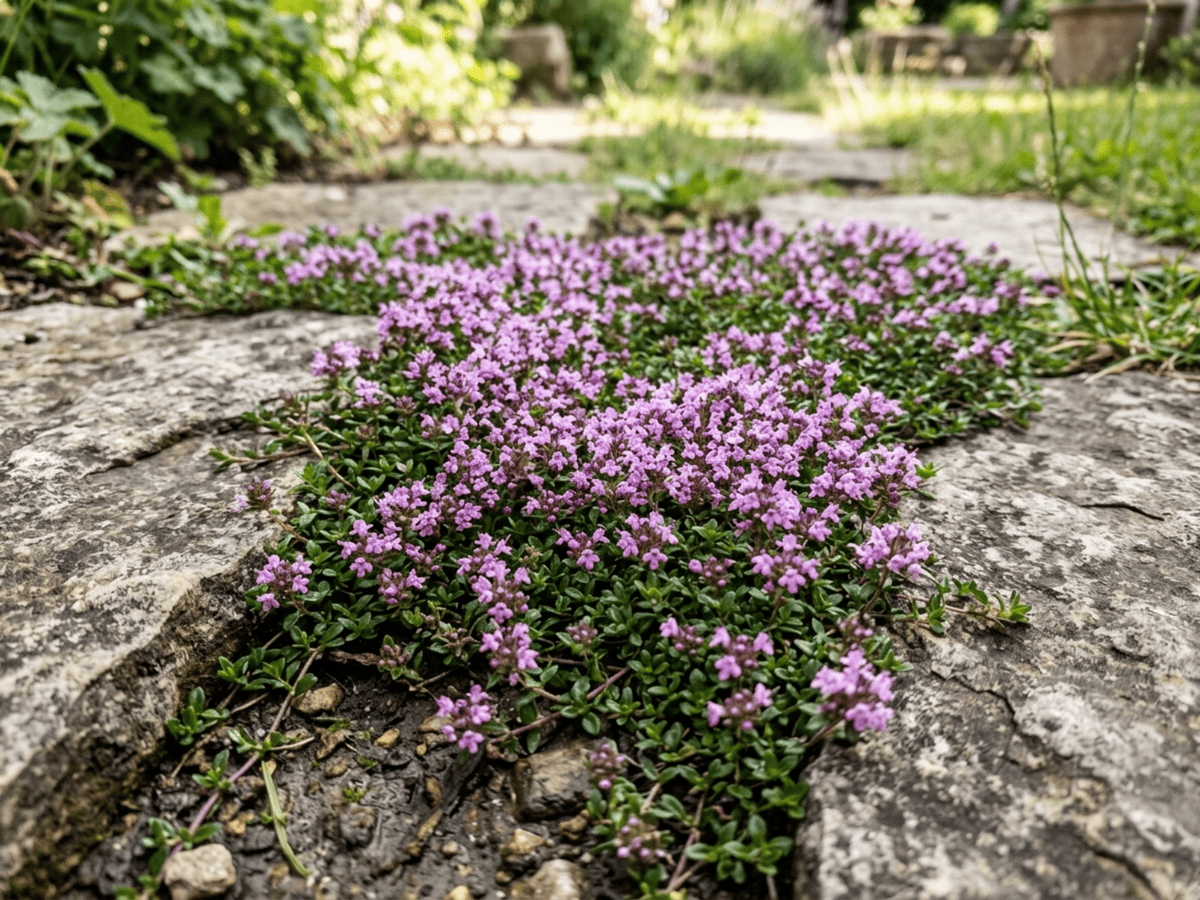
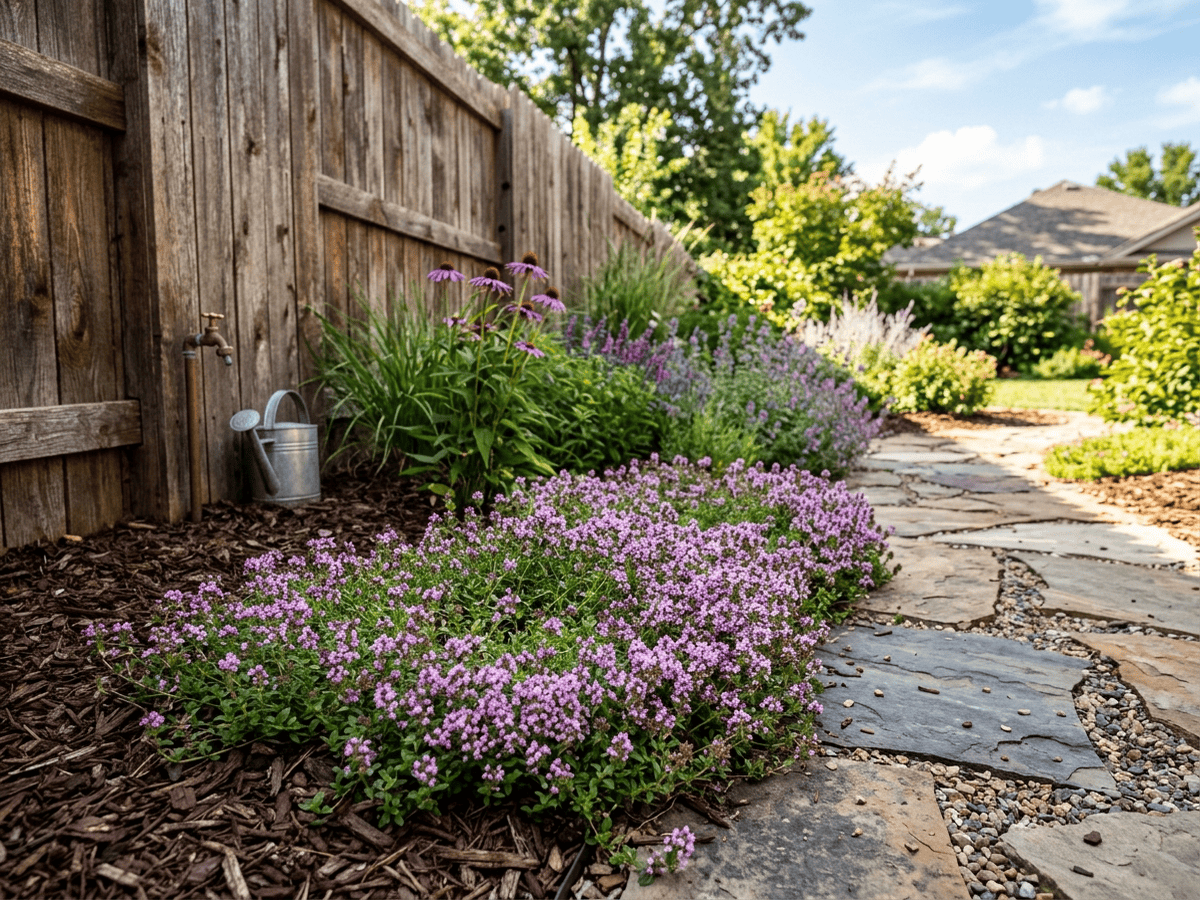
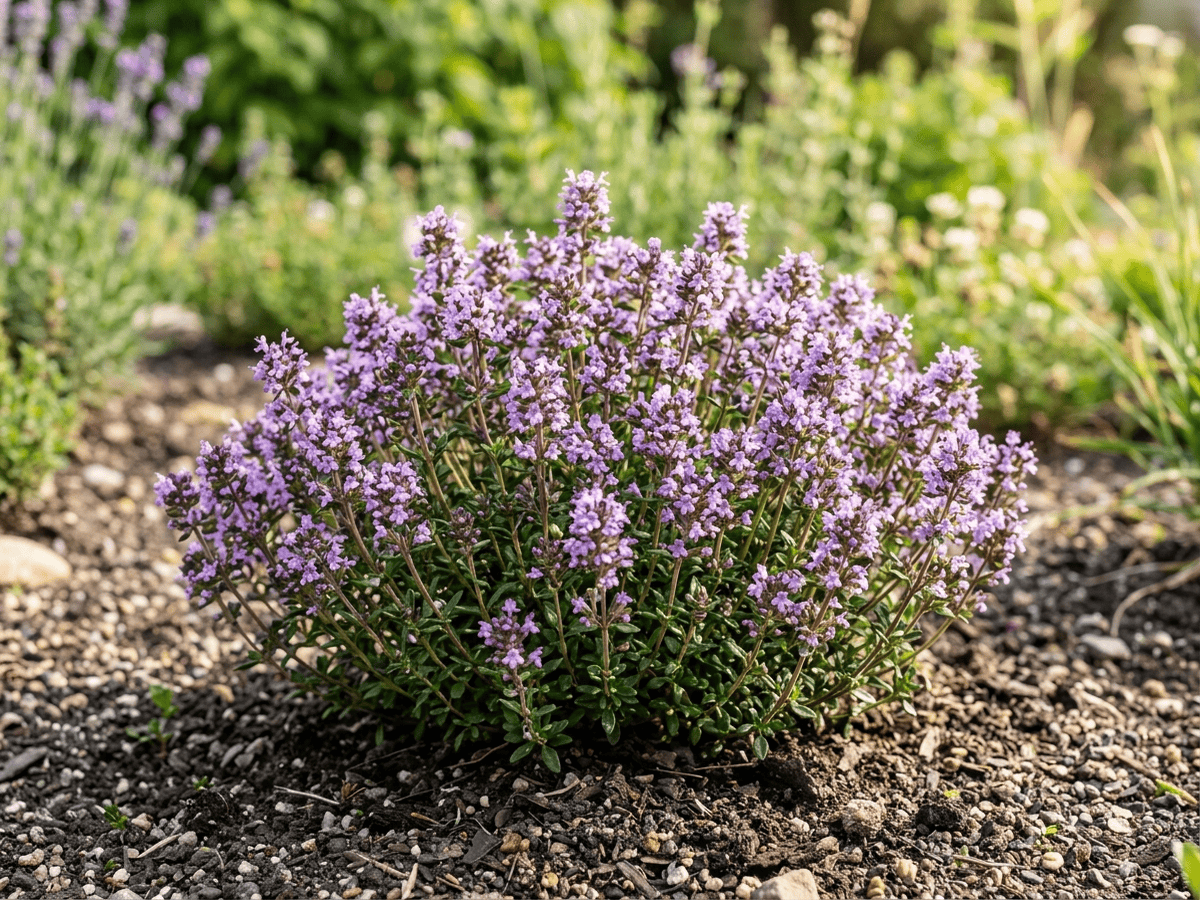
Thymus serpyllum, wild thyme or creeping thyme, is a mat-forming aromatic herb native to Europe and North Africa. It grows just 5–10 centimeters tall, spreading outward to form dense fragrant carpets that release a pleasant herbal scent when walked upon. Tiny pink to purple flowers smother the plant in early to mid-summer, attracting swarms of bees — thyme honey is considered among the finest in the world. The small oval leaves are evergreen in mild climates. Creeping thyme is drought-tolerant, thrives in poor stony soil, and handles light foot traffic, making it an excellent lawn alternative, paver filler, or rock garden plant. It requires full sun and excellent drainage, rotting quickly in wet winter soil. Shakespeare referenced wild thyme in A Midsummer Night's Dream as the fairy queen's bed. The plant contains thymol, a natural antiseptic used in mouthwash and herbal medicine.
- Fragrant
- Drought-tolerant
- Groundcover
- Evergreen
How to care for Wild Thyme
Watering
- Springevery 7 days
- Summerevery 5 days
- Fallevery 14 days
- Winterevery 30 days
Soil · Rich & well-draining
- Top dressingCompost10%
- Main mixPotting soil + compost 3:180%
- DrainageGravel10%
Top up the compost layer each season.
FERTILIZER
- Springevery 60 days
At a Glance
- NativeEurope, East Asia
- Height0.3–0.5 ft (0.1–0.2 m)
- Spread1–1.5 ft (0.3–0.5 m)
- Flower colorPink, Purple, White
- Foliage colorGreen, Variegated, Yellow
- SoilSandy, Well-drained
- LocationsYard
Bloom time
BLOOM CYCLE
Peak bloom
Jun–Aug
Masses of tiny pink-purple flowers in summer; attracts honeybees for premium thyme honey
Fragrance
MODERATE FRAGRANCE
Classic aromatic thyme scent from crushed foliage.
Toxicity
No toxicity has been reported for this plant. Still, it is wise to keep pets from chewing on any houseplant.
Educational information, not medical or veterinary advice. If exposure is suspected, contact a doctor or veterinarian.
DISTRIBUTION


- Native
- Europe
- East Asia
History
Thymus serpyllum is native across much of Europe, from the British Isles and Iberia east through Scandinavia, central Europe, and European Russia into the Caucasus and temperate Asia. It grows in open dry grasslands, heath, and rocky banks, forming aromatic mats 2-10 cm tall with tiny pink-purple (occasionally white) flowers in summer. Greek, Roman, and medieval European herbalists used wild thyme as a culinary and medicinal plant, and its intense pollinator attractiveness made "wild thyme honey" (Greek, Corsican, and Scottish highland varieties in particular) a prestige product recognized since antiquity. Shakespeare's A Midsummer Night's Dream (c. 1595) contains the famous line "I know a bank where the wild thyme blows," describing Titania's bower.
The plant's essential oil (rich in thymol and carvacrol) has documented antimicrobial activity and is used in mouthwashes, cough syrups, and herbal preparations. Modern landscape use focuses on compact cultivars ("Elfin," "Coccineus," "Pink Chintz," "Magic Carpet") for rock gardens, between pavers, and as lawn alternatives. Essential-oil thyme (culinary thyme, Thymus vulgaris) is a closely related but distinct species.
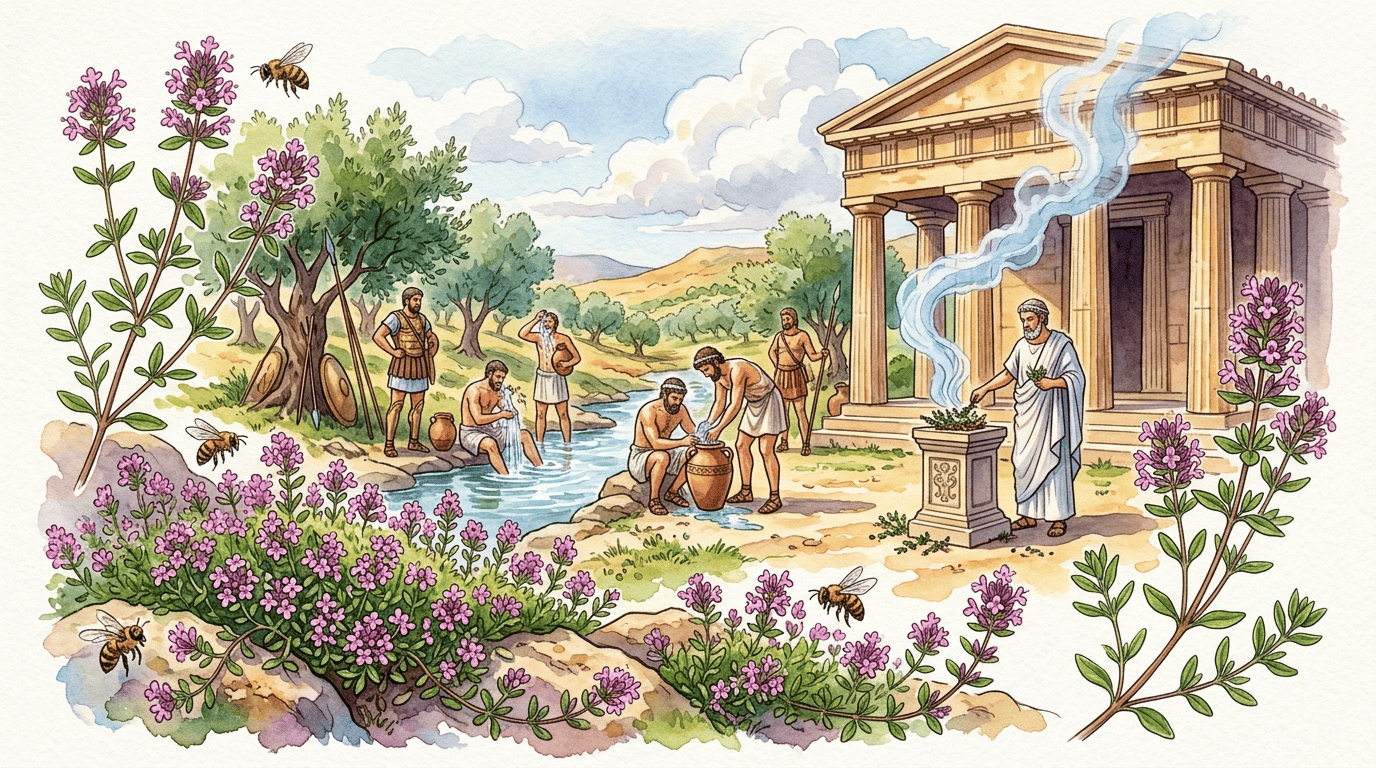
Ancient Greeks burned thyme as temple incense, believing its smoke bestowed courage — soldiers bathed in thyme water before battle. Roman soldiers exchanged sprigs of thyme as a sign of respect. During the Black Death, posies of thyme were carried to ward off plague. Greek Mount Hymettus thyme honey has been prized since antiquity and remains one of the world's most expensive honeys.
Symbolism & meaning
What It Symbolizes
Wild thyme is bravery distilled — ancient Greek warriors carried sprigs into battle as an emblem of courage, and Roman soldiers bathed in thyme water before campaigns. Its devotion is the steadier gift: a tough, fragrant mat that returns year after year to thread between paving stones, releasing scent at every footstep. Heroism and household constancy in a single creeping carpet.
- Bravery — ancient Greek warriors carried thyme as a symbol of courage in battle
- Devotion — its persistent fragrant growth represents lasting dedication
Where the Name Comes From
Thymus from Greek 'thymon', possibly from 'thymos' (courage) or 'thyo' (to fumigate). Serpyllum means 'creeping', from Greek 'herpyllos'.
Uses & Fun Facts
- Aromatic creeping thyme leaves used as Mediterranean culinary herb
- Low aromatic leaves give off thyme fragrance underfoot
- Pink-purple flower mats are heavily worked by honeybees
- Tough flowering mat for paths, walls, and lawn alternatives
Related plants
More Thymus plants
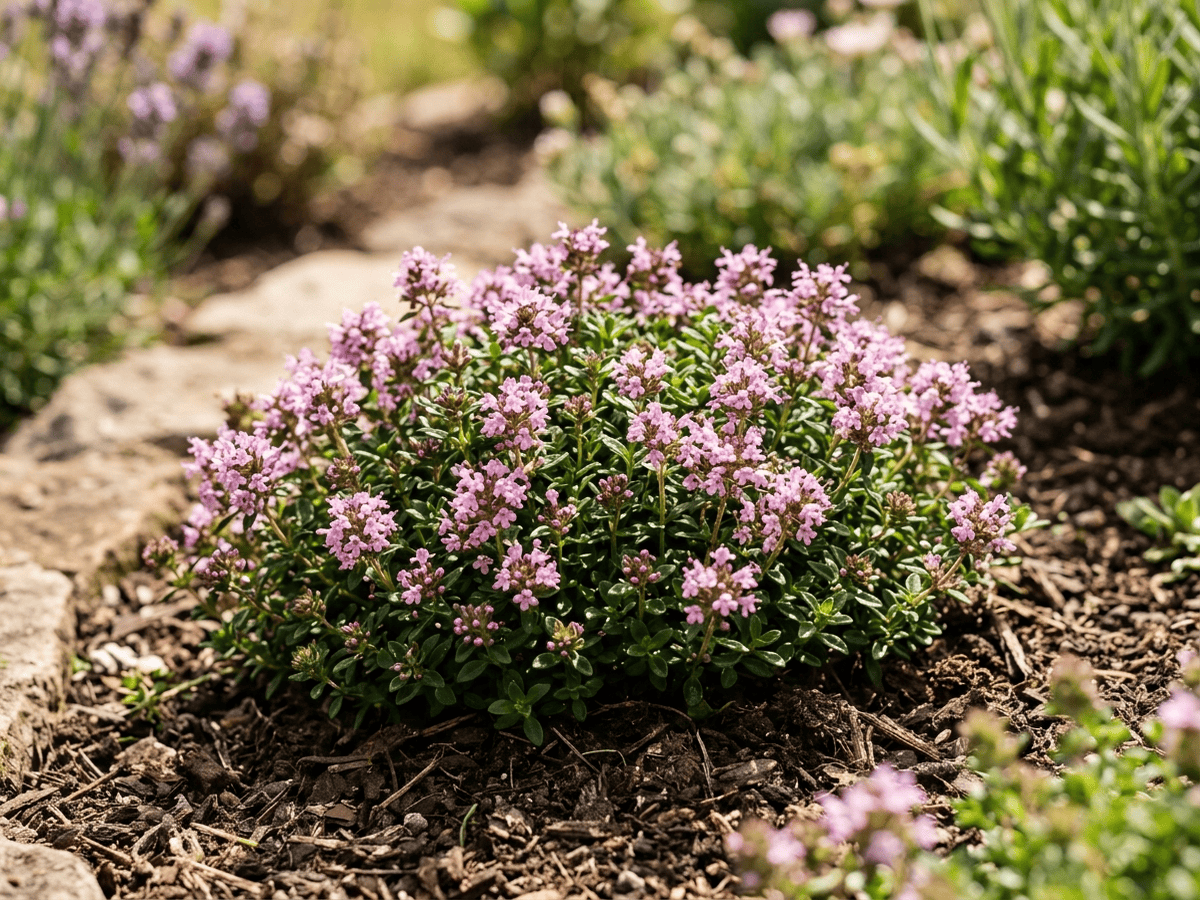 Mother Of ThymeThymus praecox
 Woolly ThymeThymus pseudolanuginosus
 Common ThymeThymus vulgaris
 Lemon ThymeThymus x citriodorus
Plants with similar care
 Chinese AbeliaAbelia chinensis
 Fragrant AbeliaAbelia mosanensis
 Large-Flowered AbeliaAbelia uniflora
 Glossy AbeliaAbelia x grandiflora
Frequently asked questions
How often should I water Wild Thyme?
In summer, water about every 5 days; in winter, about every 30 days. Adjust for heat, pot size and drainage.
How much light does Wild Thyme need?
Full sun: 6+ hrs direct. Watch the leaves — scorching or stretching means the light needs adjusting.
Is Wild Thyme toxic to cats or dogs?
No toxicity has been reported for this plant. Still, it is wise to keep pets from chewing on any houseplant. Educational information, not medical or veterinary advice. If exposure is suspected, contact a doctor or veterinarian.
Is Wild Thyme easy to grow?
Yes — it is considered an easy, beginner-friendly plant.
When does Wild Thyme bloom?
It typically blooms Jun–Aug in the Northern Hemisphere.
YardMate
Identify any plant in seconds
Snap a photo — YardMate names the plant, diagnoses problems, and reminds you when to water.
Download on the App Store