 YardMate


White Clover
Trifolium repens
Easy · Beginner friendlyAbout White Clover
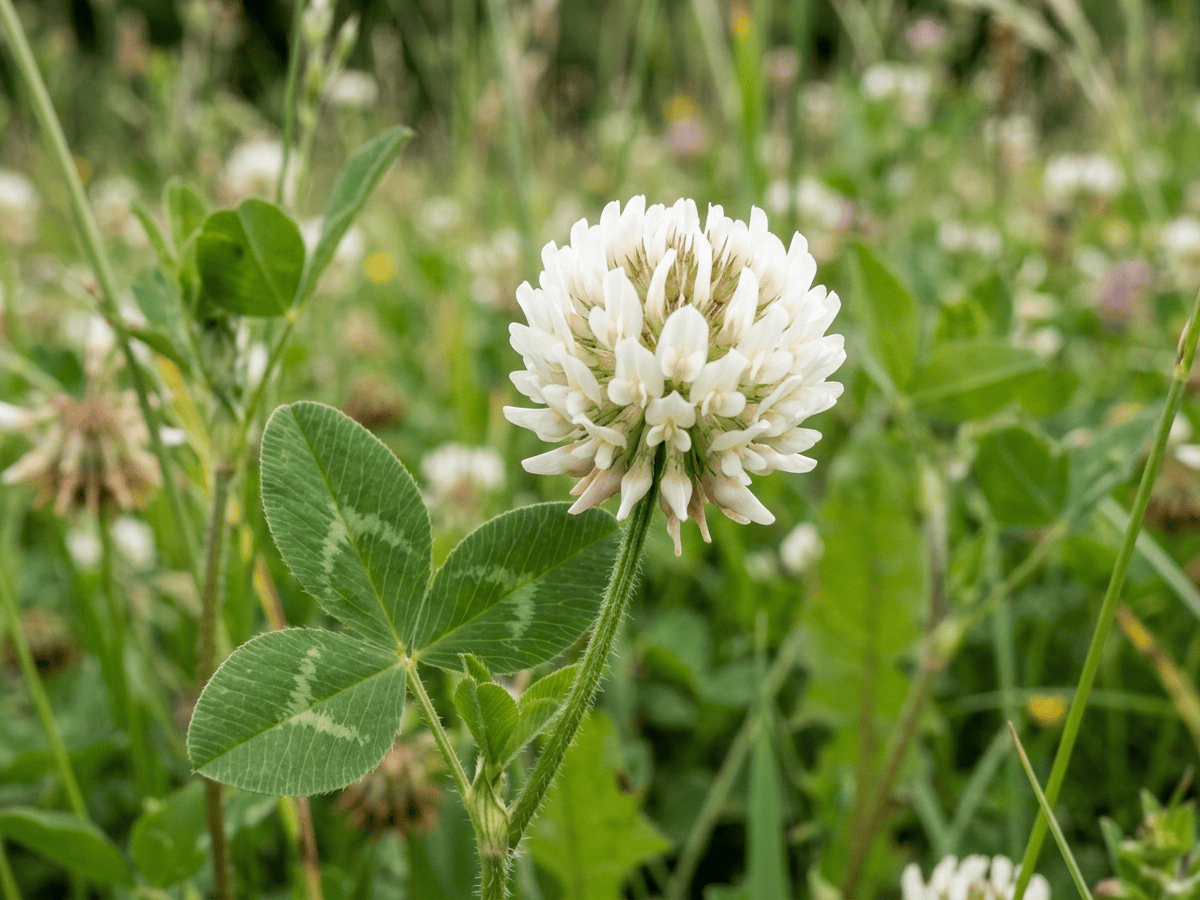
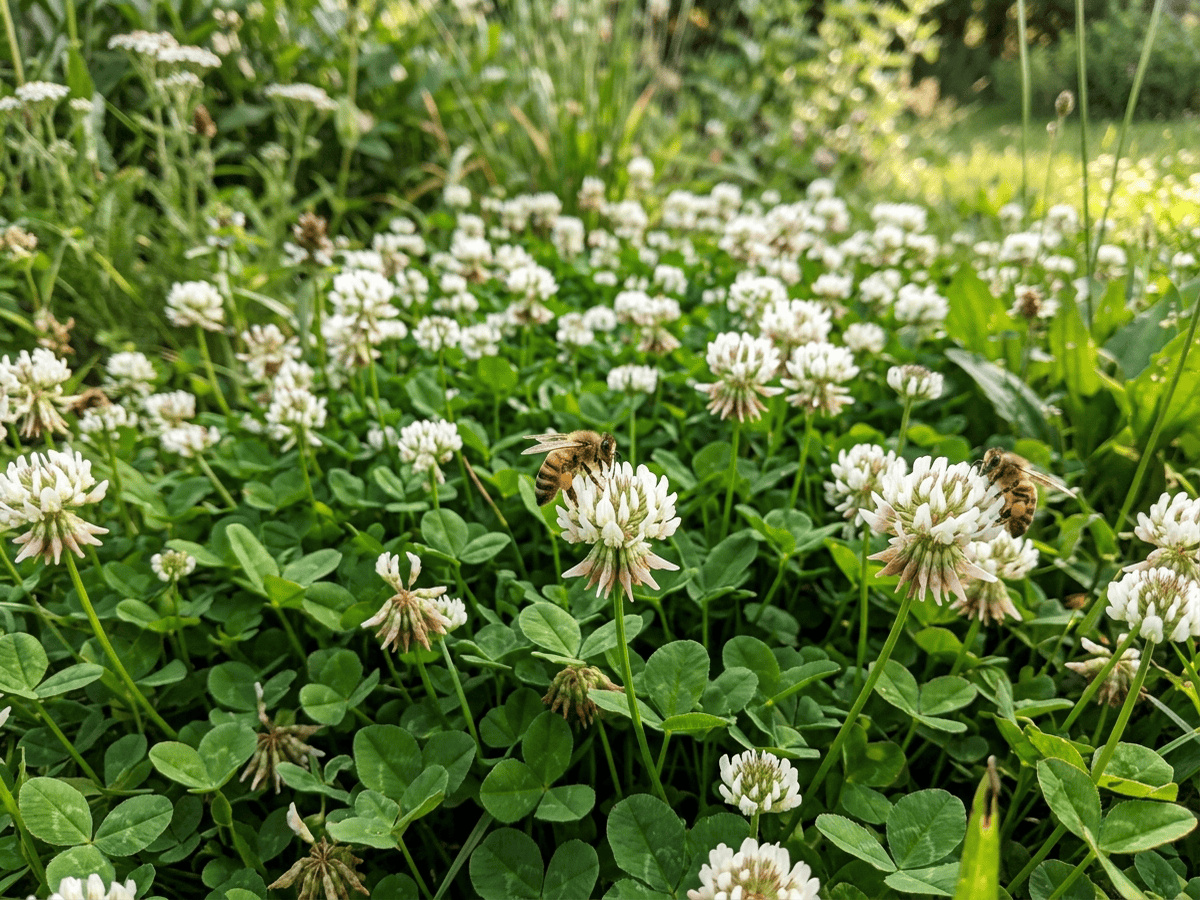
Trifolium repens, white clover, is a low creeping legume from Europe that has naturalized across lawns, pastures, and disturbed ground throughout North America. It forms mats of trifoliate leaves, often with pale crescent markings, and sends up round white flower heads through the warm season. Its relationship with lawns has changed with taste: once included intentionally in seed mixes, later rejected by uniform-turf culture, and now welcomed again in eco-lawns. White clover fixes nitrogen, stays green in moderate drought, tolerates mowing, and feeds bees when allowed to bloom. It can be slippery and patchy under heavy foot traffic, but as a living companion to grass it is practical, resilient, and quietly generous.
- Groundcover
- Pollinator-friendly
How to care for White Clover
Watering
- Springevery 7 days
- Summerevery 5 days
- Fallevery 10 days
- Winterevery 21 days
Soil · Well-draining
- Top dressingPine bark mulch10%
- Main mixPotting soil + perlite 2:170%
- DrainageLECA / gravel20%
Never skip the drainage layer — standing water is the top cause of root rot.
FERTILIZER
This plant needs little to no feeding.
At a Glance
- NativeEurope, Africa, Western Asia
- Height0.3–0.5 ft (0.1–0.2 m)
- Spread1–2 ft (0.3–0.6 m)
- Flower colorWhite, Pink
- Foliage colorGreen
- Fruit colorBrown
- SoilLoamy, Moisture-retentive
- LocationsYard
Bloom time
BLOOM CYCLE
Peak bloom
May–Oct
Round white flower heads May through October
Fragrance
MODERATE FRAGRANCE
The flowers have a sweetly honey-scented, a major bee plant scent.
Toxicity
No toxicity has been reported for this plant. Still, it is wise to keep pets from chewing on any houseplant.
Educational information, not medical or veterinary advice. If exposure is suspected, contact a doctor or veterinarian.
DISTRIBUTION


- Native
- Introduced
- Europe
- Africa
- Western Asia
History

Trifolium repens grows natively across Europe, North Africa, and western Asia, and was deliberately introduced globally from the 18th century onward as a premier pasture legume fixing 100-250 kg nitrogen per hectare per year. Linnaeus described it in Species Plantarum (1753). The Celts considered three-leaved plants sacred, and early Christian tradition in Ireland linked to Saint Patrick used its trifoliate leaves to teach the Trinity, making it the national plant emblem of Ireland (though the true 'shamrock' is often T. dubium).
Rare four-leaved mutants have been a worldwide luck symbol for at least 500 years — the odds are approximately 1 in 5000. Modern agricultural varieties such as 'Ladino' (large-leaved, 1900s Italy) and 'Huia' (New Zealand, 1920s) underpin pasture systems from Europe to New Zealand and the Americas.
Native to Europe and central Asia, introduced to North America in colonial times as a forage crop and has become universal in American lawns. Once a standard component of lawn seed mixes until mid-20th-century herbicides designed for broadleaf weeds eliminated it. Modern eco-lawn and pollinator movements have restored it as an intentional lawn plant.
Symbolism & meaning
What It Symbolizes
White Clover carries good luck through the rare four-leaf clover, the traditional charm hidden among countless three-leaved patches. The ordinary three leaflets themselves echo trinity in Irish Christian tradition, where Saint Patrick is said to have used the shamrock to teach the doctrine to early converts. A small lawn weed holding both Celtic faith and casual fortune in its leaves.
- Good luck — rare four-leaf clovers as traditional luck charm
- Trinity — three leaflets symbolic in Irish Christian tradition
Where the Name Comes From
'Trifolium' from Latin means three-leaved; 'repens' means creeping, for the spreading mat growth. Four-leaf clovers are rare mutations beloved as lucky charms.
Uses & Fun Facts
- White flower heads are a key honeybee nectar source
- Nitrogen-fixing lawn alternative tolerating mowing and foot traffic
- Forage and cover for bees, rabbits, and grazing wildlife
Related plants
More Trifolium plants
 Narrow-leaved CloverTrifolium angustifolium
 Rabbitfoot CloverTrifolium arvense
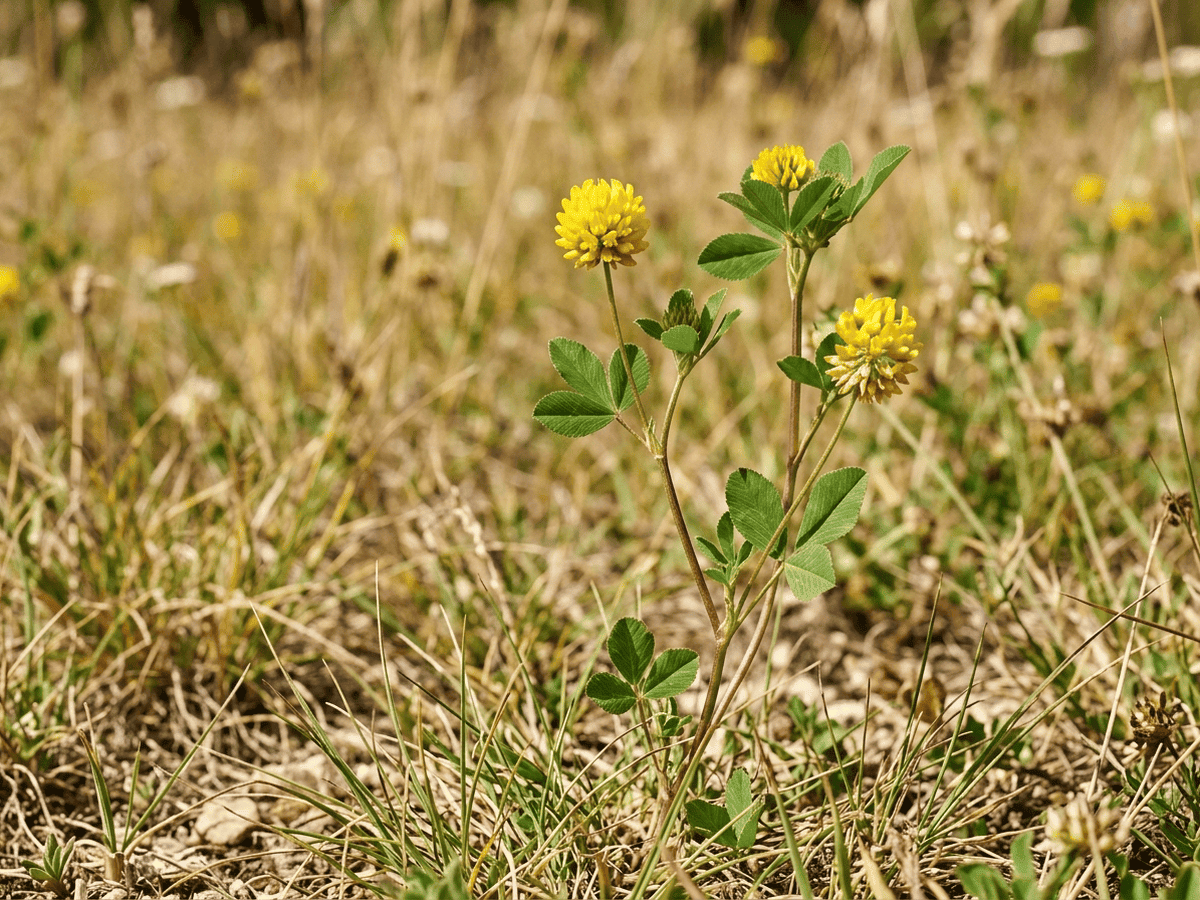 Large Hop CloverTrifolium aureum
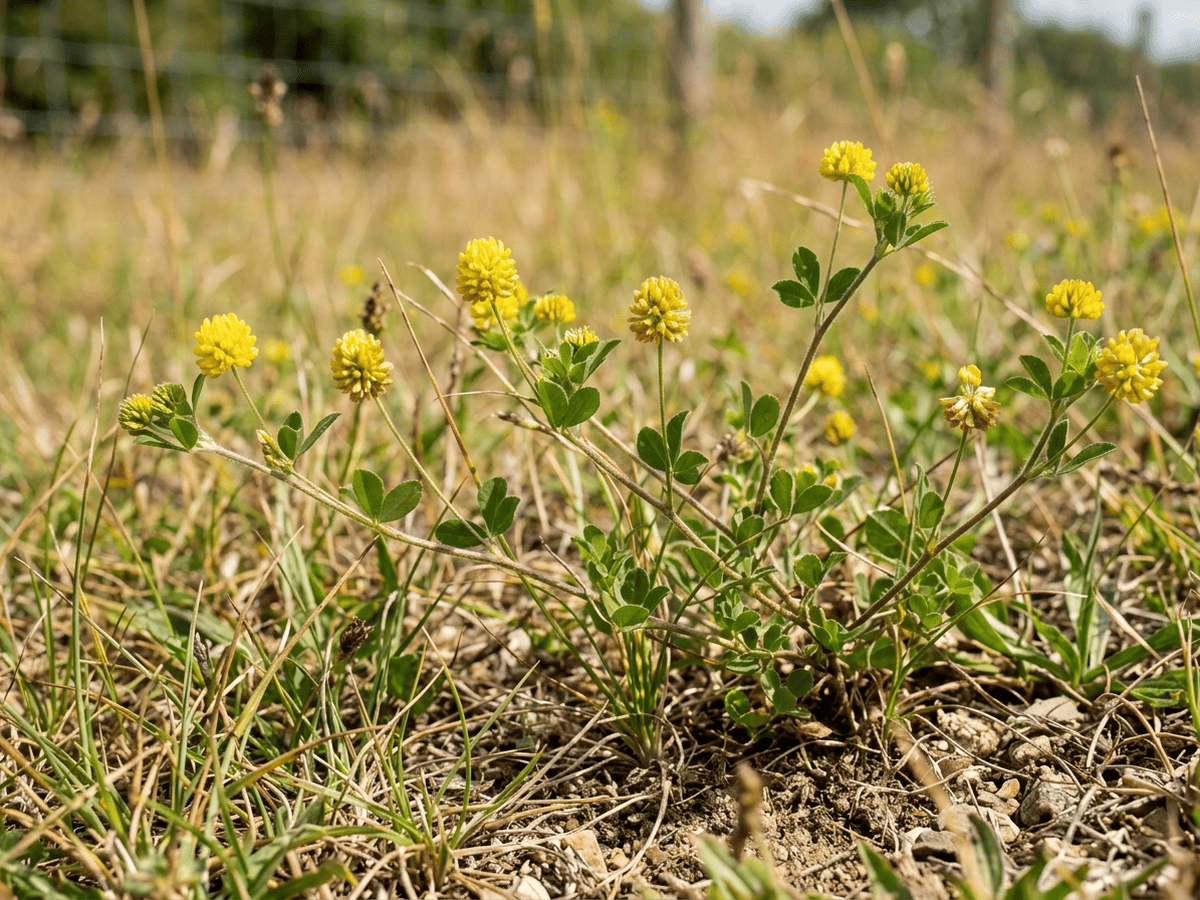 Hop TrefoilTrifolium campestre
Plants with similar care
 Chinese AbeliaAbelia chinensis
 Fragrant AbeliaAbelia mosanensis
 Large-Flowered AbeliaAbelia uniflora
 Glossy AbeliaAbelia x grandiflora
Frequently asked questions
How often should I water White Clover?
In summer, water about every 5 days; in winter, about every 21 days. Adjust for heat, pot size and drainage.
How much light does White Clover need?
Full sun: 6+ hrs direct. Watch the leaves — scorching or stretching means the light needs adjusting.
Is White Clover toxic to cats or dogs?
No toxicity has been reported for this plant. Still, it is wise to keep pets from chewing on any houseplant. Educational information, not medical or veterinary advice. If exposure is suspected, contact a doctor or veterinarian.
Is White Clover easy to grow?
Yes — it is considered an easy, beginner-friendly plant.
When does White Clover bloom?
It typically blooms May–Oct in the Northern Hemisphere.
YardMate
Identify any plant in seconds
Snap a photo — YardMate names the plant, diagnoses problems, and reminds you when to water.
Download on the App Store