 YardMate


Sweet Viburnum
Viburnum awabuki
Easy · Beginner friendlyAbout Sweet Viburnum
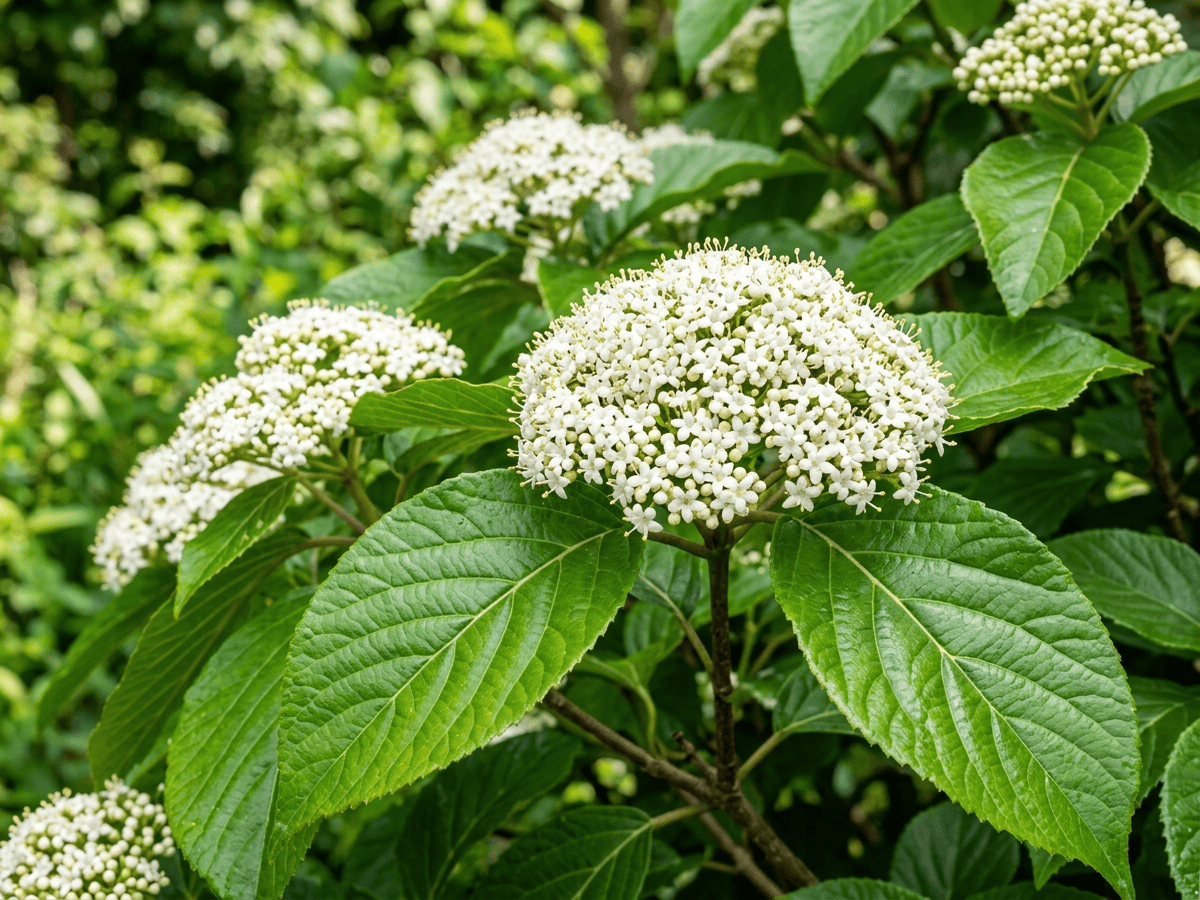
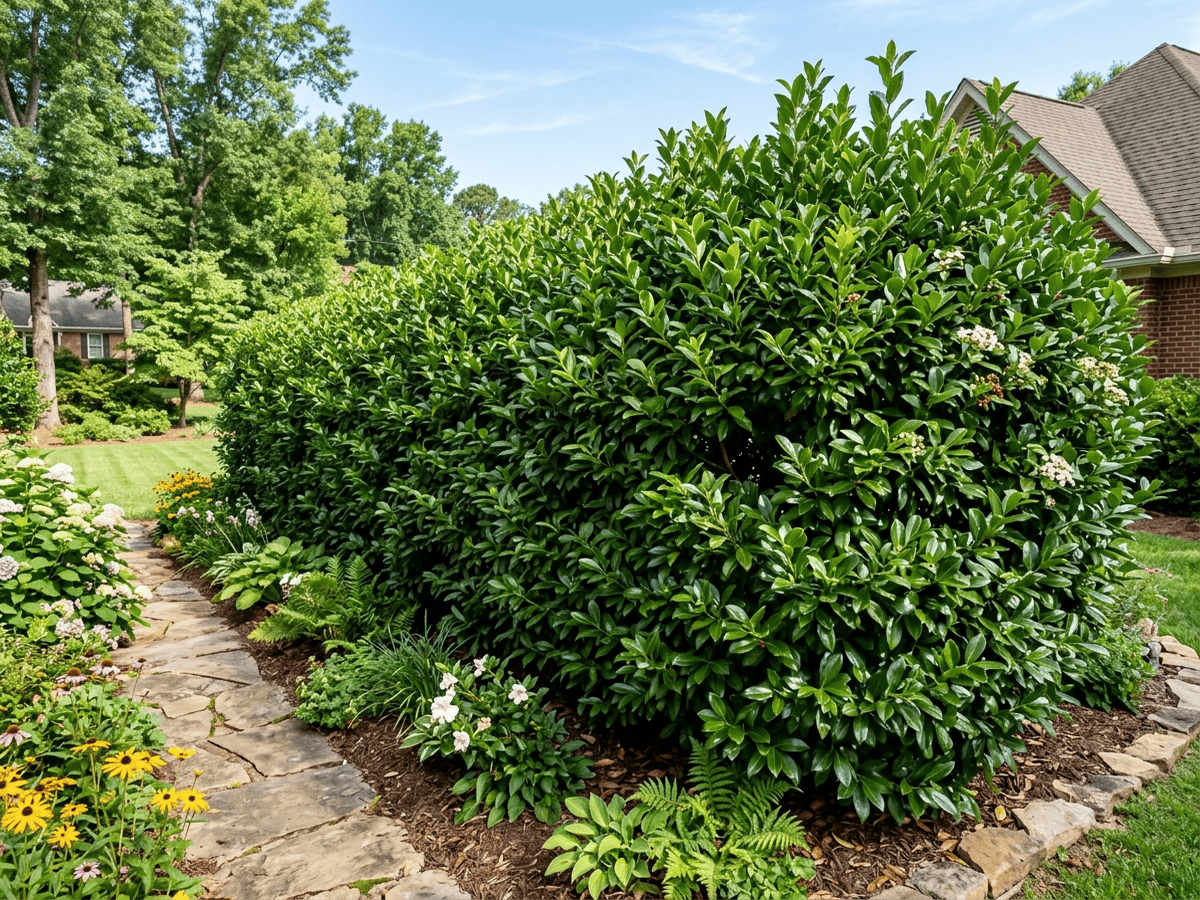
Mirror-Leaf Viburnum is a large vigorous evergreen shrub or small tree from Japan and Taiwan, growing 12-20 feet tall with exceptionally glossy dark green leaves that look as if they have been polished. The reflective leaf surface is the most lustrous of any viburnum species. Large panicles of fragrant white flowers in spring are followed by red berries that ripen to black. Increasingly popular as a fast-growing privacy screen in the American South, especially the cultivar 'Chindo'.
- Heat-tolerant
- Evergreen
How to care for Sweet Viburnum
Watering
- Springevery 7 days
- Summerevery 5 days
- Fallevery 10 days
- Winterevery 21 days
Soil · Rich & loamy
- Top dressingBark mulch15%
- Main mixRich loam + compost 3:170%
- DrainageGravel15%
Use fully finished compost — fresh compost burns roots.
FERTILIZER
Balanced Feed 14-14-14
An even feed covers all three needs at once, keeping leaves, roots and blooms moving together with nothing pushed out of balance.
- Nitrogen · Leaves
- Phosphorus · Roots + Blooms
- Potassium · Strength
- Springevery 30 days
At a Glance
- NativeEast Asia
- Height12–20 ft (3.7–6.1 m)
- Spread8–12 ft (2.4–3.7 m)
- Flower colorWhite
- Foliage colorDark-green, Green
- Fruit colorRed, Black
- SoilLoamy, Well-drained
- LocationsYard
Bloom time
BLOOM CYCLE
Peak bloom
May–Jun
Large fragrant white flower panicles May to June
Fragrance
STRONG FRAGRANCE
Powerful sweet honey-lilac fragrance from large flower panicles.
Toxicity
Humans Slight · Pets Slight
Unknown toxic principle
Slight
- Fruit
- Ingestion
EXPOSURE Eating fruit.
EFFECT Mild GI upset.
NOTE Documented concern for humans: Mild GI upset.
Slight
- Fruit
- Ingestion
EXPOSURE Eating fruit.
EFFECT Mild GI upset.
NOTE Not on ASPCA toxic list.
Slight
- Fruit
- Ingestion
EXPOSURE Eating fruit.
EFFECT Mild GI upset.
NOTE Not on ASPCA toxic list.
Educational information, not medical or veterinary advice. If exposure is suspected, contact a doctor or veterinarian.
DISTRIBUTION


- Native
- East Asia
History
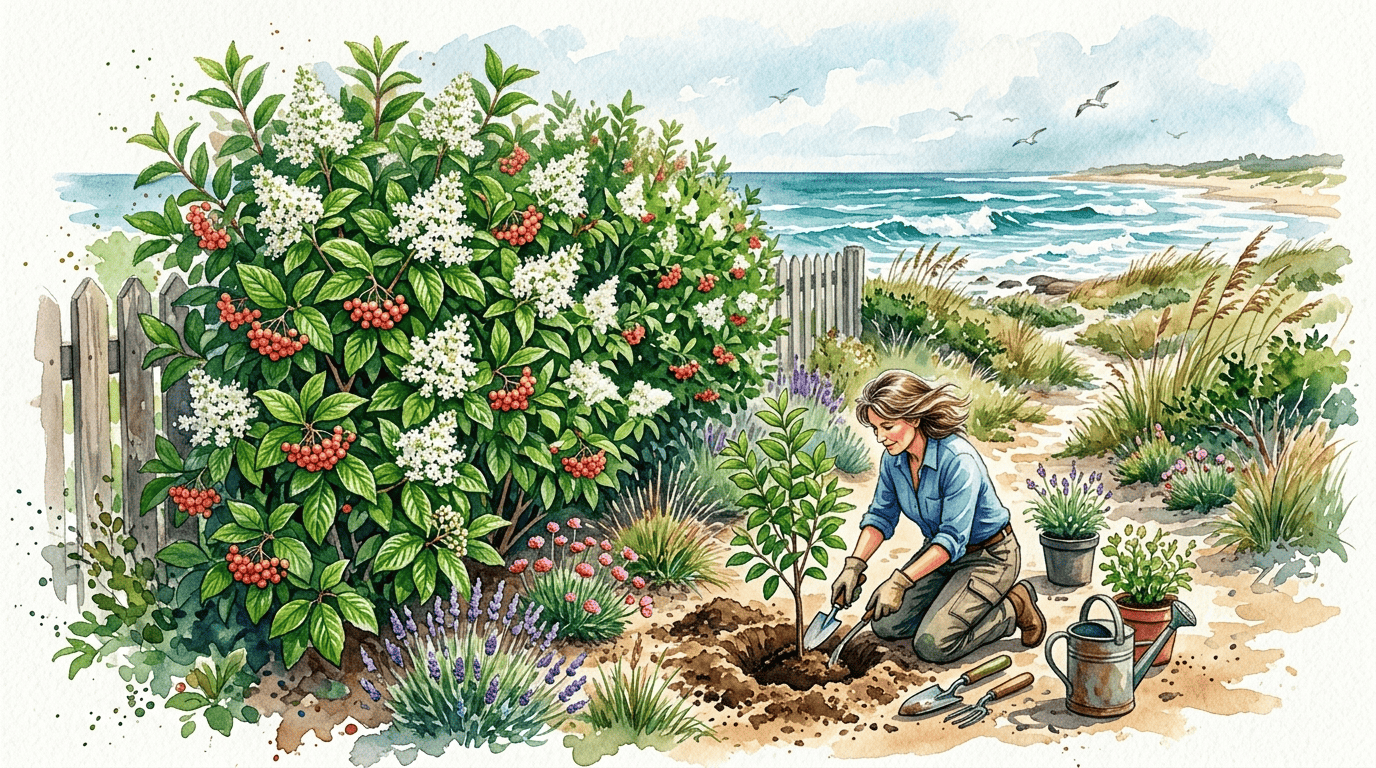
Viburnum awabuki is native to southern Japan, southern Korea, Taiwan, and eastern China. It was long treated as a variety of V. odoratissimum, but is increasingly accepted as a full species. In Japan it is called sangoju, or coral tree, for the bright red berries that later ripen black.
Structurally it is one of the boldest viburnums: a 3-6 meter shrub or small tree with large glossy corrugated leaves and enormous pyramidal flower panicles that can reach 30 cm across, carrying a sweet honey-lilac fragrance. In the southeastern United States the cultivar 'Chindo', collected from Chindo Island off Korea and introduced by the US National Arboretum in 1985, became a fast-growing evergreen screen.
Its reflective leaves suit coastal conditions, helping shed salt spray, and in Southern gardens it fills a screening role once held by photinia but with better disease resistance.
Symbolism & meaning
What It Symbolizes
Viburnum awabuki makes visible clarity, its glossy mirror-like leaves reflecting light and sky with an almost lacquered intensity. Beyond its calm reflection, the shrub also can symbolize vigorous growth — quickly achieving the screening, hedging, or specimen role assigned by the gardener. This is the viburnum for those who value polish and pace alike, a plant whose leaves shine and whose form fills in faster than expected.
- Clarity — mirror-like leaves reflecting light and sky
- Growth — vigorous habit quickly achieving garden goals
Where the Name Comes From
'Awabuki' means 'bubble-blowing' in Japanese, possibly referring to the way the leaves seem to bubble up with glossiness.
Uses & Fun Facts
- Large glossy leaves and fragrant panicles make a dense warm-climate screen
- Viburnum awabuki sheared into clipped hedges and privacy screens
- Glossy foliage and scented white bloom make a polished evergreen backdrop
Related plants
More Viburnum plants
 Korean Spice ViburnumViburnum carlesii
 Southern ArrowwoodViburnum dentatum
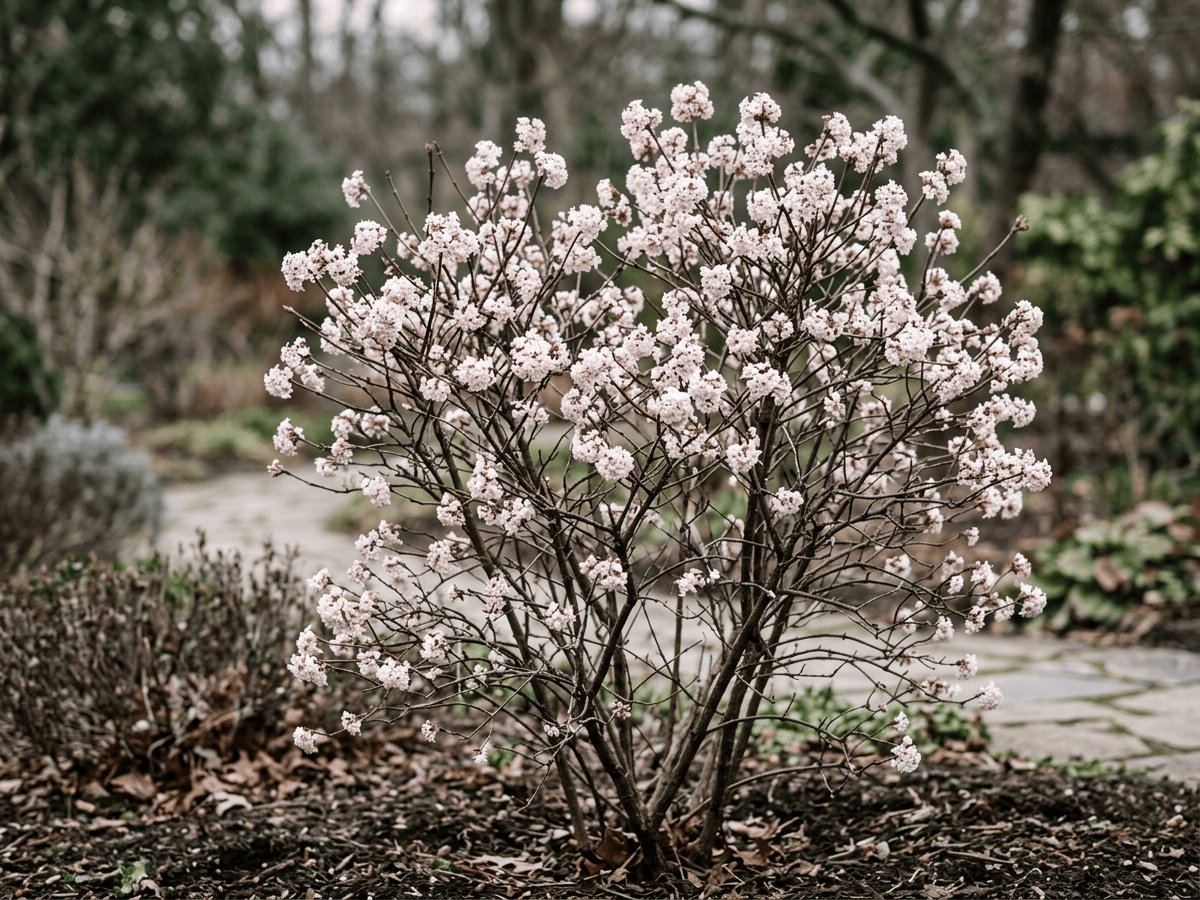 Fragrant ViburnumViburnum farreri
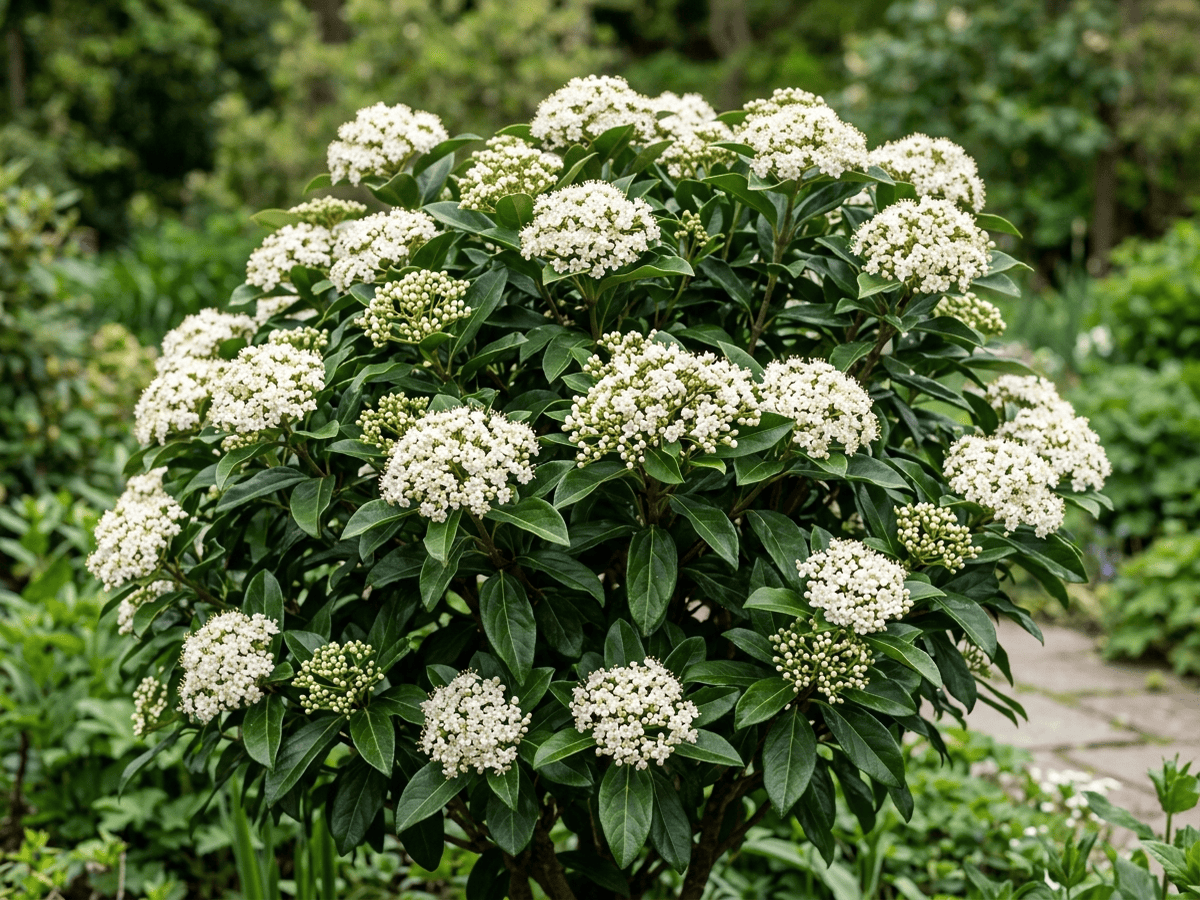 Japanese ViburnumViburnum japonicum
Plants with similar care
 Chinese AbeliaAbelia chinensis
 Fragrant AbeliaAbelia mosanensis
 Large-Flowered AbeliaAbelia uniflora
 Glossy AbeliaAbelia x grandiflora
Frequently asked questions
How often should I water Sweet Viburnum?
In summer, water about every 5 days; in winter, about every 21 days. Adjust for heat, pot size and drainage.
How much light does Sweet Viburnum need?
Full sun: 6+ hrs direct. Watch the leaves — scorching or stretching means the light needs adjusting.
Is Sweet Viburnum toxic to cats or dogs?
Pets Slight (Dogs Slight · Cats Slight) Educational information, not medical or veterinary advice. If exposure is suspected, contact a doctor or veterinarian.
Is Sweet Viburnum easy to grow?
Yes — it is considered an easy, beginner-friendly plant.
When does Sweet Viburnum bloom?
It typically blooms May–Jun in the Northern Hemisphere.
YardMate
Identify any plant in seconds
Snap a photo — YardMate names the plant, diagnoses problems, and reminds you when to water.
Download on the App Store