 YardMate


Korean Spice Viburnum
Viburnum carlesii
Easy · Beginner friendlyAbout Korean Spice Viburnum
Koreanspice Viburnum is a compact deciduous shrub from Korea and Japan, growing 4-8 feet tall, universally praised for its intoxicating spicy-sweet fragrance. Rounded clusters of pink buds open to white waxy flowers in mid-spring, releasing a scent often compared to cloves and carnations. The dark green textured leaves turn wine-red in autumn. A top choice for planting near entryways, patios, and windows where the fragrance can be enjoyed at close range.
- Fragrant
- Cold-hardy
- Compact
- Fall-color
How to care for Korean Spice Viburnum
Watering
- Springevery 7 days
- Summerevery 5 days
- Fallevery 10 days
- Winterevery 21 days
Soil · Rich & loamy
- Top dressingBark mulch15%
- Main mixRich loam + compost 3:170%
- DrainageGravel15%
Use fully finished compost — fresh compost burns roots.
FERTILIZER
Balanced Feed 14-14-14
An even feed covers all three needs at once, keeping leaves, roots and blooms moving together with nothing pushed out of balance.
- Nitrogen · Leaves
- Phosphorus · Roots + Blooms
- Potassium · Strength
- Springevery 30 days
At a Glance
- NativeEast Asia
- Height5–8 ft (1.5–2.4 m)
- Spread5–8 ft (1.5–2.4 m)
- Flower colorWhite, Pink
- Foliage colorGreen, Red
- Fruit colorBlue, Black
- SoilLoamy, Well-drained
- LocationsYard
Bloom time
BLOOM CYCLE
Peak bloom
Apr–May
Pink-white fragrant clusters April to May; plant near walkways
Fragrance
STRONG FRAGRANCE
Powerful sweet clove-spice fragrance, one of the most intensely perfumed spring shrubs.
Toxicity
Humans Slight · Pets Slight
Unknown toxic principle
Slight
- Fruit
- Ingestion
EXPOSURE Eating fruit.
EFFECT Mild GI upset if eaten.
NOTE Documented concern for humans: Mild GI upset if eaten.
Slight
- Fruit
- Ingestion
EXPOSURE Eating fruit.
EFFECT Mild GI upset.
NOTE Not on ASPCA toxic list; fruits may cause mild GI upset.
Slight
- Fruit
- Ingestion
EXPOSURE Eating fruit.
EFFECT Mild GI upset.
NOTE Not on ASPCA toxic list; fruits may cause mild GI upset.
Educational information, not medical or veterinary advice. If exposure is suspected, contact a doctor or veterinarian.
DISTRIBUTION


- Native
- Introduced
- East Asia
History
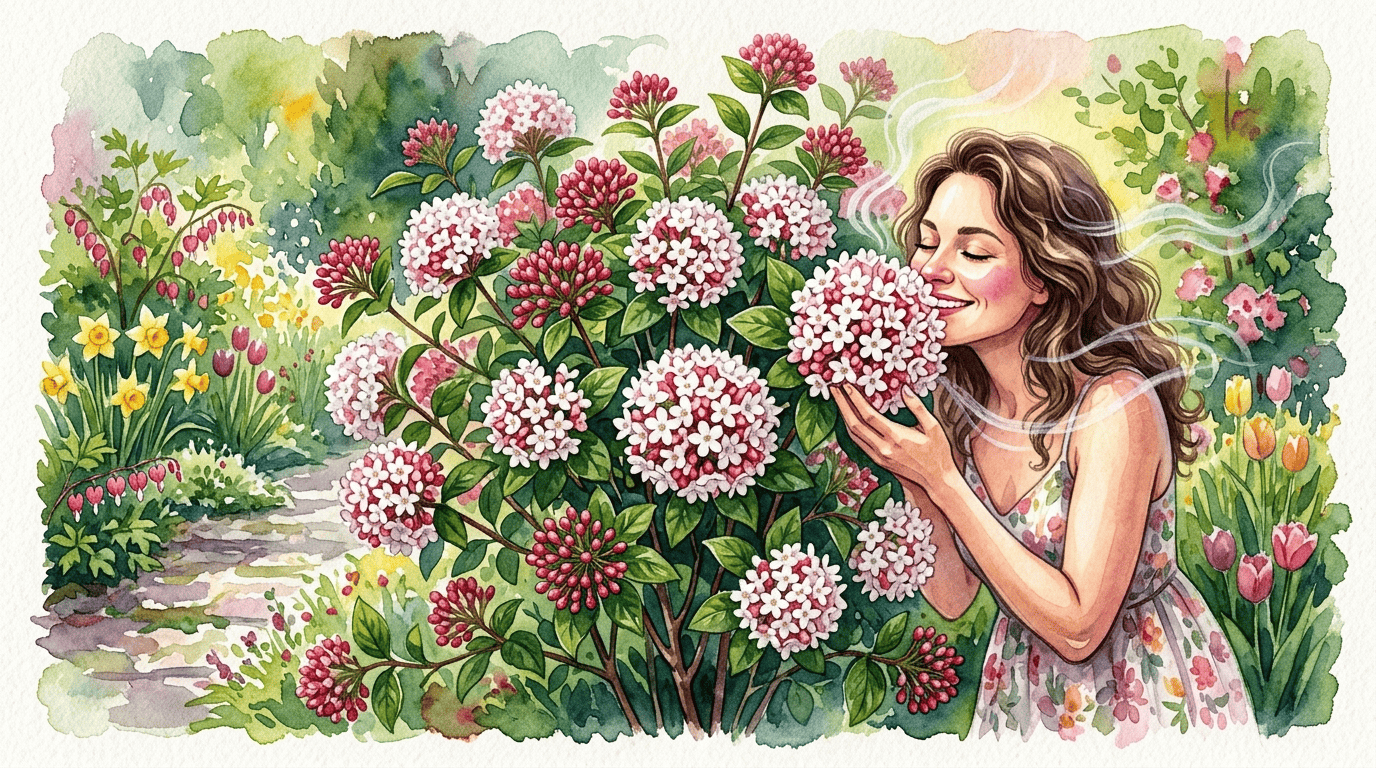
Viburnum carlesii is native to the Korean Peninsula and the Tsushima Islands of Japan. English botanist William Botting Hemsley formally described the species in 1888 from specimens collected in 1885 by William Richard Carles, a British consul and botanical collector in Korea and China whom the species honors. The species is celebrated for its exceptional fragrance—rounded snowball clusters of pink-red buds opening to white flowers 6-8 cm across release a powerful sweet clove-spice perfume in April-May that carries for many meters on warm days, rivaling daphne and lilac as the most fragrant of early-spring shrubs.
Introduced to Western cultivation by Chinese expedition plant collector James Veitch in 1902, it quickly became a garden classic. The 2-meter rounded shrub is hardy, easy, and produces warm red fall color.
It has contributed to several important hybrids including V. x burkwoodii (V. carlesii x V. utile) from Burkwood & Skipwith in 1924, and V. x juddii from T.D. x carlcephalum crossed this species with V. macrocephalum for larger flowers while retaining the fragrance. Multiple surveys of American gardeners consistently rank it among the top five most fragrant garden shrubs. Judd at Arnold Arboretum in 1935.
Symbolism & meaning
What It Symbolizes
Korean Spice Viburnum evokes love through its spicy-sweet fragrance, one of the most beloved scents in the spring garden and a longtime romantic favorite. Paired with welcome, it has been traditionally planted by doorways to greet visitors with perfume before any words are spoken. It is a shrub whose meaning is hospitality made airborne — affection that arrives on the breeze before the guest reaches the threshold.
- Love — spicy-sweet fragrance makes it a romantic garden favorite
- Welcome — traditionally planted by doorways to greet visitors
Where the Name Comes From
The name Korean Spice Viburnum points to Korea. 'Carlesii' honors William Richard Carles (1848–1929), British vice-consul in Korea.
Uses & Fun Facts
- Pink-budded white snowballs release intense spicy clove perfume
- Compact Korean spice viburnum as fragrant spring focal point
- Fragrant flower clusters feed early bees and butterflies
Related plants
More Viburnum plants
 Sweet ViburnumViburnum awabuki
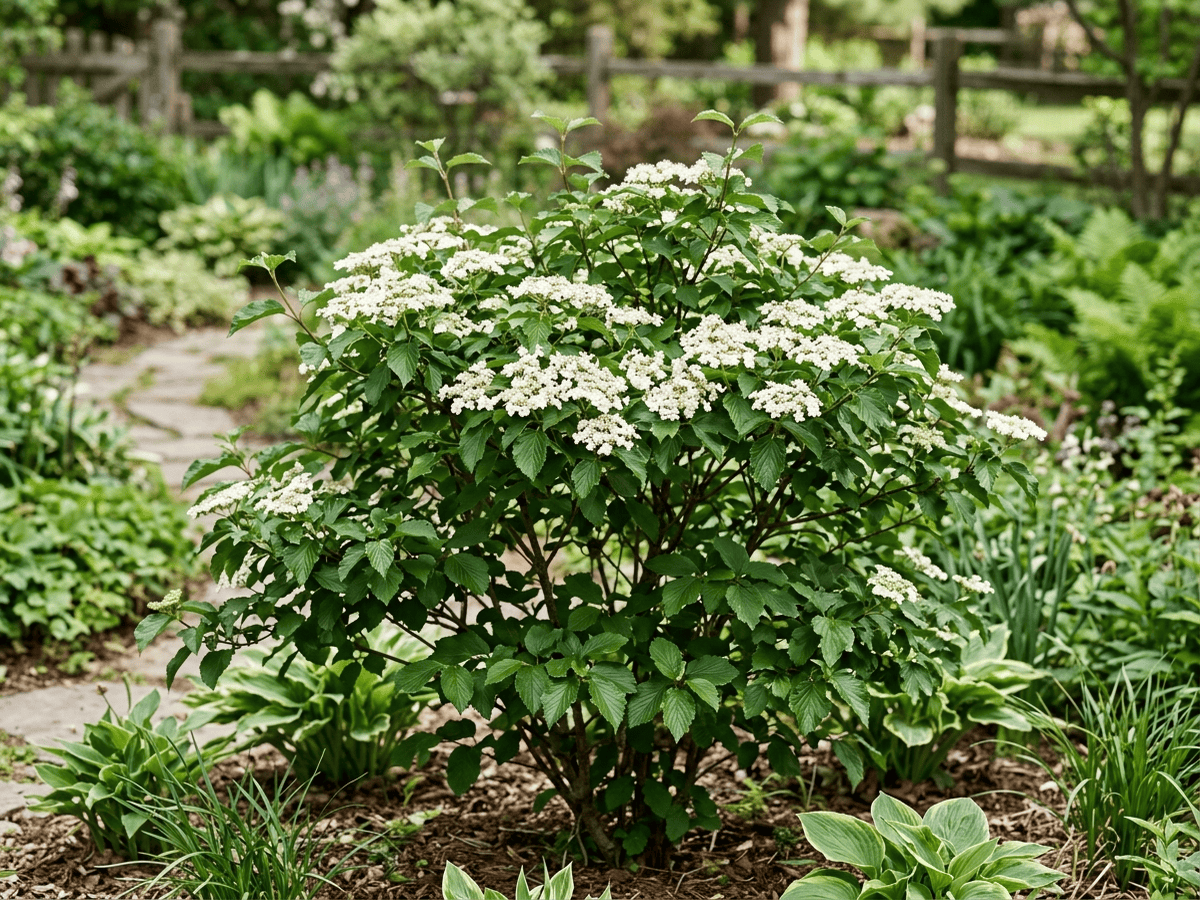 Southern ArrowwoodViburnum dentatum
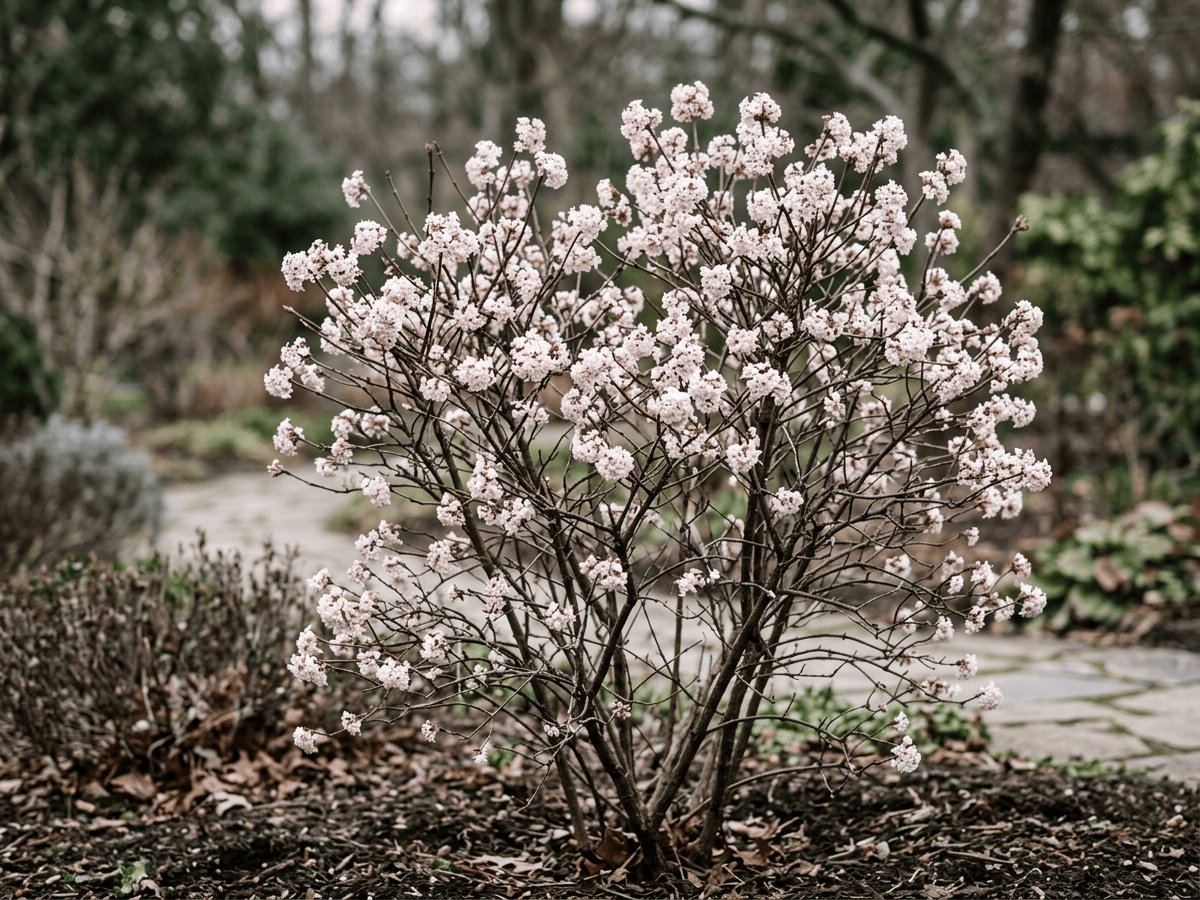 Fragrant ViburnumViburnum farreri
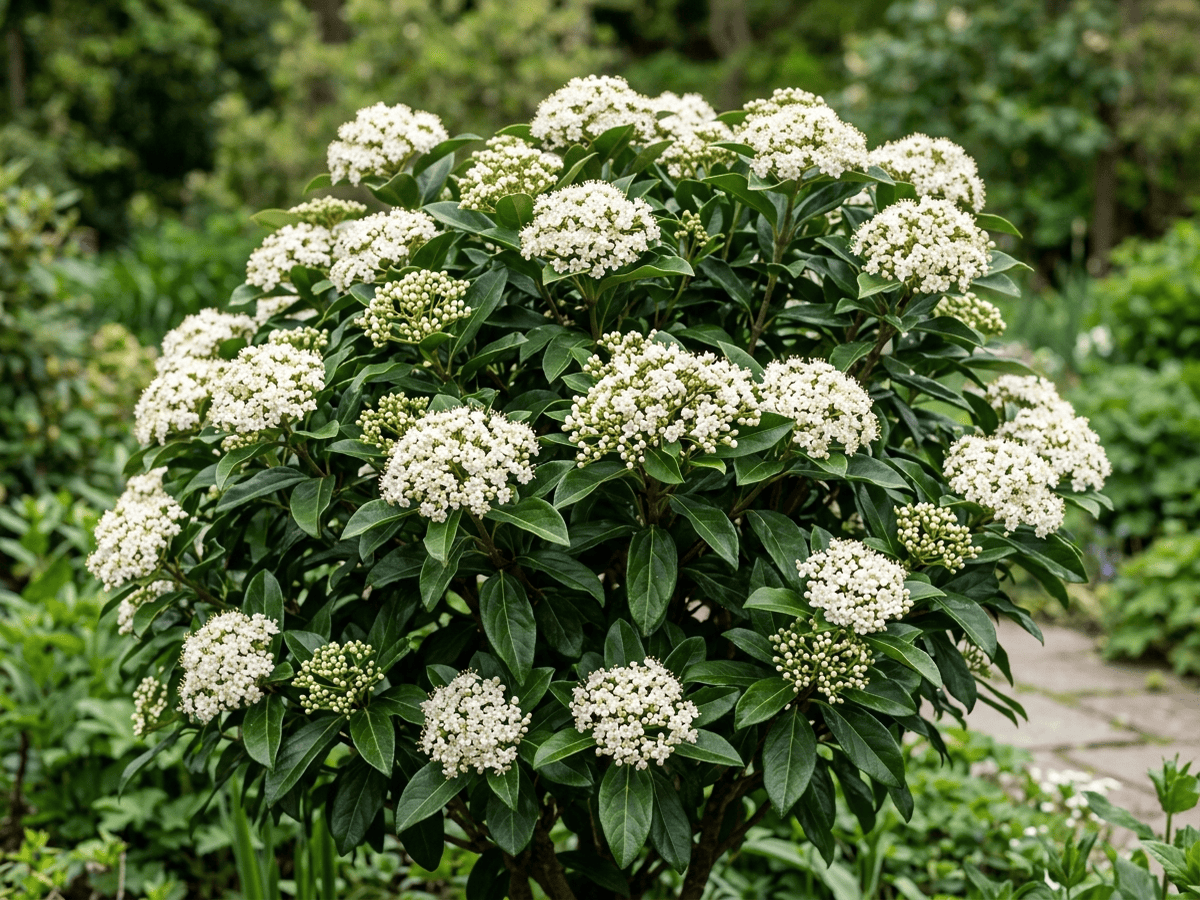 Japanese ViburnumViburnum japonicum
Plants with similar care
 Chinese AbeliaAbelia chinensis
 Fragrant AbeliaAbelia mosanensis
 Large-Flowered AbeliaAbelia uniflora
 Glossy AbeliaAbelia x grandiflora
Frequently asked questions
How often should I water Korean Spice Viburnum?
In summer, water about every 5 days; in winter, about every 21 days. Adjust for heat, pot size and drainage.
How much light does Korean Spice Viburnum need?
Full sun: 6+ hrs direct. Watch the leaves — scorching or stretching means the light needs adjusting.
Is Korean Spice Viburnum toxic to cats or dogs?
Pets Slight (Dogs Slight · Cats Slight) Educational information, not medical or veterinary advice. If exposure is suspected, contact a doctor or veterinarian.
Is Korean Spice Viburnum easy to grow?
Yes — it is considered an easy, beginner-friendly plant.
When does Korean Spice Viburnum bloom?
It typically blooms Apr–May in the Northern Hemisphere.
YardMate
Identify any plant in seconds
Snap a photo — YardMate names the plant, diagnoses problems, and reminds you when to water.
Download on the App Store