 YardMate
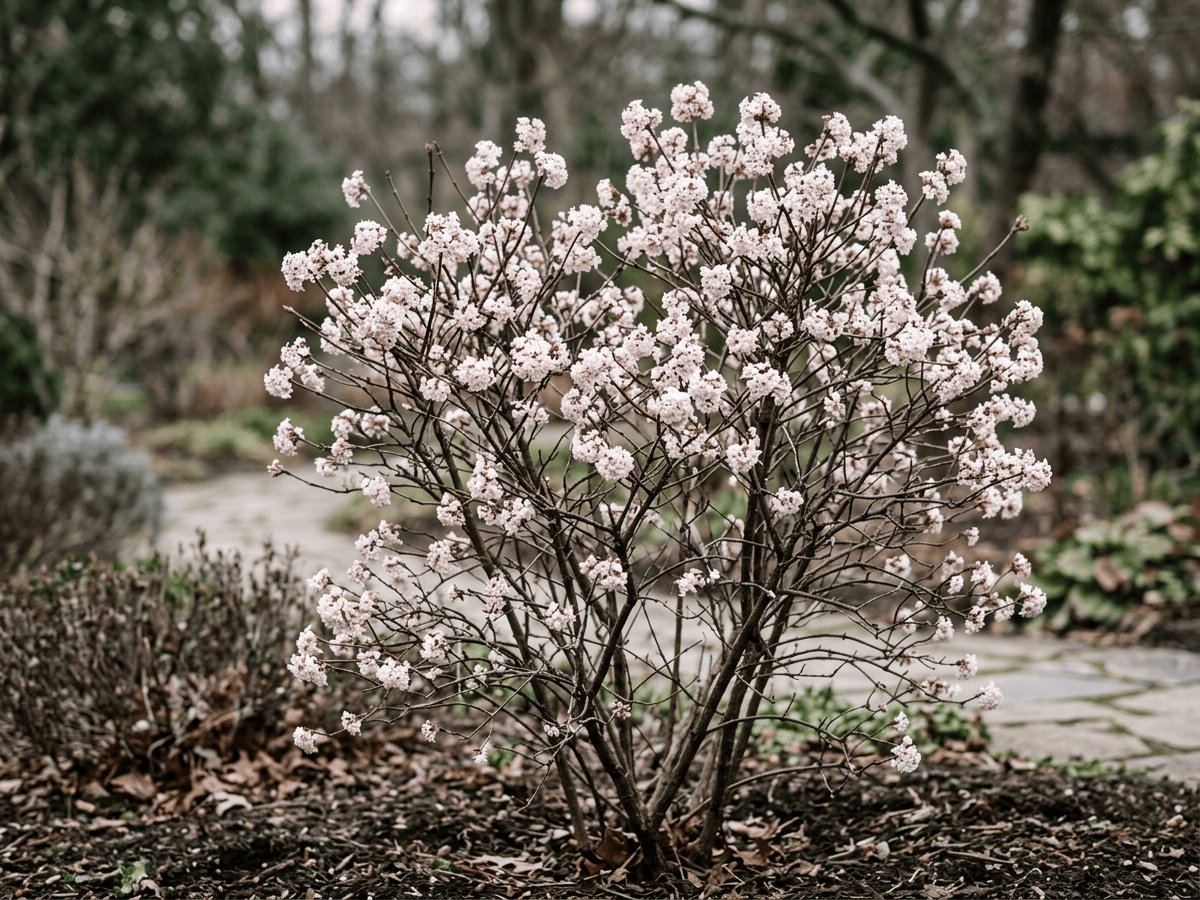


Fragrant Viburnum
Viburnum farreri
Easy · Beginner friendlyAbout Fragrant Viburnum
Fragrant Viburnum is a deciduous shrub from northern China, growing 8-12 feet tall with upright vase-shaped form. Its claim to fame is blooming in late winter to very early spring—often January or February in mild areas—when fragrant clusters of pink-budded white flowers appear on bare branches. The intense sweet fragrance carries on cold winter air, making it one of the most welcome sights and scents of the late winter garden. Bronze-tinged new foliage matures to dark green.
- Fragrant
- Cold-hardy
How to care for Fragrant Viburnum
Watering
- Springevery 7 days
- Summerevery 5 days
- Fallevery 10 days
- Winterevery 21 days
Soil · Rich & loamy
- Top dressingBark mulch15%
- Main mixRich loam + compost 3:170%
- DrainageGravel15%
Use fully finished compost — fresh compost burns roots.
FERTILIZER
Balanced Feed 14-14-14
An even feed covers all three needs at once, keeping leaves, roots and blooms moving together with nothing pushed out of balance.
- Nitrogen · Leaves
- Phosphorus · Roots + Blooms
- Potassium · Strength
- Springevery 30 days
At a Glance
- NativeEast Asia
- Height8–12 ft (2.4–3.7 m)
- Spread6–10 ft (1.8–3 m)
- Flower colorPink, White
- Foliage colorGreen, Red, Bronze
- Fruit colorRed, Black
- SoilLoamy, Well-drained
- LocationsYard
Bloom time
BLOOM CYCLE
Peak bloom
Jan–Mar
Fragrant pink-white clusters on bare branches January to March
Fragrance
STRONG FRAGRANCE
Powerful sweet heliotrope-cherry-pie fragrance in winter bloom.
Toxicity
Humans Slight · Pets Slight
Unknown toxic principle
Slight
- Fruit
- Ingestion
EXPOSURE Eating fruit.
EFFECT Mild GI upset.
NOTE Documented concern for humans: Mild GI upset.
Slight
- Fruit
- Ingestion
EXPOSURE Eating fruit.
EFFECT Mild GI upset.
NOTE Not on ASPCA toxic list.
Slight
- Fruit
- Ingestion
EXPOSURE Eating fruit.
EFFECT Mild GI upset.
NOTE Not on ASPCA toxic list.
Educational information, not medical or veterinary advice. If exposure is suspected, contact a doctor or veterinarian.
DISTRIBUTION


- Native
- Introduced
- East Asia
History
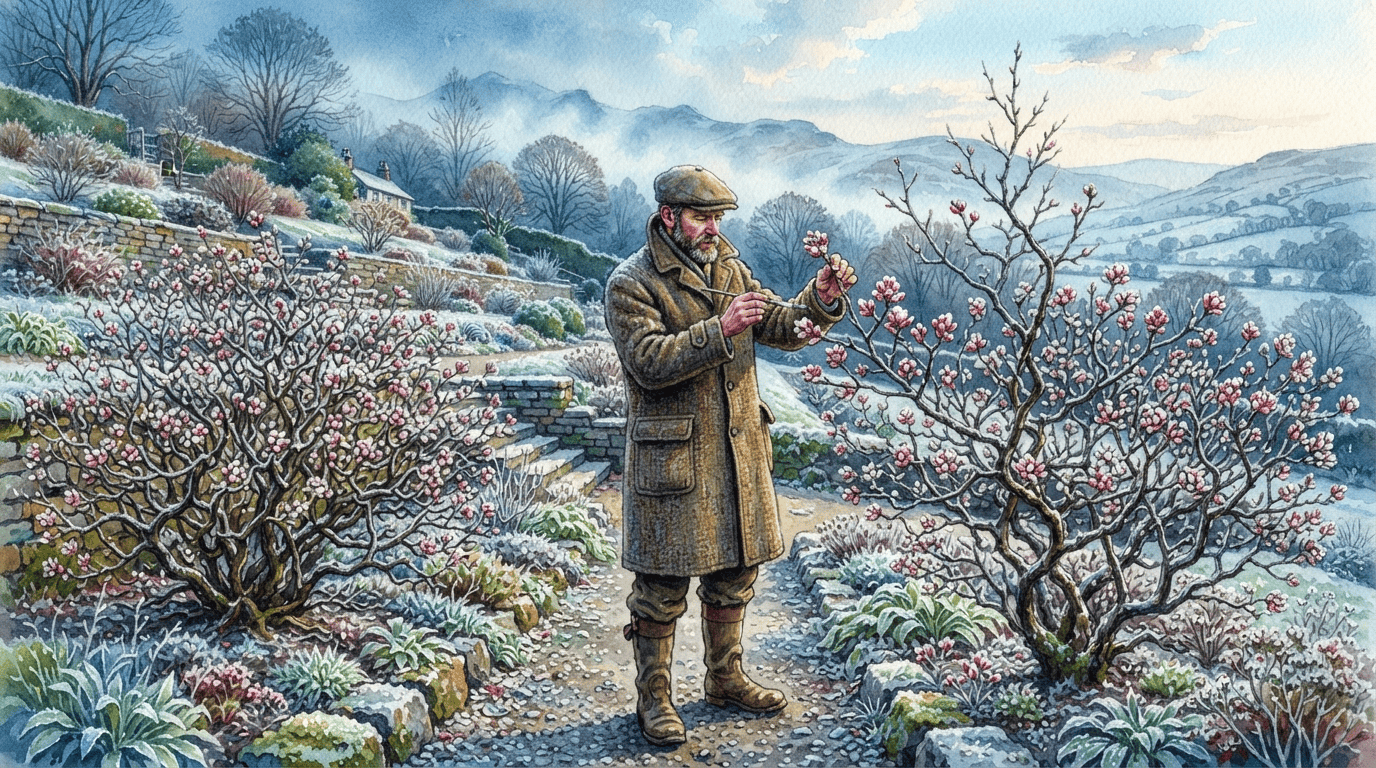
Viburnum farreri is native to northern China (Gansu, Shaanxi, Sichuan, Yunnan). The species was introduced to British horticulture as Viburnum fragrans in 1910 by the legendary English plant collector and rock garden writer Reginald Farrer, who discovered it in Kansu Province. However, the name fragrans had been validly applied earlier to a different plant, so the English botanist William T. Stearn renamed the species V. farreri in 1966, honoring Farrer posthumously (he died in Burma in 1920 at age 40). The shrub is renowned for its flowering season—tight clusters of waxy pink-budded flowers opening to pale pink/white appear on bare stems from November through March in mild winters, emitting a powerfully sweet fragrance reminiscent of heliotrope or cherry pie.
Its hybrid with V. grandiflorum produced V. x bodnantense ('Dawn', 'Charles Lamont', 'Deben') at Bodnant Garden in Wales in 1935, combining hardiness with even more prolific bloom. Upright to 3 meters, it is a cornerstone of winter gardens throughout the temperate world. Collected by Reginald Farrer in the mountains of Gansu province, China, in 1914.
Previously known as V. fragrans until renamed in his honor. Farrer called it 'a shrub that should be in every garden' for its mid-winter fragrance. Hardy to Zone 5, it often blooms during winter thaws, with flowers surviving brief dips to 20°F. One of the essential plants in the English winter garden tradition championed by the Royal Horticultural Society.
Symbolism & meaning
What It Symbolizes
Fragrant Viburnum carries hope, its pink-white flower clusters opening through the depth of winter to signal that spring is on its way. Each bloom stands for quiet courage, braving freezing temperatures while everything else still sleeps. A shrub for those who want their fragrant reassurance to begin in January, before any sensible plant should be flowering at all.
- Hope — blooming in the depth of winter signals spring's approach
- Courage — flowers brave freezing temperatures
Where the Name Comes From
The name Fragrant Viburnum describes its noticeable scent. 'Farreri' honors Reginald Farrer (1880–1920), legendary English plant hunter and alpine garden pioneer.
Uses & Fun Facts
- Pink-budded white flowers release strong sweet winter perfume
- Late-winter blooming shrub as sheltered courtyard focal plant
- Heritage Chinese viburnum prized for bare-branch winter bloom
Related plants
More Viburnum plants
 Sweet ViburnumViburnum awabuki
 Korean Spice ViburnumViburnum carlesii
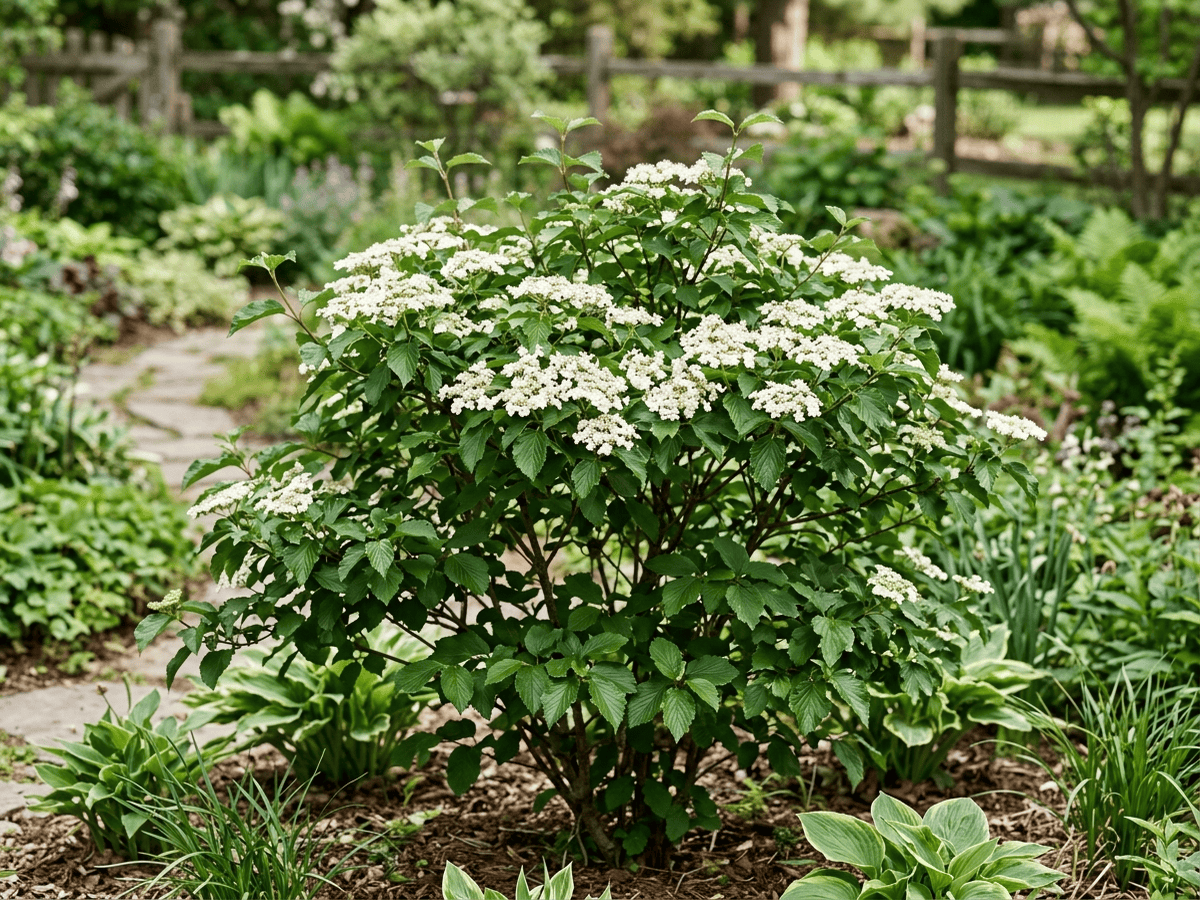 Southern ArrowwoodViburnum dentatum
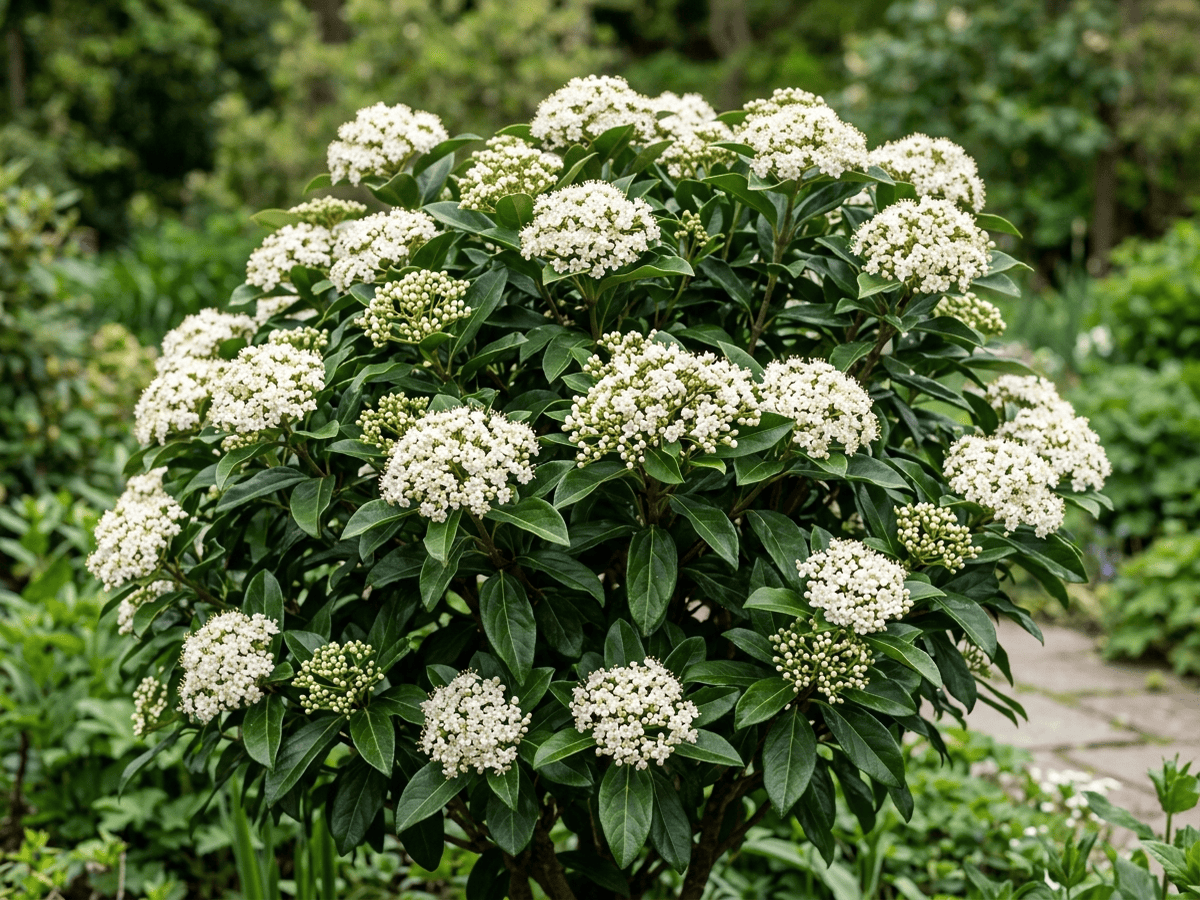 Japanese ViburnumViburnum japonicum
Plants with similar care
 Chinese AbeliaAbelia chinensis
 Fragrant AbeliaAbelia mosanensis
 Large-Flowered AbeliaAbelia uniflora
 Glossy AbeliaAbelia x grandiflora
Frequently asked questions
How often should I water Fragrant Viburnum?
In summer, water about every 5 days; in winter, about every 21 days. Adjust for heat, pot size and drainage.
How much light does Fragrant Viburnum need?
Full sun: 6+ hrs direct. Watch the leaves — scorching or stretching means the light needs adjusting.
Is Fragrant Viburnum toxic to cats or dogs?
Pets Slight (Dogs Slight · Cats Slight) Educational information, not medical or veterinary advice. If exposure is suspected, contact a doctor or veterinarian.
Is Fragrant Viburnum easy to grow?
Yes — it is considered an easy, beginner-friendly plant.
When does Fragrant Viburnum bloom?
It typically blooms Jan–Mar in the Northern Hemisphere.
YardMate
Identify any plant in seconds
Snap a photo — YardMate names the plant, diagnoses problems, and reminds you when to water.
Download on the App Store