 YardMate


Japanese Snowball
Viburnum plicatum
Easy · Beginner friendlyAbout Japanese Snowball
Japanese Snowball is a strikingly architectural deciduous shrub from Japan and China, growing 8-15 feet tall with distinctive horizontal layered branches. The form 'tomentosum' (doublefile viburnum) produces flat lacecap flower heads along the top of each horizontal tier, creating a wedding-cake effect. The snowball form produces round clusters of sterile white flowers. Dark green pleated leaves turn burgundy-red in fall. Red berries ripen to black and are devoured by birds.
- Fall-color
- Wildlife-friendly
How to care for Japanese Snowball
Watering
- Springevery 7 days
- Summerevery 5 days
- Fallevery 10 days
- Winterevery 21 days
Soil · Rich & loamy
- Top dressingBark mulch15%
- Main mixRich loam + compost 3:170%
- DrainageGravel15%
Use fully finished compost — fresh compost burns roots.
FERTILIZER
Balanced Feed 14-14-14
An even feed covers all three needs at once, keeping leaves, roots and blooms moving together with nothing pushed out of balance.
- Nitrogen · Leaves
- Phosphorus · Roots + Blooms
- Potassium · Strength
- Springevery 30 days
At a Glance
- NativeEast Asia
- Height8–15 ft (2.4–4.6 m)
- Spread8–12 ft (2.4–3.7 m)
- Flower colorWhite
- Foliage colorGreen, Red
- Fruit colorRed, Black
- SoilLoamy, Moisture-retentive
- LocationsYard
Bloom time
BLOOM CYCLE
Peak bloom
May–Jun
White lacecap or snowball flowers along tiered branches May to June
Toxicity
Humans Slight · Pets Slight
Unknown toxic principle
Slight
- Fruit
- Ingestion
EXPOSURE Eating fruit.
EFFECT GI upset if raw fruits eaten in quantity.
NOTE Documented concern for humans: GI upset if raw fruits eaten in quantity.
Slight
- Fruit
- Ingestion
EXPOSURE Eating fruit.
EFFECT Mild GI upset.
NOTE Not on ASPCA toxic list; fruits can cause mild GI upset if eaten in quantity.
Slight
- Fruit
- Ingestion
EXPOSURE Eating fruit.
EFFECT Mild GI upset.
NOTE Not on ASPCA toxic list; fruits can cause mild GI upset if eaten in quantity.
Educational information, not medical or veterinary advice. If exposure is suspected, contact a doctor or veterinarian.
DISTRIBUTION


- Native
- Introduced
- East Asia
History
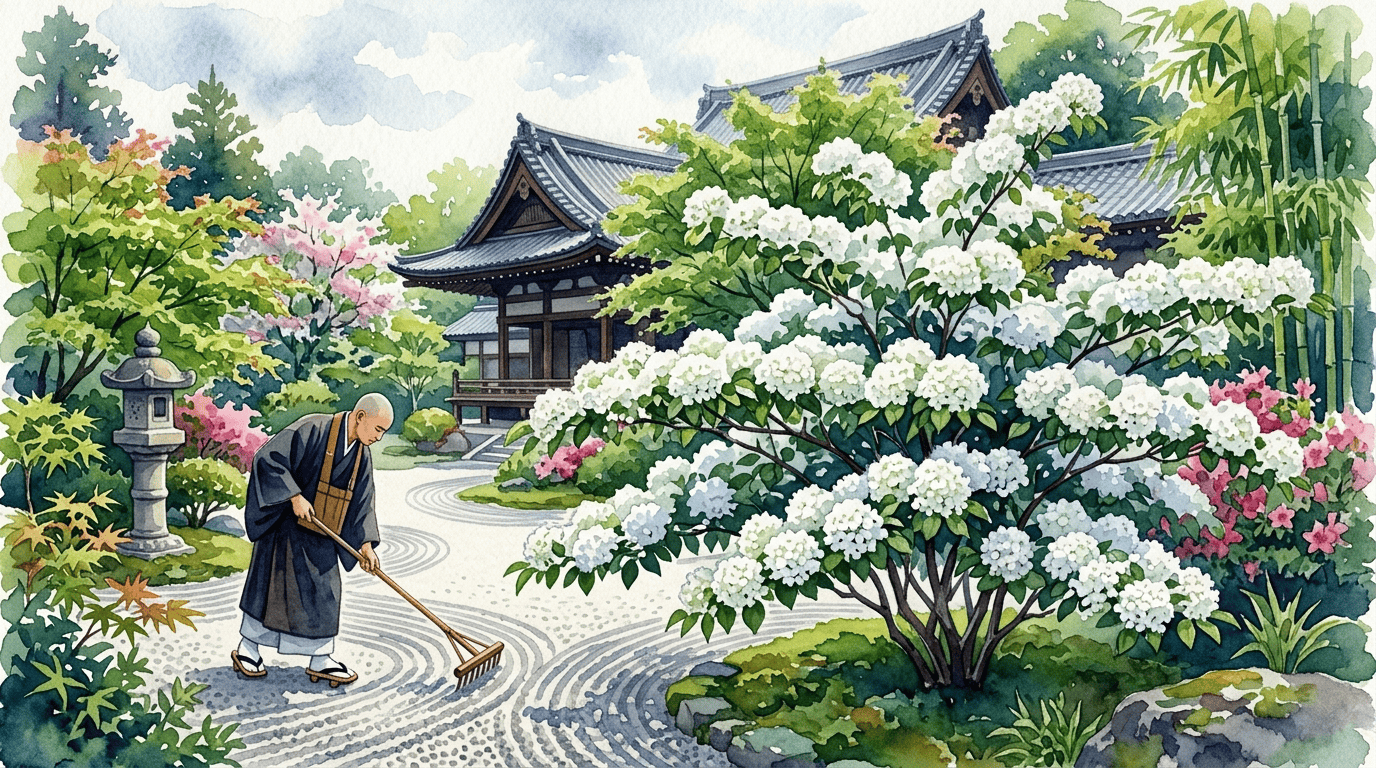
Viburnum plicatum occurs naturally in Japan and China. Swedish botanist Carl Peter Thunberg described the species in 1784 based on the cultivated double-flowered (snowball) form that had been selected centuries earlier in Chinese and Japanese temple gardens—unaware at the time that this was an ornamental sterile form. The wild single-flowered lacecap form (var. tomentosum) was introduced later by Robert Fortune in 1865 and Carl Maximowicz described it scientifically in 1867.
The shrub's distinctive horizontal branching arrangement and two rows of lace-like white inflorescences (central fertile florets surrounded by showy sterile bracts) held erect above each branch in May creates an unparalleled architectural garden effect that 20th-century designer Beatrix Farrand called 'the most beautiful of shrubs'. The 'Mariesii' selection—made by Charles Maries in Japan in 1879—remains one of the finest. 'Shasta' and 'Summer Snowflake' are modern improvements.
Red fruits follow in late summer if cross-pollinated. Introduced from Japan in 1844. The doublefile form tomentosum, with its horizontally layered branches bearing rows of white lacecap flowers, is considered one of the most beautiful flowering shrubs in existence. The cultivar 'Mariesii' was collected by Charles Maries in Japan in 1879. 'Shasta' from the US National Arboretum has become the standard landscape variety. In Japanese gardens, it evokes snow-covered mountain tiers.
Symbolism & meaning
What It Symbolizes
Japanese Snowball is purity arranged on tiers, layer upon horizontal layer of pure white flower clusters resembling stacked drifts of fresh snow. Its strong horizontal branching makes a piece of natural architecture in the spring garden, almost too tidy to be wild. In its formal, snow-white display lies one of the great lessons in restrained, structural beauty.
- Purity — tiers of white flowers like layers of fresh snow
- Architecture — horizontal branching creates natural garden sculpture
Where the Name Comes From
The name Japanese Snowball points to Japan. 'Viburnum' is the ancient Latin name for the wayfaring tree; 'plicatum' means 'pleated' in Latin, referring to the corrugated leaf surface.
Uses & Fun Facts
- Tiered horizontal branches create wedding-cake spring focal point
- Lacecap white flowers line each branching tier dramatically
- Red-to-black fall berries attract migrating songbirds
- Layered architectural shrub forms striking informal screens
Related plants
More Viburnum plants
 Sweet ViburnumViburnum awabuki
 Korean Spice ViburnumViburnum carlesii
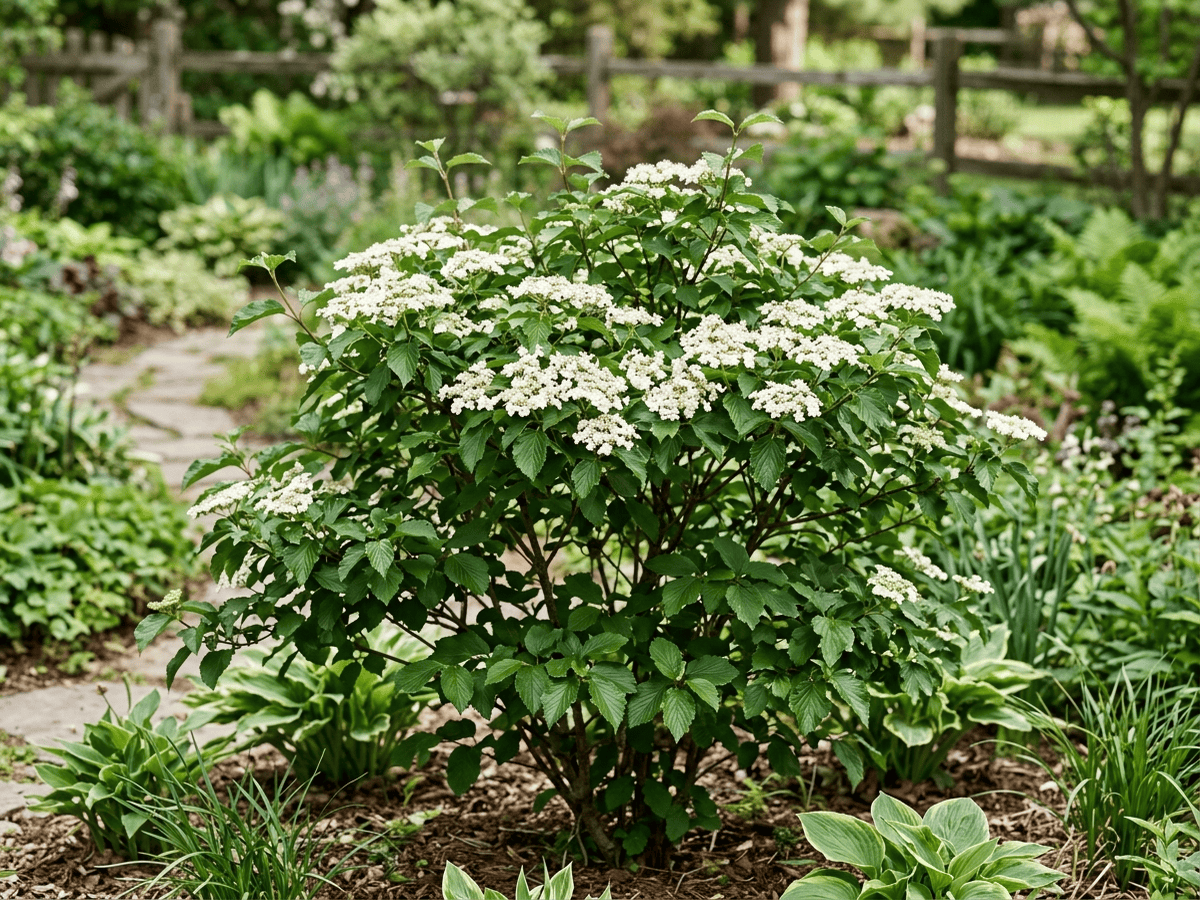 Southern ArrowwoodViburnum dentatum
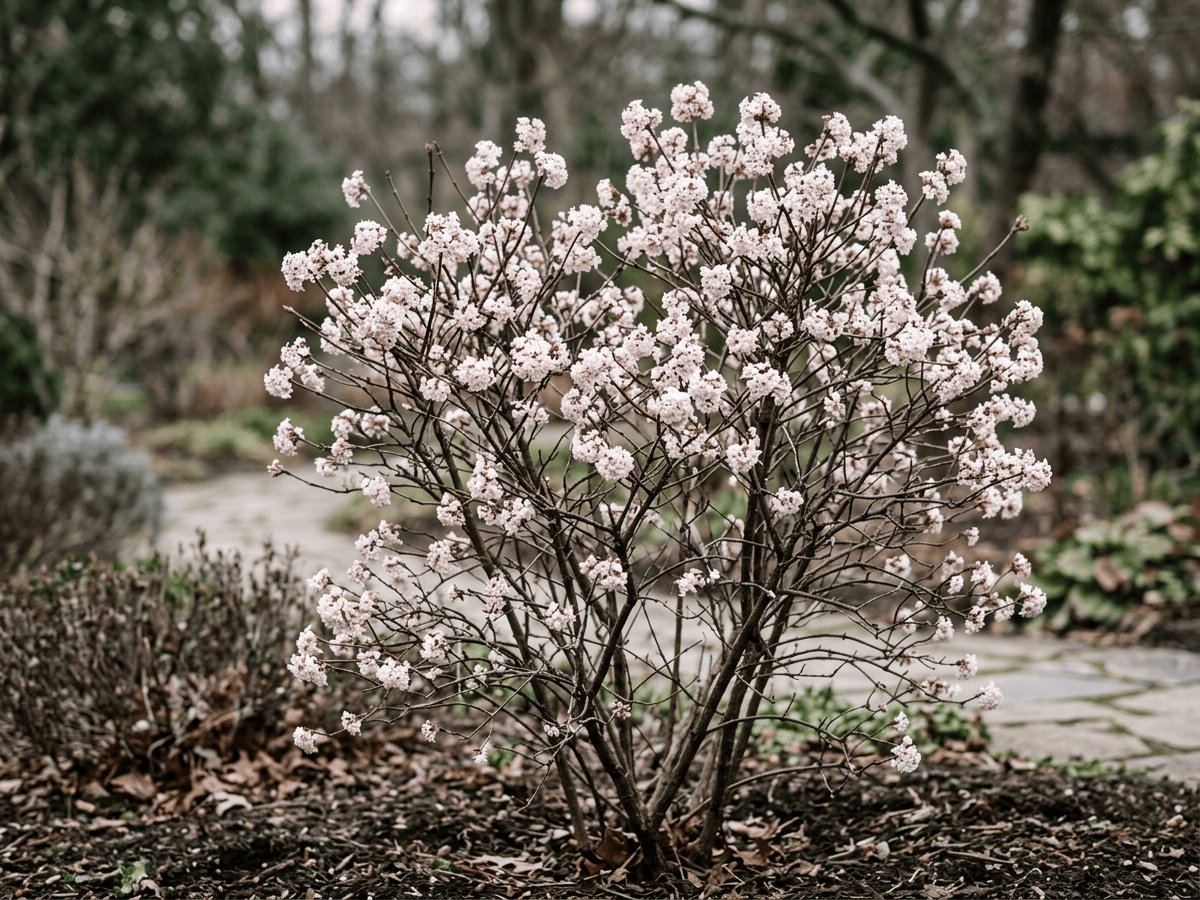 Fragrant ViburnumViburnum farreri
Plants with similar care
 Chinese AbeliaAbelia chinensis
 Fragrant AbeliaAbelia mosanensis
 Large-Flowered AbeliaAbelia uniflora
 Glossy AbeliaAbelia x grandiflora
Frequently asked questions
How often should I water Japanese Snowball?
In summer, water about every 5 days; in winter, about every 21 days. Adjust for heat, pot size and drainage.
How much light does Japanese Snowball need?
Full sun: 6+ hrs direct. Watch the leaves — scorching or stretching means the light needs adjusting.
Is Japanese Snowball toxic to cats or dogs?
Pets Slight (Dogs Slight · Cats Slight) Educational information, not medical or veterinary advice. If exposure is suspected, contact a doctor or veterinarian.
Is Japanese Snowball easy to grow?
Yes — it is considered an easy, beginner-friendly plant.
When does Japanese Snowball bloom?
It typically blooms May–Jun in the Northern Hemisphere.
YardMate
Identify any plant in seconds
Snap a photo — YardMate names the plant, diagnoses problems, and reminds you when to water.
Download on the App Store