 YardMate


Leatherleaf Viburnum
Viburnum rhytidophyllum
Easy · Beginner friendlyAbout Leatherleaf Viburnum
Leatherleaf Viburnum is a large evergreen shrub from central China, growing 10-15 feet tall with dramatic deeply wrinkled dark green leaves up to 8 inches long, felted with gray-brown hair beneath. Large flat clusters of yellowish-white flowers in spring are followed by berries that progress from red to glossy black. The bold corrugated foliage is its signature feature, creating an almost prehistoric look. Hardy to Zone 5, it brings evergreen screening to colder regions than most broadleaf evergreens.
- Cold-hardy
- Evergreen
- Wildlife-friendly
How to care for Leatherleaf Viburnum
Watering
- Springevery 7 days
- Summerevery 5 days
- Fallevery 10 days
- Winterevery 21 days
Soil · Rich & loamy
- Top dressingBark mulch15%
- Main mixRich loam + compost 3:170%
- DrainageGravel15%
Use fully finished compost — fresh compost burns roots.
FERTILIZER
Balanced Feed 14-14-14
An even feed covers all three needs at once, keeping leaves, roots and blooms moving together with nothing pushed out of balance.
- Nitrogen · Leaves
- Phosphorus · Roots + Blooms
- Potassium · Strength
- Springevery 30 days
At a Glance
- NativeEast Asia
- Height10–15 ft (3–4.6 m)
- Spread10–15 ft (3–4.6 m)
- Flower colorCream, White, Yellow
- Foliage colorDark-green, Green
- Fruit colorRed, Black
- SoilLoamy, Well-drained
- LocationsYard
Bloom time
BLOOM CYCLE
Peak bloom
May–Jun
Flat yellowish-white flower clusters May to June
Fragrance
LIGHT FRAGRANCE
Mild scent (some find unpleasantly musky).
Toxicity
Humans Slight · Pets Slight
Unknown toxic principle
Slight
- Fruit
- Ingestion
EXPOSURE Eating fruit.
EFFECT Mild GI upset.
NOTE Documented concern for humans: Mild GI upset.
Slight
- Fruit
- Ingestion
EXPOSURE Eating fruit.
EFFECT Mild GI upset.
NOTE Not on ASPCA toxic list.
Slight
- Fruit
- Ingestion
EXPOSURE Eating fruit.
EFFECT Mild GI upset.
NOTE Not on ASPCA toxic list.
Educational information, not medical or veterinary advice. If exposure is suspected, contact a doctor or veterinarian.
DISTRIBUTION

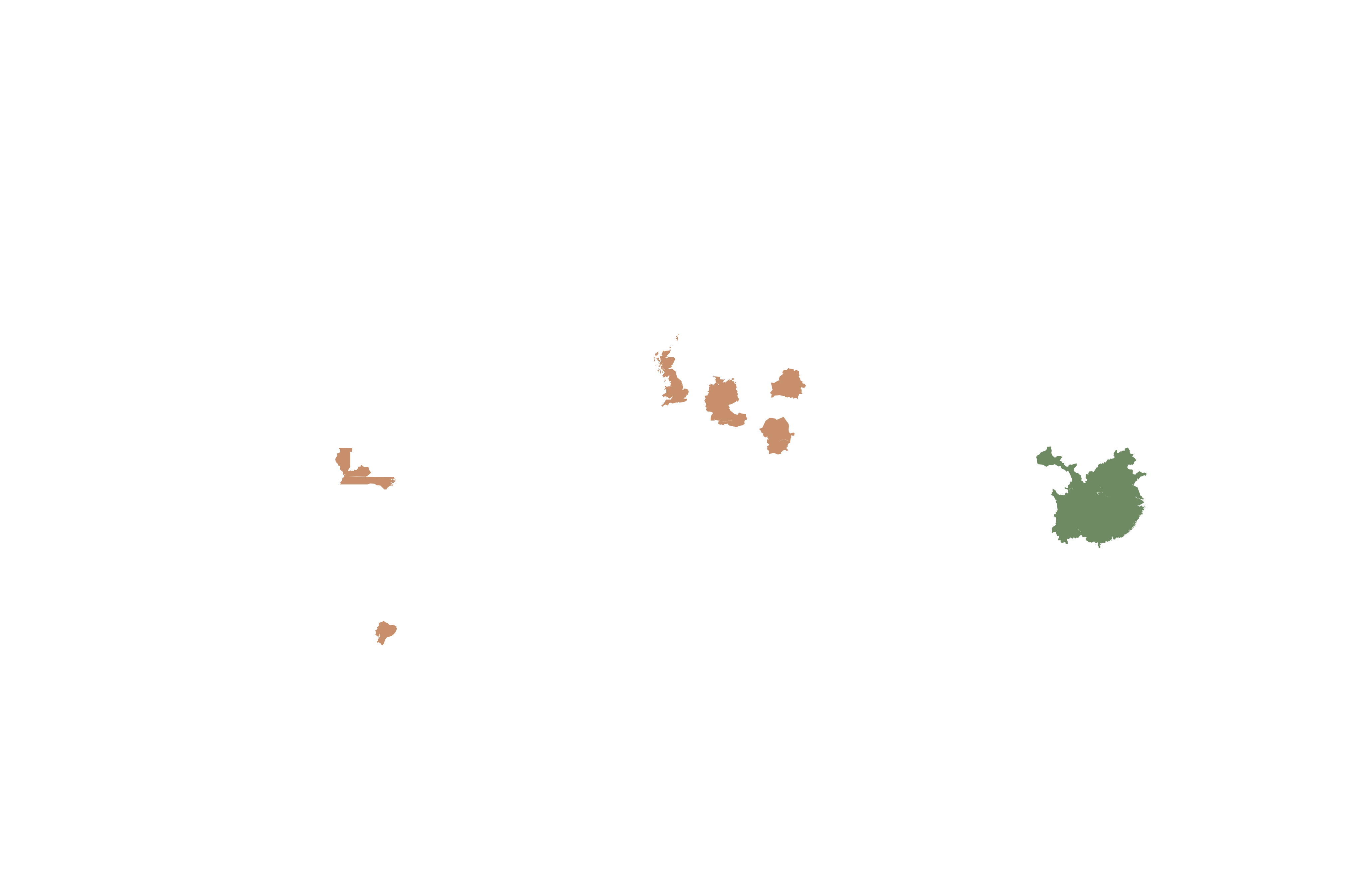
- Native
- Introduced
- East Asia
History
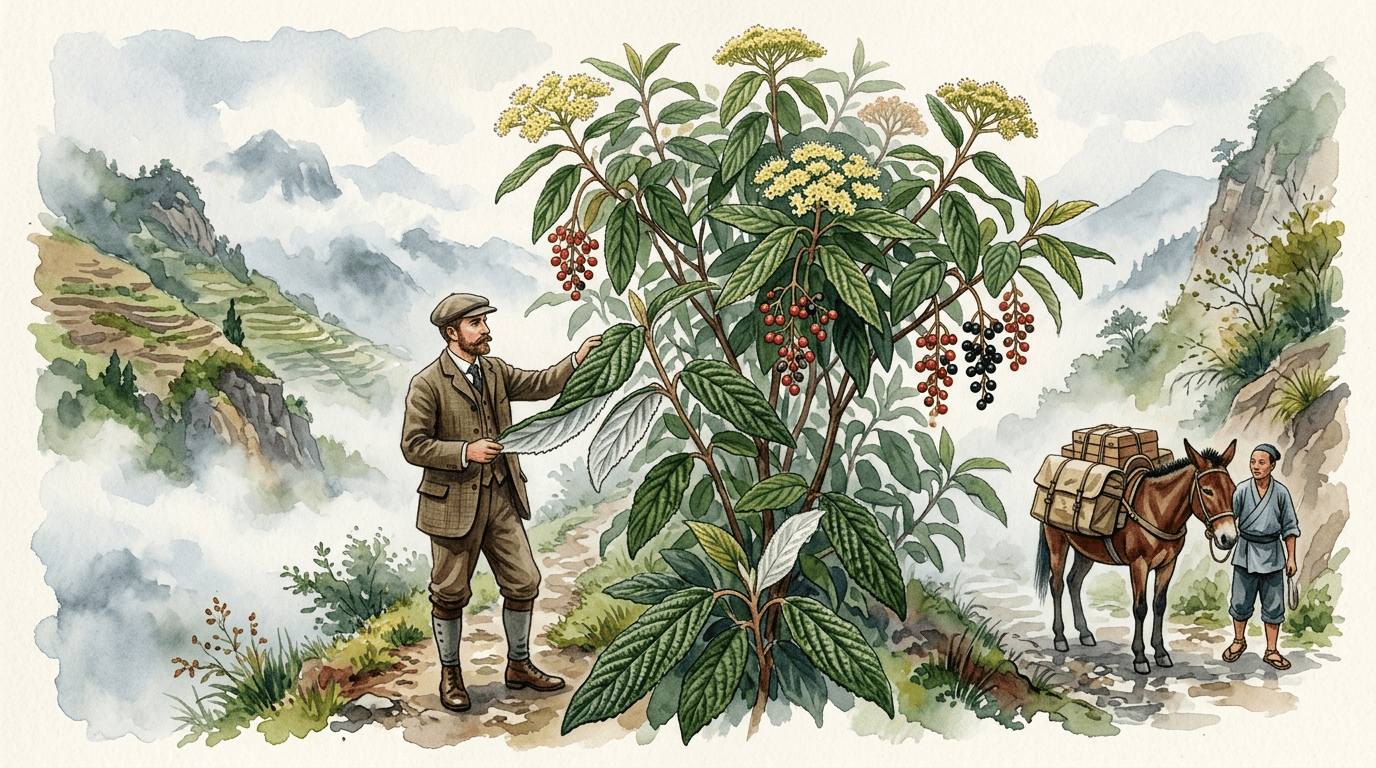
Viburnum rhytidophyllum is native to western and central China (Hubei, Sichuan, Shaanxi, Guizhou). English botanist William Botting Hemsley formally described the species in 1906 from material collected by Ernest Henry Wilson for the Veitch nursery during his 1900-1902 expedition. The epithet rhytidophyllum means wrinkled-leaf from Greek rhytis (wrinkle).
The shrub reaches 3-4 meters with long (15-25 cm), narrow, deeply corrugated leathery dark green leaves that are distinctively furry-felted white to tan on the undersides—collectively giving it perhaps the most dramatic evergreen foliage of any hardy viburnum. In late spring (May-June) it produces flat-topped domed clusters of small cream-yellow flowers followed by pendant clusters of red berries that ripen to black—held persistently into winter as decorative drooping pendants. The species is extremely hardy (to zone 5), deer-resistant, shade-tolerant, and drought-tolerant once established.
It has contributed to important hybrids including V. x rhytidophylloides (V. rhytidophyllum x V. lantana, 'Alleghany' and 'Willowwood') released by US National Arboretum. Collected by Ernest Wilson in the mountains of Hubei province, China, in 1900. The species name means 'wrinkled-leaved', its most distinctive feature.
Symbolism & meaning
What It Symbolizes
Leatherleaf Viburnum can symbolize wisdom, its deeply lined, almost wrinkled leaves suggesting an ancient, weathered knowledge that the eye reads instinctively. Another layer is resilience, for it is a rare evergreen broadleaf surviving cold winters where most large-leaved shrubs cannot. In the woodland garden, viburnum rhytidophyllum is the quiet elder of the planting, a shrub whose appearance and toughness together make it look as if it had always been there, taking the weather without complaint.
- Wisdom — deeply lined leaves suggest ancient knowledge
- Resilience — evergreen broadleaf surviving where others cannot
Where the Name Comes From
'Rhytidophyllum' from Greek 'rhytis' (wrinkle) and 'phyllon' (leaf), referring to the deeply corrugated leaf surface.
Uses & Fun Facts
- Red-to-black drupes feed thrushes and waxwings
- Leatherleaf viburnum forms tall evergreen privacy screen
- Heavily textured leathery evergreen leaves with cream flowers
- Bold-textured evergreen anchors woodland edge plantings
Related plants
More Viburnum plants
 Sweet ViburnumViburnum awabuki
 Korean Spice ViburnumViburnum carlesii
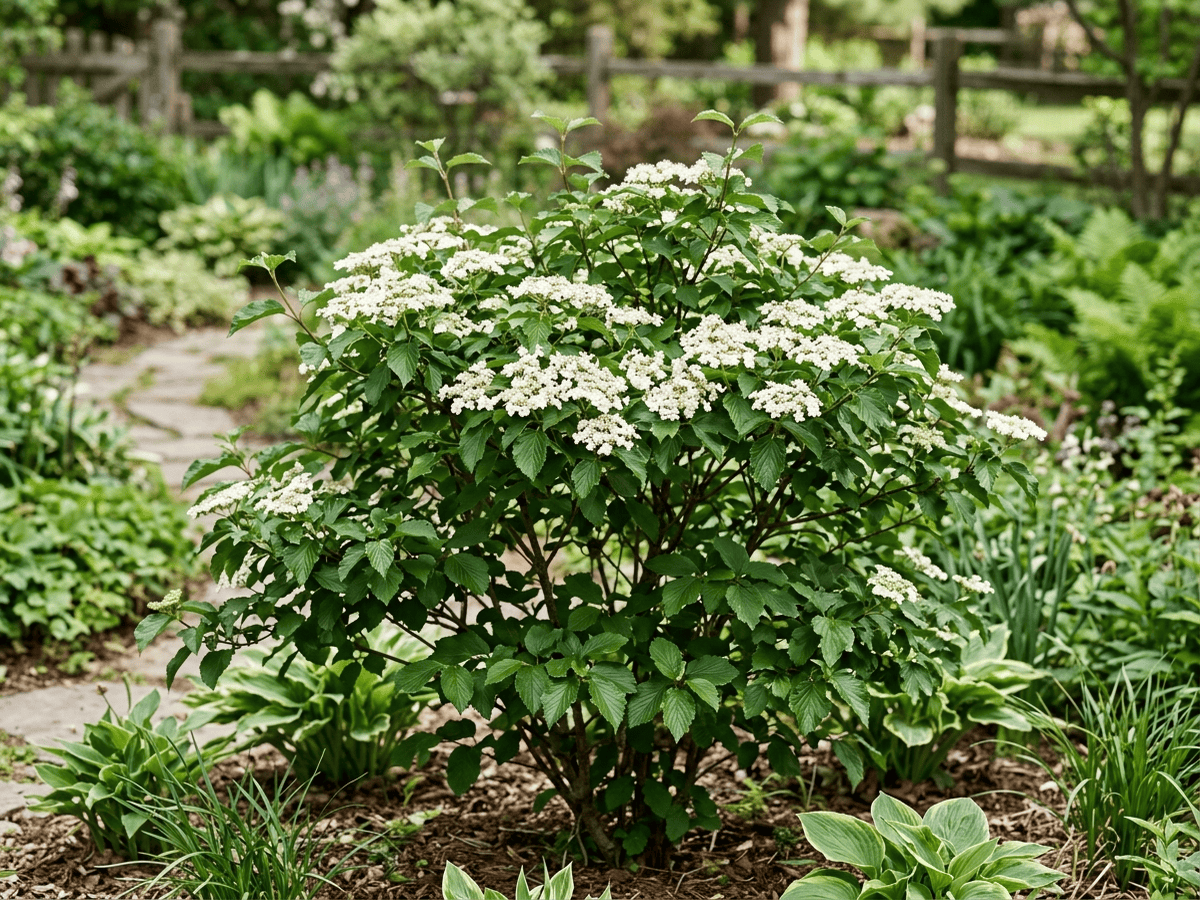 Southern ArrowwoodViburnum dentatum
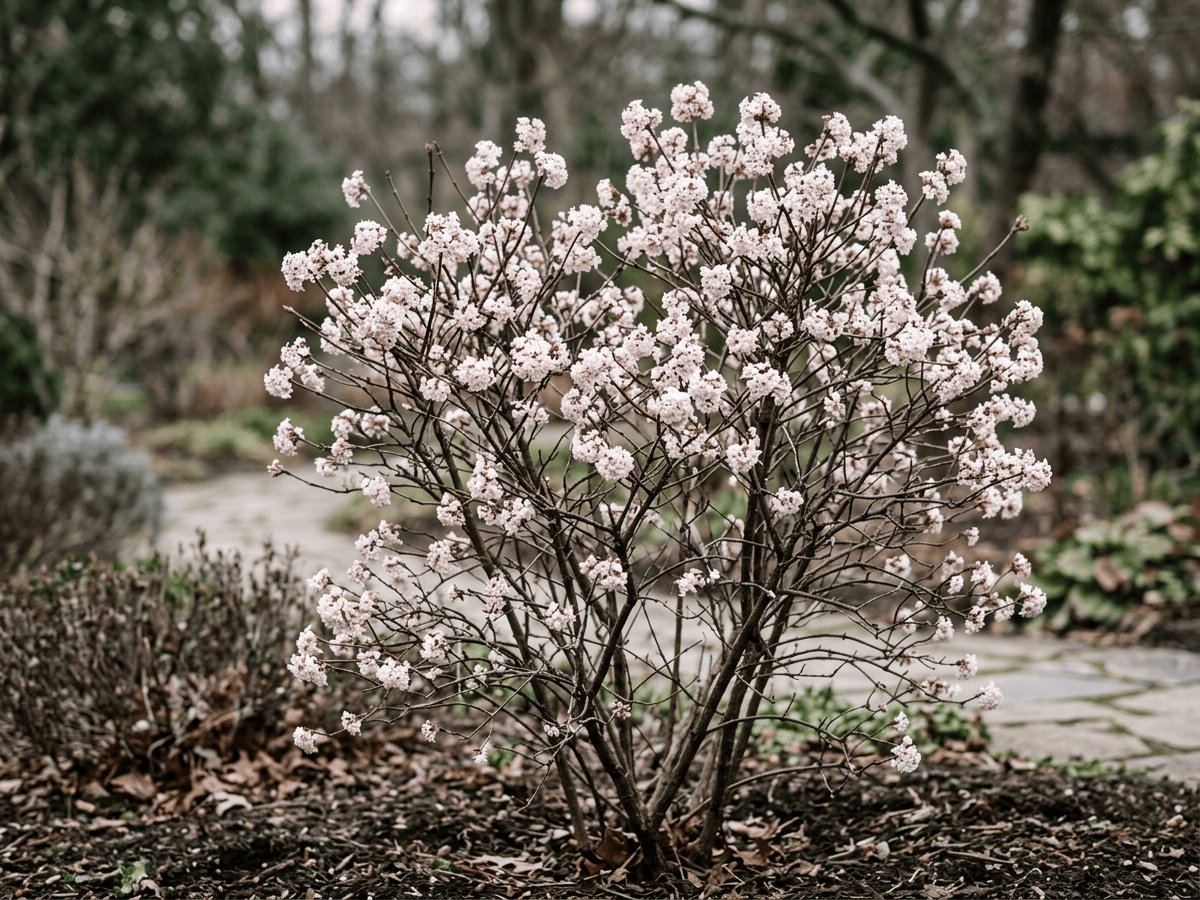 Fragrant ViburnumViburnum farreri
Plants with similar care
 Chinese AbeliaAbelia chinensis
 Fragrant AbeliaAbelia mosanensis
 Large-Flowered AbeliaAbelia uniflora
 Glossy AbeliaAbelia x grandiflora
Frequently asked questions
How often should I water Leatherleaf Viburnum?
In summer, water about every 5 days; in winter, about every 21 days. Adjust for heat, pot size and drainage.
How much light does Leatherleaf Viburnum need?
Full sun: 6+ hrs direct. Watch the leaves — scorching or stretching means the light needs adjusting.
Is Leatherleaf Viburnum toxic to cats or dogs?
Pets Slight (Dogs Slight · Cats Slight) Educational information, not medical or veterinary advice. If exposure is suspected, contact a doctor or veterinarian.
Is Leatherleaf Viburnum easy to grow?
Yes — it is considered an easy, beginner-friendly plant.
When does Leatherleaf Viburnum bloom?
It typically blooms May–Jun in the Northern Hemisphere.
YardMate
Identify any plant in seconds
Snap a photo — YardMate names the plant, diagnoses problems, and reminds you when to water.
Download on the App Store