 YardMate


Eurasian Sweet-Flag
Acorus calamus
Easy · Beginner friendlyAbout Eurasian Sweet-Flag
Acorus calamus, sweet flag or calamus, is an aromatic wetland perennial long grown along pond margins, marshes, and slow water. Sword-shaped leaves rise 60-120 cm and release a sweet, spicy scent when crushed, while the thick rhizomes are even more aromatic. The unusual finger-like spadix sets it apart from true arums. Sweet flag has a long record in ritual, perfumery, and traditional herbal practice across Asia, Europe, and North America, though some chemical forms contain beta-asarone and are restricted for food use. In gardens it works best as a bold marginal plant: fragrant, architectural, and happiest with its feet wet.
- Medicinal
- Fragrant
How to care for Eurasian Sweet-Flag
Watering
- Springevery 1 days
- Summerevery 1 days
- Fallevery 1 days
- Winterevery 2 days
Soil · Bog-wet
- WaterStanding water above soil20%
- SoilHeavy pond soil80%
No drainage layer — keep water standing above the soil.
FERTILIZER
Balanced Feed 14-14-14
An even feed covers all three needs at once, keeping leaves, roots and blooms moving together with nothing pushed out of balance.
- Nitrogen · Leaves
- Phosphorus · Roots + Blooms
- Potassium · Strength
- Springevery 30 days
At a Glance
- NativeEast Asia
- Height2–4 ft (0.6–1.2 m)
- Spread2–3 ft (0.6–0.9 m)
- Foliage colorGreen, Variegated
- SoilMoisture-retentive, Loamy
- LocationsYard
Fragrance
STRONG FRAGRANCE
Rhizomes have a strong sweet-spicy aromatic scent when crushed.
Toxicity
Humans Slight · Pets Slight
α-asarone and β-asarone (in some chemotypes)
Slight
- Root
- Ingestion
EXPOSURE Eating roots.
EFFECT Β-asarone content in some chemotypes is carcinogenic in rodents (banned as food additive in US 1968) and european diploid chemotype is β-asarone-free.
NOTE Documented concern for humans: Β-asarone content in some chemotypes is carcinogenic in rodents (banned as food additive in US 1968) and european diploid chemotype is β-asarone-free.
Slight
- Root
- Ingestion
EXPOSURE Eating roots.
EFFECT Mild GI upset possible.
NOTE Not specifically listed by ASPCA. Historical medicinal use; modern caution around β-asarone chemotype.
Slight
- Root
- Ingestion
EXPOSURE Eating roots.
EFFECT Mild GI upset possible.
NOTE Not specifically listed by ASPCA. Historical medicinal use; modern caution around β-asarone chemotype.
Educational information, not medical or veterinary advice. If exposure is suspected, contact a doctor or veterinarian.
DISTRIBUTION

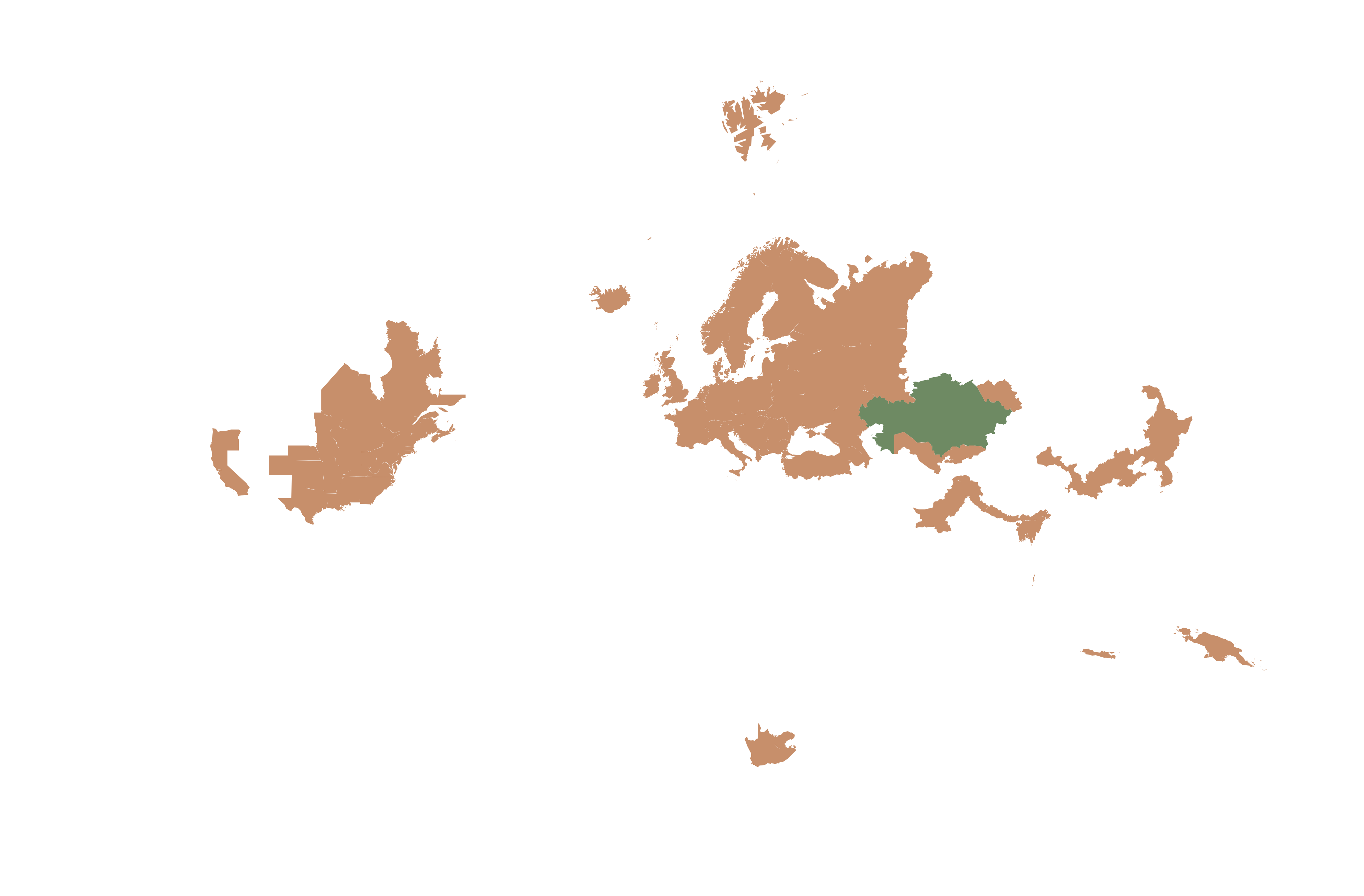
- Native
- Introduced
- East Asia
History

Acorus calamus is a wetland perennial whose native range has long been debated by botanists. Two dominant hypotheses are: (1) it is truly circumboreal native in Asia, Europe, and North America; or (2) it originated in Asia and has been introduced and naturalized so thoroughly by humans worldwide that its non-Asian populations are all anthropogenic. Molecular evidence supports the Asian-origin hypothesis, but the species has been culturally and ethnobotanically important in multiple unrelated traditions for over 2,000 years. Ancient Egyptian, Greek, and Roman medicine used calamus rhizomes; the Biblical "sweet cane" (qaneh-bosem) in Exodus is generally identified as calamus.
In Indian Ayurveda (where it is called "vacha") it is used for speech, memory, and respiratory support. In European medieval herbal tradition (where it was cultivated by the Knights Hospitaller and monastery gardens) it was used for digestive complaints and to scent floor rushes. In North American Indigenous tradition — particularly among the Cree (who call it "wiikenh"), Ojibwe, Potawatomi, and Haudenosaunee — calamus rhizome has been considered one of the most important sacred medicines, used for cough, cold, digestive upset, and as a ceremonial breath-freshener during long travels.
The triploid form commonly distributed in North America and Europe is sterile and likely represents ancient human-mediated clonal spread. Note: in 1968 the US FDA banned calamus as a food additive due to carcinogenicity of β-asarone in some chemotypes; European chemotype (diploid) is β-asarone-free. Acorus calamus is mentioned in the Biblical Song of Solomon and Egyptian Ebers Papyrus (1550 BCE), making it one of humanity's oldest documented medicinal plants. In Ayurvedic medicine it is called 'vacha' and prescribed for memory enhancement and speech disorders. Medieval Europeans strewed sweet flag leaves on floors of churches and great halls as natural air fresheners. Native Americans used it extensively for colds, fevers, and as a chewing stimulant during long journeys. Walt Whitman titled his homoerotic poetry collection 'Calamus' after this plant.
Symbolism & meaning
What It Symbolizes
Eurasian Sweet-Flag is a plant of thresholds. Its sword-like leaves rise from wet margins, while its warm spicy scent once belonged to temples, houses, and festival floors. Symbolically it stands for wisdom at the water's edge: rooted in mud, aromatic in the hand, and quietly architectural in the garden.
- Wisdom — its ancient medicinal use represents accumulated knowledge
- Purification — strewn in sacred spaces for spiritual cleansing
Where the Name Comes From
The name Eurasian Sweet-Flag describes its sweet scent or flavor. 'Acorus' possibly from Greek 'akoron' (aromatic plant). 'Calamus' is Latin for 'reed' or 'pen,' referencing the straight leaf shape.
Uses & Fun Facts
- Aromatic rhizome used in traditional digestive and tonic herbalism
- Cinnamon-scented leaves strewn historically on floors and church aisles
- Sword-shaped foliage anchors pond margins and water gardens
Related plants
Plants with similar care
 Chinese AbeliaAbelia chinensis
 Fragrant AbeliaAbelia mosanensis
 Large-Flowered AbeliaAbelia uniflora
 Glossy AbeliaAbelia x grandiflora
Frequently asked questions
How often should I water Eurasian Sweet-Flag?
In summer, water about every 1 days; in winter, about every 2 days. Adjust for heat, pot size and drainage.
How much light does Eurasian Sweet-Flag need?
Full sun: 6+ hrs direct. Watch the leaves — scorching or stretching means the light needs adjusting.
Is Eurasian Sweet-Flag toxic to cats or dogs?
Pets Slight (Dogs Slight · Cats Slight) Educational information, not medical or veterinary advice. If exposure is suspected, contact a doctor or veterinarian.
Is Eurasian Sweet-Flag easy to grow?
Yes — it is considered an easy, beginner-friendly plant.
YardMate
Identify any plant in seconds
Snap a photo — YardMate names the plant, diagnoses problems, and reminds you when to water.
Download on the App Store