 YardMate

Pot Marigold
Calendula officinalis
Easy · Beginner friendlyAbout Pot Marigold
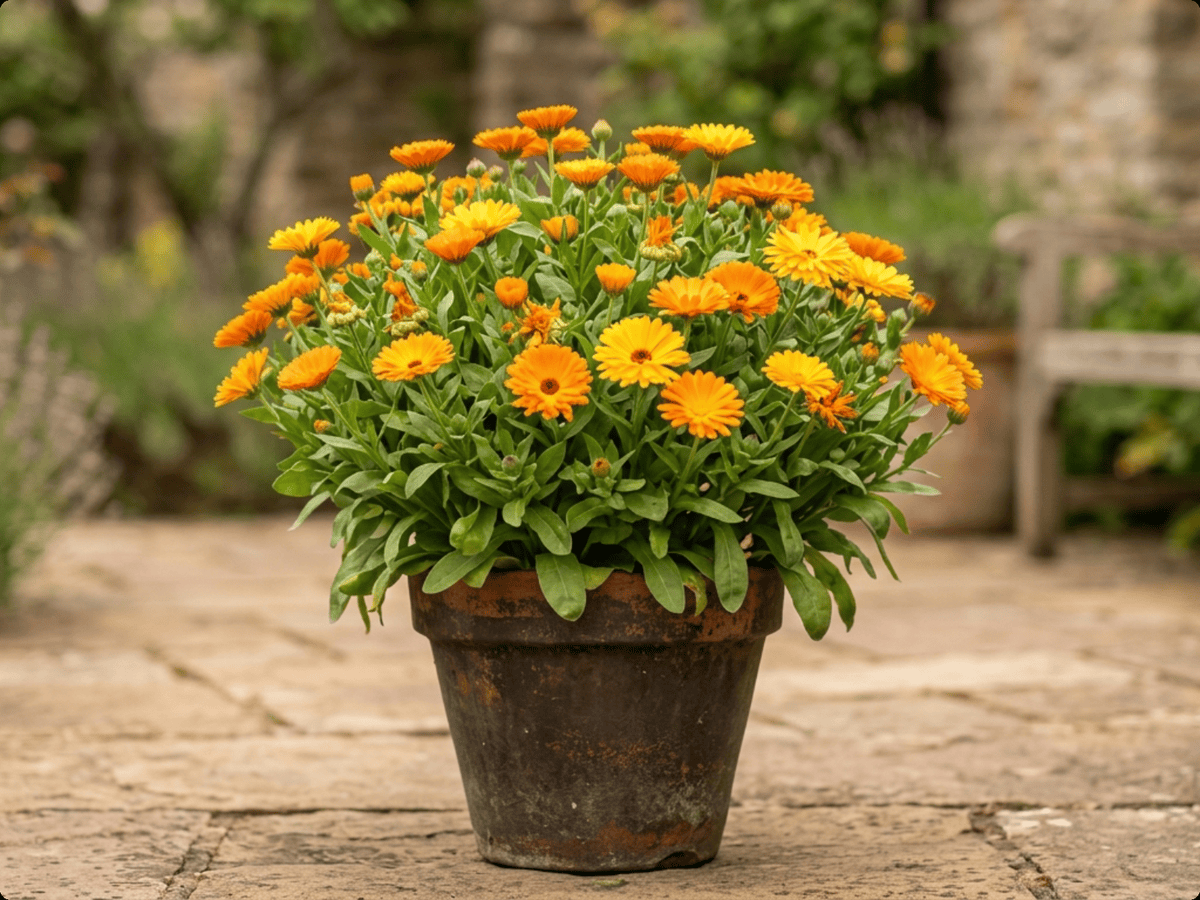
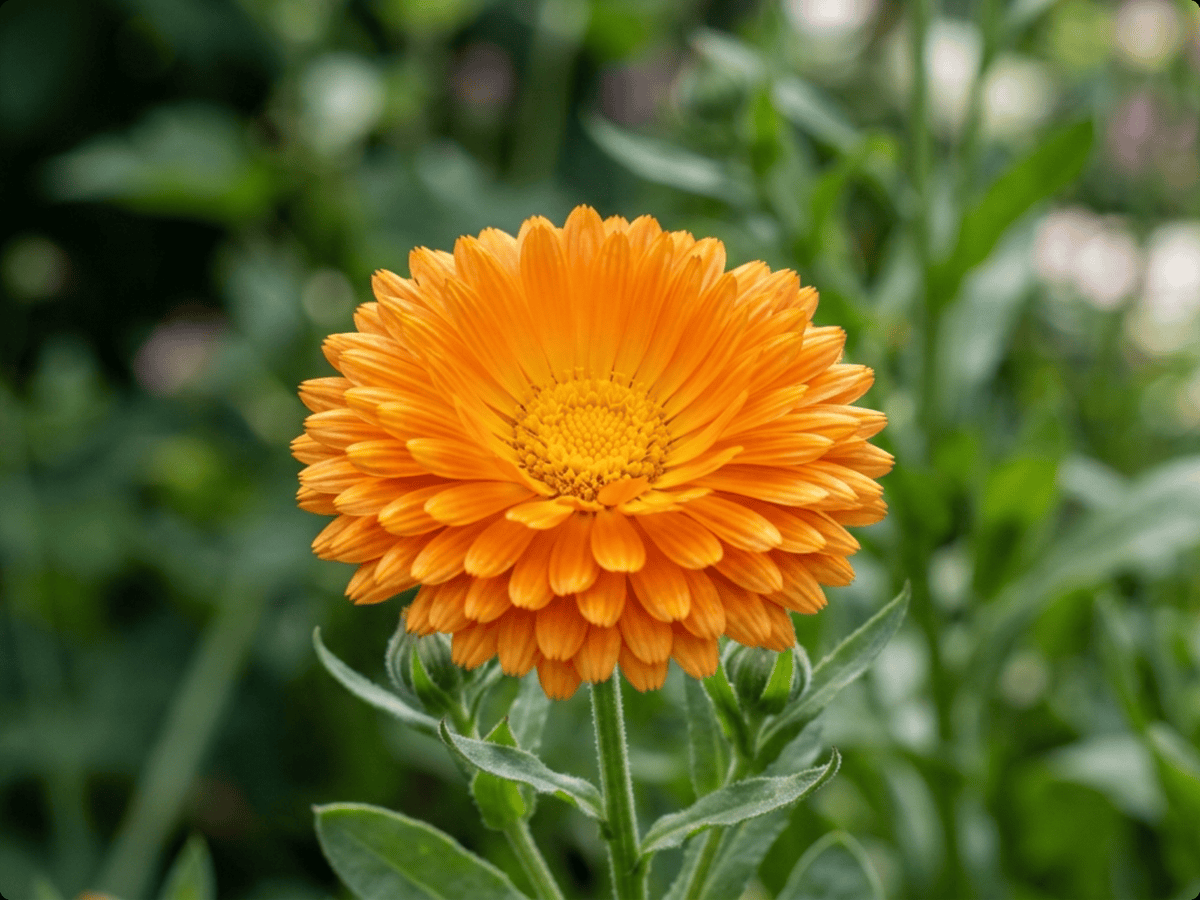
Calendula officinalis, the pot marigold, is a cheerful annual with bright orange or yellow daisy-like flowers that have been used in cooking, medicine, and cosmetics for centuries. Native to southern Europe, it blooms best in cool weather, thriving in spring and autumn while struggling in midsummer heat. The petals are edible with a slightly peppery, saffron-like taste, used to color rice, soups, and cheese. Calendula oil and salves are among the most popular natural skincare remedies. The flowers open with sunrise and close at dusk — medieval monks used them as a 'poor man's clock.'
- Edible
- Medicinal
How to care for Pot Marigold
Watering
- Springevery 5 days
- Summerevery 3 days
- Fallevery 7 days
- Winterpause watering
Soil · Rich & well-draining
- Top dressingCompost10%
- Main mixPotting soil + compost 3:180%
- DrainageGravel10%
Top up the compost layer each season.
FERTILIZER
Balanced Feed 14-14-14
An even feed covers all three needs at once, keeping leaves, roots and blooms moving together with nothing pushed out of balance.
- Nitrogen · Leaves
- Phosphorus · Roots + Blooms
- Potassium · Strength
- Springevery 21 days
- Summerevery 21 days
At a Glance
- NativeMediterranean
- Height1–2 ft (0.3–0.6 m)
- Spread1–2 ft (0.3–0.6 m)
- Flower colorYellow, Orange
- Foliage colorGreen
- SoilLoamy, Well-drained, Neutral
- LocationsYard · Balcony
Bloom time
BLOOM CYCLE
Peak bloom
Jun–Aug
Cool-season bloomer; deadhead for continuous flowers; self-seeds easily
Fragrance
MODERATE FRAGRANCE
Pungent resinous herbal scent from leaves; flowers mildly sweet.
Toxicity
Humans Safe · Pets Safe
triterpene saponins, flavonoids, and carotenoids
Safe
EXPOSURE No exposure route is reported.
EFFECT Edible and widely used in herbal medicine and cuisine.
NOTE Listed as non-toxic for humans; avoid eating ornamental plants unless confirmed edible.
Safe
EXPOSURE No exposure route is reported.
EFFECT Not listed as toxic.
NOTE Listed as non-toxic for dogs; avoid eating ornamental plants unless confirmed edible.
Safe
EXPOSURE No exposure route is reported.
EFFECT Not listed as toxic.
NOTE Listed as non-toxic for cats; avoid eating ornamental plants unless confirmed edible.
Educational information, not medical or veterinary advice. If exposure is suspected, contact a doctor or veterinarian.
DISTRIBUTION


- Native
- Introduced
- Mediterranean
History

Calendula officinalis is a Mediterranean annual whose bright orange-yellow flowers have been used in food, dye, and medicine for over two thousand years. Greeks and Romans used the petals to color butter, cheese, and broth — earning the name "poor man's saffron" — and to ease menstrual complaints. Medieval European herbalists including Hildegard von Bingen and Nicholas Culpeper prescribed it for wounds, skin inflammation, and fevers, and the petals were strewn in Catholic Marian devotions ("Mary's gold," the root of the name marigold).
During World War I and World War II, calendula tincture was applied to battlefield wounds as an antiseptic when conventional supplies ran short. Modern cosmetic and dermatological formulations continue to use its flavonoid-rich extracts for skin repair. Calendula has been a medicinal staple since ancient Rome — Pliny the Elder and Dioscorides both documented its healing properties.
The name 'calendula' comes from 'calendae' (first day of the month), as it was said to bloom at the start of each month in mild climates. During the American Civil War and World War I, calendula poultices were applied to battlefield wounds to prevent infection and promote healing. Modern research confirms anti-inflammatory and antimicrobial compounds in the petals.
Symbolism & meaning
What It Symbolizes
Pot Marigold evokes comfort in the plainest, sunniest language. Its orange petals have belonged to kitchen gardens, broths, dyes, salves, and children's bouquets, never separating beauty from household usefulness. Symbolically it is everyday care: warmth made visible on a windowsill or at the edge of a vegetable bed.
- Comfort — Its centuries of healing use represent care, comfort, and gentle remedy
Where the Name Comes From
Calendula comes from Latin 'calendae' (first of the month), for its long blooming period. 'Officinalis' means of the apothecary shop.
Uses & Fun Facts
- Petals garnish salads and color rice and butter
- Flower extracts used in herbal skin salves
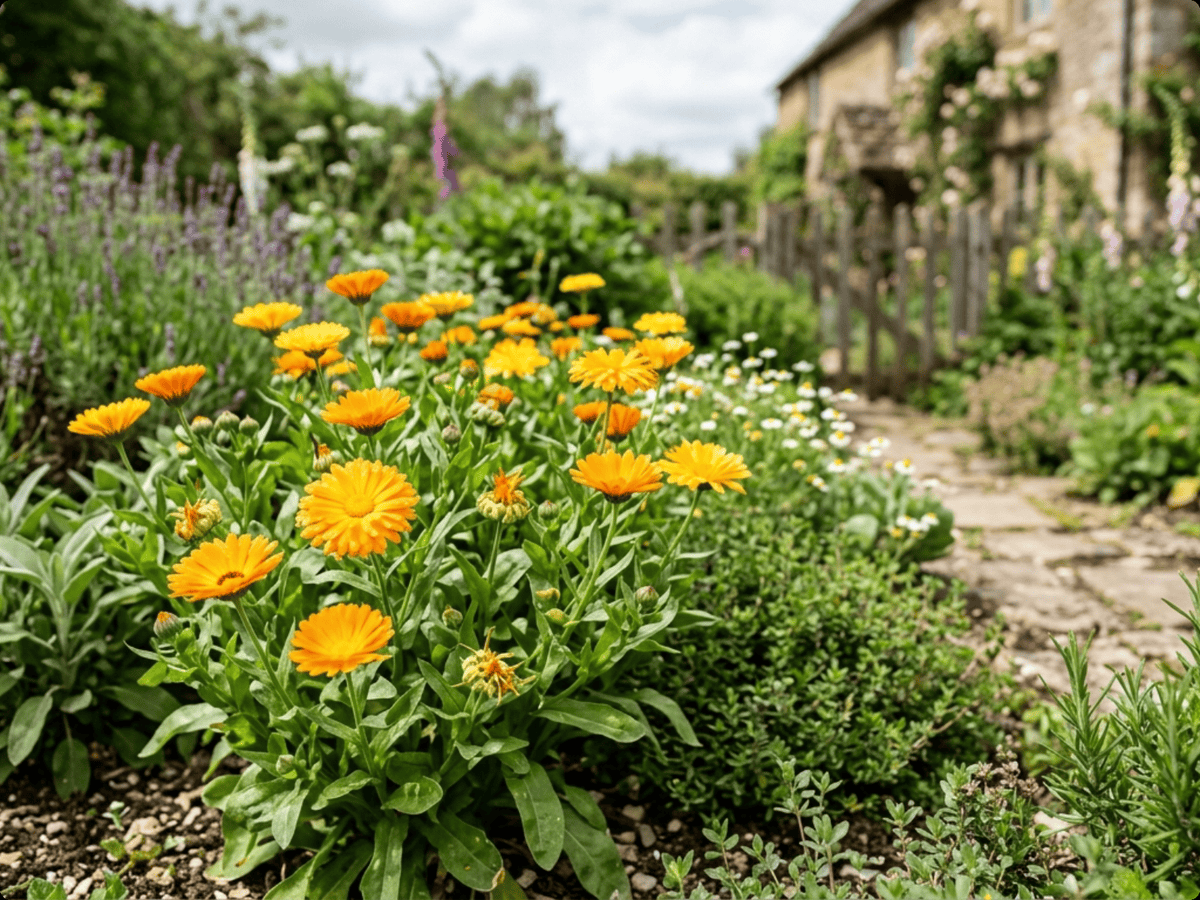
- Cheerful orange daisies brighten cool-season cottage gardens
- Petals yield natural yellow dye for textiles
Related plants
More Calendula plants
Plants with similar care
 Chinese AbeliaAbelia chinensis
 Fragrant AbeliaAbelia mosanensis
 Large-Flowered AbeliaAbelia uniflora
 Glossy AbeliaAbelia x grandiflora
Frequently asked questions
How often should I water Pot Marigold?
Water about every 5 days during the growing season, and always let excess water drain away.
How much light does Pot Marigold need?
Full sun: 6+ hrs direct. Watch the leaves — scorching or stretching means the light needs adjusting.
Is Pot Marigold toxic to cats or dogs?
Pets Safe (Dogs Safe · Cats Safe) Educational information, not medical or veterinary advice. If exposure is suspected, contact a doctor or veterinarian.
Is Pot Marigold easy to grow?
Yes — it is considered an easy, beginner-friendly plant.
When does Pot Marigold bloom?
It typically blooms Jun–Aug in the Northern Hemisphere.
YardMate
Identify any plant in seconds
Snap a photo — YardMate names the plant, diagnoses problems, and reminds you when to water.
Download on the App Store