 YardMate

Indian Shot
Canna indica
Easy · Beginner friendlyAbout Indian Shot
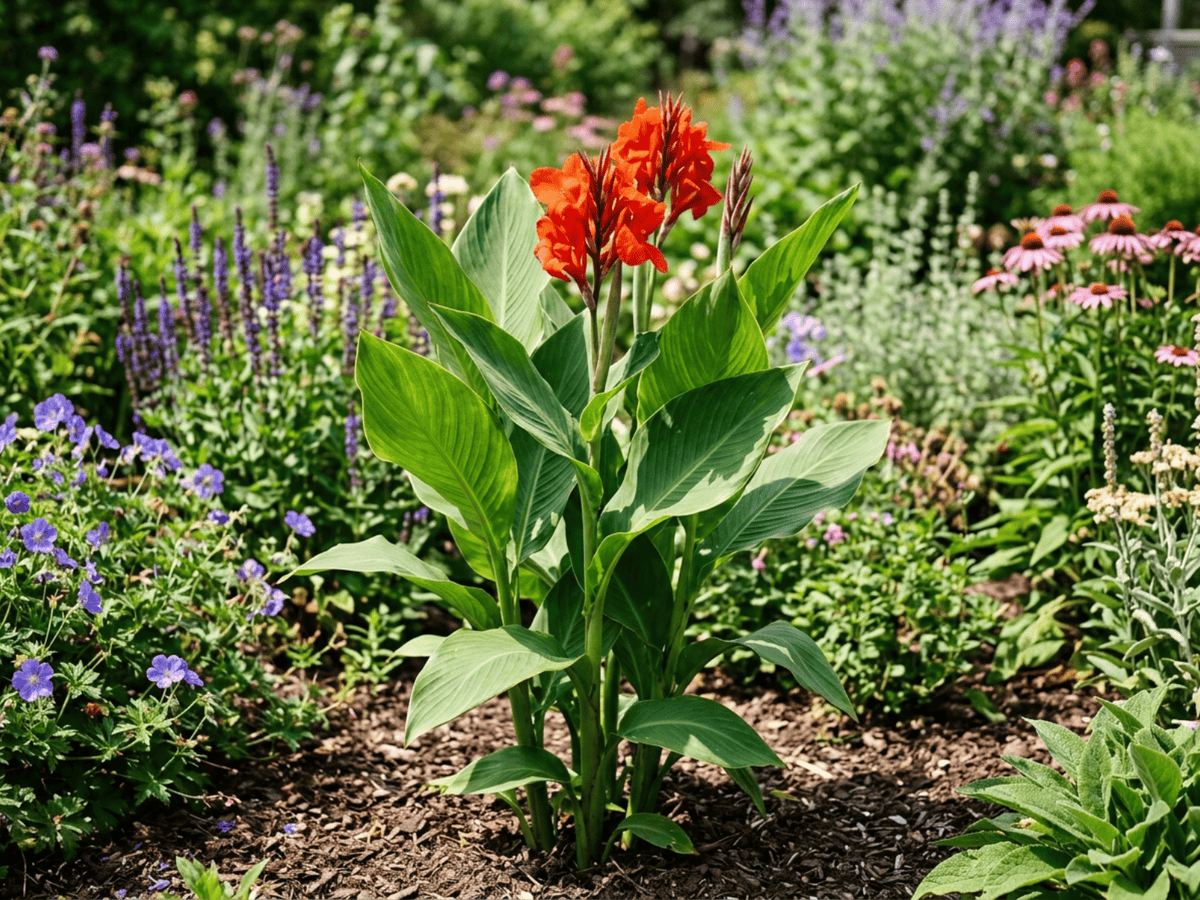
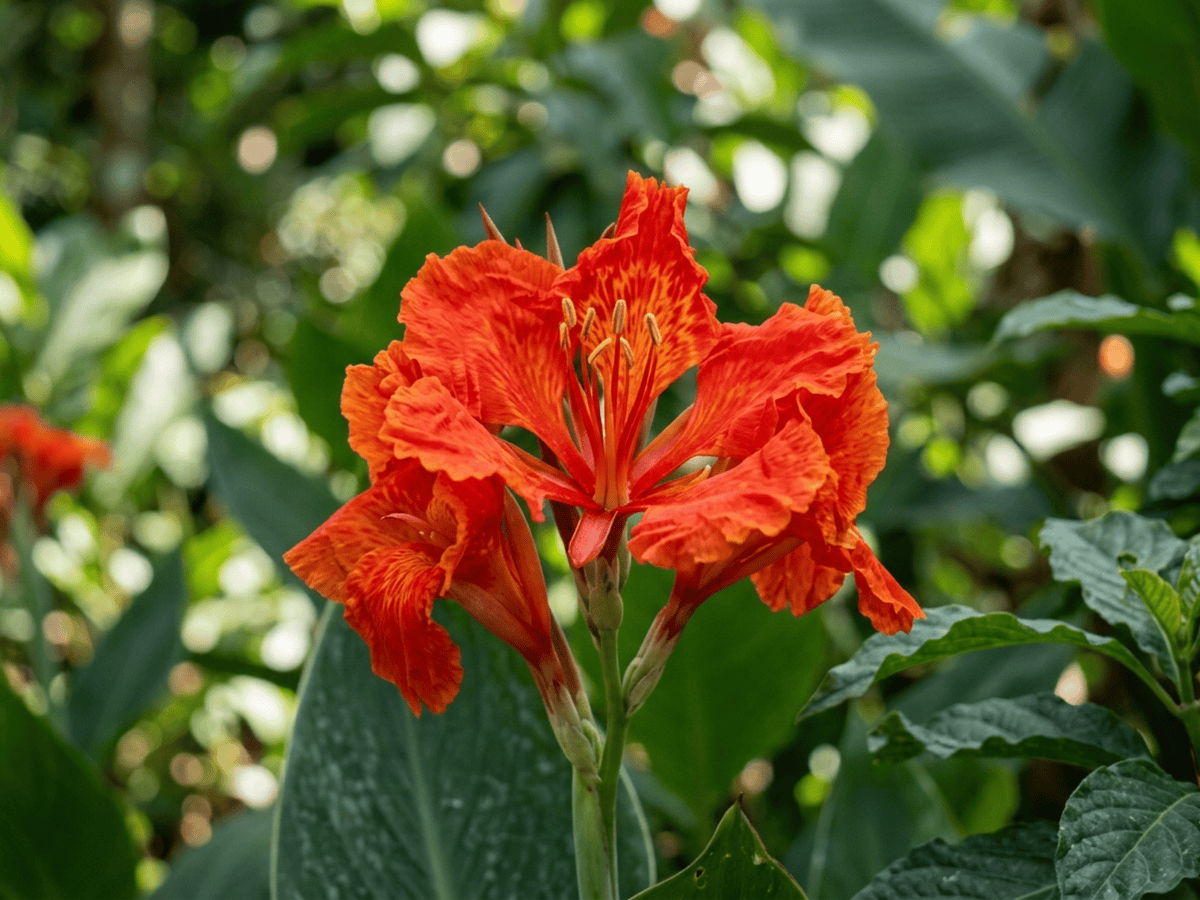
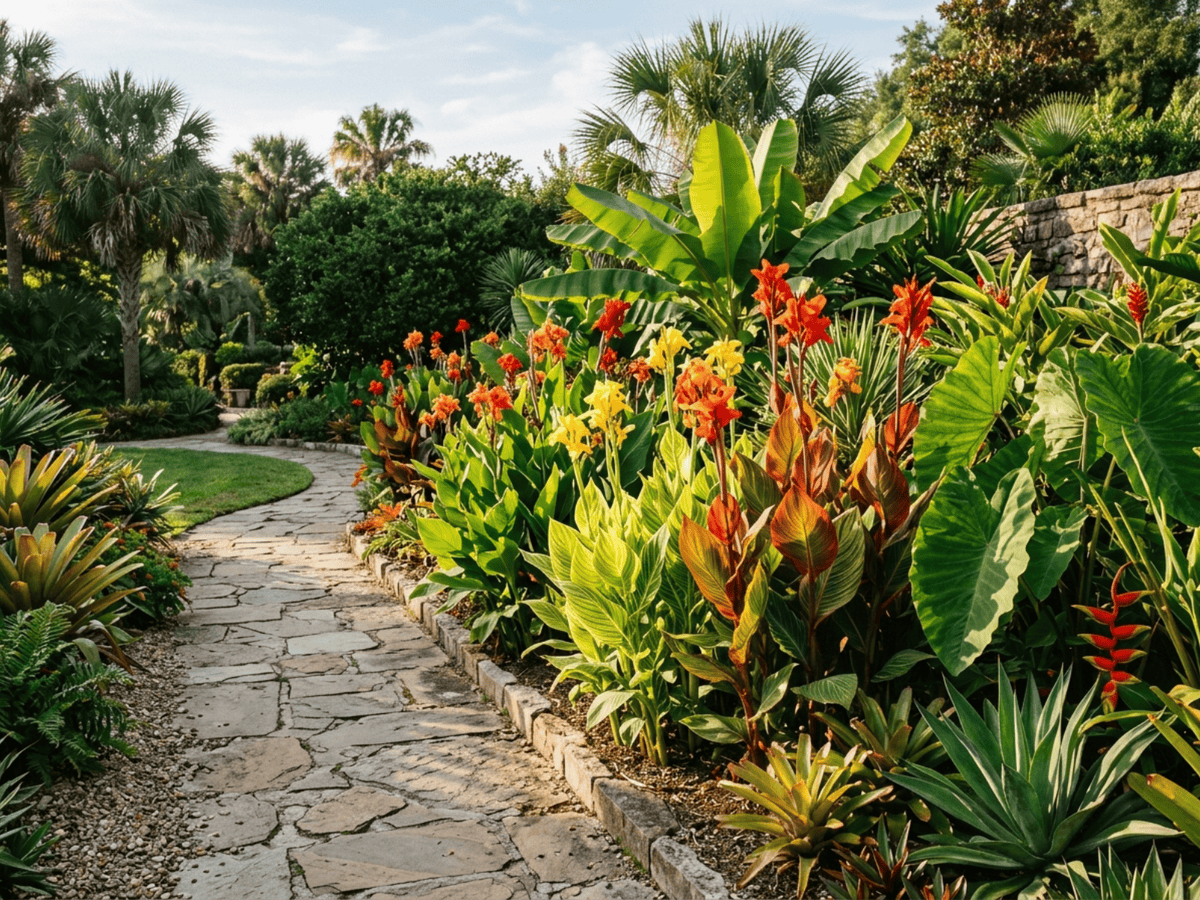
Indian Shot is the wild ancestor of modern garden cannas, native to tropical and subtropical regions of the Americas. This vigorous perennial grows 4 to 6 feet tall with large, broad leaves that range from green to bronze-purple. It produces spikes of small but vivid red and yellow flowers throughout summer and fall, followed by spiky seed capsules filled with round, incredibly hard black seeds — so hard they were historically used as musket shot, giving the plant its common name. Unlike its showier hybrid descendants, Canna indica has a more graceful, wilder appearance and is extremely tough and adaptable. It thrives in full sun with ample water and rich soil, spreading readily via thick rhizomes. The plant is now naturalized across tropical regions worldwide and is sometimes considered invasive. The rhizomes are edible and have been used as a starch source in South America and Asia. It is also grown commercially in Vietnam for producing transparent cellophane noodles from the extracted starch.
- Drought-tolerant
- Tropical
How to care for Indian Shot
Watering
- Springevery 2 days
- Summerevery 2 days
- Fallevery 5 days
- Winterevery 30 days
Soil · Well-draining
- Main mixLoam + coarse sand 3:175%
- DrainageGravel25%
Sharp drainage matters most — bulbs rot in wet soil while dormant.
FERTILIZER
Balanced Feed 14-14-14
An even feed covers all three needs at once, keeping leaves, roots and blooms moving together with nothing pushed out of balance.
- Nitrogen · Leaves
- Phosphorus · Roots + Blooms
- Potassium · Strength
- Springevery 30 days
- Summerevery 30 days
At a Glance
- NativeNorth America, Central America, South America
- Height4–8 ft (1.2–2.4 m)
- Spread1–3 ft (0.3–0.9 m)
- Flower colorRed, Orange, Yellow, Pink
- Foliage colorGreen, Bronze, Variegated, Purple
- SoilLoamy, Moisture-retentive, Rich
- LocationsYard
Bloom time
BLOOM CYCLE
Peak bloom
Jun–Nov
Small vivid red-yellow flowers on spikes throughout summer and fall
Fragrance
NO FRAGRANCE
No notable fragrance.
Toxicity
Pets Safe
None reported
Not reported
EXPOSURE No exposure route is reported.
EFFECT Rhizomes are a traditional South American food (achira starch) and no significant toxicity.
NOTE No human toxicity is reported in this catalog; avoid eating ornamental plants unless confirmed edible.
Safe
EXPOSURE No exposure route is reported.
EFFECT Not listed as toxic.
NOTE Listed as non-toxic for dogs; avoid eating ornamental plants unless confirmed edible.
Safe
EXPOSURE No exposure route is reported.
EFFECT Not listed as toxic.
NOTE Listed as non-toxic for cats; avoid eating ornamental plants unless confirmed edible.
Educational information, not medical or veterinary advice. If exposure is suspected, contact a doctor or veterinarian.
DISTRIBUTION

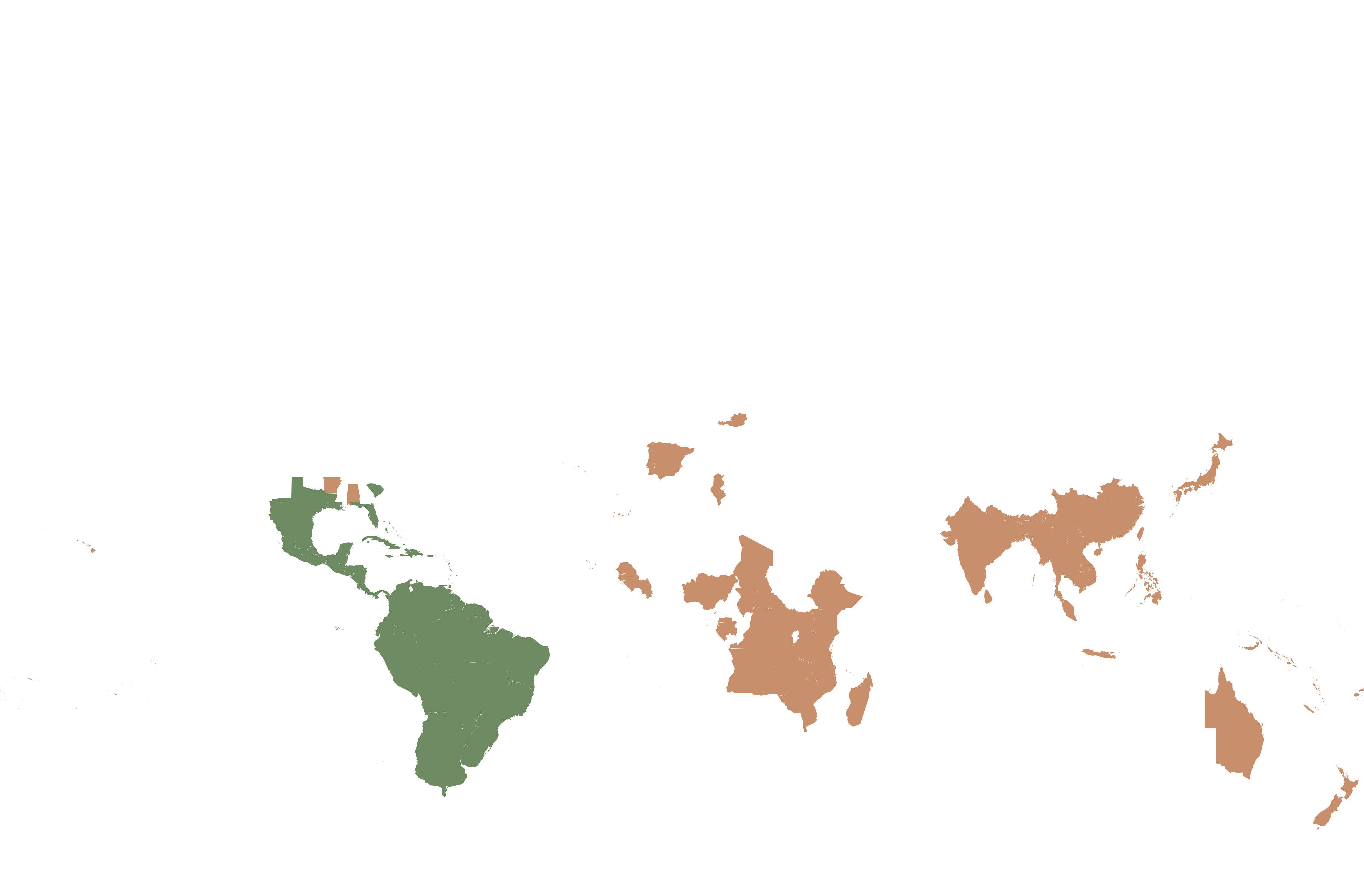
- Native
- Introduced
- North America
- Central America
- South America
History
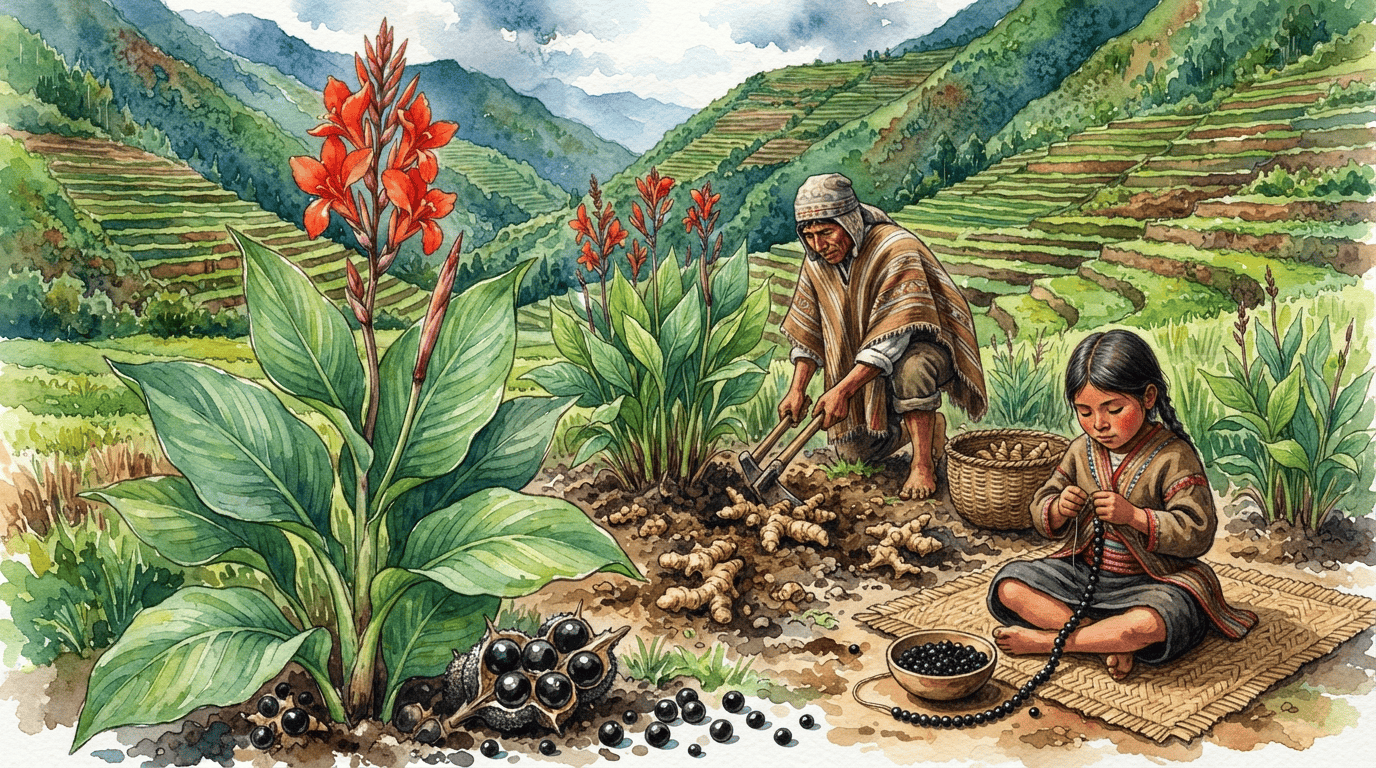
Canna indica is native to a broad range across the Americas — the southern United States through Mexico, Central America, the Caribbean islands, and much of tropical South America — where it has been cultivated for at least 4,500 years as an ornamental and as a starch crop. The species epithet "indica" is a Columbus-era misnomer: early European botanists assumed the species came from the East Indies ("India") along with other tropical plants arriving via trade routes, when in fact it is fully American in origin. The common name "Indian shot" refers to the extremely hard, spherical, metallic-looking black seeds, which are so durable and bullet-like that 19th-century tropical resistance fighters reportedly used them as emergency buckshot and slingshot ammunition. The seeds are also used as beads, rattle filler, and rosary beads in several Latin American folk traditions.
The rhizomes are edible and rich in starch — in parts of South America (particularly Peru and Ecuador) Canna starch (called "achira") is still a minor food crop, and the species is one of the oldest New World cultivated plants with archaeological starch residues dating to 4,500+ years in pre-ceramic Andean contexts. C. indica is a parent of most modern Canna x generalis ornamental hybrids. Canna indica was one of the earliest plants cultivated by indigenous peoples of the Americas, valued for its starchy rhizome.
In the 19th century, European plant breeders crossed it with other Canna species to create the large-flowered hybrids popular today. The plant is now used worldwide in constructed wetlands for wastewater treatment, as it efficiently absorbs heavy metals and nutrients from polluted water.
Symbolism & meaning
What It Symbolizes
Indian Shot stands with confidence, holding its broad leaves and torch-bright flowers upright in any tropical garden it inhabits. Its bold growth and saturated colors radiate glory and celebration — a flower unafraid to be seen and admired. From Caribbean courtyards to Asian temple grounds, canna has become the universal banner of self-assured tropical exuberance.
- Confidence — the bold upright growth and vivid flowers represent self-assurance
- Glory — tropical exuberance symbolizing celebration and splendor
Where the Name Comes From
The name Indian Shot points to India. 'Canna' comes from the Celtic word 'cana' meaning reed, describing the plant's reed-like stems. 'Indica' means of India, though the plant actually originates from the Americas — a common misnomer from early botanical classification.
Uses & Fun Facts
- Starchy rhizomes ground into traditional flour and food starch
- Bronze-green foliage and red-yellow blooms add tropical drama
- Vigorous stands filter and purify constructed wetland water
Related plants
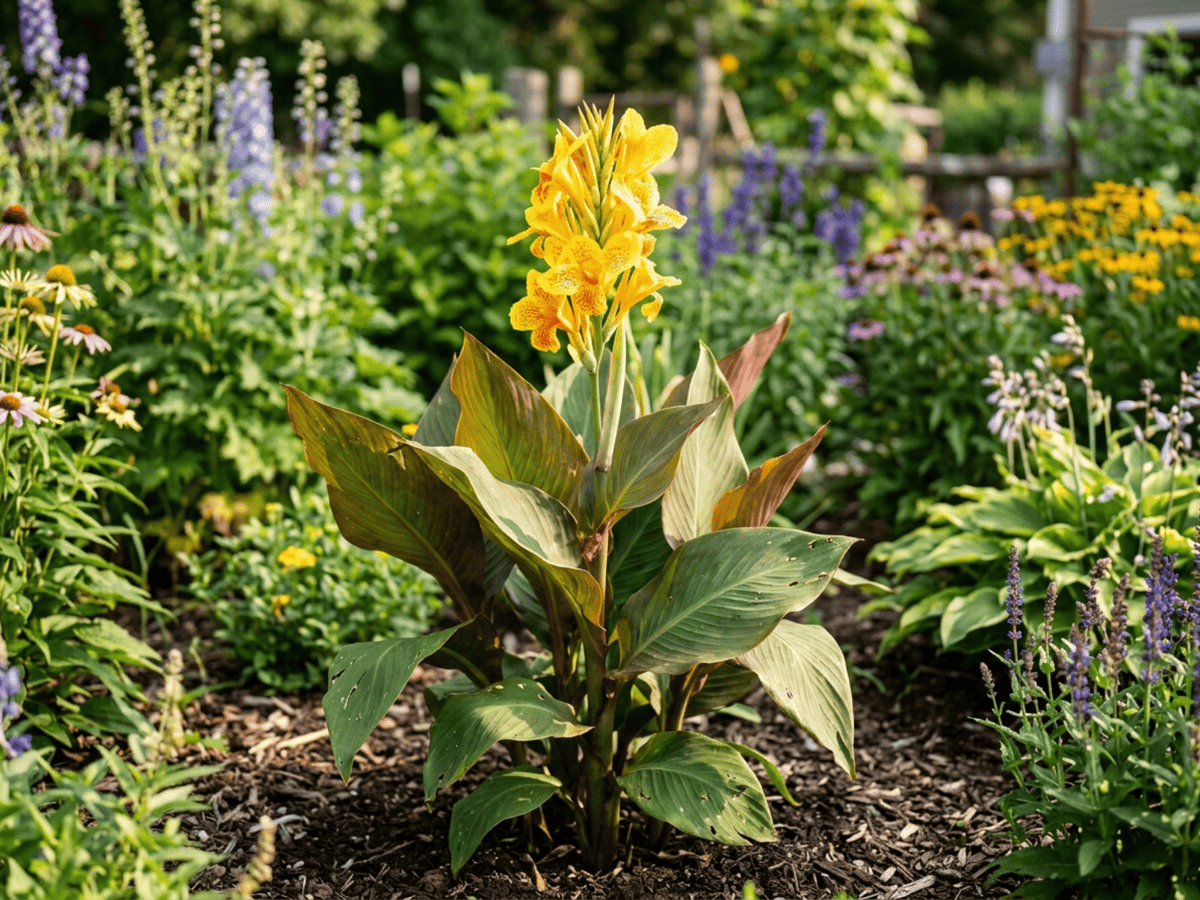
More Canna plants
Plants with similar care
 Chinese AbeliaAbelia chinensis
 Fragrant AbeliaAbelia mosanensis
 Large-Flowered AbeliaAbelia uniflora
 Glossy AbeliaAbelia x grandiflora
Frequently asked questions
How often should I water Indian Shot?
In summer, water about every 2 days; in winter, about every 30 days. Adjust for heat, pot size and drainage.
How much light does Indian Shot need?
Full sun: 6+ hrs direct. Watch the leaves — scorching or stretching means the light needs adjusting.
Is Indian Shot toxic to cats or dogs?
Pets Safe (Dogs Safe · Cats Safe) Educational information, not medical or veterinary advice. If exposure is suspected, contact a doctor or veterinarian.
Is Indian Shot easy to grow?
Yes — it is considered an easy, beginner-friendly plant.
When does Indian Shot bloom?
It typically blooms Jun–Nov in the Northern Hemisphere.
YardMate
Identify any plant in seconds
Snap a photo — YardMate names the plant, diagnoses problems, and reminds you when to water.
Download on the App Store