 YardMate


Prostrate Sandmat
Euphorbia prostrata
Easy · Beginner friendlyAbout Prostrate Sandmat
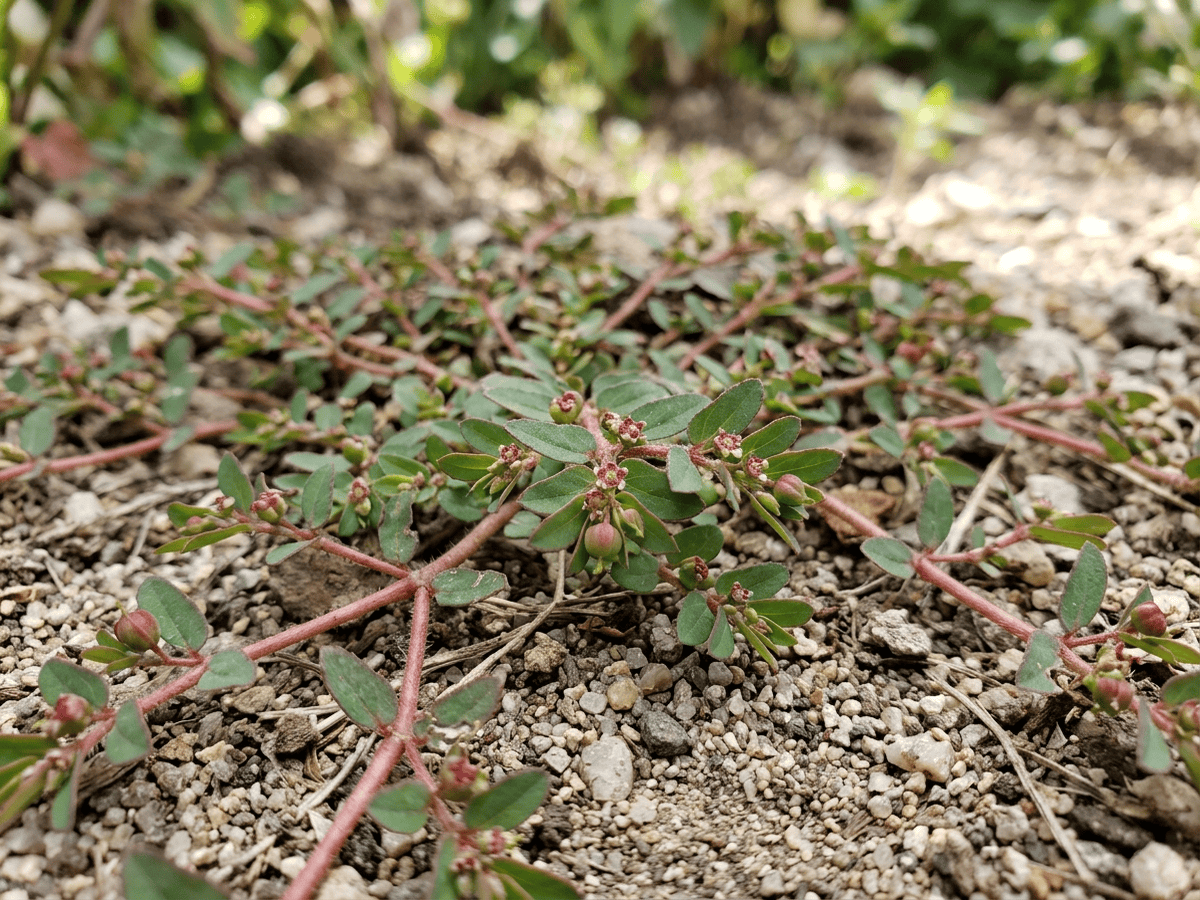
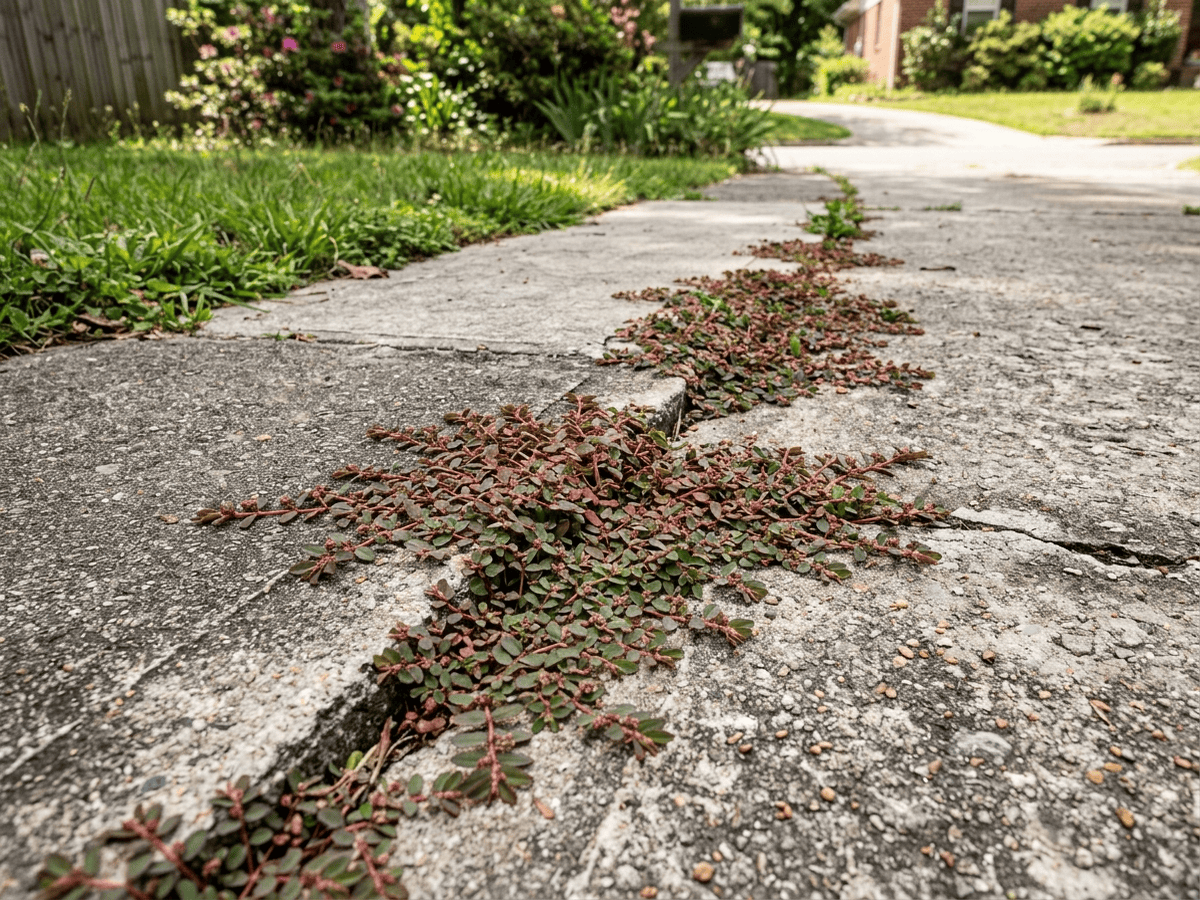
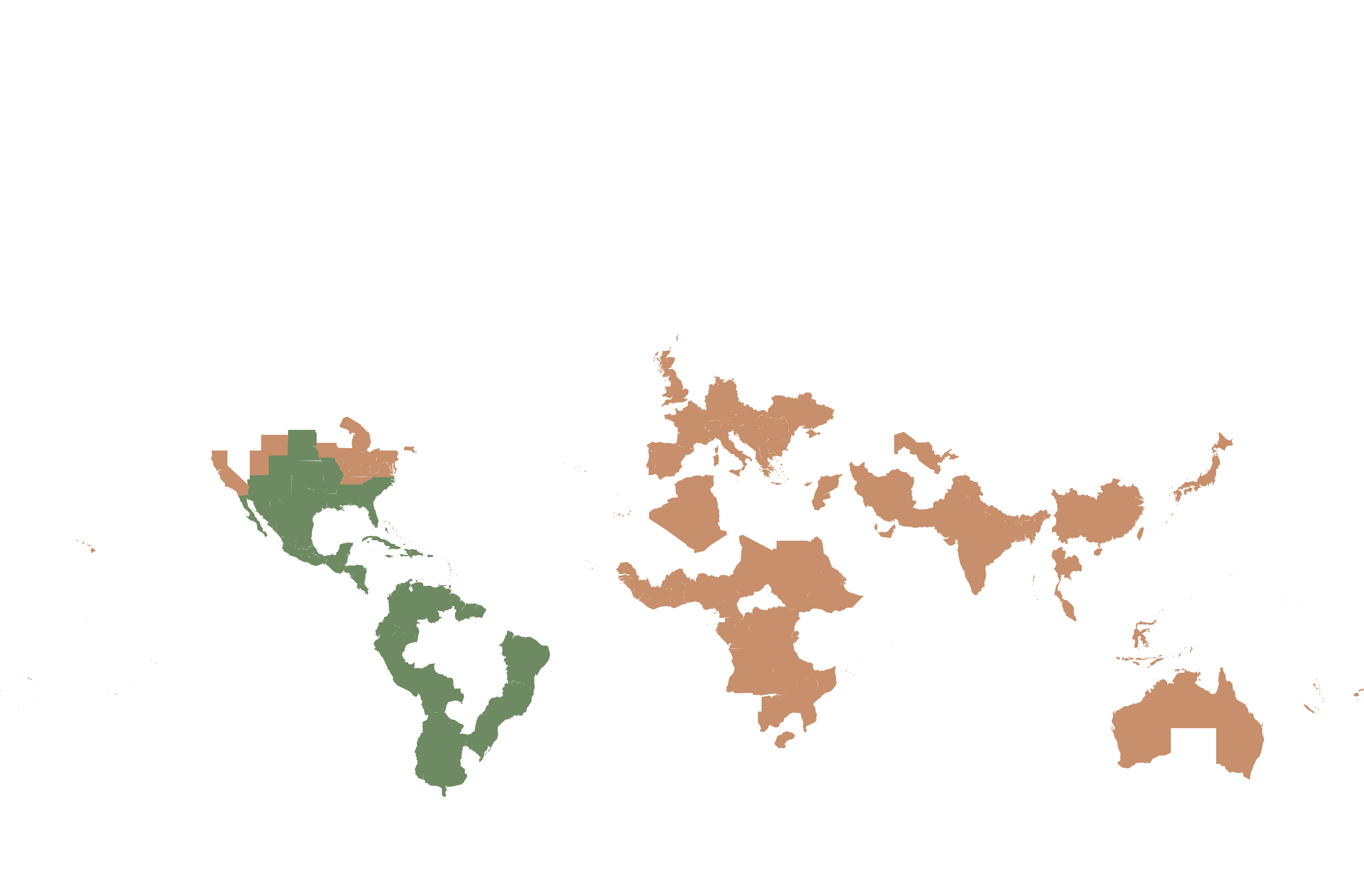
Prostrate Spurge is a tropical American warm-season annual closely related to spotted spurge and visually nearly identical, but lacking the distinct leaf spot and forming very flat hugging mats against the soil. Native to tropical Americas and widely naturalized through the warm US, especially common in Southern lawns, sidewalk cracks, and agricultural edges. Has milky irritating sap like all spurges.
- Heat-tolerant
How to care for Prostrate Sandmat
Watering
- Springevery 14 days
- Summerevery 7 days
- Fallevery 14 days
- Winterpause watering
Soil · Fast-draining
- Main mixSand + pumice + soil 1:1:150%
- DrainagePumice / gravel50%
Keep grit at half the mix or more — this soil is meant to dry out fast.
FERTILIZER
This plant needs little to no feeding.
At a Glance
- NativeCentral America, North America
- Height0.1–0.3 ft (0–0.1 m)
- Spread0.5–1.5 ft (0.2–0.5 m)
- Flower colorWhite, Pink
- Foliage colorGreen
- Fruit colorBrown
- SoilSandy, Well-drained
- LocationsYard
Bloom time
BLOOM CYCLE
Peak bloom
Jun–Nov
Tiny inconspicuous flowers summer to frost
Toxicity
Humans Moderate · Pets Slight
diterpene esters, tannins, and flavonoids
Moderate
- All
- Contact
EXPOSURE Touching any part of the plant.
EFFECT Skin rash and eye irritation from latex sap.
NOTE Documented concern for humans: Skin rash and eye irritation from latex sap.
Slight
- All
- Ingestion
- Contact
EXPOSURE Eating any part of the plant. Touching any part of the plant.
EFFECT Drooling, vomiting, and oral irritation.
NOTE Latex sap is a skin and eye irritant. ASPCA lists Euphorbia as toxic to pets.
Slight
- All
- Ingestion
- Contact
EXPOSURE Eating any part of the plant. Touching any part of the plant.
EFFECT Drooling, vomiting, and oral irritation.
NOTE Latex sap is a skin and eye irritant. ASPCA lists Euphorbia as toxic to pets.
Educational information, not medical or veterinary advice. If exposure is suspected, contact a doctor or veterinarian.
DISTRIBUTION

- Native
- Introduced
- Central America
- North America
History
Euphorbia prostrata is native to the American tropics, likely originating in Mexico and the Caribbean. Carl Ludwig Willdenow described it in 1800. It has spread globally since the 1700s with human commerce and is now cosmopolitan in warm-climate urban environments, particularly in paving cracks, gravel, and dry summer lawns.
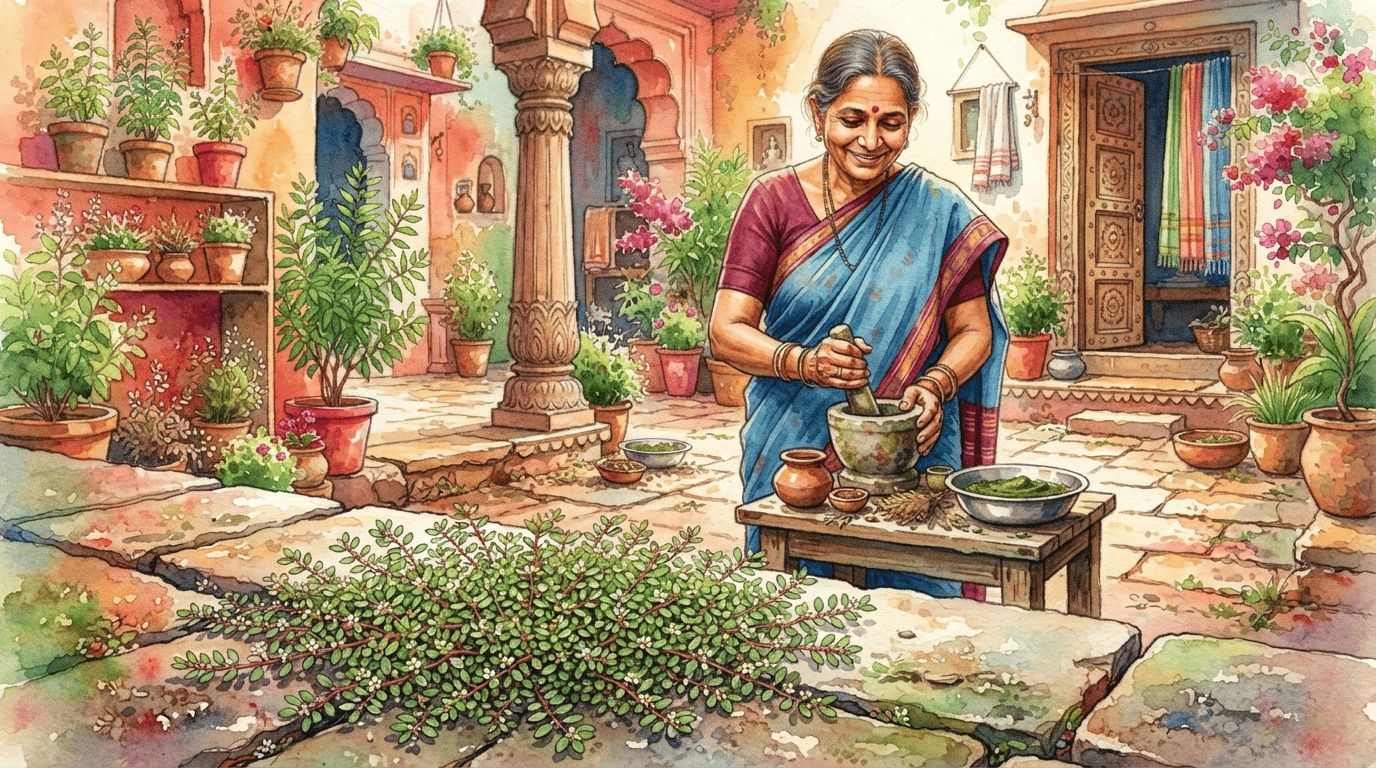
It is closely related to E. maculata and the two are often confused; prostrate spurge lacks the distinctive purple leaf spot of E. maculata and has smaller, more compact mats. In Ayurvedic and Unani traditional medicine, the whole dried plant is used as dudhi or laghu dugdhika for wound healing, diarrhea, and menstrual regulation. Modern pharmacological research has identified anti-inflammatory compounds including flavonoids and tannins, and it is investigated for anti-hemorrhoidal effects.
Sap contact can still cause skin and eye irritation. Native to tropical Americas, now naturalized across tropical and subtropical regions worldwide including the southern US. One of the most common flat-hugging summer weeds in American lawns and pavement cracks in the South and Southwest.
Symbolism & meaning
What It Symbolizes
Prostrate Sandmat is the master of Low invasion — pressing itself flat against pavement and gravel, slipping easily beneath the mower blade. As a Tropical spurge originally from the Americas, it has now naturalized across warm climates worldwide. Small, milky-sapped, and almost invisible, it succeeds by refusing to stand up.
- Low invasion — hugs ground below mower blade height
- Tropical spurge — tropical American native now globally naturalized
Where the Name Comes From
'prostrata' from Latin means prostrate, for the completely flat hugging growth habit against soil.
Uses & Fun Facts
- Flat-spreading mat fills cracks in pavement and gravel
- Used traditionally for digestive and inflammatory conditions
Related plants
More Euphorbia plants
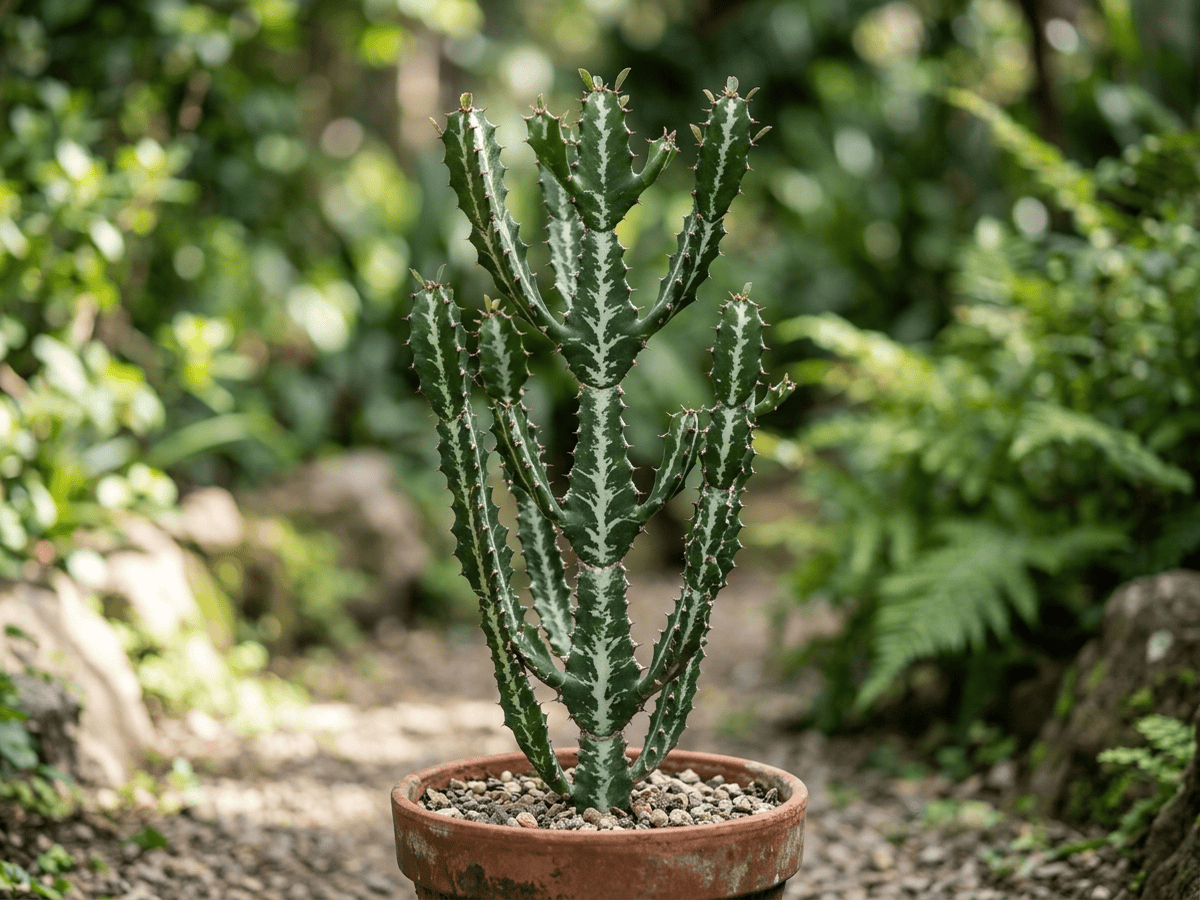 Mottled SpurgeEuphorbia lactea
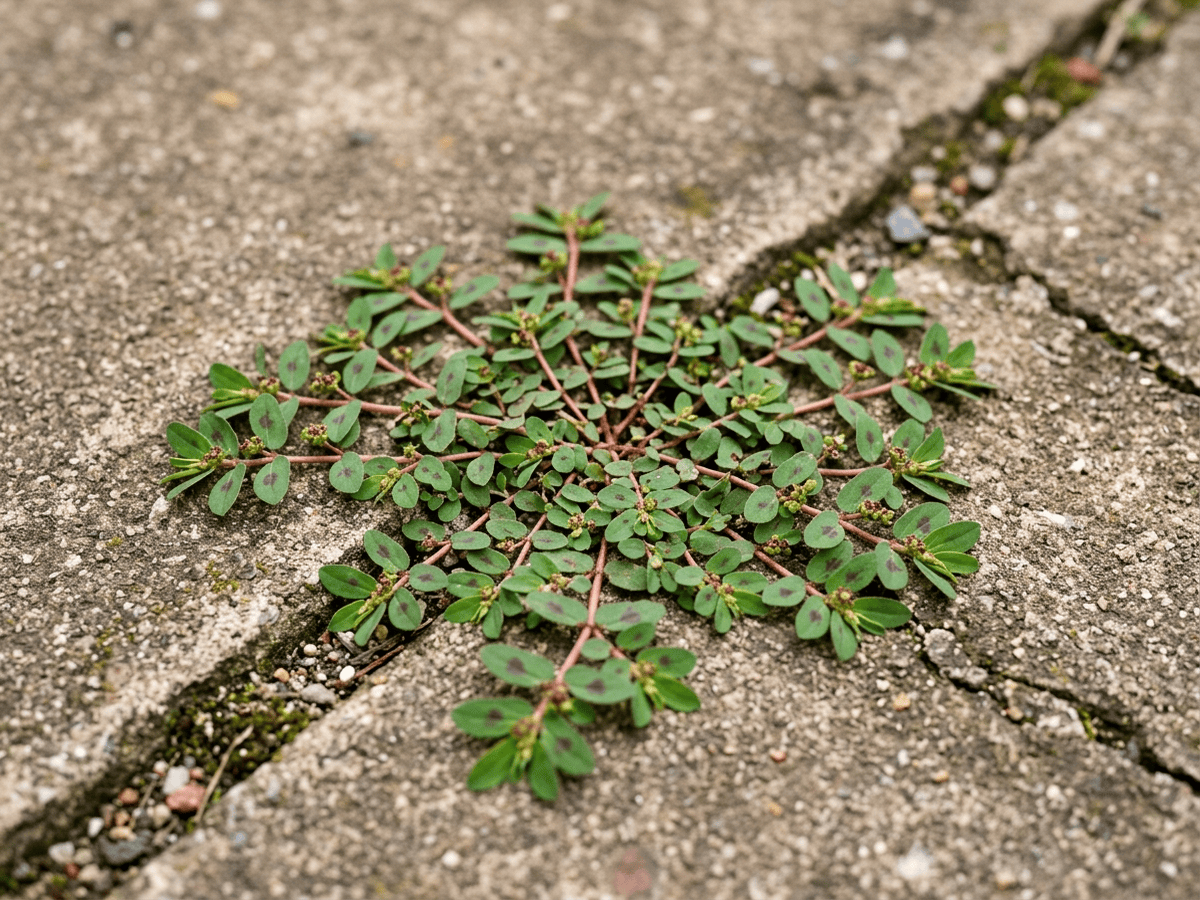 Spotted SpurgeEuphorbia maculata
 Crown-Of-ThornsEuphorbia milii
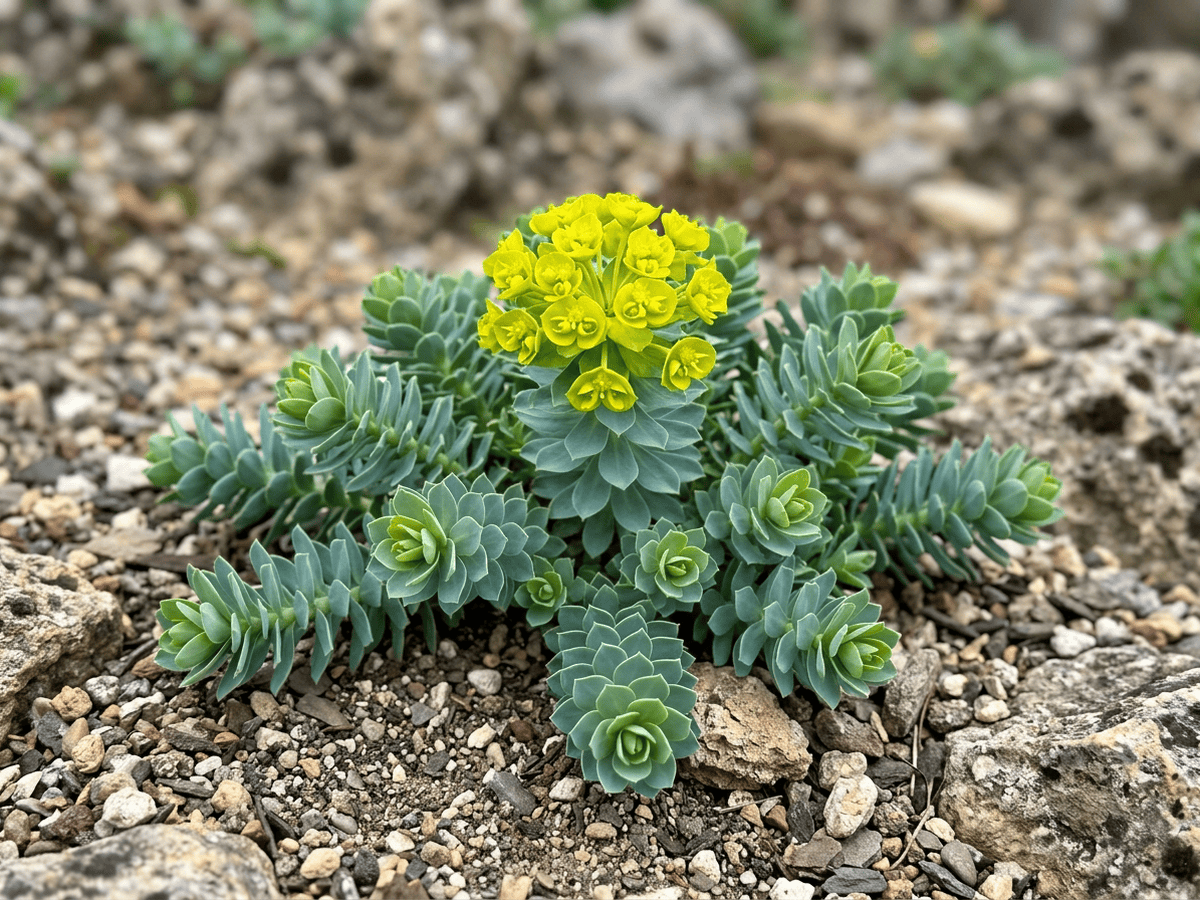 Myrtle SpurgeEuphorbia myrsinites
Plants with similar care
 Chinese AbeliaAbelia chinensis
 Fragrant AbeliaAbelia mosanensis
 Large-Flowered AbeliaAbelia uniflora
 Glossy AbeliaAbelia x grandiflora
Frequently asked questions
How often should I water Prostrate Sandmat?
Water about every 14 days during the growing season, and always let excess water drain away.
How much light does Prostrate Sandmat need?
Full sun: 6+ hrs direct. Watch the leaves — scorching or stretching means the light needs adjusting.
Is Prostrate Sandmat toxic to cats or dogs?
Pets Slight (Dogs Slight · Cats Slight) Educational information, not medical or veterinary advice. If exposure is suspected, contact a doctor or veterinarian.
Is Prostrate Sandmat easy to grow?
Yes — it is considered an easy, beginner-friendly plant.
When does Prostrate Sandmat bloom?
It typically blooms Jun–Nov in the Northern Hemisphere.
YardMate
Identify any plant in seconds
Snap a photo — YardMate names the plant, diagnoses problems, and reminds you when to water.
Download on the App Store