 YardMate


Fennel
Foeniculum vulgare
Easy · Beginner friendlyAbout Fennel
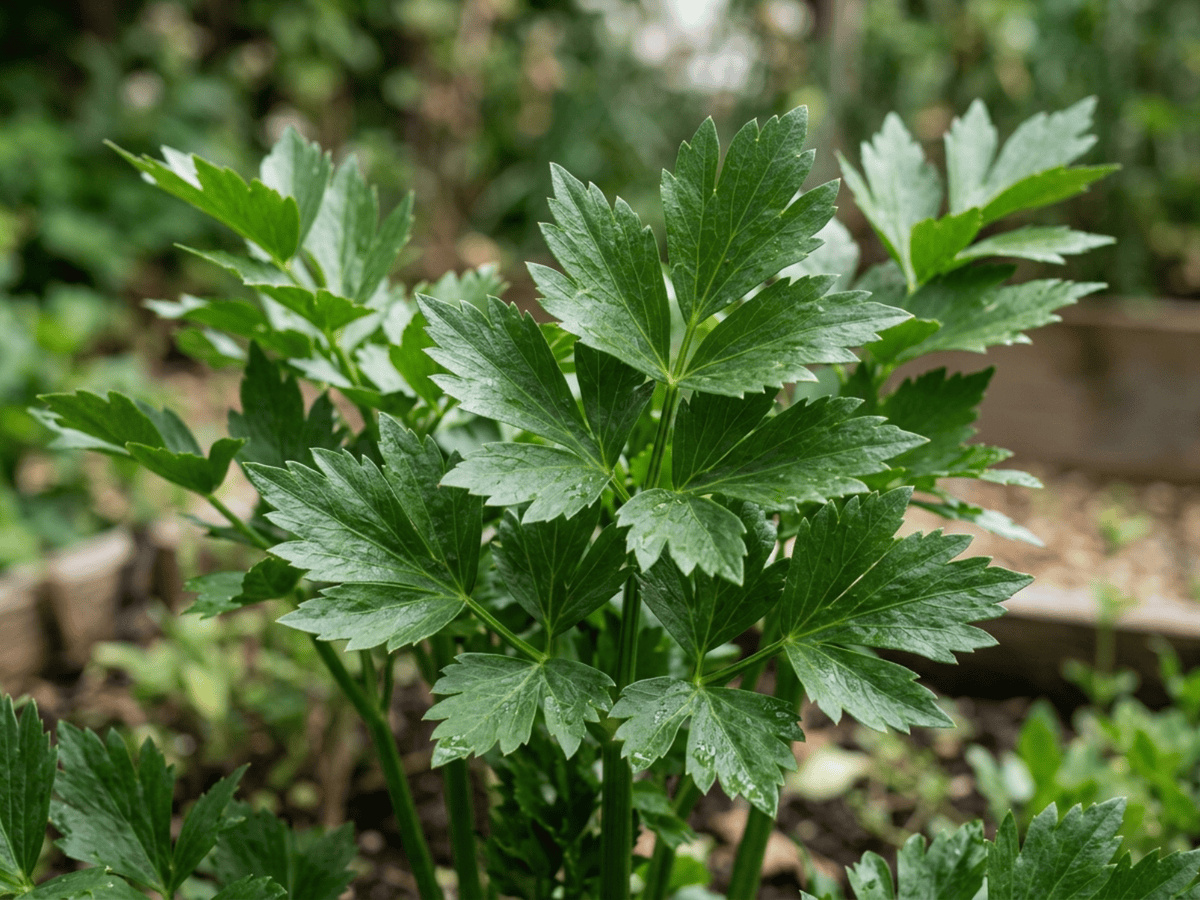
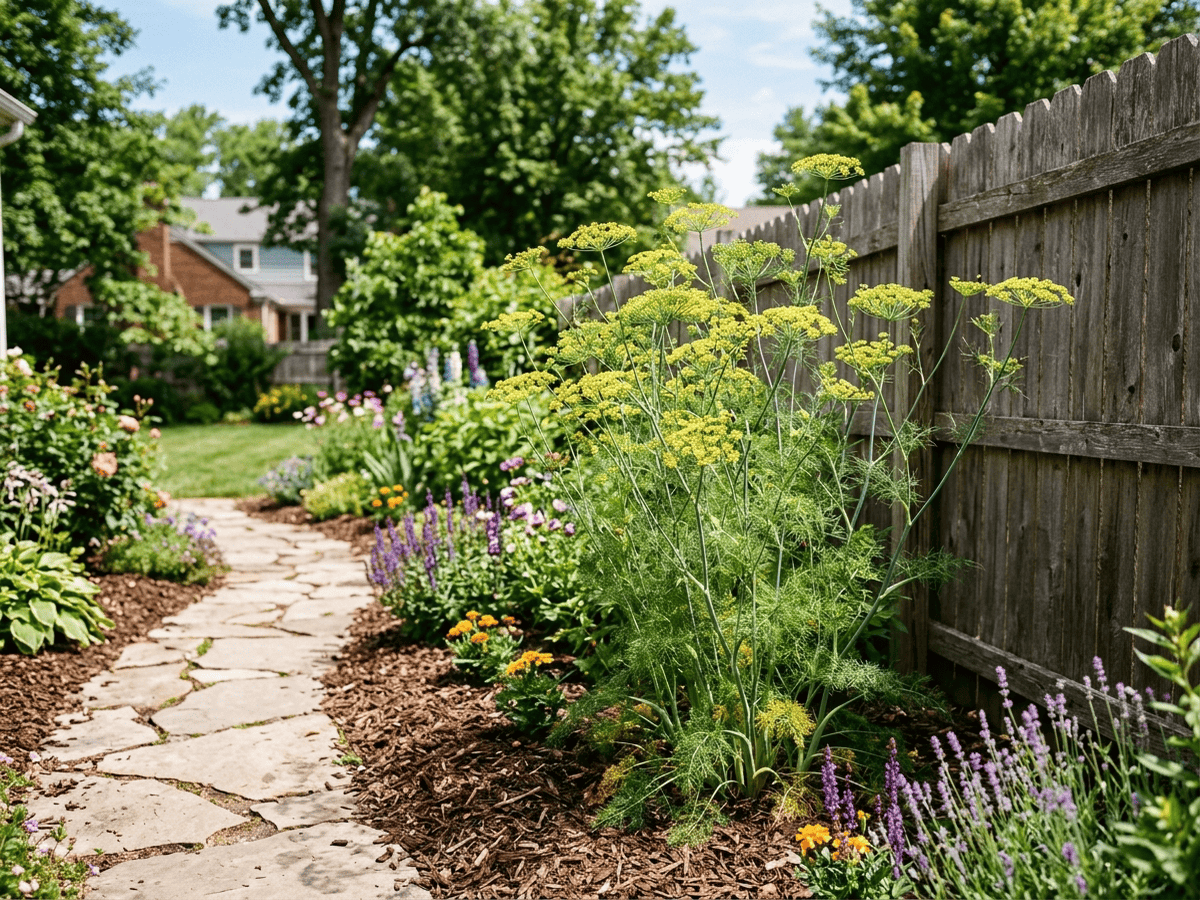
Foeniculum vulgare, or fennel, is a hardy perennial herb in the Apiaceae family native to the Mediterranean coast. It grows 1.5–2.5 m tall with feathery, thread-like foliage and large flat umbels of tiny yellow flowers. Every part of the plant—bulb, stalks, fronds, and seeds—is edible and carries a distinctive sweet anise flavour.
Fennel thrives in full sun and well-drained soil, tolerating poor and even slightly alkaline ground. It is drought-tolerant once established, making it ideal for water-wise gardens. The bronze-leaved cultivar 'Purpureum' is a popular ornamental form, and Florence fennel (var. azoricum) is grown specifically for its swollen bulb base used as a vegetable.
In the kitchen, fennel is extraordinarily versatile: raw bulb in salads, braised as a side, fronds as garnish, and seeds as a spice in sausages, breads, and teas. The seeds are chewed as a traditional after-meal digestive across India and the Middle East. Fennel is also a critical host plant for swallowtail butterfly larvae, making it ecologically valuable. Caution is advised against planting near dill, as the two species cross-pollinate, producing flavourless hybrids.
- Edible
- Fragrant
- Drought-tolerant
- Pollinator-friendly
How to care for Fennel
Watering
- Springevery 3 days
- Summerevery 2 days
- Fallevery 4 days
- Winterevery 7 days
Soil · Rich & well-draining
- Top dressingCompost10%
- Main mixPotting soil + compost 3:180%
- DrainageGravel10%
Top up the compost layer each season.
FERTILIZER
- Springevery 21 days
- Summerevery 21 days
- Fallevery 30 days
At a Glance
- NativeMediterranean
- Height4–6 ft (1.2–1.8 m)
- Spread1.5–3 ft (0.5–0.9 m)
- Flower colorYellow
- Foliage colorGreen, Bronze
- SoilLoamy, Well-drained, Neutral
- LocationsYard
Bloom time
BLOOM CYCLE
Peak bloom
Jun–Aug
Let some umbels go to seed for kitchen use and self-sowing; deadhead the rest for tidiness.
Fragrance
STRONG FRAGRANCE
Sweet anise-licorice aroma from anethole.
Toxicity
Humans Safe · Pets Safe
anethole, estragole, and fenchone
Safe
EXPOSURE No exposure route is reported.
EFFECT Culinary vegetable and herb and estragole content in essential oil is a theoretical concern at high concentrated doses.
NOTE Listed as non-toxic for humans; avoid eating ornamental plants unless confirmed edible.
Safe
EXPOSURE No exposure route is reported.
EFFECT Not listed as toxic.
NOTE Listed as non-toxic for dogs; avoid eating ornamental plants unless confirmed edible.
Safe
EXPOSURE No exposure route is reported.
EFFECT Not listed as toxic.
NOTE Listed as non-toxic for cats; avoid eating ornamental plants unless confirmed edible.
Educational information, not medical or veterinary advice. If exposure is suspected, contact a doctor or veterinarian.
DISTRIBUTION

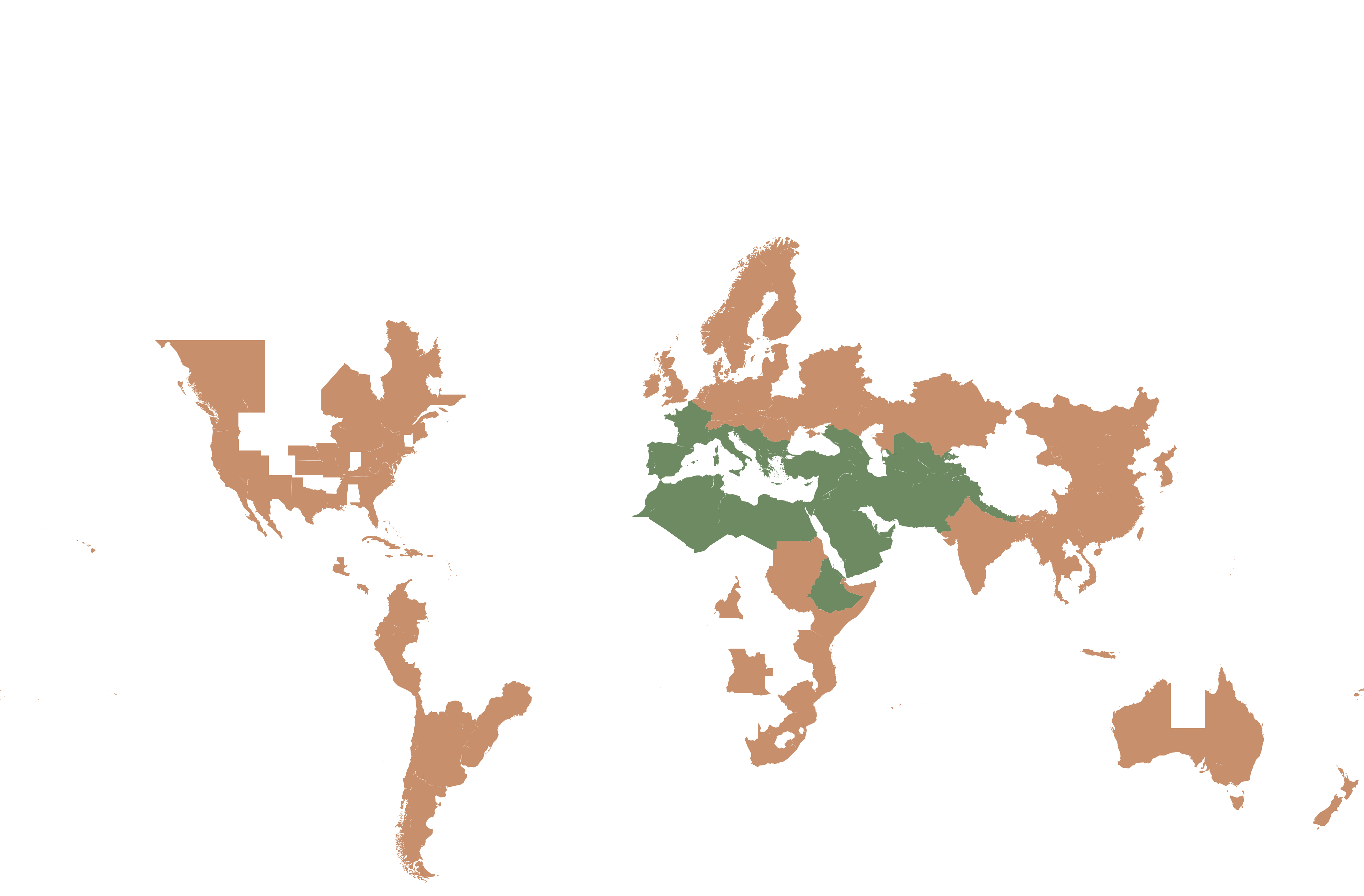
- Native
- Introduced
- Mediterranean
History

Foeniculum vulgare is native to the Mediterranean shores and has been cultivated since classical antiquity. The name derives from Latin "foenum" (hay) for the hay-like foliage scent. Greeks associated fennel with strength and longevity — marathon runners chewed fennel to maintain stamina, and the Battle of Marathon (490 BCE) was fought on a field of wild fennel, from which the Greek name "marathon" (fennel) gave the battle and eventually the modern running distance their name.
Romans valued fennel as medicine and snake repellent. Florence Italian gardeners in the 16th-17th centuries selected the "finocchio" bulb-fennel variety with swollen leaf bases, now central to Italian cuisine. Fennel seeds are an essential spice in Italian sausage, Indian "mukhwas" digestif, Chinese five-spice, and many European breads.
The plant is also a traditional flavoring in absinthe, ouzo, and other anise-family spirits alongside anise and star anise. Ancient Greeks called fennel 'marathon' — the battlefield of Marathon was named for wild fennel fields. Pliny listed it among remedies for over twenty ailments. Roman gladiators mixed fennel with their food for vigour. It became a staple monastery herb across medieval Europe.
Symbolism & meaning
What It Symbolizes
Fennel expresses strength, the herb that ancient Greek athletes consumed before Olympic competitions to fortify body and spirit. Across medieval Europe it was bound above doorways on midsummer's eve, believed to renew vitality and ward off ill influence through the coming year. Few culinary herbs carry such athletic and protective heritage — a feathery plant whose anise-bright seeds promised both endurance and long life.
- Strength — Associated with physical vigour since Greek athletes consumed it before Olympic competitions
- Longevity — Fennel was believed to renew vitality and was hung over doorways on midsummer's eve for protection
Where the Name Comes From
Foeniculum from Latin 'foenum' (hay), alluding to the fragrance of dried leaves; 'vulgare' means common.
Uses & Fun Facts
- Bulbs, fronds, pollen, and seeds bring sweet anise flavor to cooking
- Anise-scented leaves and seeds flavor teas, breads, fish, and vegetable dishes
- Yellow umbels feed bees, hoverflies, and other beneficial insects
Related plants
Plants with similar care
 Chinese AbeliaAbelia chinensis
 Fragrant AbeliaAbelia mosanensis
 Large-Flowered AbeliaAbelia uniflora
 Glossy AbeliaAbelia x grandiflora
Frequently asked questions
How often should I water Fennel?
In summer, water about every 2 days; in winter, about every 7 days. Adjust for heat, pot size and drainage.
How much light does Fennel need?
Full sun: 6+ hrs direct. Watch the leaves — scorching or stretching means the light needs adjusting.
Is Fennel toxic to cats or dogs?
Pets Safe (Dogs Safe · Cats Safe) Educational information, not medical or veterinary advice. If exposure is suspected, contact a doctor or veterinarian.
Is Fennel easy to grow?
Yes — it is considered an easy, beginner-friendly plant.
When does Fennel bloom?
It typically blooms Jun–Aug in the Northern Hemisphere.
YardMate
Identify any plant in seconds
Snap a photo — YardMate names the plant, diagnoses problems, and reminds you when to water.
Download on the App Store