 YardMate

Toyon
Heteromeles arbutifolia
Easy · Beginner friendlyAbout Toyon
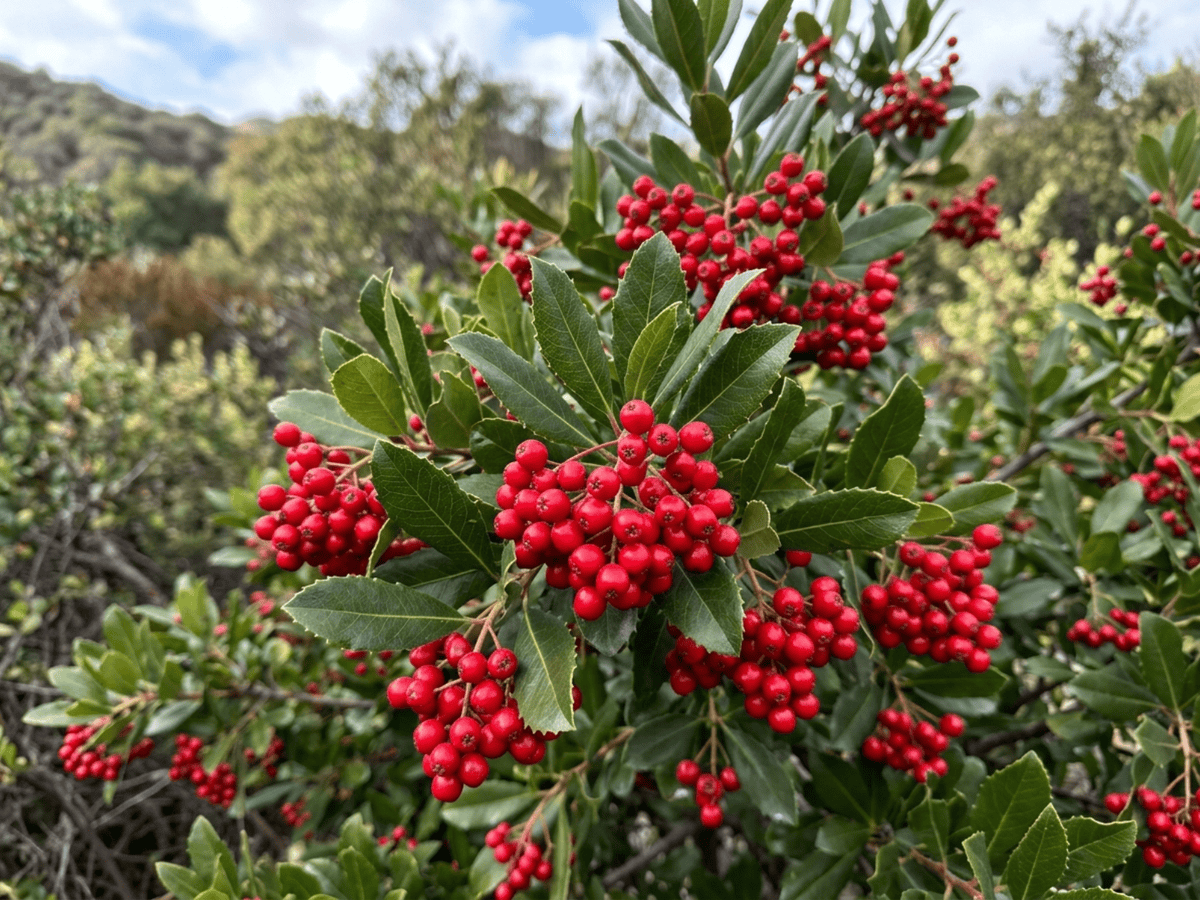
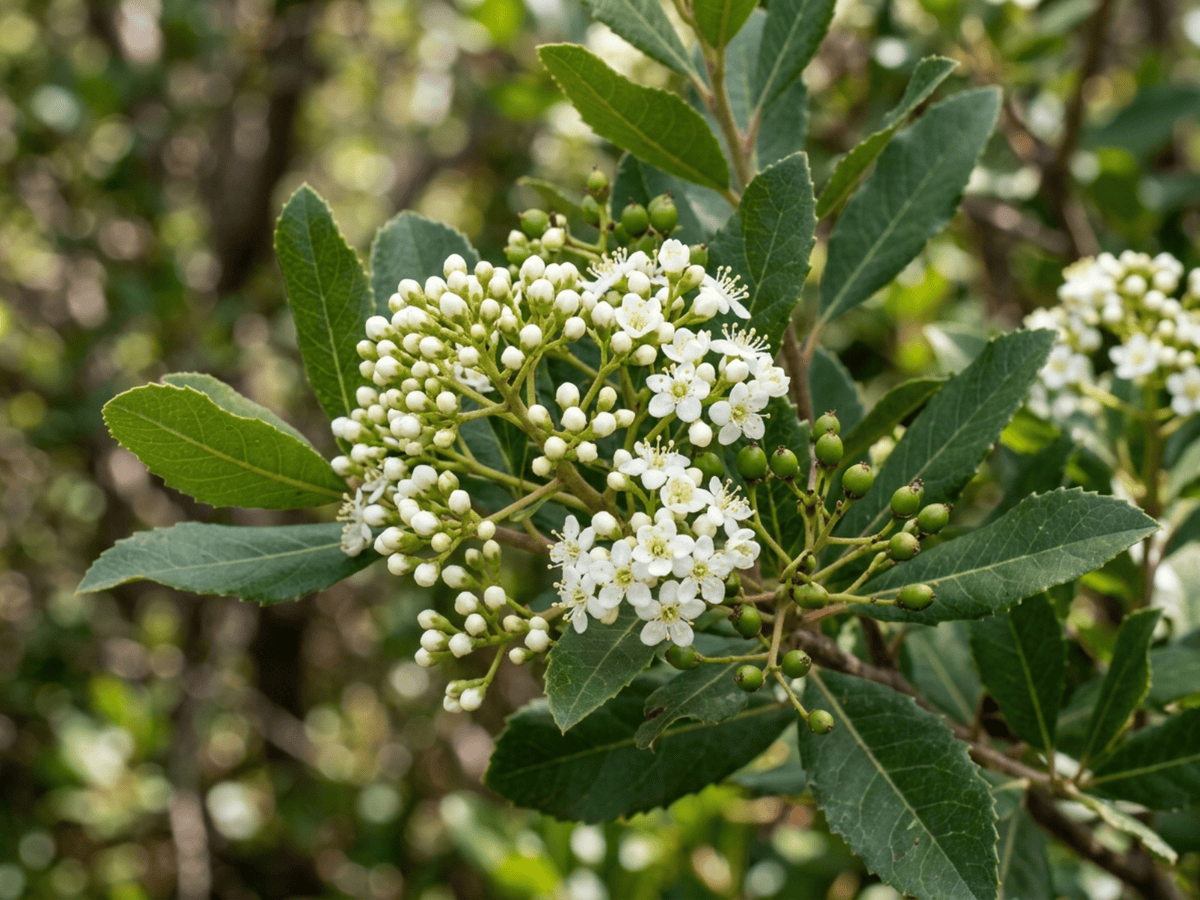
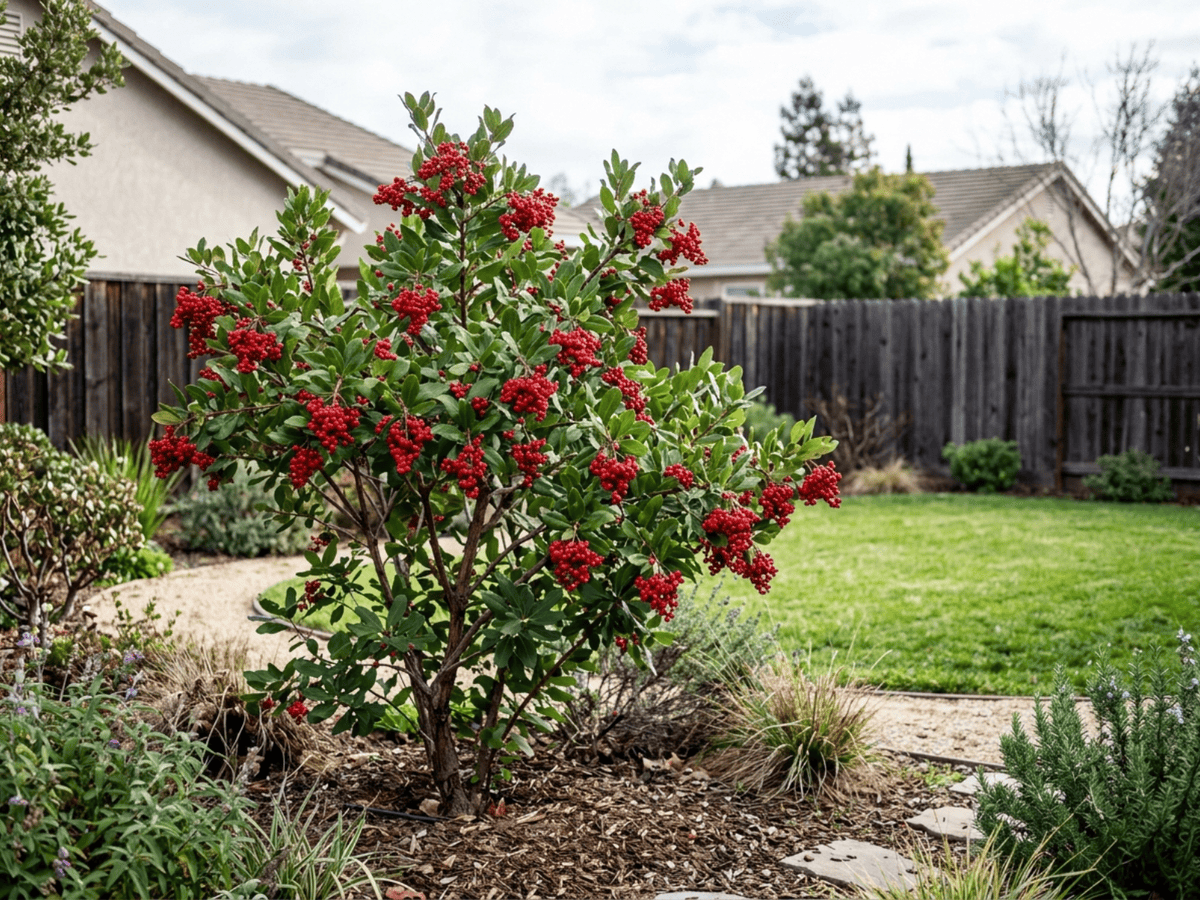
Toyon or Christmas Berry is a large California native evergreen shrub reaching 10-25 feet, adorned with glossy dark green leaves and clusters of bright red berries that ripen in late fall, persisting through winter. Native throughout California's coastal ranges and foothills, it was the plant that gave Hollywood its name. Small white flowers in summer yield the festive holiday berries that feed cedar waxwings, robins, and other wintering birds.
- Drought-tolerant
- Deer-resistant
- Evergreen
- Native
How to care for Toyon
Watering
- Springevery 14 days
- Summerevery 21 days
- Fallevery 21 days
- Winterevery 30 days
Soil · Well-draining
- Top dressingPine bark mulch10%
- Main mixPotting soil + perlite 2:170%
- DrainageLECA / gravel20%
Never skip the drainage layer — standing water is the top cause of root rot.
FERTILIZER
This plant needs little to no feeding.
At a Glance
- NativeNorth America
- Height8–25 ft (2.4–7.6 m)
- Spread8–15 ft (2.4–4.6 m)
- Flower colorWhite, Cream
- Foliage colorGreen
- Fruit colorRed
- SoilLoamy, Well-drained, Sandy
- LocationsYard
Bloom time
BLOOM CYCLE
Peak bloom
Jun–Jul
Clusters of small white flowers June to July
Fragrance
NO FRAGRANCE
No notable fragrance.
Toxicity
Humans Slight · Pets Slight
cyanogenic glycosides
Slight
- Seed
- Ingestion
EXPOSURE Eating seeds.
EFFECT Seeds contain cyanogenic glycosides and cooked flesh traditionally eaten by California Indigenous peoples.
NOTE Documented concern for humans: Seeds contain cyanogenic glycosides and cooked flesh traditionally eaten by California Indigenous peoples.
Slight
- Seed
- Leaf
- Ingestion
EXPOSURE Eating seeds and leaves.
EFFECT Mild GI upset from seeds.
NOTE Not prominently listed by ASPCA. Fruit flesh safe when cooked; raw seeds should not be eaten in quantity.
Slight
- Seed
- Leaf
- Ingestion
EXPOSURE Eating seeds and leaves.
EFFECT Mild GI upset possible.
NOTE Not prominently listed by ASPCA. Fruit flesh safe when cooked; raw seeds should not be eaten in quantity.
Educational information, not medical or veterinary advice. If exposure is suspected, contact a doctor or veterinarian.
DISTRIBUTION


- Native
- North America
History
Heteromeles arbutifolia is native to California, southwestern Oregon, and northern Baja California, Mexico, growing in chaparral, oak woodland, and coastal scrub communities throughout its range from sea level to 1500 meters elevation. It is a large evergreen shrub or small tree 3-7 meters tall with leathery serrated dark-green leaves (superficially resembling holly but in Rosaceae, the rose family, not Aquifoliaceae), flat umbels of small cream-white flowers in summer, and — most distinctively — dense clusters of bright glossy red (rarely yellow) 5-8 mm fruits in autumn and early winter that persist into January-February, providing dramatic red color at holiday season. This has led to the common name "Christmas berry" and "California holly."
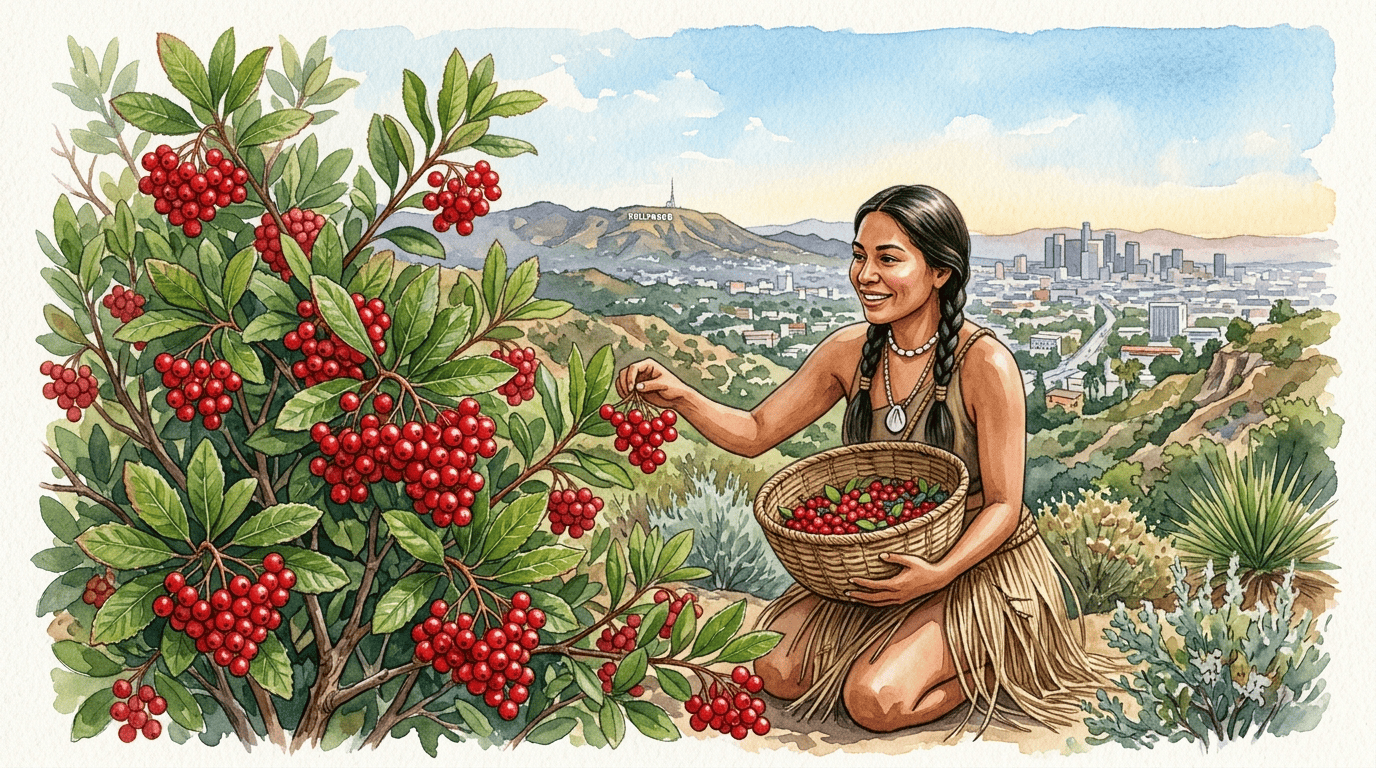
According to widely-repeated local Los Angeles history, early-20th-century real-estate developers coined the name "Hollywood" for the neighborhood in the foothills of the Santa Monica Mountains because of the abundant toyon (California holly) on the surrounding hillsides — though exact attribution of the name's origin has been disputed by local historians. Regardless of the naming history, the association between toyon and Hollywood Hills landscape is well-established, and in 2012 the Los Angeles City Council formally designated Heteromeles arbutifolia as the official native plant of the City of Los Angeles.
The fruits are an important winter food for many California native birds (particularly cedar waxwings, robins, and hermit thrushes), and cooked fruits were eaten by California Indigenous peoples; the seeds contain cyanogenic glycosides and should not be eaten raw in quantity. Chumash and Tongva peoples cooked the berries as a staple food. Its winter berries became so popular for holiday decorations that California passed a 1921 law protecting wild populations from overharvesting.
Symbolism & meaning
What It Symbolizes
Toyon can symbolize celebration, its winter clusters of bright red berries earning it the affectionate names California holly and Christmas berry. Its other layer is heritage, for those very berries gave Hollywood its name, the toyon-covered hills above early Los Angeles becoming the namesake of an entire industry. To grow toyon is to keep a piece of California's botanical and cinematic memory at once, a native festive shrub that helped name a global capital of imagination.
- Celebration — festive winter berry plant
- Heritage — gave Hollywood its name
Where the Name Comes From
'Heteromeles' means 'different apple' in Greek; 'arbutifolia' means 'arbutus-leaved', after its resemblance to madrone leaves.
Uses & Fun Facts
- Toyon berries used in jellies by California settlers
- Red winter berries feed cedar waxwings and robins
- Christmas berry adds festive color to dry-garden hedges
Related plants
Plants with similar care
 Chinese AbeliaAbelia chinensis
 Fragrant AbeliaAbelia mosanensis
 Large-Flowered AbeliaAbelia uniflora
 Glossy AbeliaAbelia x grandiflora
Frequently asked questions
How often should I water Toyon?
In summer, water about every 21 days; in winter, about every 30 days. Adjust for heat, pot size and drainage.
How much light does Toyon need?
Full sun: 6+ hrs direct. Watch the leaves — scorching or stretching means the light needs adjusting.
Is Toyon toxic to cats or dogs?
Pets Slight (Dogs Slight · Cats Slight) Educational information, not medical or veterinary advice. If exposure is suspected, contact a doctor or veterinarian.
Is Toyon easy to grow?
Yes — it is considered an easy, beginner-friendly plant.
When does Toyon bloom?
It typically blooms Jun–Jul in the Northern Hemisphere.
YardMate
Identify any plant in seconds
Snap a photo — YardMate names the plant, diagnoses problems, and reminds you when to water.
Download on the App Store