 YardMate


Yaupon Holly
Ilex vomitoria
Easy · Beginner friendlyAbout Yaupon Holly
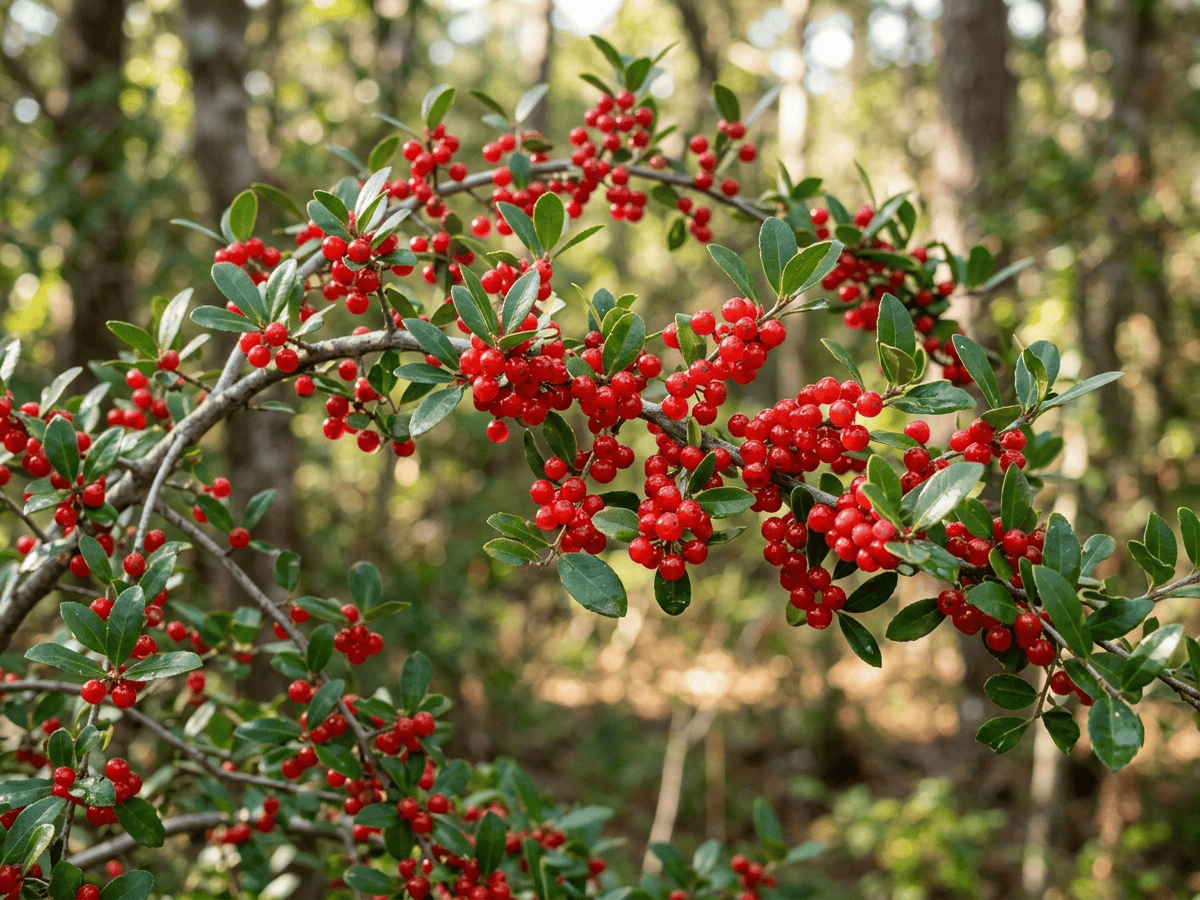
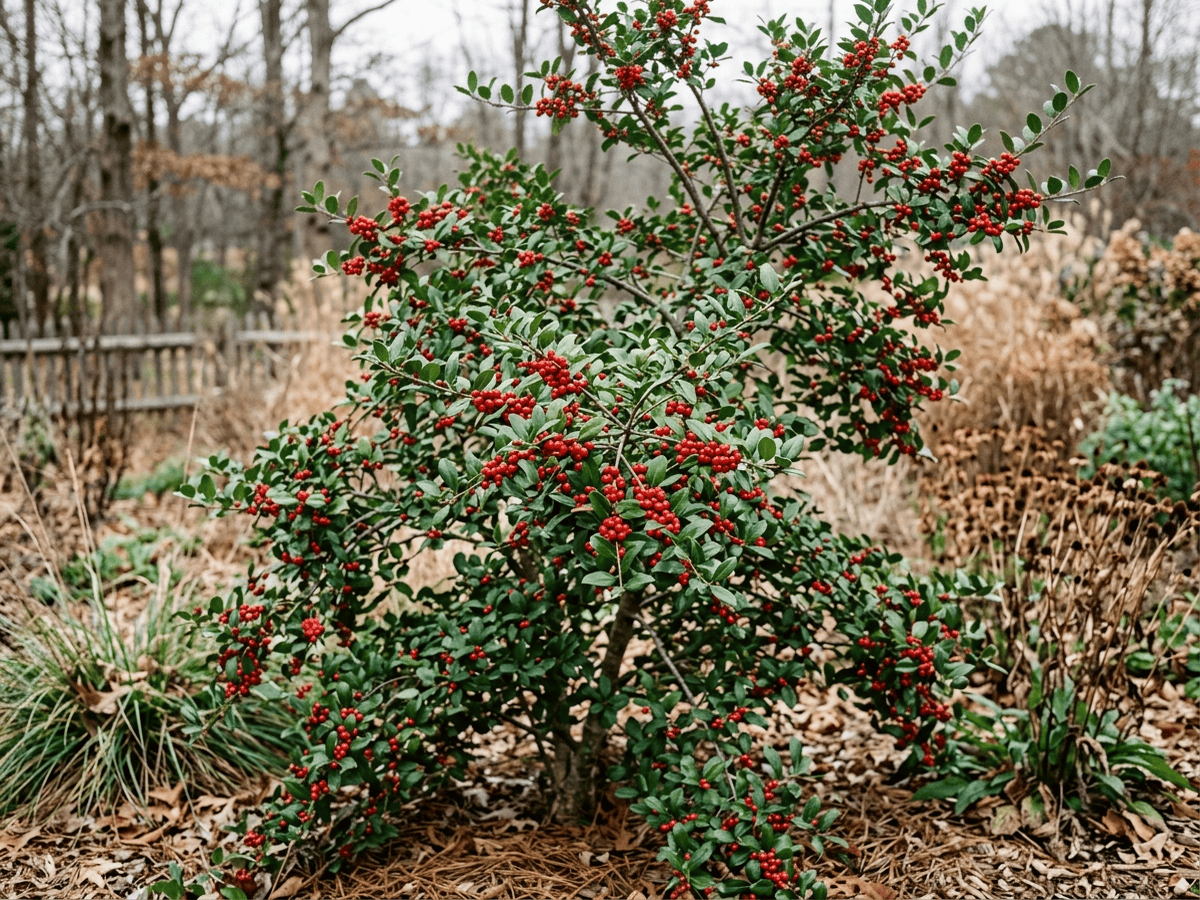
Yaupon Holly is a versatile evergreen native shrub or small tree of the southeastern United States, growing 10-20 feet tall with small oval leaves and profuse translucent red berries. The only North American plant containing caffeine, it was brewed as 'black drink' by Indigenous peoples for ceremonies. Extremely heat, drought, and salt tolerant, it thrives from Virginia to Texas in conditions that defeat most hollies. Dwarf cultivars like 'Schillings' are ubiquitous in Southern foundation plantings.
- Drought-tolerant
- Heat-tolerant
- Evergreen
- Native
How to care for Yaupon Holly
Watering
- Springevery 7 days
- Summerevery 5 days
- Fallevery 10 days
- Winterevery 21 days
Soil · Well-draining
- Top dressingPine bark mulch10%
- Main mixPotting soil + perlite 2:170%
- DrainageLECA / gravel20%
Never skip the drainage layer — standing water is the top cause of root rot.
FERTILIZER
Balanced Feed 14-14-14
An even feed covers all three needs at once, keeping leaves, roots and blooms moving together with nothing pushed out of balance.
- Nitrogen · Leaves
- Phosphorus · Roots + Blooms
- Potassium · Strength
- Springevery 30 days
At a Glance
- NativeNorth America
- Height15–25 ft (4.6–7.6 m)
- Spread10–20 ft (3–6.1 m)
- Flower colorWhite
- Foliage colorDark-green, Green
- Fruit colorRed
- SoilLoamy, Well-drained, Sandy
- LocationsYard
Bloom time
BLOOM CYCLE
Peak bloom
Mar–May
Inconspicuous white flowers in spring; female needs male for berries
Fragrance
LIGHT FRAGRANCE
Mild honey-like scent from male flowers.
Toxicity
Humans Slight · Pets Moderate
caffeine, theobromine, and saponins
Slight
- Fruit
- Ingestion
EXPOSURE Eating fruit.
EFFECT GI upset from saponins.
NOTE Documented concern for humans: GI upset from saponins.
Moderate
- Fruit
- Leaf
- Ingestion
EXPOSURE Eating fruit and leaves.
EFFECT Vomiting, diarrhea.
NOTE ASPCA lists Ilex as toxic to pets. Leaves contain caffeine; moderate tea consumption is safe for humans. Caffeine is toxic to dogs and cats.
Moderate
- Fruit
- Leaf
- Ingestion
EXPOSURE Eating fruit and leaves.
EFFECT Vomiting, diarrhea.
NOTE ASPCA lists Ilex as toxic to pets. Leaves contain caffeine; moderate tea consumption is safe for humans. Caffeine is toxic to dogs and cats.
Educational information, not medical or veterinary advice. If exposure is suspected, contact a doctor or veterinarian.
DISTRIBUTION


- Native
- Introduced
- North America
History

Ilex vomitoria is native to the southeastern United States from Virginia south through Florida and west to central Texas, and into northeastern Mexico. English botanist William Aiton described the species in 1789 in Hortus Kewensis. The unfortunate specific epithet vomitoria derives from misinterpretation of the species' role in the black drink (cassina, asi, or yaupon tea)—a ceremonial beverage brewed by indigenous peoples of the southeastern US for over 1000 years from roasted yaupon leaves. The caffeine-rich tea was drunk in large quantities at council meetings, purification rituals, and ball game preparations.
While the tea can cause vomiting when consumed ceremonially in extremely large volumes along with emetic plants added for that purpose, the yaupon itself does not cause vomiting; the name reflects European misunderstanding of the ritual context. Yaupon is North America's only caffeine-producing native plant (roughly one-third the caffeine of coffee). After centuries of neglect, yaupon tea has undergone a commercial revival since 2010, with several American companies now producing yaupon teas from both wild-harvested and cultivated leaves.
The unfortunate Latin name 'vomitoria' refers to the emetic ceremonial 'black drink' of southeastern Native Americans—though the vomiting was caused by other added ingredients, not the yaupon itself. Yaupon tea, naturally caffeinated, is experiencing a modern revival as a locally-sourced alternative to imported coffee and tea. It is the only caffeinated plant native to North America and was widely traded among pre-Columbian Indigenous peoples.
Symbolism & meaning
What It Symbolizes
Yaupon Holly carries vitality in its glossy leaves — North America's only native caffeinated plant, brewed into the sacred Black Drink of southeastern Indigenous peoples for ceremony and counsel. Its heritage runs through council fires, trade routes, and contemporary revival as a homegrown American tea. In every glossy red-berried branch sits a quiet story of native energy and ritual.
- Vitality — North America's only native caffeinated plant
- Heritage — sacred ceremonial plant of southeastern Indigenous peoples
Where the Name Comes From
'Vomitoria' refers to the ceremonial purging ritual associated with the 'black drink', though yaupon itself is not an emetic.
Uses & Fun Facts
- Caffeinated leaves brewed as native Southeastern yaupon tea
- Tough evergreen shears well into formal Southern hedges
- Translucent red berries feed songbirds through winter
- Indigenous peoples brewed leaves as ceremonial black drink
Related plants
More Ilex plants
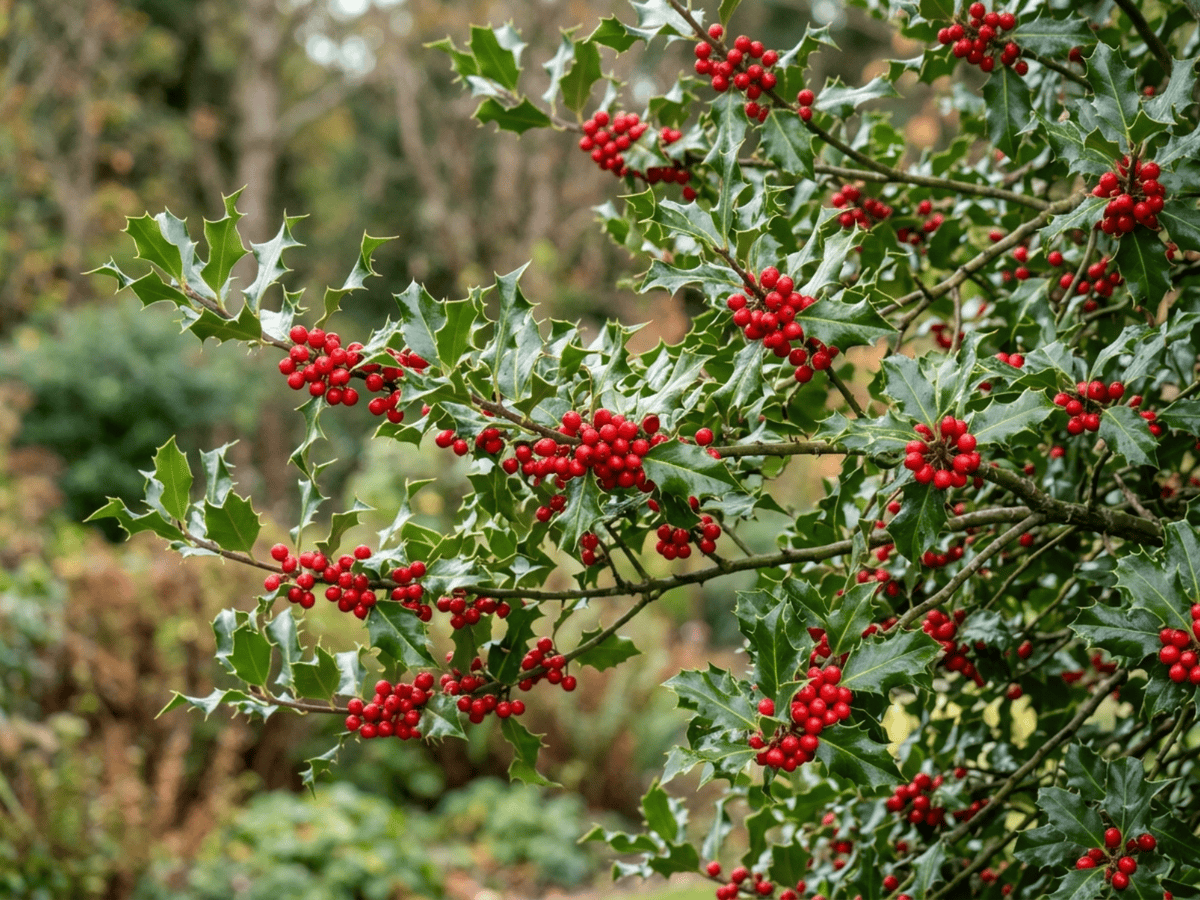 European HollyIlex aquifolium
 Chinese HollyIlex cornuta
 Japanese HollyIlex crenata
 Myrtle DahoonIlex myrtifolia
Plants with similar care
 Chinese AbeliaAbelia chinensis
 Fragrant AbeliaAbelia mosanensis
 Large-Flowered AbeliaAbelia uniflora
 Glossy AbeliaAbelia x grandiflora
Frequently asked questions
How often should I water Yaupon Holly?
In summer, water about every 5 days; in winter, about every 21 days. Adjust for heat, pot size and drainage.
How much light does Yaupon Holly need?
Full sun: 6+ hrs direct. Watch the leaves — scorching or stretching means the light needs adjusting.
Is Yaupon Holly toxic to cats or dogs?
Pets Moderate (Dogs Moderate · Cats Moderate) Educational information, not medical or veterinary advice. If exposure is suspected, contact a doctor or veterinarian.
Is Yaupon Holly easy to grow?
Yes — it is considered an easy, beginner-friendly plant.
When does Yaupon Holly bloom?
It typically blooms Mar–May in the Northern Hemisphere.
YardMate
Identify any plant in seconds
Snap a photo — YardMate names the plant, diagnoses problems, and reminds you when to water.
Download on the App Store