 YardMate

Wild Bergamot
Monarda fistulosa
Easy · Beginner friendlyAbout Wild Bergamot
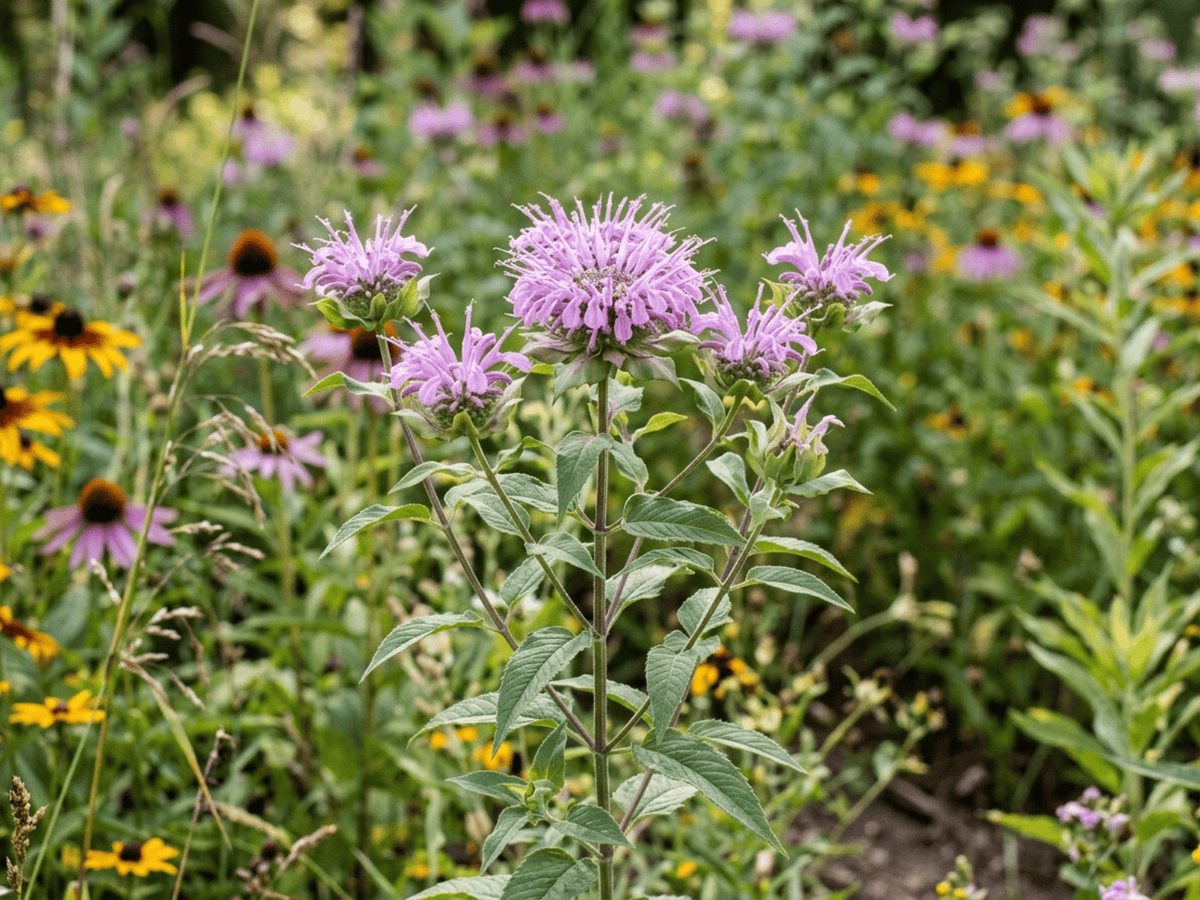
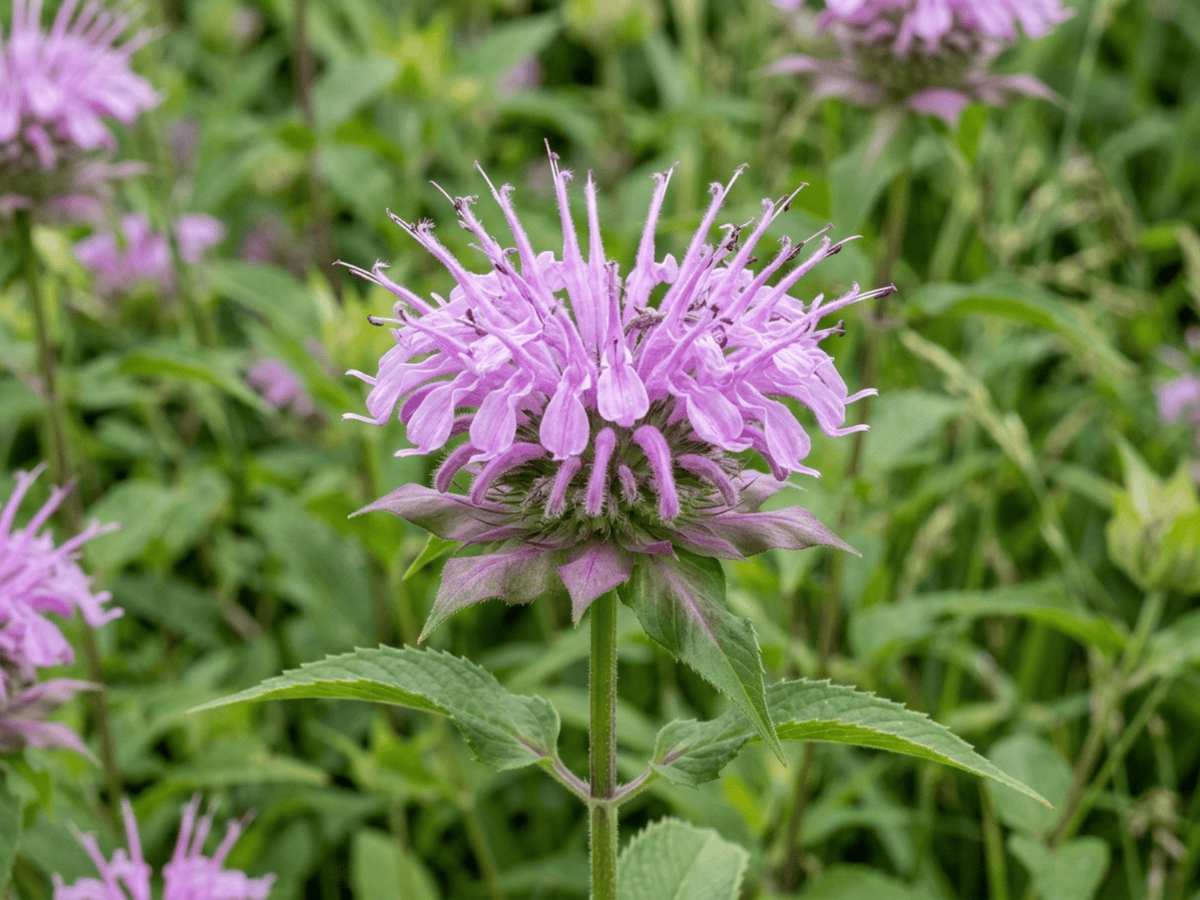
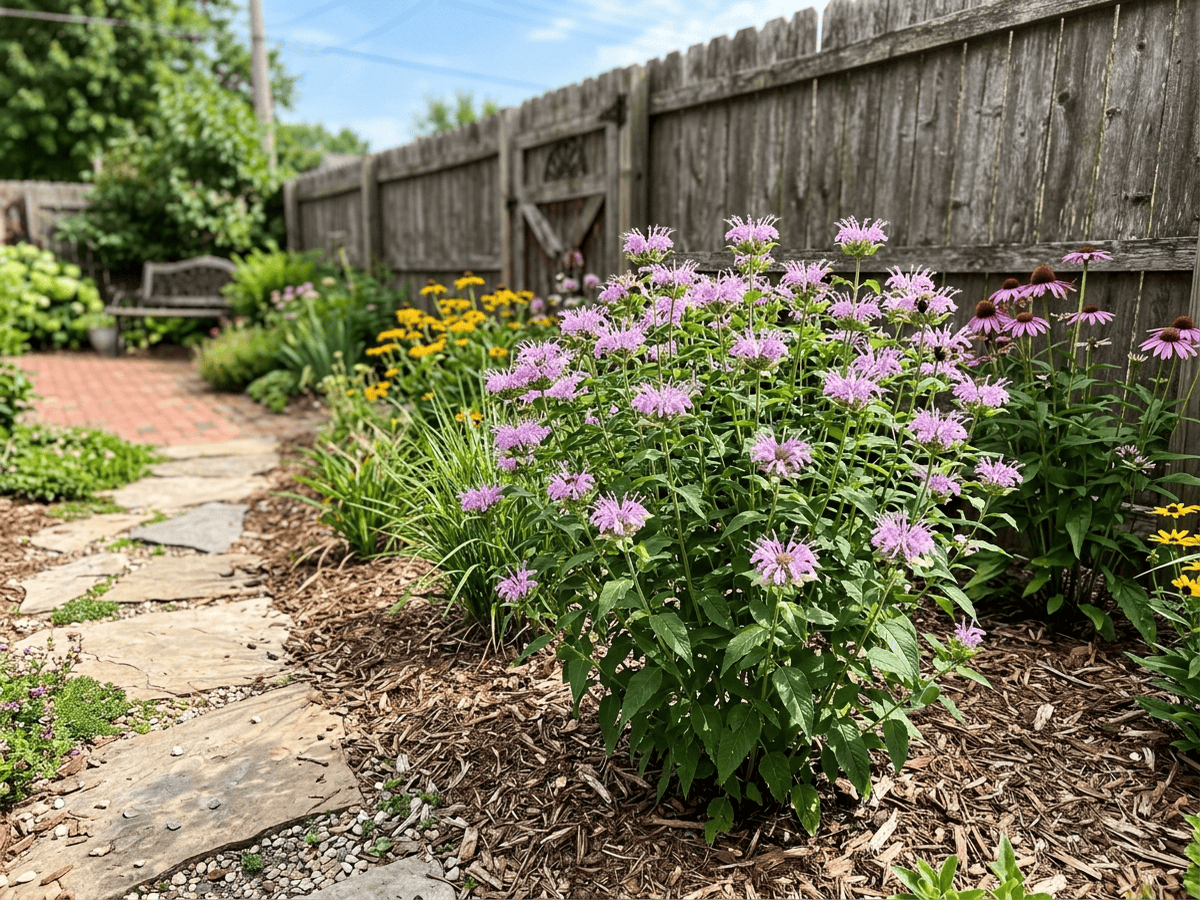
Monarda fistulosa, wild bergamot or bee balm, is a fragrant North American native perennial found across most of the continent from Quebec to British Columbia and south to Mexico. It produces rounded clusters of tubular lavender-pink flowers atop square stems, each head resembling a natural firework burst. The entire plant is intensely aromatic, with leaves that smell like oregano crossed with Earl Grey tea — in fact, the common name 'bergamot' comes from its resemblance to the fragrance of bergamot orange used in Earl Grey. Growing 60–120 cm tall, it spreads by rhizomes to form attractive colonies. It is one of the most valuable plants for native bee support, attracting over 100 species of native bees plus butterflies, moths, and hummingbirds. It thrives in average to dry soil in full sun and is more mildew-resistant than its scarlet cousin M. didyma. The leaves make a pleasant herbal tea and have long been used in traditional medicine.
- Fragrant
- Medicinal
- Native
- Pollinator-friendly
How to care for Wild Bergamot
Watering
- Springevery 5 days
- Summerevery 4 days
- Fallevery 10 days
- Winterevery 30 days
Soil · Well-draining
- Top dressingPine bark mulch10%
- Main mixPotting soil + perlite 2:170%
- DrainageLECA / gravel20%
Never skip the drainage layer — standing water is the top cause of root rot.
FERTILIZER
- Springevery 60 days
At a Glance
- NativeNorth America
- Height2–4 ft (0.6–1.2 m)
- Spread2–3 ft (0.6–0.9 m)
- Flower colorPurple, Pink
- Foliage colorGreen
- SoilLoamy, Well-drained
- LocationsYard
Bloom time
BLOOM CYCLE
Peak bloom
Jun–Sep
Lavender-pink firework clusters on square stems; mid to late summer bloom
Fragrance
MODERATE FRAGRANCE
Aromatic thyme-bergamot scent from crushed foliage.
Toxicity
No toxicity has been reported for this plant. Still, it is wise to keep pets from chewing on any houseplant.
Educational information, not medical or veterinary advice. If exposure is suspected, contact a doctor or veterinarian.
DISTRIBUTION


- Native
- Introduced
- North America
History
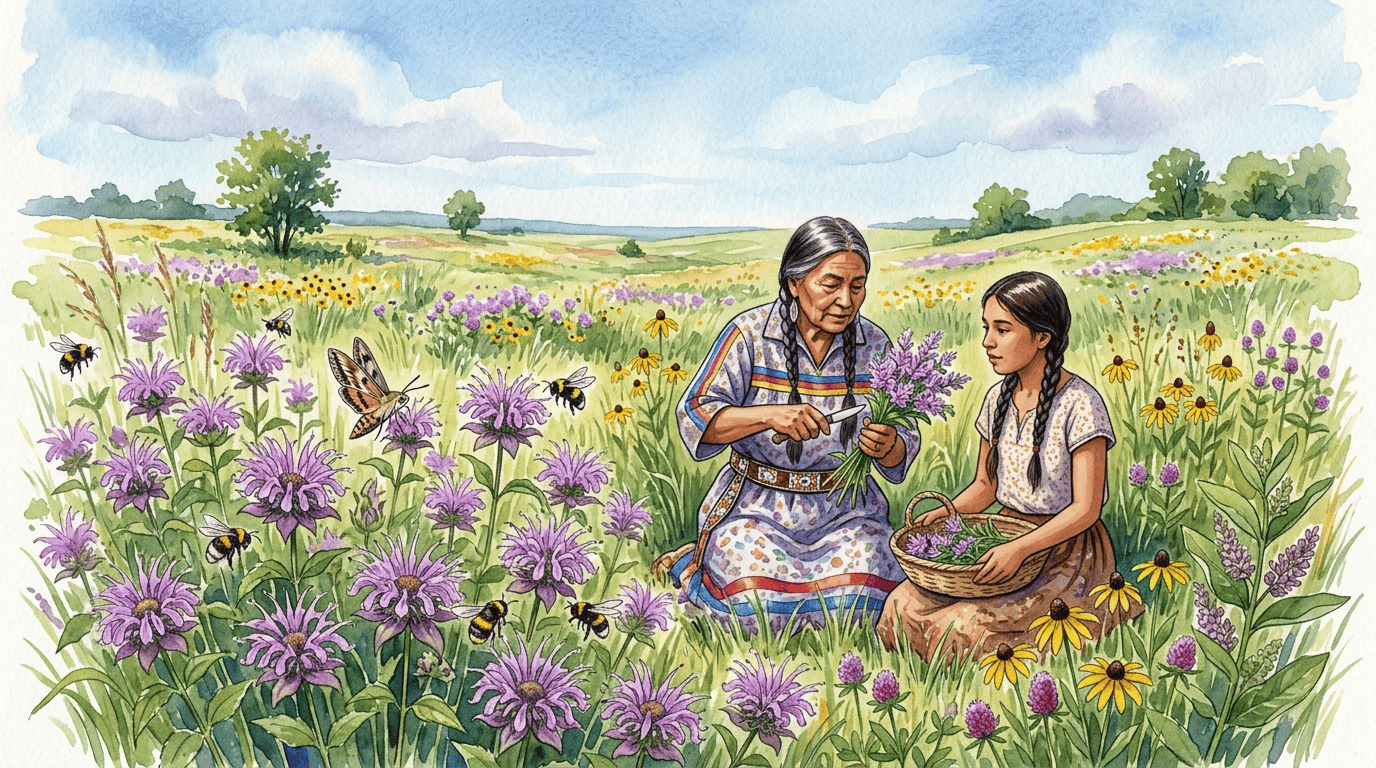
Monarda fistulosa is native to most of North America from southern Canada to northern Mexico, growing in prairie, meadow, open woodland, and roadside habitats across an exceptionally wide ecological range. It produces lavender-purple heads of tubular flowers in summer, with a characteristic scruffy whorl of bracts below each flower head. The leaves contain a mix of aromatic compounds including thymol, carvacrol, and geraniol, giving them a strong fragrance reminiscent of Italian bergamot orange — hence the common name "wild bergamot." Indigenous North American peoples across the species' range used M. fistulosa and its close relative M. didyma (scarlet bee balm) extensively in traditional medicine and as a food flavoring.
Following the Boston Tea Party of 1773 and the subsequent colonial American boycott of British tea, colonial households adopted wild bergamot leaf tea — which they called "Oswego tea" after the Oswego River Mohawk Nation people who had taught New York settlers the use — as a substitute for Chinese black tea, making Monarda an indirect player in the lead-up to the American Revolution. In the modern garden, both M. fistulosa and the closely-related M. didyma (and their hybrids) are major nectar sources for hummingbirds, bumblebees, native solitary bees, and sphinx moths; they are central components of pollinator-garden and native-plant design, though they are often troubled by powdery mildew — modern resistant cultivars including "Jacob Cline," "Marshall's Delight," and "Claire Grace" offer improved disease performance. Monarda fistulosa was one of the most widely used medicinal plants among North American Indigenous peoples.
The Ojibwe, Blackfoot, Menominee, and many other nations used leaf infusions to treat colds, fevers, headaches, and digestive complaints. The thymol-rich essential oil has genuine antiseptic properties, validated by modern research. After the Boston Tea Party in 1773, American colonists adopted Monarda tea as a patriotic substitute for imported English tea, calling it 'Oswego tea.' The genus is named after Nicolás Monardes, a 16th-century Spanish physician who wrote the first European book on New World medicinal plants — though ironically he never visited the Americas.
Symbolism & meaning
What It Symbolizes
Wild Bergamot makes visible fellowship. Its lavender flower whorls feed bees and butterflies, while its aromatic leaves carried Indigenous and settler histories into teas, gardens, and prairie plantings. After the Boston Tea Party, it became part of a distinctly American cup. Its symbolism is shared fragrance.
- Compassion — A generous healer plant symbolizing care and nurturing of others
- Independence — Adopted as patriotic 'liberty tea' after the Boston Tea Party
Where the Name Comes From
Monarda honors Nicolás Monardes (1493–1588), Spanish physician who documented New World plants. Fistulosa means 'tube-shaped' in Latin, describing the hollow stem.
Uses & Fun Facts
- Bergamot-scented foliage and flowers bring herbal fragrance to native borders
Related plants
More Monarda plants
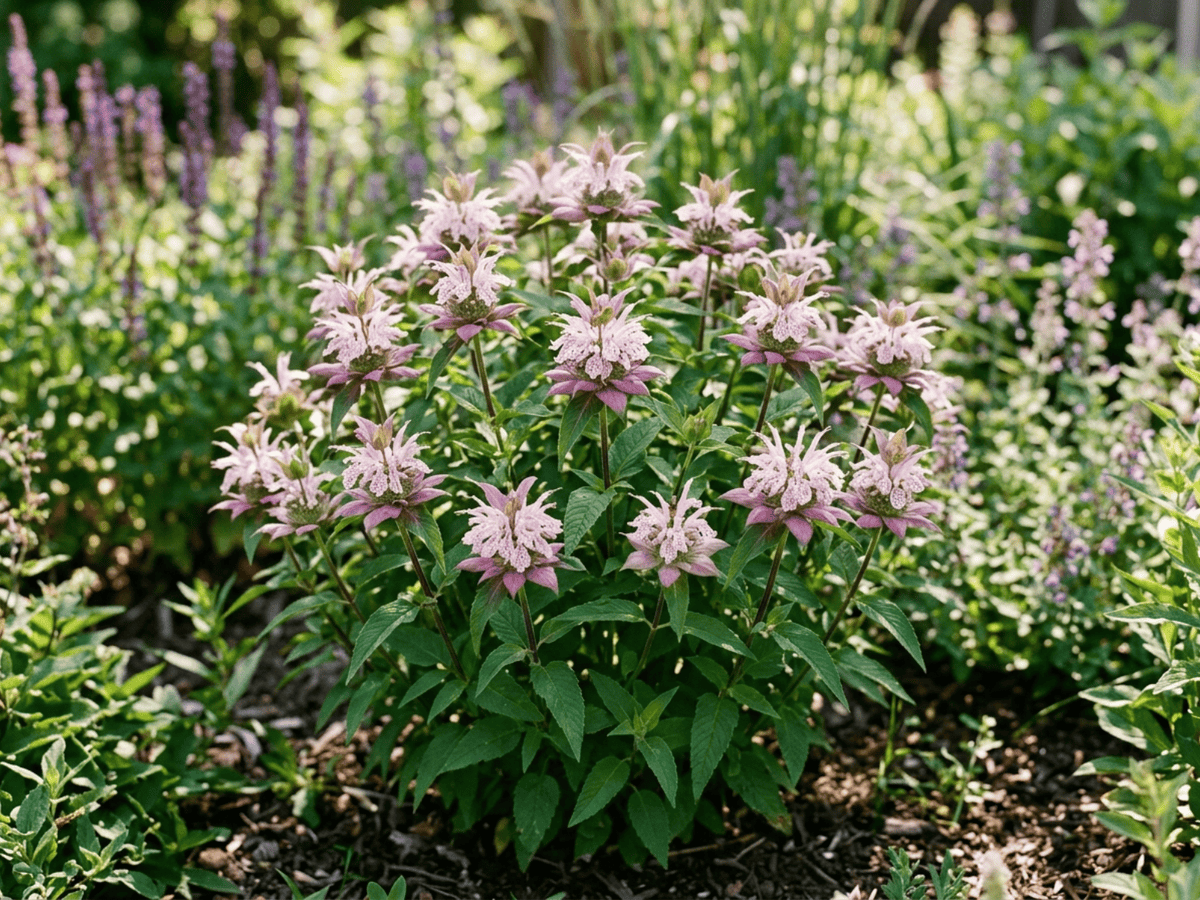 Eastern BeebalmMonarda bradburiana
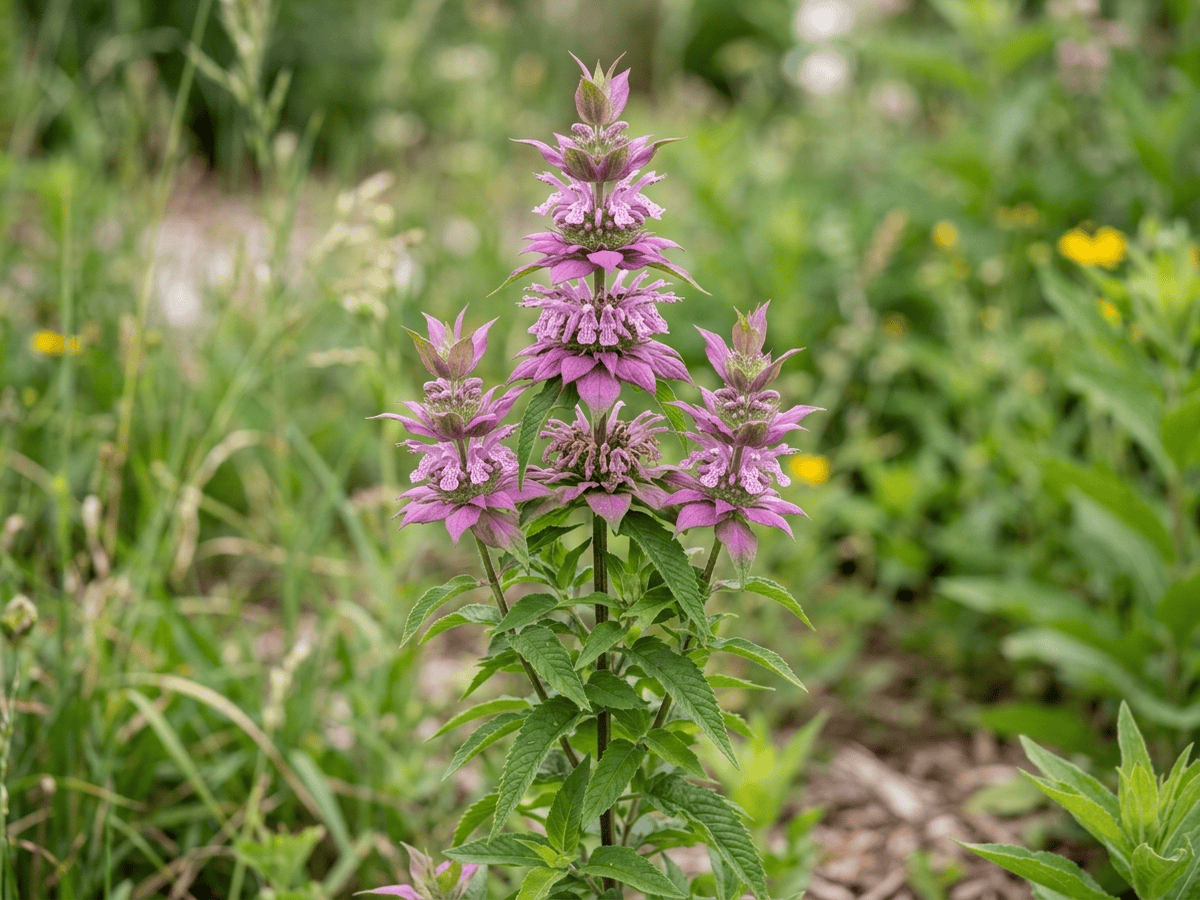 Lemon BeebalmMonarda citriodora
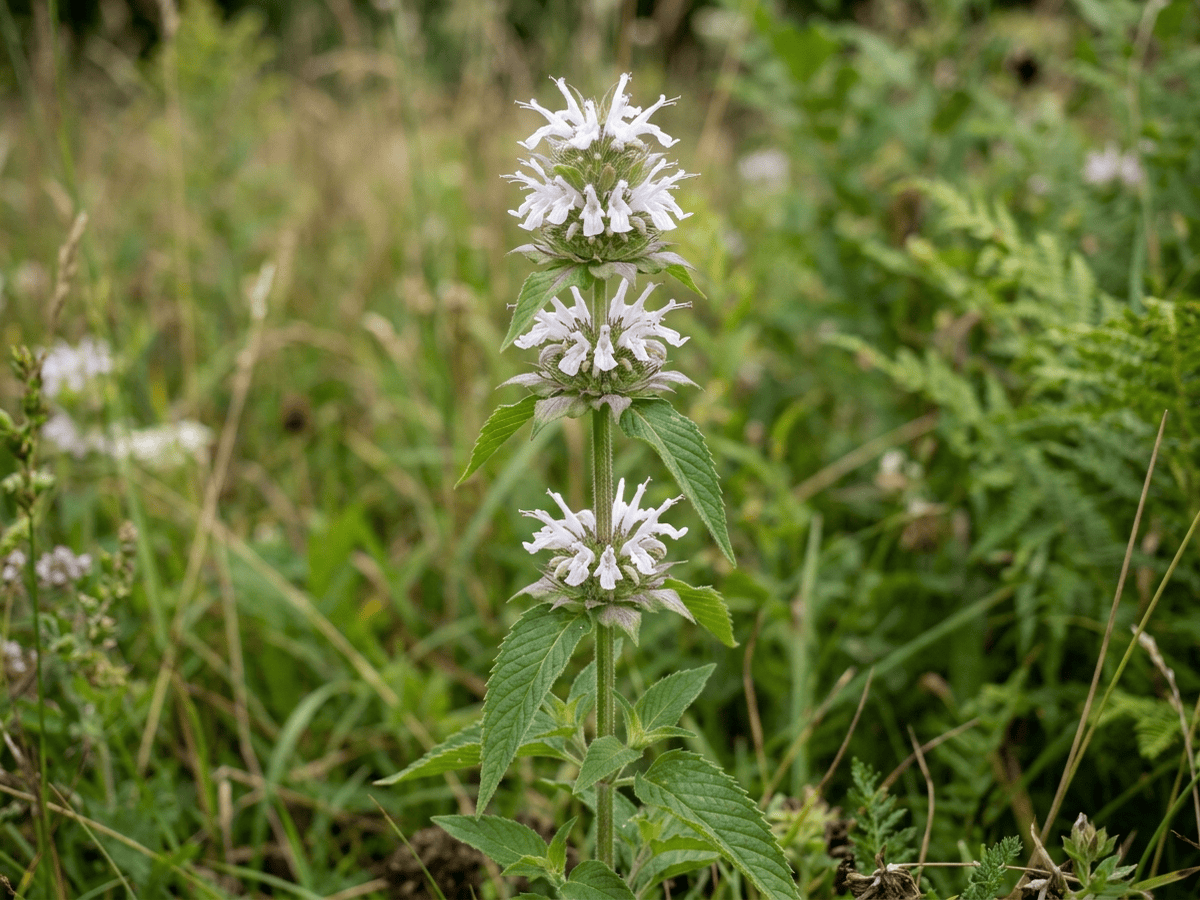 White BergamotMonarda clinopodia
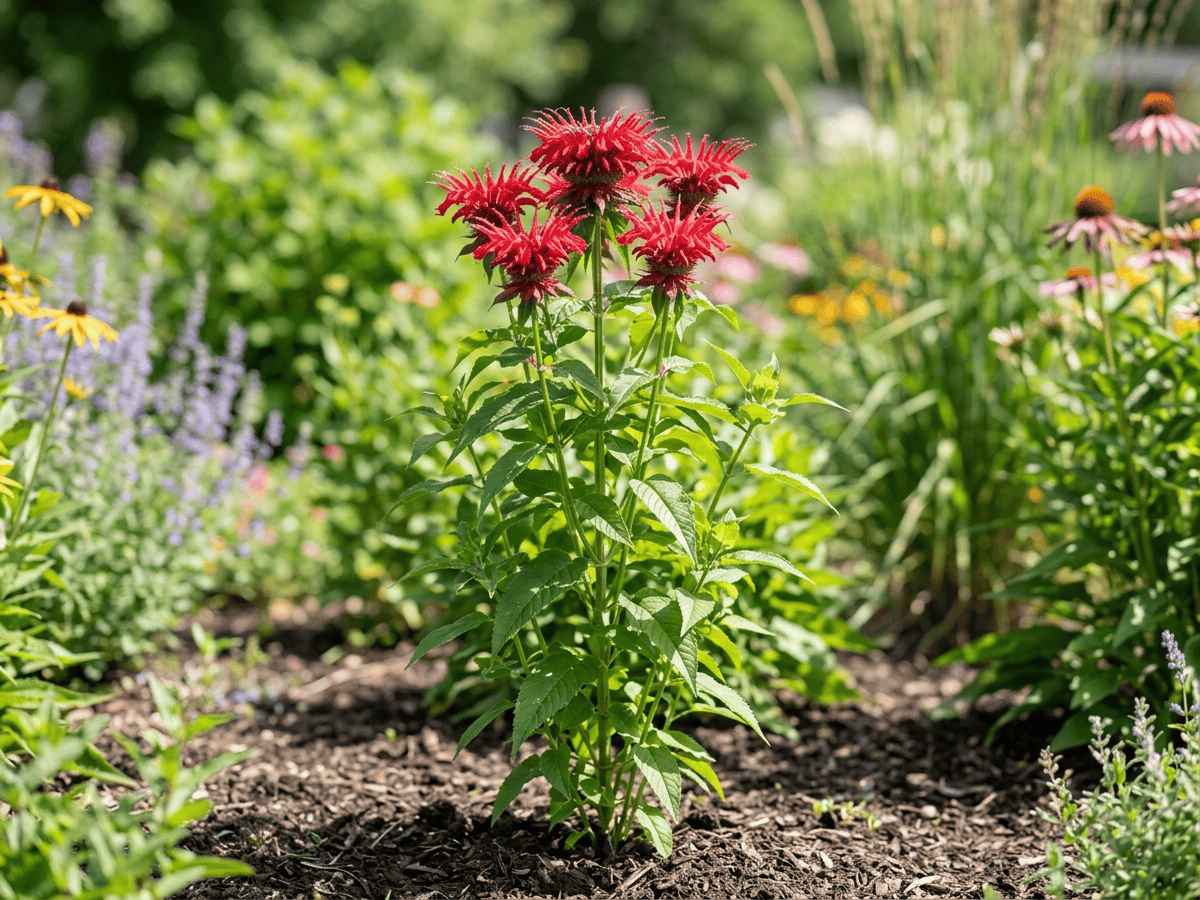 Scarlet BeebalmMonarda didyma
Plants with similar care
 Chinese AbeliaAbelia chinensis
 Fragrant AbeliaAbelia mosanensis
 Large-Flowered AbeliaAbelia uniflora
 Glossy AbeliaAbelia x grandiflora
Frequently asked questions
How often should I water Wild Bergamot?
In summer, water about every 4 days; in winter, about every 30 days. Adjust for heat, pot size and drainage.
How much light does Wild Bergamot need?
Full sun: 6+ hrs direct. Watch the leaves — scorching or stretching means the light needs adjusting.
Is Wild Bergamot toxic to cats or dogs?
No toxicity has been reported for this plant. Still, it is wise to keep pets from chewing on any houseplant. Educational information, not medical or veterinary advice. If exposure is suspected, contact a doctor or veterinarian.
Is Wild Bergamot easy to grow?
Yes — it is considered an easy, beginner-friendly plant.
When does Wild Bergamot bloom?
It typically blooms Jun–Sep in the Northern Hemisphere.
YardMate
Identify any plant in seconds
Snap a photo — YardMate names the plant, diagnoses problems, and reminds you when to water.
Download on the App Store