 YardMate


Paeonia rockii
Paeonia rockii
Hard · Experienced growersAbout Paeonia rockii
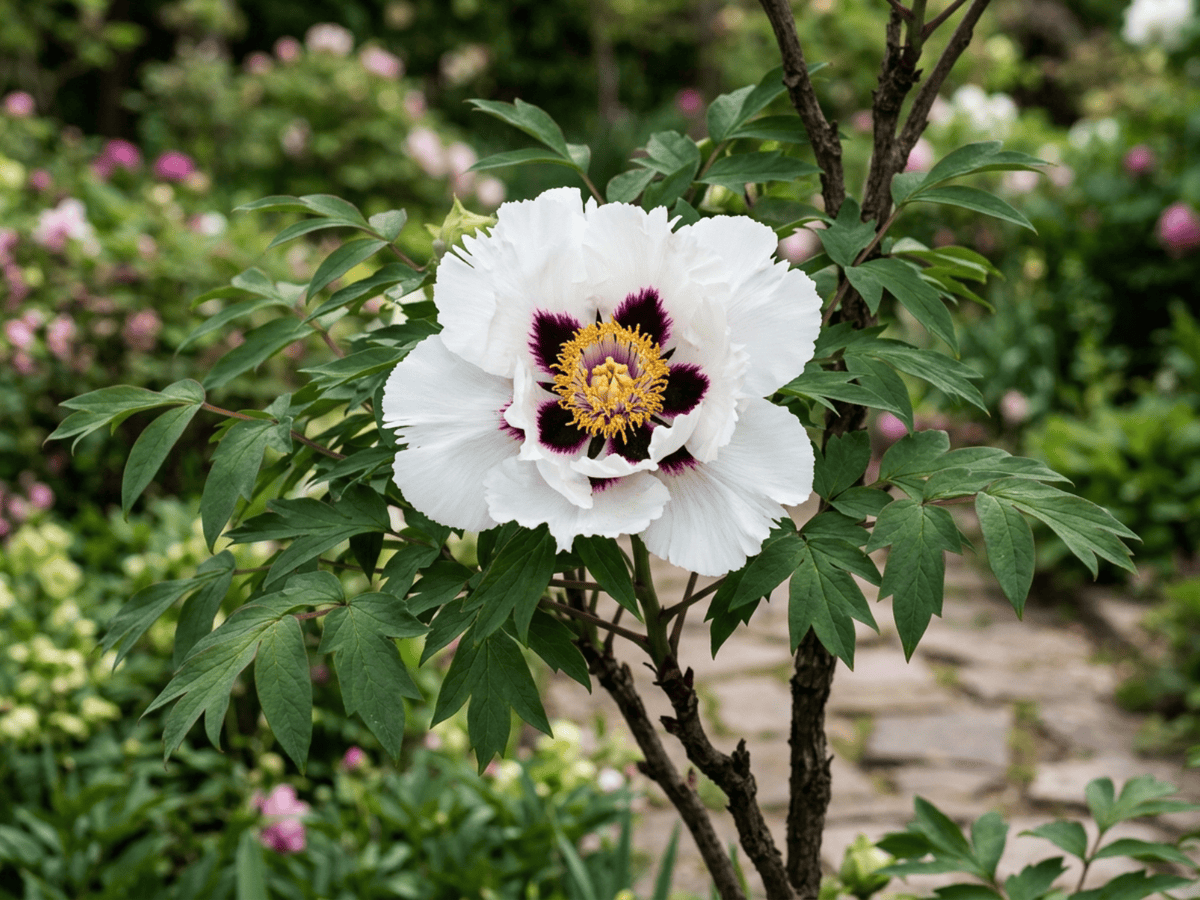
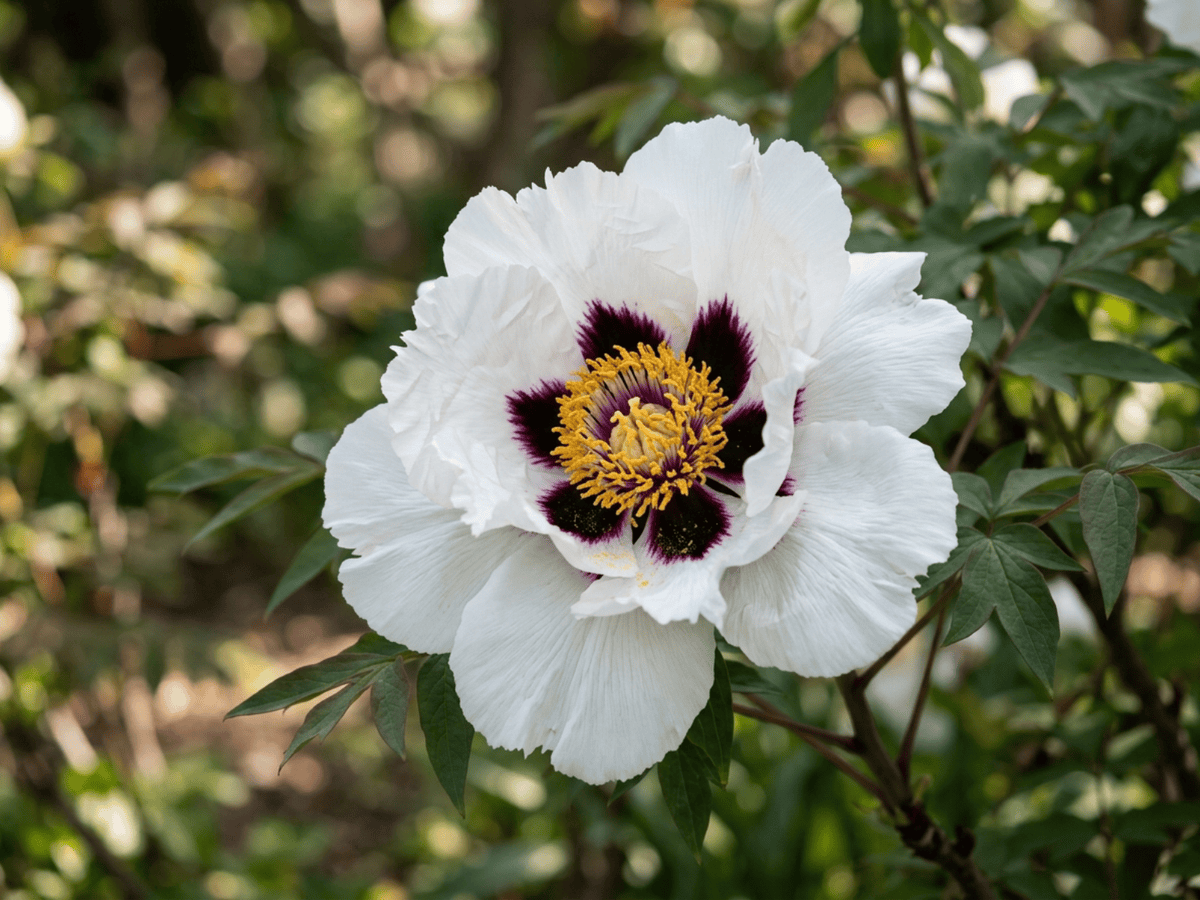
Paeonia rockii, Rock's peony or the Gansu Mudan, is a magnificent tree peony native to the mountains of central China, considered among the most beautiful of all peony species. Growing as a deciduous shrub 1–2.5 meters tall, it produces enormous single to semi-double flowers up to 25 cm across, typically white to pale lavender with dramatic dark maroon-purple blotches at the base of each petal. These striking 'flares' are its signature feature. The deeply cut, blue-green foliage is ornamental even when the plant is not in bloom. Named after Joseph Rock, the Austrian-American explorer who collected specimens in Gansu Province in the 1920s, this species is hardier than most tree peonies, tolerating temperatures down to -30°C. It is long-lived — specimens over 100 years old exist in Chinese temple gardens — and becomes more beautiful with age.
- Fragrant
- Cold-hardy
How to care for Paeonia rockii
Watering
- Springevery 7 days
- Summerevery 5 days
- Fallevery 14 days
- Winterevery 30 days
Soil · Well-draining
- Top dressingPine bark mulch10%
- Main mixPotting soil + perlite 2:170%
- DrainageLECA / gravel20%
Never skip the drainage layer — standing water is the top cause of root rot.
FERTILIZER
Balanced Feed 14-14-14
An even feed covers all three needs at once, keeping leaves, roots and blooms moving together with nothing pushed out of balance.
- Nitrogen · Leaves
- Phosphorus · Roots + Blooms
- Potassium · Strength
- Springevery 45 days
- Fallevery 45 days
At a Glance
- NativeEast Asia
- Height4–7 ft (1.2–2.1 m)
- Spread4–6 ft (1.2–1.8 m)
- Flower colorWhite, Pink
- Foliage colorGreen
- SoilLoamy, Well-drained, Neutral
- LocationsYard
Bloom time
BLOOM CYCLE
Peak bloom
Mar–May
Enormous white flowers with dark flares bloom late spring; plant in sheltered spot to protect blooms from wind
Fragrance
MODERATE FRAGRANCE
The flowers have a sweet soft peony fragrance.
Toxicity
Humans Slight · Pets Moderate
paeoniflorin and paeonol
Slight
- Root
- Seed
- Ingestion
EXPOSURE Eating roots and seeds.
EFFECT Roots contain paeoniflorin used in traditional Chinese medicine and not for casual ingestion.
NOTE Documented concern for humans: Roots contain paeoniflorin used in traditional Chinese medicine and not for casual ingestion.
Moderate
- All
- Ingestion
EXPOSURE Eating any part of the plant.
EFFECT Vomiting, diarrhea, depression.
NOTE ASPCA lists peony as toxic to dogs, cats, and horses.
Moderate
- All
- Ingestion
EXPOSURE Eating any part of the plant.
EFFECT Same as dogs.
NOTE ASPCA lists peony as toxic to dogs, cats, and horses.
Educational information, not medical or veterinary advice. If exposure is suspected, contact a doctor or veterinarian.
DISTRIBUTION


- Native
- Introduced
- East Asia
History
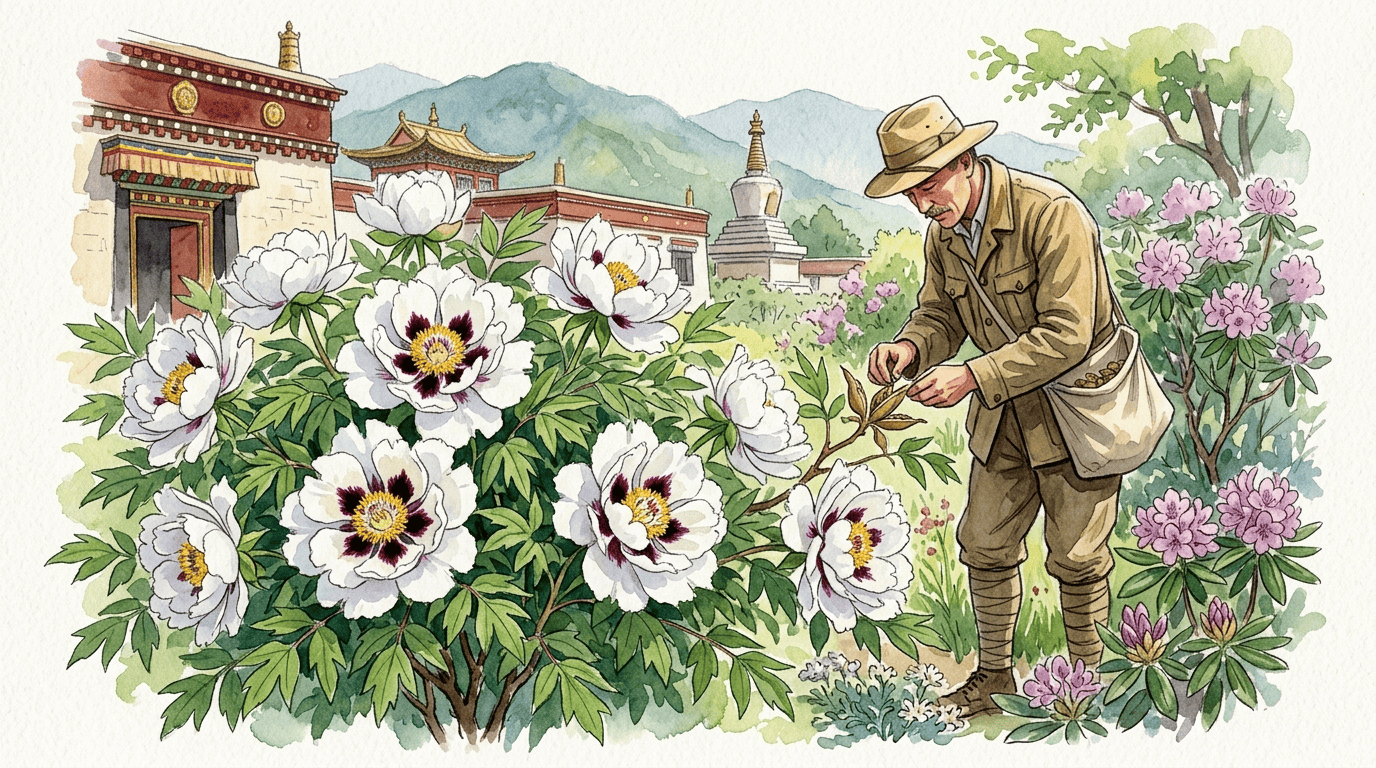
Paeonia rockii is a tree peony (woody, not herbaceous like the more common garden peony P. lactiflora) native to the mountains of central and western China — particularly Gansu, Shaanxi, and Hubei Provinces. The species was named for Joseph F. Rock (1884-1962), Austrian-American botanist and plant explorer who worked for the US Department of Agriculture and Harvard's Arnold Arboretum, and who collected seeds of this peony from a Tibetan Buddhist monastery garden near Choni (Zhuoni), Gansu Province, in the 1920s; these became the horticulturally important "Joseph Rock" selection of the species. The species produces huge semi-double flowers 15-20 cm across in pure white, with each petal marked at the base by a dramatic dark-purple, maroon, or blackish blotch — the combination of snowy white petals with striking dark centers is unusually distinctive among tree peonies.
In Chinese horticulture it is valued as one of the classic "zǐbān" (purple-spotted) peony groups and has been cultivated in monastery and scholar gardens in the western Chinese provinces for centuries. P. rockii is the principal parent of the modern "Gansu group" or "Rockii hybrids" — a line of high-quality garden tree peonies that are notably more cold-hardy than standard Chinese P. suffruticosa cultivars and widely grown in temperate North America, Europe, and Japan since the late 20th century.
Major western breeders working with Rockii hybrids include David Reath, Nassos Daphnis, and Sun Menglin.
Symbolism & meaning
What It Symbolizes
Paeonia rockii is honored in Chinese culture as the King of Flowers, its enormous ruffled blooms representing distinction, high esteem, and noble character. As a tree peony it also carries prosperity, symbolic of wealth and good fortune, and romance, associated with love, beauty, and a happy marriage. It is often read as a flower of layered Chinese symbolism, a single bloom in which personal honor, family fortune, and devoted love meet in one extravagant cup of petals.
- Honor — the King of Flowers in Chinese culture, representing distinction and high esteem
- Prosperity — tree peonies symbolize wealth and good fortune in Chinese tradition
- Romance — associated with love, beauty, and a happy marriage
Where the Name Comes From
'Paeonia' from Paeon, the Greek physician of the gods who used the plant medicinally. 'Rockii' honors Joseph F. Rock (1884–1962), the explorer who collected it in Gansu, China.
Uses & Fun Facts
- Massive blooms carry deep sweet peony perfume
- Root bark (mu dan pi) used in Chinese medicine
- Enormous tree-peony flowers prized for arrangements
- Heritage Chinese tree peony as a garden focal point
Related plants
More Paeonia plants
 Chinese PeonyPaeonia lactiflora
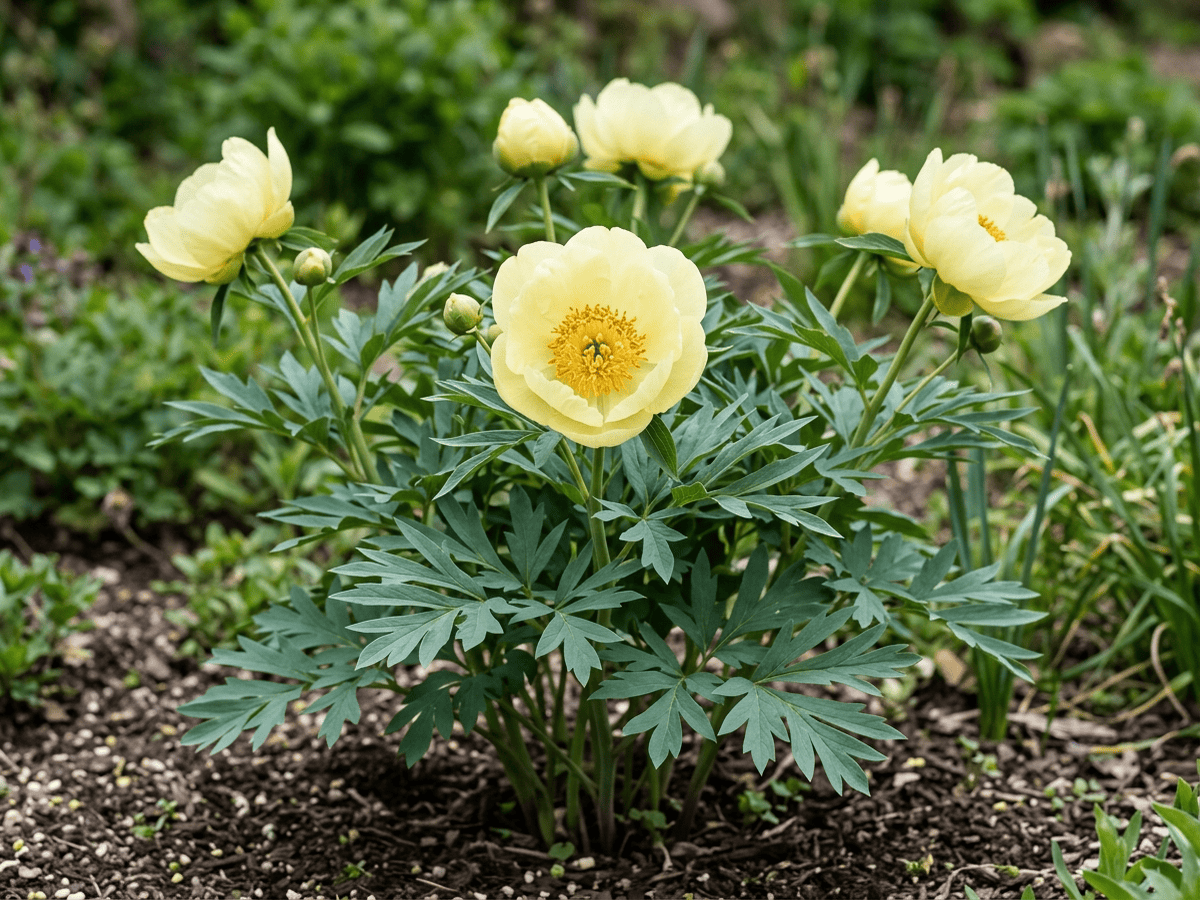 Paeonia Daurica Subsp. MlokosewitschiiPaeonia mlokosewitschii
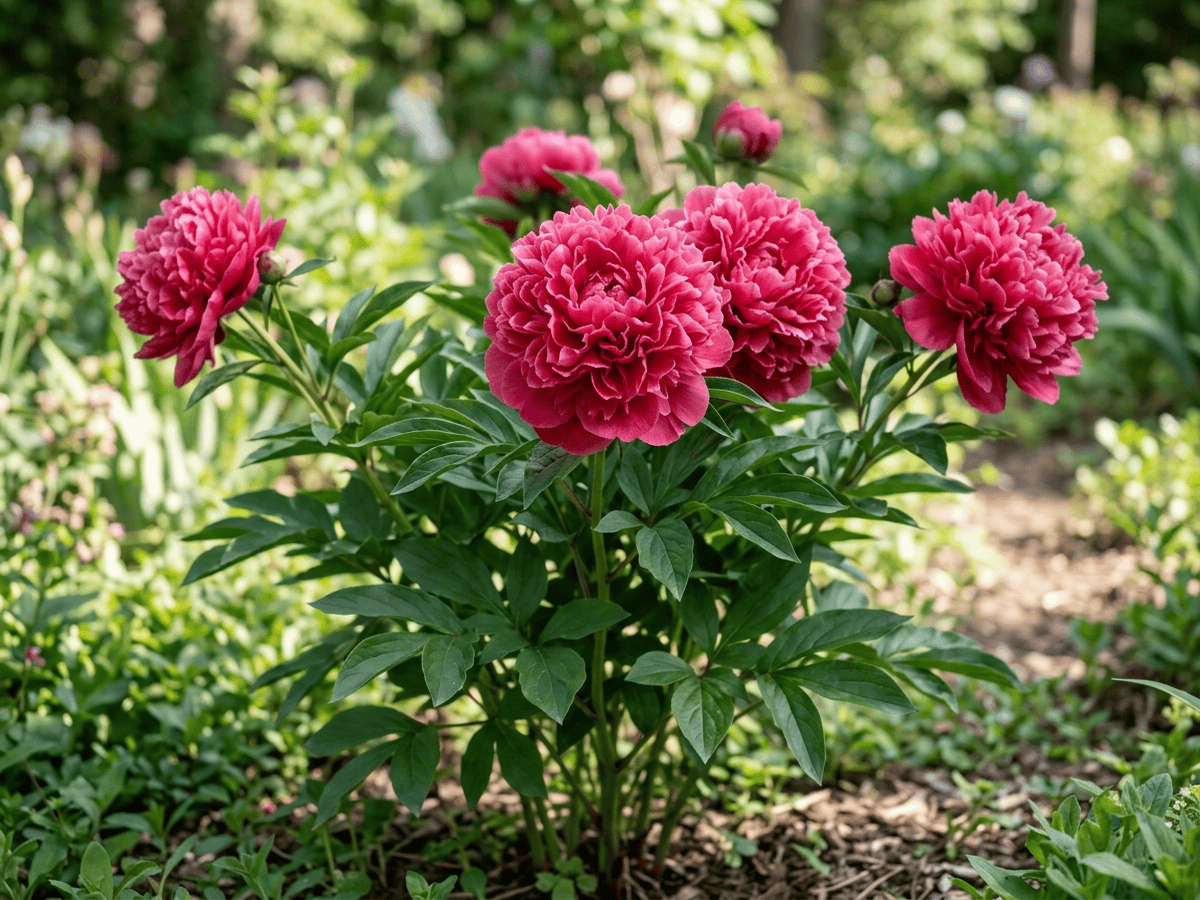 Common PeonyPaeonia officinalis
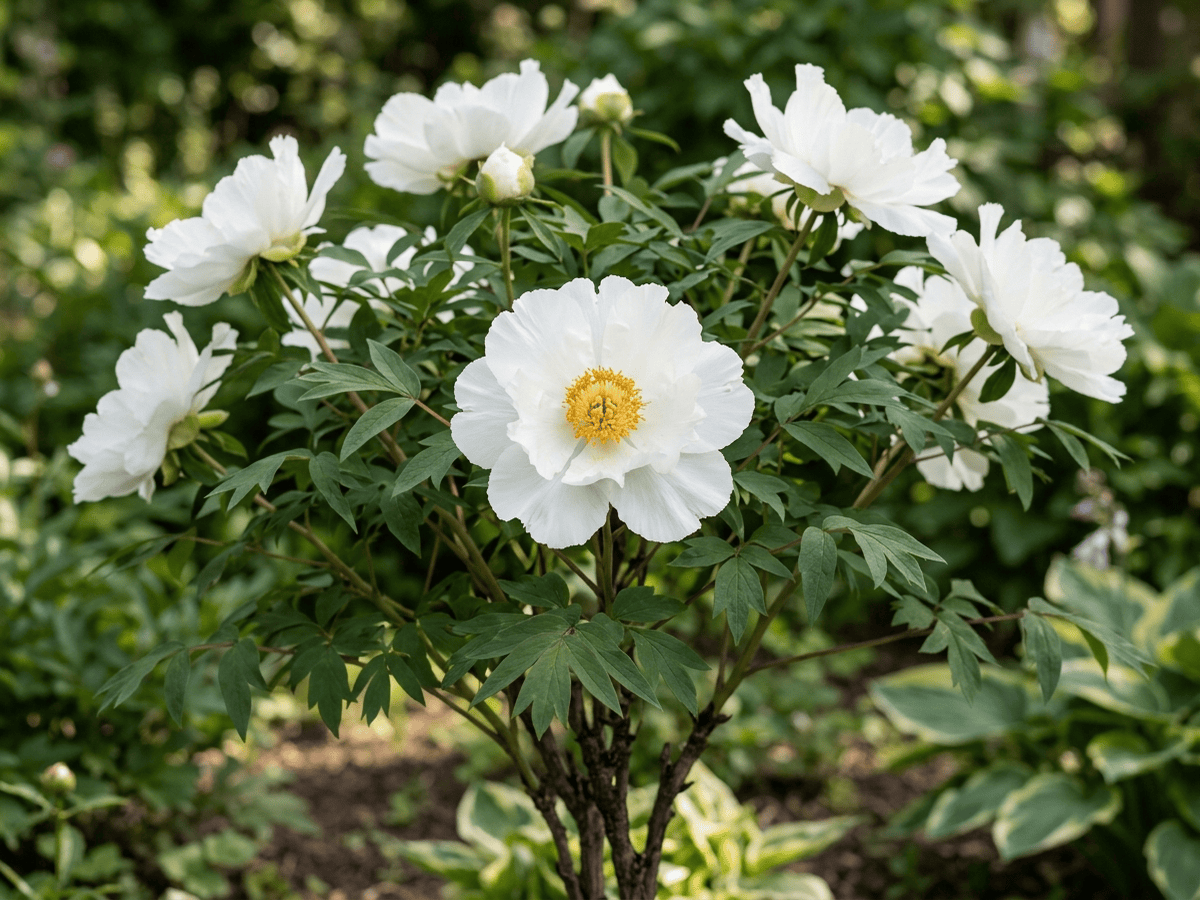 Paeonia ostiiPaeonia ostii
Plants with similar care
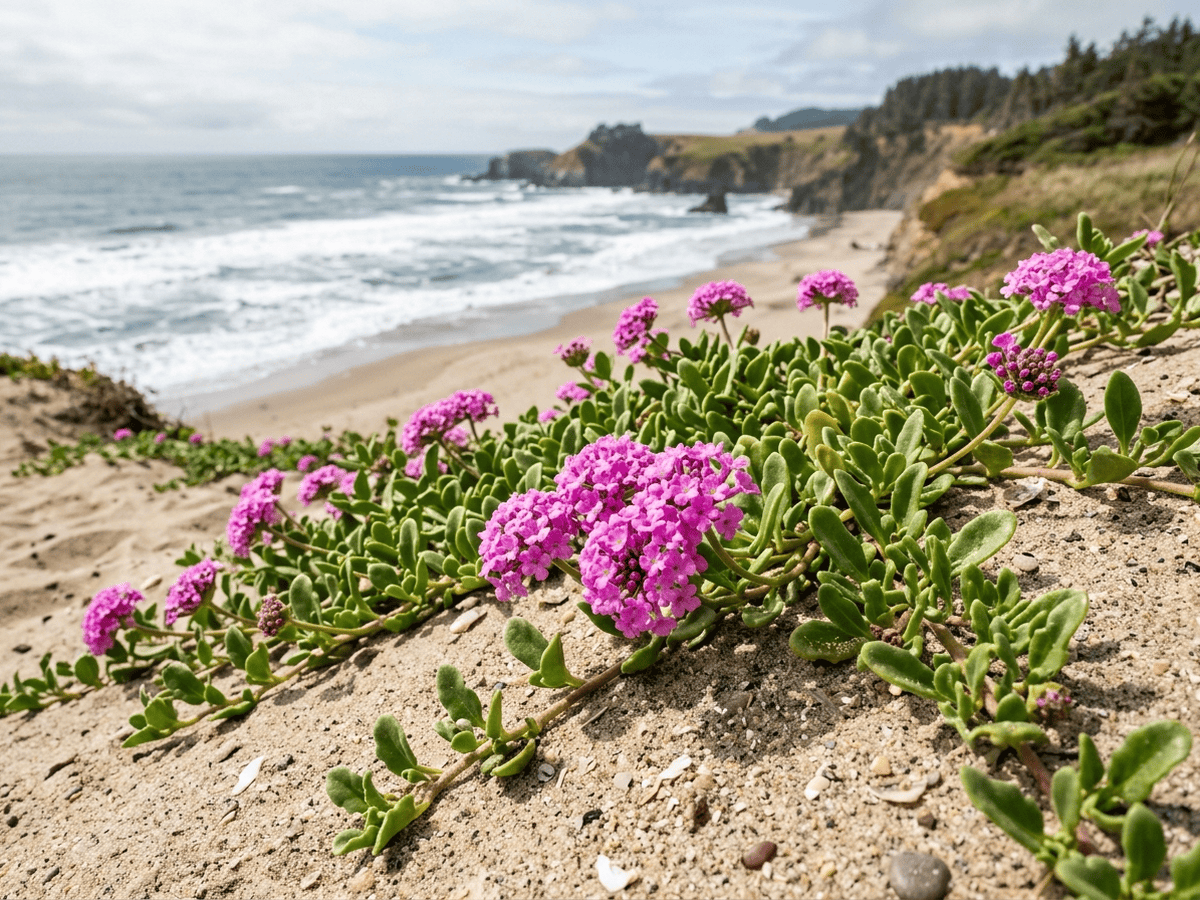 Pink Sand VerbenaAbronia umbellata
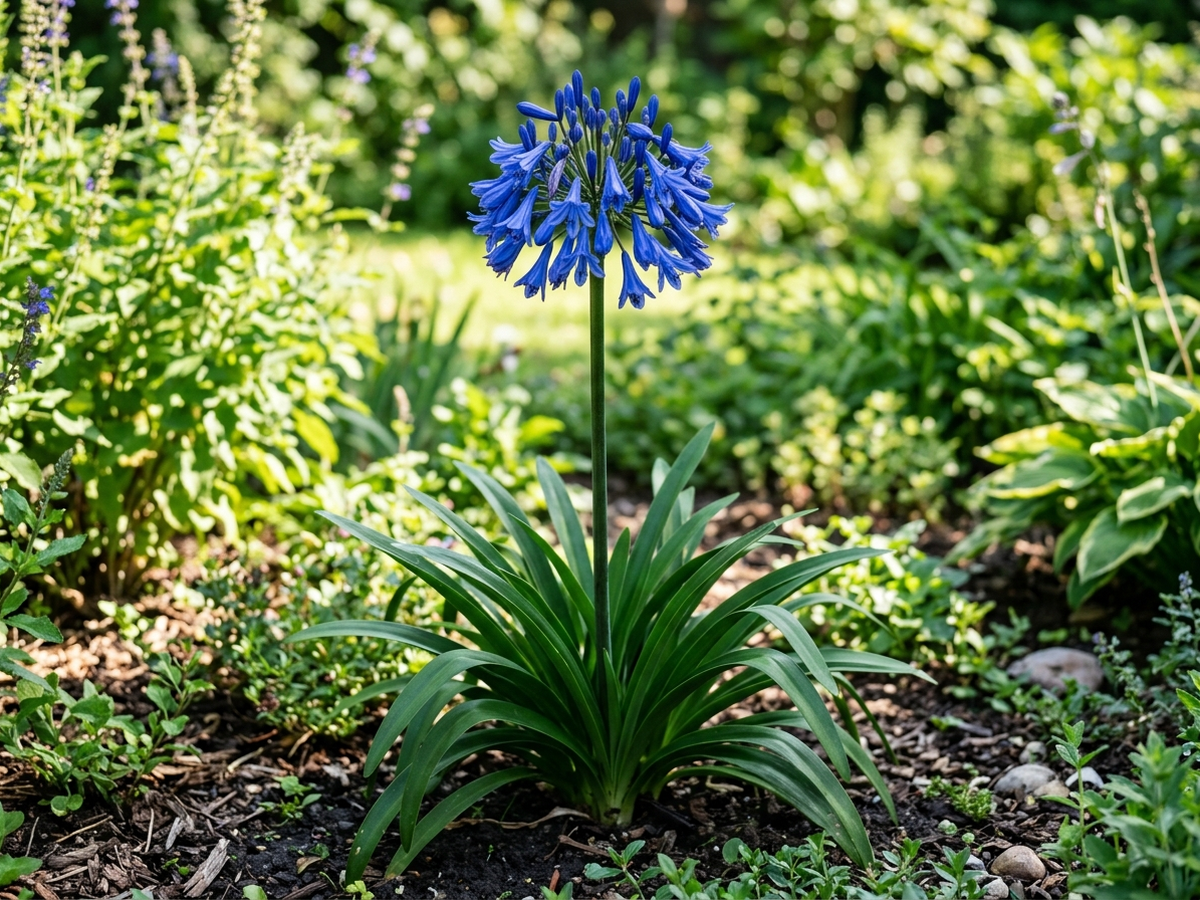 Drooping AgapanthusAgapanthus inapertus
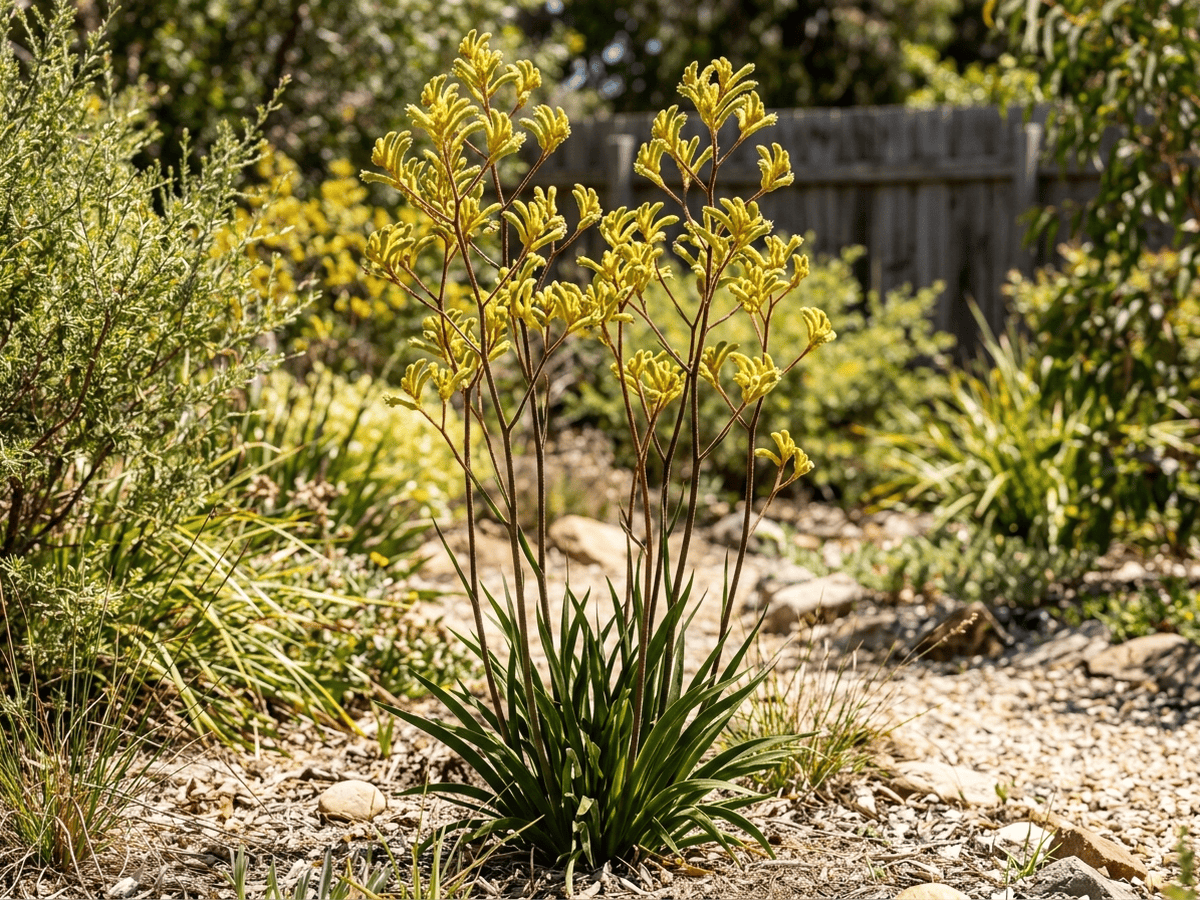 Tall Kangaroo PawAnigozanthos flavidus
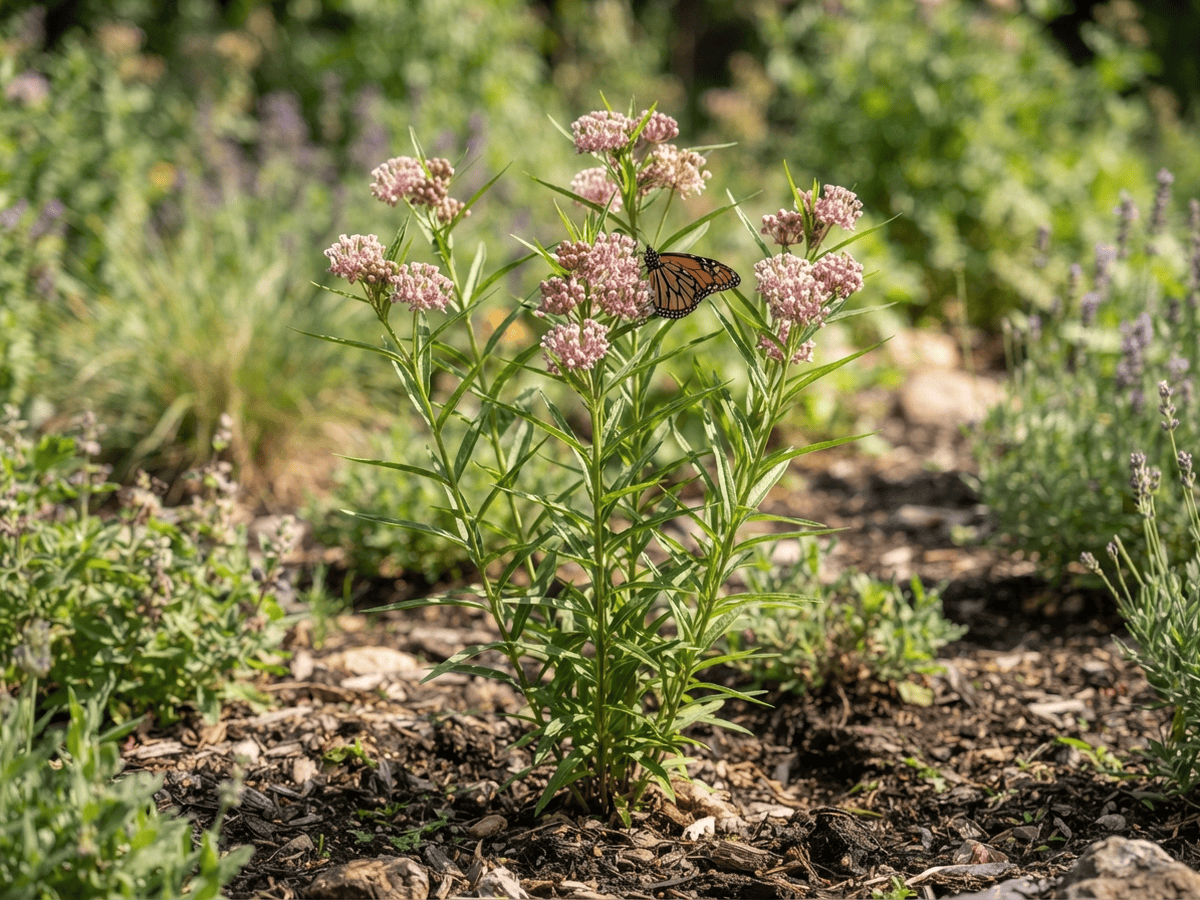 Narrowleaf MilkweedAsclepias fascicularis
Frequently asked questions
How often should I water Paeonia rockii?
In summer, water about every 5 days; in winter, about every 30 days. Adjust for heat, pot size and drainage.
How much light does Paeonia rockii need?
Full sun: 6+ hrs direct. Watch the leaves — scorching or stretching means the light needs adjusting.
Is Paeonia rockii toxic to cats or dogs?
Pets Moderate (Dogs Moderate · Cats Moderate) Educational information, not medical or veterinary advice. If exposure is suspected, contact a doctor or veterinarian.
Is Paeonia rockii easy to grow?
It is considered challenging and rewards experienced growers.
When does Paeonia rockii bloom?
It typically blooms Mar–May in the Northern Hemisphere.
YardMate
Identify any plant in seconds
Snap a photo — YardMate names the plant, diagnoses problems, and reminds you when to water.
Download on the App Store