 YardMate


Monterey Pine
Pinus radiata
Easy · Beginner friendlyAbout Monterey Pine
Monterey Pine is a California endemic coastal conifer critically endangered in the wild, with only three mainland populations remaining at Monterey, Cambria, and Año Nuevo. Growing 60-100 feet tall, it has a distinctive asymmetric crown shaped by coastal winds, bright green needles in bundles of three, and persistent conic cones that require heat to open. One of the world's most widely planted timber trees, it is grown on millions of acres in New Zealand, Australia, Chile, and Spain.
- Evergreen
- Fast-growing
- Native
How to care for Monterey Pine
Watering
- Springevery 7 days
- Summerevery 10 days
- Fallevery 14 days
- Winterevery 30 days
Soil · Well-draining
- Top dressingPine bark mulch10%
- Main mixPotting soil + perlite 2:170%
- DrainageLECA / gravel20%
Never skip the drainage layer — standing water is the top cause of root rot.
FERTILIZER
This plant needs little to no feeding.
At a Glance
- NativeNorth America
- Height60–100 ft (18.3–30.5 m)
- Spread25–40 ft (7.6–12.2 m)
- Flower colorYellow
- Foliage colorGreen
- Fruit colorBrown
- SoilSandy, Well-drained, Acidic
- LocationsYard
Bloom time
BLOOM CYCLE
Yellow pollen cones in spring
Fragrance
MODERATE FRAGRANCE
Classic resinous pine fragrance from needles and cut wood.
Toxicity
No toxicity has been reported for this plant. Still, it is wise to keep pets from chewing on any houseplant.
Educational information, not medical or veterinary advice. If exposure is suspected, contact a doctor or veterinarian.
DISTRIBUTION

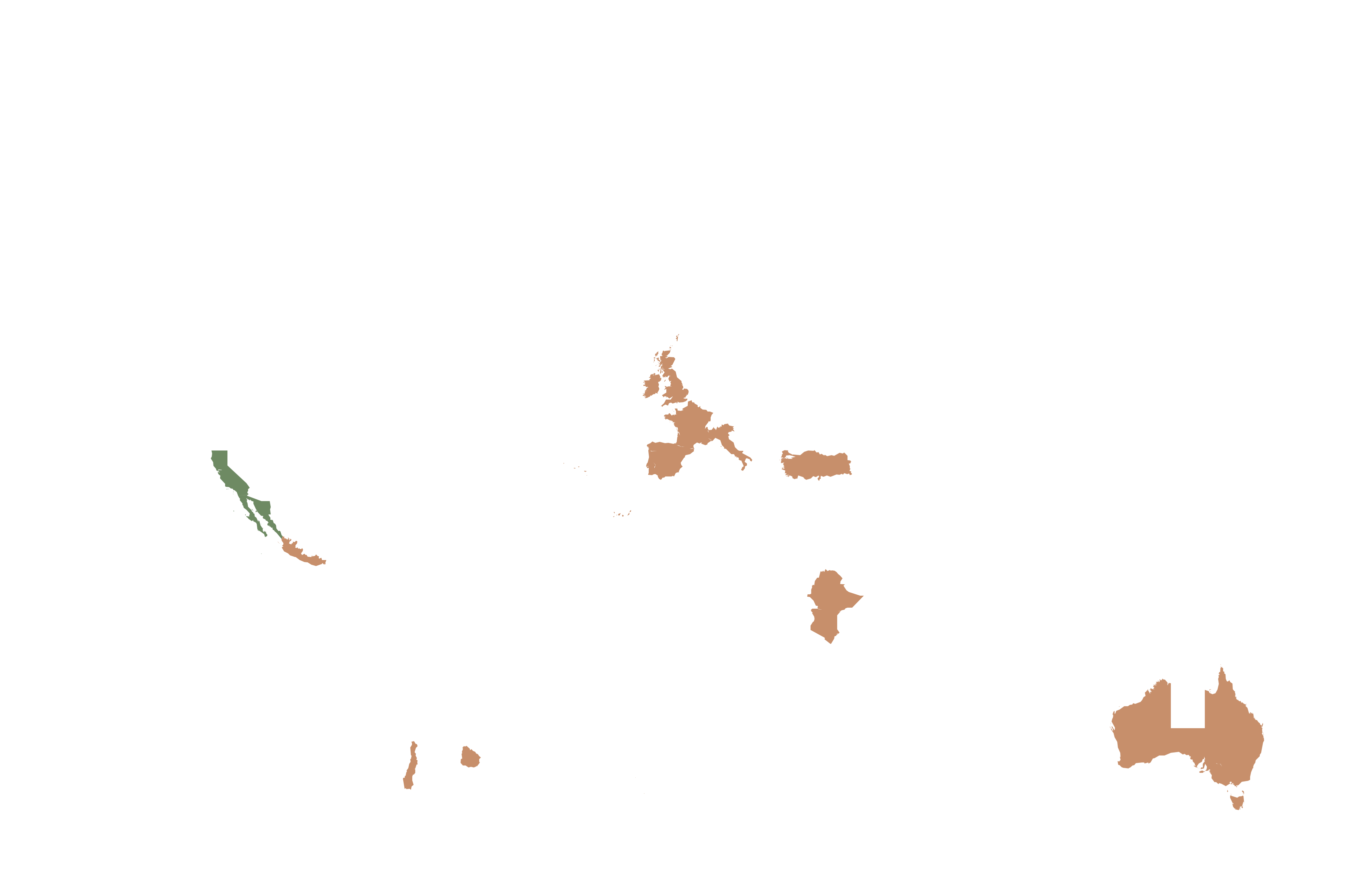
- Native
- Introduced
- North America
History

Pinus radiata has one of the most unusual distributional histories of any tree species: in its native range it is a globally-rare endangered endemic, but worldwide it is simultaneously one of the most widely-planted timber trees in the world. The species is native to only five small relict populations totaling roughly 6,500 hectares — three on the central California coast (the Monterey Peninsula and Point Lobos area, the Año Nuevo area south of San Francisco, and a small area around Cambria) and two on Mexican islands (Guadalupe Island and Cedros Island, both in the Pacific off northwestern Baja California). Ice Age climate reductions eliminated once-larger populations, and the modern 5 relict populations are seriously threatened by pitch canker disease, pine-pitch moth, and development on the California coastal sites. Meanwhile, the species was first introduced to New Zealand in the 1850s as an ornamental and quickly recognized for spectacular growth rates in the mild southern-hemisphere climate — rotations of 25-30 years produce merchantable timber in New Zealand, roughly half the rotation length of the same species in its California native range.
By the mid-20th century, enormous plantation forests of Monterey pine had been established in New Zealand (where it now covers approximately 1.6 million hectares, roughly 89% of all plantation forest and ~8% of total NZ land area), Australia (800,000 hectares in Victoria and Tasmania), Chile (over 1 million hectares), South Africa, and northern Spain. Monterey pine timber (known commercially as "radiata pine") is now one of the most traded softwood lumber commodities globally. While critically endangered in California with only about 6,000 wild trees remaining, Pinus radiata is one of the most important timber trees globally, covering over 4.5 million hectares in plantation forests worldwide.
The wild California populations are threatened by pitch canker fungus, bark beetles, and climate change. The species' genetic diversity in wild populations is a critical resource for global forestry.
Symbolism & meaning
What It Symbolizes
Monterey Pine lives a startling double life: in nature, restricted to a few foggy California headlands; in cultivation, the global backbone of softwood timber industries. Its endurance against fire and salt-wind on its native cliffs stands in counterpoint to the vast managed forests it now anchors abroad. In this duality, rarity and ubiquity grow on the same conifer.
- Endurance — thrives despite its tiny wild range
- Duality — rare in nature yet sustains global timber industries
Where the Name Comes From
'Pinus' is the classical Latin name for pine; 'radiata' means 'radiating', referring to the arrangement of needles.
Uses & Fun Facts
- World's most planted plantation softwood for lumber and pulp
- Fast-growing windbreak for coastal and inland farms
- Distinctive asymmetric crown anchors large coastal landscapes
Related plants
More Pinus plants
 Jack PinePinus banksiana
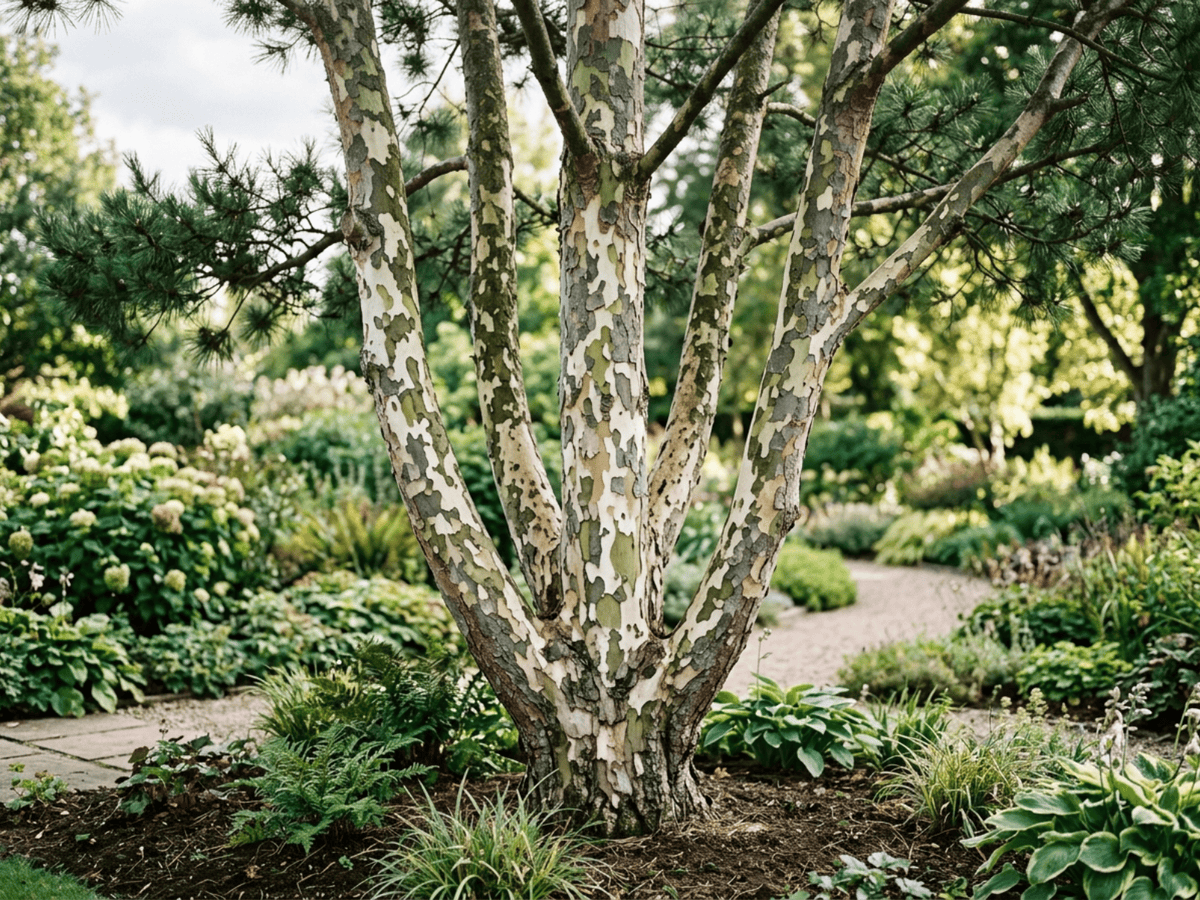 Lacebark PinePinus bungeana
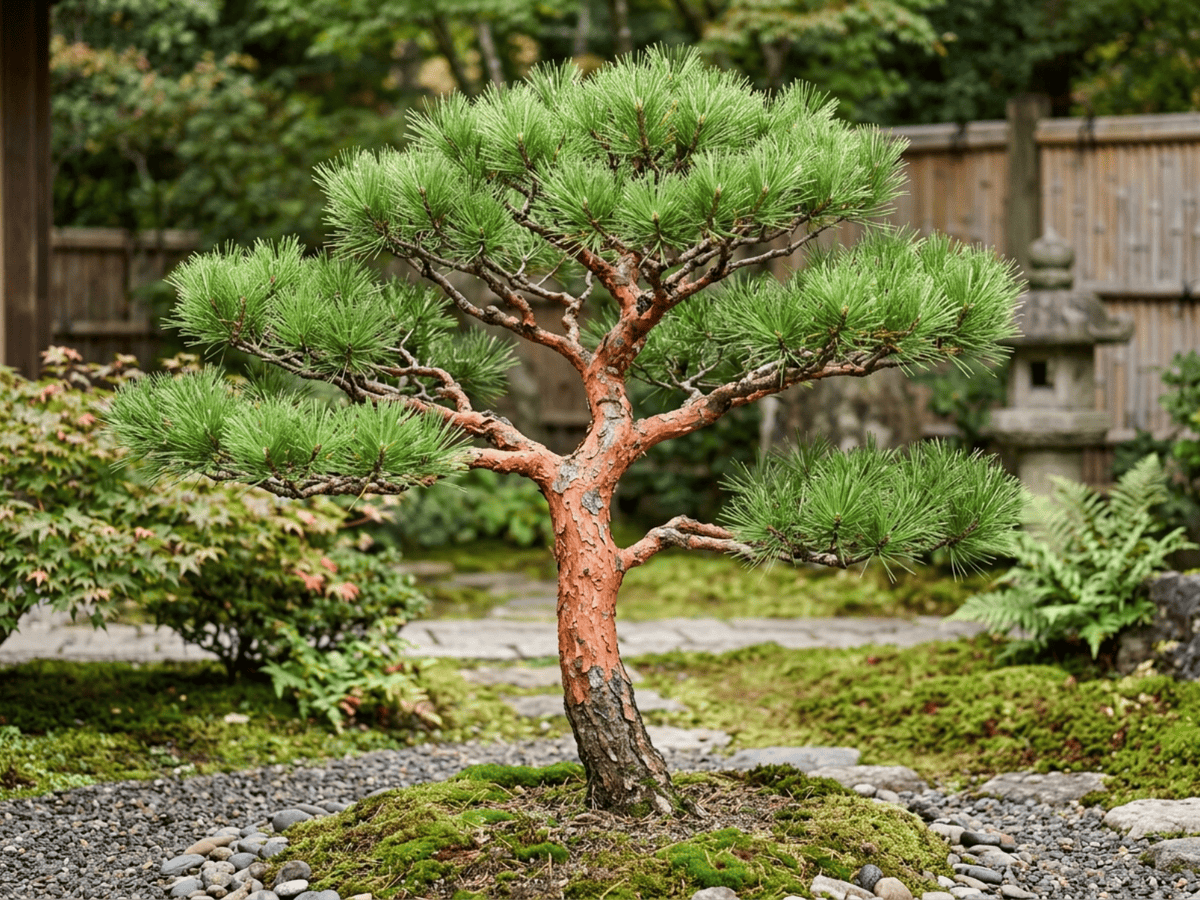 Japanese Red PinePinus densiflora
 Limber PinePinus flexilis
Plants with similar care
 Chinese AbeliaAbelia chinensis
 Fragrant AbeliaAbelia mosanensis
 Large-Flowered AbeliaAbelia uniflora
 Glossy AbeliaAbelia x grandiflora
Frequently asked questions
How often should I water Monterey Pine?
In summer, water about every 10 days; in winter, about every 30 days. Adjust for heat, pot size and drainage.
How much light does Monterey Pine need?
Full sun: 6+ hrs direct. Watch the leaves — scorching or stretching means the light needs adjusting.
Is Monterey Pine toxic to cats or dogs?
No toxicity has been reported for this plant. Still, it is wise to keep pets from chewing on any houseplant. Educational information, not medical or veterinary advice. If exposure is suspected, contact a doctor or veterinarian.
Is Monterey Pine easy to grow?
Yes — it is considered an easy, beginner-friendly plant.
YardMate
Identify any plant in seconds
Snap a photo — YardMate names the plant, diagnoses problems, and reminds you when to water.
Download on the App Store