 YardMate


Elephant Bush
Portulacaria afra
Easy · Beginner friendlyAbout Elephant Bush
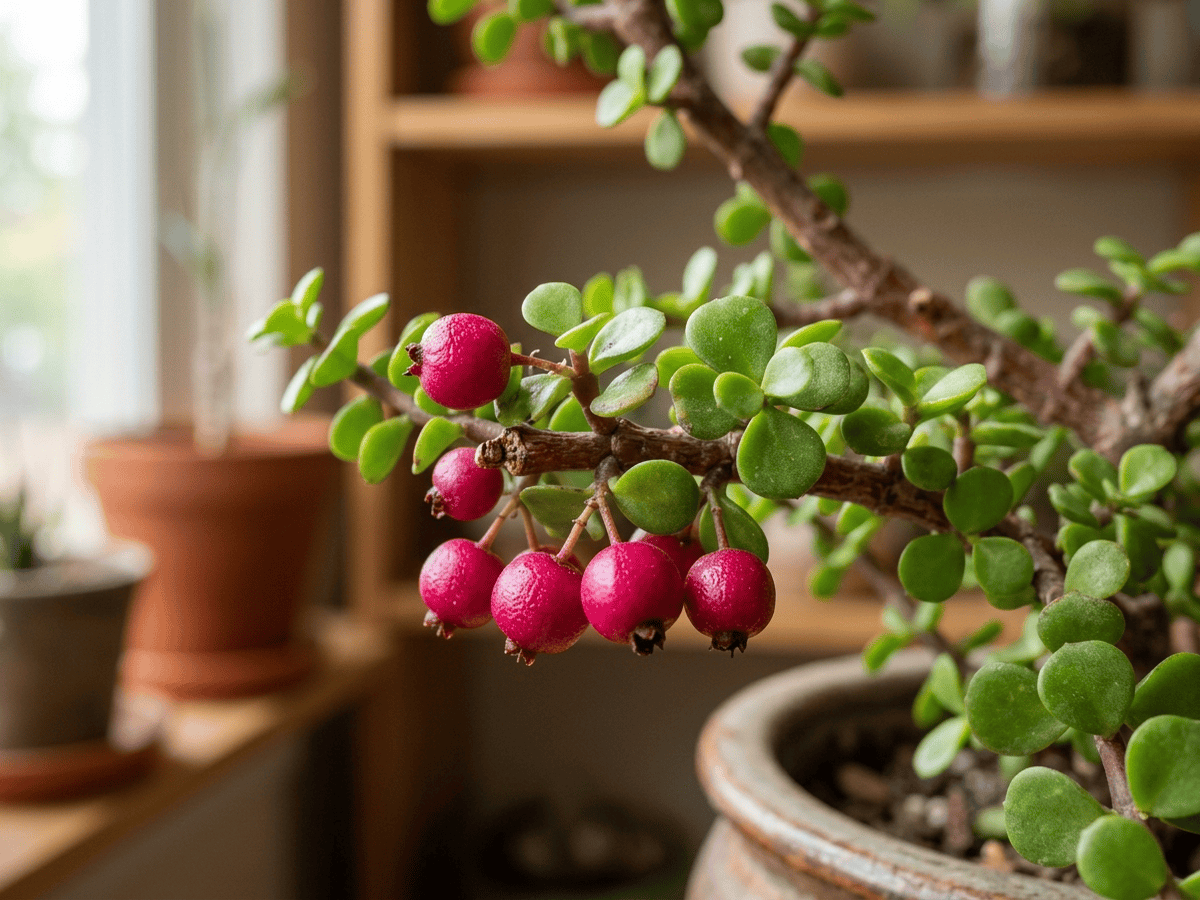
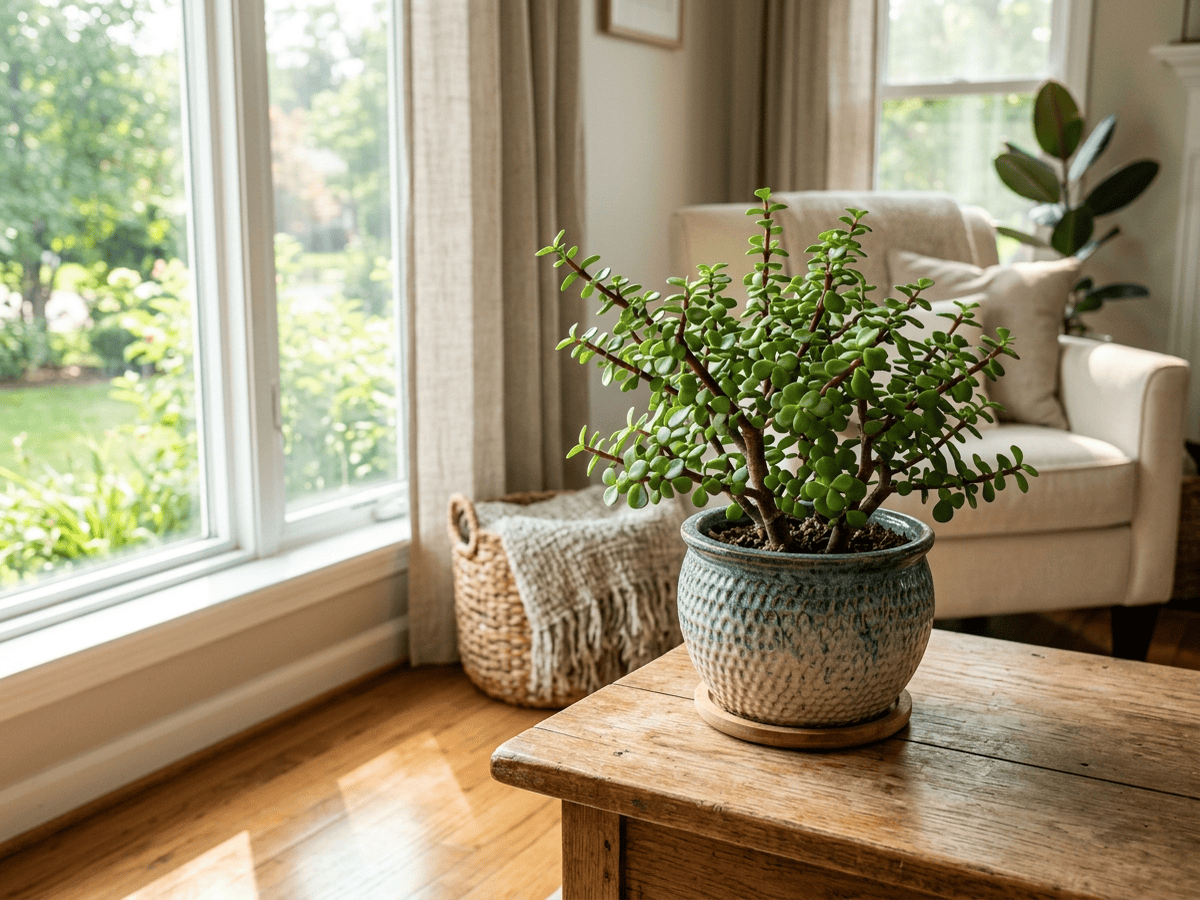
Portulacaria afra, known as elephant bush or spekboom, is a soft-wooded succulent shrub native to South Africa that plays an outsized ecological role relative to its humble appearance. In the wild, it grows into large thickets up to five meters tall, with reddish-brown stems bearing small, round, bright green succulent leaves. It is a primary food source for elephants, hence its common name, and also for black rhinos, kudu, and tortoises. What makes spekboom truly remarkable is its carbon sequestration ability — it uses both C3 and CAM photosynthesis depending on conditions, fixing carbon at rates comparable to subtropical forests. A single hectare of spekboom thicket can sequester four to ten tonnes of carbon annually. As a houseplant, it resembles a jade plant but grows faster and has smaller, thinner leaves. It is extremely easy to propagate from stem cuttings and tolerant of pruning, making it an excellent bonsai subject. The leaves are edible, with a tart, lemony flavor used in South African salads and stews.
- Edible
- Drought-tolerant
How to care for Elephant Bush
Watering
- Springevery 10 days
- Summerevery 7 days
- Fallevery 14 days
- Winterevery 21 days
Soil · Fast-draining
- Main mixSand + pumice + soil 1:1:150%
- DrainagePumice / gravel50%
Keep grit at half the mix or more — this soil is meant to dry out fast.
FERTILIZER
Balanced Feed 14-14-14
An even feed covers all three needs at once, keeping leaves, roots and blooms moving together with nothing pushed out of balance.
- Nitrogen · Leaves
- Phosphorus · Roots + Blooms
- Potassium · Strength
- Springevery 30 days
- Summerevery 45 days
- Fallevery 60 days
At a Glance
- NativeAfrica
- Height1–3 ft (0.3–0.9 m)
- Spread1–2 ft (0.3–0.6 m)
- Flower colorPink
- Foliage colorGreen, Variegated
- SoilSandy, Well-drained
- LocationsIndoor · Yard · Balcony
Bloom time
BLOOM CYCLE
Peak bloom
Mar–May
Tiny pink star flowers in spring; rarely blooms in cultivation
Fragrance
NO FRAGRANCE
No notable fragrance.
Toxicity
Humans Safe · Pets Safe
None reported
Safe
EXPOSURE No exposure route is reported.
EFFECT Leaves edible with pleasant lemony-sour taste and used in South African cuisine and salads.
NOTE Listed as non-toxic for humans; avoid eating ornamental plants unless confirmed edible.
Safe
EXPOSURE No exposure route is reported.
EFFECT Not listed as toxic.
NOTE Listed as non-toxic for dogs; avoid eating ornamental plants unless confirmed edible.
Safe
EXPOSURE No exposure route is reported.
EFFECT Not listed as toxic.
NOTE Listed as non-toxic for cats; avoid eating ornamental plants unless confirmed edible.
Educational information, not medical or veterinary advice. If exposure is suspected, contact a doctor or veterinarian.
DISTRIBUTION


- Native
- Introduced
- Africa
History
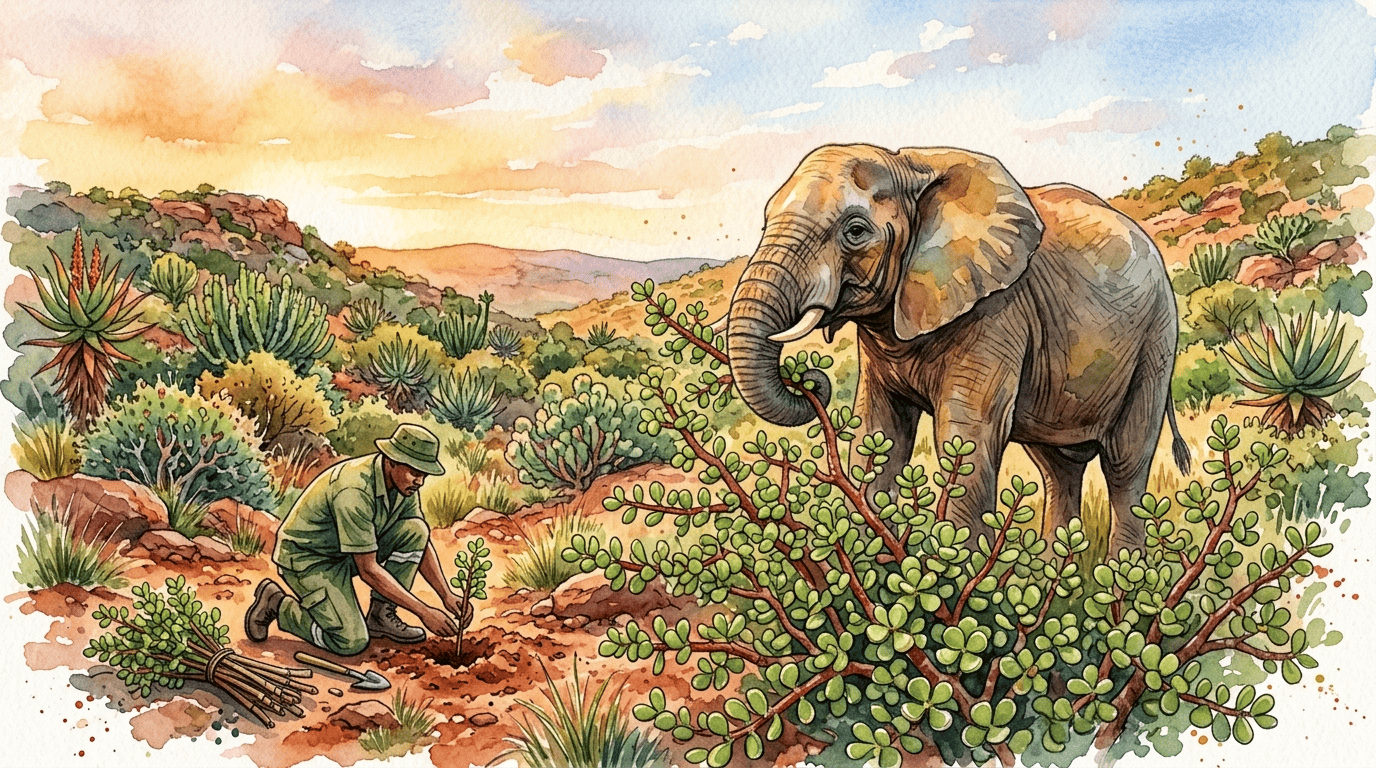
Portulacaria afra is endemic to the arid thicket biome of South Africa's Eastern Cape, where it is called "spekboom" (Afrikaans for "bacon tree") for its rich, slightly sour edible leaves. It is the primary browse food for African elephants, black rhinoceros, kudu, and tortoises in the region. Cape folk medicine and Khoi tradition used leaf pulp for heat exhaustion and dehydration.
In modern botany and climate science, spekboom is a celebrated carbon-sequestering species: it uses CAM photosynthesis efficiently, can fix carbon at rates comparable to tropical rainforest per hectare, and has become the centerpiece of South Africa's Subtropical Thicket Restoration Programme, which has replanted millions of cuttings to restore degraded thicket landscapes. Worldwide it is grown as an easy-care houseplant and as a long-lived bonsai that resprouts reliably from pruning. Portulacaria afra is central to one of the most ambitious ecological restoration projects on Earth — South Africa's Subtropical Thicket Restoration Programme, which aims to replant millions of spekboom cuttings across degraded Eastern Cape landscapes to combat climate change.
Research by Dr. Anthony Mills at Rhodes University demonstrated that spekboom thicket stores carbon at rates rivaling tropical forests. The plant has been a traditional food source for the Khoisan people for millennia, who ate the sour leaves to quench thirst during long journeys. Former President Nelson Mandela was a notable advocate for spekboom restoration.
Symbolism & meaning
What It Symbolizes
Elephant Bush is hope made succulent, its modest leaves playing a major role in climate restoration projects across the South African Karoo where it sequesters carbon at remarkable rates. It is also generously useful — feeding elephants, nourishing humans, and stabilizing degraded soils with equal cheer. Few small succulents carry such planetary significance: a humble plant standing as a living symbol of generosity and environmental hope.
- Hope — Its role in climate restoration makes it a living symbol of environmental hope
- Generosity — Feeds elephants, sequesters carbon, and nourishes humans — giving abundantly to all
Where the Name Comes From
Portulacaria means 'resembling Portulaca' (purslane), referring to the similar fleshy leaves. 'Afra' means African, indicating its origin.
Related plants
Plants with similar care
 Chinese AbeliaAbelia chinensis
 Fragrant AbeliaAbelia mosanensis
 Large-Flowered AbeliaAbelia uniflora
 Glossy AbeliaAbelia x grandiflora
Frequently asked questions
How often should I water Elephant Bush?
In summer, water about every 7 days; in winter, about every 21 days. Adjust for heat, pot size and drainage.
How much light does Elephant Bush need?
Full sun: 6+ hrs direct. Watch the leaves — scorching or stretching means the light needs adjusting.
Is Elephant Bush toxic to cats or dogs?
Pets Safe (Dogs Safe · Cats Safe) Educational information, not medical or veterinary advice. If exposure is suspected, contact a doctor or veterinarian.
Is Elephant Bush easy to grow?
Yes — it is considered an easy, beginner-friendly plant.
Can Elephant Bush be grown indoors?
Yes, it adapts well to indoor growing given the right light.
When does Elephant Bush bloom?
It typically blooms Mar–May in the Northern Hemisphere.
YardMate
Identify any plant in seconds
Snap a photo — YardMate names the plant, diagnoses problems, and reminds you when to water.
Download on the App Store