 YardMate


Cherry Laurel
Prunus laurocerasus
Easy · Beginner friendlyAbout Cherry Laurel
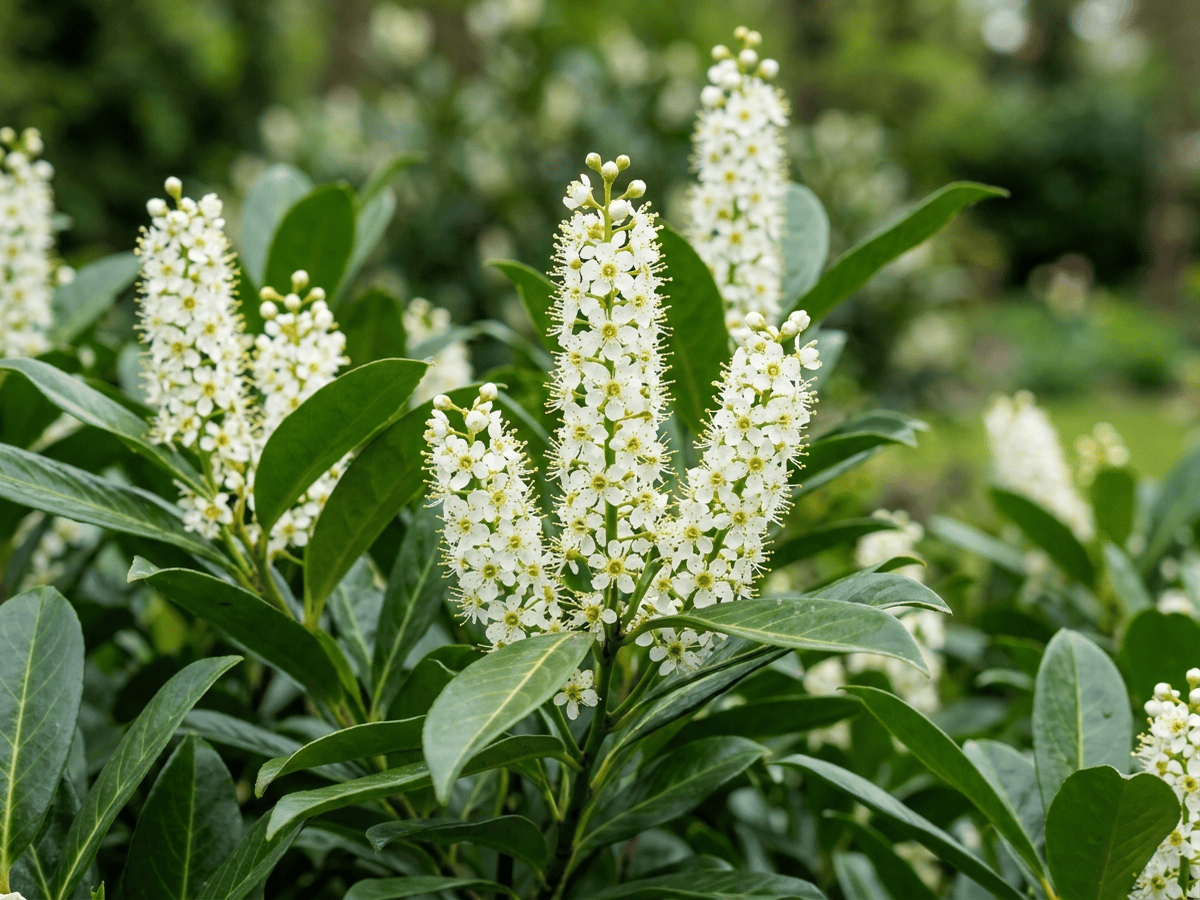
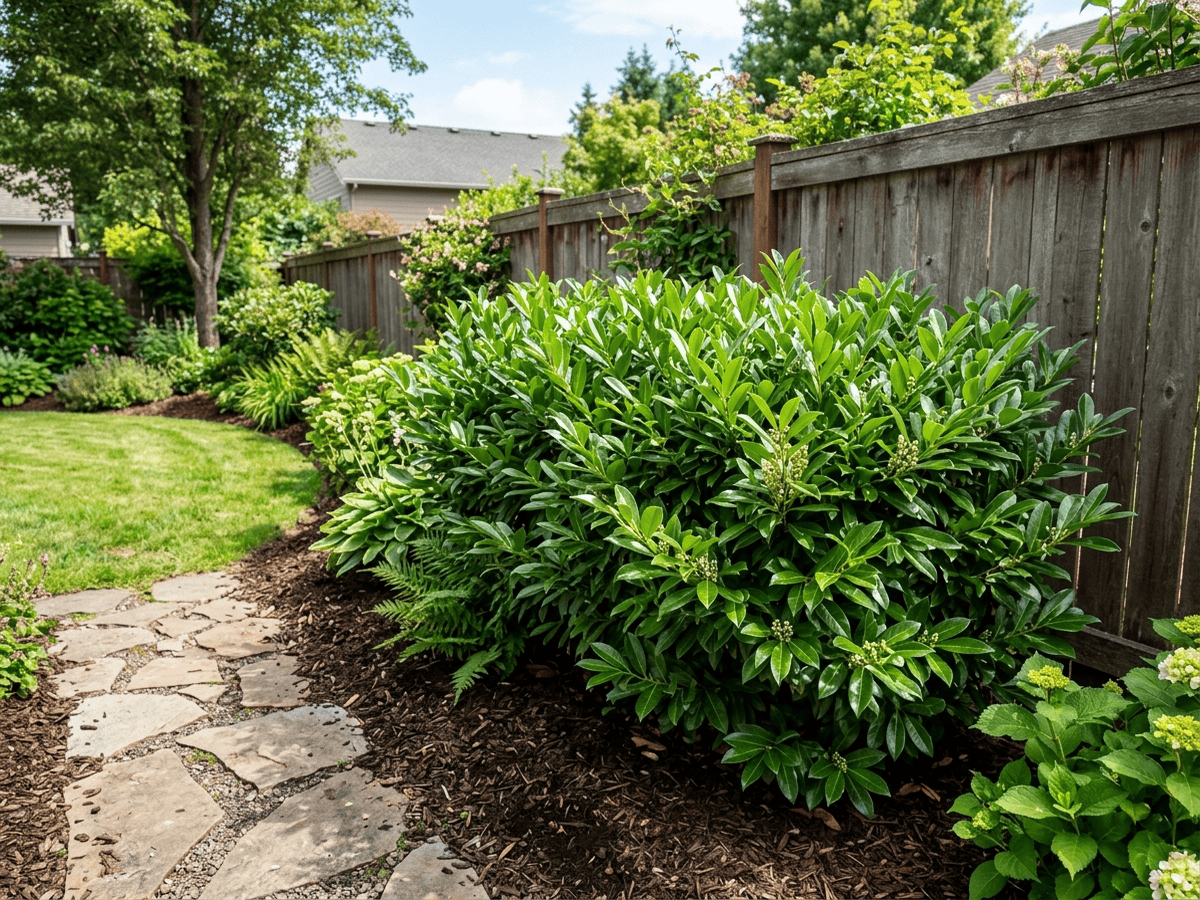
Cherry Laurel is a vigorous broadleaf evergreen shrub or small tree from southeastern Europe and southwestern Asia, growing 10-20 feet tall with large glossy dark green leaves. Its dense growth makes it one of the most effective screening and hedge plants available. Upright racemes of fragrant white flowers appear in spring, followed by small red-to-black cherry-like fruit. Widely planted across the Pacific Northwest where it thrives in the maritime climate, though it can become invasive in favorable conditions.
- Fragrant
- Shade-tolerant
- Evergreen
How to care for Cherry Laurel
Watering
- Springevery 7 days
- Summerevery 5 days
- Fallevery 10 days
- Winterevery 21 days
Soil · Well-draining
- Top dressingPine bark mulch10%
- Main mixPotting soil + perlite 2:170%
- DrainageLECA / gravel20%
Never skip the drainage layer — standing water is the top cause of root rot.
FERTILIZER
Balanced Feed 14-14-14
An even feed covers all three needs at once, keeping leaves, roots and blooms moving together with nothing pushed out of balance.
- Nitrogen · Leaves
- Phosphorus · Roots + Blooms
- Potassium · Strength
- Springevery 30 days
At a Glance
- NativeEurope, Western Asia
- Height10–20 ft (3–6.1 m)
- Spread15–25 ft (4.6–7.6 m)
- Flower colorWhite
- Foliage colorDark-green, Green
- Fruit colorRed, Black
- SoilLoamy, Well-drained
- LocationsYard
Bloom time
BLOOM CYCLE
Peak bloom
Apr–May
Fragrant white flower racemes April to May
Fragrance
MODERATE FRAGRANCE
Sweet almond-cherry fragrance from flowers; crushed leaves smell of bitter almond (cyanide).
Toxicity
Humans Toxic · Pets Toxic
prunasin and hydrogen cyanide (released)
Toxic
- Leaf
- Seed
- Fruit
- Ingestion
EXPOSURE Eating leaves, seeds, and fruit.
EFFECT Cyanide poisoning: dizziness, rapid breathing, seizures, potential death.
NOTE Documented concern for humans: Cyanide poisoning: dizziness, rapid breathing, seizures, potential death.
Toxic
- Leaf
- Seed
- Ingestion
EXPOSURE Eating leaves and seeds.
EFFECT Cyanide poisoning; vomiting, difficulty breathing, collapse.
NOTE ASPCA lists Prunus species as toxic to pets. Wilting leaves release more cyanide than fresh—hedge trimmings in livestock paddocks are a documented cause of horse and ruminant deaths.
Toxic
- Leaf
- Seed
- Ingestion
EXPOSURE Eating leaves and seeds.
EFFECT Cyanide poisoning; vomiting, difficulty breathing, collapse.
NOTE ASPCA lists Prunus species as toxic to pets. Wilting leaves release more cyanide than fresh—hedge trimmings in livestock paddocks are a documented cause of horse and ruminant deaths.
Educational information, not medical or veterinary advice. If exposure is suspected, contact a doctor or veterinarian.
DISTRIBUTION

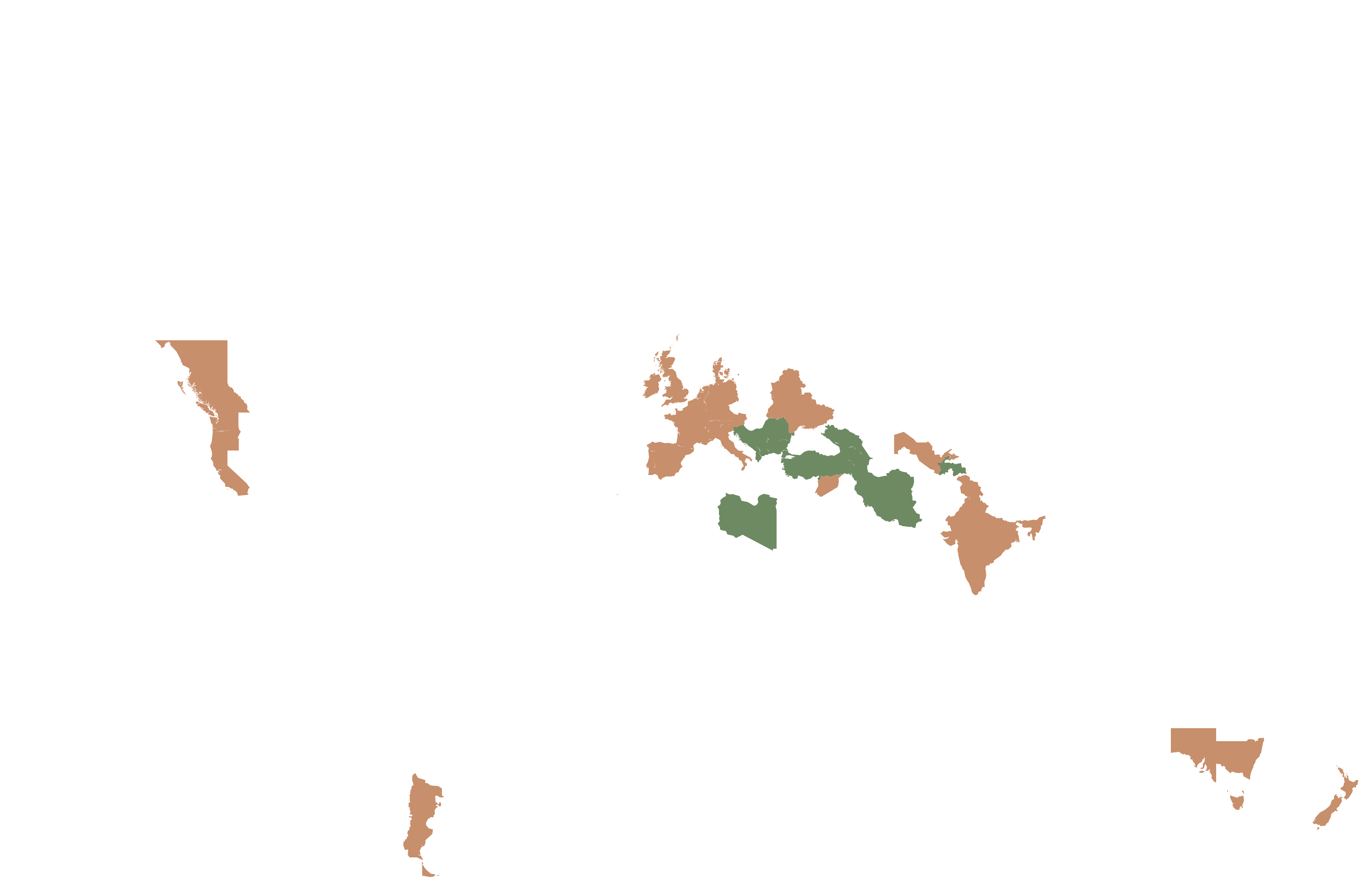
- Native
- Introduced
- Europe
- Western Asia
History
Prunus laurocerasus is native to southeastern Europe (Balkans) and southwestern Asia (Turkey, Caucasus, northern Iran), occurring naturally in moist deciduous forests. Linnaeus described the species in Species Plantarum (1753). Unlike most Prunus species, this is an evergreen broadleaf shrub or small tree with glossy dark green leaves to 15 cm.
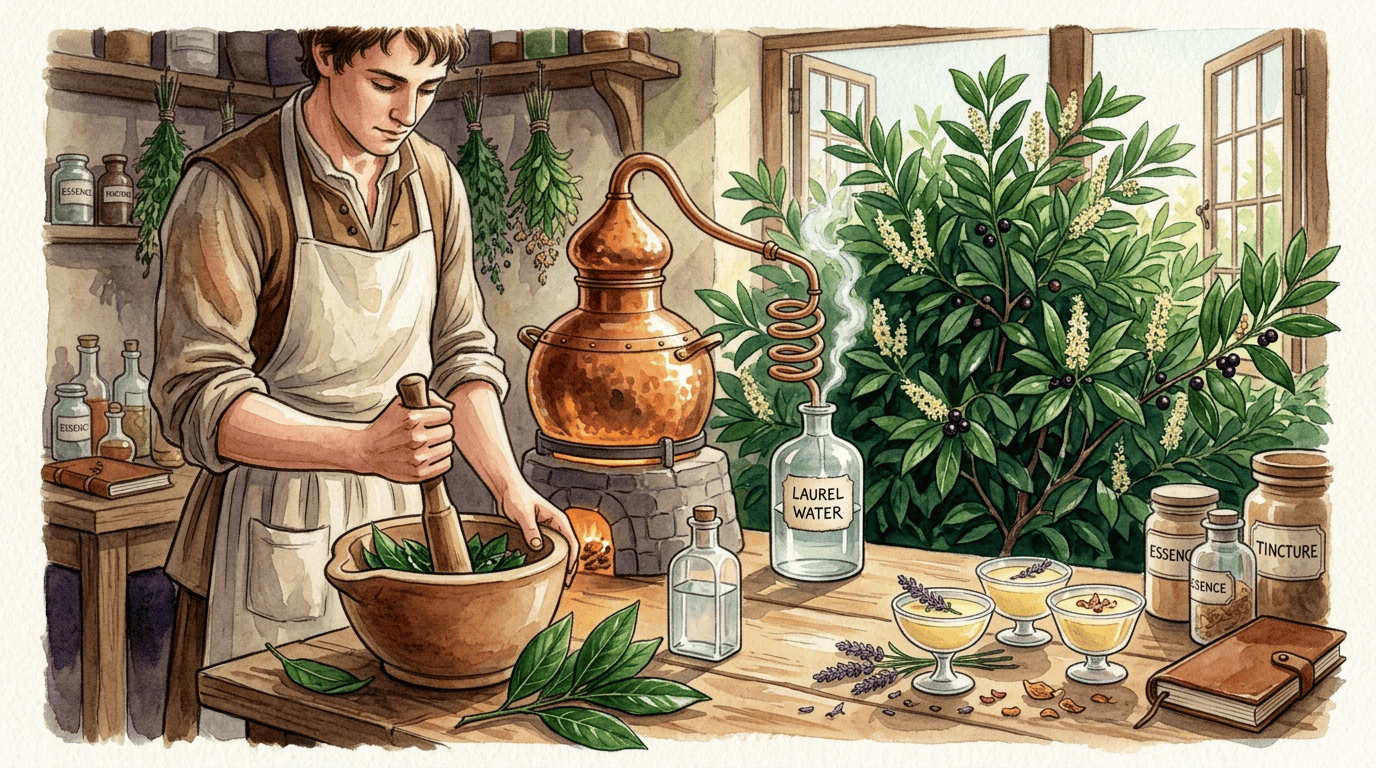
The leaves contain high concentrations of prunasin, a cyanogenic glycoside that releases hydrogen cyanide when the leaves are crushed or bruised. For centuries this property was exploited: the apothecary product laurel water (eau de laurier cerise) was distilled from macerated leaves and used as a flavoring for kirsch, custards, and confectionery, and as a medicinal cordial. Numerous accidental poisonings led to its regulation and eventual abandonment in most countries.
Despite its toxicity, cherry laurel has been the foundational evergreen hedge of English and European gardens for centuries, with cultivars 'Otto Luyken', 'Schipkaensis' (Schip laurel), 'Zabeliana', and 'Mount Vernon' widely grown. Cultivated since the 1500s and one of the most widely planted hedge plants in the Western world. It is invasive in parts of the UK and Pacific Northwest.
Symbolism & meaning
What It Symbolizes
Cherry Laurel suggests ambition through vigorous growth, quickly achieving the screening goals set by impatient gardeners. Paired with privacy, it is the defining hedge plant for garden enclosure across much of the temperate world — a green wall of shining leaves. It is a shrub whose meaning is the human wish to draw a quiet line around one's own piece of ground.
- Ambition — vigorous growth that quickly achieves screening goals
- Privacy — the defining hedge plant for garden enclosure
Where the Name Comes From
'Prunus' is the Latin name for plum; 'laurocerasus' from Latin 'laurus' (laurel) and 'cerasus' (cherry)—'laurel-cherry'.
Uses & Fun Facts
- Almond-scented white flower spikes appear in spring
- Glossy evergreen foliage forms tall dense privacy screens
- Small black drupes feed thrushes and blackbirds in autumn
Related plants
More Prunus plants



Plants with similar care
 Chinese AbeliaAbelia chinensis
 Fragrant AbeliaAbelia mosanensis
 Large-Flowered AbeliaAbelia uniflora
 Glossy AbeliaAbelia x grandiflora
Frequently asked questions
How often should I water Cherry Laurel?
In summer, water about every 5 days; in winter, about every 21 days. Adjust for heat, pot size and drainage.
How much light does Cherry Laurel need?
Full sun: 6+ hrs direct. Watch the leaves — scorching or stretching means the light needs adjusting.
Is Cherry Laurel toxic to cats or dogs?
Pets Toxic (Dogs Toxic · Cats Toxic) Educational information, not medical or veterinary advice. If exposure is suspected, contact a doctor or veterinarian.
Is Cherry Laurel easy to grow?
Yes — it is considered an easy, beginner-friendly plant.
When does Cherry Laurel bloom?
It typically blooms Apr–May in the Northern Hemisphere.
YardMate
Identify any plant in seconds
Snap a photo — YardMate names the plant, diagnoses problems, and reminds you when to water.
Download on the App Store