 YardMate


Flowering Apricot
Prunus mume
Medium · Some experienceAbout Flowering Apricot
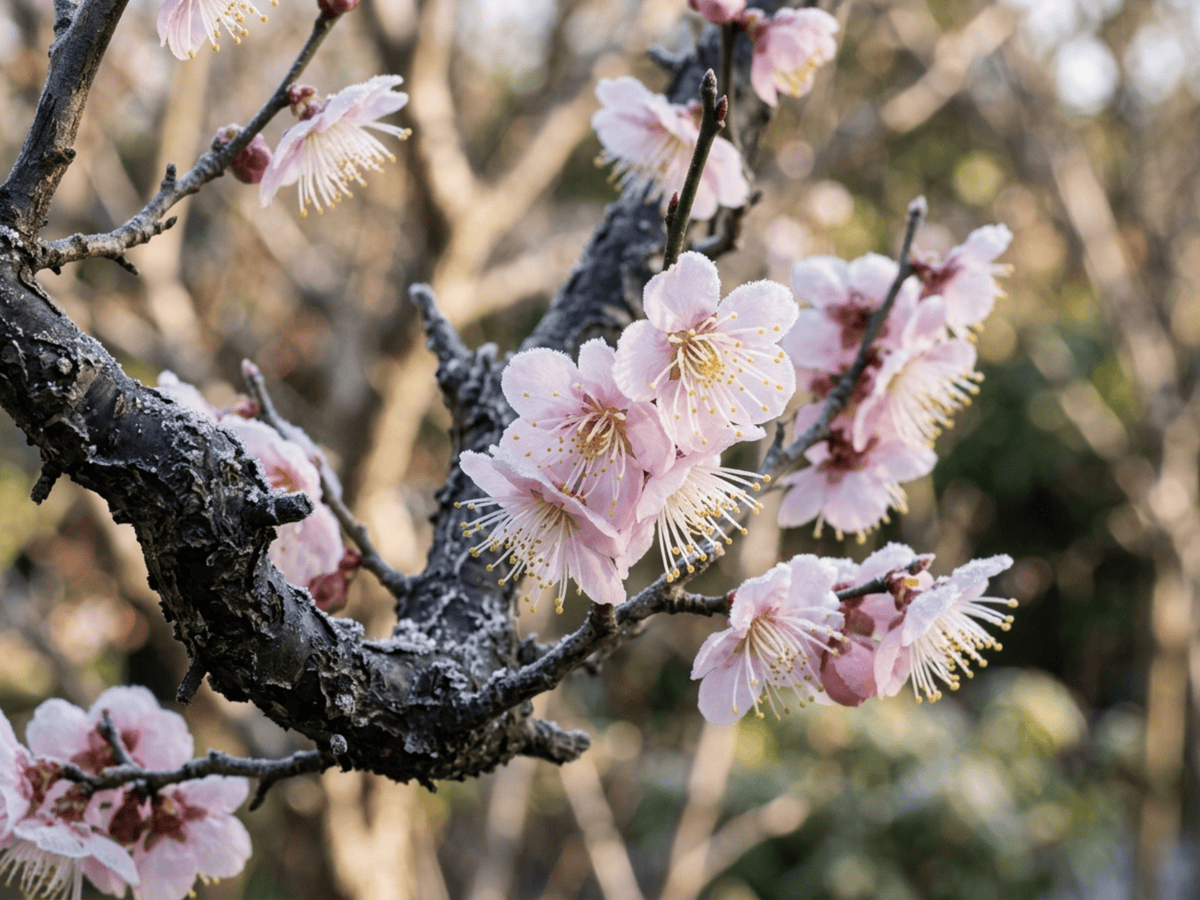
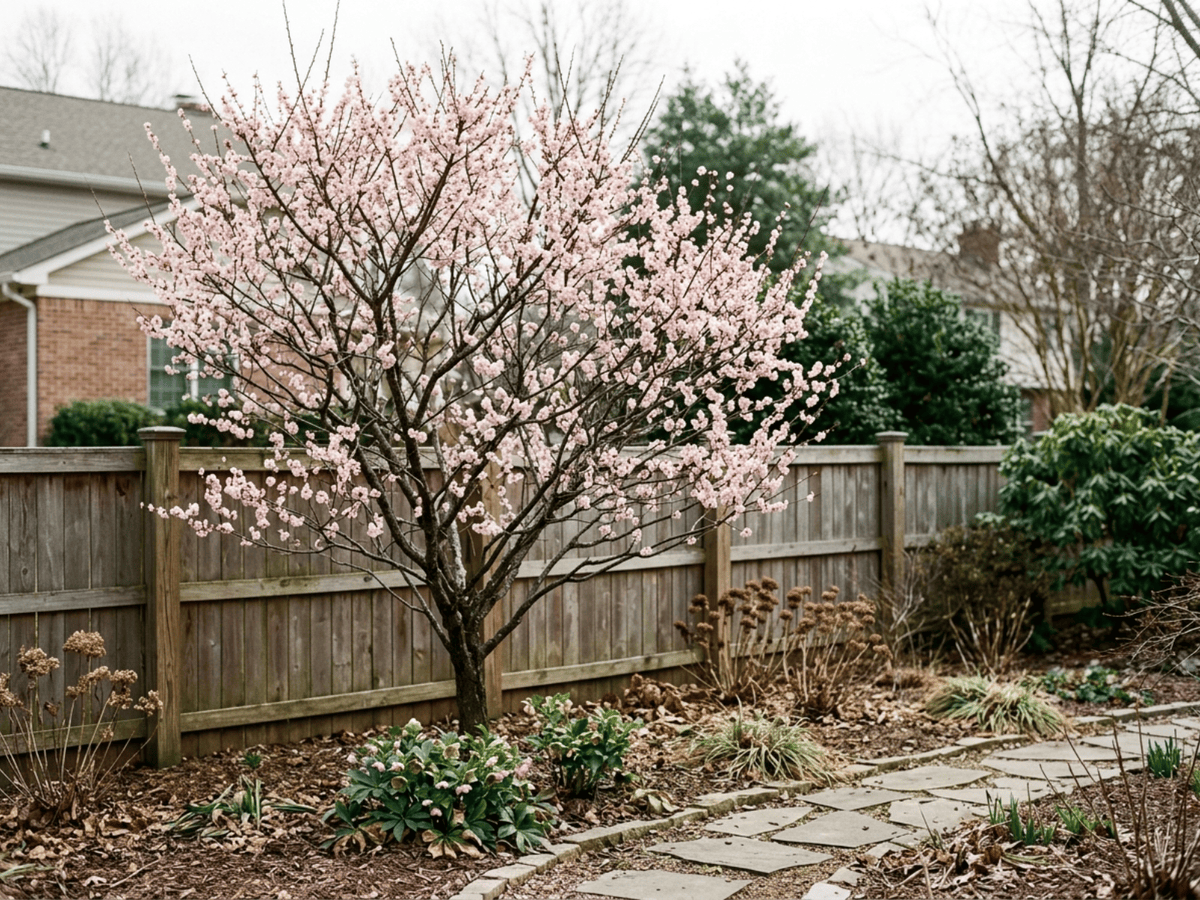
Prunus mume, often called Chinese plum or Japanese apricot, is a small deciduous tree of deep East Asian cultural importance. It blooms astonishingly early, sometimes while snow remains, opening fragrant five-petaled flowers in white, pink, or deep red on bare branches. That winter courage made the flower, known as mei or ume, a symbol of resilience, refinement, and renewal in poetry, painting, and garden design. The sour fruits are not eaten raw but become umeboshi in Japan, plum wine, syrups, and sour plum drinks in China. In gardens it asks for sun and well-drained soil, offering fragrance and meaning at the cold edge of spring.
- Fragrant
How to care for Flowering Apricot
Watering
- Springevery 5 days
- Summerevery 4 days
- Fallevery 10 days
- Winterevery 21 days
Soil · Well-draining
- Top dressingPine bark mulch10%
- Main mixPotting soil + perlite 2:170%
- DrainageLECA / gravel20%
Never skip the drainage layer — standing water is the top cause of root rot.
FERTILIZER
Balanced Feed 14-14-14
An even feed covers all three needs at once, keeping leaves, roots and blooms moving together with nothing pushed out of balance.
- Nitrogen · Leaves
- Phosphorus · Roots + Blooms
- Potassium · Strength
- Springevery 45 days
- Fallevery 45 days
At a Glance
- NativeEast Asia
- Height15–25 ft (4.6–7.6 m)
- Spread15–20 ft (4.6–6.1 m)
- Flower colorPink, White, Red
- Foliage colorGreen
- SoilLoamy, Well-drained, Neutral
- LocationsYard
Bloom time
BLOOM CYCLE
Peak bloom
Dec–Feb
Flowers appear on bare branches in late winter before leaves; protect from late hard frosts
Fragrance
MODERATE FRAGRANCE
Sweet spicy fragrance, especially pronounced on warmer late-winter afternoons.
Toxicity
Humans Slight · Pets Moderate
amygdalin (cyanogenic glycoside)
Slight
- Seed
- Ingestion
EXPOSURE Eating seeds.
EFFECT Seeds contain cyanogenic glycoside amygdalin like other Prunus and raw fruit pits should not be eaten in quantity. Fermented products are safe.
NOTE Documented concern for humans: Seeds contain cyanogenic glycoside amygdalin like other Prunus and raw fruit pits should not be eaten in quantity. Fermented products are safe.
Moderate
- Seed
- Leaf
- Stem
- Ingestion
EXPOSURE Eating seeds, leaves, and stems.
EFFECT Cyanide poisoning: weakness, panting, dilated pupils, shock.
NOTE ASPCA lists Prunus species as toxic to dogs, cats, and horses — seeds, leaves, and stems contain cyanogenic glycosides.
Moderate
- Seed
- Leaf
- Stem
- Ingestion
EXPOSURE Eating seeds, leaves, and stems.
EFFECT Same as dogs.
NOTE ASPCA lists Prunus species as toxic to dogs, cats, and horses — seeds, leaves, and stems contain cyanogenic glycosides.
Educational information, not medical or veterinary advice. If exposure is suspected, contact a doctor or veterinarian.
DISTRIBUTION


- Native
- Introduced
- East Asia
History

Prunus mume is native to the mountains of southern China and reached Korea and Japan by at least the 8th century. Despite the common name Japanese apricot, it is more closely allied to apricots than plums; the small sour fruits are pickled as umeboshi, fermented into liqueurs such as umeshu and meijiu, or cooked into syrups. The flowers matter even more than the fruit.
Opening on bare dark branches in late winter, often while snow remains, they became a central East Asian symbol of steadfast beauty under hardship. In Chinese poetry and painting, mei blossoms represent the scholar's resilience; they are one of the Three Friends of Winter with pine and bamboo and one of the Four Gentlemen with orchid, bamboo, and chrysanthemum.
In Japan, ume-viewing predates the more famous cherry-blossom viewing. The species is also the national flower of Taiwan, and hundreds of cultivars preserve shades of white, pink, and red.
Symbolism & meaning
What It Symbolizes
Flowering Apricot is resilience in bloom, opening through winter's harshest cold and becoming the classical Chinese emblem of perseverance through adversity. As one of the earliest blossoms of the year, it carries renewal, heralding spring's return long before any leaf appears. Sparse pink flowers on bare branches speak of purity and disciplined hope, the noble simplicity celebrated in centuries of East Asian poetry and ink painting.
- Resilience — blooming in winter's harshest cold symbolizes perseverance through adversity
- Renewal — the earliest blossoms of the year herald spring's eventual return
- Purity — sparse blossoms on bare branches embody noble simplicity
Where the Name Comes From
'Prunus' is the Latin name for plum trees. 'Mume' comes through Japanese from the Chinese mei, the plum or apricot blossom celebrated in East Asian culture.
Uses & Fun Facts
- Fruit processed into umeboshi and Chinese sour-plum drinks
- Late-winter blooms carry sweet spicy perfume
- Subject of three thousand years of East Asian art and poetry
- Trained as bonsai or featured spring-flowering tree
Related plants
More Prunus plants



Plants with similar care
 Mexican AbeliaAbelia floribunda
 Fraser FirAbies fraseri
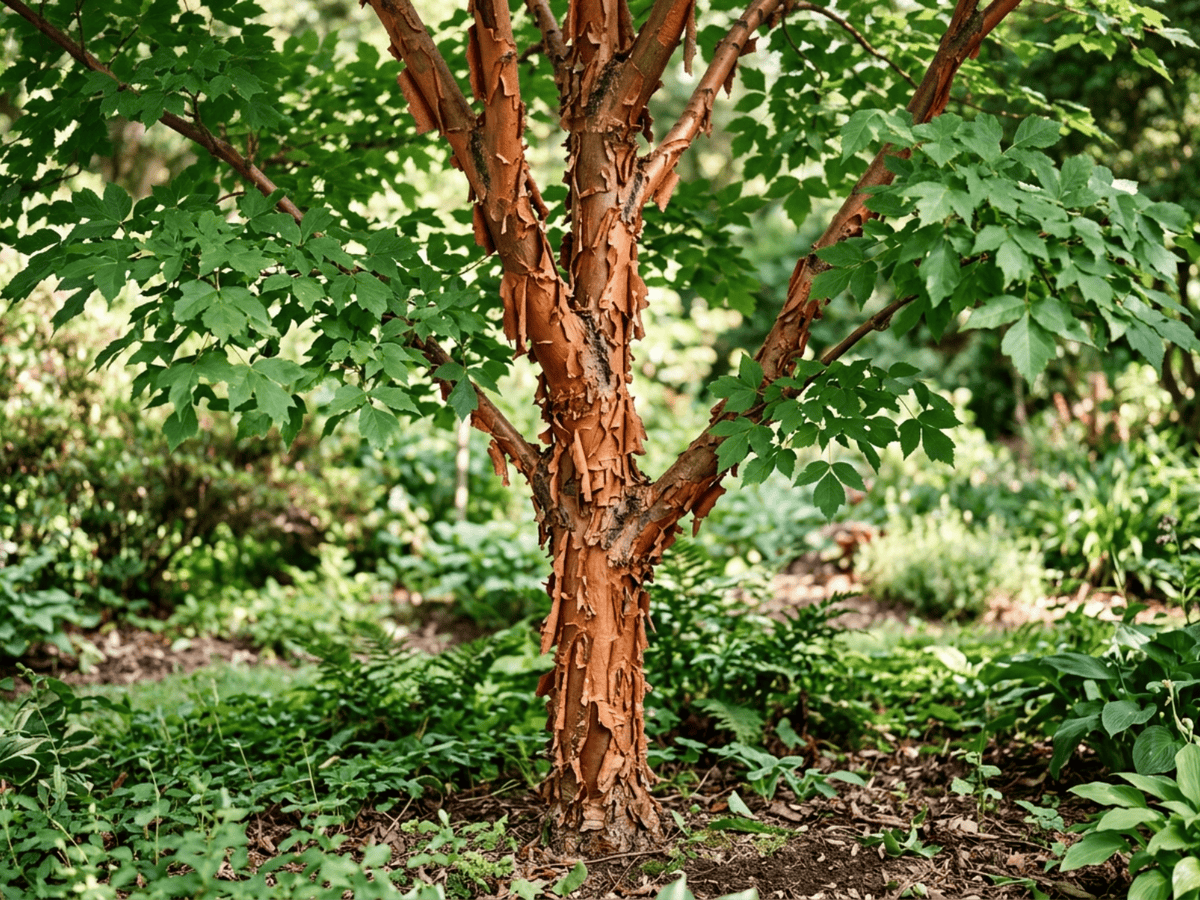 Paperbark MapleAcer griseum
 Sugar MapleAcer saccharum
Frequently asked questions
How often should I water Flowering Apricot?
In summer, water about every 4 days; in winter, about every 21 days. Adjust for heat, pot size and drainage.
How much light does Flowering Apricot need?
Full sun: 6+ hrs direct. Watch the leaves — scorching or stretching means the light needs adjusting.
Is Flowering Apricot toxic to cats or dogs?
Pets Moderate (Dogs Moderate · Cats Moderate) Educational information, not medical or veterinary advice. If exposure is suspected, contact a doctor or veterinarian.
Is Flowering Apricot easy to grow?
It is moderately demanding: a good choice once you have a little experience.
When does Flowering Apricot bloom?
It typically blooms Dec–Feb in the Northern Hemisphere.
YardMate
Identify any plant in seconds
Snap a photo — YardMate names the plant, diagnoses problems, and reminds you when to water.
Download on the App Store