 YardMate


Nanking Cherry
Prunus tomentosa
Easy · Beginner friendlyAbout Nanking Cherry
Nanking Cherry is a hardy Asian bush cherry from China, Korea, and Mongolia bearing fragrant pale pink to white flowers in early spring followed by abundant bright red edible cherries. Growing 6-10 feet tall and wide, it produces tart but flavorful fruit for fresh eating, jams, and wines. Extremely cold-hardy (USDA 2-7), it is a cornerstone edible landscape plant across the northern American Great Plains and Upper Midwest.
- Edible
- Fragrant
- Cold-hardy
- Pollinator-friendly
How to care for Nanking Cherry
Watering
- Springevery 7 days
- Summerevery 5 days
- Fallevery 10 days
- Winterpause watering
Soil · Well-draining
- Top dressingPine bark mulch10%
- Main mixPotting soil + perlite 2:170%
- DrainageLECA / gravel20%
Never skip the drainage layer — standing water is the top cause of root rot.
FERTILIZER
Balanced Feed 14-14-14
An even feed covers all three needs at once, keeping leaves, roots and blooms moving together with nothing pushed out of balance.
- Nitrogen · Leaves
- Phosphorus · Roots + Blooms
- Potassium · Strength
- Springevery 60 days
- Summerevery 60 days
At a Glance
- NativeEast Asia
- Height6–10 ft (1.8–3 m)
- Spread6–12 ft (1.8–3.7 m)
- Flower colorPink, White
- Foliage colorGreen
- Fruit colorRed
- SoilLoamy, Well-drained
- LocationsYard
Bloom time
BLOOM CYCLE
Peak bloom
Apr
Fragrant pale pink to white flowers April
Fragrance
LIGHT FRAGRANCE
The flowers have a mild scent.
Toxicity
Humans Moderate · Pets Moderate
amygdalin and cyanogenic glycosides
Moderate
- Seed
- Leaf
- Ingestion
EXPOSURE Eating seeds and leaves.
EFFECT Cyanide from pits if crushed.
NOTE Documented concern for humans: Cyanide from pits if crushed.
Moderate
- Seed
- Leaf
- Ingestion
EXPOSURE Eating seeds and leaves.
EFFECT Cyanide poisoning.
NOTE ASPCA lists all Prunus as toxic. Fruit flesh edible and commonly eaten; avoid pits.
Moderate
- Seed
- Leaf
- Ingestion
EXPOSURE Eating seeds and leaves.
EFFECT Cyanide poisoning.
NOTE ASPCA lists all Prunus as toxic. Fruit flesh edible and commonly eaten; avoid pits.
Educational information, not medical or veterinary advice. If exposure is suspected, contact a doctor or veterinarian.
DISTRIBUTION

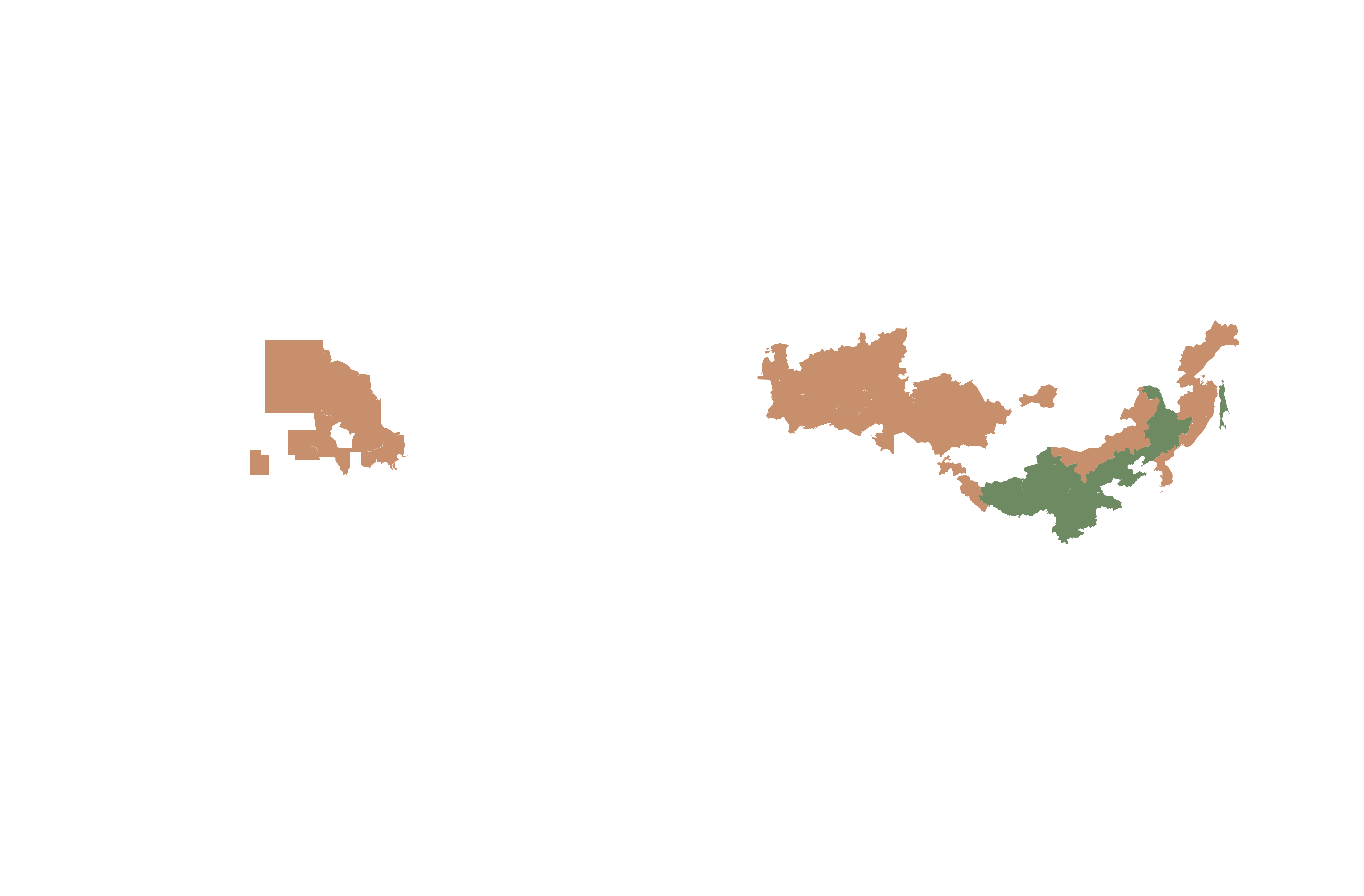
- Native
- Introduced
- East Asia
History

Prunus tomentosa is native to northern China, Manchuria, Korea, and the western Himalayas. Swedish botanist Carl Peter Thunberg formally described it in 1784. The epithet tomentosa refers to the downy fuzz covering leaves, stems, and fruit.
Chinese gardens have cultivated it for centuries as yingtao, and Korean and Japanese traditional medicine uses the fruit and seed. It reached American horticulture in the early 20th century through the US Department of Agriculture's plant introduction program; plant explorer Frank Meyer sent seeds from China in 1907-08. Extreme cold hardiness (zone 2-3) and edible small scarlet-to-dark-red cherry-like fruits, sweeter than most ornamental cherries, made it a staple of Great Plains and Midwestern homestead orchards, wildlife plantings, and windbreaks.
Modern selections like 'Orient' and 'Drilea' improve fruit quality. Called 'nanking' despite being more closely associated with Mongolia and Manchuria. Introduced to the United States by the USDA in 1882 as a hardy fruit crop for the Northern Plains, where it proved invaluable as a shelterbelt and orchard plant. Still recommended by extension services across the American Midwest for edible hedging.
Symbolism & meaning
What It Symbolizes
Nanking Cherry is abundance born of resilience, its slender branches bending each summer under a heavy crop of shining red fruit. Bred for life on the cold steppes of northern Asia, it laughs at winters that would shatter softer stone fruits. In its generous harvest from such hard country, the plant proves that toughness and sweetness can ripen together.
- Abundance — heavy fruit production
- Resilience — extreme cold tolerance
Where the Name Comes From
'Tomentosa' means 'covered with matted hairs', referring to the fuzzy leaves and young stems.
Uses & Fun Facts
- Tart red cherries used for fresh eating, jams, and wines
- Pale pink early-spring blossoms release sweet almond scent
- Cold-hardy bush cherry forms productive informal windbreaks
- Abundant fruit attracts songbirds and beneficial insects
Related plants
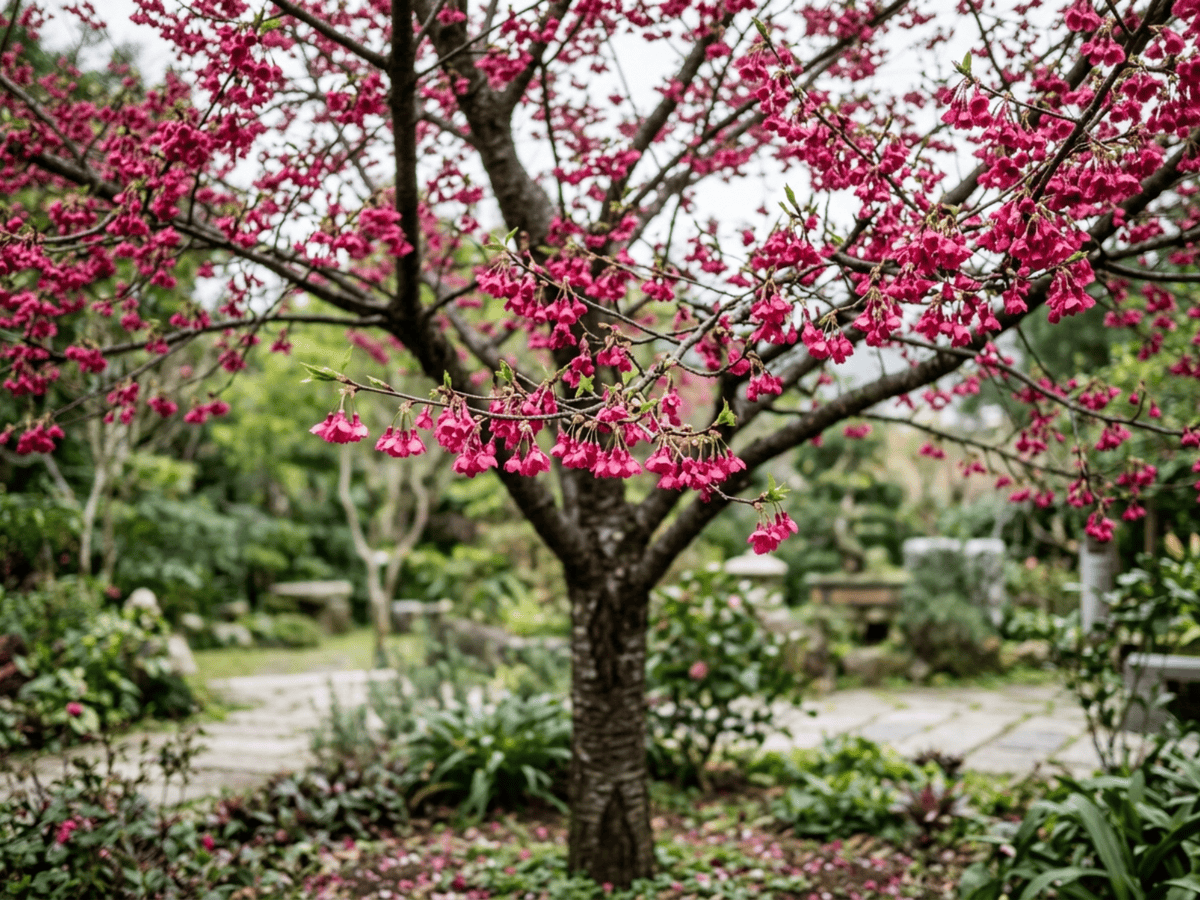
More Prunus plants



Plants with similar care
 Chinese AbeliaAbelia chinensis
 Fragrant AbeliaAbelia mosanensis
 Large-Flowered AbeliaAbelia uniflora
 Glossy AbeliaAbelia x grandiflora
Frequently asked questions
How often should I water Nanking Cherry?
Water about every 7 days during the growing season, and always let excess water drain away.
How much light does Nanking Cherry need?
Full sun: 6+ hrs direct. Watch the leaves — scorching or stretching means the light needs adjusting.
Is Nanking Cherry toxic to cats or dogs?
Pets Moderate (Dogs Moderate · Cats Moderate) Educational information, not medical or veterinary advice. If exposure is suspected, contact a doctor or veterinarian.
Is Nanking Cherry easy to grow?
Yes — it is considered an easy, beginner-friendly plant.
When does Nanking Cherry bloom?
It typically blooms Apr in the Northern Hemisphere.
YardMate
Identify any plant in seconds
Snap a photo — YardMate names the plant, diagnoses problems, and reminds you when to water.
Download on the App Store