 YardMate



Pomegranate
Punica granatum
Easy · Beginner friendlyAbout Pomegranate
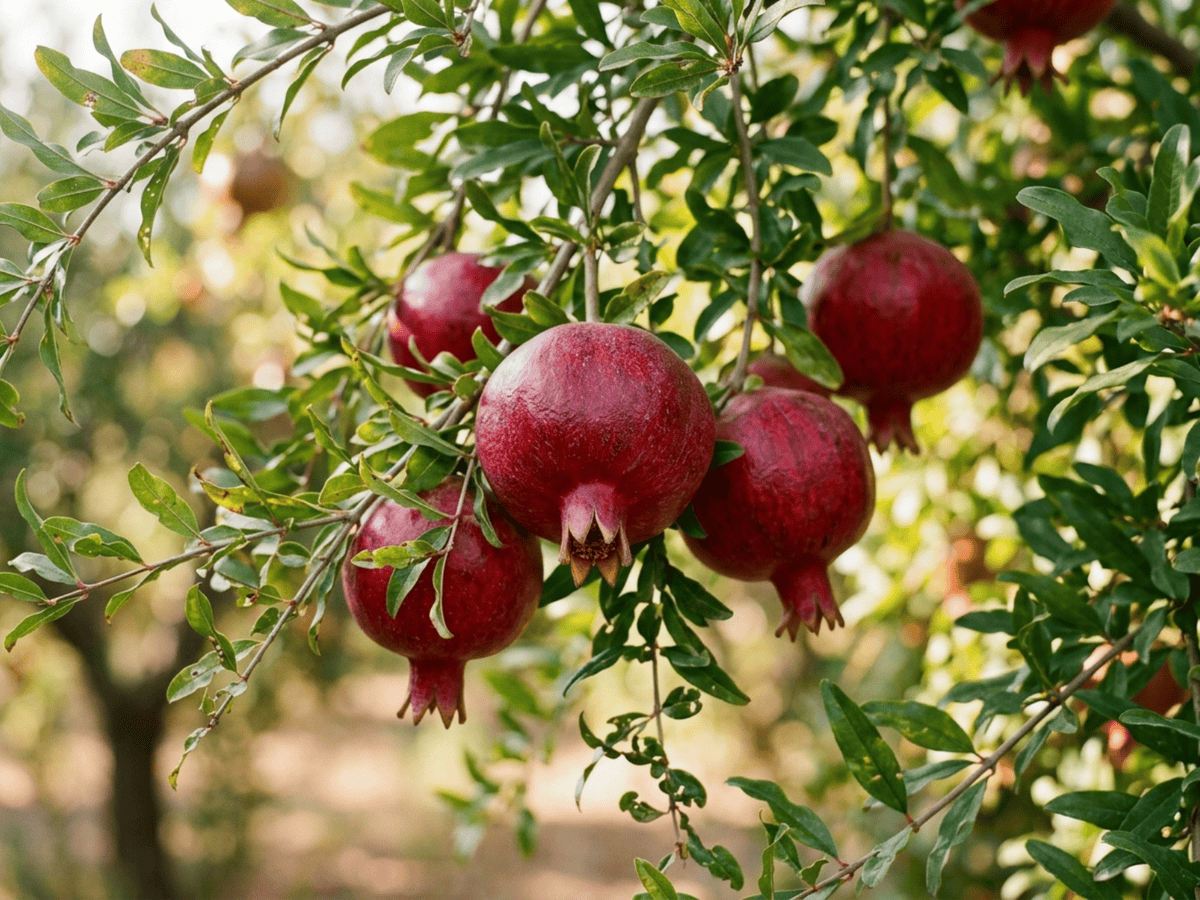
Punica granatum, the pomegranate, is a deciduous shrub or small tree native from Iran into the western Himalayas and cultivated around the Mediterranean for millennia. Glossy leaves, orange-red tubular flowers, and leathery fruits full of jewel-like arils make it ornamental even before harvest. Pomegranates thrive in hot, dry summers with full sun and well-drained soil, tolerating drought once established; in colder regions they can live in large containers and overwinter indoors. Few fruits carry more symbolism. Persephone's seeds explained the seasons in Greek myth, while Jewish, Islamic, Christian, Persian, and Hindu traditions all found abundance and fertility in the many-seeded fruit. In the kitchen, the arils, juice, and tart molasses bring brightness to salads, stews, desserts, and cocktails.
- Edible
- Drought-tolerant
How to care for Pomegranate
Watering
- Springevery 5 days
- Summerevery 4 days
- Fallevery 7 days
- Winterevery 14 days
Soil · Well-draining
- Top dressingPine bark mulch10%
- Main mixPotting soil + perlite 2:170%
- DrainageLECA / gravel20%
Never skip the drainage layer — standing water is the top cause of root rot.
FERTILIZER
Balanced Feed 14-14-14
An even feed covers all three needs at once, keeping leaves, roots and blooms moving together with nothing pushed out of balance.
- Nitrogen · Leaves
- Phosphorus · Roots + Blooms
- Potassium · Strength
- Springevery 45 days
- Summerevery 45 days
- Fallevery 60 days
At a Glance
- NativeWestern Asia, South Asia
- Height12–20 ft (3.7–6.1 m)
- Spread10–15 ft (3–4.6 m)
- Flower colorRed, Orange, Yellow
- Foliage colorGreen
- Fruit colorRed
- SoilLoamy, Well-drained
- LocationsYard · Indoor · Balcony
Bloom time
BLOOM CYCLE
Peak bloom
Jun–Aug
Showy orange-red flowers in summer are ornamental even without fruit; self-fertile but cross-pollination improves yield.
Fragrance
LIGHT FRAGRANCE
The flowers have a mild sweet blossom scent.
Toxicity
Pets Slight
punicalagins, tannins, and anthocyanins
Not reported
EXPOSURE No exposure route is reported.
EFFECT Widely consumed.
NOTE No human toxicity is reported in this catalog; avoid eating ornamental plants unless confirmed edible.
Slight
- Fruit
- Ingestion
EXPOSURE Eating fruit.
EFFECT Mild GI upset from tannins and seeds (per ASPCA).
NOTE ASPCA lists Punica as mildly toxic to pets.
Slight
- Fruit
- Ingestion
EXPOSURE Eating fruit.
EFFECT Mild GI upset.
NOTE ASPCA lists Punica as mildly toxic to pets.
Educational information, not medical or veterinary advice. If exposure is suspected, contact a doctor or veterinarian.
DISTRIBUTION


- Native
- Introduced
- Western Asia
- South Asia
History
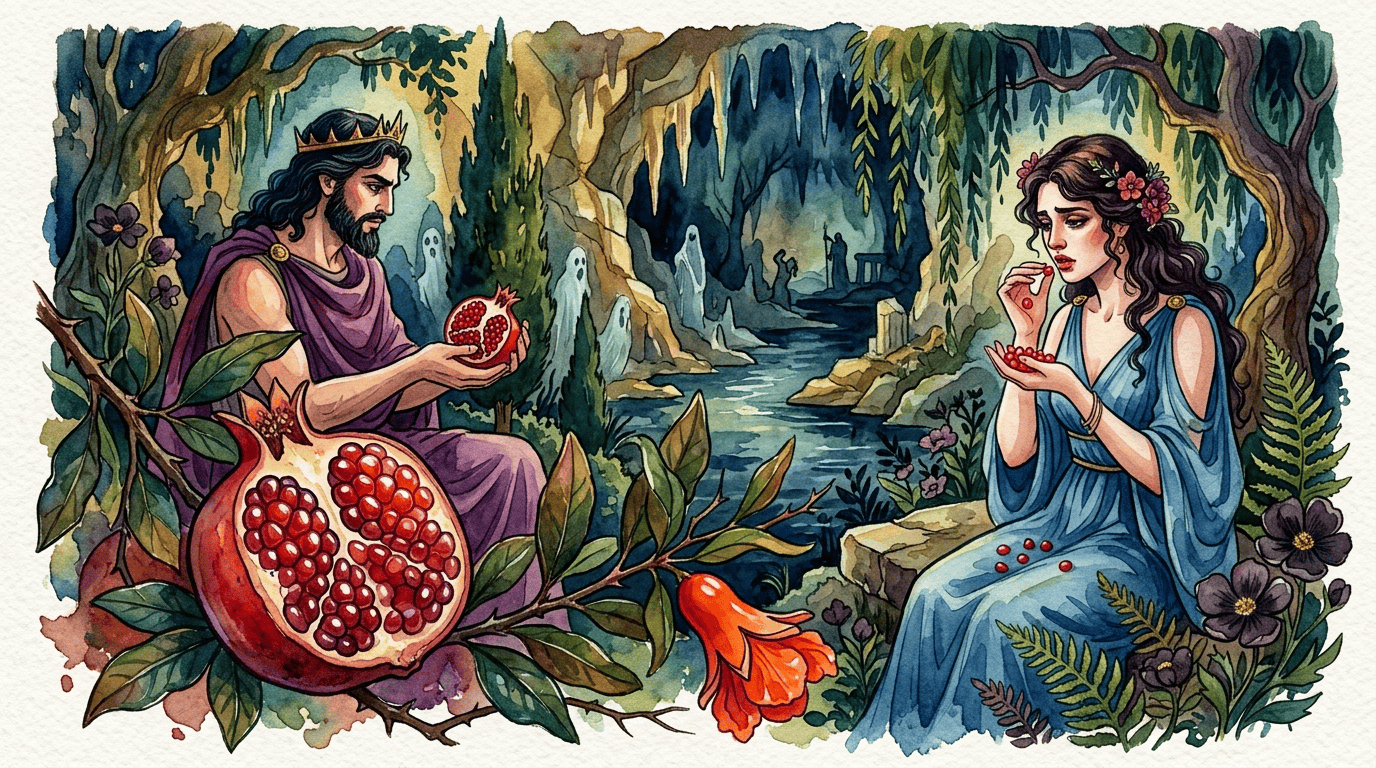
Punica granatum is native to Iran and northern India, with domestication at least 5,000 years ago. Carbonized pomegranate remains have been found at Bronze Age archaeological sites across the Near East. The fruit is profoundly woven into religious and mythic traditions around the Mediterranean and Middle East.
In Greek myth, Hades tricked Persephone into eating six pomegranate seeds, binding her to six months of the year in the underworld — the origin of seasonal myth. Jewish tradition holds that the pomegranate contains 613 seeds, corresponding to the 613 mitzvot (commandments) of the Torah, and the fruit appears on the pillars of Solomon's Temple as described in 1 Kings. Islamic tradition mentions pomegranates in the Quran as a fruit of paradise.
In medieval Spain, the city of Granada takes its name from the Arabic for pomegranate (rumman) or the Latin, reflecting the fruit's long presence in Moorish Andalusia. Modern cultivation centers on Iran (the largest producer), India, Turkey, Azerbaijan, and California. Pomegranate juice's antioxidant content — particularly punicalagins — has driven a major 21st-century health-drink industry. Cultivated since at least 3000 BC in Iran. Listed as one of the Seven Species of the Land of Israel. Spanish missionaries introduced it to the Americas; the city of Granada, Spain, is named for the pomegranate. POM Wonderful's marketing campaign in the 2000s drove the modern superfruit boom.
Symbolism & meaning
What It Symbolizes
Pomegranate embodies fertility, the hundreds of seeds in a single fruit making it a universal emblem of abundance and procreation across Mediterranean and Middle Eastern cultures. In Jewish tradition, its seeds are said to number 613 — matching the commandments of the Torah — adding a layer of righteousness to its symbolism. A fruit where biology and theology happen to count almost the same number.
- Fertility — Hundreds of seeds in a single fruit make the pomegranate a universal symbol of abundance and procreation
- Righteousness — In Jewish tradition, pomegranate seeds number 613, matching the commandments of the Torah
Where the Name Comes From
Punica from Latin 'punicus' (Carthaginian/Phoenician), as Romans associated the fruit with Carthage; 'granatum' from Latin 'granatus' (many-seeded). 'Pomegranate' from medieval Latin 'pomum granatum' (apple of many seeds).
Uses & Fun Facts
- Ruby arils eaten fresh, juiced, and in Pomegranate molasses
- Coral spring flowers and golden autumn foliage on a small tree
- Ancient symbol of fertility in Mediterranean and Persian traditions
- Thorny growth trimmed into productive flowering hedgerows
Related plants
Plants with similar care
 Chinese AbeliaAbelia chinensis
 Fragrant AbeliaAbelia mosanensis
 Large-Flowered AbeliaAbelia uniflora
 Glossy AbeliaAbelia x grandiflora
Frequently asked questions
How often should I water Pomegranate?
In summer, water about every 4 days; in winter, about every 14 days. Adjust for heat, pot size and drainage.
How much light does Pomegranate need?
Full sun: 6+ hrs direct. Watch the leaves — scorching or stretching means the light needs adjusting.
Is Pomegranate toxic to cats or dogs?
Pets Slight (Dogs Slight · Cats Slight) Educational information, not medical or veterinary advice. If exposure is suspected, contact a doctor or veterinarian.
Is Pomegranate easy to grow?
Yes — it is considered an easy, beginner-friendly plant.
Can Pomegranate be grown indoors?
Yes, it adapts well to indoor growing given the right light.
When does Pomegranate bloom?
It typically blooms Jun–Aug in the Northern Hemisphere.
YardMate
Identify any plant in seconds
Snap a photo — YardMate names the plant, diagnoses problems, and reminds you when to water.
Download on the App Store