 YardMate


Cultivated Radish
Raphanus sativus
Easy · Beginner friendlyAbout Cultivated Radish
Raphanus sativus, the radish, is one of the fastest and easiest vegetables to grow—a perfect gateway crop for new gardeners. This annual or biennial root vegetable in the Brassicaceae family likely originated in Southeast Asia and has been cultivated for thousands of years. The species encompasses enormous diversity: tiny red cherry belles (ready in 25 days), long white daikon (up to 60 cm), black Spanish radishes, watermelon radishes with their stunning pink interior, and the massive sakurajima daikon of Japan that can weigh over 30 kg.
Spring radishes are among the quickest crops in the garden (21–30 days seed to harvest), while winter varieties like daikon take 50–70 days. They prefer cool weather and full sun in loose, well-drained soil. In hot weather they bolt and turn pithy and pungent.
Culinarily, radishes offer incredible range: raw in salads and crudités, pickled, roasted (which transforms their flavour to sweet and mellow), in tacos, as daikon in Japanese oden and Korean kkakdugi, or shredded as a garnish. The greens are edible and nutritious. Radishes are also valuable as trap crops for flea beetles and as soil-breaking cover crops—daikon radishes, or 'tillage radishes,' are planted specifically to penetrate compacted soil with their deep roots.
- Edible
- Fast-growing
How to care for Cultivated Radish
Watering
- Springevery 2 days
- Summerevery 1 days
- Fallevery 3 days
- Winterevery 5 days
Soil · Rich & well-draining
- Top dressingCompost10%
- Main mixPotting soil + compost 3:180%
- DrainageGravel10%
Top up the compost layer each season.
FERTILIZER
Balanced Feed 14-14-14
An even feed covers all three needs at once, keeping leaves, roots and blooms moving together with nothing pushed out of balance.
- Nitrogen · Leaves
- Phosphorus · Roots + Blooms
- Potassium · Strength
- Springevery 21 days
- Summerevery 21 days
- Fallevery 21 days
At a Glance
- NativeWestern Asia
- Height0.5–1.5 ft (0.2–0.5 m)
- Spread0.5–1 ft (0.2–0.3 m)
- Flower colorWhite, Pink, Purple
- Foliage colorGreen
- SoilLoamy, Well-drained, Rich
- LocationsYard · Indoor · Balcony
Bloom time
BLOOM CYCLE
Peak bloom
Jun–Aug
Bolt-prone in heat; sow in cool weather for best roots. Let some bolt for edible seed pods.
Fragrance
NO FRAGRANCE
No notable fragrance.
Toxicity
Humans Safe · Pets Safe
glucosinolates and isothiocyanates
Safe
EXPOSURE No exposure route is reported.
EFFECT Widely consumed and no significant toxicity.
NOTE Listed as non-toxic for humans; avoid eating ornamental plants unless confirmed edible.
Safe
EXPOSURE No exposure route is reported.
EFFECT Not listed as toxic.
NOTE Listed as non-toxic for dogs; avoid eating ornamental plants unless confirmed edible.
Safe
EXPOSURE No exposure route is reported.
EFFECT Not listed as toxic.
NOTE Listed as non-toxic for cats; avoid eating ornamental plants unless confirmed edible.
Educational information, not medical or veterinary advice. If exposure is suspected, contact a doctor or veterinarian.
DISTRIBUTION


- Native
- Introduced
- Western Asia
History
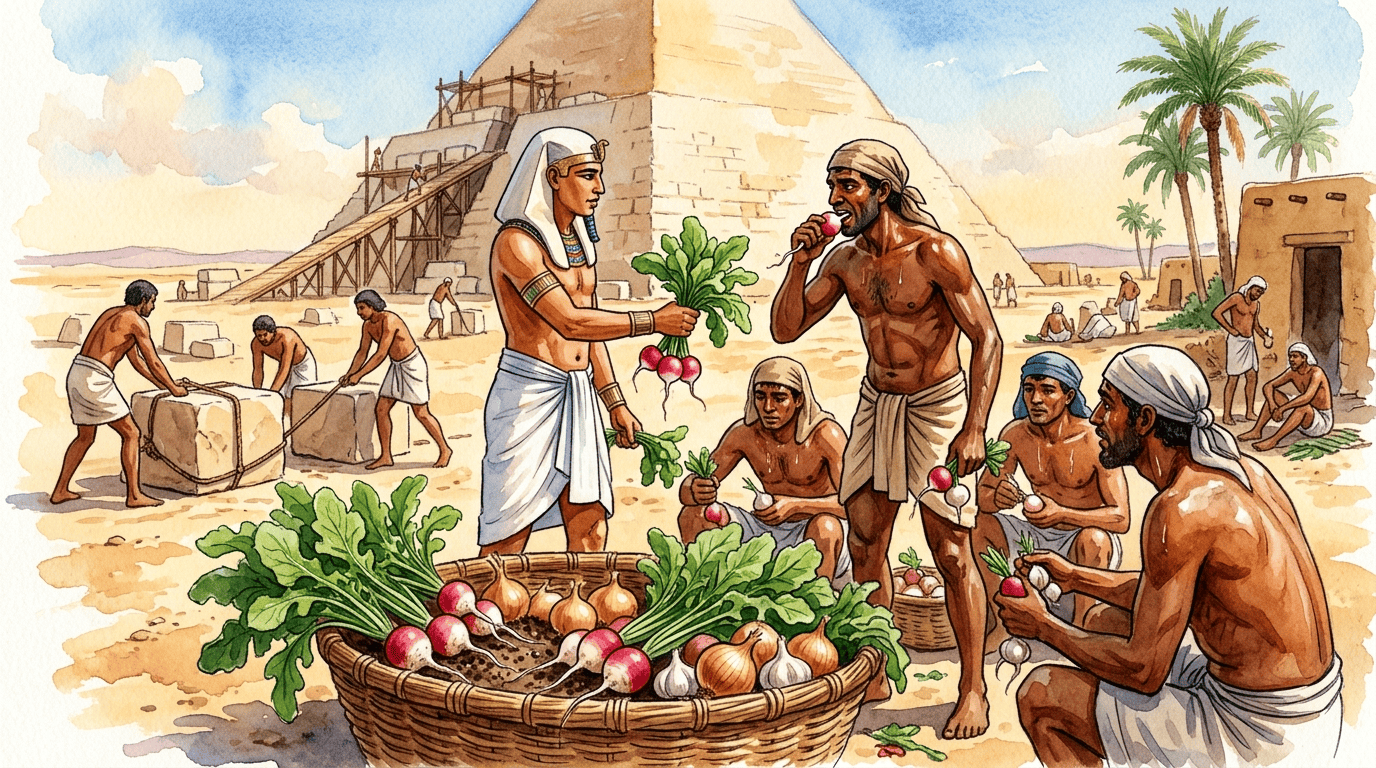
Raphanus sativus, the cultivated radish, probably arose in southwestern Asia, though its domestication is blurred by extreme antiquity. Greek writers mentioned it, Roman cooks ate it, and Egyptian records suggest pyramid workers received radishes alongside onions and garlic. Distinct lines developed across cultures: small red European salad radishes, long white forms, Korean mu for kimchi, Chinese luobo for soups and hot pot, and Japanese daikon, including giant Sakurajima types that can weigh 30-45 kilograms.
The English word radish descends from Latin radix, meaning root. Greek offerings at Delphi reportedly ranked radish high enough to be represented in gold. Its peppery bite comes from glucosinolates and isothiocyanates, compounds that also give mustards and wasabi their heat. From pyramid ration to deli crunch to massive daikon, radish is one of the world's great shape-shifting root crops.
Symbolism & meaning
What It Symbolizes
Cultivated Radish embodies swiftness — the fastest vegetable from seed to table, often ready in under a month, symbolizing quick results and instant gratification. It also stands for simplicity, an easy and accessible crop representing the joy of uncomplicated gardening. The radish is many beginning gardeners' first successful harvest, and the first proof that the soil really does keep its promises.
- Swiftness — The fastest vegetable from seed to table, the radish symbolizes quick results and instant gratification
- Simplicity — Easy and accessible, the radish represents the joy of simple, uncomplicated gardening
Where the Name Comes From
Raphanus from Greek 'raphanos' (easily reared); 'sativus' means cultivated. 'Radish' from Latin 'radix' (root).
Uses & Fun Facts
- Crisp peppery roots eaten raw, pickled, and braised
Related plants
Plants with similar care
 Chinese AbeliaAbelia chinensis
 Fragrant AbeliaAbelia mosanensis
 Large-Flowered AbeliaAbelia uniflora
 Glossy AbeliaAbelia x grandiflora
Frequently asked questions
How often should I water Cultivated Radish?
In summer, water about every 1 days; in winter, about every 5 days. Adjust for heat, pot size and drainage.
How much light does Cultivated Radish need?
Full sun: 6+ hrs direct. Watch the leaves — scorching or stretching means the light needs adjusting.
Is Cultivated Radish toxic to cats or dogs?
Pets Safe (Dogs Safe · Cats Safe) Educational information, not medical or veterinary advice. If exposure is suspected, contact a doctor or veterinarian.
Is Cultivated Radish easy to grow?
Yes — it is considered an easy, beginner-friendly plant.
Can Cultivated Radish be grown indoors?
Yes, it adapts well to indoor growing given the right light.
When does Cultivated Radish bloom?
It typically blooms Jun–Aug in the Northern Hemisphere.
YardMate
Identify any plant in seconds
Snap a photo — YardMate names the plant, diagnoses problems, and reminds you when to water.
Download on the App Store