 YardMate


Purple Sage
Salvia leucophylla
Easy · Beginner friendlyAbout Purple Sage
Purple Sage is a California native coastal scrub shrub famous for its silvery-gray felted leaves and whorls of soft pink-lavender flowers. Native to Santa Barbara and the Channel Islands, it grows 3-6 feet tall and spreads even wider. The foliage reflects sunlight, helping it survive hot dry summers. Its silvery hue brightens the landscape year-round and complements the cool blues and purples of other California natives. Hummingbirds flock to the blooms.
- Fragrant
- Drought-tolerant
- Deer-resistant
- Evergreen
How to care for Purple Sage
Watering
- Springevery 10 days
- Summerevery 14 days
- Fallevery 21 days
- Winterevery 30 days
Soil · Well-draining
- Top dressingPine bark mulch10%
- Main mixPotting soil + perlite 2:170%
- DrainageLECA / gravel20%
Never skip the drainage layer — standing water is the top cause of root rot.
FERTILIZER
This plant needs little to no feeding.
At a Glance
- NativeNorth America
- Height3–5 ft (0.9–1.5 m)
- Spread5–8 ft (1.5–2.4 m)
- Flower colorPink, Purple
- Foliage colorSilver, Green, Variegated
- SoilSandy, Well-drained
- LocationsYard
Bloom time
BLOOM CYCLE
Peak bloom
May–Jul
Pink-lavender whorls May to July
Fragrance
STRONG FRAGRANCE
Powerful herbal-resinous scent; camphor and cineole are the allelopathic volatile compounds.
Toxicity
No toxicity has been reported for this plant. Still, it is wise to keep pets from chewing on any houseplant.
Educational information, not medical or veterinary advice. If exposure is suspected, contact a doctor or veterinarian.
DISTRIBUTION


- Native
- North America
History
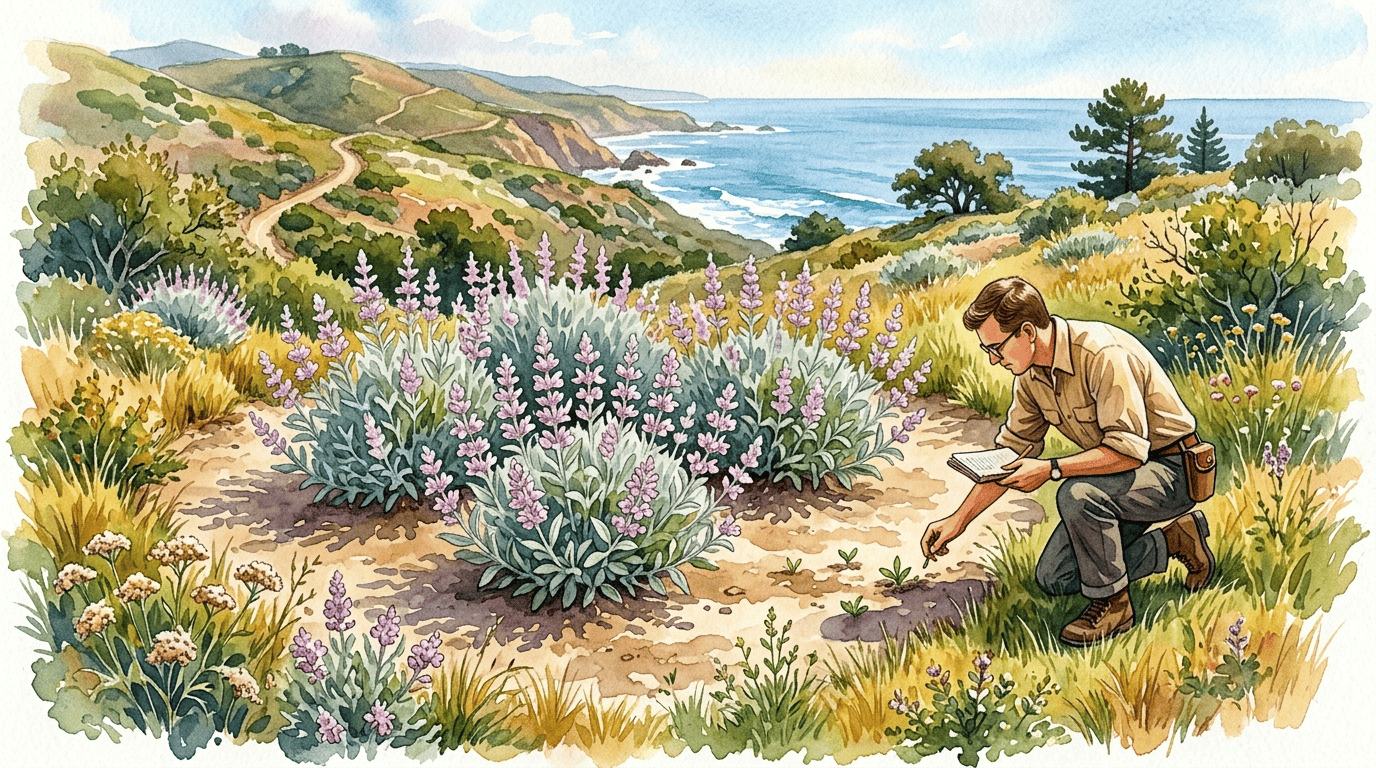
Salvia leucophylla is native to coastal sage scrub communities of Southern California — from San Luis Obispo County south through Santa Barbara, Ventura, and Los Angeles Counties to Orange and San Diego Counties — and into northern Baja California, Mexico. The species epithet "leucophylla" ("white-leaved") refers to the distinctive silvery-white tomentose foliage that reflects sunlight and reduces water loss in the hot dry chaparral summer. It is a compact sprawling evergreen shrub 60-150 cm tall with aromatic gray-white-woolly leaves and, in late spring and early summer, stacked whorls of pale-pink to light-purple flowers (more muted than the vivid purple of S. clevelandii). The species is a famous textbook case-study of plant allelopathy: a landmark 1964 paper by Cornelius Muller and collaborators published in Science showed that volatile monoterpenes (particularly camphor and cineole) released from the leaves of S. leucophylla vaporize and are absorbed by surrounding soil, where they strongly inhibit germination of competing annual grass and herb seeds.
The result is visible bare-earth zones 1-2 meters wide around established purple sage plants — visible from aerial photographs — a vegetation pattern that has been cited in ecology textbooks for decades as a clear-cut example of chemical competition between plants. (Subsequent research has argued that rodent seed predation and drought stress may also contribute to the bare zones, and that allelopathy is not the sole explanation, but the classical allelopathy interpretation remains influential.) Important horticulturally as the "Point Sal" selection and as a parent of "Bee's Bliss" and "Pozo Blue" hybrid garden cultivars.
Chumash people used the leaves medicinally and ceremonially. First collected by Thomas Nuttall in the 1830s.
Symbolism & meaning
What It Symbolizes
Purple Sage is desert clarity. Silver leaves, violet flowers, and resinous scent make it feel carved from sun, wind, and chaparral air. Its symbolism is austere wisdom: a plant that does not waste water, color, or gesture, and is more powerful for that restraint.
- Healing — traditional medicinal herb
- Clarity — silver foliage evokes mental clarity
Where the Name Comes From
'Purple sage' is the garden name for a silvery California Salvia with lavender-purple bloom. Leucophylla means white-leaved in Greek, referring to the pale foliage.
Uses & Fun Facts
- Felted gray foliage releases pungent sage scent in heat
- Bundled for traditional ceremonial smudge sticks and incense
- Lavender flower whorls feed native bees and hummingbirds
Related plants
More Salvia plants
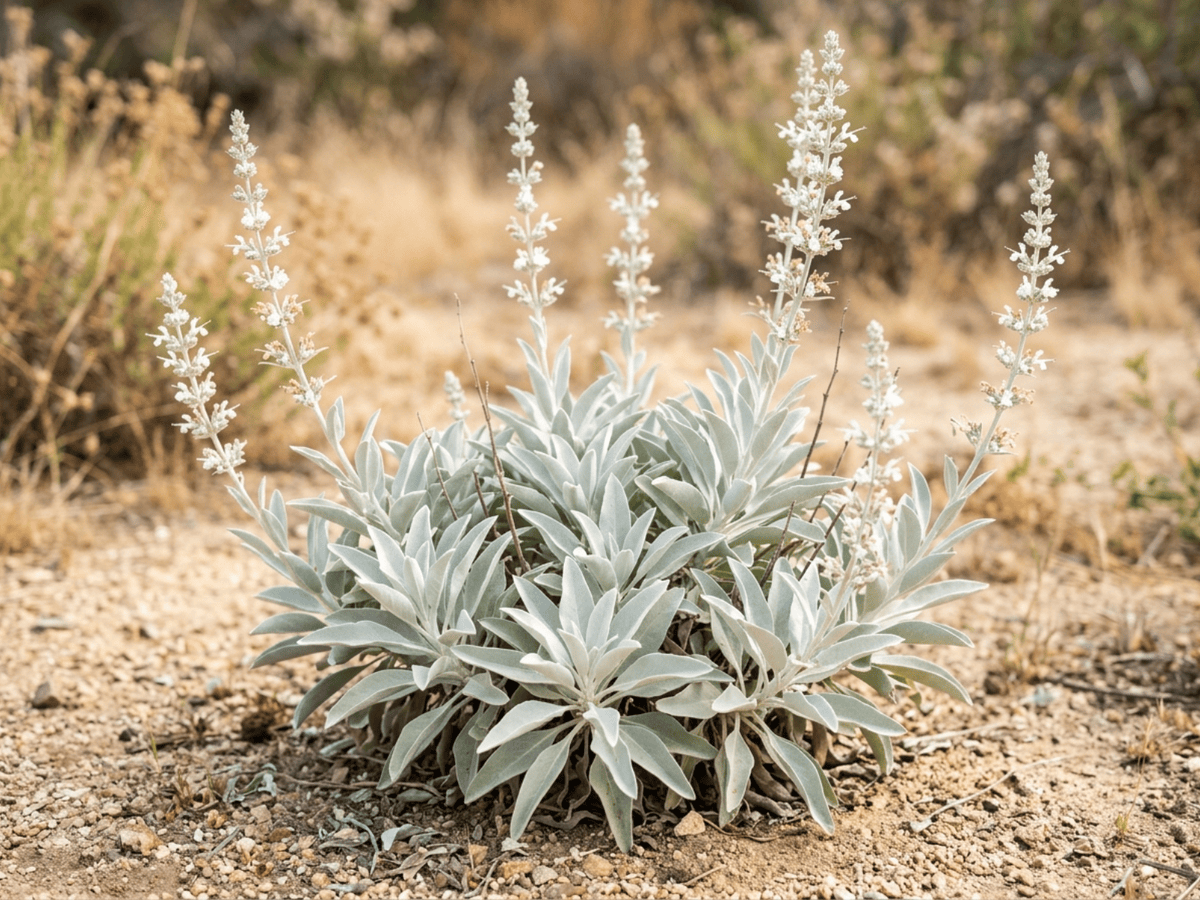 White SageSalvia apiana
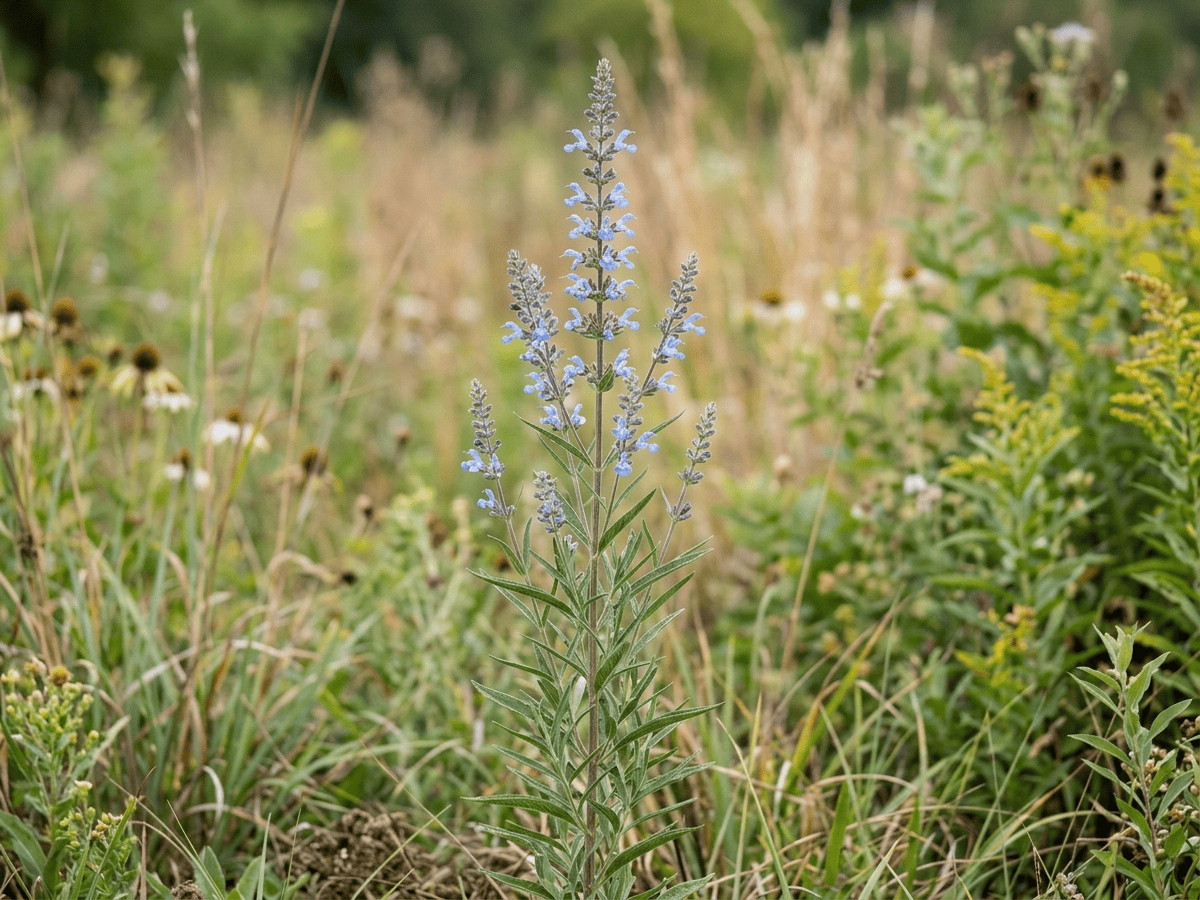 Giant Blue SageSalvia azurea
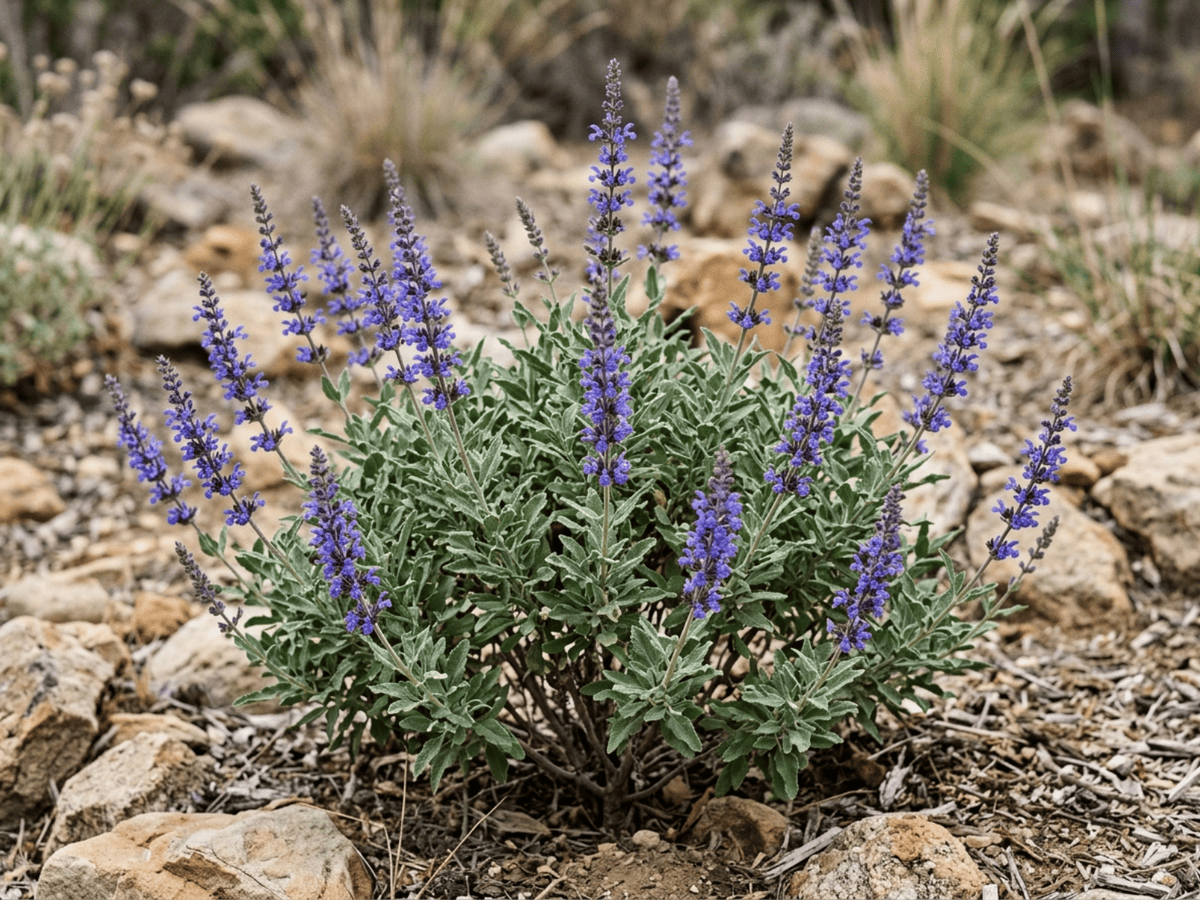 Cleveland SageSalvia clevelandii
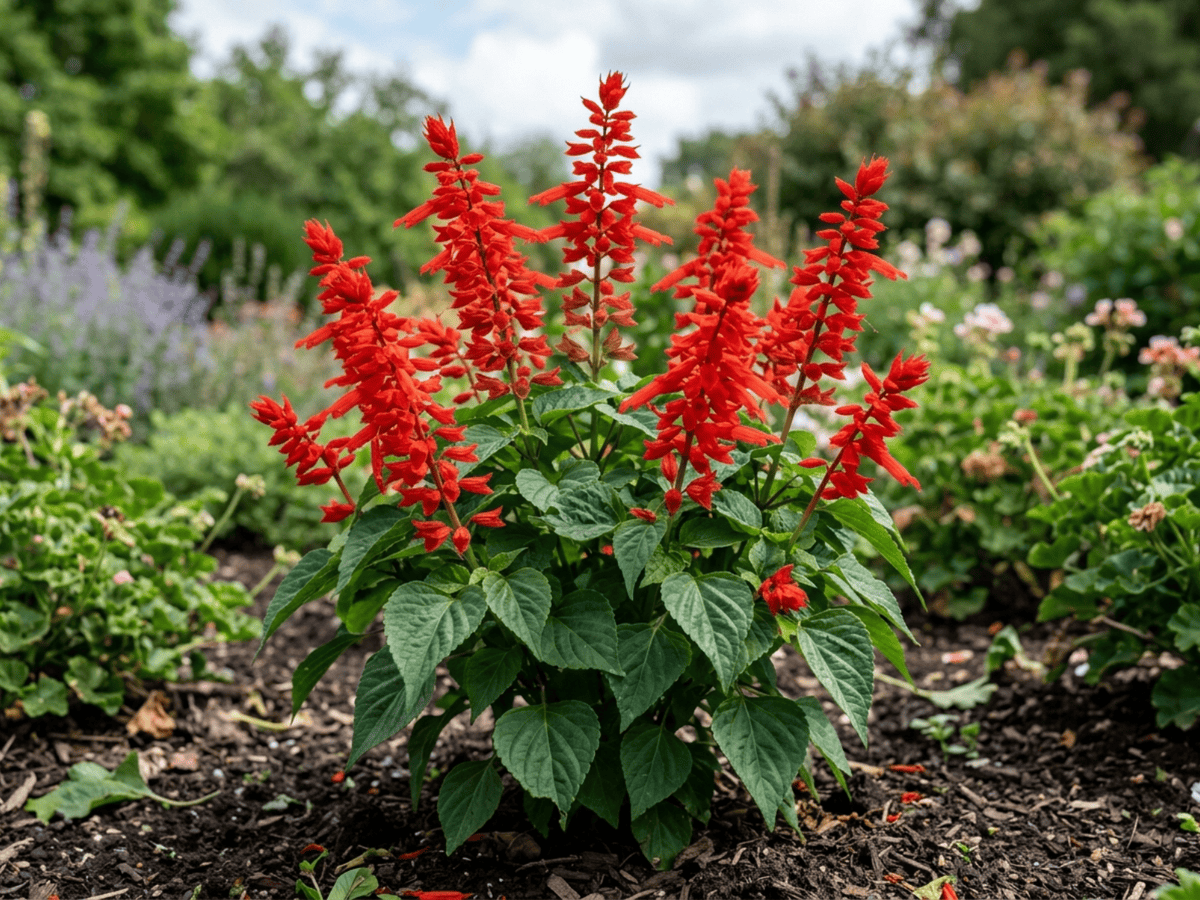 Tropical SageSalvia coccinea
Plants with similar care
 Chinese AbeliaAbelia chinensis
 Fragrant AbeliaAbelia mosanensis
 Large-Flowered AbeliaAbelia uniflora
 Glossy AbeliaAbelia x grandiflora
Frequently asked questions
How often should I water Purple Sage?
In summer, water about every 14 days; in winter, about every 30 days. Adjust for heat, pot size and drainage.
How much light does Purple Sage need?
Full sun: 6+ hrs direct. Watch the leaves — scorching or stretching means the light needs adjusting.
Is Purple Sage toxic to cats or dogs?
No toxicity has been reported for this plant. Still, it is wise to keep pets from chewing on any houseplant. Educational information, not medical or veterinary advice. If exposure is suspected, contact a doctor or veterinarian.
Is Purple Sage easy to grow?
Yes — it is considered an easy, beginner-friendly plant.
When does Purple Sage bloom?
It typically blooms May–Jul in the Northern Hemisphere.
YardMate
Identify any plant in seconds
Snap a photo — YardMate names the plant, diagnoses problems, and reminds you when to water.
Download on the App Store