 YardMate
Butter Tree
Tylecodon paniculatus
Hard · Experienced growersAbout Butter Tree
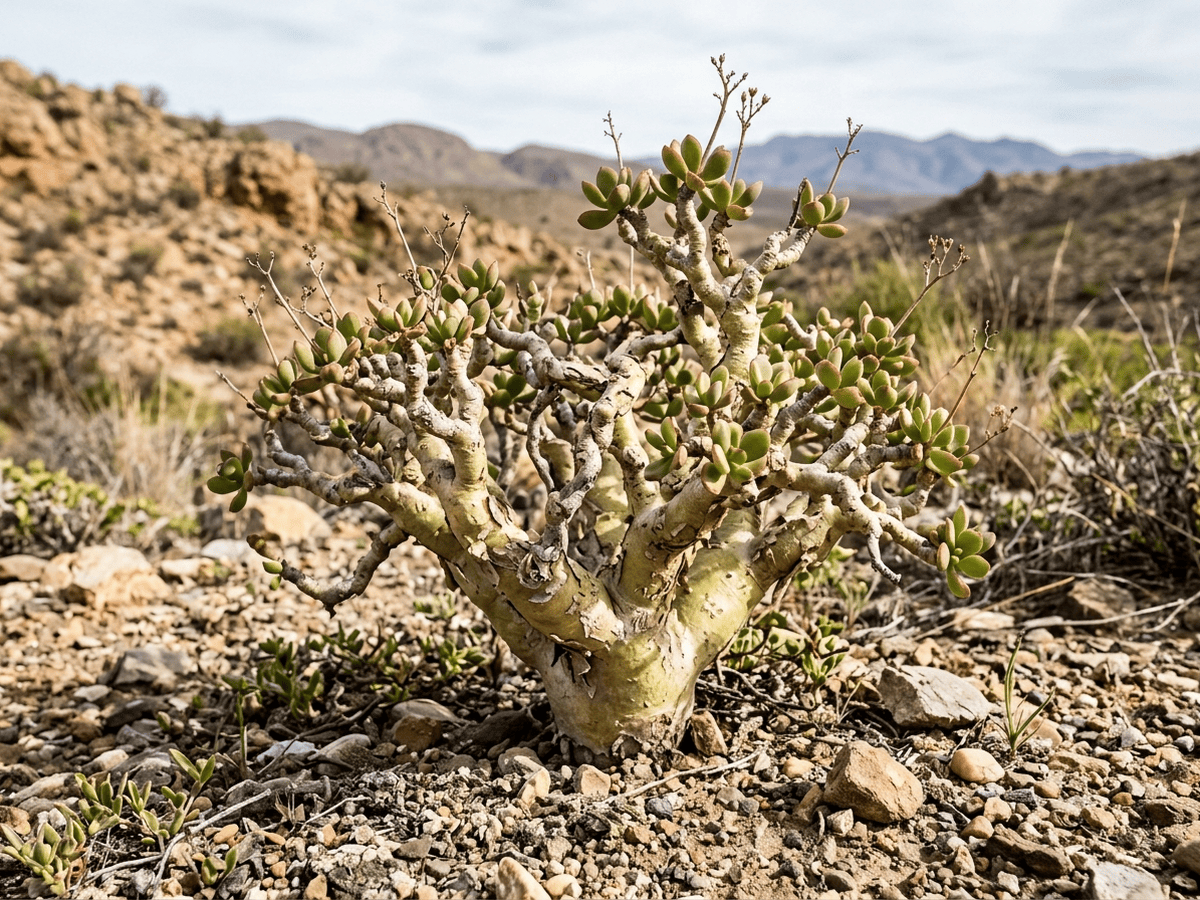
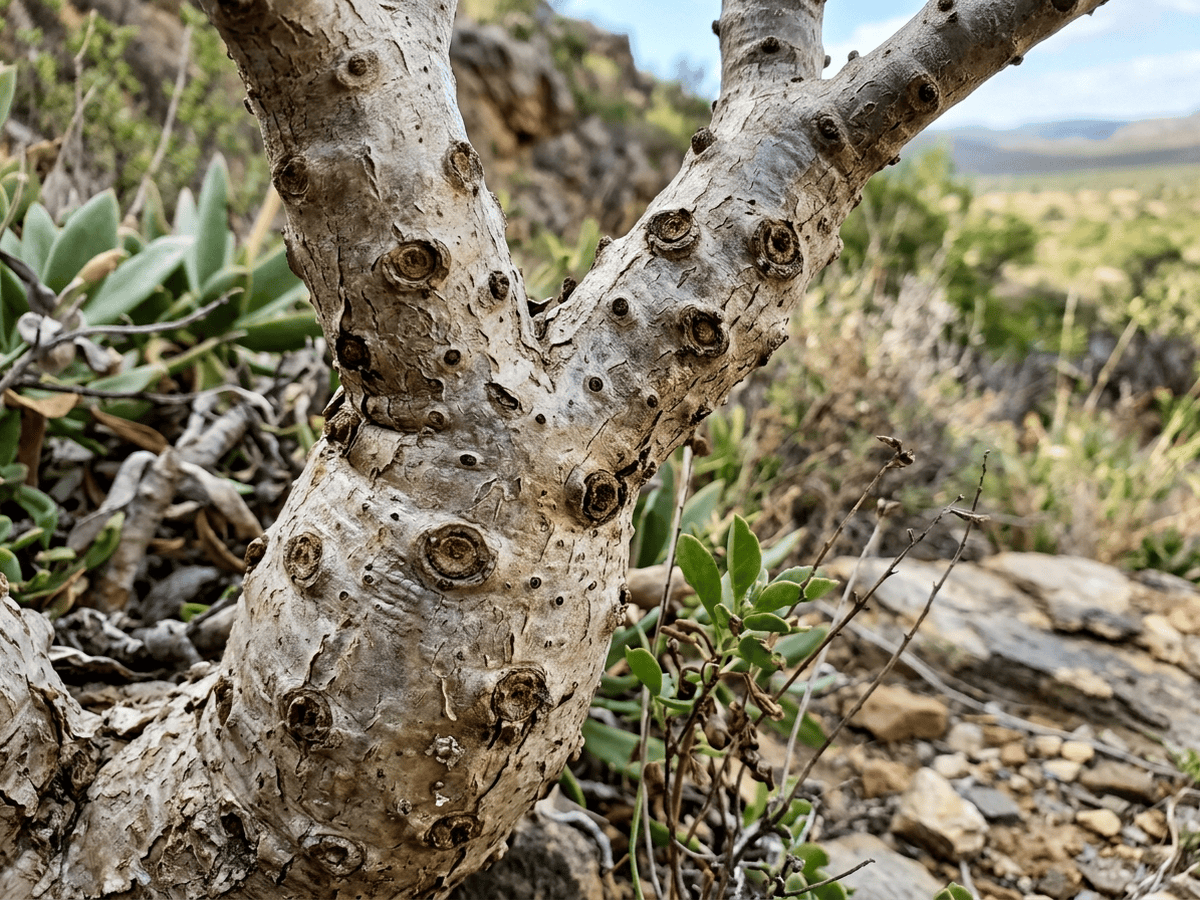
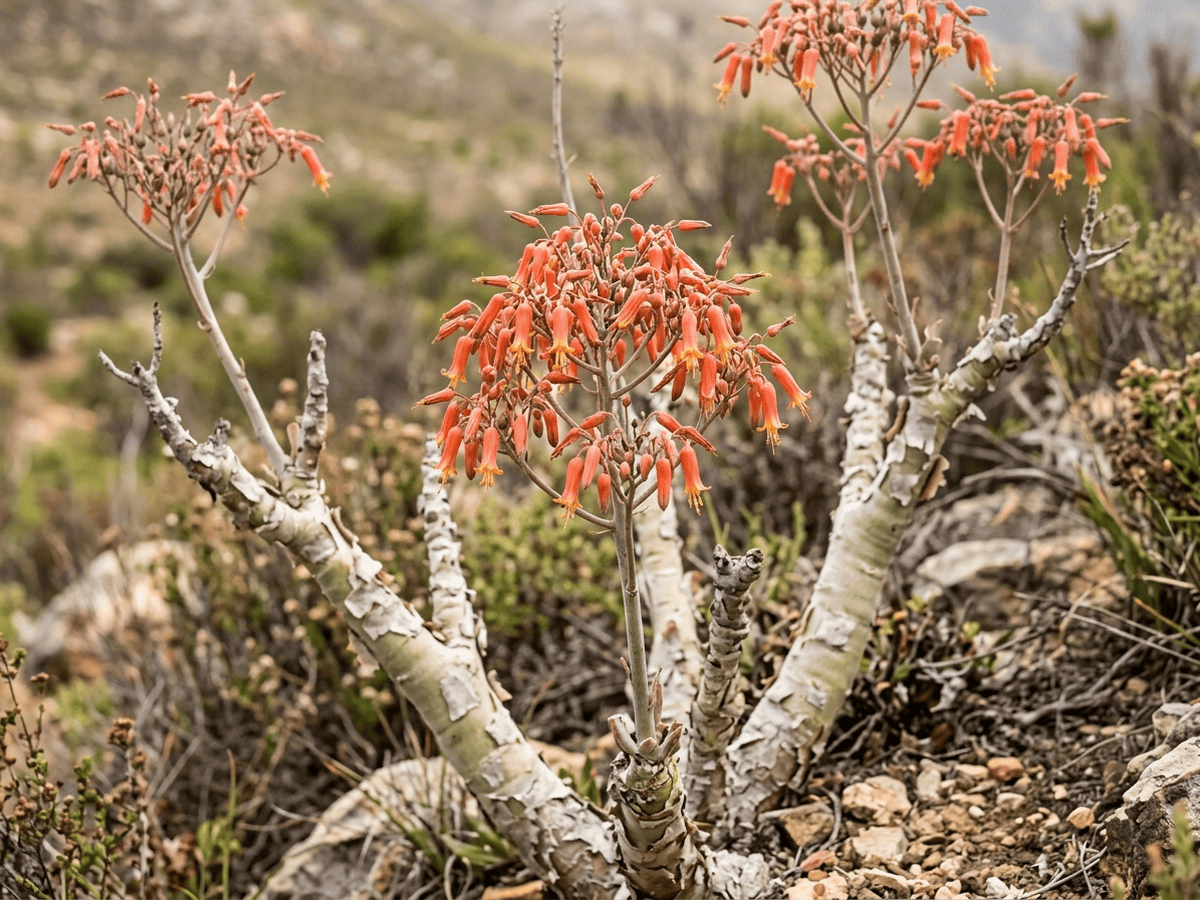
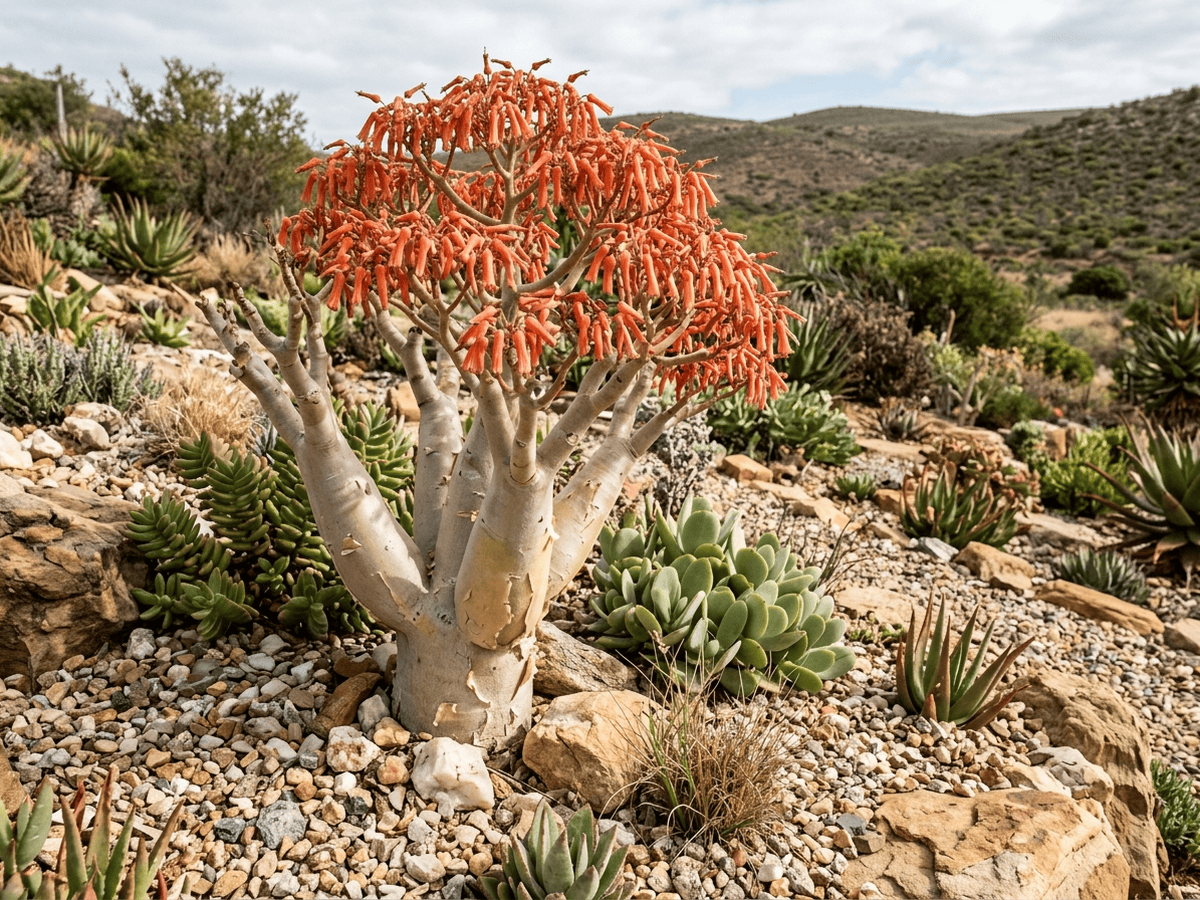
Tylecodon paniculatus, the Butter Tree (Botter Boom), is a striking succulent shrub native to the arid winter-rainfall regions of South Africa—Namaqualand, the Richtersveld, and the Karoo. Summer-dormant by adaptation, it bears leaves only in winter, then flowers spectacularly on bare leafless stems in late summer before going dormant. Its thick, pale yellowish-green succulent stems have the waxy, buttery appearance that gives it its name. Spectacular orange-red tubular flowers on tall panicles make it a prized specimen in dry gardens and succulent collections worldwide. The entire plant is highly toxic—bufadienolide compounds cause severe neurological and cardiac effects in livestock and pets—the source of the South African livestock disease known as krimpsiekte.
- Drought-tolerant
- Slow-growing
- Deciduous
- Container-friendly
- Showy-fruit
How to care for Butter Tree
Watering
- Springevery 10 days
- Summerevery 10 days
- Fallevery 20 days
- Winterevery 30 days
Soil · Fast-draining
- Main mixSand + pumice + soil 1:1:150%
- DrainagePumice / gravel50%
Keep grit at half the mix or more — this soil is meant to dry out fast.
FERTILIZER
Cactus & Succulent Feed 2-7-7
Hold the nitrogen back and growth stays compact instead of soft and stretched. Phosphorus and potassium carry the roots and the flowering.
- Nitrogen · Leaves
- Phosphorus · Roots + Blooms
- Potassium · Strength
- Springevery 30 days
- Summerevery 30 days
At a Glance
- NativeSouthern Africa
- Height1–3 ft (0.3–0.9 m)
- Spread1–2 ft (0.3–0.6 m)
- Foliage colorGreen
- SoilWell-drained, Sandy
- LocationsYard · Balcony
Fragrance
NO FRAGRANCE
Flowers have no significant fragrance.
Toxicity
Toxicity unknown
None reported
Unknown
EXPOSURE No exposure route is reported.
EFFECT No toxic effect is reported.
NOTE Toxicity for humans is not well documented; use caution until verified.
Unknown
EXPOSURE No exposure route is reported.
EFFECT No toxic effect is reported.
NOTE Toxicity for dogs is not well documented; use caution until verified.
Unknown
EXPOSURE No exposure route is reported.
EFFECT No toxic effect is reported.
NOTE Toxicity for cats is not well documented; use caution until verified.
Educational information, not medical or veterinary advice. If exposure is suspected, contact a doctor or veterinarian.
DISTRIBUTION


- Native
- Southern Africa
History
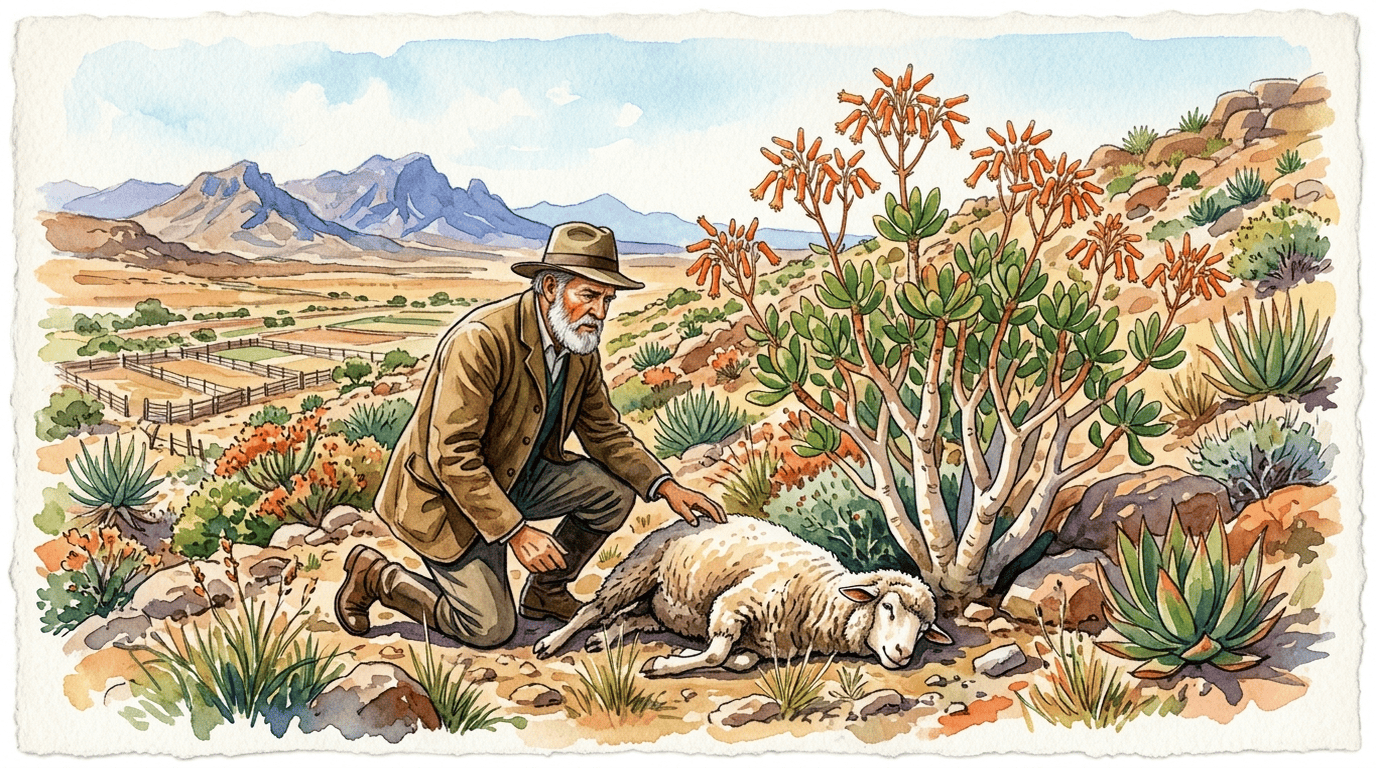
Tylecodon paniculatus grows in one of the most spectacular botanical regions on Earth—the Namaqualand and Richtersveld of South Africa's northwest coast, where winter rains produce extraordinary wildflower displays and endemic succulents crowd rocky hillsides. Dutch settlers began grazing livestock in this region from the late 17th century, and within decades they had identified a pattern: cattle, sheep, and goats that fed on the thick succulent leaves of the Botterboom developed a characteristic disease the Afrikaner farmers called krimpsiekte—'shrinking sickness' or 'cramping disease.' Animals that ingested the leaves became uncoordinated, trembled, and eventually developed progressive paralysis and died. The disease was one of the most economically significant livestock problems in the Cape Colony and later South Africa.
The toxic compounds responsible—bufadienolides, a class of steroidal compounds that affect heart and nerve function—were not identified until the 20th century. Bufadienolides are related to the cardiac glycosides of foxglove (Digitalis) but structurally distinct; they affect voltage-sensitive sodium channels in muscle tissue and can cause both cardiac arrhythmias and the motor neuron damage responsible for krimpsiekte's characteristic paralysis.
Taxonomically, Tylecodon was separated from Cotyledon in 1978 by the South African botanist Herman Jacobsen. The genus name is an anagram of Cotyledon—a clever signal that the two are closely related but distinct. T. paniculatus, the largest species in the genus, was among the first Tylecodons to attract European botanical attention; specimens reached European herbaria with early Cape collections and the species appeared in early works on Cape flora.
In cultivation, it has become a prized ornamental for collectors worldwide—the buttery stem texture, the summer deciduousness, the bare-stem orange flowers—but always with the caveat that every part is toxic.
Symbolism & meaning
What It Symbolizes
For the farmers of Namaqualand, the Botter Boom was beautiful and deadly in equal measure. Its orange flowers brightened the hillsides. Its leaves killed their sheep. They learned to respect it from a safe distance—which is perhaps the right relationship with something so beautiful and so dangerous.
- beautiful danger — Stunning in flower and form, yet lethally toxic throughout—the Butter Tree is a reminder that beauty and danger are not opposites in nature.
- patient dormancy — It drops its leaves and sleeps through the summer, blooming in bare-stem splendor at the end of drought—a living demonstration that patience and timing are their own form of strength.
Where the Name Comes From
Tylecodon is an anagram of Cotyledon, the related genus from which it was separated in 1978 by botanist Herman Jacobsen. The species name paniculatus refers to the paniculate (branched, elongated) arrangement of the flower clusters. Butter Tree is the English translation of the Afrikaans Botter Boom, referring to the thick, waxy, yellowish-pale succulent stems that resemble churned butter.
Uses & Fun Facts
- Prized specimen plant for dry gardens, succulent collections, and Mediterranean-climate landscapes; distinctive buttery stems, summer deciduousness, and dramatic bare-stem orange flower panicles
- In native Namaqualand, tubular flowers are visited by sunbirds and other nectarivores in the arid-region pollinator community
Related plants
Plants with similar care
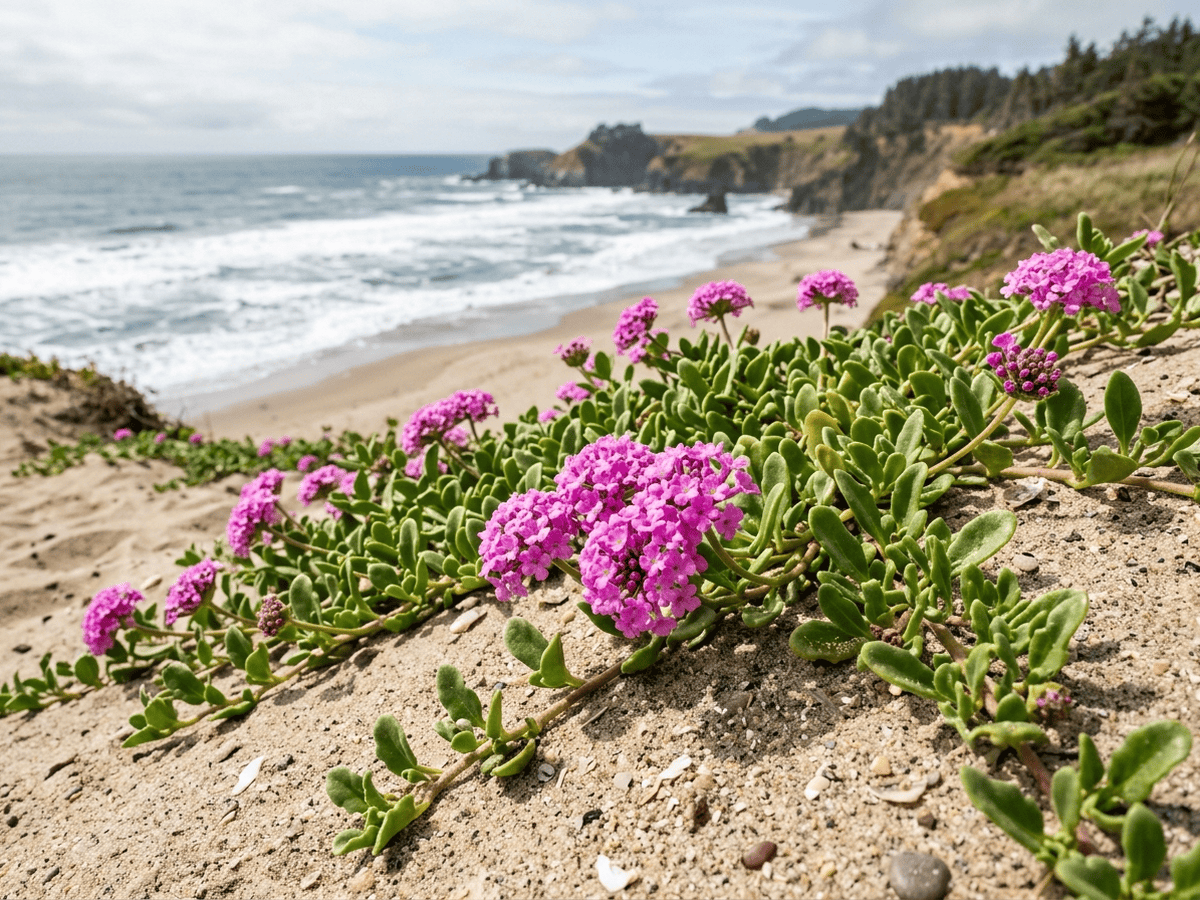 Pink Sand VerbenaAbronia umbellata
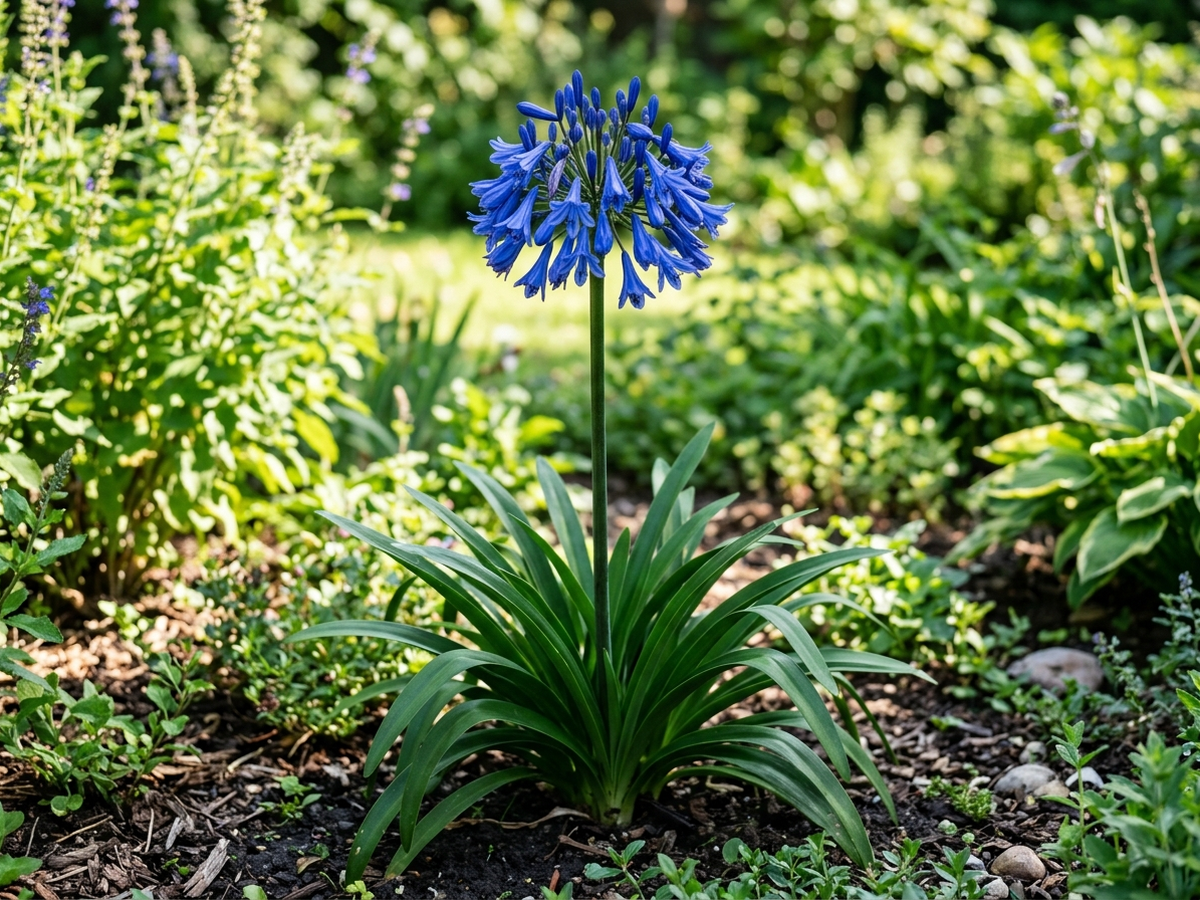 Drooping AgapanthusAgapanthus inapertus
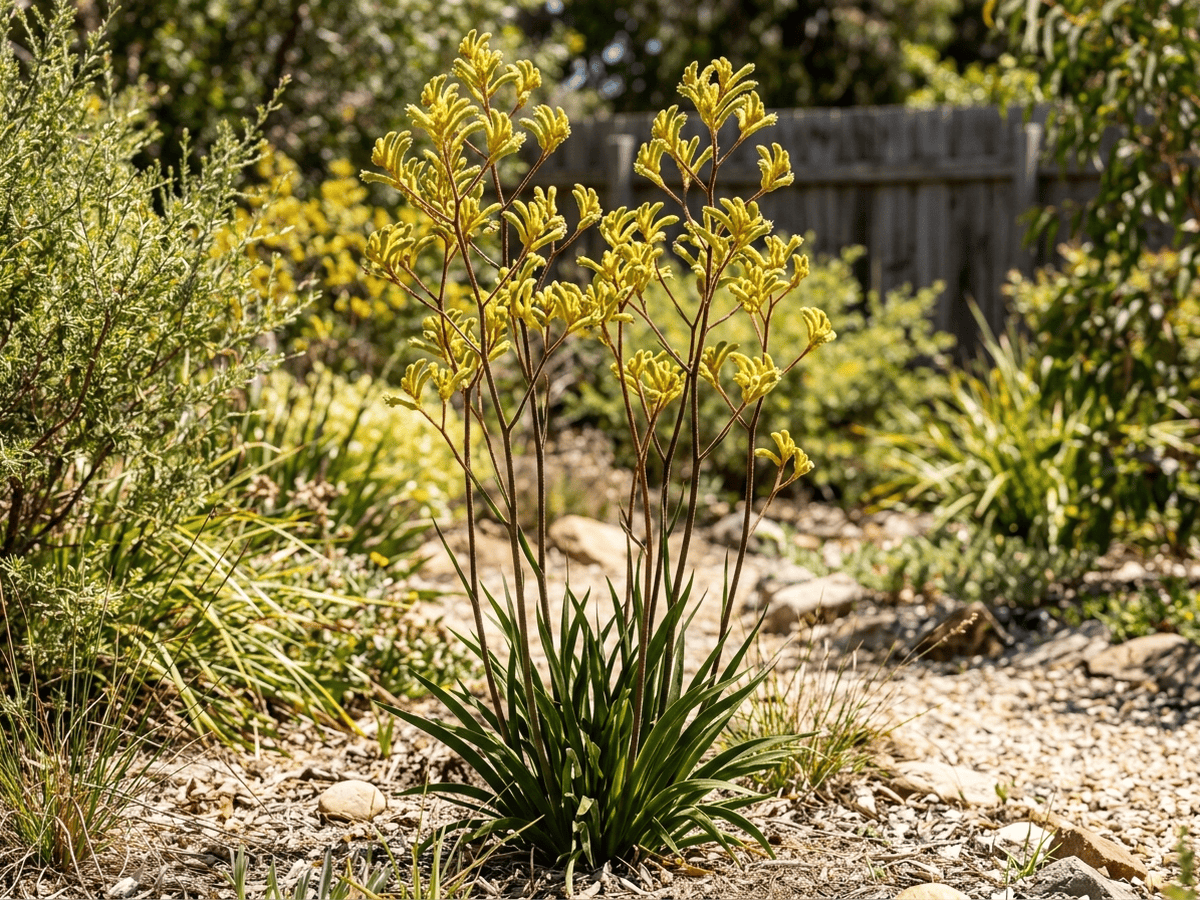 Tall Kangaroo PawAnigozanthos flavidus
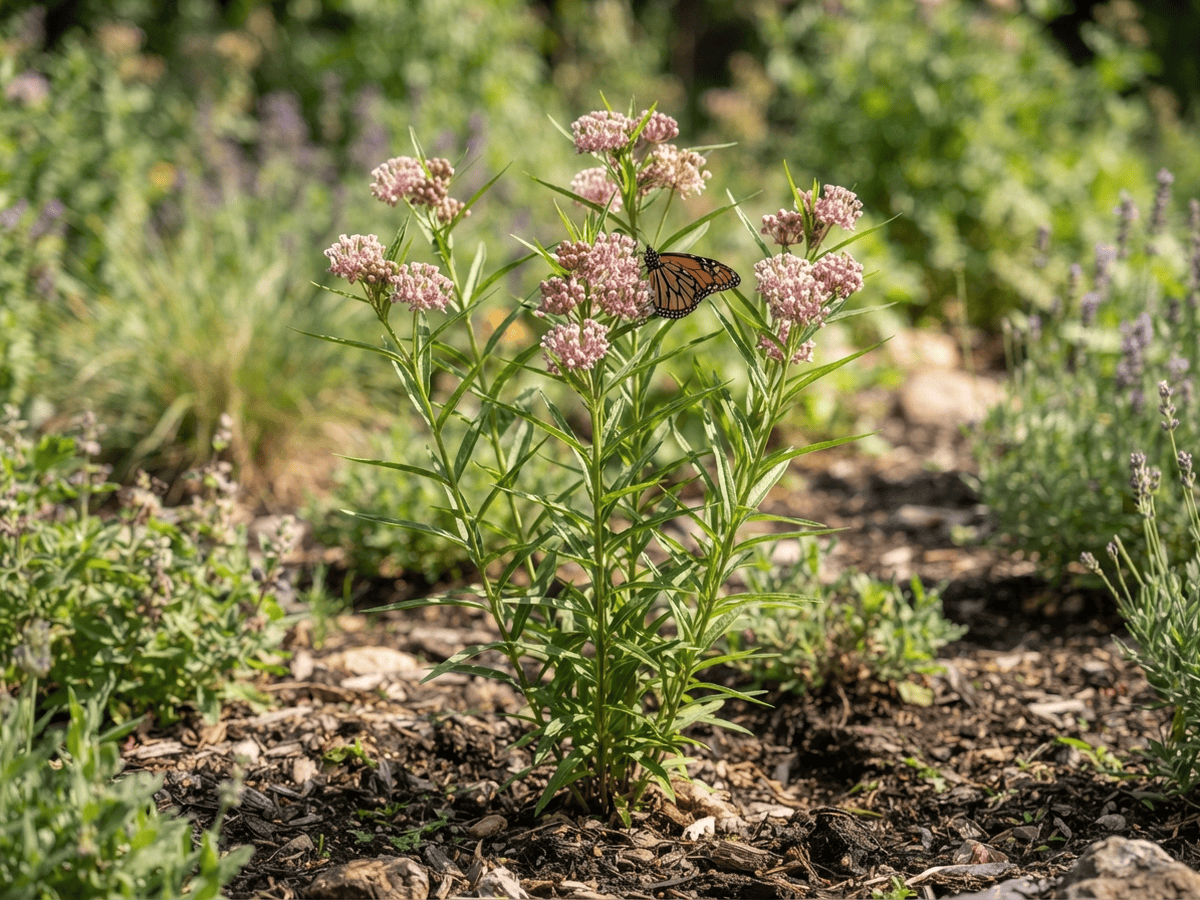 Narrowleaf MilkweedAsclepias fascicularis
Frequently asked questions
How often should I water Butter Tree?
In summer, water about every 10 days; in winter, about every 30 days. Adjust for heat, pot size and drainage.
How much light does Butter Tree need?
Full sun: 6+ hrs direct. Watch the leaves — scorching or stretching means the light needs adjusting.
Is Butter Tree toxic to cats or dogs?
Pets Unknown (Dogs Unknown · Cats Unknown) Educational information, not medical or veterinary advice. If exposure is suspected, contact a doctor or veterinarian.
Is Butter Tree easy to grow?
It is considered challenging and rewards experienced growers.
YardMate
Identify any plant in seconds
Snap a photo — YardMate names the plant, diagnoses problems, and reminds you when to water.
Download on the App Store