 YardMate


Perennial Wall-Rocket
Diplotaxis tenuifolia
Easy · Beginner friendlyAbout Perennial Wall-Rocket
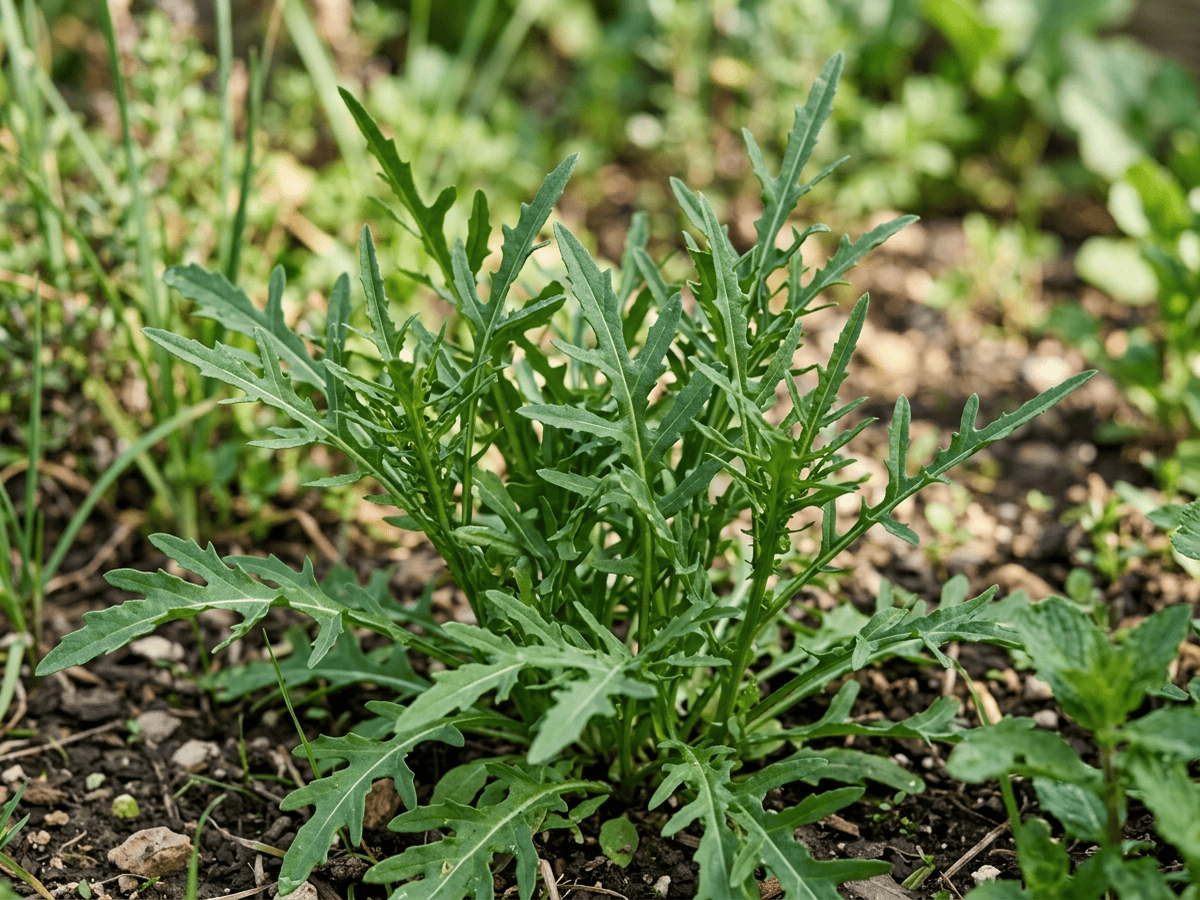
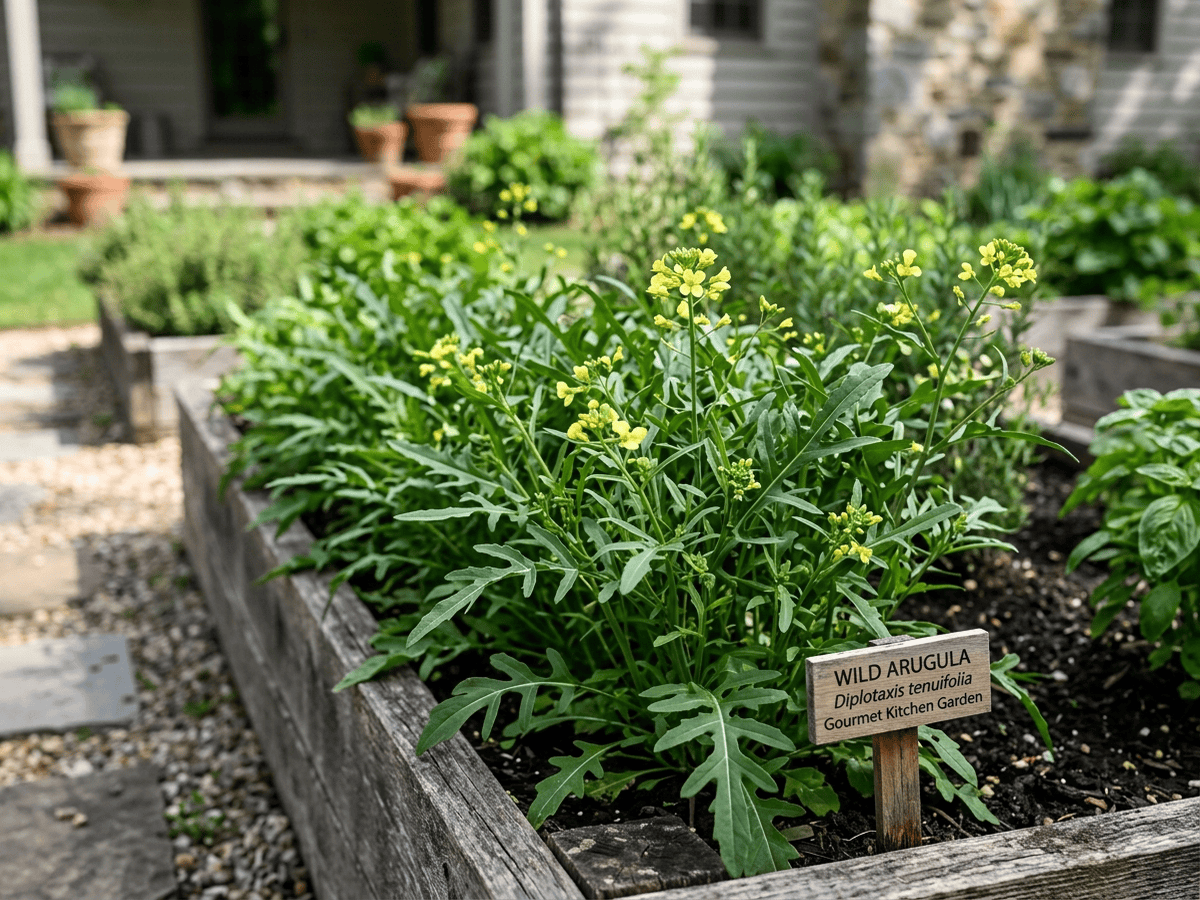
Wild Arugula or Sylvetta is a Mediterranean perennial relative of common arugula reaching 12-24 inches, with finely divided green leaves of significantly stronger and more peppery flavor and bright yellow flowers in summer. More heat-tolerant than annual arugula, it provides peppery greens through summer when annual arugula bolts. Increasingly available at gourmet grocers and grown by serious salad-green enthusiasts in American gardens.
- Edible
- Drought-tolerant
- Heat-tolerant
How to care for Perennial Wall-Rocket
Watering
- Springevery 7 days
- Summerevery 10 days
- Fallevery 14 days
- Winterevery 30 days
Soil · Rich & well-draining
- Top dressingCompost10%
- Main mixPotting soil + compost 3:180%
- DrainageGravel10%
Top up the compost layer each season.
FERTILIZER
Balanced Feed 14-14-14
An even feed covers all three needs at once, keeping leaves, roots and blooms moving together with nothing pushed out of balance.
- Nitrogen · Leaves
- Phosphorus · Roots + Blooms
- Potassium · Strength
- Springevery 30 days
- Summerevery 30 days
At a Glance
- NativeMediterranean, Europe, Africa
- Height1–2 ft (0.3–0.6 m)
- Spread1–1.5 ft (0.3–0.5 m)
- Flower colorYellow
- Foliage colorGreen
- SoilWell-drained, Loamy
- LocationsYard · Balcony
Bloom time
BLOOM CYCLE
Peak bloom
Jun–Aug
Bright yellow flowers in summer
Fragrance
MODERATE FRAGRANCE
The foliage has a sharp peppery mustard aroma.
Toxicity
Humans Safe · Pets Safe
glucosinolates
Safe
EXPOSURE No exposure route is reported.
EFFECT No toxic effect is reported.
NOTE Listed as non-toxic for humans; avoid eating ornamental plants unless confirmed edible.
Safe
EXPOSURE No exposure route is reported.
EFFECT No toxic effect is reported.
NOTE Listed as non-toxic for dogs; avoid eating ornamental plants unless confirmed edible.
Safe
EXPOSURE No exposure route is reported.
EFFECT No toxic effect is reported.
NOTE Listed as non-toxic for cats; avoid eating ornamental plants unless confirmed edible.
Educational information, not medical or veterinary advice. If exposure is suspected, contact a doctor or veterinarian.
DISTRIBUTION

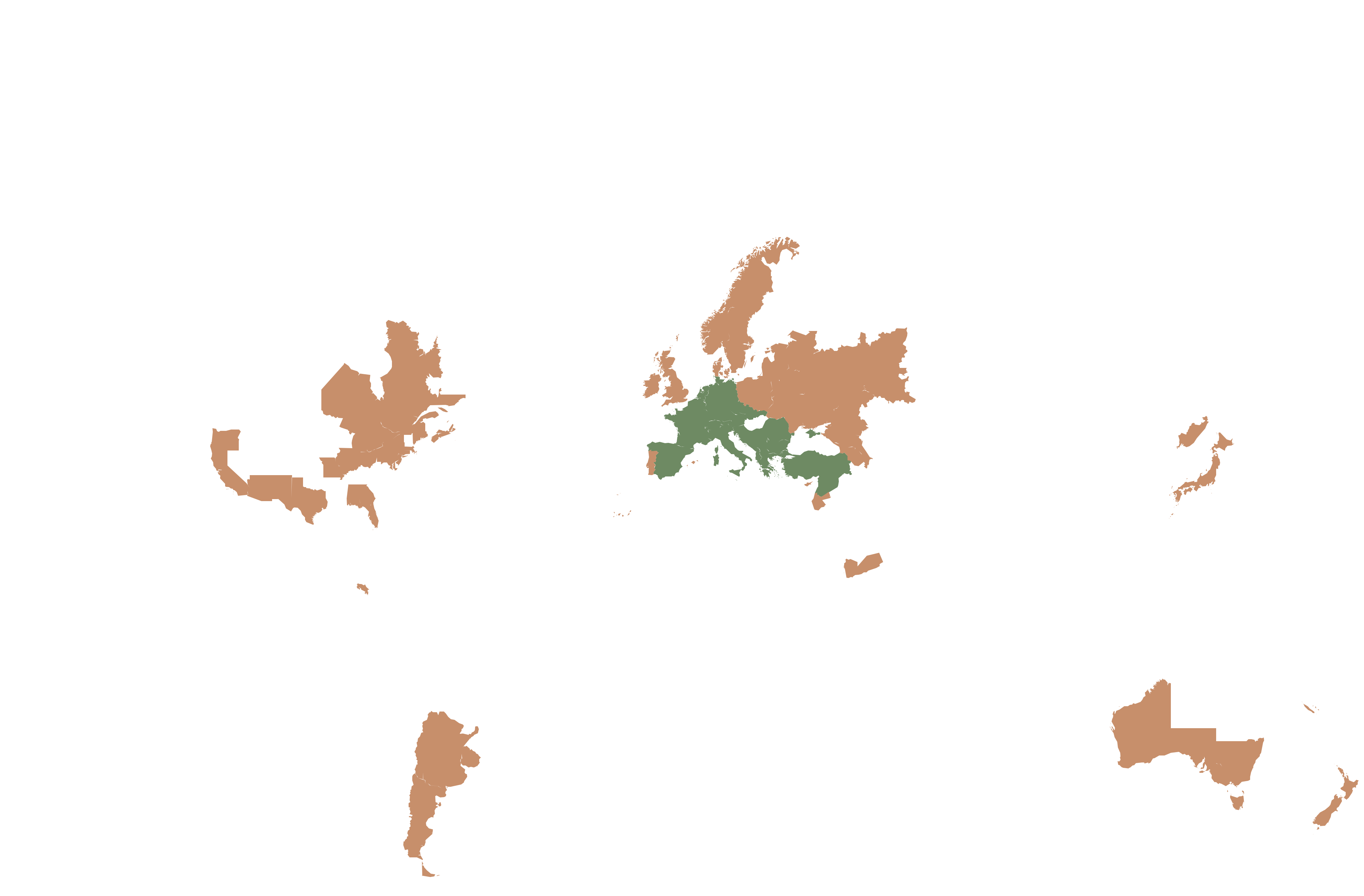
- Native
- Introduced
- Mediterranean
- Europe
- Africa
History

Diplotaxis tenuifolia, commonly called wild rocket, perennial wall rocket, or sand rocket, is a perennial herb in the cabbage family (Brassicaceae) native to the Mediterranean basin, temperate Europe (including much of Britain), North Africa, and southwestern Asia, typically growing on disturbed ground, wall crevices, rocky slopes, and sand dunes. Carl Linnaeus originally described it as Sisymbrium tenuifolium in Species Plantarum in 1753; Swiss botanist Augustin Pyramus de Candolle transferred it to Diplotaxis in 1821 when he established that genus. The epithet tenuifolia means narrow-leaved, referring to the slender deeply pinnately lobed bright green leaves that are narrower and more elegantly cut than those of the related Eruca sativa.
Plants are perennial, forming woody-based crowns with flowering stems 30-60 cm tall producing bright yellow four-petaled flowers (unlike the creamy-white flowers of Eruca). The flavor is distinctly spicier, sharper, and more peppery than true arugula.
Since the 1990s-2000s the species has dominated the European and increasingly global 'wild rocket' and 'baby rocket' salad market, often outselling true Eruca. Long popular in Italian cuisine where it is called 'rucola selvatica' (wild rocket). Has become the gourmet's preferred arugula for its more intense peppery flavor and ability to provide greens through summer heat when common arugula bolts.
Symbolism & meaning
What It Symbolizes
Perennial Wall-Rocket is a study in boldness — its narrow leaves carry an intensely peppery flavor that wakes any salad it joins. Endurance is its other gift: unlike its annual cousin, this rocket persists through summer heat and returns year after year. Its meaning is quiet, sharp character — a flavor and a habit that refuse to be muted by season or soil.
- Boldness — intensely peppery flavor
- Endurance — perennial green that thrives through summer heat
Where the Name Comes From
The name Perennial Wall-Rocket points to rocky habitats. 'Diplotaxis' from Greek meaning double-row (referring to seeds); 'tenuifolia' means slender-leaved.
Uses & Fun Facts
- Peppery leaves harvested as perennial wild rocket salad
- Yellow flowers feed bees through long bloom season
Related plants
Plants with similar care
 Chinese AbeliaAbelia chinensis
 Fragrant AbeliaAbelia mosanensis
 Large-Flowered AbeliaAbelia uniflora
 Glossy AbeliaAbelia x grandiflora
Frequently asked questions
How often should I water Perennial Wall-Rocket?
In summer, water about every 10 days; in winter, about every 30 days. Adjust for heat, pot size and drainage.
How much light does Perennial Wall-Rocket need?
Full sun: 6+ hrs direct. Watch the leaves — scorching or stretching means the light needs adjusting.
Is Perennial Wall-Rocket toxic to cats or dogs?
Pets Safe (Dogs Safe · Cats Safe) Educational information, not medical or veterinary advice. If exposure is suspected, contact a doctor or veterinarian.
Is Perennial Wall-Rocket easy to grow?
Yes — it is considered an easy, beginner-friendly plant.
When does Perennial Wall-Rocket bloom?
It typically blooms Jun–Aug in the Northern Hemisphere.
YardMate
Identify any plant in seconds
Snap a photo — YardMate names the plant, diagnoses problems, and reminds you when to water.
Download on the App Store