 YardMate
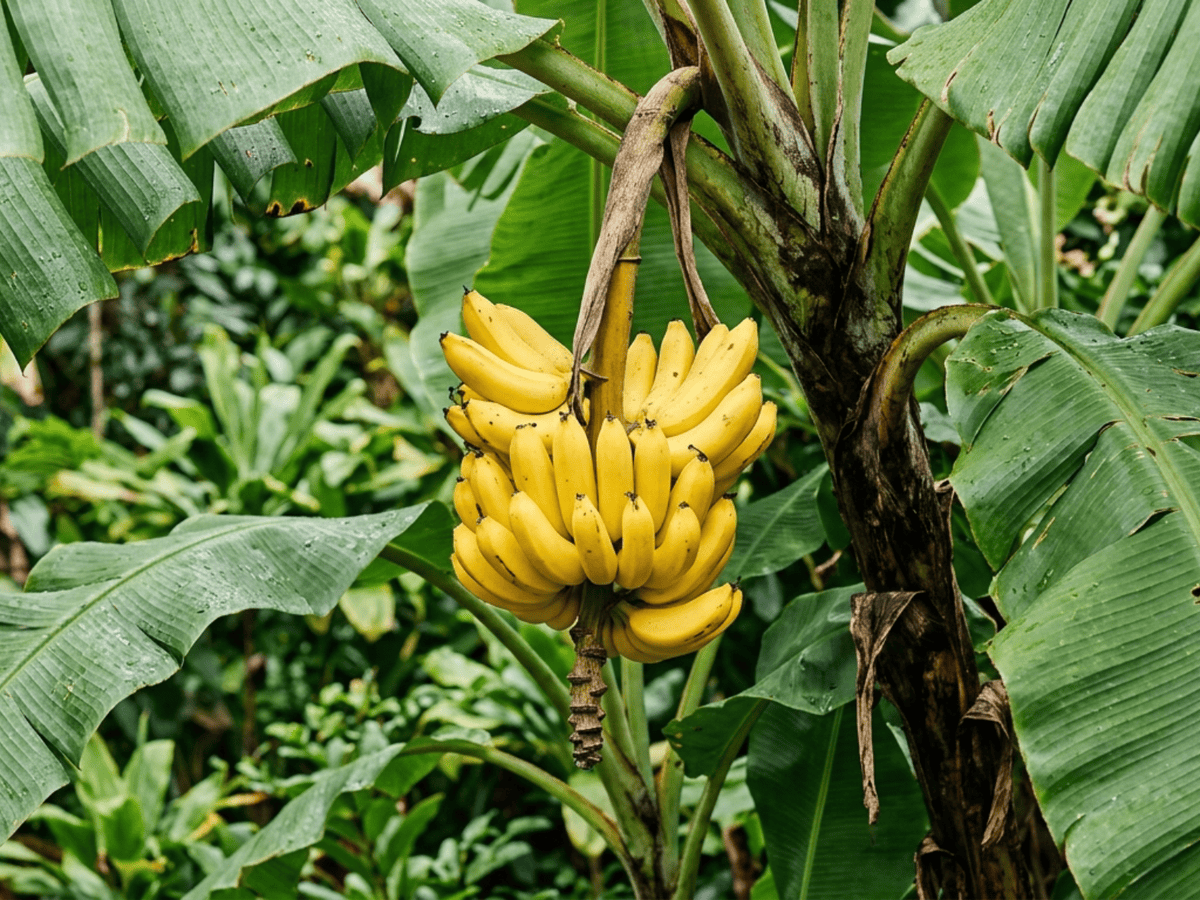


Cavendish Banana
Musa acuminata
Medium · Some experienceAbout Cavendish Banana
Musa acuminata, the banana, is a giant herbaceous perennial in the Musaceae family native to Southeast Asia. What appears to be a 'trunk' is actually a pseudostem formed from tightly packed leaf sheaths; the true stem is underground. Plants reach 2–9 m tall with enormous paddle-shaped leaves that can be 2.7 m long. Each plant produces one massive hanging flower cluster that develops into a bunch of 100–300 bananas.
Bananas are tropical plants requiring USDA zones 9–11 (or as ornamentals/annuals in cooler zones). They need full sun, rich soil, abundant water, and high humidity. Dwarf varieties like 'Dwarf Cavendish' can be grown in large containers. Each pseudostem fruits once then dies, replaced by suckers from the rhizome—a single plant is essentially immortal.
The banana is the world's most popular fruit and the fourth most important food crop globally. The Cavendish variety dominates commercial trade, but it faces existential threat from Tropical Race 4 (TR4) Fusarium wilt—the same fate that wiped out the previous commercial variety, Gros Michel, in the 1950s. Wild and heirloom varieties offer incredible diversity: red, pink, cooking bananas (plantains), tiny finger bananas, and ice-cream textured varieties. Bananas provide potassium, vitamin B6, and quick-release energy.
- Edible
- Fast-growing
- Tropical
How to care for Cavendish Banana
Watering
- Springevery 3 days
- Summerevery 2 days
- Fallevery 4 days
- Winterevery 7 days
Soil · Well-draining
- Main mixLoam + bark + perlite 2:1:175%
- DrainageLECA25%
Bark keeps the mix from compacting under a heavy root ball.
FERTILIZER
Balanced Feed 14-14-14
An even feed covers all three needs at once, keeping leaves, roots and blooms moving together with nothing pushed out of balance.
- Nitrogen · Leaves
- Phosphorus · Roots + Blooms
- Potassium · Strength
- Springevery 14 days
- Summerevery 14 days
- Fallevery 21 days
At a Glance
- NativeAustralasia, East Asia
- Height10–20 ft (3–6.1 m)
- Spread6–10 ft (1.8–3 m)
- Flower colorYellow, Purple
- Foliage colorGreen
- Fruit colorYellow
- SoilLoamy, Moisture-retentive, Rich
- LocationsYard · Indoor · Balcony
Bloom time
BLOOM CYCLE
Peak bloom
Jun–Aug
Dramatic hanging flower cluster appears 9–12 months after planting; each pseudostem flowers once.
Fragrance
MODERATE FRAGRANCE
Distinctive banana aroma dominated by isoamyl acetate ester.
Toxicity
Humans Safe · Pets Safe
None reported
Safe
EXPOSURE No exposure route is reported.
EFFECT Widely consumed and rare banana allergy with latex cross-reactivity.
NOTE Listed as non-toxic for humans; avoid eating ornamental plants unless confirmed edible.
Safe
EXPOSURE No exposure route is reported.
EFFECT Flesh not toxic and peel can cause GI obstruction.
NOTE Listed as non-toxic for dogs; avoid eating ornamental plants unless confirmed edible.
Safe
EXPOSURE No exposure route is reported.
EFFECT Flesh not toxic.
NOTE Listed as non-toxic for cats; avoid eating ornamental plants unless confirmed edible.
Educational information, not medical or veterinary advice. If exposure is suspected, contact a doctor or veterinarian.
DISTRIBUTION


- Native
- Introduced
- Australasia
- East Asia
History

Musa acuminata was domesticated in the highlands of Papua New Guinea approximately 7,000 years ago. The Kuk Swamp archaeological site in Papua New Guinea provides some of the earliest evidence of agriculture anywhere on Earth, with banana phytoliths and taro cultivation dated to 6950-6440 BCE. From New Guinea, bananas spread through Southeast Asia, Africa (by approximately 500 CE via Madagascar and the Indian Ocean), and the Americas (via 16th-century Portuguese traders from West Africa to the Caribbean).
The modern global commercial banana industry is built on a single parthenocarpic (seedless, genetically identical) clone — originally the "Gros Michel" variety, which was devastated by Fusarium wilt (Panama disease) in the 1950s-60s. The industry then shifted to the "Cavendish" clone, which dominates today. Cavendish is now threatened by Tropical Race 4 of Fusarium, first identified in Taiwan and Malaysia in the 1990s and now spreading globally.
Research into genetically resistant varieties and GMO Cavendish continues. Ecuador, the Philippines, Costa Rica, Colombia, and Guatemala are leading commercial producers; India is the largest producer overall when domestic consumption is included. The United Fruit Company's 20th-century monopoly influenced Central American politics ('banana republics'). The Gros Michel — tastier than today's Cavendish — was commercially extinct by the 1960s due to Panama Disease. TR4 now threatens the Cavendish similarly.
Symbolism & meaning
What It Symbolizes
The Cavendish Banana embodies prosperity, the plant of fertility, abundance, and continuous renewal across Hindu and Southeast Asian traditions. A single specimen produces hundreds of fruits in its lifetime, embodying a generosity that scales beyond personal use into community feeding. From temple offerings to family kitchens, the banana stands for nature's bountiful giving — the kind of generosity so abundant that it cannot help but be shared.
- Prosperity — In Hindu and Southeast Asian traditions, the banana plant symbolizes fertility, prosperity, and continuous renewal
- Generosity — A single plant providing hundreds of fruits represents nature's bountiful giving
Where the Name Comes From
Musa possibly honours Antonius Musa, physician to Emperor Augustus, or from Arabic 'mauz' (banana); 'acuminata' means pointed, describing the leaf tip.
Uses & Fun Facts
- Cavendish Banana perennial used in cottage and naturalistic borders
Related plants
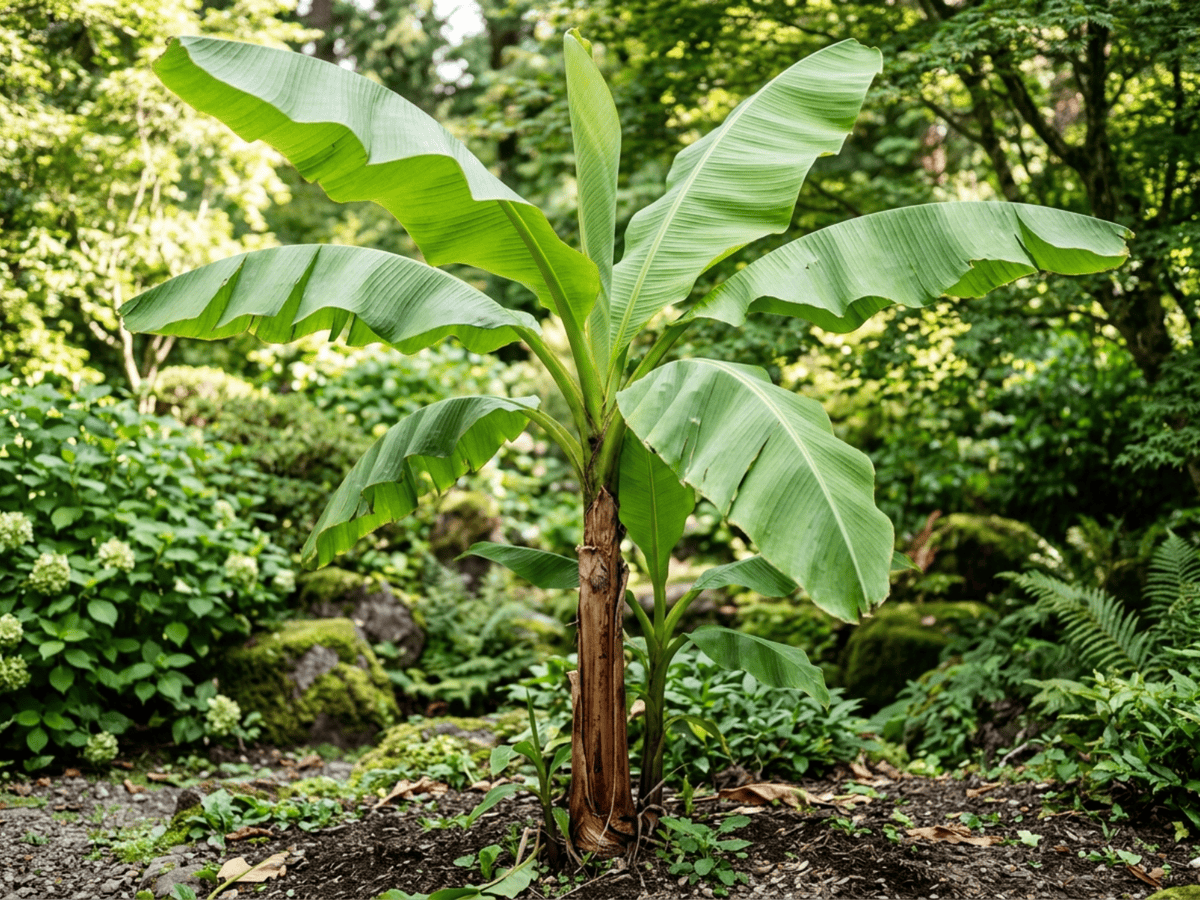
More Musa plants
Plants with similar care
 Mexican AbeliaAbelia floribunda
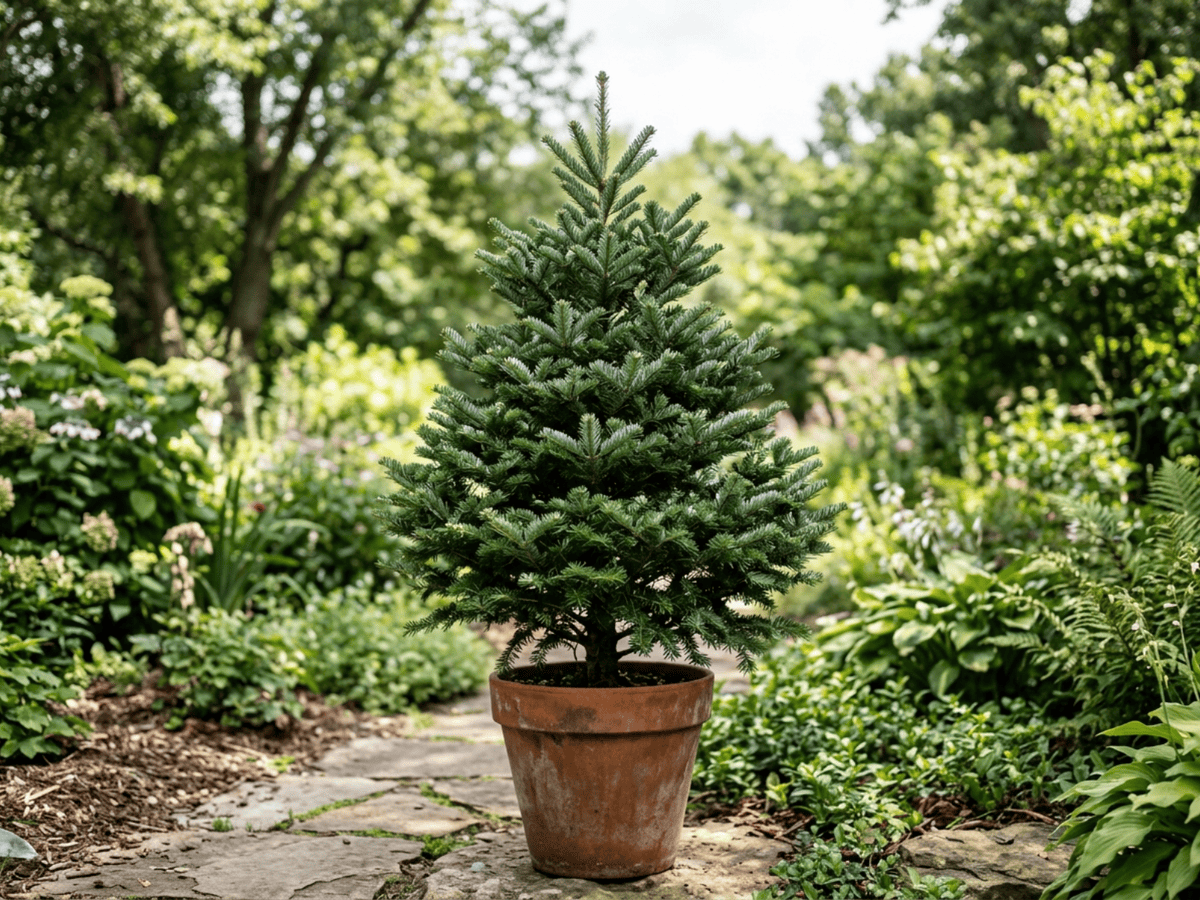 Fraser FirAbies fraseri
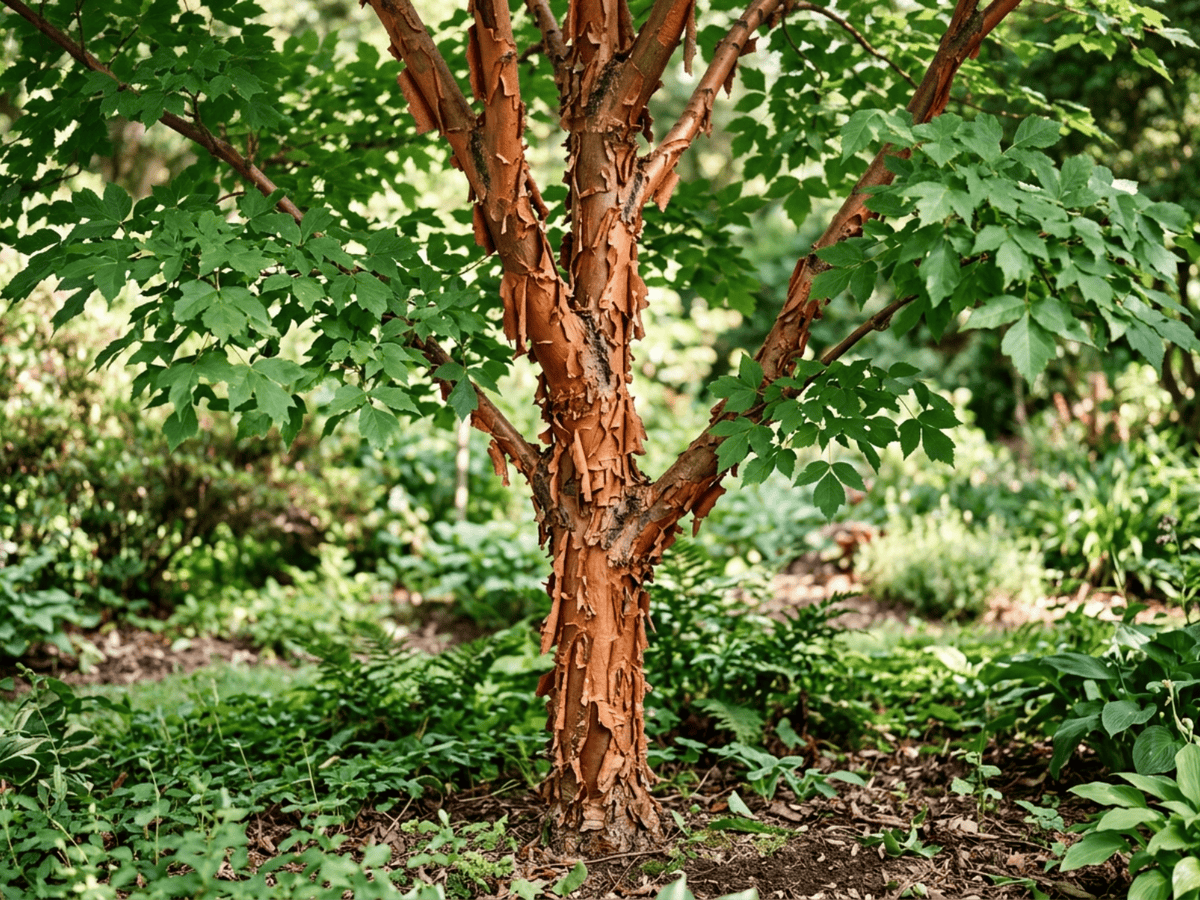 Paperbark MapleAcer griseum
 Sugar MapleAcer saccharum
Frequently asked questions
How often should I water Cavendish Banana?
In summer, water about every 2 days; in winter, about every 7 days. Adjust for heat, pot size and drainage.
How much light does Cavendish Banana need?
Full sun: 6+ hrs direct. Watch the leaves — scorching or stretching means the light needs adjusting.
Is Cavendish Banana toxic to cats or dogs?
Pets Safe (Dogs Safe · Cats Safe) Educational information, not medical or veterinary advice. If exposure is suspected, contact a doctor or veterinarian.
Is Cavendish Banana easy to grow?
It is moderately demanding: a good choice once you have a little experience.
Can Cavendish Banana be grown indoors?
Yes, it adapts well to indoor growing given the right light.
When does Cavendish Banana bloom?
It typically blooms Jun–Aug in the Northern Hemisphere.
YardMate
Identify any plant in seconds
Snap a photo — YardMate names the plant, diagnoses problems, and reminds you when to water.
Download on the App Store