 YardMate

Love-In-A-Mist
Nigella damascena
Easy · Beginner friendlyAbout Love-In-A-Mist
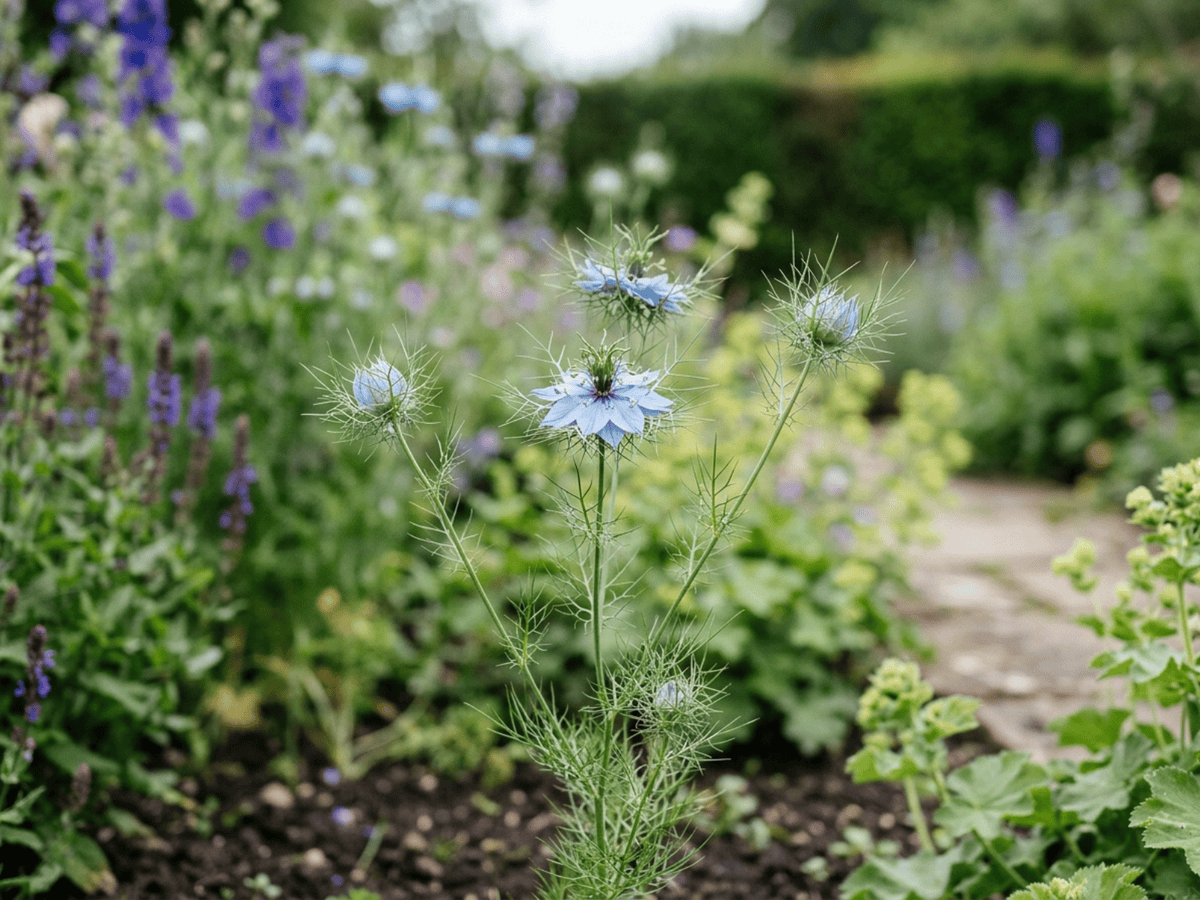
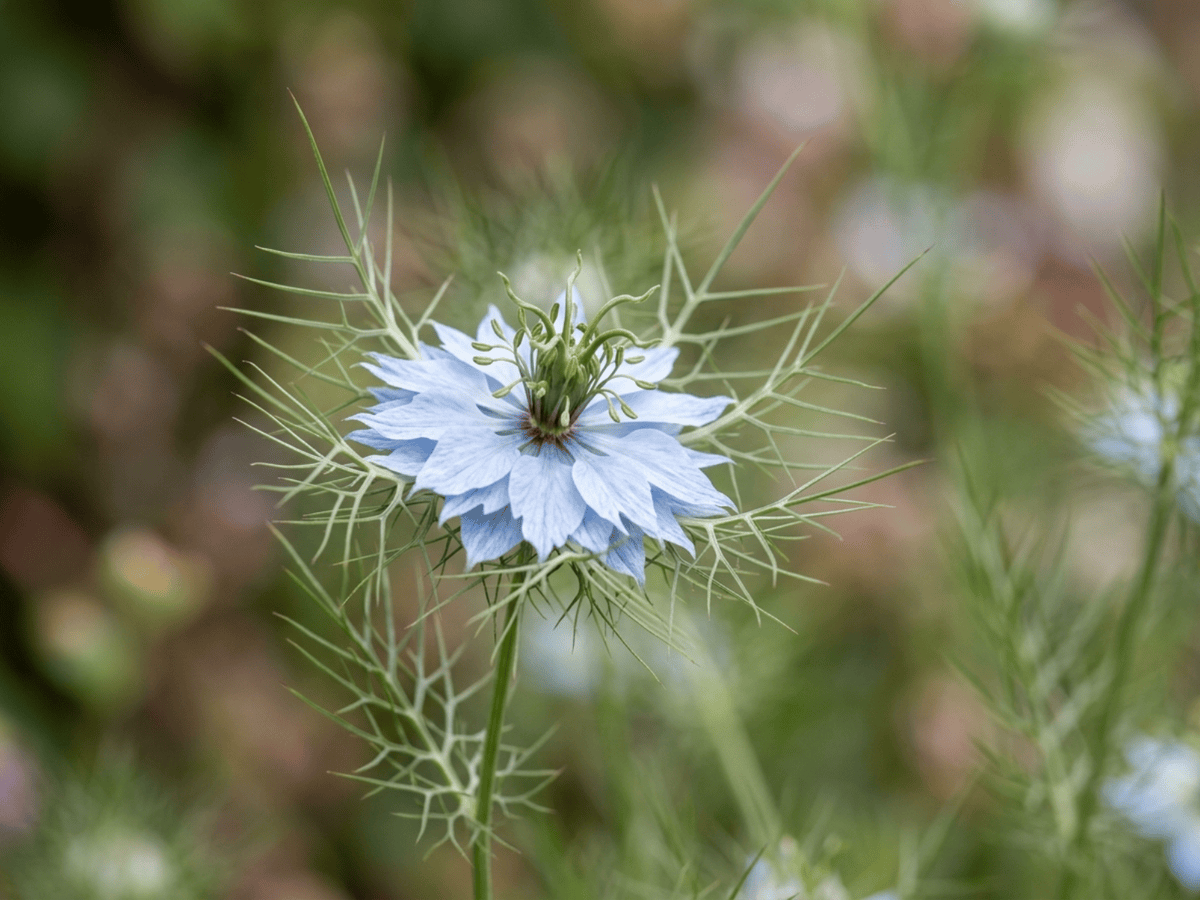
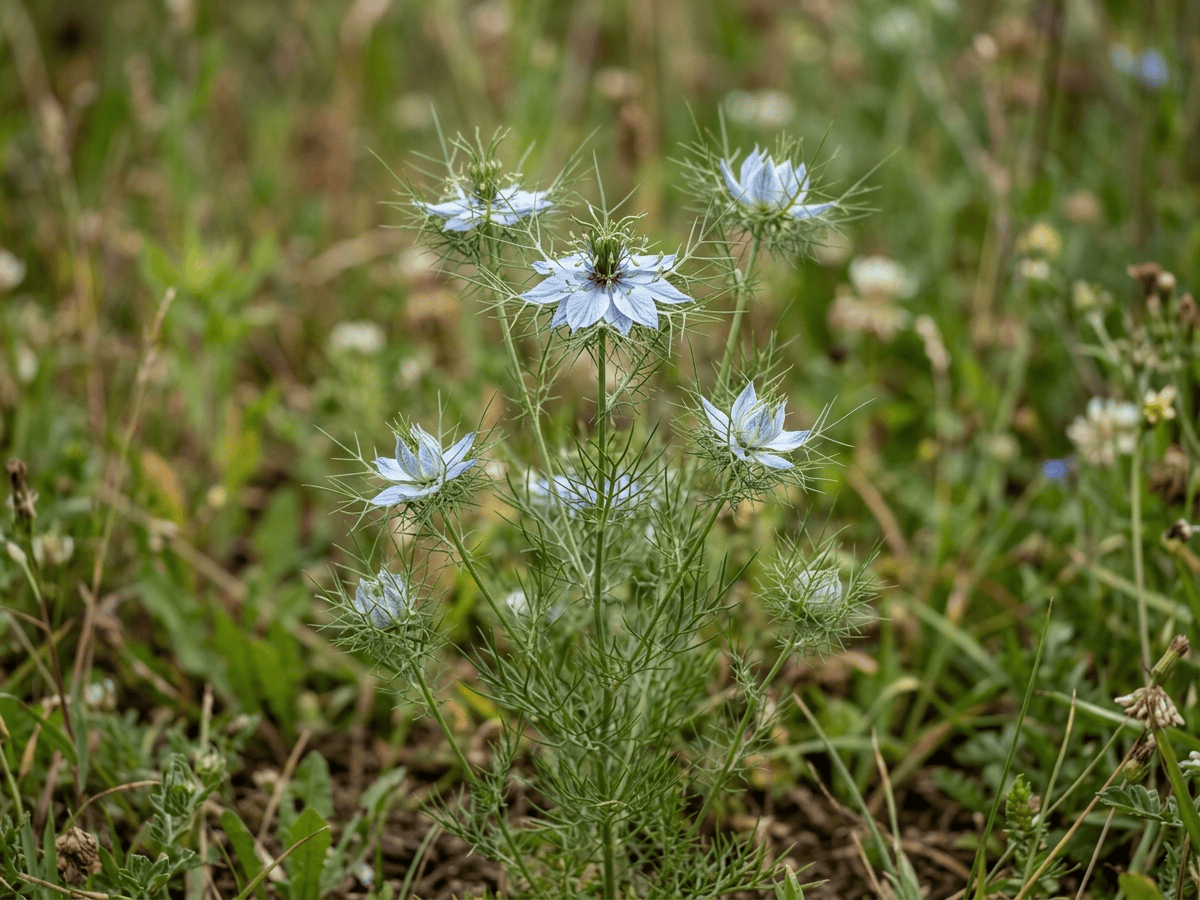
Nigella damascena, love-in-a-mist, is a enchanting annual native to southern Europe, North Africa, and southwestern Asia. Its delicate blue, white, or pink flowers are nestled within a filigree of thread-like bracts that create a misty, ethereal halo around each bloom — the source of its romantic common name. Growing 30 to 50 cm tall, the plant has feathery, finely divided foliage that adds a soft, airy texture to any planting. After flowering, it produces ornamental inflated seed pods with prominent horns that are prized in dried flower arrangements. Love-in-a-mist is one of the easiest annuals to grow from direct-sown seed, germinating in cool conditions and blooming about eight weeks later. It dislikes transplanting due to its delicate taproot. The plant self-sows reliably, often returning year after year once established. The black seeds (called 'black cumin' in some cultures, not to be confused with Nigella sativa) have a mild peppery flavor. It is virtually pest-free and thrives in full sun with average, well-drained soil.
- Pollinator-friendly
- Cut-flower
- Drought-tolerant
How to care for Love-In-A-Mist
Watering
- Springevery 5 days
- Summerevery 4 days
- Fallevery 10 days
- Winterpause watering
Soil · Well-draining
- Top dressingPine bark mulch10%
- Main mixPotting soil + perlite 2:170%
- DrainageLECA / gravel20%
Never skip the drainage layer — standing water is the top cause of root rot.
FERTILIZER
This plant needs little to no feeding.
At a Glance
- NativeMediterranean, Western Asia
- Height1–2 ft (0.3–0.6 m)
- Spread0.5–1 ft (0.2–0.3 m)
- Flower colorBlue, White, Pink, Purple
- Foliage colorGreen
- SoilLoamy, Well-drained
- LocationsYard · Indoor · Balcony
Bloom time
BLOOM CYCLE
Peak bloom
Mar, Apr, Sep, Oct, Nov
Direct sow in early spring or fall; successive sowings every 3 weeks extend the bloom season
Fragrance
NO FRAGRANCE
No notable fragrance.
Toxicity
Humans Slight · Pets Slight
damascenine
Slight
- Seed
- Ingestion
EXPOSURE Eating seeds.
EFFECT Ornamental Nigella damascena seeds contain damascenine and should not be consumed and kitchen nigella is the different species N. sativa.
NOTE Documented concern for humans: Ornamental Nigella damascena seeds contain damascenine and should not be consumed and kitchen nigella is the different species N. sativa.
Slight
- Seed
- Ingestion
EXPOSURE Eating seeds.
EFFECT Mild GI upset possible.
NOTE Not listed by ASPCA. N. damascena is NOT the culinary nigella spice (N. sativa) — don't eat N. damascena seeds.
Slight
- Seed
- Ingestion
EXPOSURE Eating seeds.
EFFECT Mild GI upset possible.
NOTE Not listed by ASPCA. N. damascena is NOT the culinary nigella spice (N. sativa) — don't eat N. damascena seeds.
Educational information, not medical or veterinary advice. If exposure is suspected, contact a doctor or veterinarian.
DISTRIBUTION

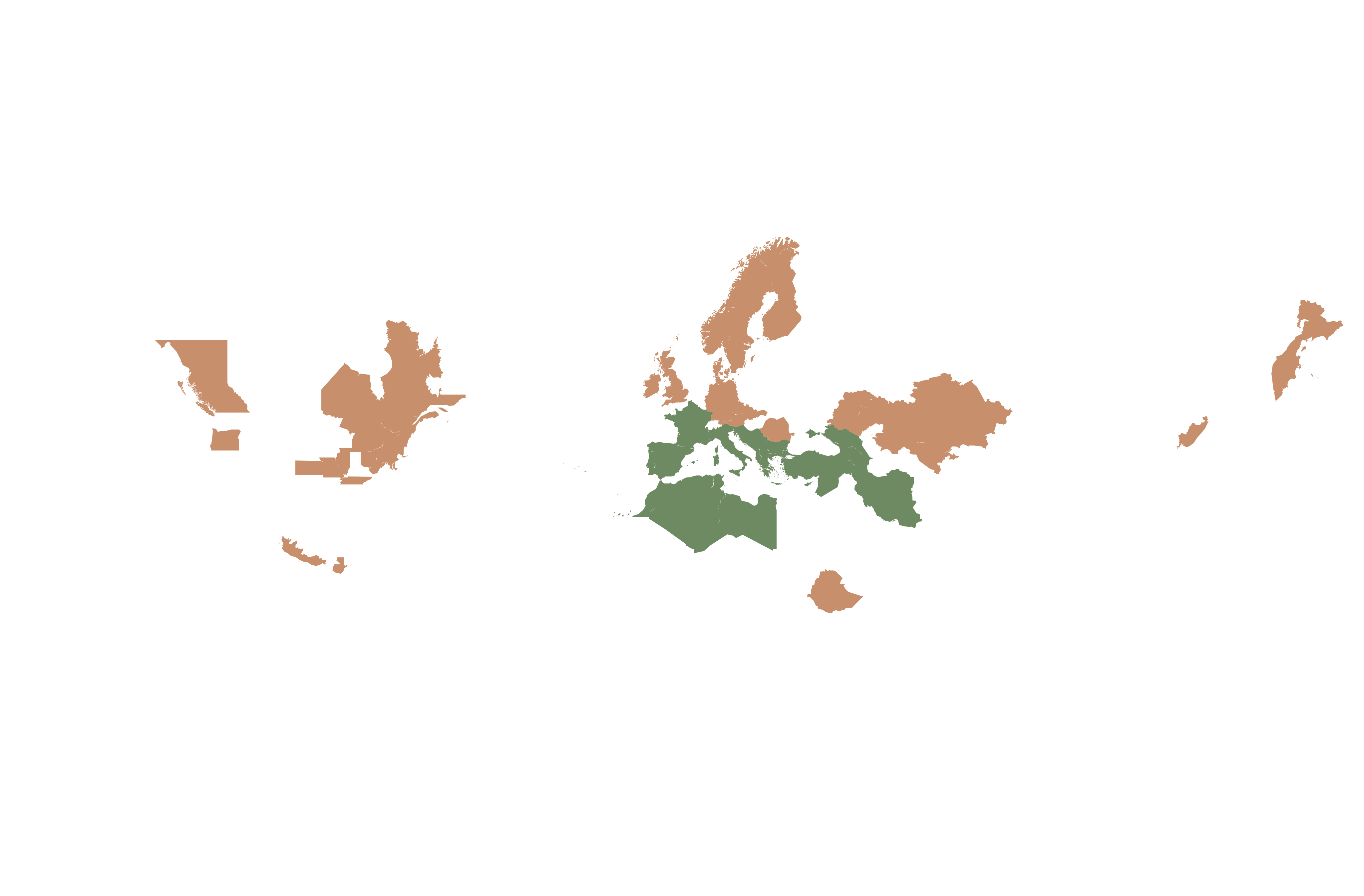
- Native
- Introduced
- Mediterranean
- Western Asia
History
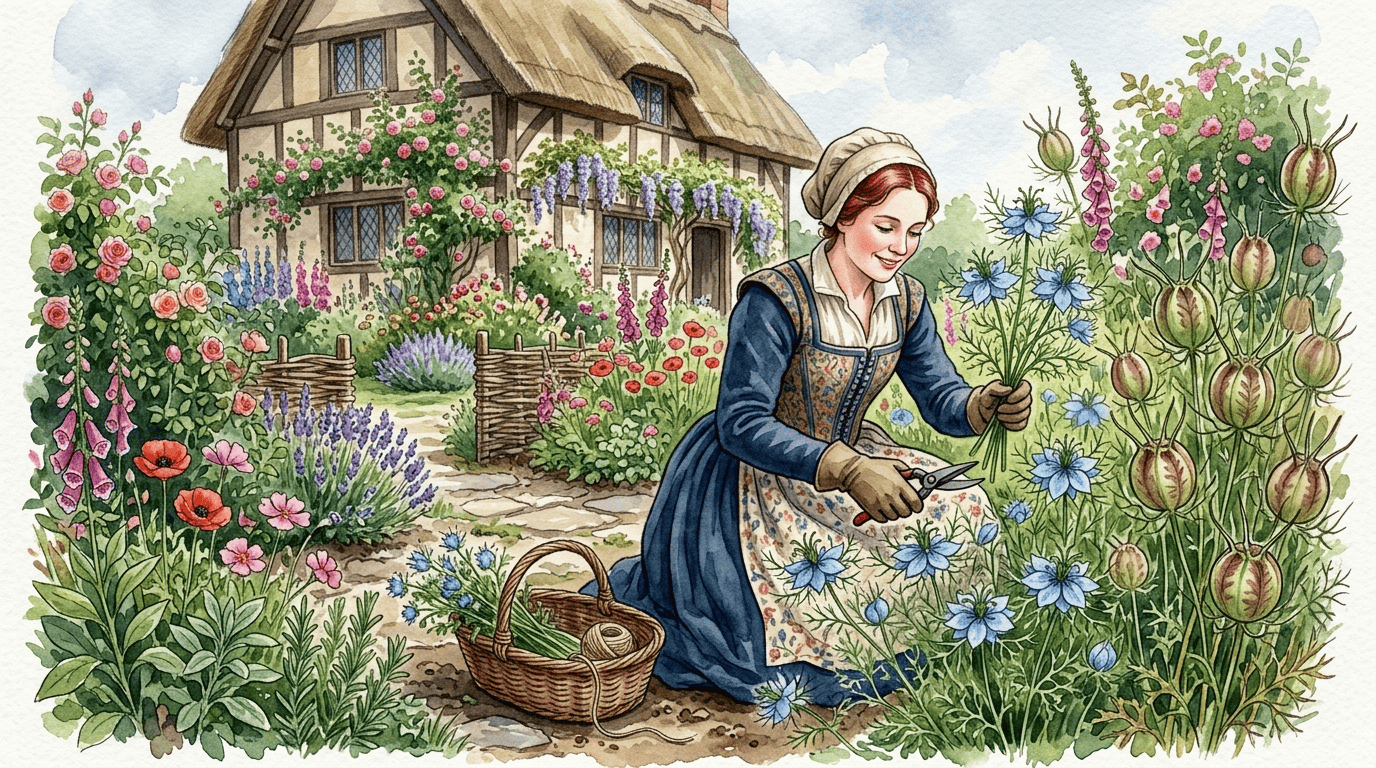
Nigella damascena is native to the Mediterranean basin, from southern Europe through North Africa and into southwest Asia. The species epithet "damascena" ("of Damascus") reflects its frequent occurrence in Syria and its early association with the Damascus region in European botanical literature. The plant has been cultivated in English cottage gardens since at least the Elizabethan era — John Gerard's 1597 Herball describes it. It produces delicate open blue, white, pink, or purple flowers 3-4 cm across, each surrounded by a distinctive halo of finely dissected thread-like bracts that give the plant its charming "love-in-a-mist" common name.
Following flowering the plant produces spectacular inflated horned star-shaped seed capsules about 2-3 cm across, which dry beautifully and are prized as elements of dried-flower arrangements — driving a continuing presence in cutting gardens and craft planting. The species reseeds freely from year to year and is a self-maintaining staple of many English and American cottage gardens once established. A related species, Nigella sativa (black cumin), is the source of the culinary "nigella seed" spice widely used in Middle Eastern, Indian, and North African cuisine — but N. damascena is not the culinary spice species and its seeds should not be consumed.
Popular ornamental cultivars include "Persian Jewels" (mixed colors), "Miss Jekyll" (pure blue — named for garden designer Gertrude Jekyll), and "Oxford Blue." Love-in-a-mist has been cultivated in European gardens since at least the 16th century, appearing in the great herbals of Gerard and Parkinson. The evocative common name refers to the misty nest of bracts surrounding each flower, as if the bloom were hidden in fog. In the Victorian language of flowers, it represented 'perplexity' — the feeling of being simultaneously attracted and puzzled by love. The genus name Nigella means 'little black one,' referring to the jet-black seeds. In some Mediterranean traditions, the seeds were scattered on bread before baking, similar to the use of its close relative Nigella sativa (true black cumin). The ornamental seed pods have made it a staple of the dried flower industry.
Symbolism & meaning
What It Symbolizes
Love-in-a-Mist is perplexity bloomed into a flower — sky-blue petals veiled in a haze of threadlike green bracts, the very picture of the beautiful confusion of falling in love. In Victorian floriography it meant mystery and romantic intrigue, sent to lovers whose feelings were not yet fully named. It is the flower for the heart that cannot quite see clearly, and rather likes it that way.
- Perplexity — The veiled, misty flowers symbolize the beautiful confusion of falling in love
- Mystery — Blooms hidden in a haze of bracts evoke secrets and romantic intrigue
Where the Name Comes From
Nigella from Latin 'niger' meaning 'black,' for the dark seeds. Damascena refers to Damascus, Syria, suggesting an eastern Mediterranean origin.
Uses & Fun Facts
- Decorative striped seed pods star in dried arrangements
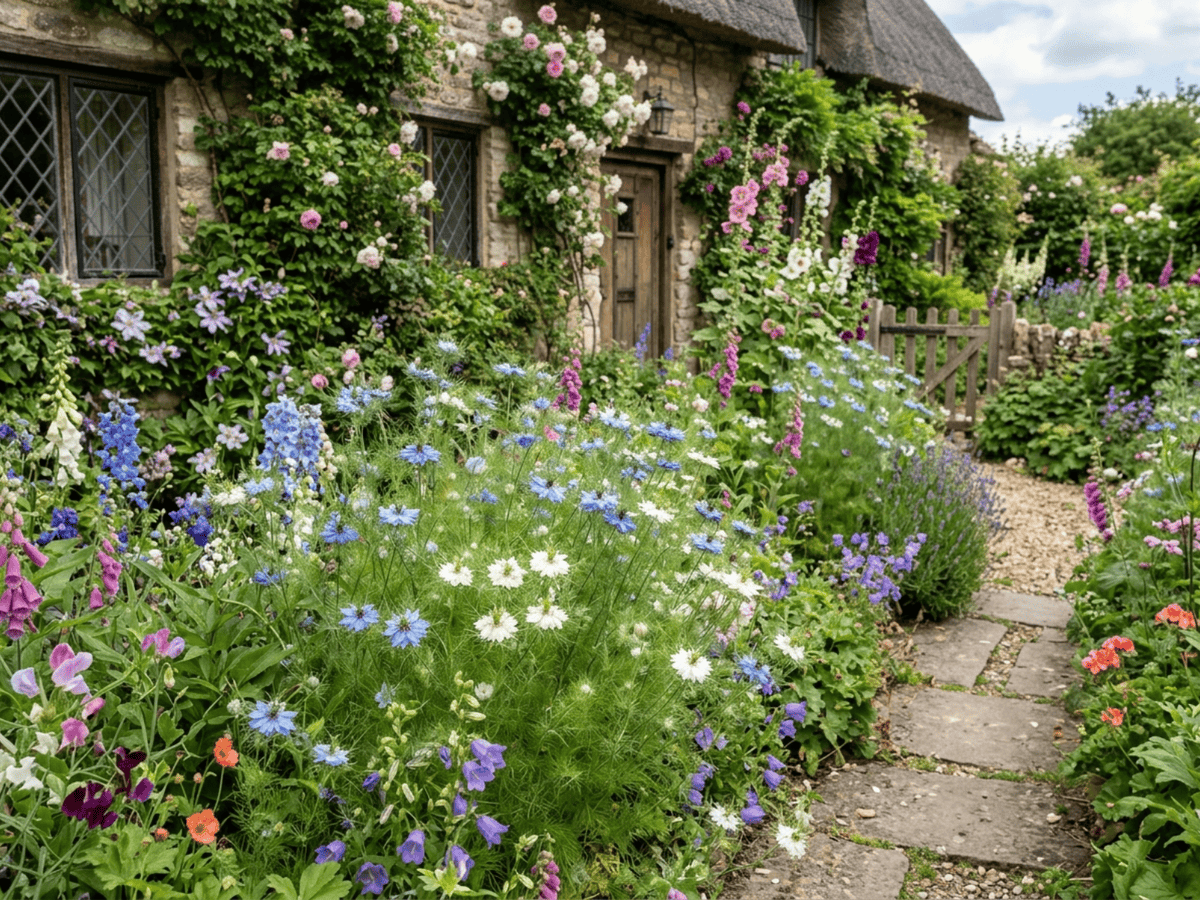
- Misty thread-like bracts surround flowers in cottage borders
Related plants
More Nigella plants
Plants with similar care
 Chinese AbeliaAbelia chinensis
 Fragrant AbeliaAbelia mosanensis
 Large-Flowered AbeliaAbelia uniflora
 Glossy AbeliaAbelia x grandiflora
Frequently asked questions
How often should I water Love-In-A-Mist?
Water about every 5 days during the growing season, and always let excess water drain away.
How much light does Love-In-A-Mist need?
Full sun: 6+ hrs direct. Watch the leaves — scorching or stretching means the light needs adjusting.
Is Love-In-A-Mist toxic to cats or dogs?
Pets Slight (Dogs Slight · Cats Slight) Educational information, not medical or veterinary advice. If exposure is suspected, contact a doctor or veterinarian.
Is Love-In-A-Mist easy to grow?
Yes — it is considered an easy, beginner-friendly plant.
Can Love-In-A-Mist be grown indoors?
Yes, it adapts well to indoor growing given the right light.
When does Love-In-A-Mist bloom?
It typically blooms Mar, Apr, Sep, Oct, Nov in the Northern Hemisphere.
YardMate
Identify any plant in seconds
Snap a photo — YardMate names the plant, diagnoses problems, and reminds you when to water.
Download on the App Store