 YardMate


Nigella
Nigella sativa
Easy · Beginner friendlyAbout Nigella
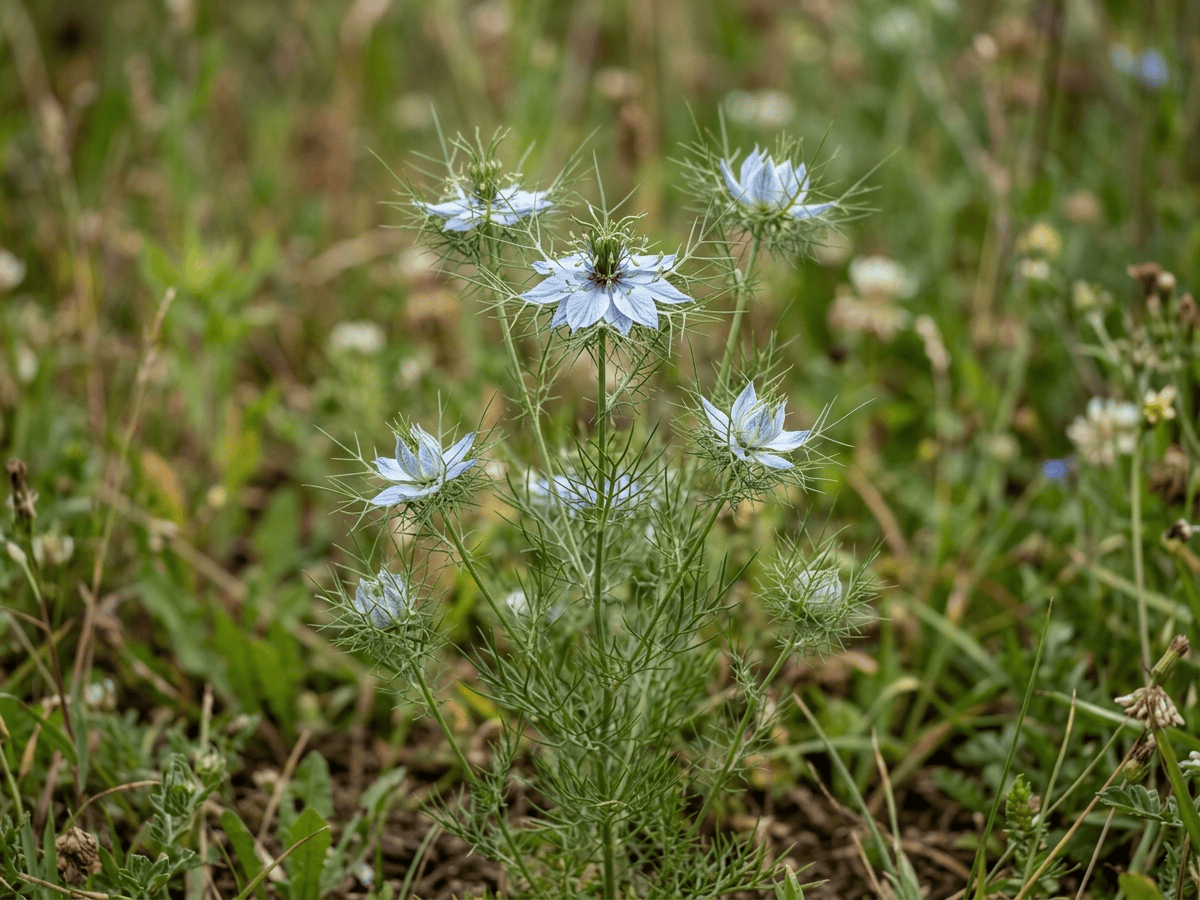
Nigella sativa, black cumin or black seed, is a fine-textured annual from the Mediterranean and West Asia, grown for its small matte-black seeds. The plant stands 20-45 cm tall with threadlike foliage, pale blue to white flowers, and inflated seed capsules that dry into ornamental pods. The seeds have a warm, peppery, onion-oregano flavor and season breads, cheeses, pickles, and spice blends across the Middle East, North Africa, and South Asia. It is related to love-in-a-mist, but this species belongs more to the spice cabinet than the flower border. Give it sun, light soil, and a dry finish so the capsules can mature cleanly for harvest.
- Edible
- Medicinal
- Drought-tolerant
How to care for Nigella
Watering
- Springevery 5 days
- Summerevery 4 days
- Fallevery 7 days
- Winterevery 10 days
Soil · Rich & well-draining
- Top dressingCompost10%
- Main mixPotting soil + compost 3:180%
- DrainageGravel10%
Top up the compost layer each season.
FERTILIZER
Balanced Feed 14-14-14
An even feed covers all three needs at once, keeping leaves, roots and blooms moving together with nothing pushed out of balance.
- Nitrogen · Leaves
- Phosphorus · Roots + Blooms
- Potassium · Strength
- Springevery 30 days
At a Glance
- NativeWestern Asia, Mediterranean
- Height1–1.5 ft (0.3–0.5 m)
- Spread0.5–1 ft (0.2–0.3 m)
- Flower colorBlue, White
- Foliage colorGreen
- Fruit colorBrown, Black
- SoilWell-drained, Loamy, Neutral
- LocationsYard
Bloom time
BLOOM CYCLE
Peak bloom
May–Aug
Pale blue or white flowers early summer
Fragrance
LIGHT FRAGRANCE
Seeds have a distinctive peppery oregano-like aroma.
Toxicity
Pets Slight
thymoquinone and nigellone
Not reported
EXPOSURE No exposure route is reported.
EFFECT No toxic effect is reported.
NOTE No toxicity is reported for humans in this catalog; this is not evidence that the plant is edible or harmless.
Slight
- Seed
- Ingestion
EXPOSURE Eating seeds.
EFFECT Large quantities of essential oils may cause GI upset.
NOTE Seeds widely consumed as food and medicine; avoid large medicinal doses in pregnancy.
Slight
- Seed
- Ingestion
EXPOSURE Eating seeds.
EFFECT Large quantities of essential oils may cause GI upset.
NOTE Seeds widely consumed as food and medicine; avoid large medicinal doses in pregnancy.
Educational information, not medical or veterinary advice. If exposure is suspected, contact a doctor or veterinarian.
DISTRIBUTION

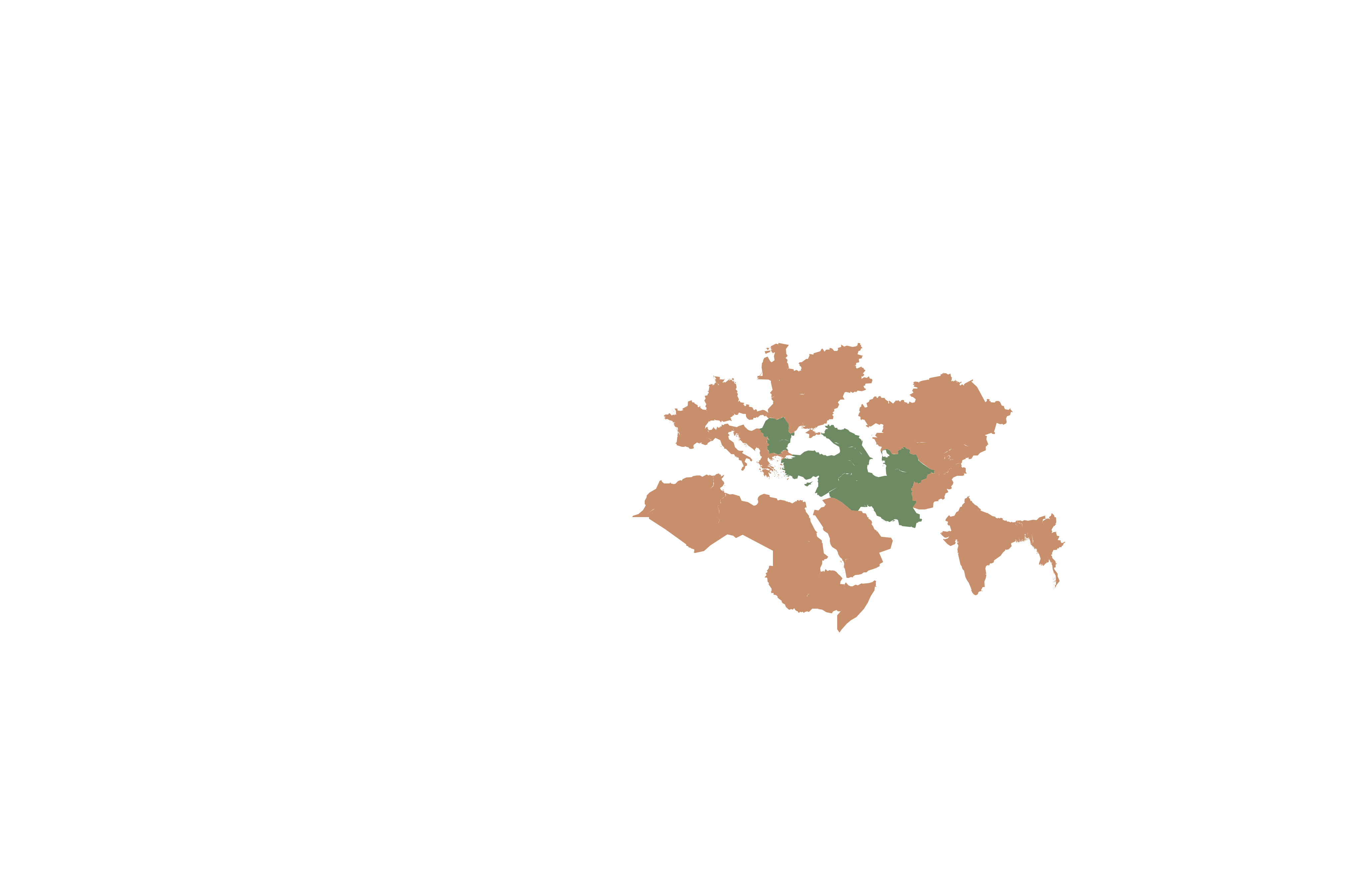
- Native
- Introduced
- Western Asia
- Mediterranean
History

Nigella sativa, commonly called black cumin, black seed, kalonji, or habba sawda, is an annual herb native to southwestern Asia and the eastern Mediterranean. The small black seeds have been used as spice and traditional medicine for more than 3000 years; a bottle was found in Tutankhamun's tomb, and the Old Testament Book of Isaiah refers to fitches harvested by threshing. Prophet Muhammad is quoted in hadith as describing black seed as a cure for everything except death, cementing its importance in Islamic medicine.
Modern pharmacological research has focused on thymoquinone, the active compound, for antimicrobial, anti-inflammatory, and chemopreventive effects. The seeds flavor naan, Turkish breads, pickles, curries, and Bengali panch phoron spice mixes.
Blue or white starry flowers adorn the plant before forming inflated seed capsules. Cultivated for over 3,000 years across Egypt, the Middle East, India, and North Africa. Recently popular in American medicinal herb gardens for its well-documented traditional uses.
Symbolism & meaning
What It Symbolizes
Nigella is ancient wisdom in a black seed. The delicate blue or white flowers and inflated pods look ornamental, but the real story is in the peppery seeds that moved through Middle Eastern, North African, and South Asian kitchens for centuries. Its symbolism is smallness with depth.
- Ancient wisdom — 3,000 year-old medicinal tradition
- Sacred seed — revered in Islamic and biblical tradition
Where the Name Comes From
'Nigella' from Latin 'niger' meaning black, for the black seeds; 'sativa' from Latin means cultivated, indicating long agricultural history.
Uses & Fun Facts
- Black seeds spice breads and curries across Middle East
- Seeds used traditionally for digestive and immune support
- Pale blue flowers and inflated seed pods in gardens
Related plants
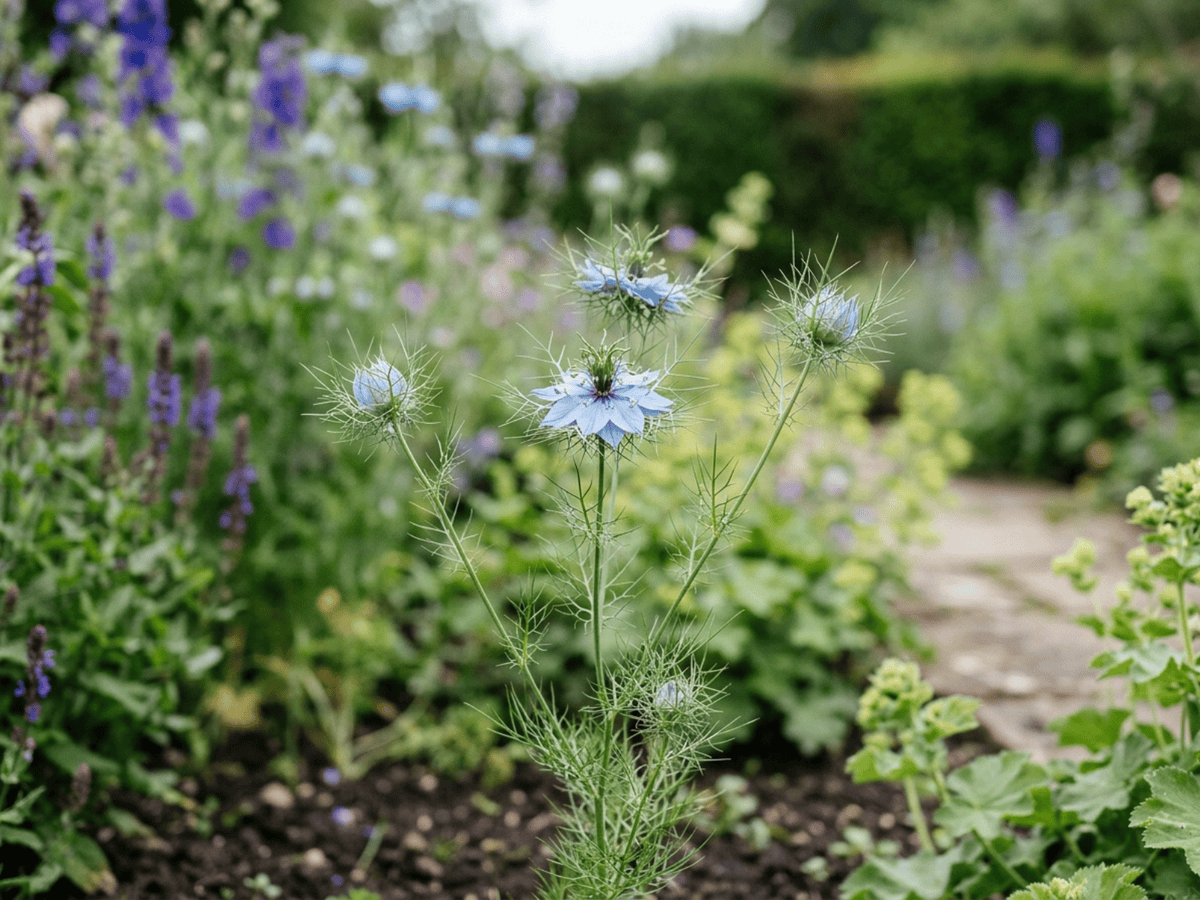
More Nigella plants
Plants with similar care
 Chinese AbeliaAbelia chinensis
 Fragrant AbeliaAbelia mosanensis
 Large-Flowered AbeliaAbelia uniflora
 Glossy AbeliaAbelia x grandiflora
Frequently asked questions
How often should I water Nigella?
In summer, water about every 4 days; in winter, about every 10 days. Adjust for heat, pot size and drainage.
How much light does Nigella need?
Full sun: 6+ hrs direct. Watch the leaves — scorching or stretching means the light needs adjusting.
Is Nigella toxic to cats or dogs?
Pets Slight (Dogs Slight · Cats Slight) Educational information, not medical or veterinary advice. If exposure is suspected, contact a doctor or veterinarian.
Is Nigella easy to grow?
Yes — it is considered an easy, beginner-friendly plant.
When does Nigella bloom?
It typically blooms May–Aug in the Northern Hemisphere.
YardMate
Identify any plant in seconds
Snap a photo — YardMate names the plant, diagnoses problems, and reminds you when to water.
Download on the App Store