 YardMate



Rosemary
Rosmarinus officinalis
Easy · Beginner friendlyAbout Rosemary
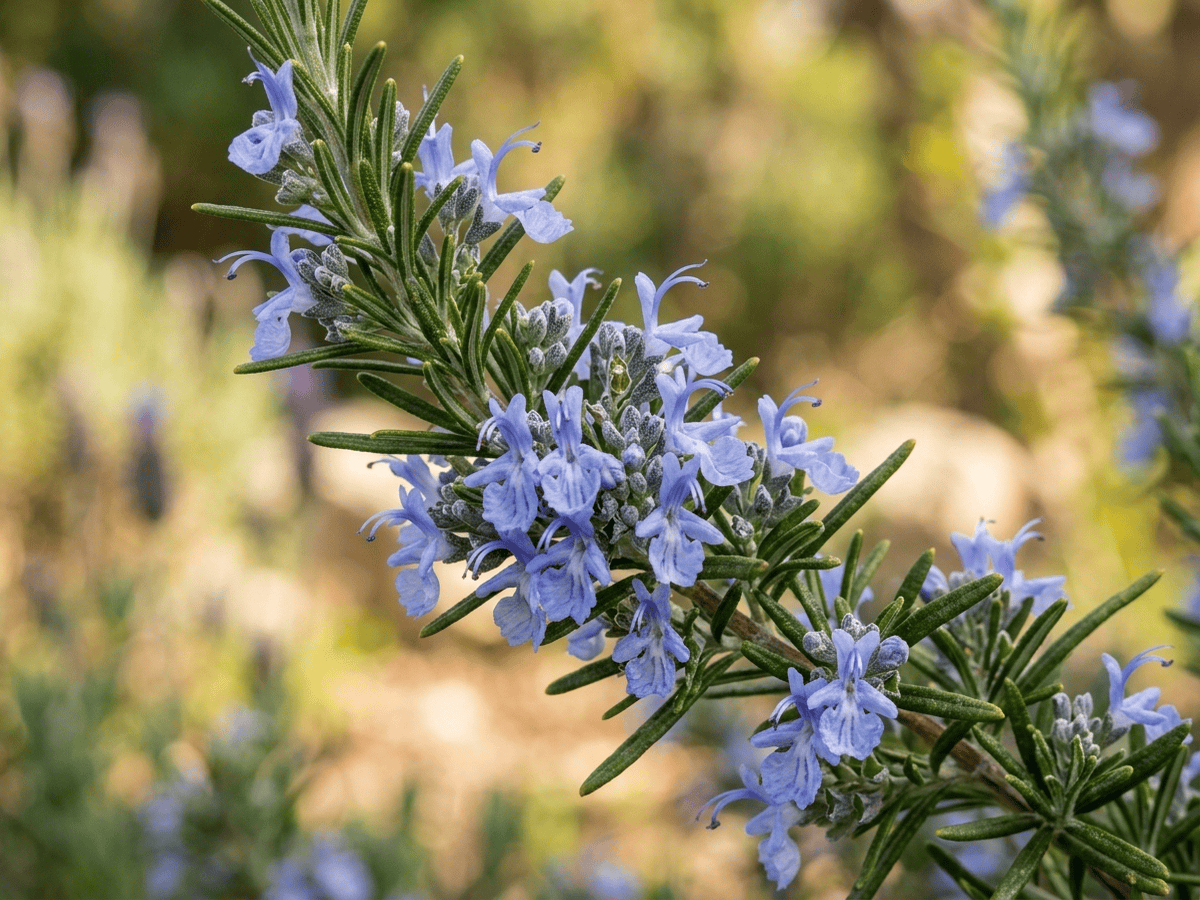
Rosmarinus officinalis, rosemary, is an aromatic evergreen shrub with needle-like leaves and small blue flowers, native to the Mediterranean. It is one of the most important culinary herbs — essential for roasted meats, potatoes, focaccia, and Herbes de Provence. The plant grows 60–150 cm tall, thriving in hot, dry, poor soil. It is remarkably drought-tolerant and deer-resistant. In mild climates, it forms handsome hedges and ground covers. The strong, piney fragrance has made it a symbol of remembrance since ancient times. Trailing varieties cascade beautifully over walls and from containers.
- Edible
- Fragrant
- Drought-tolerant
- Evergreen
How to care for Rosemary
Watering
- Springevery 5 days
- Summerevery 4 days
- Fallevery 7 days
- Winterevery 14 days
Soil · Rich & well-draining
- Top dressingCompost10%
- Main mixPotting soil + compost 3:180%
- DrainageGravel10%
Top up the compost layer each season.
FERTILIZER
- Springevery 30 days
- Summerevery 30 days
- Fallevery 45 days
At a Glance
- NativeMediterranean
- Height3–5 ft (0.9–1.5 m)
- Spread3–5 ft (0.9–1.5 m)
- Flower colorBlue, White, Pink
- Foliage colorGreen
- SoilSandy, Well-drained, Alkaline
- LocationsYard · Balcony
Bloom time
BLOOM CYCLE
Peak bloom
Dec–May
Blue flowers winter to spring; thrives in poor, dry soil; clip regularly for bushier habit
Fragrance
STRONG FRAGRANCE
Pungent pine-camphor aroma from needle-like leaves.
Toxicity
Pets Safe
1,8-cineole, camphor, and rosmarinic acid
Not reported
EXPOSURE No exposure route is reported.
EFFECT Culinary herb and concentrated essential oil can cause seizures in very high doses.
NOTE No human toxicity is reported in this catalog; avoid eating ornamental plants unless confirmed edible.
Safe
EXPOSURE No exposure route is reported.
EFFECT Not listed as toxic and commonly used in small quantities in pet foods.
NOTE Listed as non-toxic for dogs; avoid eating ornamental plants unless confirmed edible.
Safe
EXPOSURE No exposure route is reported.
EFFECT No toxic effect is reported.
NOTE Listed as non-toxic for cats; avoid eating ornamental plants unless confirmed edible.
Educational information, not medical or veterinary advice. If exposure is suspected, contact a doctor or veterinarian.
DISTRIBUTION


- Native
- Introduced
- Mediterranean
History

Rosmarinus officinalis — now accepted as Salvia rosmarinus following molecular phylogenetic revision of Lamiaceae, though horticulture retains the older name — is native to the Mediterranean coast, with its name derived from Latin "ros marinus" ("dew of the sea") for its habit of growing on coastal cliffs where it captured sea mist. Classical Greek students wove it into crowns to aid study, believing it strengthened memory — a tradition echoed in Shakespeare's Hamlet ("There's rosemary, that's for remembrance") and in the modern tradition of wearing rosemary at funerals and on ANZAC Day (Australia and New Zealand war remembrance, 25 April). Medieval European monasteries grew it for medicine and cuisine.
Hungarian rosemary water, reputedly created in the 14th century for Queen Elizabeth of Hungary, was among the first distilled alcohol-based perfumes in Europe. Modern culinary use is central to Provencal, Tuscan, and Greek cooking; essential oil is used in aromatherapy and cosmetics. Rosemary's association with memory dates to ancient Greece, where students wore rosemary garlands during exams believing it improved recall.
Modern neuroscience has partially validated this — a 2003 study by Moss and Oliver found that rosemary essential oil aroma improved memory performance by 60-75%. In WWII France, rosemary sprigs were placed in the hands of fallen soldiers. Rosemary was recently reclassified as Salvia rosmarinus, though the old name persists in common use.
Symbolism & meaning
What It Symbolizes
Rosemary has been the herb of remembrance for millennia, its needled leaves worn by Greek students at examinations and laid by mourners in Shakespeare's plays. Sprigs were tucked into wedding bouquets and planted on graves alike — a single scent expected to honor both the living and the dead. To brush against rosemary is to release one of the oldest and most faithful symbols of memory in the Western garden.
- Remembrance — For millennia, the herb of memory — worn by students, carried by mourners, planted on graves
Where the Name Comes From
The name Rosemary describes its rose-like blooms. Rosmarinus comes from Latin 'ros marinus' (dew of the sea). 'Officinalis' means of the apothecary shop. Recently reclassified as Salvia rosmarinus.
Uses & Fun Facts
- Aromatic needles flavor meats breads and Mediterranean dishes
- Resinous foliage distilled for essential oil and perfumery
- Compact woody herb thrives in patio pots and kitchen gardens
- Pale blue flowers feed bees in late winter and spring
Related plants
Plants with similar care
 Chinese AbeliaAbelia chinensis
 Fragrant AbeliaAbelia mosanensis
 Large-Flowered AbeliaAbelia uniflora
 Glossy AbeliaAbelia x grandiflora
Frequently asked questions
How often should I water Rosemary?
In summer, water about every 4 days; in winter, about every 14 days. Adjust for heat, pot size and drainage.
How much light does Rosemary need?
Full sun: 6+ hrs direct. Watch the leaves — scorching or stretching means the light needs adjusting.
Is Rosemary toxic to cats or dogs?
Pets Safe (Dogs Safe · Cats Safe) Educational information, not medical or veterinary advice. If exposure is suspected, contact a doctor or veterinarian.
Is Rosemary easy to grow?
Yes — it is considered an easy, beginner-friendly plant.
When does Rosemary bloom?
It typically blooms Dec–May in the Northern Hemisphere.
YardMate
Identify any plant in seconds
Snap a photo — YardMate names the plant, diagnoses problems, and reminds you when to water.
Download on the App Store