 YardMate


Broadleaf Arrowhead
Sagittaria latifolia
Easy · Beginner friendlyAbout Broadleaf Arrowhead
Sagittaria latifolia, known as broadleaf arrowhead, duck potato, or wapato, is a native North American aquatic perennial recognized by its distinctive arrow-shaped leaves. Growing 30–120 cm tall in shallow water and muddy margins, it produces whorls of three-petaled white flowers on tall stalks from mid to late summer. Below the surface, its stolons produce starchy tubers that have been a vital food source for Indigenous peoples for thousands of years — Lewis and Clark documented Chinook people harvesting wapato extensively. The tubers taste similar to potatoes when cooked. The bold arrowhead foliage provides excellent cover for fish and amphibians, while waterfowl feed eagerly on the tubers. It spreads readily by runners and tubers, naturalizing beautifully along pond edges and in water gardens.
- Edible
- Native
- Wildlife-friendly
How to care for Broadleaf Arrowhead
Watering
- Springevery 1 days
- Summerevery 1 days
- Fallevery 1 days
- Winterevery 1 days
Soil · Bog-wet
- WaterStanding water above soil20%
- SoilHeavy pond soil80%
No drainage layer — keep water standing above the soil.
FERTILIZER
Balanced Feed 14-14-14
An even feed covers all three needs at once, keeping leaves, roots and blooms moving together with nothing pushed out of balance.
- Nitrogen · Leaves
- Phosphorus · Roots + Blooms
- Potassium · Strength
- Springevery 30 days
At a Glance
- NativeNorth America, Central America
- Height1–4 ft (0.3–1.2 m)
- Spread1–2 ft (0.3–0.6 m)
- Flower colorWhite
- Foliage colorGreen
- SoilMoisture-retentive, Loamy
- LocationsYard
Bloom time
BLOOM CYCLE
Peak bloom
Jun–Aug
White three-petaled flowers in whorls bloom mid-summer on tall stalks
Fragrance
NO FRAGRANCE
No notable fragrance.
Toxicity
No toxicity has been reported for this plant. Still, it is wise to keep pets from chewing on any houseplant.
Educational information, not medical or veterinary advice. If exposure is suspected, contact a doctor or veterinarian.
DISTRIBUTION

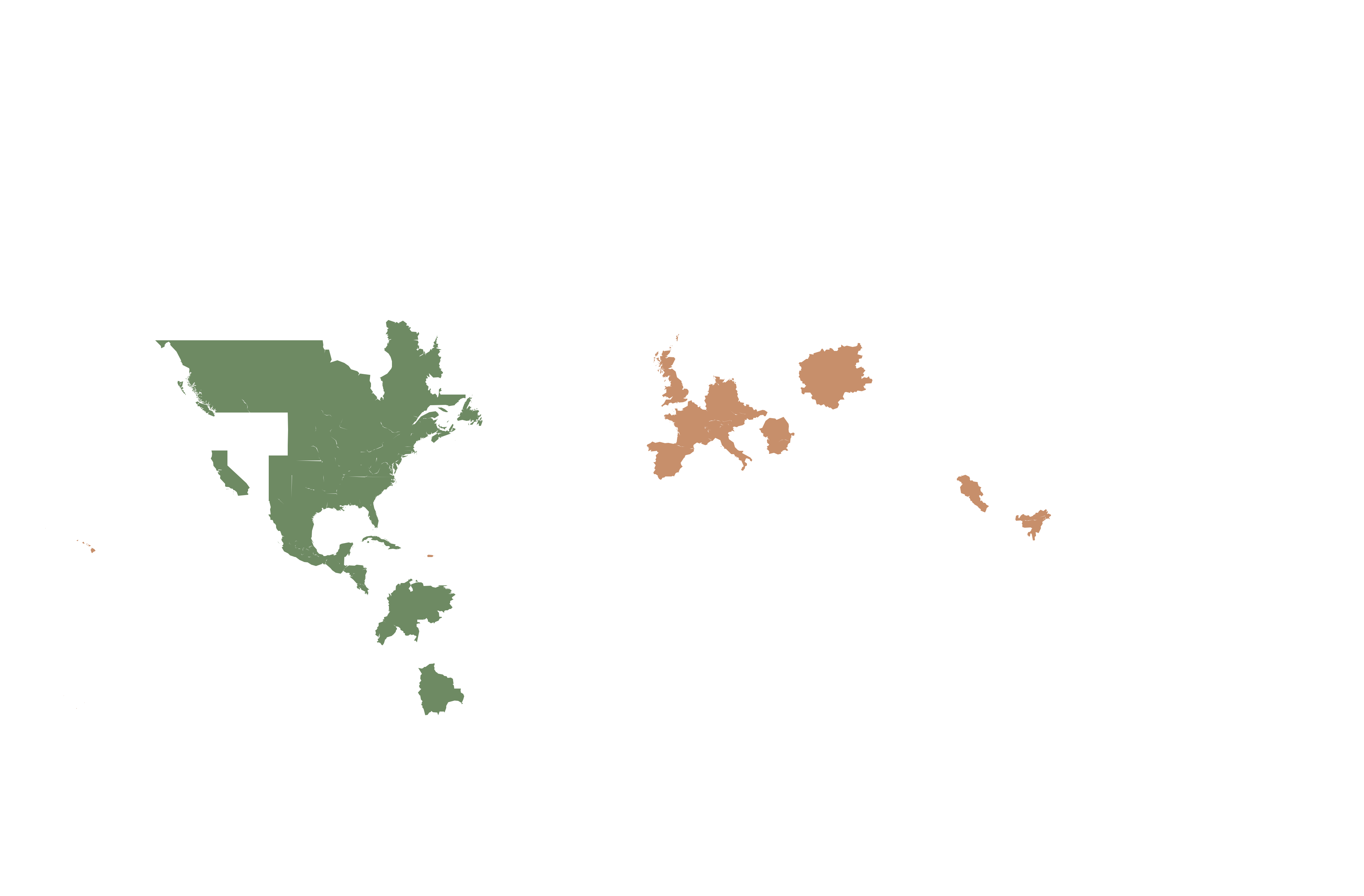
- Native
- Introduced
- North America
- Central America
History

Sagittaria latifolia is native to wetlands across most of North America — from southern Canada south through the entire United States and into parts of Mexico and Central America. It grows at pond and lake edges, slow streams, marshes, ditches, and wet meadows. Its distinctive arrowhead-shaped leaves held above the water surface give the genus its Latin name Sagittaria ("arrow").
Underwater the plant produces clusters of small starchy tubers 2-4 cm across, which have been one of the most important Indigenous plant foods of wetland-rich regions of North America. Among Pacific Northwest Coast peoples (including Chinookan and Salishan groups of the lower Columbia River), Columbia Plateau peoples (Yakama, Umatilla, Nez Perce), and Eastern Woodlands peoples, Sagittaria tubers were called by various names — "wapato" (Chinookan origin), "duck potato," "Indian potato," "arrowhead" — and harvested primarily by women, who would wade into waist-deep water and dislodge the tubers with their feet; the buoyant tubers would then float to the surface to be gathered into canoes.
Wapato was traded between tribes along major river routes; the Lewis and Clark expedition extensively documented its central role in lower Columbia River Indigenous diet in 1805-1806. Tubers are cooked like potatoes (roasted, boiled, or made into soup) and have a distinctive slightly chestnut-like flavor.
Symbolism & meaning
What It Symbolizes
Broadleaf Arrowhead expresses nourishment, its starchy edible tubers, called wapato by many Indigenous nations, having sustained communities along North American waterways for millennia. Its arrow-shaped leaves give it a second meaning of direction, symbolizing purpose and clear guidance. It is often read as a flower of pointed sustenance, a wetland plant whose meaning braids together physical food and the spiritual sense of knowing which way to go, pointing both into the water and toward the future.
- Nourishment — its edible tubers have sustained communities for millennia
- Direction — the arrow-shaped leaves symbolize purpose and guidance
Where the Name Comes From
'Sagittaria' from Latin 'sagitta' (arrow), describing the arrow-shaped leaves. 'Latifolia' means 'broad-leaved.'
Uses & Fun Facts
- Wapato tubers were Indigenous staple aquatic food
- Tubers and seeds favored by ducks and waterfowl
- Arrow-shaped leaves and white flowers in shallow ponds
Related plants
Plants with similar care
 Chinese AbeliaAbelia chinensis
 Fragrant AbeliaAbelia mosanensis
 Large-Flowered AbeliaAbelia uniflora
 Glossy AbeliaAbelia x grandiflora
Frequently asked questions
How often should I water Broadleaf Arrowhead?
In summer, water about every 1 days; in winter, about every 1 days. Adjust for heat, pot size and drainage.
How much light does Broadleaf Arrowhead need?
Full sun: 6+ hrs direct. Watch the leaves — scorching or stretching means the light needs adjusting.
Is Broadleaf Arrowhead toxic to cats or dogs?
No toxicity has been reported for this plant. Still, it is wise to keep pets from chewing on any houseplant. Educational information, not medical or veterinary advice. If exposure is suspected, contact a doctor or veterinarian.
Is Broadleaf Arrowhead easy to grow?
Yes — it is considered an easy, beginner-friendly plant.
When does Broadleaf Arrowhead bloom?
It typically blooms Jun–Aug in the Northern Hemisphere.
YardMate
Identify any plant in seconds
Snap a photo — YardMate names the plant, diagnoses problems, and reminds you when to water.
Download on the App Store