 YardMate


American Cranberrybush
Viburnum trilobum
Easy · Beginner friendlyAbout American Cranberrybush
American Cranberrybush Viburnum is a native North American deciduous shrub growing 8 to 12 feet tall, producing flat-topped lacecap white flower clusters in late spring followed by bright translucent red berries that persist through winter. Outstanding red-purple fall foliage makes it a three-season native shrub. Berries are edible and historically used as a cranberry substitute in American pioneer cooking.
- Edible
- Fall-color
- Native
- Wildlife-friendly
How to care for American Cranberrybush
Watering
- Springevery 5 days
- Summerevery 3 days
- Fallevery 7 days
- Winterevery 14 days
Soil · Rich & loamy
- Top dressingBark mulch15%
- Main mixRich loam + compost 3:170%
- DrainageGravel15%
Use fully finished compost — fresh compost burns roots.
FERTILIZER
Balanced Feed 14-14-14
An even feed covers all three needs at once, keeping leaves, roots and blooms moving together with nothing pushed out of balance.
- Nitrogen · Leaves
- Phosphorus · Roots + Blooms
- Potassium · Strength
- Springevery 45 days
- Summerevery 60 days
At a Glance
- NativeNorth America
- Height8–12 ft (2.4–3.7 m)
- Spread8–12 ft (2.4–3.7 m)
- Flower colorWhite
- Foliage colorGreen, Red
- Fruit colorRed
- SoilLoamy, Moisture-retentive
- LocationsYard
Bloom time
BLOOM CYCLE
Peak bloom
Mar–May
Flat-topped lacecap white flowers in late spring
Fragrance
LIGHT FRAGRANCE
The flowers have a very lightly scented scent.
Toxicity
Humans Slight · Pets Slight
viburnin and tannins
Slight
- Fruit
- Ingestion
EXPOSURE Eating fruit.
EFFECT Mild GI upset if eaten raw in large quantities.
NOTE Ripe fruit edible when cooked; raw unripe fruit can cause mild GI upset.
Slight
- Fruit
- Ingestion
EXPOSURE Eating fruit.
EFFECT Vomiting and diarrhea.
NOTE Ripe fruit edible when cooked; raw unripe fruit can cause mild GI upset.
Slight
- Fruit
- Ingestion
EXPOSURE Eating fruit.
EFFECT Vomiting and diarrhea.
NOTE Ripe fruit edible when cooked; raw unripe fruit can cause mild GI upset.
Educational information, not medical or veterinary advice. If exposure is suspected, contact a doctor or veterinarian.
DISTRIBUTION


- Native
- Introduced
- North America
History

Viburnum trilobum grows across Canada and the northern United States from Newfoundland to British Columbia and south to Pennsylvania, Illinois, and Oregon. Thomas Walter described it in Flora Caroliniana (1788). Many Indigenous peoples, including the Ojibwe, Cree, and Iroquois, gathered the bright red astringent fruits as a preserved winter food, making jelly and sauces after the first frost — hence the pioneer name 'highbush cranberry', though botanically unrelated to true Vaccinium cranberries.
Modern taxonomy treats it as V. opulus var. americanum, although nurseries and native-plant sources still widely use V. trilobum. Bailey Nursery in Minnesota and others selected heavy-fruiting cold-hardy forms such as 'Wentworth', 'Andrews', and 'Bailey Compact'.
It is valued for spring lacecap flowers, red autumn foliage, and winter-persistent fruit. Pioneer settlers used the tart red berries as a cranberry substitute for sauces and jellies, and Native peoples used them medicinally. americanum, the American variant of European cranberrybush.
Symbolism & meaning
What It Symbolizes
American Cranberrybush embodies pioneer bounty, its tart red berries serving frontier kitchens as a substitute when true cranberries were hard to come by. Through the long Northern winter, its translucent fruits hang on like small jewels, glowing red against the snow even after the first hard freezes. This is the native shrub of resourceful hospitality — a plant that fed early households and continues, every winter, to brighten the cold months with color.
- Pioneer bounty — frontier cranberry substitute
- Winter jewel — translucent red berries glow in winter snow
Where the Name Comes From
The name American Cranberrybush points to North America. 'trilobum' from Latin means three-lobed, for the three-lobed maple-like leaves.
Uses & Fun Facts
- American Cranberrybush berries and cover sustain songbirds through autumn
- American Cranberrybush sheared into clipped hedges and privacy screens
Related plants
More Viburnum plants
 Sweet ViburnumViburnum awabuki
 Korean Spice ViburnumViburnum carlesii
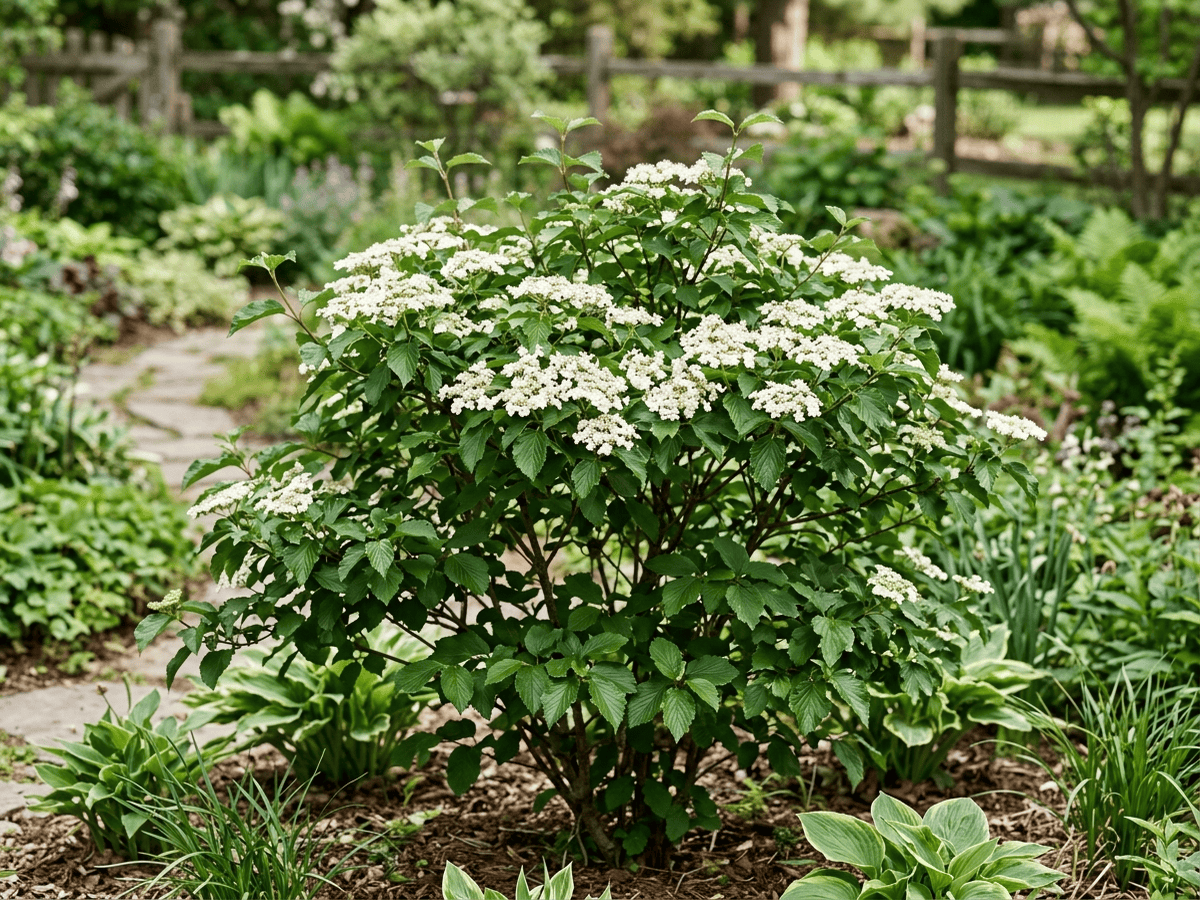 Southern ArrowwoodViburnum dentatum
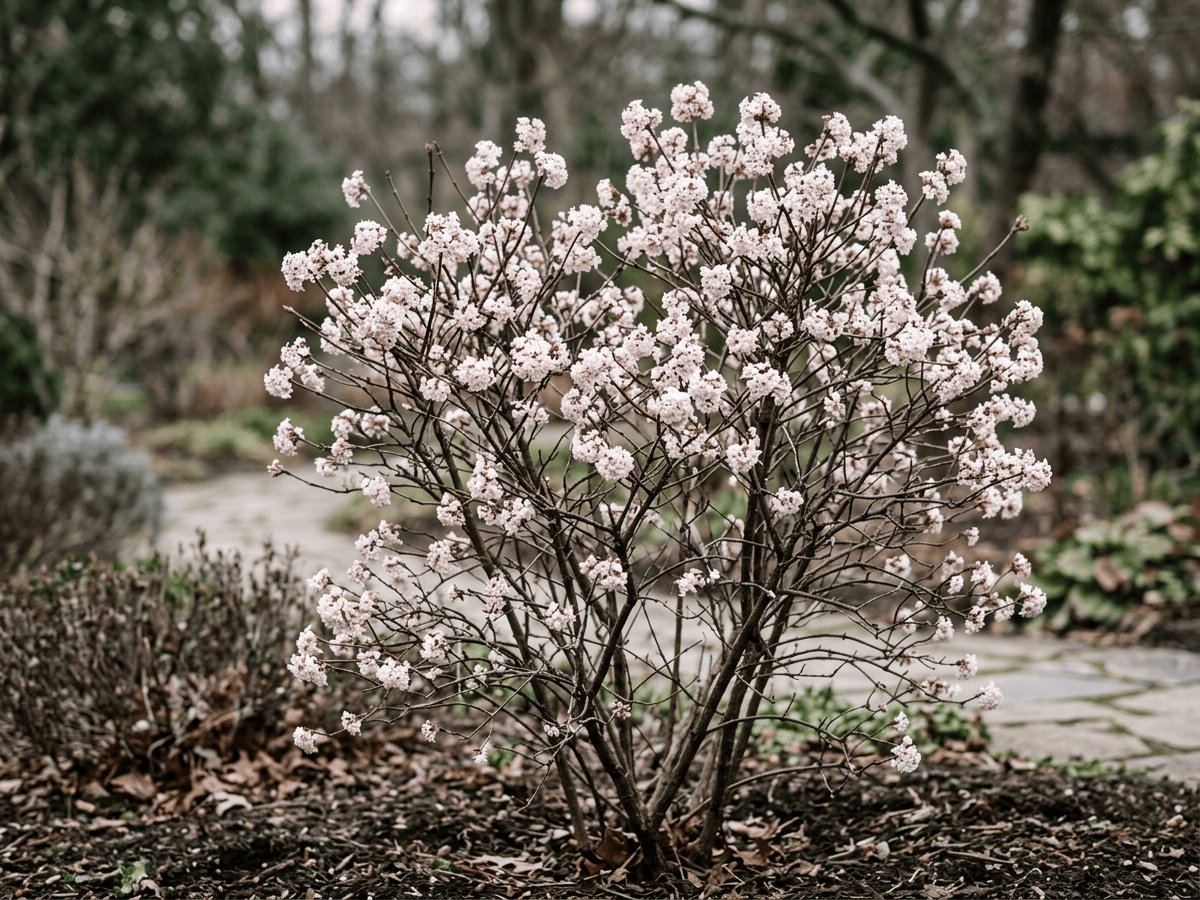 Fragrant ViburnumViburnum farreri
Plants with similar care
 Chinese AbeliaAbelia chinensis
 Fragrant AbeliaAbelia mosanensis
 Large-Flowered AbeliaAbelia uniflora
 Glossy AbeliaAbelia x grandiflora
Frequently asked questions
How often should I water American Cranberrybush?
In summer, water about every 3 days; in winter, about every 14 days. Adjust for heat, pot size and drainage.
How much light does American Cranberrybush need?
Full sun: 6+ hrs direct. Watch the leaves — scorching or stretching means the light needs adjusting.
Is American Cranberrybush toxic to cats or dogs?
Pets Slight (Dogs Slight · Cats Slight) Educational information, not medical or veterinary advice. If exposure is suspected, contact a doctor or veterinarian.
Is American Cranberrybush easy to grow?
Yes — it is considered an easy, beginner-friendly plant.
When does American Cranberrybush bloom?
It typically blooms Mar–May in the Northern Hemisphere.
YardMate
Identify any plant in seconds
Snap a photo — YardMate names the plant, diagnoses problems, and reminds you when to water.
Download on the App Store