 YardMate

Kiwifruit
Actinidia deliciosa
Medium · Some experienceAbout Kiwifruit
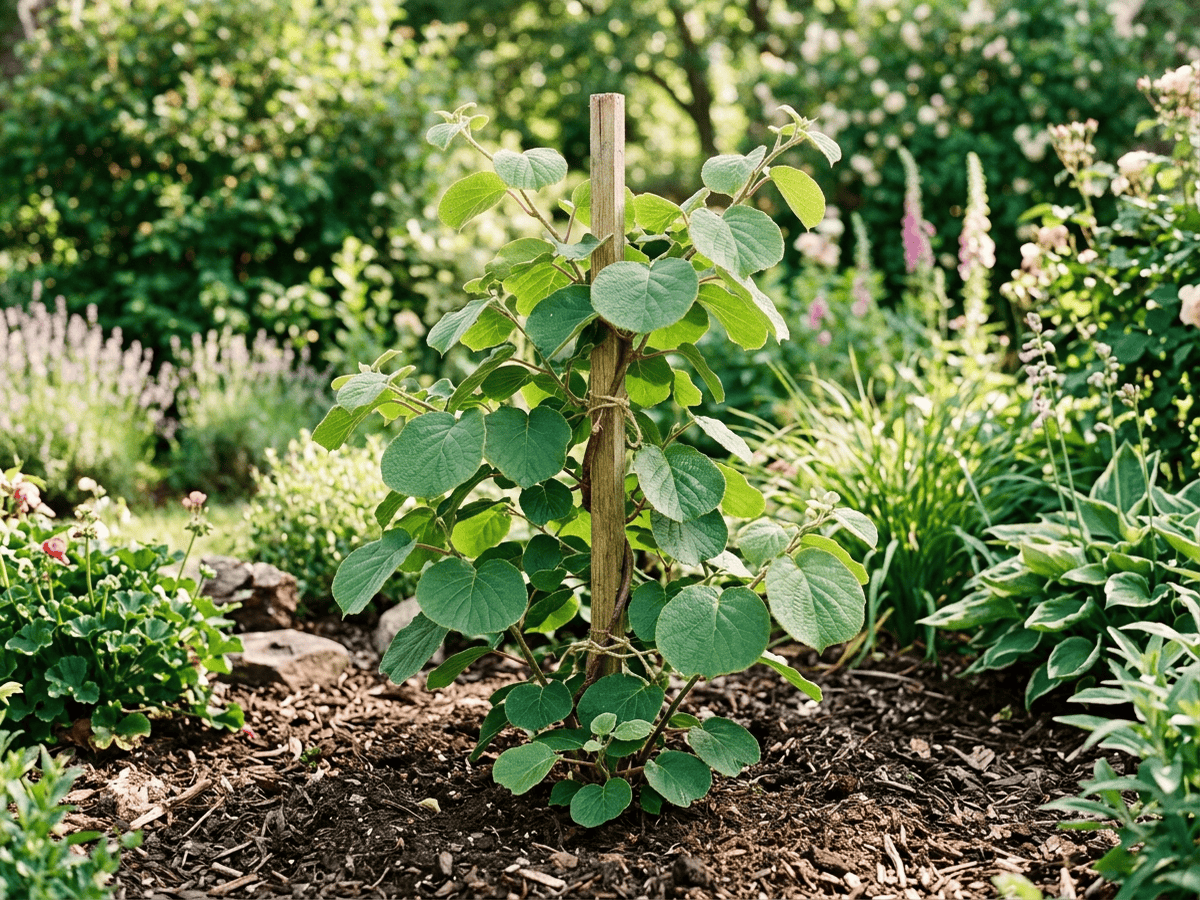
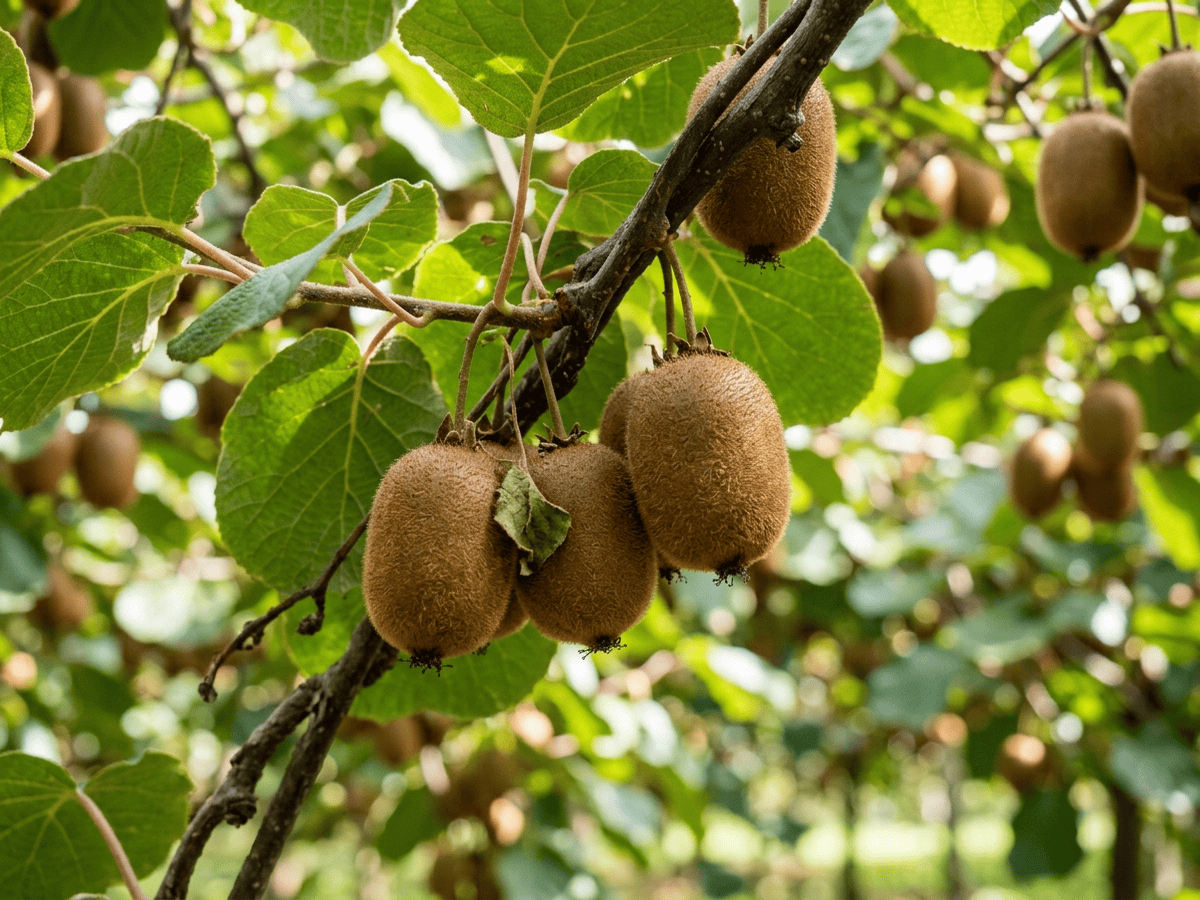
Actinidia deliciosa, the kiwifruit (previously Chinese gooseberry), is a vigorous deciduous vine in the Actinidiaceae family native to south-central China. The vine can grow 10+ metres, with large, heart-shaped leaves and fragrant cream-to-buff flowers. The fuzzy brown fruit, roughly egg-sized, contains bright green flesh with a ring of tiny black seeds and a distinctive sweet-tart flavour.
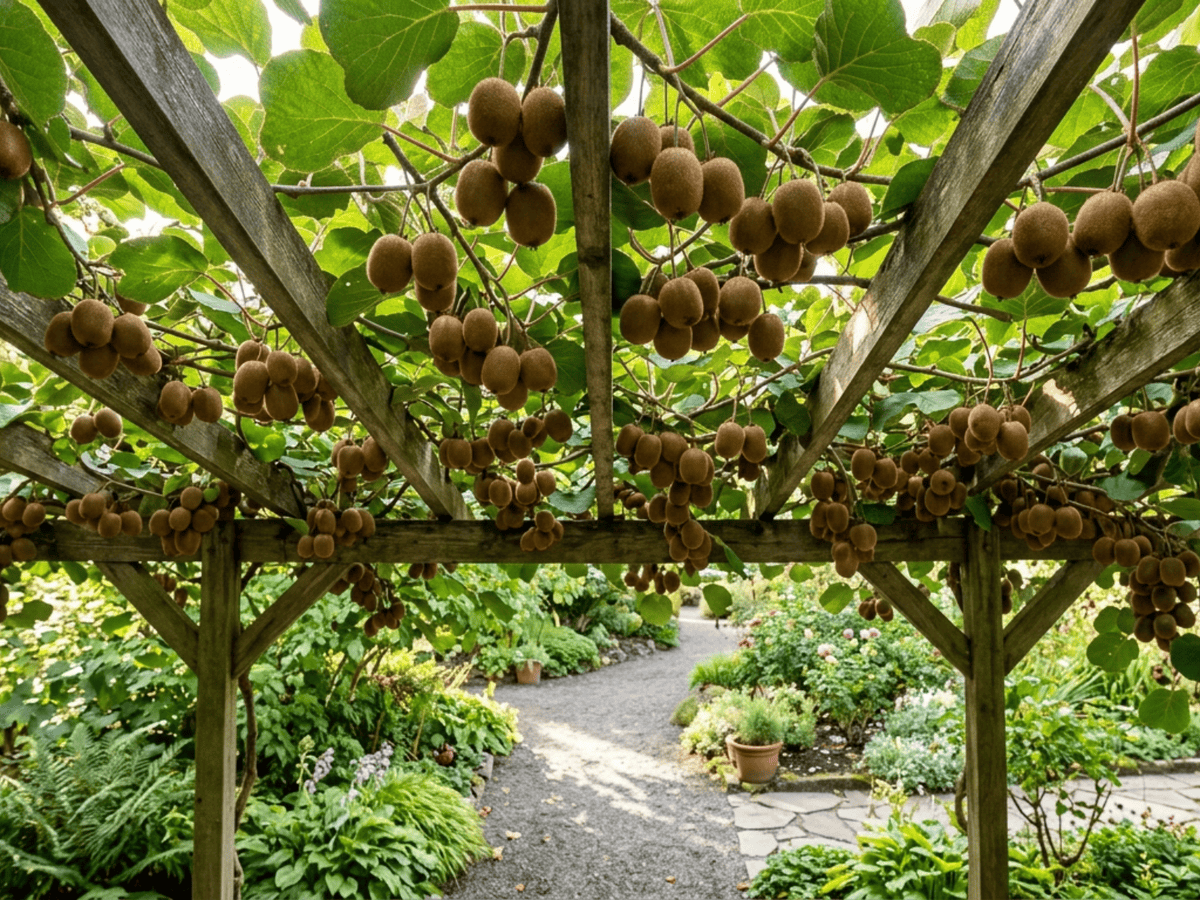
Kiwifruit thrives in USDA zones 7–9, requiring 600–800 chill hours, long frost-free growing seasons, and protection from late spring freezes. Plants are dioecious—you need both a male and a female vine for fruit. Vines need a strong trellis or pergola and take 3–5 years to begin bearing. Once established, a single female vine can produce 50–100 kg of fruit annually.
The kiwifruit's modern story is one of the most remarkable in horticultural marketing. Seeds taken from China to New Zealand in 1904 launched a new national industry. New Zealand growers rebranded the 'Chinese gooseberry' as 'kiwifruit' in 1959 (after their national bird) for export appeal. The fruit contains more vitamin C per gram than oranges, plus actinidin—a protein-dissolving enzyme used as a natural meat tenderiser. The gold-fleshed variety (A. chinensis 'Zespri Gold') is sweeter and smoother.
- Edible
- Fast-growing
How to care for Kiwifruit
Watering
- Springevery 4 days
- Summerevery 3 days
- Fallevery 5 days
- Winterevery 10 days
Soil · Well-draining
- Top dressingPine bark mulch10%
- Main mixPotting soil + perlite 2:170%
- DrainageLECA / gravel20%
Never skip the drainage layer — standing water is the top cause of root rot.
FERTILIZER
Balanced Feed 14-14-14
An even feed covers all three needs at once, keeping leaves, roots and blooms moving together with nothing pushed out of balance.
- Nitrogen · Leaves
- Phosphorus · Roots + Blooms
- Potassium · Strength
- Springevery 30 days
- Summerevery 30 days
- Fallevery 45 days
At a Glance
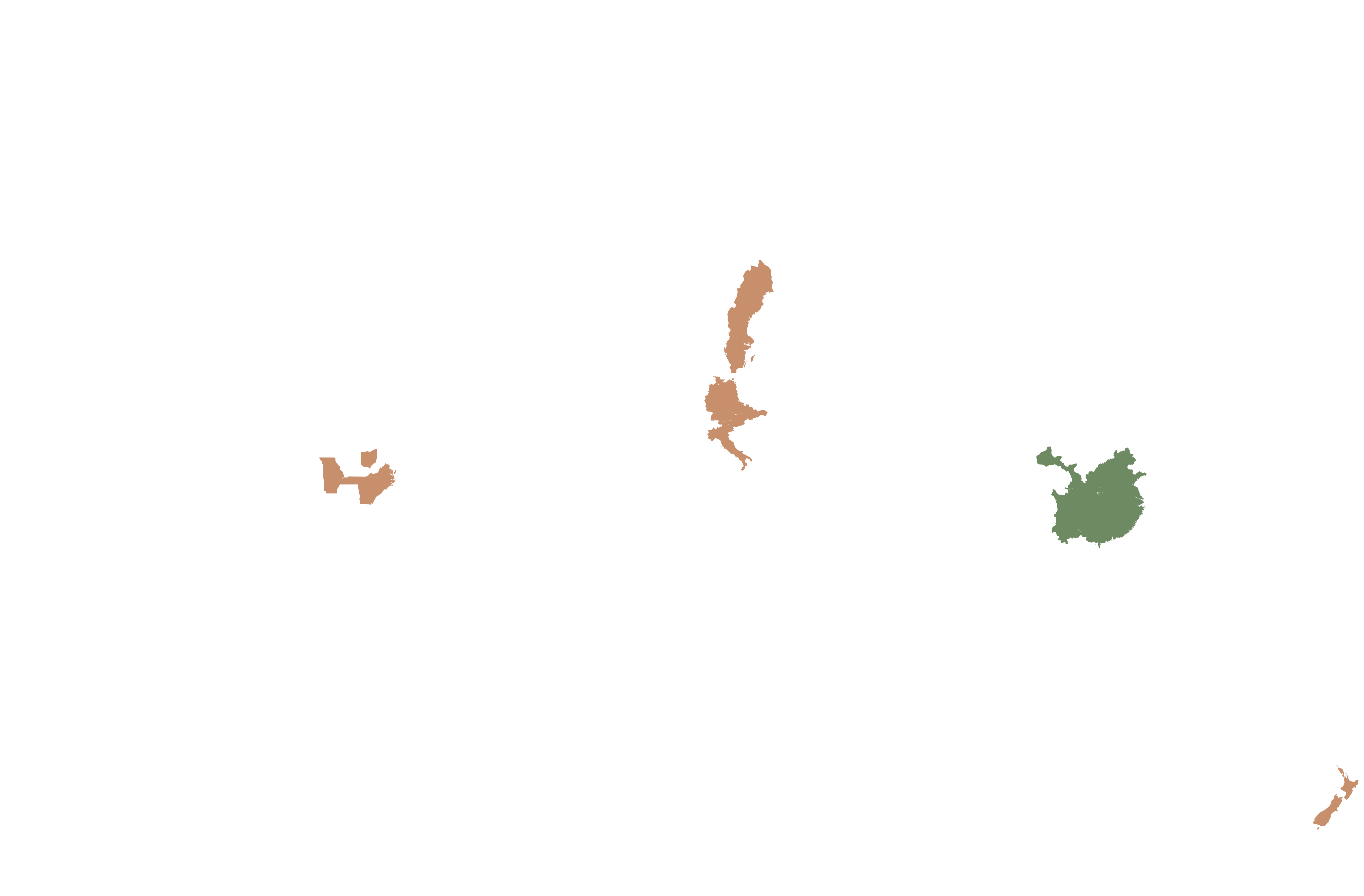
- NativeEast Asia
- Height15–30 ft (4.6–9.1 m)
- Spread10–20 ft (3–6.1 m)
- Flower colorWhite, Cream
- Foliage colorGreen
- Fruit colorBrown, Green
- SoilLoamy, Well-drained, Rich
- LocationsYard
Fragrance
LIGHT FRAGRANCE
The flowers have a mild floral scent.
Toxicity
No toxicity has been reported for this plant. Still, it is wise to keep pets from chewing on any houseplant.
Educational information, not medical or veterinary advice. If exposure is suspected, contact a doctor or veterinarian.
DISTRIBUTION

- Native
- Introduced
- East Asia
History

Actinidia deliciosa is native to central China, especially the Yangtze River valley, where wild vines were known for centuries as mihoutao, or monkey peach. Seeds reached New Zealand in 1904 when Mary Isabel Fraser, principal of Wanganui Girls' College, brought them back from China. From those seedlings, Alexander Allison and later Hayward Wright selected the large-fruited forms that created the modern kiwifruit industry; the Hayward cultivar, chosen around 1928, still dominates global production.
Exporters first marketed the fruit as Chinese gooseberry, but Cold War politics and New Zealand branding pushed a new name in 1959: kiwifruit, after the national bird. The rebrand turned a Chinese forest vine into one of the great fruit-marketing success stories of the 20th century.
Today China is again the world's largest producer, while New Zealand's Zespri brand and golden Actinidia chinensis cultivars keep reshaping the market.
Symbolism & meaning
What It Symbolizes
The Chinese-Gooseberry, once a wild vine clinging to forested hills, became the kiwifruit of global commerce, and so its meaning is opportunity realised through patient vision. Beneath the plain, fuzzy brown skin hides vibrant green flesh studded with seeds, a quiet metaphor for the surprises hidden within unassuming things. It reminds the gardener that potential is rarely loud at the start, and that beauty often waits beneath an ordinary surface.
- Opportunity — A wild Chinese vine transformed into a billion-dollar global fruit — symbolizing potential realised through vision
- Surprise — The plain brown exterior hiding vibrant green flesh represents unexpected beauty within
Where the Name Comes From
The name Chinese-Gooseberry points to China. Actinidia from Greek 'aktis' (ray), describing the radiating styles of the flower; 'deliciosa' means delicious. 'Kiwifruit' was a 1959 New Zealand marketing name, after the kiwi bird.
Uses & Fun Facts
- Fuzzy kiwifruit eaten fresh or used in desserts
- Creamy spring flowers carry a subtle sweet scent
- Vigorous vine trained on sturdy pergola or trellis
Related plants
More Actinidia plants

Plants with similar care
 Mexican AbeliaAbelia floribunda
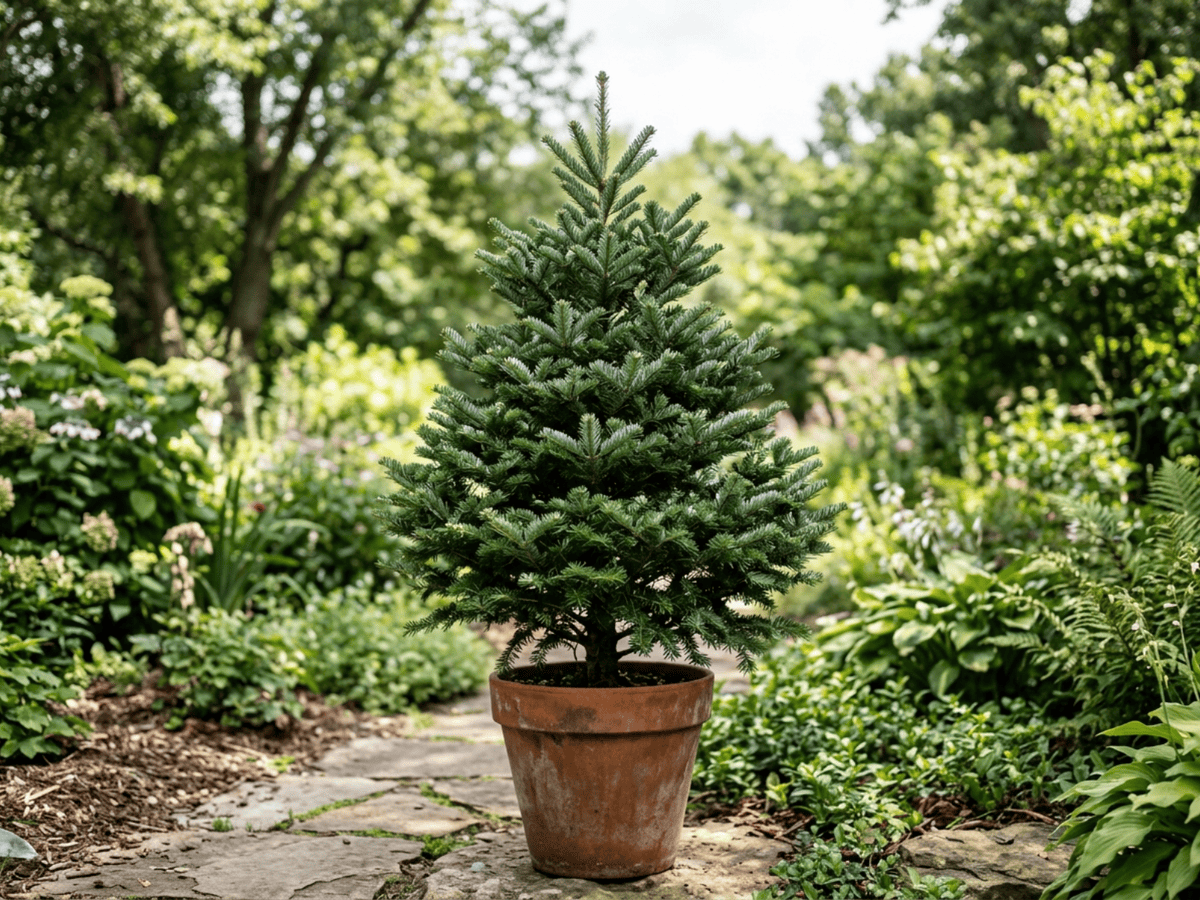 Fraser FirAbies fraseri
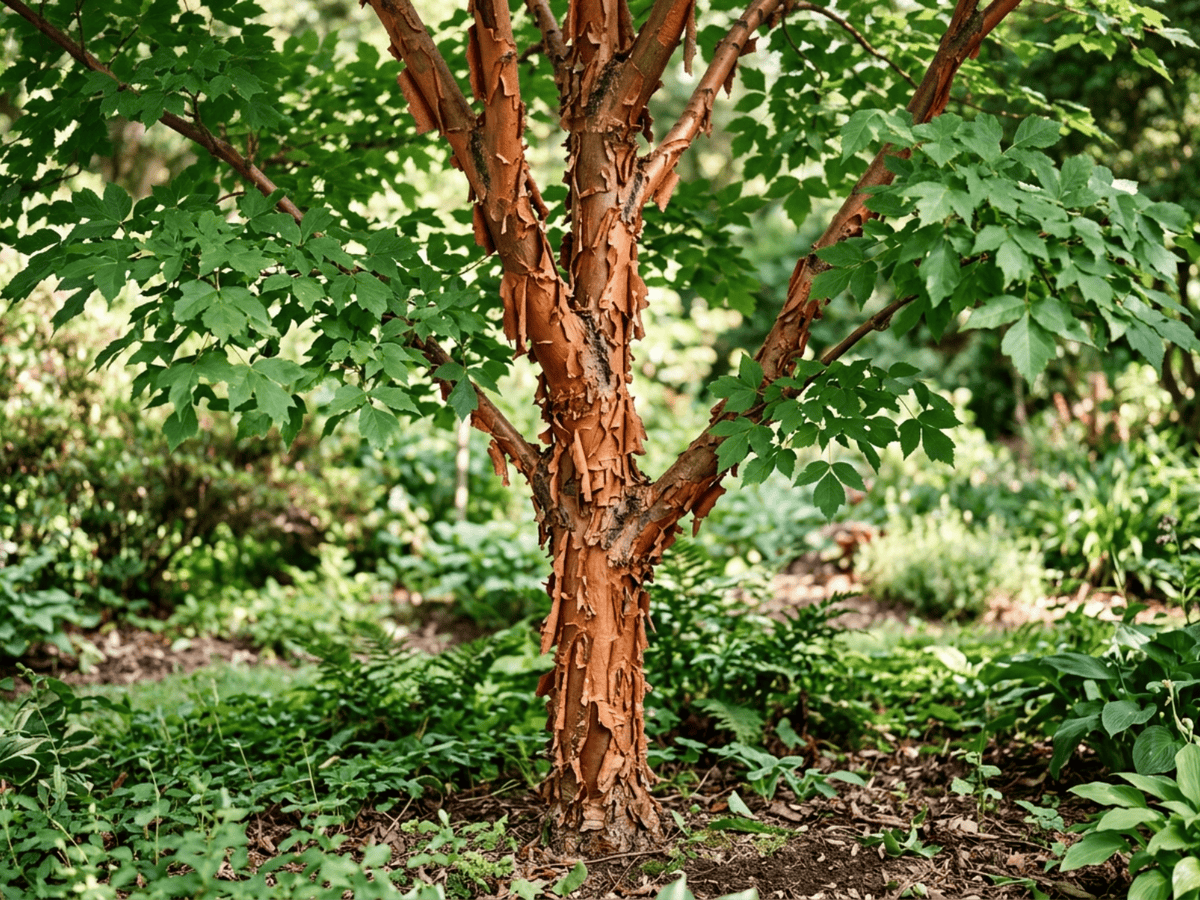 Paperbark MapleAcer griseum
 Sugar MapleAcer saccharum
Frequently asked questions
How often should I water Kiwifruit?
In summer, water about every 3 days; in winter, about every 10 days. Adjust for heat, pot size and drainage.
How much light does Kiwifruit need?
Full sun: 6+ hrs direct. Watch the leaves — scorching or stretching means the light needs adjusting.
Is Kiwifruit toxic to cats or dogs?
No toxicity has been reported for this plant. Still, it is wise to keep pets from chewing on any houseplant. Educational information, not medical or veterinary advice. If exposure is suspected, contact a doctor or veterinarian.
Is Kiwifruit easy to grow?
It is moderately demanding: a good choice once you have a little experience.
YardMate
Identify any plant in seconds
Snap a photo — YardMate names the plant, diagnoses problems, and reminds you when to water.
Download on the App Store